American Firms No Longer Have to Report Beneficial Ownership

I promised Diana Wales that I was going to write about this, so I’d better get cracking.

Beneficial ownership

I’ve talked about beneficial ownership before and why it’s important. As I said while discussing the ownership of Hungarian firm FaceKom:

“De facto control without de jure control could very well be wielded by a powerful politician, or his son-in-law.”

And to make things juicier, FaceKom was acquired by another Hungarian firm (4iG Informatikai) with government links. Viktor Orbán has since left office, and I don’t know the current status of either firm.

Because of this, businesses throughout the world track beneficial ownership, and the U.S. Government is here to help.

U.S. firms no longer have to report

Well, it used to be.

“The U.S. Treasury Department announced on Tuesday (Aug. 11) that its Financial Crimes Enforcement Network (FinCEN) is permanently removing U.S. companies and U.S. persons from beneficial ownership reporting under the Corporate Transparency Act and will delete previously reported information. Foreign reporting companies remain subject to narrower requirements involving foreign beneficial owners.”

In essence, the idea is that U.S. companies don’t have to engage in beneficial ownership reporting because all U.S. owned companies are good and would never break the law. It’s only those foreign companies that do evil beneficial ownership disguises.

But financial entities are still responsible

Of course, this doesn’t only benefit the U.S. companies who are relieved of the reporting requirement. It also benefits financial firms who don’t have to worry about the beneficial ownership of U.S. owned companies because…oh wait…financial firms still have to worry.

“But eliminating a government reporting requirement does not eliminate the financial system’s need to understand corporate ownership. Banks, broker-dealers and other covered financial institutions remain subject to customer due diligence obligations designed precisely to prevent criminals from hiding behind legal entities. They must identify and verify beneficial owners in specified circumstances, understand customer relationships, build risk profiles and monitor for suspicious activity.”

So since there’s no central source of beneficial ownership information, the financial institutions must rely on alternate sources. Multiple alternate sources.

And the U.S. firms, breathing a sigh of relief from eliminating a government reporting requirement, will now have to submit reports to a myriad of private entities, and maybe some state authorities also. And if Texas demands that you file a beneficial ownership report, don’t mess with Texas.

Welcome to the world of efficiency.

And one more thing: how do we know that these U.S. owned companies AREN’T under foreign control?

A word from our (U.S. owned) sponsor

If your firm must explain its know your business processes to your own clients, perhaps you can take advantage of Bredemarket’s marketing and writing services.


Bredemarket: Services, Process, and Pricing.

Reintroducing Bredemarket’s Services, Process, and Pricing

Now that my little break is wrapping up, I’m just reiterating what I do.

And how I do it. (Not in a frenetic way, and obviously not in an ephemeral way since I tend to be consistent.)

And how much it costs. I figure you want to know that, so I refuse to hide it, or lock you into a room before I reveal it. I’m not selling timeshares.

Bredemarket: Services, Process, and Pricing.

Schedule a free meeting

If you like what you see, talk to me.

More on the writing services

Or read about my writing services below.

Beware, Amazon: Credit Has Been Extended Beyond Humans

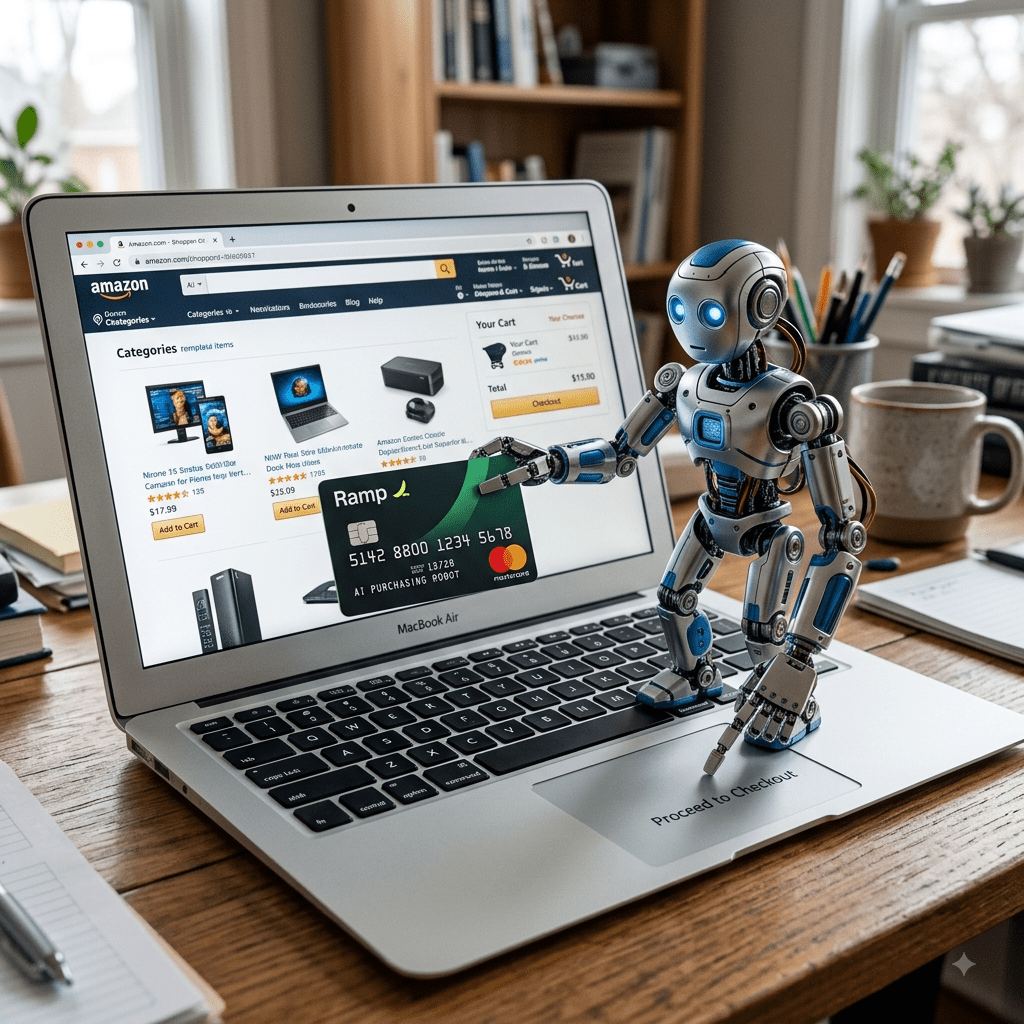
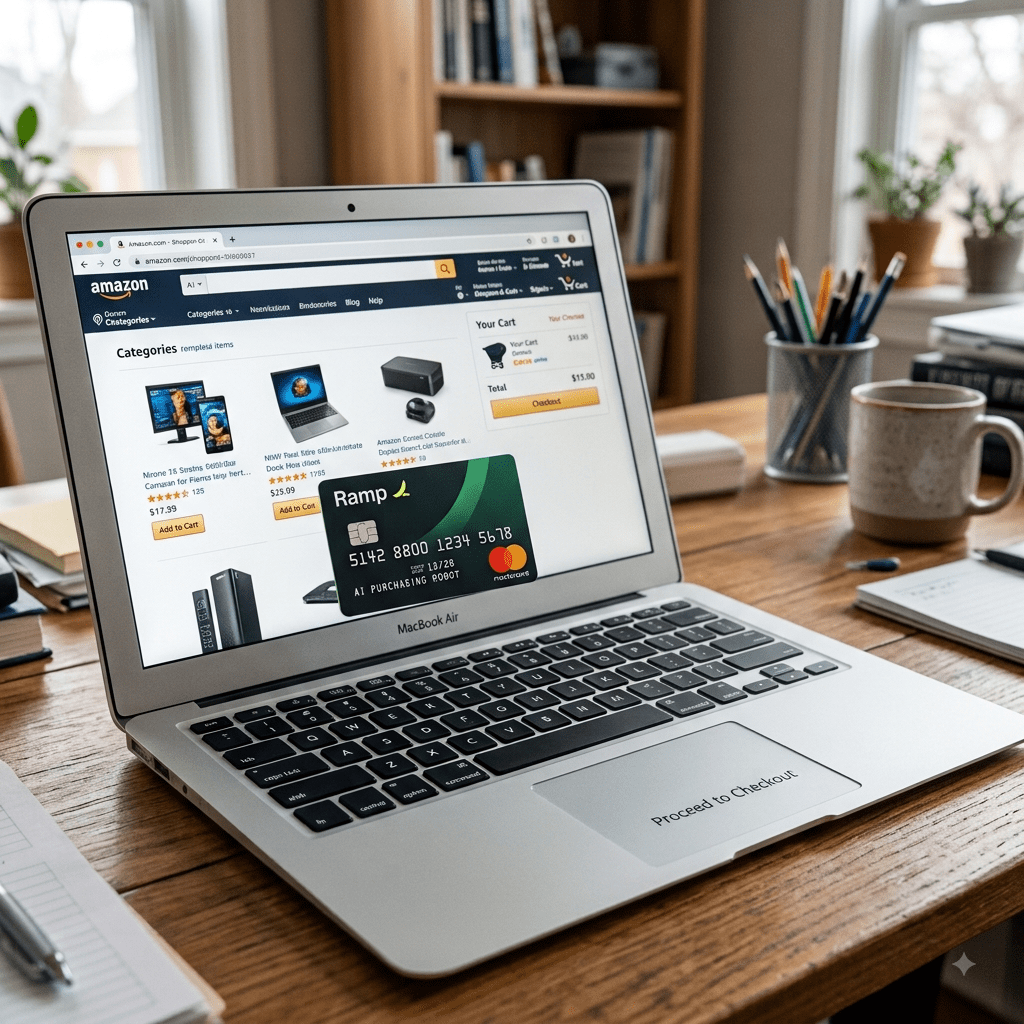
If you are staunchly declaring that your company will NEVER do business with a bot, forget it. The bots have credit cards now.

Yes, the credit card industry, which (before the Equal Credit Opportunity Act of 1974) would not let women apply for credit cards in their own names, is now starting to extend credit to non human identities.

PYMNTS:

“Mercury this week gave artificial intelligence agents something companies routinely give new employees: a corporate card of their own. Extending that perk to an agent, not a person, is new. Agent cards treat the agent exactly like that new hire, with its own payment credential, its own spending limits and its own audit trail, separate from any human on the team.”

And Mercury isn’t the only company issuing such cards.

“Ramp is issuing scoped virtual cards through its Visa partnership that external AI agents can use within policy guardrails set by a company…”

Robocredit. Google Lyria. Public Domain.

For those who worry about misuse, humans can misuse corporate credit cards also. And if this means that more entities will buy from your company, and possibly buy more rapidly…why should you complain?

Well, unless you’re Amazon. But as of now, Amazon has failed in its attempt to ban Perplexity AI shopping agents, so it’s fighting a losing battle.

The Flawed Perspective of “Go-to-market”: It’s Really “Come-to-market”

If you’re a vendor, it’s not all about you.

Medieval cities, as well as modern yuppified cities, often featured a market. Once a week vendors would congregate in the marketplace to sell their wares, and townspeople and others would go to the market and peruse what was on offer.

One Thursday morning, one prosperous vendor of apples announced to his workers, “Today we are going to GO TO MARKET!”

The trumpeter blew his trumpet, the workers assembled in a line, and the vendor mounted his horse and headed toward the city to GO TO MARKET.

His workers were already pre-briefed with internal sales enablement materials, and the vendor had printed flyers for the townspeople who could read. For the others, there were the trumpets.

Ad forum ire (go-to-market). All images Google Gemini.

Now THAT is how you go to market.

Except that by the time the vendor arrived at the market, seven other vendors were already selling apples at the market and doing a brisk business. The vendor and his wares were ignored, and the trumpets were reluctantly put away.

Too late.

Too late.

Because while everyone planning the go-to-market initiative thought it was all about them, the prospects had other ideas.

Come-to-market

I have read hundreds of product marketing job descriptions, and they all describe the product marketer’s go-to-market duties as spearheading a go-to-market plan, and coordinating with internal departments to ensure the go-to-market runs smoothly.

Never mind the fact that the market itself may have other ideas.

And that the prospects, not the vendors, control whether sales happen.

Because in reality it’s not a GO-to-market exercise.

It’s an exercise in which the vendors COME-to-market to sell their wares to the prospects.

Come-to-market.

It’s about the prospects, not the vendors. (Customer focus.)

Managing Privacy When Your Face is Your Password

We know the damage that can happen when people steal passwords. But other stolen information can do harm, including facial templates.

Non-password authentication

I’ve been writing some use cases around the common “selfie plus ID” method.

  • Usually you use facial recognition plus a government-issued ID (such as a driver’s license) to enroll in the system and verify your identity. (Although you could use other factors.)
  • Usually you use only facial recognition (against the template stored from enrollment) to authenticate your identity. (Again, you could use other factors, even a password.)

If the identity mechanism is centralized, you don’t store a password, but instead store a biometric template.

The threat of theft

What happens when—not if—the central storage is hacked?

Even if the storage is decrypted (you did encrypt the data at rest, right?), all may not be lost. Biometric templates from one vendor may not be usable by another vendor’s system.

But even in the worst case scenario in which someone steals and reuses someone’s biometric template, it’s practically useless if the system guards against presentation attacks (liveness) and injection attacks. With those guards, you need more than a valid template to get into a system.

And for those who respond that decentralized identity is the perfect solution…edge devices can be hacked also.

The threat to privacy

But those are just the technical issues. You have to deal with the business issues.

Because the theft exposes personally identifiable information, which may result in legal issues.

Depending upon local law, you have to inform your users of the breach, potentially disclosing what data was breached.

What now?

Are you ready to deal with the business consequences?

Bredemarket can help you get ready.