Bredemarket content marketing services for small businesses in and around Ontario, California (the March 31, 2022 iteration)

A lot has happened since I first wrote this description of Bredemarket’s local marketing services on September 1, 2021. Time for a content refresh.

The refresh begins with the reprint of the relevant text on my home page, which was just updated this week.

Bredemarket presently offers its services to identity/biometrics, technology, and general business firms, as well as to nonprofits. I offer my services to firms in my hometown of Ontario, California, as well as firms in EastvaleFontanaMontclairRancho CucamongaUpland, other cities of the Inland Empire West, and throughout the United States.

From https://bredemarket.com/

This post concentrates on the services that Bredemarket can provide to businesses in my local area. Read on if you own a small, arty business in the Emporia Arts District of Ontario…

Ontario, California Emporia Arts District.

…or perhaps a larger, less arty business north of Holt in Ontario, or perhaps even a business in one of the other cities that I mentioned, or one of the ones I didn’t (sorry Narod).

There are a lot of local businesses out there

Even if you don’t count sole proprietors (such as myself) or freelancers, there are somewhere around 7.7 million businesses in the United States. (This figure is from 2016; I’m not sure if it’s gone up or gone down in the last five years.) Now if you include sole proprietors in the total, then you’re talking about 32 million businesses. (This particular number may have actually increased over time.)

Obviously I can’t target them all. Well, I could try, but it would be a little ridiculous.

So what if I took a subset of those 32 million businesses and tried to see if Bredemarket could serve that subset?

The local small business persona

When you want to market to a particular group, you develop a persona that represents that group. You can then develop a profile of that persona: the persona’s needs, aspirations, and expectations; the persona’s underlying goals and values; and perhaps some other elements. The persona may be developed via extensive research, or perhaps via…a little less quantification.

When I initially looked at this topic last September, I concentrated on a particular persona, but my thoughts on this topic have evolved over time. While I will still serve artists as I initially proposed last September, I’m now thinking of other businesses that can best use the type of content that I provide.

For example, the business may be an incorporated business that is based on the Inland Empire West, provides its products or services to customers in the local area, provides excellent service that is loved by its existing customers, and needs to get the word out to new potential customers by creating content that can be downloaded from a company website, shared via a company social media account, or handed out at a trade show or other in-person event.

Regarding the values of this particular persona, you can probably already deduce some of them based upon the customer love for the company.

  • The business puts the customer first and strives to provide services that satisfy its customers.
  • However, the business also prioritizes the well-being of its employees.
  • While the business may not have explicitly articulated a vision, its actions testify to a vision of excellent service, customer satisfaction, and care for employees.

But what does this business need in terms of types of content? For my example, these businesses are ones that need customer-facing content such as the following:

  • A document (online or printed) that explains the product(s) or service(s) that the business provides, and that discusses the benefits that the product(s)/service(s) offers to the customers. This document may take the form of a product/service description, or it may take the form of a white paper. For example, your business might issue a white paper entitled “Seven Mandatory Requirements for a Green Widget,” and the white paper just might happen to mention at the end that your green widget just happens to meet all seven mandatory requirements. (Coincidence? I think not.)
Portion of the concluding section of a white paper in which Bredemarket provided the text.
  • A document (online or printed) that tells a story about how an individual customer benefited from the product(s) or service(s) that the business provides. You could call such a document a case study, or you could call it a testimonial. Or you could call it a casetimonial.

These types of documents are more valuable to some businesses than to others. Your average convenience store has little need for a 3,000 word white paper. But perhaps your business has this sort of need.

How many words should your content contain?

When I originally wrote this last September, I started off by discussing my two standard packages, based on word length. But now that I’ve thought about it a bit more, there are some questions that you need to ask BEFORE deciding on the content length. (We’ll get to content length later.)

(Owen Lovejoy) How long should a man’s legs be in proportion to his body?”

(Abraham Lincoln) “I have not given the matter much consideration, but on first blush I should judge they ought to be long enough to reach from his body to the ground.”

Thomas Lowery, quoted at https://thelogcabinsage.com/how-long-should-a-mans-legs-be-and-2-other-lincoln-stories/
Abraham Lincoln.
Abraham Lincoln. (Legs not shown.) By Hesler, Alexander, 1823-1895 – This image is available from the United States Library of Congress’s Prints and Photographs divisionunder the digital ID cph.3a36988.This tag does not indicate the copyright status of the attached work. A normal copyright tag is still required. See Commons:Licensing for more information., Public Domain, https://commons.wikimedia.org/w/index.php?curid=18705107

So how far away is the ground? Let’s ask some other questions first before we determine the answer to content length.

Bredemarket’s initial questions for you

Before I create a single word, I start by asking you some questions about your content to make sure our project starts on the right foot. (Even though I am left-footed.)

Bredemarket Kickoff Guide header.

  • What is the topic of the content?
  • What is the goal that you want to achieve with the content?
  • What are the benefits (not features, but benefits) that your end customers can realize by using your product or service?
  • What is the target audience for the content?

Once I’ve asked you these and other questions (such as a potential outline), we will both have a good idea of how long the final piece needs to be.

The length of the content also dictates the length and complexity of the review process.

Returning to the content length question

Once we have a good idea of the content length, there are three options that we can pursue to actually create the content.

If your content consists of 400 to 600 words, then I create the content using the process detailed in my Bredemarket 400 Short Writing Service.

https://bredemarket.com/bredemarket-400-short-writing-service/

This has two review cycles with up to three days per review cycle.

Bredemarket 400 Short Writing Service
If your content is longer, say 2800 to 3200 words, then I create the content using a similar (but more detailed) process through my Bredemarket 2800 Medium Writing Service.

https://bredemarket.com/bredemarket-2800-medium-writing-service/

This has three review cycles with up to seven days per review cycle.

Bredemarket 2800 Medium Writing Service
If your content falls between these two lengths, or is longer than 3200 words, or needs a more rapid delivery time, we’ll talk and come up with a solution. (And we’ll even come up with a spiffy name if you like)
For more services, see https://bredemarket.com/what-i-do/

If you can use my services, what are the next steps?

If I can help your business, or if you have further questions about Bredemarket’s B2B content creation services, please contact me.

And one more thing…

Scroll down to the bottom of my general “local” page for a special “locals only” discount code!

Free resume advice at the Upland (California) library

When I established the Bredemarket Yelp account, I sadly had to inform two inquirers that my services (what I do) did not include resume writing services.

But I just discovered that if you are near Upland, California, you can obtain resume writing services for free.

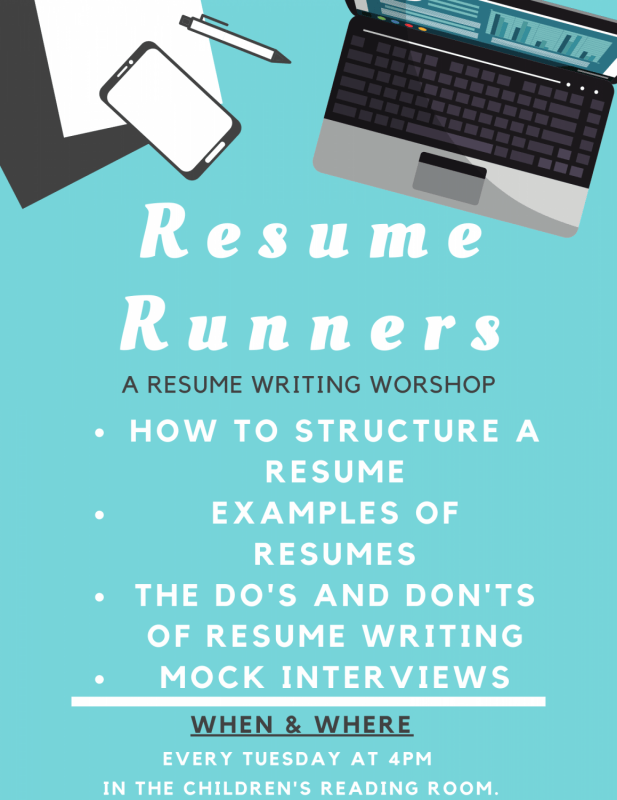
Today (March 29) and every Tuesday at 4:00 pm, the Upland Library hosts a resume writing workshop, “Resume Runners.” And unlike Bredemarket’s services, Upland Library services are free.

Don’t count your bears, and don’t forget them either in Upland

I recently talked about planning for various scenarios, but I didn’t image something like this. Consider the following:

  • Amazon delivery drivers are measured on their ability to deliver packages. Kinda like U.S. Postal Service employees, but Amazon has better measurement tools.
  • Upland, California lies just south of a sparsely inhabited mountain range. Even though the mountain range has semi-desert conditions, the mountains are teeming with wildlife.

Put those two together, and you have this story from Los Angeles’ ABC station.

Yes, that’s an Amazon driver in the foreground, raising his hands to try to scare a bear away so he can make his delivery. He was successful.

The full Storyful video can be found here. (And of course it’s a Ring video. You didn’t expect a Nest video, did you?)

By the way, if your business has a story to tell, Bredemarket can help. (Psst: Upland businesses should scroll to the end of this page for a special “locals only” discount.)

If you would like Bredemarket to help your business tell your story…

Three Redlands “Shacks” Restaurants Tell a Story. What’s Your Story?

Fielding Buck of the Southern California News Group (including my local Inland Valley Daily Bulletin) recently told a story about the opening of a restaurant in Redlands called Pizza Shack.

Google Street View, 1711 West Lugonia, Redlands, California. Image captured February 2022. Fair use.

Sounds like a nice place for pizza, but Buck’s story didn’t end there.

Pizza Shack, at 1711 W. Lugonia, Suite 104, has the same owners as Taco Shack and Breakfast Shack in other parts of town.

From Redlands gets a third Shack: Pizza Shack on Lugonia – San Bernardino Sun (sbsun.com). Repurposed at other SCNG websites.

I couldn’t confirm the common ownership myself, so I’ll take Fielding Buck’s word for it. After all, he’s a professional with a quarter century of journalism experience (check his biography, which lists his 1995 award from his time at the Desert Sun), so I’m sure he got his facts straight. And you know that I like people with a quarter century of experience.

As Buck noted, the other two “Shack” restaurants are also in Redlands.

  • Taco Shack is at 510 East State Street.
  • Breakfast Shack (couldn’t find a website, but I found an Instagram page) is at 615 West State Street.

The three “shacks” are all within three miles of each other, which means that you could start the day at Breakfast Shack, go to Taco Shack for lunch, and then walk the breakfast and tacos off before enjoying a Pizza Shack dinner.

From west to east: Pizza Shack, Breakfast Shack, and Taco Shack. Via Google Maps.

I had nothing to do with Fielding Buck’s story, or with the three “shacks” in Redlands, but this story caught my eye.

Does your Inland Empire business have a story to tell?

Perhaps you don’t own a restaurant, but you may be in another type of business that has a story that you want to share.

  • Perhaps it’s a shorter story of around 400 to 600 words.
  • Or maybe it’s a medium length story of 2800 to 3200 words.
  • Something that you could share in a blog post, a social media Facebook or LinkedIn post, or in a downloadable form on your website.
  • Something that speaks to your potential customers’ needs, and clearly communicates the benefits that your business’ product or service provides to your potential customers.

Bredemarket’s content creation process ensures that the final written content (a) advances your GOAL, (b) communicates your BENEFITS, and (c) speaks to your TARGET AUDIENCE. It is both iterative and collaborative. For the full process, read this.

Bredemarket can help your Inland Empire business tell that story. Even if you’re west of Redlands and don’t serve food.

(Psst: local readers should scroll to the end of this page for a special “locals only” discount.)

If you would like Bredemarket to help your business tell your story…

Inland Empire B2B Content Services from Bredemarket.

How to follow the Bredemarket Local Firm Services page on LinkedIn

Inland Empire West businesses (businesses in the Ontario, California area) have a need for business news. There are a variety of services that provide this news, but I wanted to let you know about MY service.

In September 2021, I started a page on LinkedIn called “Bredemarket Local Firm Services.” While the primary purpose is (admittedly) to promote the marketing and writing services that my company Bredemarket can provide to local businesses, the company page also provides information from others that may be of interest to you.

So, how do you follow the Bredemarket Local Firm Services page?

  1. Log into your LinkedIn account.
  2. Go to the page: https://www.linkedin.com/showcase/bredemarket-local-firm-services/.
  3. Click the “Follow” button.
How to follow the Bredemarket Local Firm Services LinkedIn group at https://www.linkedin.com/showcase/bredemarket-local-firm-services/.

Simple enough, isn’t it?

Of course, if you would rather not follow my service, you can check out other information services such as the IE Business Daily (https://iebusinessdaily.com/), InlandEmpire.US (https://inlandempire.us/), the Inland Empire Business Journal (https://iebizjournal.com/), the OCIE SBDC (https://ociesmallbusiness.org/blog-news/), and Startempire Wire (https://startempirewire.com/).

How Inland Empire West businesses can attract new customers via testimonials

(Updated 4/18/2022 with additional customer focus information.)

I recently had the occasion to observe the digital marketing of a particular company, which I will refer to as “WidgetCo” in this post. (WidgetCo is NOT a current Bredemarket customer, and for various reasons will probably not become a future Bredemarket customer.)

Without going into detail, most of WidgetCo’s digital marketing (online information about the company on its website and its social media channels) emphasized its financial achievements, all related to startup funding.

TechCrunch’s recent funding news. (“WidgetCo” is NOT one of the companies listed.) By the time you read this, it will be updated. From https://techcrunch.com/startups/recent-funding/

If you’ve been around me for any length of time, you know how I reacted.

So what?

Let me give you an example of why bragging about your Series X funding is meaningless to your potential customers.

  • When you go to Amazon, Best Buy, or a similar online product-buying service, you can search for products based on various criteria.
  • For example, you can search for TVs based on screen size, or can search for computers based on the available storage, or search for CDs based on the artist.
  • Have you ever seen an online marketplace that lets you search for a product based upon the company’s Series C funding amount?

The reason that you can’t search for a product based upon its company’s Series C funding is because the customer doesn’t give a, um, hoot about the company’s Series C funding. You never hear a customer say, “You know, this product is good, but this other product comes from a company that just completed a $25 million Series C funding round. I’ll buy the other one instead.”

So why do people talk about this so much?

Customer-centric marketing

Marketing efforts need to begin with the customer, what the customer needs, and how you can fulfill the customer’s needs.

I think this makes the point quite nicely. From the Gary Fly / Brooks Group article “7 Tips for Implementing a Customer-Centric Strategy,” at https://brooksgroup.com/sales-training-blog/7-tips-implementing-customer-centric-strategy/

From Bredemarket’s perspective, this means that I shouldn’t be emphasizing the needs of my clients, but instead should talk about the needs of my clients’ end customers.

So, for example, my company Bredemarket shouldn’t EMPHASIZE my nearly 40 years in the Inland Empire West. It’s fine to mention it in passing, but that shouldn’t be the most important reason why you should use my marketing and writing services.

Instead, I SHOULD be emphasizing that you should use Bredemarket’s marketing and writing services because I can help you tell the stories that you need to tell to attract customers to your product or service.

  • You have the need to attract customers.
  • Bredemarket can help you attract customers.

I think you notice the theme here.

From the Gary Fly / Brooks Group article “7 Tips for Implementing a Customer-Centric Strategy,” at https://brooksgroup.com/sales-training-blog/7-tips-implementing-customer-centric-strategy/

There are various ways to tell these stories. Today I just want to talk about one of them.

Testimonials

You can say that your company provides an excellent product or service.

But it’s more important when one of your customers says that your company provides an excellent product or service. Outside praise is more important than self-praise (something I realized myself when I set Bredemarket’s second goal for 2022), and a testimonial that quotes one of your customers speaks the same language as your other customers.

As of February 16, 2022, I have created fourteen (14) case studies for clients. (“Case study” can be considered a fancy word for “testimonial”; both have the same goal.) For example, one of the case studies featured a law enforcement agency that used a product from a particular biometric firm. The law enforcement agency faced a particular need, the biometric firm provided a product that met this need, and the law enforcement agency apprehended a criminal with the product much more quickly than it could have without the product. (In fact, it’s possible that without the biometric firm’s product, the criminal may NEVER have been apprehended.)

So how does the biometric firm use this case study? It goes to OTHER law enforcement agencies and says, “Hey, YOU have this problem. Look at how another law enforcement agency solved this problem.” Because the case study was written from the perspective of a law enforcement agency, the message resonantes with other law enforcement agencies.

Cops talking to cops. It works.

From the Gary Fly / Brooks Group article “7 Tips for Implementing a Customer-Centric Strategy,” at https://brooksgroup.com/sales-training-blog/7-tips-implementing-customer-centric-strategy/

Now YOU are asking ME, “So what?”

To be fair, the Inland Empire West businesspeople who are reading this are saying, “I don’t work with law enforcement agencies. How can your testimonial services help ME?”

I have not only worked with companies that sell to law enforcement agencies, but with other types of firms, ranging from sole proprietors to huge multinationals, that need to communicate with their end users.

If you’re sick of focusing on the customer by this point, then perhaps you shouldn’t be in business. From the Gary Fly / Brooks Group article “7 Tips for Implementing a Customer-Centric Strategy,” at https://brooksgroup.com/sales-training-blog/7-tips-implementing-customer-centric-strategy/

In addition, YOU remain an essential part of the testimonial creation process. (Along with the customer that we will feature in the testimonial, of course.) When you engage with Bredemarket, we start by agreeing on the goal of the content, the benefits to communicate, and the target audience.

Bredemarket’s content creation process ensures that the final written content (a) advances your GOAL, (b) communicates your BENEFITS, and (c) speaks to your TARGET AUDIENCE. It is both iterative and collaborative….

(At the beginning) You and Bredemarket agree upon the topic, goal, benefits, and target audience (and, if necessary, outline, section sub-goals, relevant examples, and relevant key words/hashtags, and interim and final due dates).

From https://bredemarket.com/bredemarket-400-short-writing-service/

You can read about how we will work together here, in my description of the Bredemarket 400 Short Writing Service. (If you want me to prepare a really LONG testimonial or case study, I can do that also.)

But will you enjoy the final product? I just happen to have a testimonial…

“I just wanted to truly say thank you for putting these templates together. I worked on this…last week and it was extremely simple to use and I thought really provided a professional advantage and tool to give the customer….TRULY THANK YOU!”

Comment from one of the client’s employees who used the standard proposal text

Oh, and one more thing. If you’re an Inland Empire West business, be sure to read this page and find the discount code at the bottom of the page.

If my services can help you:

Hey! Didn’t I just read something similar?

Perhaps you recently read a Bredemarket blog post that included many of the same words that you saw in this post, and you’re now wondering if you’re going through deja vu all over again.

Yes, I wrote two similar (but not identical) posts.

  • This post is targeted to Inland Empire West companies who need Bredemarket services for testimonials (or case studies).
  • One post is targeted to biometric/identity customers who need Bredemarket services for case studies (or testimonials).

Why TWO posts, each of which is targeted to SEPARATE Bredemarket social media channels?

Because I need to address the needs of DIFFERENT types of customers, by using my skill set as applicable.

(4/18/2022: For additional information on customer focus, click here.)

And if I grow both sectors of my business, my Series B funding round will be HUGE.

By Beltane43 – Own work, CC BY-SA 3.0, https://commons.wikimedia.org/w/index.php?curid=30298042

Louie, take a look at this! Free FTR FST Friday in Ontario

Another Friday, another all-day event.

FTR FST (“future fest”), sponsored by 4th Sector Innovations, SwoopIn, and several other organizations, will be held on Friday, November 12 in downtown Ontario, California. While I’m primarily going for the “professional development” part, FTR FST also features creative expression (including food trucks, which appropriately fall into the “creative expression” category), collaboration, and a tech showcase.

The professional development schedule includes the following sessions, among others:

  • A keynote presentation from Colin Mangham entitled “Days of Future Past.” According to FTR FST, the topic will be biomimicry.

Biomimicry is the practice of learning from and emulating life’s genius to create more efficient, elegant, and sustainable designs. It’s a problem-solving method, a sustainability ethos, an innovation approach, a change movement, and a new way of viewing and valuing nature. In practice it’s dedicated to reconnecting people with nature, and aligning human systems with biological systems.

As such, our aim is to connect a spectrum of innovation where human and biological system designs interact together seamlessly. Our team offers education and consulting to apply biological insights to systematic sustainability challenges. Our collaborative partnerships and services support interdisciplinary dialogue across industry sectors and regions, while reconnecting all of us to the local ecosystem that supports us.

OK, at this point some of you are saying to yourselves, “THAT kind of conference.”

By Maureen.gi at English Wikipedia, CC BY 3.0, https://commons.wikimedia.org/w/index.php?curid=32864557

But frankly, there’s just as much value in approaching problems from a futuristic sustainability view as there is in approaching problems from a more traditional program management process (or Shipley process, or whatever), or even from a more old school sustainability view as espoused by Broguiere’s and the late Huell Howser.

See, it all ties together. After all, the new school 4th Sector Innovations is less than a mile from the decidedly old school Graber Olive House (featured in one of Howser’s “Louie, take a look at this!” TV shows.)

I seem to have strayed from my original topic…

Anyway, let’s refocus and return to some of the other professional development sessions at this Friday’s FTR FST.

  • The workshop “Navigating Cashflow” by Gilbert Wenseslao, Chase Bank.
  • The workshop “Accessing Grants for Growth” by Pershetta SlackThe Funded Intensive. (NOW they hold this workshop. One of the previous presenters at the Ontario IDEA Exchange just finished submitting a grant application, and probably could have used this session.)
  • The workshop “Next Gen Cyber Security” by Erik Delgadillo, SecLex.
  • The workshop “The Evolution of Mobility” by Maritza Berger at Piaggio Fast Forward
  • A panel (participants unidentified) on equalizing opportunity.
  • Vendor spotlights.

After 3:00 pm, FTR FST transitions to less intensive sessions. Bring the kids! The complete schedule can be found here.

You can register for FTR FST here. Oh, and one new wrinkle: attendance at the professional development sessions is now FREE, thanks to the event sponsors.

FTR FST will be at 4th Sector Innovations, 404 N Euclid Avenue in Ontario.

From Mapquest. (Hey, why not?)

Coffee and hair styling in Ontario, California

My local area is undergoing a transformation, with a number of new businesses appearing in the area. Oddly enough, I keep on seeing two distinctly different types of businesses appearing here.

Over the last couple of years, a number of coffee shops have opened in downtown Ontario (California, not Canada). I’m unintentionally going to leave many of them off this list, but a few of the new coffee shops include Mestiza Cakehouse and Cafe, Special Needz Coffee (with a second location inside 4th Sector Innovations), and Starbucks.

At the same time, a number of new hair stylists and barber shops have opened in downtown Ontario. Trust me, there’s a bunch of them.

I don’t know if this is public knowledge (it’s been discussed at the Ontario IDEA Exchange and other B2B forums), but downtown Ontario is even on track to have an establishment that combines the two business types. (Of course, a few of you have already figured out who I’m talking about.)

I guess that’s real life.

If you have a business and need to stand out from the crowd:

Also see https://bredemarket.com/bredemarket-2800-medium-writing-service/.

Why ONT’s international flights depart from (but do not arrive at) Terminal 2, and why there is no Terminal 3

I learned some fun facts during Eren Cello’s presentation to the Greater Ontario Business Council this morning, and filed those in my brain along with some other facts that I have collected over the years.

Cello is the Director of Marketing and Communications for Ontario International Airport in Ontario, California. Which, incidentally, is not in Canada.

Ontario International Airport in the 1980s and 1990s

I first became aware of Ontario International Airport in October 1983, when I flew in from Portland, Oregon for a job interview. Back in those days, you didn’t walk from the airplane straight into the terminal. Instead, you walked to a flight of stairs, went down the stairs, then walked across the runway to enter the terminal.

As Ontario and the surrounding area grew over the years, the then-owner of Ontario International Airport (Los Angeles World Airports) decided that an ambitious expansion of the airport was in order, including modern, multi-level terminals with check-in and baggage claim on the first floor, and the gates and shops on the second floor. Instead of renovating the existing terminal, LAWA decided to build two brand new terminals. These terminals were opened in 1998 and were designated “Terminal 2” and “Terminal 4.” As soon as traffic increased to the required level, LAWA would go ahead and build Terminal 3 between the two terminals.

And the old terminal, now “Terminal 1,” was closed.

Ontario International Airport Terminal 1 as of September 2021, 20 years after airport traffic changed forever.

It sounded like a sensible design and a sensible plan. What could go wrong?

Ontario International Airport in the 2000s and 2010s

Well, three years after Terminals 2 and 4 opened, 9/11 happened. This had two immediate effects.

First, the anticipated increase in passenger traffic needed to open Terminal 3 didn’t happen.

There were other alleged reasons for this which eventually led to the separation of Ontario International Airport from LAWA, but those are beyond the scope of this post. I wrote about them in a personal blog at the time; here’s an example.

Second, increased security meant that the second floors of Terminals 2 and 4 were accessible to passengers only.

The days of walking to the gate to send off departing passengers and greet arriving ones were gone forever.

And for all of those businesses that were located on the second floors of the two terminals, their customer base was cut dramatically, since non-ticketed individuals were confined to the first floors of the terminals. Until recently, those first floors only included the random vending machine to serve visitors. Only now is the situation starting to improve.

But Ontario International Airport survived 9/11, and has survived COVID (although traffic is still only at 93% of 2019 levels).

According to Cello, Ontario International Airport now serves 11 passenger airlines with nonstop flights to destinations in the United States, Mexico, Central America, and Asia.

The second most fascinating fun fact

But of all the fun facts I learned today, the second most fascinating fun fact was the reason why the international airlines are based in Terminal 2 rather than Terminal 4. No, it’s not because Southwest has so many flights in Terminal 4 that there is no room for anyone else. Actually, parts of Terminal 4 are closed; if you see a film with someone at Gate 412, you know the film is staged. See 15:08 of this video.

The reason why the international airlines are based in Terminal 2 is because that terminal is the only one designed for the large wide-body jets that go to international destinations.

Southwest Airlines, of course, has a different operating model that doesn’t need a lot of wide-body jets.

International services in the future and in the past

Incidentally, there are both short-term and long-term plans to improve the facilities for international passengers, who currently can depart from Terminal 2 but have to arrive at a completely separate “international arrivals terminal” (reviews) and go through security there.

And if you’re wondering why Ontario International Airport doesn’t have optimum service for international passengers, the “international” in the airport’s designation merely means that there is at least one existing flight to an international destination. For Ontario, trans-Pacific cargo flights existed back in the 1940s, and the first passenger flight from an international destination occurred (according to Wikipedia) on May 18, 1946, when a Pacific Overseas Airlines flight arrived from Shanghai. (This was the Pacific Overseas Airlines based in Ontario, California, not the Pacific Overseas Airlines in Siam. The Ontario company appears to have only been in existence for a year or so.)

Of course, back in 1946, international passengers didn’t have great expectations. Leaving the plane by going down a flight of stairs was the normal mode of operations; none of this walking from the airplane straight into the airport building.

The Beatles arrive at the former Idlewild Airport on February 7, 1964. Note the stairway in the background. By United Press International, photographer unknown – This image is available from the United States Library of Congress’s Prints and Photographs division under the digital ID cph.3c11094.This tag does not indicate the copyright status of the attached work. A normal copyright tag is still required. See Commons: Licensing for more information., Public Domain, https://commons.wikimedia.org/w/index.php?curid=4532407

The MOST fascinating fun fact

Oh, and in case you’re wondering why the wide-body jet service is only the second most fascinating fun fact, I learned something else today.

The “Paw Squad” at Ontario International Airport has their own trading cards!