There are companies that believe silence is golden when it comes to product marketing.
Is your company one of them?

Identity/biometrics/technology marketing and writing services

There are companies that believe silence is golden when it comes to product marketing.
Is your company one of them?
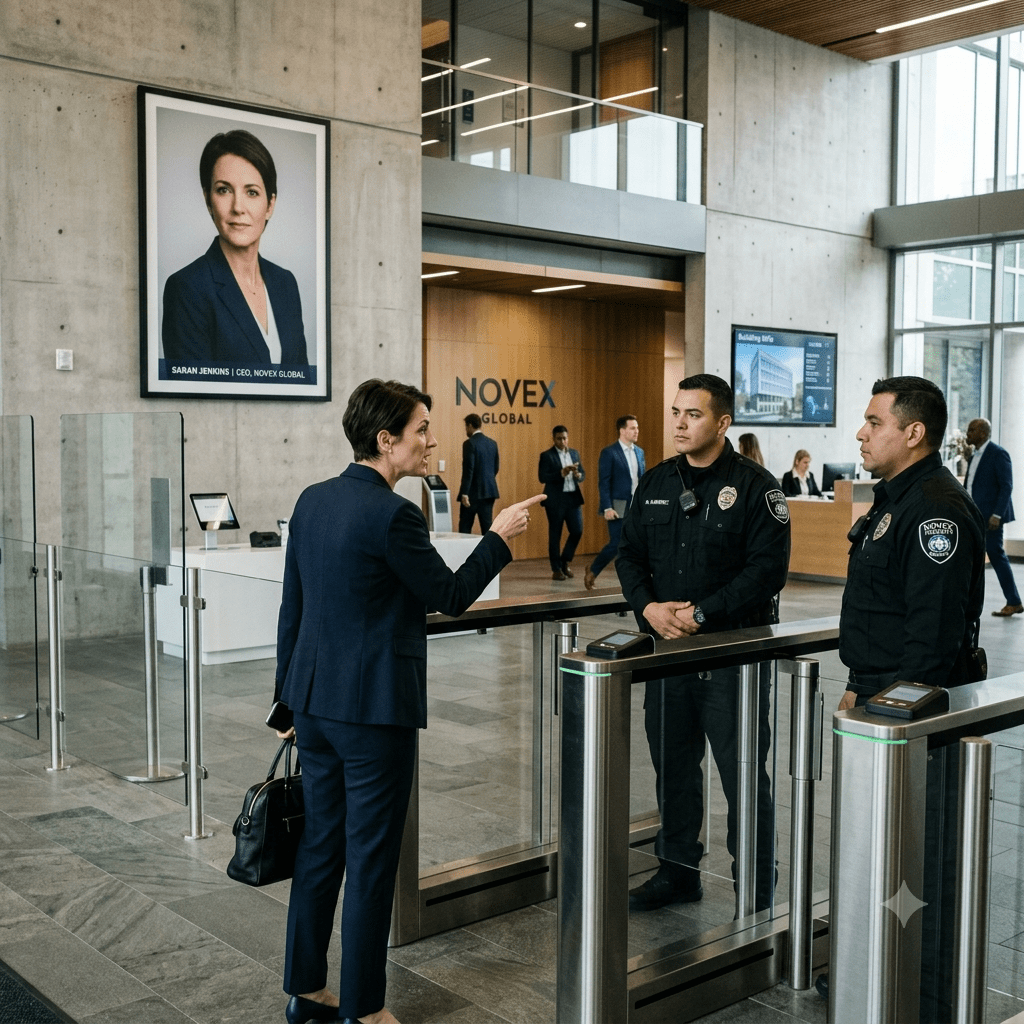
I’ve previously noted that too many identity/biometric companies use the same word—trust—in their marketing. Resulting in non-differentiated sameness and uniformity.
Even though the technical underpinnings behind the companies’ solutions have moved away from the ideas of firewalls, trusted networks, and trusted devices. In today’s mandated zero trust environment, everyone—including your chief engineer—must prove their rights to access information. Every. Time.
Zero trust is even stricter than the Reagan-era “Trust, but Verify.” Which is a 2026 cybersecurity expert’s worst nightmare.
And to truly embrace zero trust in both technological and business contexts, customers must demand that vendors prove themselves continuously.
Some customers don’t make such demands, but others do. I know of a national agency that had been with a vendor for years…and then decided that it was a good idea to learn what the other vendors were offering. After hearing the others, the customer let the original vendor (my then employer) make its own pitch. For a variety of reasons they switched vendors…but haven’t switched since.
If your customers insist on continuous trust evaluation, how can you as a vendor continuously re-earn that customer trust?

In music, modulation is the practice of shifting a song between keys. Direct modulation is a simple transfer from one key to another.
“Repeating a section of a song in a higher key.
“This has become a clichéd move in pop songs and there is nothing smooth about it. In fact, I’ve heard it referred to as the “truck driver’s gear change.” It can be powerful when used tastefully.”
Practitioners range from Broadway productions to Stevie Wonder to Pat Benatar to Barry Manilow, all of whom employ the technique to magnify the emotion of the song, by ending their songs up a major key. But none of them equal the effect of Orchestral Manoeuvres in the Dark’s “If You Leave,” which modulates…and modulates…and then some.
Count upon fellow Rose Bowl performer Martin Gore to create a (musically) perverse alternative—“Little 15,” which goes DOWN a key (at about the three minute mark).
While there are textual equivalents to musical modulation, such as initially adopting an overblown ridiculous tone and shifting to a more reasonable measured tone, I don’t have much occasion to use them in Bredemarket client writing. An analysis would be considered “less professional” if it suddenly changed tone part way through.
But I use them when I can.

There is one group that opposes anti-money laundering initiatives: money launderers. Are you one of them?
Of course not, you say. You’re not using someone’s money to buy arms for terrorists, or to buy massive supplies of fentanyl.
But what is money laundering? FinCEN:
“Money laundering involves disguising financial assets so they can be used without detection of the illegal activity that produced them.”
And that’s ANY illegal activity, not just the sexy stuff like bombs or drugs.
Let me get very personal. If Bredemarket receives income but I don’t report it on my taxes, that’s illegal.
But let’s look at H&R Block’s story of a firefighter:
“John Doe is a firefighter and works one 24-hour shift every fourth day. During his off hours, he has developed a lucrative plumbing side business….John deals in cash for most of his plumbing jobs, but sometimes he deposits plumbing income into a special savings account. From 2011 to 2013, John cleared about $35,000 a year, after expenses, from his side business.”
Except Doe kinda sorta forgot to declare this income or the separate bank account when filing his taxes.
“Little does John know, the IRS received a Form 1099-MISC reporting $1,100 that ABC Builders paid to John Doe. The IRS also received a Form 1099-INT for $10.61 in interest income on John’s special savings account from Central Bank.”
In H&R Block’s story, Doe serves jail time, has to pay back taxes, and as a convicted felon loses his firefighting job.
Admittedly Doe’s plumbing work is not in and of itself criminal, so this isn’t money laundering…unless Doe’s customers are drug dealers looking to spend their profits on plumbing work.
So…are you pro-money laundering?

“Sydney, Australia — 21 April 2026—Protecht Group (“Protecht”), an Australian based global leader in governance, risk and compliance (GRC) solutions, today announced the acquisition of VISO TRUST, a US-based third-party risk management platform powered by artificial intelligence (AI). “
Source:

When a Request for Proposal includes mandatory criteria, all bidders should meet them. If you don’t, you won’t win. (Usually.)
But what about a Request for Information?
In that case some latitude is possible. Tell the agency what you do, what you could do, and what you can’t or won’t do.
But if you can’t perform ANYTHING the RFI requests, no point in submitting a response.
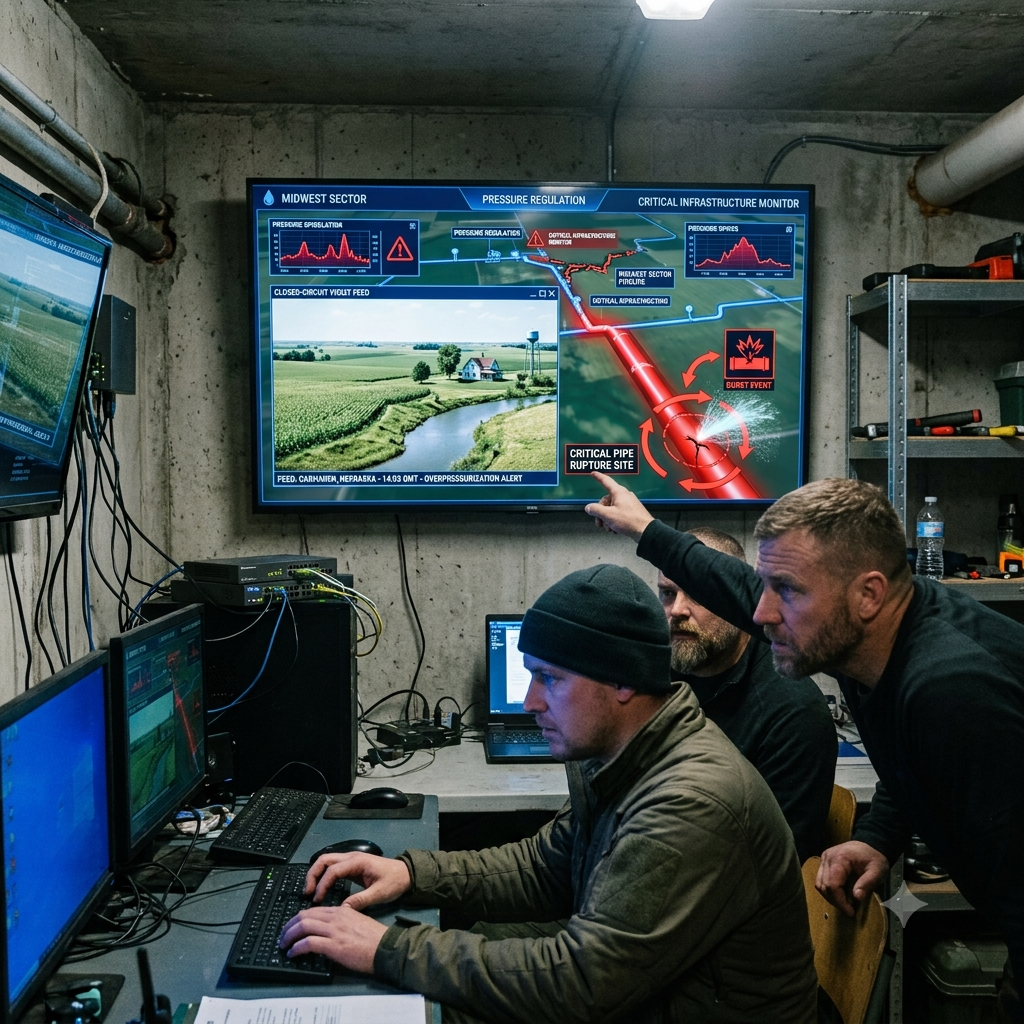
Here in the southwestern United States, water or the lack thereof may be so contentious that we blithely say that we have to fight for it.
Meanwhile, things happen.
“Water and wastewater utilities in at least seven states have now reported cybersecurity incidents involving Internet-facing programmable logic controllers (PLCs), according to the FBI and the Environmental Protection Agency (EPA)….Specific states were not named.”
But at least four incidents HAVE been explicitly named.
“Meanwhile, Minnesota officials announced this week that at least 30 community water systems across the state were hit with malicious cyber activity, and an investigation is ongoing there….
“Four Minnesota city water organizations publicly announced cyber incidents, but others are unidentified. Braham’s water plant went temporarily offline; Plymouth announced impacts to automated controls and cellular-connected equipment at water towers and lift stations; South St. Paul announced a cybersecurity incident on automated controls; and Maple Plain declared a temporary emergency.”
Now perhaps this is just a bunch of instances of kids messing around.
Or perhaps it’s something else.
“The authoring agencies urgently warn U.S. organizations of ongoing Iranian-affiliated cyber targeting of internet-connected operational technology (OT) devices, including programmable logic controllers (PLCs).”
Yes, Iran. You may recall that we are at war with them.
This brings these incidents into the realm of critical infrastructure. Among our 16 critical infrastructure sectors is the water and wastewater sector.
“In the United States, there are approximately 152,000 public drinking water systems, including 50,000 community water systems, and more than 16,000 wastewater treatment systems. Over 80 percent of the U.S. population receives their potable water from these drinking water systems, and about 75 percent have their sanitary sewerage treated by these wastewater systems.
“The Water and Wastewater Systems Sector is vulnerable to various threats, including physical attacks, cyberattacks, and contamination with harmful agents. Such incidents could result in widespread illness, casualties, and service disruptions, significantly impacting public health and economic stability.”
Messing up someone’s computer is bad enough. But messing up their glass of drinking water is devastating. And whether the damage is done by a state-sponsored terrorist or by Beavis, you want to prevent it from happening.

Even in rework, I ask, then I act.


The word “frenetic” is not one I use daily, but I used it in an image prompt.
And in a Lyria prompt for music to accompany the video of images.
You’ll see and hear the video Monday.
And perhaps I should use “frenetic” more often when warranted.


 Bredemarket