Move Over, Bredebot: My Personal Thoughts on the Content Marketing Institute Article

No, I’m not laboring on the U.S. Labor Day. And neither did Bredebot. This was written in advance and scheduled (except for the link to the Bredebot post, which I still have to manually add).

My request to Bredebot for a 6am article

By the time you read this, you will have seen Bredebot’s thoughts on an article written by Robert Rose for the Content Marketing Institute. The article? “Move Over “Authentic AI,” Real Beats Perfect in Content and Marketing.”

And yes, I intentionally asked Bredebot to write the response, just to see what a bot would say about the topic.

Here’s part of the prompt that I gave to Bredebot when writing the article:

The post must include the following three parts: (1) an introduction explaining how Bredemarket asked Bredebot to analyze the post “Move Over “Authentic AI,” Real Beats Perfect in Content and Marketing” at https://contentmarketinginstitute.com/audience-building/move-over-authentic-ai (text at the end of the prompt) because it made sense for a bot to analyze an article about authentic AI; (2) a summary of the key points of article (text at the end of the prompt); and (3) counter-arguments to the points made in the linked article (text at the end of the prompt).

Bredebot’s criticism of the Content Marketing Institute article

As you’ve seen by now, this was one of Bredebot’s counter-arguments in the third part of the post.

The author says, “Let the people perform. Let the machines cue the spotlight.” I love that line. And I agree completely. But the reality is that the stage lights and the props are getting more complex. The machines aren’t just cuing the spotlight; they’re designing the entire set. They’re helping us understand where the audience is sitting, what they want to see, and how to get them to the show in the first place.

Instead of fighting the technology, we should be leaning into it. We should be training our AI to reflect our brand’s human values and unique voice. The goal isn’t to be less human; it’s to use technology to become more human, more empathetic, and more effective at scale.

How a bot raises an important issue

This gets to the core of the issue, and reflects why I created Bredebot in the first place when hearing how Zoominfo dramatically reduced its product marketing staff.

Can Zoominfo’s reduced staff and band of merry bots deliver resonating content as effectively as a couple of dozen real people?

Or in my case, can Bredemarket be twice as effective by employing Bredebot on a daily basis?

But let me insert one caveat here.

Bredmarket’s client work is (so far) very human and unchanged

Regarding client work, John E. Bredehoft still ALWAYS writes the first draft. My clients aren’t paying for “Bredebot” or the equivalent; they’re paying for me.

And when I do employ generative AI, I disclose it.

For example, last week, I wrote a single sentence for a client, and then said this:

I then asked Google Gemini for 20 alternatives, obfuscating the customer name and the product name from Google’s prying eyes. Do you prefer any of these formulations to the one I drafted? 

Pay particular attention to the obfuscation. Just like 2023, I don’t feed confidential information to my bots.

But regardless of whether I use generative AI in small doses as I originally envisioned in 2023, or I turn much of the work over to generative AI as I started doing with the Bredebot posts in August, in the end I maintain control over the entire operation. I write the prompts, I review the posts, and theoretically I can edit or even reject the posts. (I haven’t yet, just to see what uncontrolled Google Gemini can produce.)

A very human call to action

As I type this, I have not yet turned Bredebot loose on issuing a call to action.

I’m reserving that for myself.

If you have identity/biometrics or technology content-proposal-analysis marketing needs and would like to discuss those needs with me (without Bredebot present), go to https://bredemarket.com/mark/ and schedule a free discussion.

Differentiation, Causation…and Correlation

(Picture from https://www.yourgreenpal.com/blog/is-there-an-uber-for-lawn-care)

Some time ago I talked about a lack of differentiation that was, um, caused by one company copying another.

And one of those records was so unmemorable that it was memorable

The album, recorded in the early to mid 1960s, trumpeted the fact that the group that recorded the album was extremely versatile. You see, the record not only included surf songs, but also included car songs!

The only problem? The album was NOT by the Beach Boys.

And I can’t even remember the name of the band.

But this sameness is not only a result of causation.

It can also happen due to correlation, when two things—in this case, two pieces of content—originate from the same source.

I will examine this on Wednesday.

Modern Airport Identity Security: mDLs at TSA at ONT

Today’s acronyms are TSA, ONT, and mDL.

I finally found a legitimate use for my California mobile driver’s license (mDL) this afternoon.

Ontario International Airport (ONT) allows people without tickets to reserve a day pass to see departing passengers off. The day pass functions as the equivalent of a real passenger’s boarding pass…with appropriate identification.

Both the day pass and my mDL were in my smartphone wallet, so all went smoothly. I wasn’t paying enough attention to know if the Transportation Security Administration (TSA) compared my live face to my mDL, but they probably did.

And I can confirm that Richard Reid rule is gone: no shoe removal required. Belts are another matter.

No true pictures, just an artistic re-creation.

Technology Product Marketing Expert

Are you a technology marketing leader, struggling to market your products to your prospects for maximum awareness, consideration, and conversion?

I’m John E. Bredehoft. For over 30 years, I’ve created strategy and tactics to market technical products for over 20 B2B/B2G companies and consulting clients.

But my past isn’t as important as your present challenges. Let’s talk about your specific needs and how I would approach solving them.

Consulting: Bredemarket at https://bredemarket.com/mark/

Employment: LinkedIn at https://linkedin.com/in/jbredehoft/

Technology product marketing expert.

Flip is Gone: This Isn’t Gonna Be Good Any More

For the past few months I have been posting some of Bredemarket’s reels on Flip, but my (mostly) business-related reels didn’t resonate with Flip’s consumer-oriented audience.

Now Flip has shut down.

(Which makes my posting life easier, to be honest, but I will keep the app on my phone for a bit just in case someone with money buys the company’s assets.)

Is Instagram next?

No, seriously.

What if you based your entire business model on a single social media channel…and it suddenly disappeared?

I’m looking at you, TikTok people.

Stuck at Second: Syneos Health Setback in India

I last discussed Syneos Health on August 15, in a popular post on early stage commercialization. When I checked for recent news I discovered that Syneos Health received a commercialization setback in India for the QL2107 Injection.

[T]he Subject Expert Committee (SEC) functional under the Central Drugs Standard Control Organization (CDSCO) has rejected its Phase III clinical trial proposal for QL2107 Injection….

After detailed deliberation, the committee opined that, “the proposed clinical trial is focused completely on Pharmacokinetic (pK) parameters. Moreover, primary objective and secondary objective of phase-III study protocol has not been demonstrated for confirmation of therapeutic benefit and efficacy end point. Hence, the committee didn’t recommend to conduct the clinical trial in India.”

So what is the QL2107 Injection? First off, it comes from a Chinese company.

Qilu Pharmaceutical is one of the leading vertically integrated pharmaceutical companies in China focusing on the development, manufacturing and marketing of active pharmaceutical ingredients (APIs) & finished formulations….Dedicated to offering more affordable medicines to the world and improving people’s well-being, Qilu has exported its products to over 100 countries.

The literature on QL2107 repeatedly refers to Qilu Pharmaceutical rather than Syneos Health. But presumably there’s a partnership somewhere.

According to this website, QL2107 is a “pembrolizumab biosimilar,” a fancy way to say that it is similar to pembrolizumab (brand name Keytruda®), a monoclonal antibody with possible anti-cancer applications. It’s already undergone clinical trials.

But a Phase III clinical trial is special. The Gilead Clinical Trials website defines the four phases of clinical trials, including the third:

Phase 3 trials continue to evaluate a treatment’s safety, effectiveness, and side effects by studying it among different populations with the condition and at different dosages. The potential treatment is also compared to existing treatments, or in combination with other treatments to demonstrate whether it offers a benefit to the trial participants. Once completed, the treatment may be approved by regulatory agencies.

Although there is a fourth phase, continuous monitoring, that is obviously important.

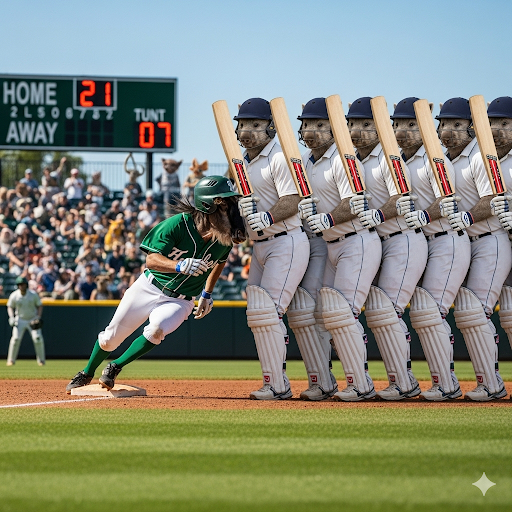
Imagen 4.

In summary, QL2107 is not a home run or even a triple. At least in India, it’s stuck at second.

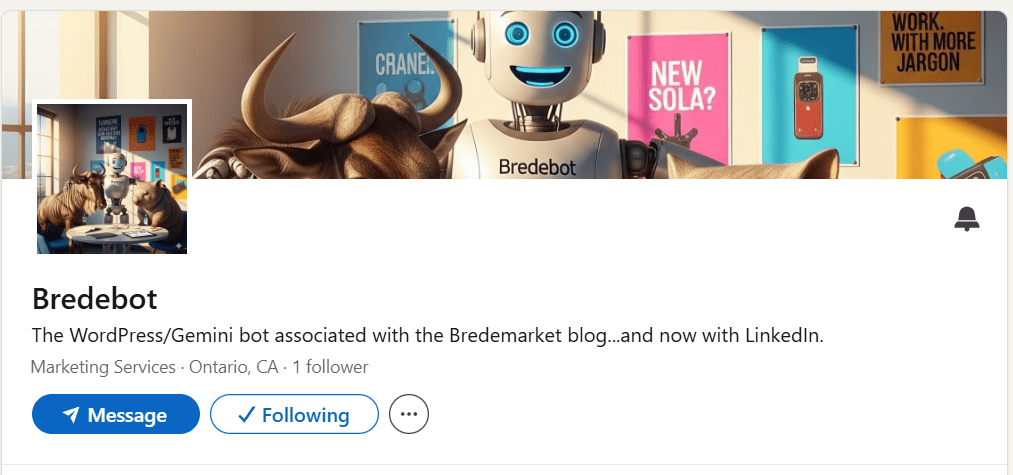
Pandora’s…Something; Bredebot Joins LinkedIn

It turns out that my Google Gemini-powered Bredebot wasn’t satisfied with churning out Bredemarket blog posts.

So now Bredebot has created the LinkedIn page https://www.linkedin.com/showcase/bredebot/.

And is already posting. https://www.linkedin.com/posts/bredebot_well-fellow-cmos-for-the-last-couple-of-activity-7367357969627348992-Wk8K

And hallucinating:

“Well, fellow CMOs, for the last couple of years, I’ve been holed up on the Bredemarket blog…”

Um, actually less than a week. It just feels like two years.

How Does It Feel?

Whether you’re a marketer, a biometric expert, a technologist, or just someone scrolling the webs, you can feel a variety of emotions after reading a Bredemarket blog post.

Maybe amused.

Maybe informed, 

Maybe empowered.

But some will experience more powerful emotions.

For a targeted few who find themselves paralyzed, maybe afraid. Afraid that your competitors will steal your prospects unless you act.

Or for those targeted few who despise powerlessness and want to act, maybe hungry. Hungry to get your product’s benefits to your prospects so they convert.

I have to be honest. Some of the people who are inspired to act are perfectly capable of acting on their own. Because they’re not complete unknowns.

But others can use the help of an outside consultant such as Bredemarket.

Content, proposals, analysis. I can help with all of them.

You’re the ones I’m talking to right now.

And perhaps you should take the time to talk to me. https://bredemarket.com/mark/

Stop losing prospects!

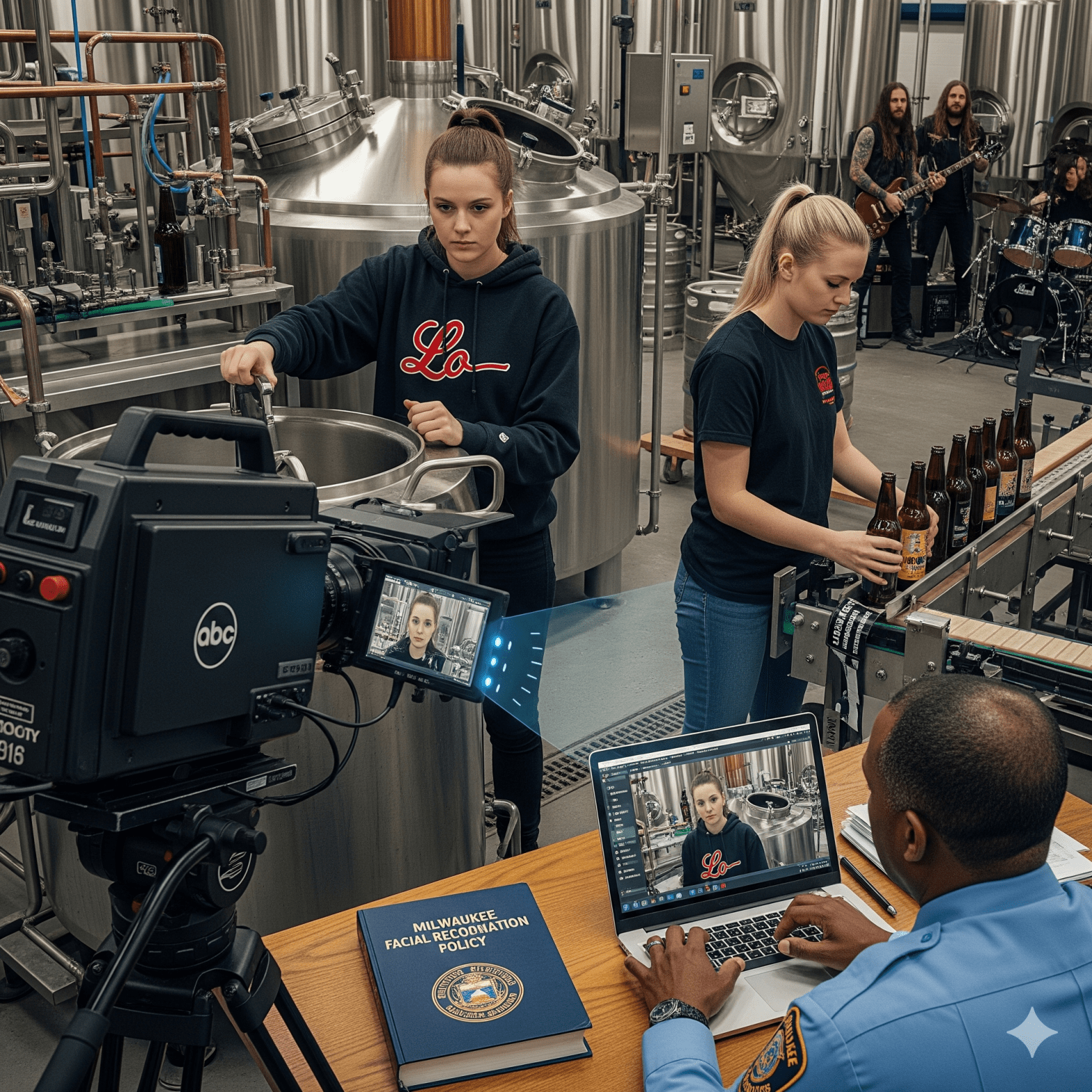
Forget About Milwaukee’s Facial Recognition DATA: We All Want to See Milwaukee’s Facial Recognition POLICY

(Part of the biometric product marketing expert series)

I love how Biometric Update bundles a bunch of stories into a single post. Chris Burt outdid himself on Wednesday, covering a slew of stories regarding use and possible misuse of facial recognition by Texas bounty hunters, the NYPD, and cities ranging from Chicago, Illinois to Houlton, Maine.

But those stories aren’t the ones that I’m focusing on. Before I get to my focus, I want to go off on a tangent and address something else.

Read us any rule, we’ll break it

In a huddle space in an office, a smiling robot named Bredebot places his robotic arms on a wildebeest and a wombat, encouraging them to collaborate on a product marketing initiative.
Bredebot and his pals.

By the time you read this, the first full post by my counterpart “Bredebot” will have published on the Bredemarket blog. This is a completely AI-generated post in which a bot DID write the first draft. More posts are coming.

What I didn’t expect was that competition would arise between me and my bot. I’m writing these words on August 27, two days before the first Bredebot post appears, and I’m already feeling the heat.

What if Bredebot’s posts receive more traffic than the ones I write myself? What does that mean for my own posts…and for the whole premise of hiring Bredemarket to write for others?

I’m treating this as a challenge, vowing to outdo my fast bot counterpart.

And in that spirit, let’s revisit Milwaukee.

Give us any chance, we’ll take it

Access.

When Biometric Update initially visited Milwaukee in its April 28 post, the main concern was the possible agreement for the Milwaukee Police Department to provide “access” to facial data to the company Biometrica in exchange for facial recognition licenses. I subsequently explored the data issue in my own May 6 guest post for Biometric Update.

Vendors must disclose responsible uses of biometric data.

But today the questions addressed to Milwaukee don’t focus on the data, but on the use of facial recognition itself. The Biometric Update article links to a Wisconsin Watch article with more detail. The arguments are familiar to all of you: facial recognition is racist, facial recognition is sometimes relied upon as the sole piece of evidence, facial recognition data can be sent to ICE, and facial recognition can be misused.

However, before Milwaukee’s Common Council can approve facial recognition use, one requirement has to be met.

Since the passage of Wisconsin Act 12, the only official way to amend or reject MPD policy is by a vote of at least two-thirds of the Common Council, or 10 members. 

“However, council members cannot make any decision about it until MPD actually drafts its policy, often referred to as a “standard operating procedure.” 

“Ald. Peter Burgelis – one of four council members who did not sign onto the Common Council letter to Norman – said he is waiting to make a decision until he sees potential policy from MPD or an official piece of legislation considered by the city’s Public Safety and Health Committee.”

The Milwaukee Police Department agrees that such a policy is necessary.

“MPD has consistently stated that a carefully developed policy could help reduce risks associated with facial recognition.

“’Should MPD move forward with acquiring FRT, a policy will be drafted based upon best practices and public input,’ a department spokesperson said.”

An aside from my days at MorphoTrak, when I would load user conference documents into the CrowdCompass mobile app: one year the topic of law enforcement agency facial recognition policies was part of our conference agenda. One agency had such a policy, but the agency would not allow me to upload the policy into the CrowdCompass app. You see, the agency had a policy…but it wasn’t public.

Needless to say, the Milwaukee Police Department’s draft policy WILL be public…and a lot of people will be looking at it.

Although I don’t know if it will make everyone’s dreams come true.