When Bredemarket begins an engagement with a client, I usually have no idea what processes, templates, or practices the client already has. So I have to handle whatever is or is not there and either understand what is there, adapt it, or create what is needed.
Understand
In some cases clients already have a process.
For example, as I delved into the Sharepoint library for one of Bredemarket’s clients, I found a complete set of branding guidelines that covered logos, colors, and many other aspects of the company’s branding.
In that case, my job is to simply make sure that I align with the client’s branding, and that my content, proposals, and analysis work for the client aligns with the branding guidelines…or with whatever other process the client has.
Adapt
Sometimes the client has a process, but it needs to be adapted in some way.
Here’s an example I can publicly share: not from a Bredemarket client, but from my former employer Motorola (back when Motorola was one company). I was a product manager at the time, and products were developed via a “stage gate” process. At Motorola, of course, it was called M-Gates.
Our “Printrak” group (automated fingerprint identification systems, computer aided dispatch systems, and the like) was the odd group out in our part of Motorola (the part that would later become Motorola Solutions). Most of the people in that part of Motorola sold police radios that were manufactured in bulk. Therefore the stage gate process included a step for a limited production run of police radios before moving to full production.
That didn’t apply for the software we sold to government systems. For example, the entire production run for the Omnitrak 8.1 release was no more than a half dozen systems for customers in Switzerland, Oklahoma, and other places. A limited production run wouldn’t make sense.
So OUR stage gate process eliminated that step and went straight to full production.
Create
And then there are the clients who don’t have anything. In these cases, my invention hat goes on.
For one Bredemarket client, I was asked to develop several pieces of collateral, such as (ironically) one on process maturity, and several random pieces of content tied to a product release.
I decided to approach it more systematically by introducing a simple go-to-market process that defined the external and internal collateral required for a “high” tier product release and a “low” tier product release. Resisting my urge to define something thorough, I simplified the GTM process as much as possible, while still providing guidance on what a product release should contain.
The client rejected the idea: “we don’t need no steenking process.”
Not surprisingly, the process maturity content was never released either.
I’ve had better luck with other Bredemarket clients, defining go-to-market, proposal, and other processes for them as needed.
Be Prepared
Providing product marketing expertise is much more than writing about a product.
Before I write a word of text, I ensure that the content aligns with the client’s strategies…or my own strategies if the client doesn’t have any.
Many years ago I was driving on Holt Boulevard in Montclair, California, preparing to make a left turn on Central. I followed the vehicle behind me and made my left turn…only then noticing that the left turn light was now red.
As the registered owner of the vehicle I was driving, I received an email from the city of Montclair a few days later. Because this is when Montclair was using cameras for traffic enforcement.
Off to traffic school.
Montclair doesn’t use traffic cameras any more, but all sorts of cameras are owned by, or accessible to, law enforcement agencies.
But how should they be used?
404 Media reported that the Georgia State Patrol accesses Flock cameras, for the intended purpose of gathering information for serious crimes. But what happens when the camera captures something not serious?
“Georgia State Patrol used its system of Flock automated license plate reader (ALPR) surveillance cameras to issue a ticket to a motorcyclist who was allegedly looking at his cell phone while riding, according to a copy of the citation obtained by 404 Media….The incident happened December 26 in Coffee County, Georgia. The ticket lists the offense as ‘Holding/supporting wireless telecommunications device,’ and includes the note ‘CAPTURED ON FLOCK CAMERA 31 MM 1 HOLDING PHONE IN LEFT HAND.’”
The man went to court and the ticket was dropped, but 404 Media is still outraged that the ticket was issued in the first place. Not because of Georgia’s policies, but because of other policies.
“Many police departments go out of their way to tell community members that Flock cameras are not used for traffic enforcement. For example, the City of Glenwood Springs, Colorado, states in a FAQ that “GSPD [Glenwood Springs Police Department] does not use Flock cameras for traffic enforcement, parking enforcement, or minor code violations.” El Paso, Texas, tells residents “these are not traffic enforcement cameras. They do not issue tickets, do not monitor speed, and do not generate revenue. They are investigative tools used after crimes occur.” Lynwood, Washington tells residents “these cameras will not be used for traffic infractions, immigration enforcement, or monitoring First Amendment-protected expressive activity” (Flock cameras have now been used for all of these purposes, as we have reported.)”
You will recall that I addressed another Flock Safety case, in which a citizen made public records requests from two Washington state jurisdictions. The jurisdictions said that they didn’t have the data; Flock Safety did. Flock Safety said that it had deleted the data.
Basically, Flock Safety is controversial, and some people are going to oppose ANYTHING they do. Even when Flock Safety technology protects people from dangerous drivers.
My view is that if a camera is used by a law enforcement agency, and there is no law prohibiting the law enforcement agency from using a camera for a particular purpose, then the agency can use the camera. There appears to be no such law in Georgia, so I’m not bent out of shape over this.
What are your thoughts? Is this a privacy violation?
“Within the space of a single week, nearly every major identity vendor announced or shipped a platform specifically designed to govern AI agents. The timing was not coordinated. It was convergent.”
A little more detail, courtesy EU Brussels, regarding the policy brief published by the EU Innovation Hub for Internal Security, coordinated by eu-LISA together with the European Commission, Europol and Frontex.
As I noted earlier today, one proposal is for Europe to perform its own independent biometric testing, reducing Europe’s dependence on the American National Institute of Standards and Technology (NIST).
“The second is a centralised evaluation and testing platform connected to that repository, allowing standardised, independent and continuous assessment of biometric technologies, including benchmarking across vendors.”
But if there is a second proposal (European testing) in the cited European biometric policy brief, there must also be a first proposal—one I failed to discuss this morning.
“The first is a common EU biometric data repository containing datasets that comply with European rules, reflect the demographics and use-cases relevant to EU authorities and are stored in a secure environment.”
Makes sense. If you are going to test you need test data. And NIST has no obligation to ensure its test data complies with the General Data Protection Regulation (GDPR). The subjects in NIST test databases rarely provided the “explicit consent” mentioned in GDPR, and the “right to erasure” from a NIST database is…laughable.
Yes, it’s extremely challenging to construct a testing database that complies with GDPR.
And NIST certainly ain’t gonna do it.
Will a European entity construct it?
And if the right to erasure is maintained, how will you maintain historical consistency of test results?
I intentionally waited two days to write this. Let’s pick up the story from Monday.
Monday afternoon
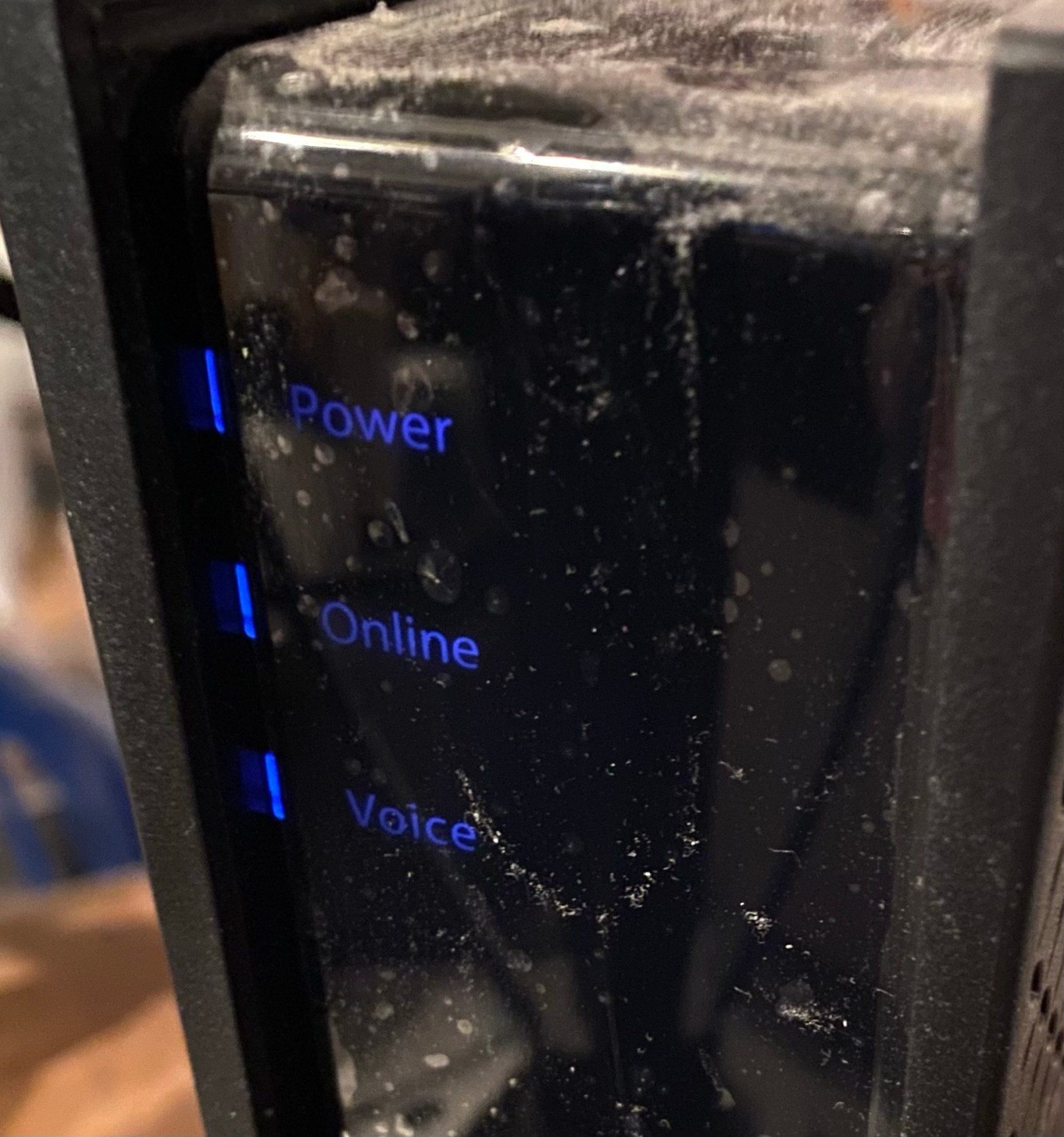
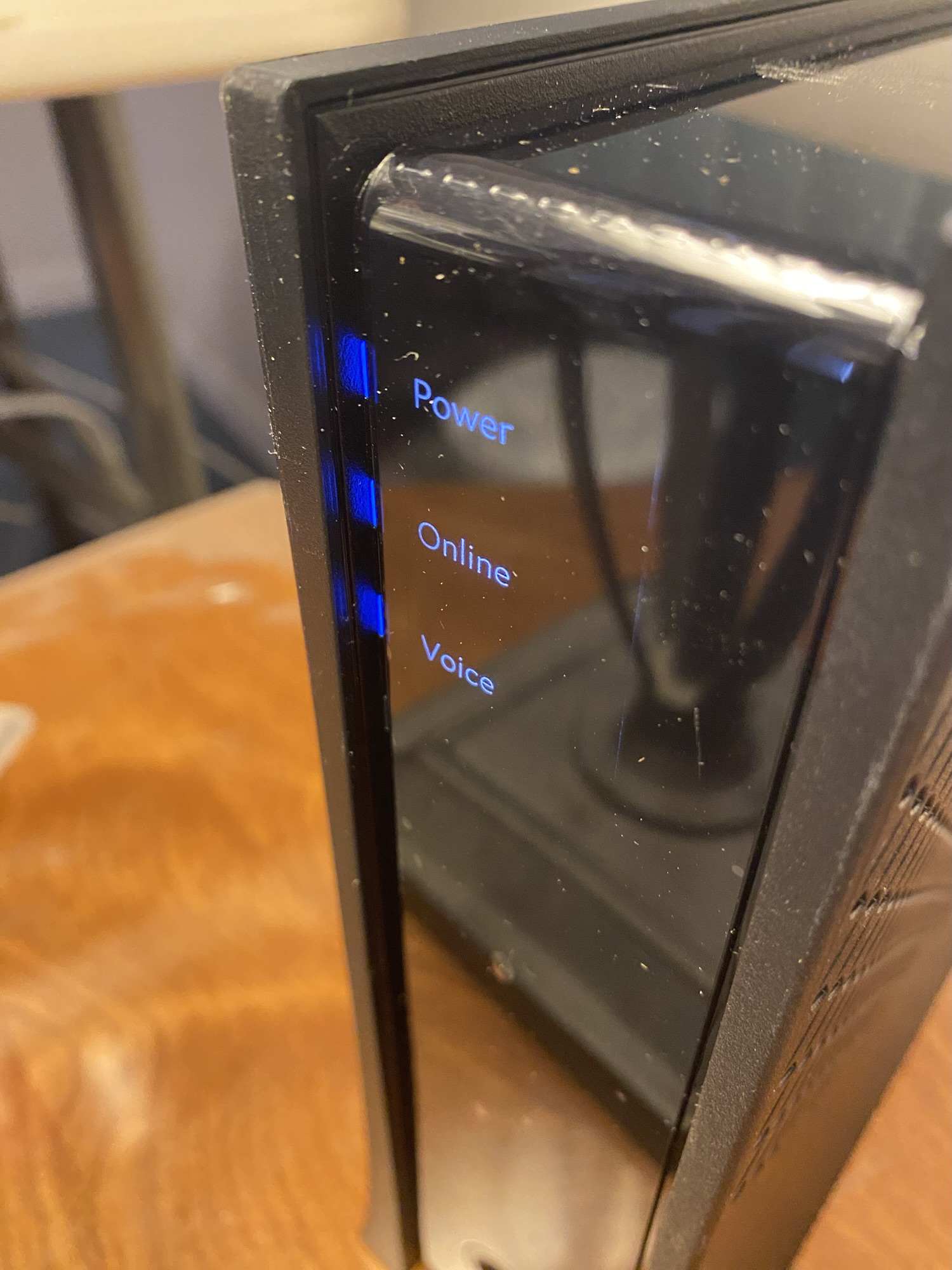
The second technician arrived at my house and ended up replacing ALL the cabling between the utility pole and the (new) modem. Among other issues, there was water in the cable. And I don’t need to be a coaxial product marketing expert to know that water in a cable is not a good thing.
Oh yeah: coaxial. Because my internet network is NOT a fiber network. It’s a hybrid network that starts as fiber, but then becomes coaxial for “the last mile.”
And this is relevant, because even after he re-cabled everything, he said there was an amplifier issue down the street. If I had been on fiber, there would be no need for a nearby amplifier.
And no, he wasn’t talking about a Spinal Tap amplifier.
I prompted Google Gemini for an explanation of network amplifiers, but I’m not going to reprint it here. Suffice it to say that the ISP needed to perform some work, but it wasn’t customer-facing work, was apparently super-secret work, and I would never be informed when the work was done. I was then told that if I still had problems on Friday (4 days later) NOT to contact the ISP’s regular support line, but to instead call his boss directly.
The tech restarted the modem at 2:55 pm.
He left at 3:13 pm.
My wi-fi went down at 3:29 pm.
Tuesday
It had been a week since my wi-fi started failing, And since the second technician had left on Monday afternoon, the wi-fi hadn’t stayed up for more than 45 minutes at a time. I finally gave up trying.
Then I disobeyed instructions.
Early Tuesday morning I texted “the boss.” No answer.
Then I called the boss. No answer.
By early afternoon I contacted my ISP, but not for customer support. I called the “Retention Department.” Yeah, the department that you call to cancel your service.
The man I spoke to had no visibility into the scheduling of our local amplifier repair, but he promised someone would call me back within the hour.
A woman called me 20 minutes later. She had no visibility into the super-secret amplifier repair schedule either.
She asked if the second technician had reported the issue to maintenance or construction. I didn’t know. Turns out this is critical information; if construction had to get involved, city permits would be required before construction could even begin. Who knows how long that would take.
But she had a solution.
Send a third technician out.
Have the third technician tell me whether they would report the issue to maintenance or construction.
If it was maintenance, then the super-secret group would perform maintenance. Maybe by Friday. Maybe later.
I kept my mouth shut, but this sounded like a colossal waste of time. As you will see, it wasn’t.
After I got off the phone I made a decision. Since this problem was going to persist until the ISP fixed it—or I got a new ISP—I was going to have to work around it. So I set up a TV table in front of the love seat next to the modem, then moved my laptop to the TV table. That way if my laptop lost wi-fi I could immediately restart the modem, and hopefully my laptop soul reconnect to wi-fi and I wouldn’t lose anything.
So here’s how THAT worked out:
Tuesday afternoon 2:01 pm: Set up laptop near the modem.
2:21 pm: I lost wi-fi while submitting an online form.
2:26 pm: After a modem restart, successfully submitted the online form.
2:44 pm: I lost wi-fi while in mail.
2:50 pm: After a modem restart, I refreshed my mail tab and everything appeared.
5:30 pm: By this point I had enjoyed uninterrupted wi-fi for over two hours. I had stopped working on my laptop and was writing a Bredemarket blog post on my phone (like I am doing right now).
5:50 pm: I lost wi-fi and restarted the modem.
6:03 pm: There was an election in the city of Ontario that day, so I left the house to vote.
6:30 pm: By the time I returned, the wi-fi was down.
A pain, but I could limp along. But by that time I was done working for the night.
Me for several days. Google Gemini.
Wednesday morning
After a few modem restarts during the night, I restarted it at 7:11 am and started working at 7:29. (Incidentally, I highly recommend Toggl Track.)
I got a lot of work done until 10:00 am, when I lost wi-fi while working on a file in OneDrive.
I restarted the modem and made sure OneDrive synced, then worked merrily along until losing wi-fi at 10:22 while working on a Bredemarket client PowerPoint.
I lost wi-fi again at 10:28.
And 11:09.
And 11:26.
But by that time the third technician was on his way.
Wednesday afternoon
I was under the impression that the third technician would climb the utility pole, check the signal-to-noise ratio issue on the amplifier (but he called it a node rather than an amplifier), and go from there.
But that isn’t what he did. He brought his test equipment into the house and started running the (new) modem and (new) router signals through the test equipment.
But he had some news for me.
“The node has improved already, so someone has been here.”
So the super-secret people had completed their mission. Now what?
The technician kept testing. 20 minutes later:
“Coax looking good.”
He was mostly testing in the house, but also testing in the backyard and running to his truck. Ten minutes later:
“The signal’s good.”
Eventually I noticed that he had grabbed a new modem from his truck, but I assumed it was only for testing.
By 12:59 he had to leave for his state-mandated lunch break, but before he left he restarted the modem one more time. He said he’d check it when he returned from lunch.
So I ate lunch myself, although Bredemarket is not subject to state work break requirements.
When he returned at 2 the wi-fi was still up. That’s when he told me that he HAD replaced my new modem (which the ISP store gave me a week ago) with an even newer modem (from his truck). Apparently the connection from the utility pole to the coax cable end was fine, and the connection from the Ethernet cable end to the router was fine, but the new modem itself had issues that the even newer modem didn’t have.
He left, and the wi-fi went down…
…actually it didn’t. As I write this I have enjoyed wi-fi for over 50 hours without interruption.
I even moved my laptop back to the Bredemarket world headquarters.
And if you’ve read all the way to the end of this post, this is actually the SHORT version. Trust me.
The really short version
My summary of what happened between Tuesday March 17 and Wednesday March 25 between two ISP store visits, three technician visits, and countless support chats and calls:
2 modem replacements 3/18 (new modem), 3/25 (even newer modem).
1 router replacement 3/20 (not counting my second Google router 3/19).
2 cable replacements 3/23 (black cable from pole to southeast corner of house, white cable from there to modem in northeast corner of house).
1 apparent node fix (date unknown, maybe 3/24 or 3/25) to fix signal to noise ratio SNR issue.
And yes, this started with a modem replacement and ended (hopefully) with a modem re-replacement.
“[Product marketers are] told to be data-led, technical, commercial, and customer-obsessed—all while moving at lightning speed. Someone in your company likely thinks you own everything from win rates and pipeline to product roadmaps and internal comms. But the best PMMs don’t try to be everything for everyone.”
However, it’s tough to maintain focus when prospects, or employers, are looking for ways to save money.
Once I applied for a product marketing position in which the job description talked solely about product marketing.
The interview went fine…for the first five minutes.
Then the interviewer asked about my experience in leading demand generation programs, and my experience in leading analyst relations programs.
While I’ve contributed to such programs at Motorola, Incode, and some of my Bredemarket clients, I’ve never actually led these programs.
The interview ended five minutes later.
(Incidentally, if the job description had actually stated that experience running demand generation and analyst relations was required, the interviewer would have saved a lot of time. Me also.)
So no, Bredemarket won’t run your account-based marketing (ABM) program to market your products…but I’ll ensure you have the customer-focused benefit statements to ensure ABM success.
After all, I know what to ask.
I ask, then I act.
So if Bredemarket can help you with product-focused strategy and content for demand generation, account-based marketing, or analyst relations, talk to me.
I’ve seen twoarticles about a possible move by Europe to set up a Europe-wide biometric testing agency, bypassing the need for National Institute of Standards and Technology (NIST) biometric testing.
One reason is that a European-controlled testing methodology can incorporate European regulations, such as the General Data Protection Regulation (GDPR).
A second related reason for Europe to bypass NIST biometric testing is that U.S. government agencies, including NIST and the Federal Bureau of Investigation (FBI), naturally place prime importance on American interests.
Remember when the U.S. House of Representatives Select Committee on the Chinese Communist Party complained that the FBI Certified Products List contained Chinese biometric vendors (the Certified Communist Products List)?
Wait until they discover all the Chinese companies that participate in NIST testing.
And wait until someone in the legislative or executive branches decides that the FBI or NIST shouldn’t list products from other countries deemed unfriendly to the United States. Denmark? Germany? France?
For these reasons, Europe may be compelled to set up its own biometric testing organization.










 Bredemarket