
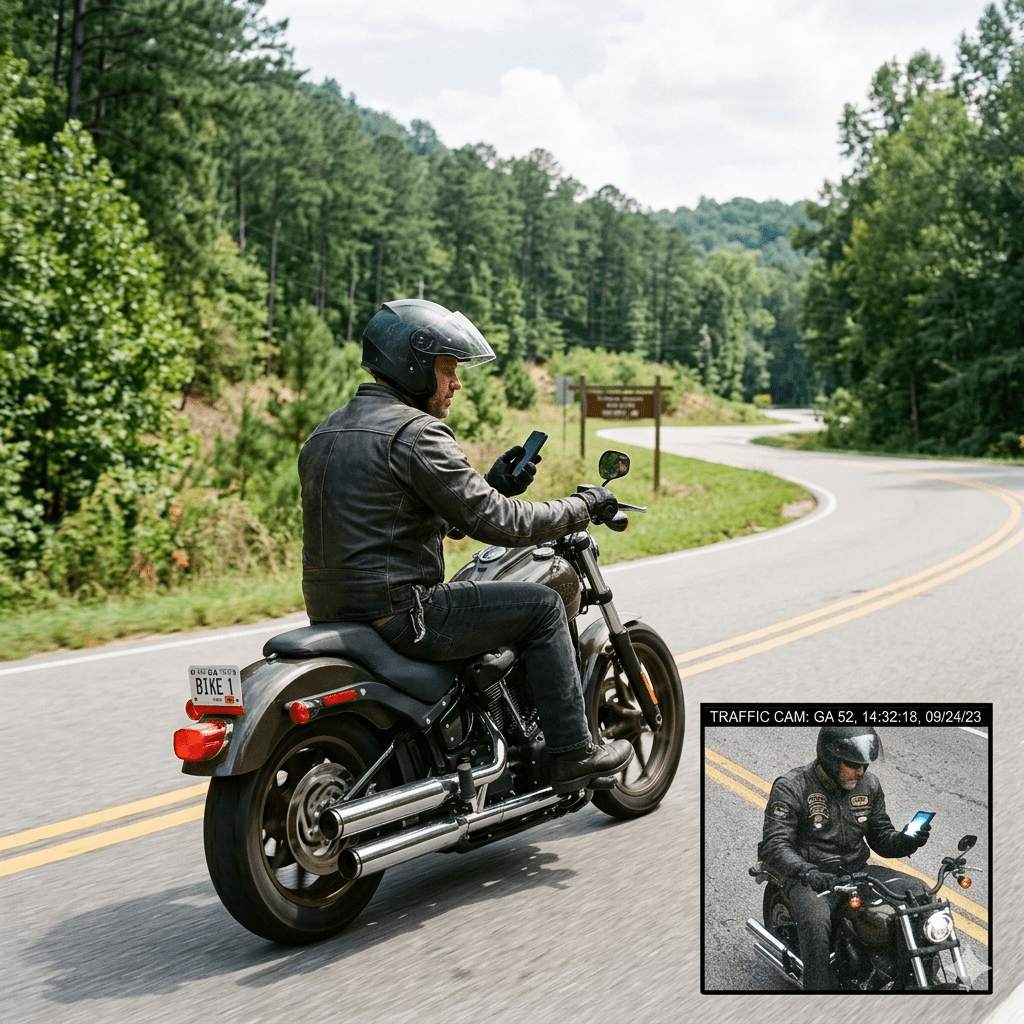
Here’s another instance where I take an old post and completely contradict it. Flying against the flock, as it were.
But before I launch into the topic of this post, I want to share a video that Daniel Solove originally shared. The video was originally created by Apple to emphasize the privacy features of its Safari browser. Just the Safari browser, not anything else like, say, where your car is.
The title of the video just coincidentally happens to be “Flock.”
And now for something completely different.
When is a Law Enforcement Camera a Law Enforcement Camera?
You may remember my March post “When is a Law Enforcement Camera a Law Enforcement Camera?” The post concluded as follows:
“Basically, Flock Safety is controversial, and some people are going to oppose ANYTHING they do. Even when Flock Safety technology protects people from dangerous drivers.
“My view is that if a camera is used by a law enforcement agency, and there is no law prohibiting the law enforcement agency from using a camera for a particular purpose, then the agency can use the camera. There appears to be no such law in Georgia, so I’m not bent out of shape over this.
“What are your thoughts? Is this a privacy violation?”
Comments, we get comments
I received a comment on the March post that felt my “particular purpose” comment ignored the fact that the cameras can be used for other purposes…and ARE being used for other purposes. Without a search warrant. Here are a few excerpts from the comment:
“Every single one of these cameras takes images of every vehicle passing by on public roadways, even ones that are not owned or driven by a suspected criminal or the vehicle itself being suspected of being involved any crime. From there the images are processed by AI software logging the vehicles description and license plate number, along with the location of every one of the cameras that captured the same vehicle passing by along with a date and time of each passing, then that data is logged into a searchable database that can be searched by law enforcement up to 30 days (less or more in some places) without needing a search warrant signed by a judge….They can just search for anyone’s vehicles data regardless if there’s probable cause or not to do so.
“Law enforcement require a warrant prior to putting a GPS on someone’s vehicle, they are required to get a warrant before getting a persons cell phone ping and gps data from a mobile phone service company, but these systems are trying to be a loophole and pass any warrant requirements but provide the same type of private data that the other techniques require a search warrant for.”
The only comment I’ll offer is that it’s wise to make a distinction between how the cameras should be used and how the cameras are potentially used. Assuming that a law enforcement officer can search the database without a warrant, I believe that the officer should have probable cause to do so. The officer should not use a Flock database to stalk a romantic interest.
“In March, for instance, an officer resigned from the Milwaukee Police Department after allegedly using the department’s network of ALPRs to track his romantic partner and one of the partner’s exes nearly 180 times over a two-month period. His misconduct surfaced only after his victims looked up their license plate numbers on HaveIBeenFlocked.com, which collects Flock audit data that some local governments have made publicly available. MPD subsequently revoked most officers’ access to the Flock database.”
And so I ask you, again. What are your thoughts? Is this a privacy violation?
And if you need help writing about privacy…
I know a guy.
 Bredemarket