“It’s OK. The competitor isn’t talking, so we can say anything we want.”
But what if “the competitor”…is YOU?
Get in the content conversation: https://bredemarket.com/cpa/
(Imagen 3)

Identity/biometrics/technology marketing and writing services

“It’s OK. The competitor isn’t talking, so we can say anything we want.”
But what if “the competitor”…is YOU?
Get in the content conversation: https://bredemarket.com/cpa/
(Imagen 3)
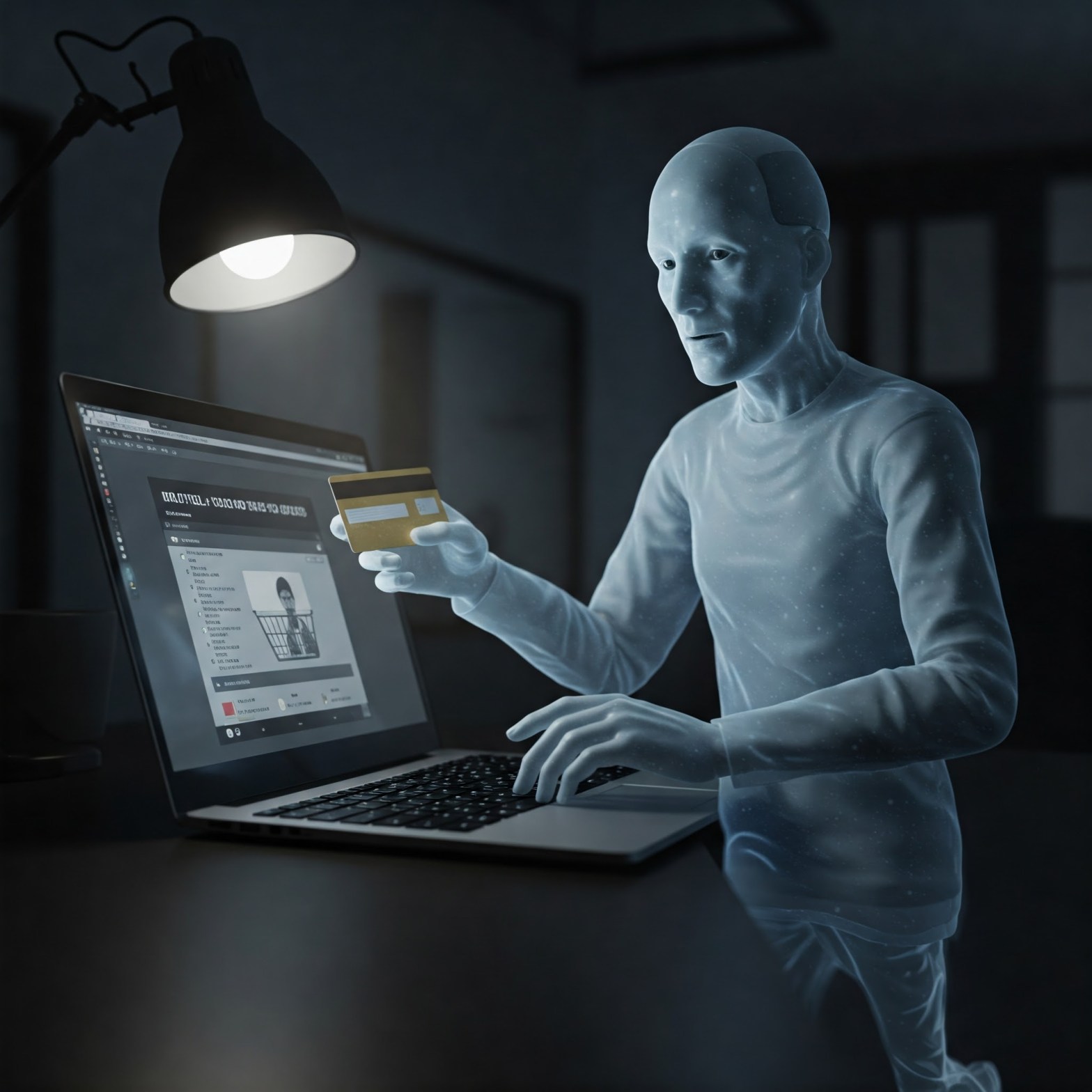
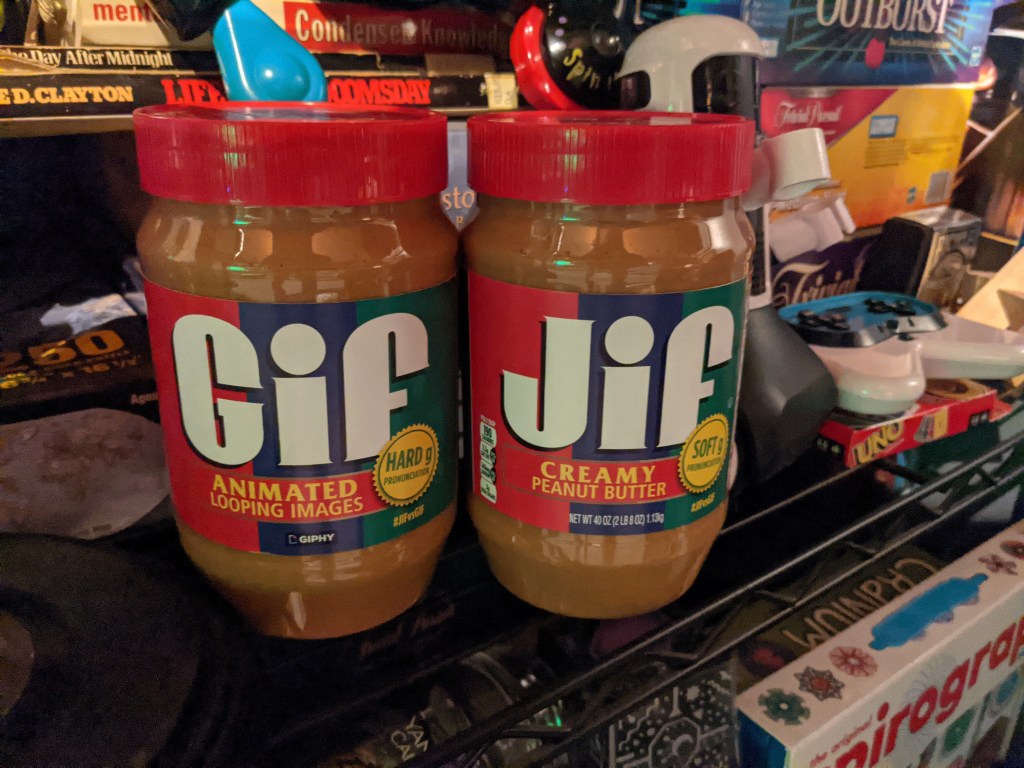
Identity firms really hope that prospects understand the threat posed by synthetic identity fraud, or SIF.
I’m here to help.
(Synthetic identity AI image from Imagen 3.)
In an early synthetic identity fraud post in 2020, I referenced a Thomson Reuters (not Thomas Reuters) article from that year which quoted synthetic identity fraud figures all over the map.
Oh, and a later post that I wrote quoted a $20 billion figure for synthetic identity fraud losses in 2020. Plus this is where I learned the cool acronym “SIF” to refer to synthetic identity fraud. As far as I know, there is no government agency with the acronym SIF, which would of course cause confusion. (There was a Social Innovation Fund, but that may no longer exist in 2025.)
Back to synthetic identity fraud, which reportedly resulted in between $6 billion and $20 billion in losses in 2020.
But that was 2020.
What about now? Let’s visit Socure again:
The financial toll of AI-driven fraud is staggering, with projected global losses reaching $40 billion by 2027 up from US12.3 billion in 2023 (CAGR 32%)., driven by sophisticated fraud techniques and automation, such as synthetic identities created with AI tools.
Again this includes non-synthetic fraud, but it’s a good number for the high end. While my FTC fraud post didn’t break out synthetic identity fraud figures, Plaid cited a 2023 $1.8 billion figure for the auto industry alone, and Mastercard cited a $5 billion figure.
But everyone agrees on a figure of billions and billions.
(I had to stop writing this post for a minute because I received a phone call from “JP Morgan Chase,” but the person didn’t know who they were talking to, merely asking for the owner of the phone number. Back to fraud.)
In a 2023 post, I cataloged four ways to fight synthetic identity fraud:
Ideally an identity verification solution should use multiple methods, and not just one. It doesn’t do you any good to forge a driver’s license if AAMVA doesn’t know about the license in any state or provincial database.
And if you need an identity content marketing expert to communicate how your firm fights synthetic identities, Bredemarket can help with its content-proposal-analysis services.


So a Bredemarket prospect requested samples of my internal and external sales enablement content, so they could evaluate my writing style.
There were only two problems with the request.
But I provided external samples of what I do anyway: two client short data sheets, three client long data sheets, three Bredemarket data sheets, two client landing pages, one Bredemarket landing page, and two other samples.
So I will share one of the landing pages with you, but not a client one. This is one of mine, for Bredemarket’s identity/biometric prospects.
I’ve talked about differentiation ad nauseam, and even created a video about it last spring.
And I’ve provided some examples of lack of differentiation from my own industry:
This isn’t effective. Trust me.
But prospective customers aren’t the only ones who are turned off by “me-too” messaging.
What about prospective employees who don’t want to apply to your company because they see no compelling reason to do so?
I’ll grant that the tech job market is so out of balance right now that people are applying to ANYTHING.
But the more choosy ones are…more choosy in their applications. Just like choosy mothers choose…you know.
I recently received this message from a product marketer after I shared a particular identity/biometric job description with them.
Not so sure that company is well positioned for evolving identity landscape.
From a selfish perspective, this benefits me, because I DID apply for this position while they DIDN’T. Reducing the competition increases my chances of getting the job.
But the company (which I’m not naming) doesn’t benefit, because at least one experienced identity verification product marketer doesn’t want to work for them.
So be sure to differentiate…as long as the differentiation resonates with your hungry people (target audience). If your audience is repelled by your differentiation, then that’s a problem with your customer focus.

Now Bredemarket can’t help you with your job search, because I’m certainly not an expert in that. But I can ask you questions that help you create content that conveys that your product is great and your competitors’ products…are not so good.
Visit Bredemarket’s “CPA” page to learn how I can help your firm’s content (and analysis, and proposals), and to schedule a meeting.
KYC stands for Know Your Customer.
So I guess KYI stands for Know Your InMailer.
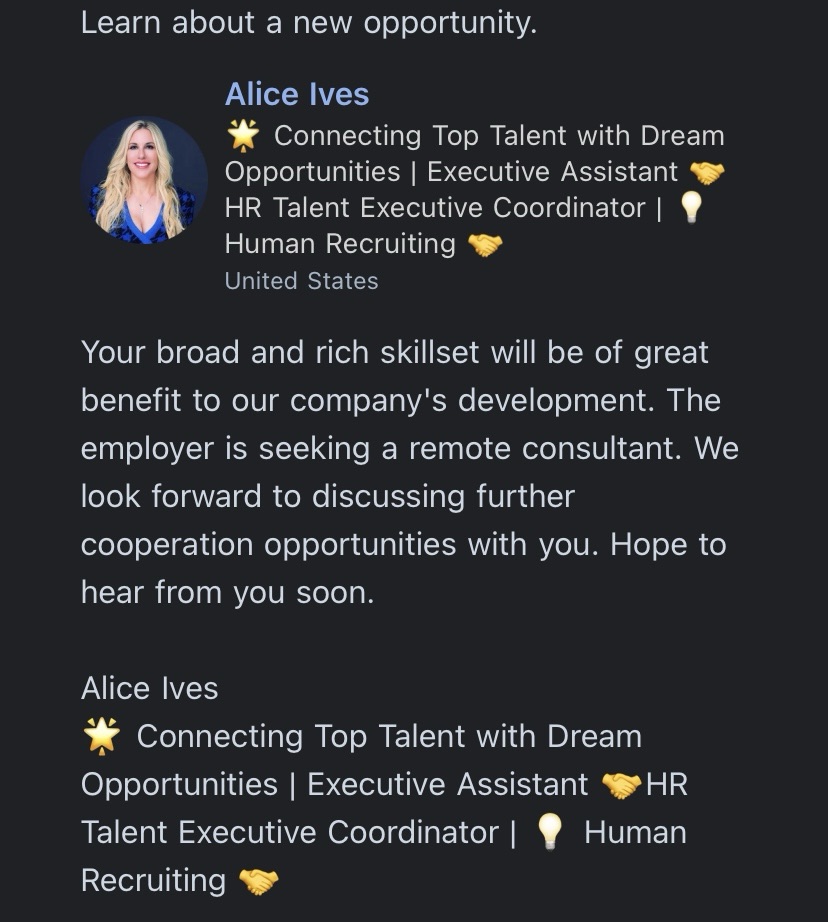
This afternoon I received an email and a LinkedIn InMail from “Alice Ives,” purportedly with Maharah according to her profile. She wanted to tell me about an opportunity.
“Your broad and rich skillset will be of great benefit to our company’s development. The employer is seeking a remote consultant. We look forward to discussing further cooperation opportunities with you. Hope to hear from you soon.”
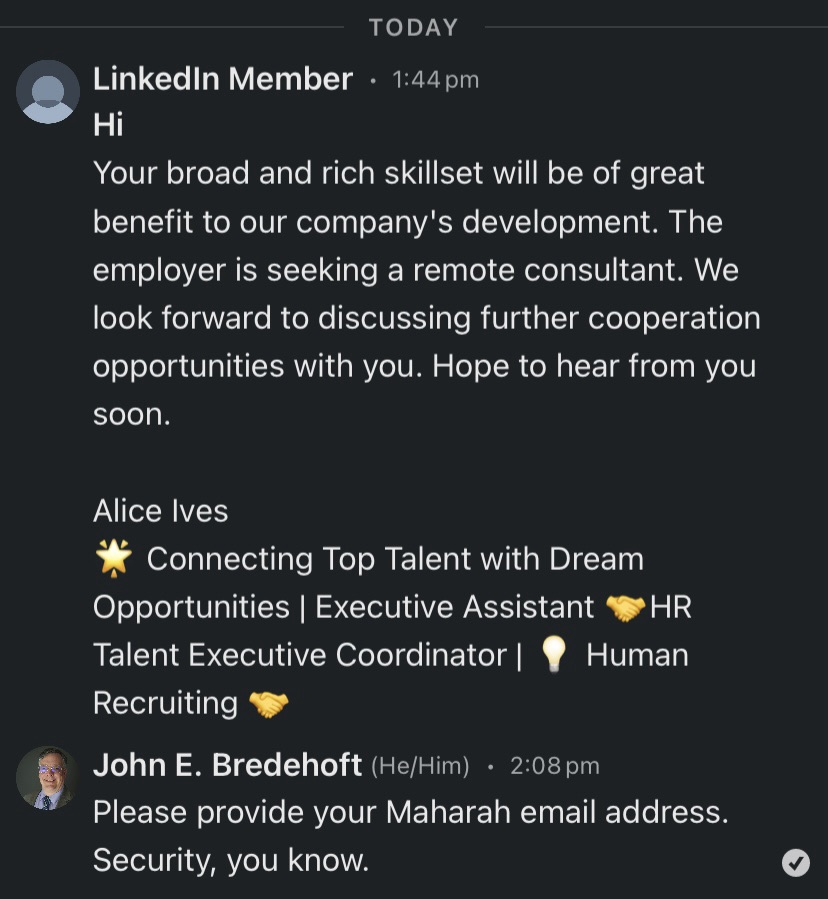
But when I asked for her Maharah email address she didn’t respond, and her profile became invisible to me. I don’t know if “Alice” deleted her profile, if she blocked me, or if LinkedIn removed her.
Of course in the real world outside of social media, Know Your Customer procedures can be rigorous, encompassing government-issued identity documents, biometrics and liveness detection, information from public and private databases worldwide, and even geolocation.
But from what I recall before Alice’s profile disappeared, her claimed geolocation was “United States.” Just one possible indicator of fakery.
Did you spot the others?
For better or worse, I write my own content. If I’m going to write yours, then I should write mine.
So I’m always amused when I receive pitches to write for the Bredemarket blog. Invariably these pitches do NOT mention:

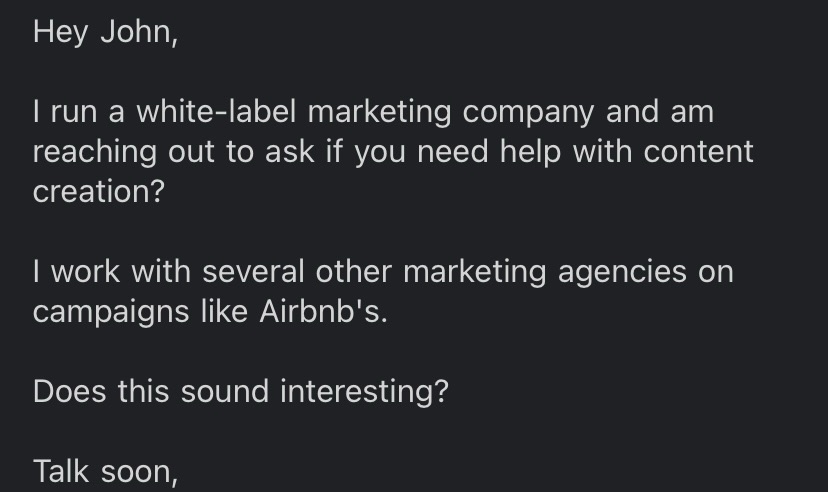
But a recent pitch excelled in its, um, genericism. Here’s the relevant part:
I run a white-label marketing company and am reaching out to ask if you need help with content creation? I work with several other marketing agencies on campaigns like Airbnb’s.
I’m not sure how Bredemarket relates to Airbnb, but it really doesn’t matter because they have worked on campaigns LIKE Airbnb. So I do not know what they’ve done. (Although ghostwriters have this problem.)
I recently sent out a mailing that was hopefully much more targeted. I knew my hungry people (target audience), so even though it was a mass mailing (OK, not “mass”), it was relevant.
If you didn’t receive the mailing, you can view the repurposed version here.
Contact Bredemarket if you need content that benefits from my 29+ years of identity/biometrics experience.


This week has been a busy week in Bredemarket-land, including work on some of the following client projects:
Plus I’ve been working on some non-Bredemarket deliverables and meetings with a significant time commitment.
But there’s one more Bredemarket deliverable that I haven’t mentioned—because I’m about to discuss it now.
Without going into detail, a client required me to repurpose a piece of third-party government-authored (i.e. non-copyrighted) text, originally written for a particular market.
The request was clear, and I’ve already completed the first draft of the text and am working on the second draft.
But I wanted to dive into the three steps above—not regarding this particular client writing project, but in a more general way.
When you’ve worked in a lot of different industries, you learn that each industry has its own language, including things you say—and things you don’t say.
I’ll give you an example that doesn’t reflect the particular project I was working on, but does reflect why rewriting is often necessary.
When I started in biometrics, the first two industries that I wrote about were law enforcement and benefits administration.


These two examples illustrate why something originally written for “market 1” must often be rewritten for “market 2.”
But sometimes a simple rewrite isn’t enough.
Now I don’t play in the B2C market in which crisp text is extremely necessary. But it’s needed in the various B2G and B2B markets also—some more than others.
If you are writing for more scientific markets, your readers are more accustomed to reading long, academic, “Sage”-like blocks of text.
But if you are writing for other markets, such as hospitality, your readers not only don’t want to read long blocks of text, but actively despise it.
You need to “get to the point.”
In my particular project, “market 1” was one of those markets that valued long-windedness, while “market 2” clearly didn’t. So I had to cut the text down significantly, using the same techniques that I use when rewriting my “draft 0.5” (which a client NEVER sees) to my “draft 1” (which I turn over to the client).
But sometimes a simple shorten isn’t enough.
If you know me, you know I’m not graphically inclined.

But I still pay attention to the presentation of my words.
Remember those long blocks of text that I mentioned earlier? One way to break them up is to use bullets.
So your reader will be very happy.
But as I was editing this particular piece of content, sometimes I ran into long lists of bullets, which weren’t really conducive to the reading experience.
| Question | Answer | What does this mean? |
| Why are long lists of bullets bad? | Because with enough repetition, they’re just as bad as long blocks of text. | Your readers will tune you out. |
| How can you format long lists of bullets into something easier to read? | One way is to convert the bullets into a table with separate entries. | Your readers will enjoy a more attractive presentation. |
| What do tables do for your reader? | They arrange the content in two dimensions rather than one. | The readers’ eyes move in two directions, rather than just one. |
| Hey, wait a minute… | Yeah, I just plugged my seven questions again by intentionally using the first three: why, how, and what. | You can go here to download the e-book “Seven Questions Your Content Creator Should Ask You.” |
After I had moved through the three steps of rewriting, shortening, and simplifying the original content, I had a repurposed piece of content that was much more attractive to the “hungry people” (target audience) who were going to read it.
These people wouldn’t fall asleep while reading the content, and they wouldn’t be offended by some word that didn’t apply to them (such as “mugshot”).
So don’t be afraid to repurpose—even for a completely different market.
I do it all the time.
Look at two of my recent reels. Note the differences. But note the similarities.
So which of Bredemarket’s markets do you think will receive the “grapes” reel?
Stay tuned.
Last week I created two promotional reels. You probably saw the reels for my identity/biometric services and Inland Empire services.
I wanted to share the latter on NextDoor, but that service wouldn’t accept the video.
Thinking the 45 second length was the issue, I decided to create a 15 second version of the Inland Empire video…and a 15 second version of the (50 second) identity/biometrics video while I was at it.
For those of you who would like to”a nice surprise…every once in a while.”
By the way, I’m considering creating a new Inland Empire video…with an agricultural theme. (Fruits, not cows.)

As Identity and biometrics solution providers know, their applications are found in a variety of vertical markets.
A LARGE variety of vertical markets.
Seven of these markets include financial services, travel and hospitality, government services, education, health, criminal applications, and venues. (Among others.)
To start this post, I’m going to cheat and “appropriate” the work already performed by the Prism Project.
This effort is managed by Maxine Most’s Acuity Market Intelligence and supported by a variety of partners (including industry partners).
The Prism Project has identified 3 (so far) critical vertical markets for identity and biometrics. While this doesn’t pretend to be a comprehensive list, it’s a good starting point to illustrate the breadth of markets that benefit from identity and biometrics.
As you can see, identity and biometrics apply in wildly diverging vertical markets. You can use identity verification to open a bank account, enter your hotel room, or pay your taxes.
But those aren’t the only markets that use identity and biometrics.
Let’s look at two markets that the Prism Project hasn’t covered…yet.
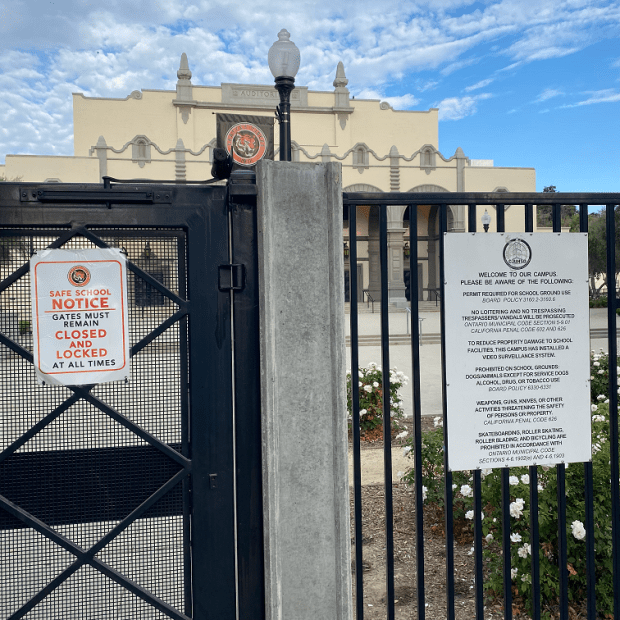
Another example of a market that uses identity and biometrics is the education market.
Bredemarket has written several posts about educational applications for identity and biometrics. You can read all my education writing on Bredemarket’s “Educational Identity” information page.

Similarly Bredemarket has written several posts about healthcare applications for identity and biometrics, including some that dwell on the unique privacy legislation that covers healthcare. You can read all my health writing on Bredemarket’s “Health” information page. (It’s not called “Health Identity” because healthcare has both identity and technology aspects.)
By the way, Bredemarket also has a page on “Financial Identity,” but the Prism Project’s content is more comprehensive.
So this is the point where Ed McMahon intones, “So Acuity Market Intelligence and Bredemarket have identified all five of the markets that benefit from the use of identity and biometrics!”

And you know how Johnny (Johnny Carson, or Johnny Bredehoft) would respond to that.

So let’s look at two more markets that benefit from the use of identity and biometrics-two markets that I know very well from the beginning and end of my time at Printrak/Motorola/MorphoTrak/IDEMIA.
There are government services, and then there are government services.
I started my biometric journey over 29 years ago when I wrote proposals addressed to law enforcement agencies who wanted to find out who left their fingerprints on a crime scene, and whether the person being arrested was who they said they were.
I don’t know if Maxine Most is going to classify criminal applications as a subset of government services, but there are clear reasons that she may not want to do this.
Big difference.
If someone asked me in late 2019 what my career five year plan was, I would have had a great story to tell.
As I was wrapping up over 24 years in identity and biometrics, I was about to help my then-employer IDEMIA enter a new market, the venue market. This market, which CLEAR was already exploring at the time, replaced the cumbersome ticketing process with the use of frictionless biometrics to enter sports stadiums, concert halls, trade shows, and related venues. Imagine using your face or IDEMIA’s contactless fingerprint solution MorphoWave to enter a venue, enter secure restricted areas, or even order food and beverages.
Imagine the convenience that benefit consumer and venue operator alike.
What could go wrong? I mean, the market was robust, and we certainly would NEVER face a situation in which all the stadiums and all the concert halls and all the trade shows would suddenly close down.
Since early 2020 when a worldwide pandemic DID shut down a lot of things, many identity/biometric firms have entered the venue market with a slew of solutions to benefit fans, teams, and venues alike.
There are many more vertical markets than these seven, ranging from agriculture to automobile access to computer physical/logical access to construction to customer service (mainly voice) to critical infrastructure to gaming (computer gaming) to gaming (gambling) to the gig economy to manufacturing to real estate to retail to telecommunications to transportation (planes, trains, buses, taxis, and cruise ships).
And all these markets have a biometric story to tell.
Can Bredemarket help you describe how your identity/biometric solution addresses one or more of these markets?
(Part of the biometric product marketing expert series)
Is your firm asking the following questions?
Bredemarket can help you answer these questions.
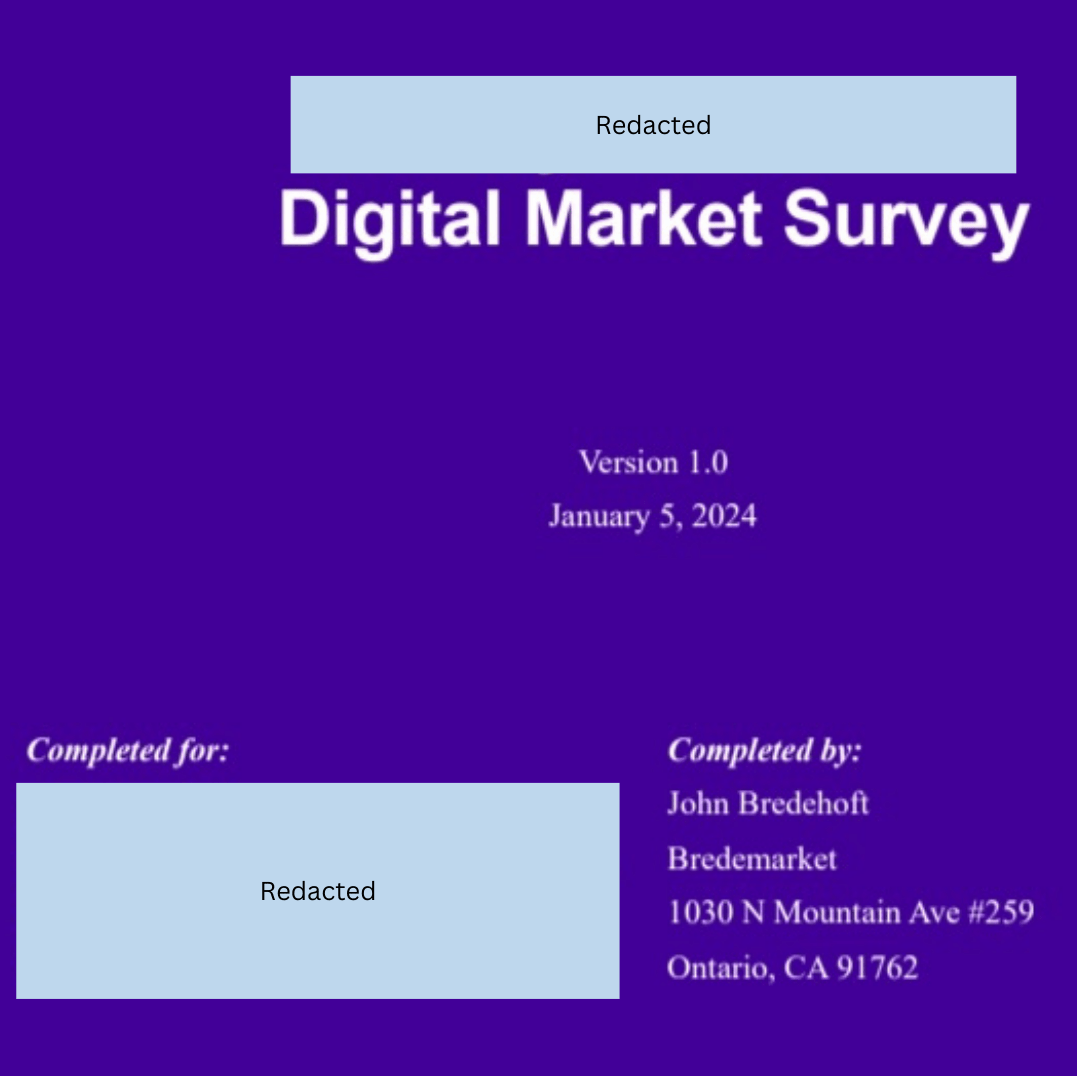
For those who don’t know, or who missed my previous discussion on the topic, Bredemarket performs analyses that contain one or more of the following:
Bredemarket analyses only use publicly available data.
These analyses can range in size from very small to very large. On the very small side, I briefly analyzed the markets of three prospect firms in advance of calls with them. On the large side, I’ve performed analyses that take between one and six weeks to complete.
Obviously I can’t provide specifics upon the analyses I’ve already performed since those are confidential to my customers, but I always discuss the customers’ needs before launching the analysis to ensure that the final product is what you want. I also provide drafts along the way in case we need to perform a course correction.
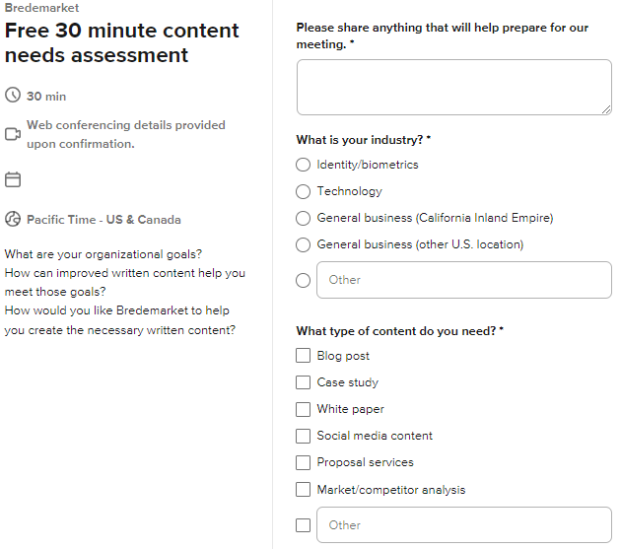
Do you need a market, competitor, or self analysis? Contact me. Or book a meeting with me at calendly.com/bredemarket to talk about your needs (and check the “Market/competitor analysis” check box).

 Bredemarket