Unlike the other rumors over the last few years, this is official.
From IDEMIA:
“IN Groupe and IDEMIA Group have entered into exclusive negotiations regarding the acquisition of IDEMIA Smart Identity, one of the three divisions of IDEMIA Group.”
But discussions are one thing, and government approvals are another. By the way, IN Groupe’s sole shareholder is the French state…
Plus IDEMIA, like Motorola before it, will have to figure out how the, um, bifurcated components will work with each other. After all, IDEMIA Smart Identity is intertwined with the other parts of IDEMIA.
Again, from IDEMIA:
“IDEMIA Smart Identity, a division of IDEMIA Group, is a leader in physical and digital identity solutions. We have fostered longstanding relationships with governments across the globe, based on the shared understanding that a secured legal identity enables citizens to access their fundamental rights in the physical and digital worlds.”
Regardless, this process will take some time.
And what will Advent International eventually do with the other parts of IDEMIA? That will take even more time to figure out.
I remember the first computer I ever owned: a Macintosh Plus with a hard disk with a whopping 20 megabytes of storage space. And that hard disk held ALL my files, with room to spare.
For sake of comparison, the video at the end of this blog post would fill up three-quarters of that old hard drive. Not that the Mac would have any way to play that video.
And its 20 megabyte hard disk illustrates the limitations of those days. File storage was a precious commodity in the 1980s and 1990s, and we therefore accepted images that we wouldn’t even think about accepting today.
This affected the ways in which entities exchanged biometric information.
The 1993 ANSI/NIST standard
The ANSI/NIST standard for biometric data interchange has gone through several iterations over the years, beginning in 1986 when NIST didn’t even exist (it was called the National Bureau of Standards in those days).
Yes, FINGERPRINT information. No faces. No scars/marks/tattoos. signatures, voice recordings, dental/oral data, irises, DNA, or even palm prints. Oh, and no XML-formatted interchange either. Just fingerprints.
No logical record type 99, or even type 10
Back in 1993, there were only 9 logical record types.
For purposes of this post I’m going to focus on logical record types 3 through 6 and explain what they mean.
Type 3, Fingerprint image data (low-resolution grayscale).
Type 4, Fingerprint image data (high-resolution grayscale).
Type 5, Fingerprint image data (low-resolution binary).
Type 6, Fingerprint image data (high-resolution binary).
Image resolution in the 1993 standard
In the 1993 version of the ANSI/NIST standard:
“Low-resolution” was defined in standard section 5.2 as “9.84 p/mm +/- 0.10 p/mm (250 p/in +/- 2.5 p/in),” or 250 pixels per inch (250ppi).
The “high-resolution” definition in sections 5.1 and 5.2 was twice that, or “19.69 p/mm +/- 20 p/mm (500 p/in +/- 5 p/in.”
While you could transmit at these resolutions, the standard still mandated that you actually scan the fingerprints at the “high-resolution” 500 pixels per inch (500ppi) value.
Incidentally, this brings up an important point. The series of ANSI/NIST standards are not focused on STORAGE of data. They are focused on INTERCHANGE of data. They only provided a method for Printrak system users to exchange data with automated fingerprint identification systems (AFIS) from NEC, Morpho, Cogent, and other fingerprint system providers. Just interchange. Nothing more.
Binary and grayscale data in the 1993 standard
Now let’s get back to Types 3 through 6 and note that you were able to exchange binary fingerprint images.
Why the heck would fingerprint experts tolerate a system that transmitted binary images that latent fingerprint examiners considered practically useless?
Because they had to.
Storage and transmission constraints in 1993
Two technological constraints adversely affected the interchange of fingerprint data in 1993:
Storage space. As mentioned above, storage space was limited and expensive in the 1980s and the 1990s. Not everyone could afford to store detailed grayscale images with (standard section 4.2) “eight bits (256 gray levels)” of data. Can you imagine storing TEN ENTIRE FINGERS with that detail, at an astronomical 500 pixels per inch?
Transmission speed. There was another limitation enforced by the modems of the data. Did I mention that the ANSI/NIST standard was an INTERCHANGE standard? Well, you couldn’t always interchange your data via the huge 1.44 megabyte floppy disks of the day. Sometimes you had to pull your your trusty 14.4k or 28.8k modem and send the images over the telephone. Did you want to spend the time sending those huge grayscale images over the phone line?
So as a workaround, the ANSI/NIST standard allowed users to interchange binary (black and white) images to save disk space and modem transmission time.
And we were all delighted with the capabilities of the 1993 ANSI/NIST standard.
Until we weren’t.
The 2015 ANSI/NIST standard
The current standard, ANSI/NIST-ITL 1-2011 Update 2015, supports a myriad of biometric types. For fingerprints (and palm prints), the focus is on grayscale images: binary image Type 5 and Type 6 are deprecated in the current standard, and low-resolution Type 3 grayscale images are also deprecated. Even Type 4 is shunned by most people in favor of new friction ridge image types in which the former “high resolution” is now the lowest resolution that anyone supports:
I should properly open this post by stating any necessary disclosures…but I don’t have any. I know NOTHING about the goings-on reported in this post other than what I read in the papers.
However, I do know the history of Thales and mobile driver’s licenses. Which makes the recent announcements from Florida and Thales even more surprising.
Gemalto’s pioneering mobile driver’s license pilots
Back when I worked for IDEMIA from 2017 to 2020, many states were performing some level of testing of mobile driver’s licenses. Rather than having to carry a physical driver’s license card, you would be able to carry a virtual one on your phone.
Some of these states were working with the company Gemalto to create pilots for mobile driver’s licenses. As early as 2016, Gemalto announced its participation in pilot mDL projects in Colorado, Idaho, Maryland, and Washington DC. As I recall, at the time Gemalto had more publicly-known pilots in process than any other vendor, and appeared to be leading the pack in the effort to transition driver’s licenses from the (physical) wallet to the smartphone.
Thales’ operational mobile driver’s license
By the time Gemalto was acquired by and absorbed into Thales, the company won the opportunity to provide an operational (as opposed to pilot) driver’s license. The Florida Smart ID app has been available to both iPhone and Android users since 2021.
One of the most important pieces of new information was a revised set of Frequently Asked Questions (or “Question,” or “Statement”) on the “Florida Smart ID” section of the Florida Highway Safety and Motor Vehicles website.
The Florida Smart ID applications will be updated and improved by a new vendor. At this time, the Florida Department of Highway Safety and Motor Vehicles is removing the current Florida Smart ID application from the app store. Please email FloridaSmartID@flhsmv.gov to receive notification of future availability.
Um…that was abrupt.
But a second piece of information, a Thales statement shared by PC Mag, explained the abruptness…in part.
In a statement provided to PCMag, a Thales spokesperson said the company’s contract with the FLHSMV expired on June 30, 2024.
“The project has now entered a new phase in which the FLHSMV requirements have evolved, necessitating a retender,” Thales says. “Thales chose not to compete in this tender. However, we are pleased to have been a part of this pioneering solution and wishes it continued success.”
The new vendor and/or the State of Florida chose not to begin providing services when the Thales contract expired on June 30.
Thales and/or the State of Florida chose not to temporarily renew the existing contract until the new vendor was providing services in 2025.
This third point is especially odd. I’ve known of situations where Company A lost a renewal bid to Company B, Company B was unable to deliver the new system on time, and Company A was all too happy to continue to provide service until Company B (or in some cases the government agency itself) got its act together.
Anyway, for whatever reason, those who had Florida mobile driver’s licenses have now lost them, and will presumably have to go through an entirely new process (with an as-yet unknown vendor) to get their mobile driver’s licenses again.
I’m not sure how much more we will learn publicly, and I don’t know how much is being whispered privately. Presumably the new vendor, whoever it is, has some insight, but they’re not talking.
As Identity and biometrics solution providers know, their applications are found in a variety of vertical markets.
A LARGE variety of vertical markets.
Seven of these markets include financial services, travel and hospitality, government services, education, health, criminal applications, and venues. (Among others.)
Which three vertical markets does the Prism Project examine?
To start this post, I’m going to cheat and “appropriate” the work already performed by the Prism Project.
This effort is managed by Maxine Most’s Acuity Market Intelligence and supported by a variety of partners (including industry partners).
The Prism Project has identified 3 (so far) critical vertical markets for identity and biometrics. While this doesn’t pretend to be a comprehensive list, it’s a good starting point to illustrate the breadth of markets that benefit from identity and biometrics.
The Prism Project has already released its report for financial services, which businesses can download here.
The Prism Project has started to develop its report for travel and hospitality. You can preview the report here.
Finally, the Prism Project plans to release a report addressing government services later in the year. For the latest status of this report, visit the Prism Project home page.
As you can see, identity and biometrics apply in wildly diverging vertical markets. You can use identity verification to open a bank account, enter your hotel room, or pay your taxes.
But those aren’t the only markets that use identity and biometrics.
Let me school you on two other markets, education and health
Let’s look at two markets that the Prism Project hasn’t covered…yet.
Education
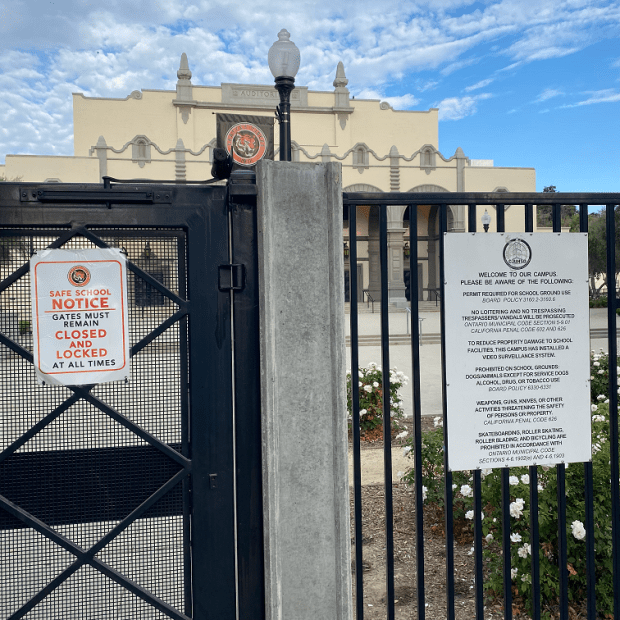
Chaffey High School, Ontario, California.
Another example of a market that uses identity and biometrics is the education market.
Who is allowed on a physical campus? Students? Teachers? Staff? Parents and guardians?
Who is NOT allowed on a physical campus? Expelled students? Fired faculty and staff?
Who is taking that remotely-administered online test?
Bredemarket has written several posts about educational applications for identity and biometrics. You can read all my education writing on Bredemarket’s “Educational Identity” information page.
Health
What, did you expect me to post a Marcus Welby picture here? I’m sharing a real medical professional: Jonas Salk administering the polio vaccine. By Yousuf Karsh, photographer – Wisdom Magazine, Aug. 1956 (Vol 1, No. 8), PD-US, https://en.wikipedia.org/w/index.php?curid=27746788.
Similarly Bredemarket has written several posts about healthcare applications for identity and biometrics, including some that dwell on the unique privacy legislation that covers healthcare. You can read all my health writing on Bredemarket’s “Health” information page. (It’s not called “Health Identity” because healthcare has both identity and technology aspects.)
Another source on finance
By the way, Bredemarket also has a page on “Financial Identity,” but the Prism Project’s content is more comprehensive.
But wait…there’s more!
So this is the point where Ed McMahon intones, “So Acuity Market Intelligence and Bredemarket have identified all five of the markets that benefit from the use of identity and biometrics!”
So let’s look at two more markets that benefit from the use of identity and biometrics-two markets that I know very well from the beginning and end of my time at Printrak/Motorola/MorphoTrak/IDEMIA.
Criminal applications
There are government services, and then there are government services.
I started my biometric journey over 29 years ago when I wrote proposals addressed to law enforcement agencies who wanted to find out who left their fingerprints on a crime scene, and whether the person being arrested was who they said they were.
I don’t know if Maxine Most is going to classify criminal applications as a subset of government services, but there are clear reasons that she may not want to do this.
When you pay your taxes or apply for unemployment benefits, you WANT the biometric system to identify you correctly.
When you steal a car or rob a bank, you do NOT want the biometric system to identify you correctly.
Big difference.
Stadiums, concert halls, and other venues
If someone asked me in late 2019 what my career five year plan was, I would have had a great story to tell.
As I was wrapping up over 24 years in identity and biometrics, I was about to help my then-employer IDEMIA enter a new market, the venue market. This market, which CLEAR was already exploring at the time, replaced the cumbersome ticketing process with the use of frictionless biometrics to enter sports stadiums, concert halls, trade shows, and related venues. Imagine using your face or IDEMIA’s contactless fingerprint solution MorphoWave to enter a venue, enter secure restricted areas, or even order food and beverages.
Imagine the convenience that benefit consumer and venue operator alike.
What could go wrong? I mean, the market was robust, and we certainly would NEVER face a situation in which all the stadiums and all the concert halls and all the trade shows would suddenly close down.
Since early 2020 when a worldwide pandemic DID shut down a lot of things, many identity/biometric firms have entered the venue market with a slew of solutions to benefit fans, teams, and venues alike.
And still more
There are many more vertical markets than these seven, ranging from agriculture to automobile access to computer physical/logical access to construction to customer service (mainly voice) to critical infrastructure to gaming (computer gaming) to gaming (gambling) to the gig economy to manufacturing to real estate to retail to telecommunications to transportation (planes, trains, buses, taxis, and cruise ships).
And all these markets have a biometric story to tell.
Can Bredemarket help you describe how your identity/biometric solution addresses one or more of these markets?
Image from the mid-2010s. “John, how do you use the CrowdCompass app for this Users Conference?” Well, let me tell you…
Because of my former involvement with the biometric user conference managed by IDEMIA, MorphoTrak, Sagem Morpho, Motorola, and older entities, I always like to peek and see what they’re doing these days. And it looks like they’re still prioritizing the educational element of the conference.
Although the 2024 Justice and Public Safety Conference won’t take place until September, the agenda is already online.
Subject to change, presumably.
This Joseph Courtesis session, scheduled for the afternoon of Thursday, September 12 caught my eye. It’s entitled “Ethical Use of Facial Recognition in Law Enforcement: Policy Before Technology.” Here’s an excerpt from the abstract:
This session will focus on post investigative image identification with the assistance of Facial Recognition Technology (FRT). It’s important to point out that FRT, by itself, does not produce Probable Cause to arrest.
Re-read that last sentence, then re-read it one more time. 100% of the wrongful arrest cases would be eliminated if everyone adopted this one practice. FRT is ONLY an investigative lead.
And Courtesis makes one related point:
Any image identification process that includes FRT should put policy before the technology.
Any technology that could deprive a person of their liberty needs a clear policy on its proper use.
September conference attendees will definitely receive a comprehensive education from an authority on the topic.
But now I’m having flashbacks, and visions of Excel session planning workbooks are dancing in my head. Maybe they plan with Asana today.
In a recent conversation with a client, I was reminded that procedures in one country may not be followed in another. For example, the process of getting a U.S. passport differs from the process to get one in France.
The client asked me about my experience with centralized and decentralized ID document issuance systems.
It turns out I was experienced in both based upon my time at IDEMIA. State agencies can manufacture driver’s licenses either via a dencentralized process where the driver’s license is printed at your local DMV office while you wait, or via a centralized process where all the driver’s licenses are produced at a secure facility which may or may not be located in the state in question. IDEMIA maintains several such centralized facilities to produce driver’s licenses and credit card-related materials, and they’re so secure that even when I was an IDEMIA employee I was not allowed to enter them.
Based upon my U.S. experience, I knew about centralized passport production.
The client noted that things are different in some other countries. So I read about the process in France.
Passports and passport renewals in the United States
When I joined Incode Technologies in May 2022, I had to quickly renew my passport so that I could attend a possible meeting in Mexico City. And it’s a good thing I did, because that meeting occurred soon afterwards…well, if you consider April 2023 “soon afterwards.”
My passport had expired in 2020, but I was able to renew my passport anyway with a fairly simple procedure.
Go to my local CVS drug store and use their automated machine to take the required passport photo in an ICAO-compliant fashion. The machine checked for ICAO compliance. (It took a few tries to get it right.)
Fill out a paper form.
Use an antiquated currency technology called a “check” to make out a payment to the U.S. State Department.
Put everything in an envelope and mail it to a centralized passport processing center.
Let’s skip right to the biggest difference between France and the United States:
The passport will take a few days to process.
Uh…what?
Not “the passport will take a few days to process if you pay rush fees.”
It will take a few days to process, period.
And no, this isn’t because the United States is larger than France. The same time period applies if you apply for a passport in one of France’s scattered overseas departments, or at a French embassy or consulate.
First off, you don’t need to mail a bunch of stuff off to a centralized office. You can simply go to your local town hall (mairie), embassy, or consulate. You need the following:
A French ID card or other acceptable proof of French nationality.
A recent photograph (again, ICAO compliant).
Your fingers, which are presumably attached to your person, so that they can be captured for biometric purposes.
Proof of residence.
The passport fee.
Once your bring everything to the mairie, your passport is processed within a few days. (OK, perhaps slightly longer in the summer.) When it’s ready you go back to the mairie, sign your passport, and take it with you to travel to all of the countries you can visit with a French passport. (More than with a United States passport.)
Follow your local, um, customs
My research hasn’t yet uncovered a country where you can get your passport on the same day you apply for it, but such a timeframe is theoretically possible.
This isn’t a current concern of mine since Bredemarket only deals with U.S. firms, but some of these firms are multinational and may ask me to create written content regarding their installation in Vietnam or wherever.
Always ask what the local practice is and don’t assume that the locals do things like we do in Southern California.
We get all sorts of great tools, but do we know how to use them? And what are the consequences if we don’t know how to use them? Could we lose the use of those tools entirely due to bad publicity from misuse?
According to a report released in September by the US Government Accountability Office, only 5 percent of the 196 FBI agents who have access to facial recognition technology from outside vendors have completed any training on how to properly use the tools.
It turns out that the study is NOT limited to FBI use of facial recognition services, but also addresses six other federal agencies: the Bureau of Alcohol, Tobacco, Firearms and Explosives (the guvmint doesn’t believe in the Oxford comma); U.S. Customs and Border Protection; the Drug Enforcement Administration; Homeland Security Investigations; the U.S. Marshals Service; and the U.S. Secret Service.
Initially, none of the seven agencies required users to complete facial recognition training. As of April 2023, two of the agencies (Homeland Security Investigations and the U.S. Marshals Service) required training, two (the FBI and Customs and Border Protection) did not, and the other three had quit using these four facial recognition services.
The FBI stated that facial recognition training was recommended as a “best practice,” but not mandatory. And when something isn’t mandatory, you can guess what happened:
GAO found that few of these staff completed the training, and across the FBI, only 10 staff completed facial recognition training of 196 staff that accessed the service. FBI said they intend to implement a training requirement for all staff, but have not yet done so.
Although not a requirement, FBI officials said they recommend (as a best practice) that some staff complete FBI’s Face Comparison and Identification Training when using Clearview AI. The recommended training course, which is 24 hours in length, provides staff with information on how to interpret the output of facial recognition services, how to analyze different facial features (such as ears, eyes, and mouths), and how changes to facial features (such as aging) could affect results.
However, this type of training was not recommended for all FBI users of Clearview AI, and was not recommended for any FBI users of Marinus Analytics or Thorn.
I should note that the report was issued in September 2023, based upon data gathered earlier in the year, and that for all I know the FBI now mandates such training.
Or maybe it doesn’t.
What about your state and local facial recognition users?
Of course, training for federal facial recognition users is only a small part of the story, since most of the law enforcement activity takes place at the state and local level. State and local users need training so that they can understand:
The anatomy of the face, and how it affects comparisons between two facial images.
How cameras work, and how this affects comparisons between two facial images.
How poor quality images can adversely affect facial recognition.
How facial recognition should ONLY be used as an investigative lead.
If facial recognition users had been trained, none of the false arrests over the last few years would have taken place.
The users would have realized that the poor images were not of sufficient quality to determine a match.
The users would have realized that even if they had been of sufficient quality, facial recognition must only be used as an investigative lead, and once other data had been checked, the cases would have fallen apart.
But the false arrests gave the privacy advocates the ammunition they needed.
Not to insist upon proper training in the use of facial recognition.
Like nuclear or biological weapons, facial recognition’s threat to human society and civil liberties far outweighs any potential benefits. Silicon Valley lobbyists are disingenuously calling for regulation of facial recognition so they can continue to profit by rapidly spreading this surveillance dragnet. They’re trying to avoid the real debate: whether technology this dangerous should even exist. Industry-friendly and government-friendly oversight will not fix the dangers inherent in law enforcement’s discriminatory use of facial recognition: we need an all-out ban.
(And just wait until the anti-facial recognition forces discover that this is not only a plot of evil Silicon Valley, but also a plot of evil non-American foreign interests located in places like Paris and Tokyo.)
Because the anti-facial recognition forces want us to remove the use of technology and go back to the good old days…of eyewitness misidentification.
Eyewitnesses are often expected to identify perpetrators of crimes based on memory, which is incredibly malleable. Under intense pressure, through suggestive police practices, or over time, an eyewitness is more likely to find it difficult to correctly recall details about what they saw.
At least in the United States, the mobile driver’s license world is fragmented.
Because driver’s license issuance in the U.S. is a state and not a federal responsibility, each state has to develop its own mobile driver’s license implementation. Subject to federal and international standards, of course.
To date there have been two parties helping the states with this:
mDL vendors such as Envoc and IDEMIA, who work with the states to create mDLs.
Operating system vendors such as Apple and Google, who work with the states to incorporate mDLs in smartphone wallets.
But because the Android ecosystem is more fragmented than the iOS ecosystem, we now have a third party that is involved in mDLs. In addition to mDL vendors and operating system vendors, we also have really large smartphone providers.
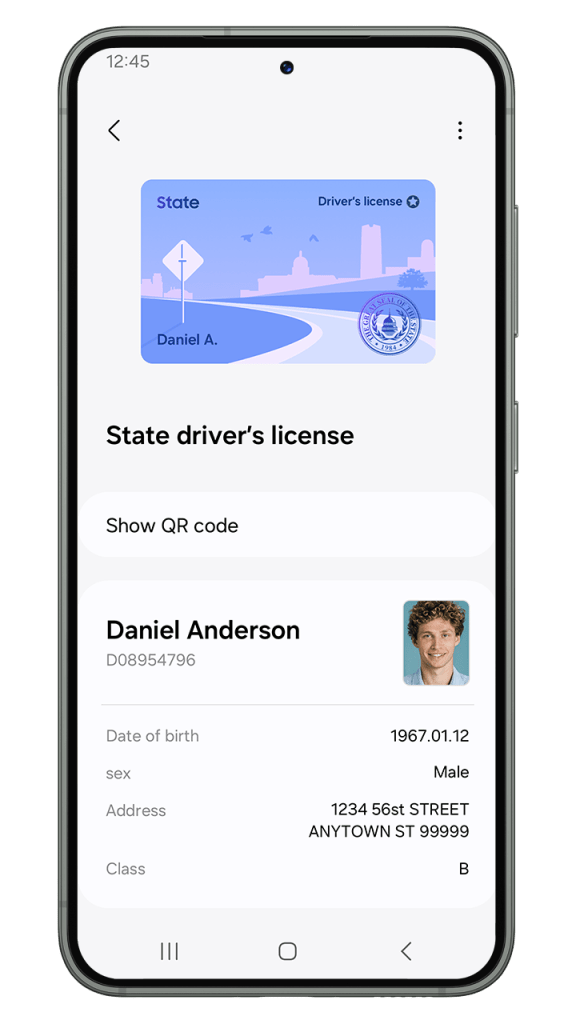
Samsung Electronics America today announced it is bringing mobile driver’s licenses and state IDs to Samsung Wallet. Arizona and Iowa will be the first states to offer a mobile version of its driver’s license to their residents. The update expands the Samsung Wallet experience by adding a convenient and secure way to use state-issued IDs and driver’s licenses
In this particular case Samsung is working with IDEMIA (the mDL provider for Arizona and Iowa), but Samsung announced that it is working with other states and with the Transportation Security Administration (TSA).
On a personal note, I’m still working on validating my driver’s license for California’s pilot mDL program. It probably didn’t help that I renewed my physical driver’s license right in the middle of the mDL validation process.
I didn’t either. Frankly, I didn’t even work in biometrics professionally until I was in my 30s.
If you have a mad adult desire to become a biometric content marketing expert, here are five topics that I (a self-styled biometric content marketing expert) think you need to understand.
Topic One: Biometrics
Sorry to be Captain Obvious, but if you’re going to talk about biometrics you need to know what you’re talking about.
The days in which an expert could confine themselves to a single biometric modality are long past. Why? Because once you declare yourself an iris expert, someone is bound to ask, “How does iris recognition compare to facial recognition?”
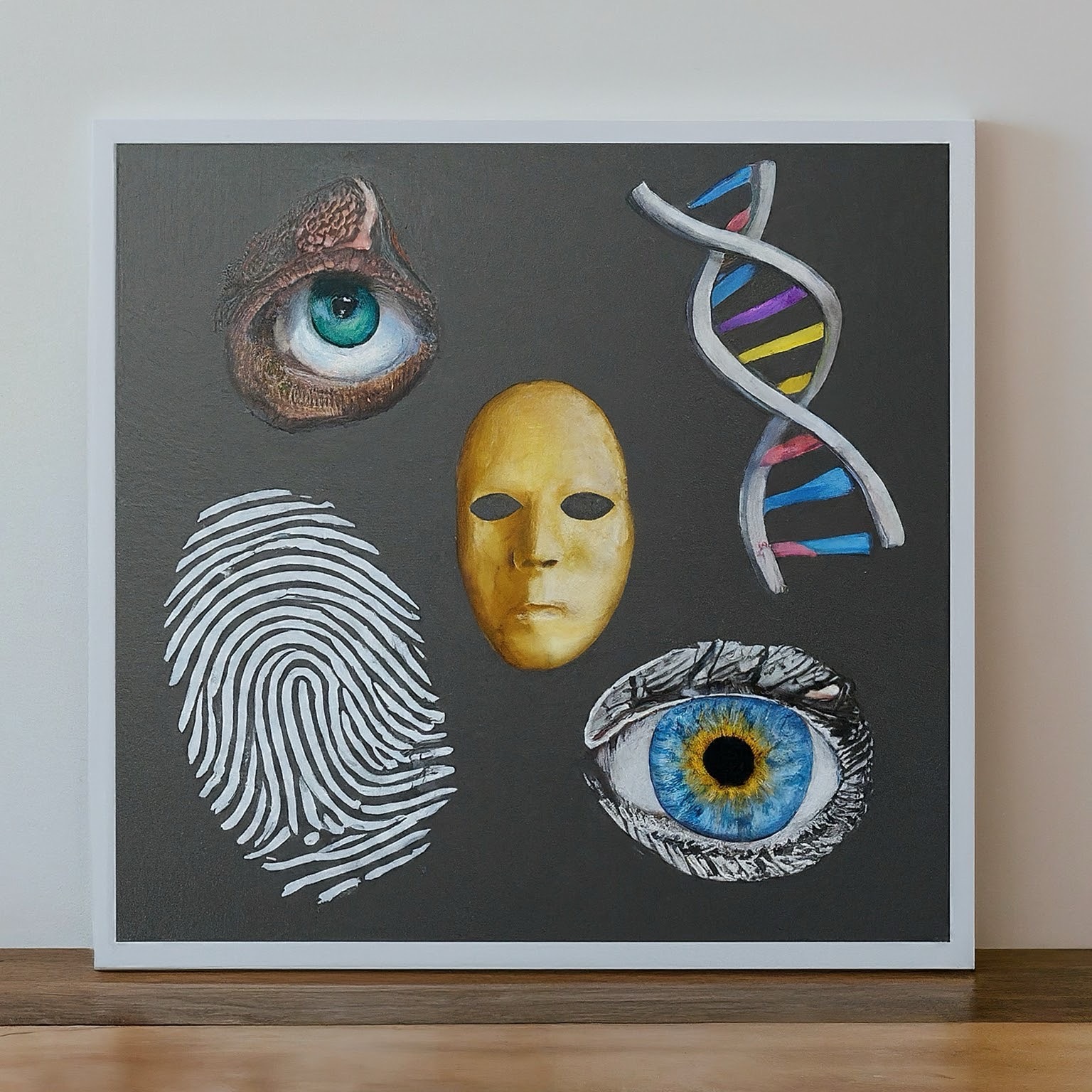
And there are a number of biometric modalities. In addition to face and iris, the Biometrics Institute has cataloged a list of other biometric modalities, including fingerprints/palmprints, voice, DNA, vein, finger/hand geometry, and some more esoteric ones such as gait, keystrokes, and odor. (I wouldn’t want to manage the NIST independent testing for odor.)
As far as I’m concerned, the point isn’t to select the best biometric and ignore all the others. I’m a huge fan of multimodal biometrics, in which a person’s identity is verified or authenticated by multiple biometric types. It’s harder to spoof multiple biometrics than it is to spoof a single one. And even if you spoof two of them, what if the system checks for odor and you haven’t spoofed that one yet?
Topic Two: All the other factors
In the same way that I don’t care for people who select one biometric and ignore the others, I don’t care for some in the “passwords are dead” crowd who go further and say, “Passwords are dead. Use biometrics instead.”
Although I admire the rhyming nature of the phrase.
If you want a robust identity system, you need to use multiple factors in identity verification and authentication.
Something you know.
Something you have.
Something you are (i.e. biometrics).
Something you do.
Somewhere you are.
Again, use of multiple factors protects against spoofing. Maybe someone can create a gummy fingerprint, but can they also create a fake passport AND spoof the city in which you are physically located?
It’s not enough to understand the technical ins and outs of biometric capture, matching, and review. You need to know how biometrics are used.
One-to-one vs. one-to-many. Is the biometric that you acquire only compared to a single biometric samples, or to a database of hundreds, thousands, millions, or billions of other biometric samples?
Markets. When I started in biometrics, I only participated in two markets: law enforcement (catch bad people) and benefits (get benefit payments to the right people). There are many other markets. Just recently I have written about financial identity and educational identity. I’ve worked with about a dozen other markets personally, and there are many more.
Use cases. Related to markets, you need to understand the use cases that biometrics can address. Taking the benefits example, there’s a use case in which a person enrolls for benefits, and the government agency wants to make sure that the person isn’t already enrolled under another name. And there’s a use cases when benefits are paid to make sure that the authorized recipient receives their benefits, and no one else receives their benefits.
Legal and privacy issues. It is imperative that you understand the legal ramifications that affect your chosen biometric use case in your locality. For example, if your house has a doorbell camera that uses “familiar face detection” to identify the faces of people that come to your door, and the people that come to your door are residents of the state of Illinois, you have a BIG BIPA (Biometric Information Privacy Act) problem.
Any identity content marketing expert or biometric content marketing expert worth their salt will understand these and related issues.
Topic Four: Content marketing
This is another Captain Obvious point. If you want to present yourself as a biometric contet marketing expert or identity content marketing expert, you have to have a feel for content marketing.
The definition of content marketing is simple: It’s the process of publishing written and visual material online with the purpose of attracting more leads to your business. These can include blog posts, pages, ebooks, infographics, videos, and more.
But content marketers need to be comfortable with creating at least one type of content.
Topic Five: How L-1 Identity Solutions came to be
Yes, an identity content marketing expert needs to thoroughly understand how L-1 Identity Solutions came to be.
I’m only half joking.
Back in the late 1990s and early 2000s (I’ll ignore FpVTE results for a moment), the fingerprint world in which I worked recognized four major vendors: Cogent, NEC, Printrak (later part of Motorola), and Sagem Morpho.
And then there were all these teeny tiny vendors that offered biometric and non-biometric solutions, including the fierce competitors Identix and Digital Biometrics, the fierce competitors Viisage and Visionics, and a bunch of other companies like Iridian.
Wel, there WERE all these teeny tiny vendors.
Until Bob LaPenta bought them all up and combined them into a single company, L-1 Identity Solutions. (LaPenta was one of the “Ls” in L-3, so he chose the name L-1 when he started his own company.)
So around 2008 the Big Four (including a post-FpVTE Motorola) became the Big Five, since L-1 Identity Solutions was now at the table with the big boys.
But then several things happened:
Motorola started selling off parts of itself. One of those parts, its Biometric Business Unit, was purchased by Safran (the company formed after Sagem and Snecma merged). This affected me because I, a Motorola employee, became an employee of MorphoTrak, the subsidiary formed when Sagem Morpho de facto acquired “Printrak” (Motorola’s Biometric Business Unit). So now the Big Five were the Big Four.
Make that the Big Three, because Safran also bought L-1 Identity Solutions, which became MorphoTrust. MorphoTrak and MorphoTrust were separate entities, and in fact competed against each other, so maybe we should say that the Big Four still existed.
Oh, and by the way, the independent company Cogent was acquired by 3M (although NEC considered buying it).
A few years later, 3M sold bits of itself (including the Cogent bit) to Gemalto.
Then in 2017, Advent International (which owned Oberthur) acquired bits of Safran (the “Morpho” part) and merged them with Oberthur to form IDEMIA. As a consequence of this, MorphoTrust de facto acquired MorphoTrak, ending the competition but requiring me to have two separate computers to access the still-separate MorphoTrust and MorphoTrak computer networks. (In passing, I have heard from two sources, but have not confirmed myself, that the possible sale of IDEMIA is on hold.)
Why do I mention all this? Because all these mergers and acquisitions have resulted in identity practitioners working for a dizzying number of firms.
As of August 2023, I myself have worked for five identity firms, but in reality four of the five are the same firm because the original Printrak International kept on getting acquired (Motorola, Safran, IDEMIA).
And that’s nothing. One of my former Printrak coworkers (R.M.) has also worked for Digital Biometrics (now part of IDEMIA), Cross Match Technologies (now part of ASSA ABLOY), Iridian (now part of IDEMIA), Datastrip, Creative Information Technology, AGNITiO, iTouch Biometrics, NDI Recognition Systems, iProov, and a few other firms here and there.
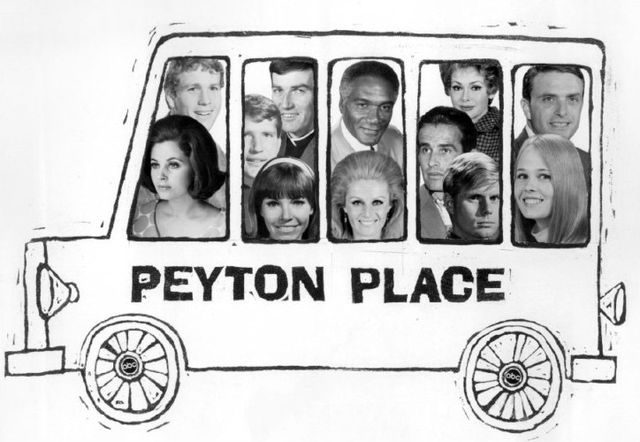
The point is that everybody knows everybody because everybody has worked with (and against) everybody. And with all the job shifts, it’s a regular Peyton Place.
Not sure which one is me, which one is R.M., and who the other people are.
Do you need an identity content marketing expert today?
Do you need someone who not only knows biometrics and content marketing, but also all the other factors, their uses, and even knows the tangled history of L-1?










 Bredemarket