Whether and how you delegate something depends upon its importance, especially if you recognize three levels of importance. Sometimes the very important and critically important items require a CPA, or Content-Proposal-Analysis marketing professional. (I know one.)
When you have a single level of importance, then decisions are pretty simple. For urgent things, do it yourself if it’s important, delegate it if it’s not.
When “importance” is more granular
But what if, instead of “Not Important” and “Important,” we had three levels of importance instead of just one? In other words, “Not Important,” “Important,” “Very Important,” and “Critically Important”?
A U.S. Navy plane flying over a Soviet ship in October 1962 is, um, classified as “Critically Important.” Oh, and it’s urgent. By USN – Dictionary of American Naval Aviation Squadrons Volume 2: The History of VP, VPB, VP(H) and VP(AM) Squadrons [4], Public Domain, https://commons.wikimedia.org/w/index.php?curid=7328539.
In that case, you not only consider whether to delegate something, but who should be delegated that thing. (Or, as you’ll see, WHAT should be delegated that thing.)
If the need is not important, delegate it, but it doesn’t really matter to whom or what you delegate it. ChatGPT or Bard is “good enough,” even if the result is awful.
If the need is important, delegate it to someone you trust to create very good content. Let them create the content, you approve it, and you’re done.
If the need is very important, then you may delegate some of the work, but you don’t want to delegate all of it. You need to be involved in the content creation process from the initial meeting, through the review of every draft, and of course for the final approval. The goal is stellar content.
If the need is critically important, then you probably don’t want to delegate the work and will want to do it yourself—unless you can find someone who is better than you in creating content.
As I noted in October, a more granular approach to importance increases the, um, importance of Bredemarket’s services.
In the simple Eisenhower Matrix model, Bredemarket handles the Not Important stuff while you handle the Important stuff.
In the “three levels of importance” model, Bredemarket handles the Very Important and Critically Important stuff. Because the merely Important stuff and the Not Important stuff doesn’t require my 30 years of technology, identity, and biometrics expertise.
Sometimes you need a CPA (but NOT a Certified Public Accountant)
But if your needs are critical, and you require the services of a CPA (Content-Proposal-Analysis marketing professional), then you need to learn what Bredemarket can do for you. Click on the image to learn more.
Due to the nature of my business, Bredemarket doesn’t usually get involved in strategy. The clients set the strategy, and I fill the tactical holes to execute that strategy.
But I recently welcomed the opportunity to envision a strategy to achieve a strategy, and in the process defined seven essential strategy documents to kick off a product marketing or general marketing program.
Depending upon how you define product marketing, one of these seven goes above and beyond the product marketing function. I included it anyway, because if you ask 20 people what “product marketing” is, you will get 21 answers.
There’s a reason I dated this. I may want to refine it in the future. For example, some of you may recall how my “six questions your content creator should ask you” eventually became seven questions.
The seven strategy and process documents
Go-to-Market Process. I’ve talked about this before, but it bears repeating. You can’t just slap a few things together in three days and say your go-to-market is complete. You need a plan on how you will go to market, including the different tiers of go-to-market efforts (you won’t spend four months planning materials for your 5.0.11 software release), the types of internal (employee) content you will release in each tier, and the types of external (prospect/customer) content you will release in each tier.
Performance Report. I listed this near the top because you need to quickly establish your metrics, define them, and how you will gather them. For example, if you want to measure “engagement,” you need to define exactly what engagement is (likes on a blog post? reshares on a LinkedIn post?), and ensure that you have a way to capture that data. Preferably automated data capture; manual tabulation is horrendous.
Product and Competitive Analysis. Plan how you will perform these duties. Even in my simplest analyses when I was still with IDEMIA, I planned exactly what data I needed, what data I wanted to capture, and how I was going to distribute it. I refined this during my time at Incode, when a team of four released battlecards in a standard format, with data that highlighted items important to Incode. My subsequent analyses for Bredemarket, which were more comparative rather than stand-alone, refined things still further.
Brand Strategy. I must confess that I have never created a formal brand book. But it’s important that you define your branding, at least informally, so that your products and services are presented consistently on all platforms. And so you spell things correctly (it’s NOT “BredeMarket”).
Customer Feedback. If you want to institute a customer focus, you need information from your prospects and customers. What information do you need? How much? (Shorter surveys get more responses.) How will you get it? What will you do with it? (“Trash it” is not an option.)
Positioning and Messaging Book. Once you’ve created the brand strategy, you need a set of consistent positioning (internal) and messaging (external) content. The positioning and messaging matrix can get pretty complex if you are supporting multiple products, personas, industries, use cases, and geographies. I will again confess that I do not have a standard messaging statement for Bredemarket 400 prospects who are Chief Marketing Officers who need blog posts in the identity/biometric industry discussing privacy concerns in the European Union. My loss.
Demand Generation and Content Marketing Parameters. Now in many organizations, demand generation and/or content marketing are separate from product marketing. But sometimes they’re not. What are your plans for demand generation? How will you achieve your goals? What content is necessary?
So what?
As I said, I recently had the opportunity to envision these strategies for a prospect, and have scheduled a meeting with the prospect to discuss these. (Note to “prospect”: these are iterative, and I fully expect that up to 90% of this may change by the time of implementation. But I think it’s a good starting point for discussion.)
The prospect may secure my services, or they may not.
And if they don’t, I can develop these same documents for others.
Do YOU need help defining strategies for your business? If so, let’s talk.
A single loss does not define your entire life. As the sporting world teaches us, Olympic losers and other competitive losers can become winners—if not in sports, then elsewhere.
The human drama of athletic competition
When I was young, the best variety show on television didn’t involve Bob Mackie dresses. It instead featured Jim McKay, introducing the show as follows.
Spanning the globe to bring you the constant variety of sport…the thrill of victory…and the agony of defeat…the human drama of athletic competition…This is ABC’s Wide World of Sports!
A technological marvel when originally introduced, this variety show brought sporting events to American viewers from all over the world.
And these viewers learned that in competitions, there are winners and losers.
But since Wide World of Sports focused on the immediate (well, with a bit of tape delay), viewers never learned about the losers who became winners.
Jim McKay and his colleagues were not retrospective, but were known for the moment. In one instance that was NOT on tape delay, Jim McKay spoke his most consequential words, “They’re all gone.”
Vinko Bogataj
(Note: some of this content is repurposed because repurposing is cool.)
Turning to less lethal sporting events, remember Jim McKay’s phrase “the agony of defeat”?
For American TV watchers, this phrase was personified by Vinko Bogataj.
The agony of defeat.
Hailing from a country then known as Yugoslavia (now Slovenia), Bogataj was competing in the 1970 World Ski Flying Championships in Oberstdorf, in a country then known as West Germany (now Germany). His daughter described what happened:
It was bad weather, and he had to wait around 20 minutes before he got permission to start. He remembers that he couldn’t see very good. The track was very bad, and just before he could jump, the snow or something grabbed his skis and he fell. From that moment, he doesn’t remember anything.
While Bogataj suffered a concussion and a broken ankle, the accident was captured by the Wide World of Sports film crew, and Bogataj became famous on the “capitalist” side of the Cold War.
“He didn’t have a clue he was famous,” (his daughter) Sandra said. That changed when ABC tracked him down in Slovenia and asked him to attend a ceremony in New York to celebrate the 20th anniversary of “Wide World of Sports” in 1981.
At the gala, Bogataj received the loudest ovation among a group that included some of the best-known athletes in the world. The moment became truly surreal for Bogataj when Muhammad Ali asked for his autograph.
Bogataj is now a painter, but his 1970 performance still follows him.
Over 20 years after the infamous ski jump, Terry Gannon interviewed Bogataj for ABC. As Gannon recounted it on X (then Twitter), Bogataj “got in a fender bender on the way. His first line..’every time I’m on ABC I crash.'”
Some guy at the Athens Olympics in 2004
Since the Paris Olympics is taking place as I write this, people are paying a lot of attention to present and past Olympics.
The 2004 Olympics in Athens was a notable one, taking place in the country where the original Olympics were held.
But during that year, people may have missed some of the important stories that took place. We pay attention to winners, not losers.
Take the men’s 200 meter competition. It began with 7 heats, with the top competitors from the heats advancing.
Within the 7 heats, Heat 4 was a run-of-the-mill race, with the top four sprinters advancing to the next round. If I were to read their names to you you’d probably reward me with a blank stare.
But if I were to read the 5th place finisher to you, the guy who failed to advance to the next round, you’d recognize the name.
KBWEB Consult tells the story of another competitor in the same 200 meter event in Athens. Chris Lambert participated in Heat 3, but didn’t place in the first four positions and therefore didn’t advance.
Nor did he place in the fifth position like Usain Bolt did in Heat 4.
Actually, he technically didn’t place at all. His performance is marked with a “DNF,” or “did not finish.”
You see, at about the 50 meter point of the 200 meter event, Lambert pulled a hamstring.
And that ended his Olympic competition dreams forever. By the time the Olympics were held in Lambert’s home country of the United Kingdom in 2012, he was not a competitor, but a volunteer for the London Olympics.
But Lambert learned much from his competitive days, and now works for Adobe.
KBWEB Consult (who consults on Adobe Experience Manager implementations) tells the full story of Chris Lambert and what he learned in its post “Expert Coaching From KBWEB Consult.”
I haven’t done one of these in a while, but it’s important to remember that just because you lost a particular competition doesn’t mean that all is lost. We need to remember this whether we are a 200 meter runner who didn’t advance from their heat, or whether we are a job applicant receiving yet another “we are moving in a different direction” form letter.
In the meantime, take care of yourself, and each other.
I wanted to share the latter on NextDoor, but that service wouldn’t accept the video.
Thinking the 45 second length was the issue, I decided to create a 15 second version of the Inland Empire video…and a 15 second version of the (50 second) identity/biometrics video while I was at it.
For those of you who would like to”a nice surprise…every once in a while.”
Identity/biometric.
Inland Empire.
By the way, I’m considering creating a new Inland Empire video…with an agricultural theme. (Fruits, not cows.)
Who are the competitors in the market for my product?
Which features do competitive products offer? How do they compare to the features my product offers?
Which industries do competitors target? How do they compare with the industries my company targets?
Which contracts have the competitors won? How do they compare with the contracts my company has won?
How effective is my company’s product marketing? My website? My social media? My key employees’ social media?
Bredemarket can help you answer these questions.
Types of analyses Bredemarket performs
For those who don’t know, or who missed my previous discussion on the topic, Bredemarket performs analyses that contain one or more of the following:
Analysis of one or more markets/industries for a particular product or product line.
Analysis of one or more (perhaps tens or hundreds) of competitors and/or competitive products for a particular product or product line.
Analysis of a firm’s own product or product line, including how it is marketed.
How Bredemarket conducts its analyses
Bredemarket analyses only use publicly available data.
I’m not hacking websites to get competitor prices or plans.
I’m not asking past employees to violate their non-disclosure agreements.
How Bredemarket packages its analyses
These analyses can range in size from very small to very large. On the very small side, I briefly analyzed the markets of three prospect firms in advance of calls with them. On the large side, I’ve performed analyses that take between one and six weeks to complete.
For the small self-analyses (excluding the very small quick freebies before a prospect call), I deliver these under my Bredemarket 404 Web/Social Media Checkup banner. When I first offered this service in 2020, I had a complex price calculation mechanism that depended upon the number of pages I had to analyze. Now I’ve simplified it and charge one of two flat rates.
Because the larger analyses are of undetermined length, I offer these at an hourly rate under my Bredemarket 4000 Long Writing Service banner. These reports can number 40 pages or more in length, sometimes accompanied by a workbook describing 700 or more competitor products or contracts.
Obviously I can’t provide specifics upon the analyses I’ve already performed since those are confidential to my customers, but I always discuss the customers’ needs before launching the analysis to ensure that the final product is what you want. I also provide drafts along the way in case we need to perform a course correction.
Do you need a market, competitor, or self analysis? Contact me. Or book a meeting with me at calendly.com/bredemarket to talk about your needs (and check the “Market/competitor analysis” check box).
For all but one Bredemarket client, I provide my deliverables via email. The deliverables usually consist of items such as Microsoft Word documents, Microsoft Excel workbooks, and Portable Document Files.
As I mentioned above, Bredemarket often performs market/competitive analyses. In fact, one of my clients likes my analyses so much that they keep on coming back for more analyses to cover different markets.
For the last three analyses for this particular client, my deliverables have consisted of the following:
An overall report, in PDF format.
The raw data, in XLSX format.
Extracts from the raw data, in PDF format.
The raw text of the report, in DOCX format.
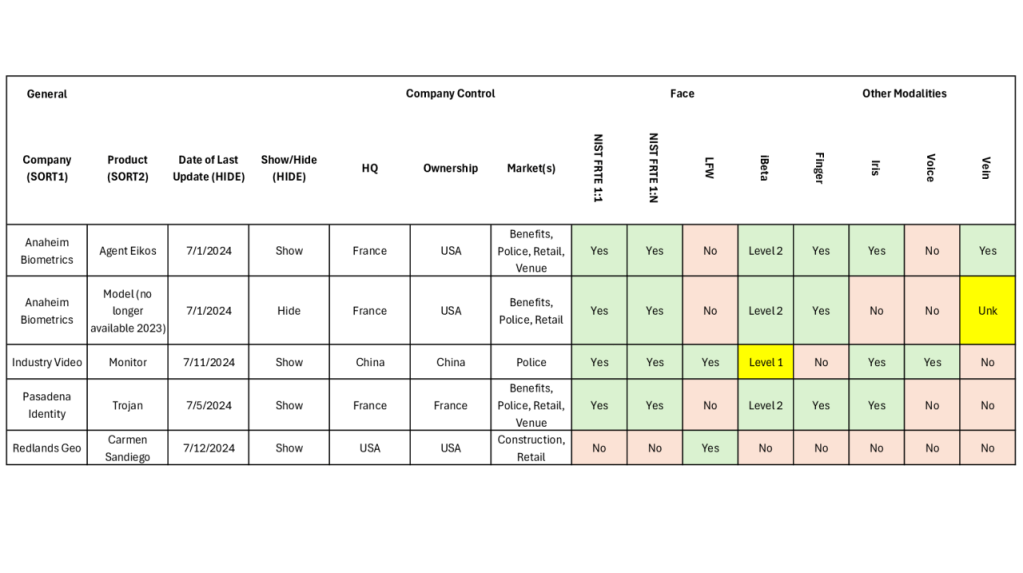
Not a real Bredemarket report. By National Highway Traffic Safety Administration – National Highway Traffic Safety Administration Publication Number: NHTSA-DOT-HS-5-01160, Public Domain, https://commons.wikimedia.org/w/index.php?curid=6709383.
In my analyses I referred to the companies’ publicly available websites to gather information on the competitor products, as well as the markets they address. (Using a made-up example, if my client provided its products to convenience stores, and a particular competitor ALSO targeted convenience stores, my client would obviously want to know this.)
The opportunity
But for this third analysis I didn’t just look at the websites. I also looked at the product brochures that I could download from these websites.
Since I was downloading all the publicly available brochures from the various competitors, why not provide all of these brochures to my client?
It seemed like a great idea. Since I had gone through all the work to collect the brochures, might as well let my client make future use of them.
The problem
So as I wrapped up the project and prepared the deliverables for my client, I discovered that I had amassed over 100 megabytes of brochures. (That’s what happens when you analyze over 100 competitor products.)
So my idea of zipping all the brochures into a single file wouldn’t work. Even the zip file exceeded the attachment sending limits of Bredemarket’s email service provider, Google. (And probably exceeded the attachment receiving limits of my client’s email service provider.)
And if you’ve already figured out the obvious solution to my problem, bear with me. It took me several days to realize the obvious solution myself.
Anyway, I hit upon a great solution to my problem…or so I thought.
The solution, first attempt
But that wasn’t a problem for me. Along with my email account, Google also provides Bredemarket with Google Drive. While the contents of my Google Drive are private to the employees of Bredemarket (all 1 of us), I can designate individual files and folders for access by selected people.
So I set up a designated folder for my client’s access only, uploaded all the deliverables including the 100+ MB zip file to the designated folder, and provided my client’s contact with access.
I then told my client that all the deliverables were in the Google Drive folder and asked the client to let me know when they were downloaded.
Which is when I encountered my second problem.
For security reasons, the client’s IT department forbids employees from accessing unauthorized Google Drives.
So I jumped back to Plan A and emailed all the files to my client except for the one 100+ MB zip file.
Now I just had to get that zip file to the client.
The solution, second attempt
That’s when I recalled the Dropbox account I set up for Bredemarket some time ago.
It was a quick process to upload the single 100+ MB zip file to a designated folder in Dropbox and give my client access.
But the client isn’t allowed to access Dropbox from work either.
The solution, third attempt
By the time that my client was contacting his IT department for a possible fix, I realized the solution that you the reader probably realized several paragraphs ago.
Instead of emailing one zip file, why not email multiple zip files in multiple emails, with each zip file under Google’s 25 MB limit?
So I sent six emails to my client.
This FINALLY worked.
I should have divided and conquered in the first place.
Can you use Bredemarket’s deliverables?
Do you want Bredemarket to send you 100 megabytes of brochures, now that I know how to do it?
More importantly, do you want Bredemarket to send you a market/competitor analysis to your specifications?
Talk to Bredemarket and discuss your needs. Book a meeting with me at calendly.com/bredemarket. Be sure to fill out the information form so I can best help you.
If you book a free 30 minute meeting with Bredemarket, you’ll now find an additional option in the “What Type of Content Do You Need?” section: Market/competitor analysis. I’ve done these for years, but never added the option to the form.
My analyses ONLY use publicly available information that is NOT subject to NDA. So you won’t get access to the analyses I’ve performed for other clients, and they won’t get access to the analysis I prepare for you.
While I primarily provide these analyses in the identity/biometrics industry, I’m open to discussing analysis needs in other industries.