Inland Empire businesses, do you require marketing and writing deliverables for your product or service with a unit price > $2000?
Consider Bredemarket for your content – proposal – analysis needs.
Let’s talk.

Identity/biometrics/technology marketing and writing services

Inland Empire businesses, do you require marketing and writing deliverables for your product or service with a unit price > $2000?
Consider Bredemarket for your content – proposal – analysis needs.
Let’s talk.

My “Biometrics and Bredemarket” video is buried in the middle of my “Ready, Fire, Aim” post, but people are finding it anyway.
(They’re skipping the short video and watching the long one.)
So it’s time to feature “Biometrics and Bredemarket” on its own.
If you don’t feel like watching a 2 minute and 20 second video, here are the bullets:
Learn more in the video, or at my “CPA” page.


(Gift wrapping image CC BY-SA 3.0)
At Bredemarket, I am wrapping up one of my marketing-writing projects at the end of this week.
So I will have an opening next week for you.
Content? Proposal? Analysis? You decide.
Visit Bredemarket’s “CPA” page to schedule a free discussion.

(Ready, fire, aim wildebeest via Imagen 3/Google Gemini)
If I had to choose between acting too quickly and acting too slowly, I would choose the former. You already know I don’t like it when things never get done. But the ready, fire, aim method introduces problems of its own. Let’s look at how ready, fire, aim can adversely affect both external and internal content.
If you haven’t figured it out already, I create a lot of external prospect/customer facing content. Not only for Bredemarket’s clients, but also for Bredemarket itself so I can get more clients. This blog post is an example.
Sometimes I meticulously plan a full campaign via a myriad of Asana tasks covering multiple blog and social media posts. Sometimes the entire project appears in a day or two, sometimes it takes a week, and one recent project took 3 weeks including teaser content, the main content, and follow-up content.
Yes, sometimes I meticulously plan. And other times I just do stuff.
Last Saturday I was struck with an idea for a 2 minute and 20 second landscape video about biometrics and Bredemarket. I knew it was long and many who encountered it wouldn’t watch the whole thing, but I wanted to make my statement and reserve it for bottom of funnel activities.
Only AFTER I posted the video did I realize that this was the logical second part to a 30 second video that I had previously created for biometric clients.
If I had thought this through, I could have started with the 30 second video, THEN introduced the longer video as the logical next step. Like a funnel, if you believe in funnels.
Well, better late than never.
Watch this 30 second video that I made for Bredemarket’s biometric prospects and clients.
Hey, did you like that video? Would you like to learn more?

Watch this 140 second video that I made for Bredemarket’s extra special biometric prospects and clients.
Hey, did you like that video? Learn more on my “CPA” page.
Well, that’s what I should have done in the first place so I wouldn’t have to make this clumsy fix later.
But there’s still time to fix a future internal campaign before it happens.
Because this content is internal I can’t really talk about it, but I anticipate that Bredemarket will be invited to a future event…and I am already planning NOT to attend.
There are a number of stakeholders associated with this event, and in a TLOI kind of way they will have different reactions to my non-attendance. Some of them probably don’t give a you-know-what whether I attend or not. But perhaps there are those who do care, ranging from mild curiosity about why I’m not going, to the other extreme of demanding to know how I could bypass this important event.
So I drafted three messages in case I was asked about my non-attendance: (1) a brief two-paragraph message, (2) a longer message, and (3) a detailed message which delved into my concerns.
But what if I don’t know which message to send? What if I unloaded my deepest darkest fears via the long message, when the stakeholder merely wanted to know if I had other commitments at the time of the event?
So I rewrote the messages so that they build on one another.
There’s my funnel. And if needed I can skip directly to the third message with certain stakeholders.
And if no one asks why I’m skipping the event, I don’t send ANY communication—and know that my decision to skip the event was the right one.
So in the future, whether creating external or internal content, I need to pause and think about how it fits into the tons of content I’ve already created.
So that I can tell the best stories.
And so I will achieve ready, aim, fire rather than ready, fire, aim.

I’ve talked about differentiation ad nauseam, and even created a video about it last spring.
And I’ve provided some examples of lack of differentiation from my own industry:
This isn’t effective. Trust me.
But prospective customers aren’t the only ones who are turned off by “me-too” messaging.
What about prospective employees who don’t want to apply to your company because they see no compelling reason to do so?
I’ll grant that the tech job market is so out of balance right now that people are applying to ANYTHING.
But the more choosy ones are…more choosy in their applications. Just like choosy mothers choose…you know.
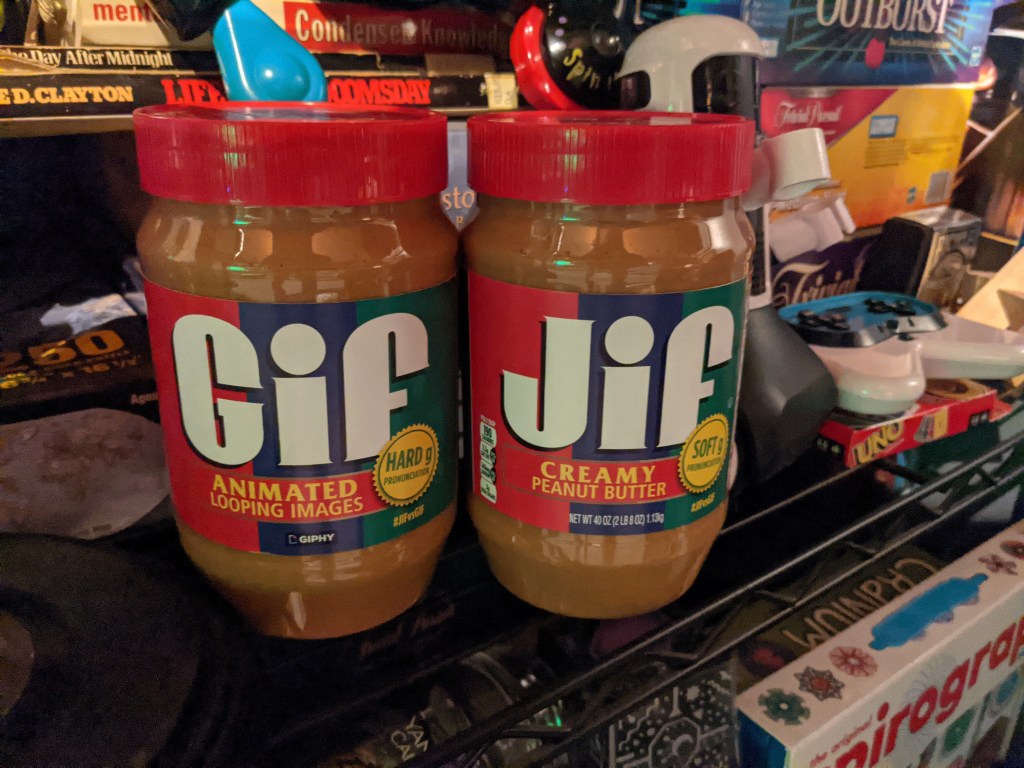
I recently received this message from a product marketer after I shared a particular identity/biometric job description with them.
Not so sure that company is well positioned for evolving identity landscape.
From a selfish perspective, this benefits me, because I DID apply for this position while they DIDN’T. Reducing the competition increases my chances of getting the job.
But the company (which I’m not naming) doesn’t benefit, because at least one experienced identity verification product marketer doesn’t want to work for them.
So be sure to differentiate…as long as the differentiation resonates with your hungry people (target audience). If your audience is repelled by your differentiation, then that’s a problem with your customer focus.

Now Bredemarket can’t help you with your job search, because I’m certainly not an expert in that. But I can ask you questions that help you create content that conveys that your product is great and your competitors’ products…are not so good.
Visit Bredemarket’s “CPA” page to learn how I can help your firm’s content (and analysis, and proposals), and to schedule a meeting.


Bredemarket writes for biometric clients.
Content, proposal, analysis.
More information: https://bredemarket.com/cpa/

It all started with “Know Your Customer,” a shorthand phrase used by financial institutions and related entities who need to know who their customers are.
But then various governments, industries, and entities got into the act with their own variants, such as “Know Your Business.”
I was curious about how many of these “know your” variants I’ve discussed in the Bredemarket blog. Here’s what I found:
I’m sure I’ll come up with some others.

Effective product marketing usually won’t help you make your numbers this quarter. But it can provide long-term benefits…if properly executed and maintained.
In a down employment market such as the one the tech industry is experiencing right now, the common wisdom is that if a company isn’t hiring new employees, it can definitely use independent consultants.
Sometimes the common wisdom is faulty.
One of Bredemarket’s former clients (whom I will not name) illustrates the gaps in the common wisdom. I had worked on projects for this company several times…until I didn’t.
If I had provided said company with top-notch content-proposal-analysis work, would those laid-off people have kept their jobs?
Probably not. Content, proposal, and analysis work is not a quick fix.
While not a quick fix, doing the work now will benefit the company in the long run. Even in the short term, setting the strategy communicates to everyone, including both internal and external stakeholders, the direction in which your company is heading.
But you can’t just treat this as a one-time oroject and be done with it. Looking at the content portion alone, you have to regularly revisit your content and update it as needed.
This is a trick I learned back in my proposal days. Some of my former employers used proposal management software packages, many of which used a “timeout” feature on standard proposal text that required someone to review the text by a certain date.
Does your proposal text state that your software supports Windows 10? Perhaps it’s a good idea to mention Windows 11 also.
Or you may need to revise your standard proposal text to mention that new feature…or new benefit. Any proposal text for a health application that was written in December 2019 definitely required an update in December 2020.
If you haven’t laid the groundwork for your company’s product marketing, Bredemarket can help in a variety of ways. After asking questions (starting with “Why?”) about your needs, we can jointly decide on the most critically important things Bredemarket can do for you and your company.
To find out how John E. Bredehoft of Bredemarket can serve as your “CPA” (Content-Proposal-Analysis marketing professional), go to my CPA page.
And no, I’m not going to share an Eagles song. I’m going to share a Madness song.
(AI wildebeest “Keep Moving” image from Google Gemini)
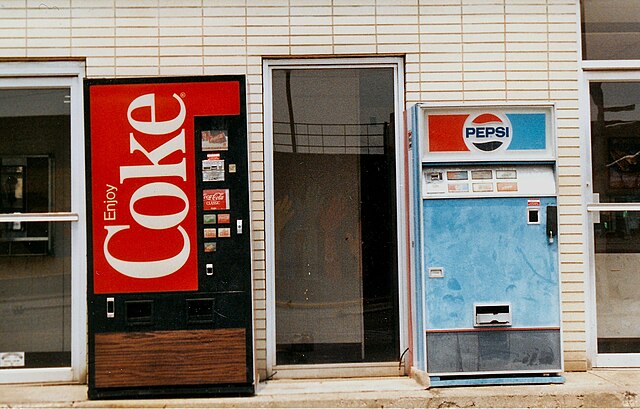
I recently wrote a non-published document explaining, among other things, how I would perform competitive analysis as a product marketer for a particular firm.
Since the firm elected not to use my product marketing services, I will now publish a very small portion of my document, with proper redactions, explaining how Bredemarket (or I as an individual) could perform competitive analysis for YOU.
I recently applied for a product marketing position with a firm outside of the identity/biometrics industry (“Firm X”). This required extensive research on the firm and the industry.
I framed this research using a tool that I learned about through Phyl Terry’s Never Search Alone program. Specifically, the “Job Mission with OKRs” tool.
You draft your OKRs (objectives and key results) yourself, while you are still interviewing for the job. Sure they may be off—when I performed a similar exercise in early 2022, I assumed I would have to create social media content, but subsequently discovered the firm had a very talented social media manager. But even OKRs that are only 25% accurate are better than no OKRs at all.
Returning to 2024, I started drafting my “Job Mission with OKRs” for Firm X’s product marketing position before I went to my first interview, and iterated it through the second one, creating OKRs for seven key areas.
I planned to iterate my OKRs through subsequent interviews with peers and non-marketing executives, then present them to the hiring manager before my offer.
Unfortunately, I never got the chance. One day after my second interview, the Firm X recruiter sent a personalized letter to me.
While we really enjoyed getting to know you, and after careful consideration, we have determined that there is not a fit at this time, and we will not be moving forward in our process.
I know its not the news you were hoping to hear, but we appreciate your interest….
Have you ever written something and then found out it’s not needed any more? Well, now I had these seven OKRs and no immediate use for them…
…except for one of the OKRs that ties into something I’ve discussed before.
One of my seven OKRs dealt with competitive analysis. And I have a lot to say about that.
Earlier this year I started a LinkedIn newsletter for Bredemarket called “The Wildebeest Speaks.”
The July 12 edition of the newsletter was entitled “Three Tips That Show Why Bredemarket Excels at Product, Market, and Competitive Analysis.”
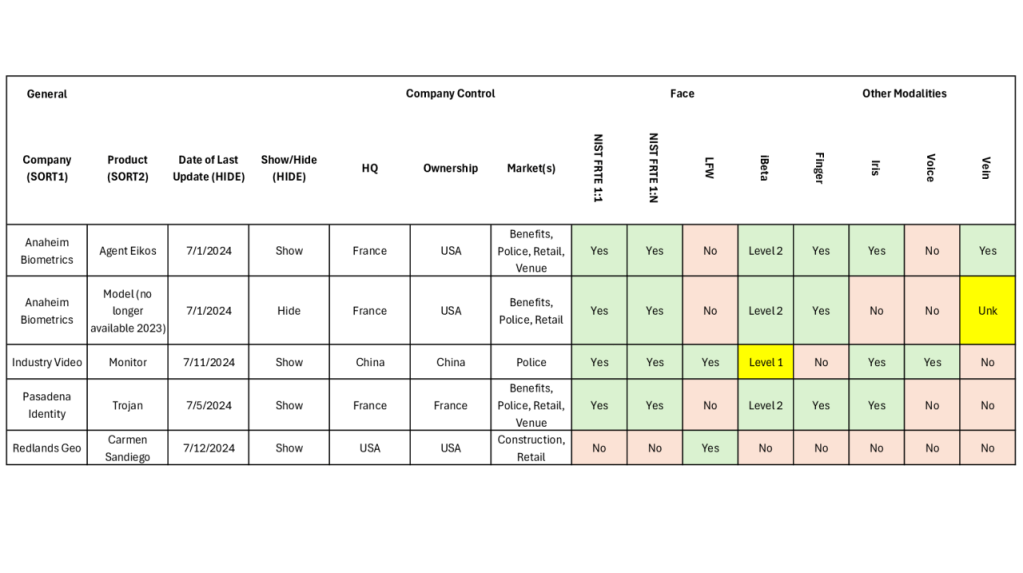
As you can probably guess from the title, the tips in question are Excel-specific and relate to how I format my investigative workbooks. So they’re more nuts-and-bolts than high-level.
Despite this, early this morning I reshared those Bredemarket tips on my personal profile, just in case someone from Firm X happened to take a look at my LinkedIn profile. (They didn’t.)
Sadly, my wildebeest discussion of competitive analysis confined itself to nuts and bolts, and I needed a higher level discussion of how Bredemarket performs analysis for its clients.
It turns out I had already written it, when I described to Firm X how I intended to perform competitive analysis for them.
So here’s a redacted version of the competitive analysis OKR I prepared for Firm X, last revised yesterday, but never shared with the firm.
Using techniques developed at IDEMIA, Incode, and Bredemarket:
- Identify true competitors (approximately 20 possible competitors identified as of 11/26/2024).
- Perform feature comparison to indicate closeness of competitors, [FIRM] strengths, and [FIRM] failures.
- Identify key collateral required for each competitor (SWOT analysis, one-page battlecard, messaging/positioning document).
- Identify key competitors (high, medium, low).
- Complete collateral for high competitors.
- Complete collateral for medium competitors.
- Complete collateral for low competitors.
- Revisit collateral on a regular cadence, revise as necessary.
- Identify new competitors as necessary.
Now that I have the chance, let me elaborate on two of the points.
Have you ever heard a company say “we have no competitors”?
Bull.
Every single company that sells something ALWAYS has one competitor: “do nothing.”
And many companies have competitors that are not always apparent at the surface. For example, your average U.S. satellite television network (CBS, Fox News, Game Show Network, whatever) doesn’t only compete with other satellite television networks, but also competes with YouTube, TikTok, and other sources of information.
But no company has a truly infinite number of competitors. Yes, one could argue that a View-Master is a legitimate competitor to a U.S. satellite television network…but how much market share will View-Master steal from CBS?

So you need to identify the POSSIBLE competitors to your product, and then see if they TRULY compete.
One way to do this is to compare the features of your product against the features of other firms’ products.
But you have to do it right.
If you are completely enamored with your product, you may choose to ONLY list the features that YOUR product has, and compare only those features against possible competitors. By definition, your product will have every feature in the comparison, and therefore it’s the best product ever.
Perhaps you can start with this…but then you need to look at your competitors’ features and determine which ones your product DOESN’T have.
For example, your product may be the best on-premise solution ever, but if your competitors offer SaaS implementations and you don’t, that’s one way in which your product sucks.
Once you have a true feature comparison, you can proceed with ranking the competitors as high, medium, or low, then with enunciating your benefits and closing your weaknesses.
If your knowledge of your competitors is lackluster, perhaps I can help.
Does your firm want to employ me to spearhead your analysis services? Contact me on LinkedIn.
Or, if you only require my services on a consulting basis, contact me through Bredemarket’s “CPA” page. Unless I’m employed by one of your competitors.

Hardly anything is permanent. And this applies to boxing AND to B2B sales.

Perhaps you heard what Mike Tyson said a few days ago.
I don’t know, I don’t believe in the word “legacy.” I just think that’s another word for ego. Legacy doesn’t mean nothing. It’s just some word everybody grabbed onto.
It means absolutely nothing to me. I’m just passing through. I’m going to die and it’s going to be over. Who cares about legacy after that?
We’re nothing. We’re just dead. We’re dust. We’re absolutely nothing. Our legacy is nothing.
With the life that Tyson has lived, it’s understandable why he’s echoing Ecclesiastes in this interview.
But you don’t have to have had Tyson’s experiences to realize that legacy does not last.
In business (and in life), there are companies (and people) who don’t need you or want you.
This may be temporary. The company that doesn’t need you today may urgently (and importantly) need you tomorrow.

Or it may NOT be temporary. There are companies that will NEVER need you or want you.
I recently ran across three such companies that will never need Bredemarket.

Perhaps you noticed Bredemarket’s “six weeks” promotion over the weekend. It was addressed to companies that may have a final project that they want to complete before the year ends in six weeks. (Now 5 1/2 weeks.) I emphasized that Bredemarket can help companies complete those content, proposal, and analysis projects.
The promotion included a blog post, a LinkedIn post, a Facebook reel, an Instagram reel, a YouTube short, and appearances in other online locations. Which is probably overkill, since the promotion is already outdated and can’t be used again until possibly November 2025.
I also included email in this campaign, targeting prospects whom I haven’t worked with recently, or whom I’ve never worked with at all. I didn’t go overboard in my emails; although I have over 400 contacts in Bredemarket’s customer relationship management system, I sent the email to less than 40 of them.
As of this morning, none of the recipients has booked a meeting with me to discuss their end of year needs.
And I discovered that three companies (four contacts) will NEVER need or want Bredemarket’s services.
How did I discover that?
Via four “delivery status notification” messages.

So I visited the web pages in question, and they no longer existed.
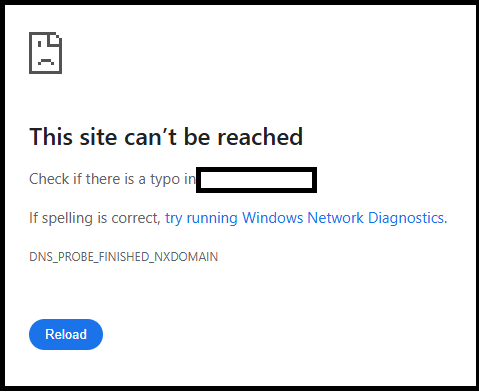
I’ve been building up my CRM for over four years, so it’s not shocking that some companies have disappeared.
But one of the companies (“Company X”) DID exist a mere eight months ago.
I know this because I prepared a presentation on differentiation (see version 2 of the presentation here), and two representatives from Company X received the presentation in advance of a conference.
After the conference organizer distributed the presentation, I offered to meet with the companies individually (no charge) to discuss their content and differentiation needs, or anything else they wanted to discuss.
While some conference attendees took advantage of my April offer, the representatives from Company X did not.
And now in November, Company X no longer exists.
Could Bredemarket have created the necessary content to keep Company X afloat? Who knows?
But EVERY company needs content to differentiate it from its competitors. Otherwise the competitors will attack you. And your competitors may not be as merciful with you as Jake Paul was with Mike Tyson.
If you need Bredemarket’s help with content, proposal, or analysis services, book a meeting with me.

 Bredemarket