DNA mixture interpretation outside of the forensic laboratory? Apparently not yet.

(Part of the biometric product marketing expert series)

The National Institute of Standards and Technology has published a draft report entitled DNA Mixture Interpretation: A Scientific Foundation Review.

As NIST explains:

This report, currently published in draft form, reviews the methods that forensic laboratories use to interpret evidence containing a mixture of DNA from two or more people.

From https://www.nist.gov/dna-mixture-interpretation-nist-scientific-foundation-review

The problem of mixtures is more pronounced in DNA analysis than in analysis of other biometrics. You aren’t going to encounter two overlapping irises or two overlapping faces in the real world. (Well, not normally.)

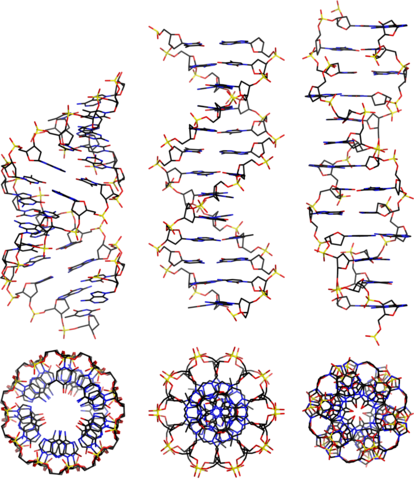
By Olli Niemitalo – Own work, CC0, https://commons.wikimedia.org/w/index.php?curid=18707318

You can certainly encounter overlapping voices (in a recorded conversation) or overlapping fingerprints (when two or more people touched the same item).

But there are methods to separate one biometric sample from another.

It’s a little more complicated when you’re dealing with DNA.

Distinguishing one person’s DNA from another in these mixtures, estimating how many individuals contributed DNA, determining whether the DNA is even relevant or is from contamination, or whether there is a trace amount of suspect or victim DNA make DNA mixture interpretation inherently more challenging than examining single-source samples. These issues, if not properly considered and communicated, can lead to misunderstandings regarding the strength and relevance of the DNA evidence in a case.

From the Abstract in https://doi.org/10.6028/NIST.IR.8351-draft%C2%A0

As some of you know, I have experience with “rapid DNA” instruments that provide a mostly-automated way to analyze DNA samples. Because these instruments are mostly automated and designed for use by non-scientific personnel, they are not able to analyze all of the types of DNA that would be analyzed by a forensic laboratory.

Therefore, this draft document is silent on the topic of rapid DNA, despite the fact that co-author Peter Vallone has years of experience in rapid DNA.

I am not a scientist, but in my view the absence of any reference to rapid DNA strongly suggests that it’s premature at this time to apply these instruments to DNA mixtures, such as rape cases in which both the assailant’s and the victim’s DNA are present in a sample.

Granted, there may be rape cases in which the DNA of the assailant may be present with no mixture.

You have to be REALLY careful before claiming that rapid DNA instruments can be used to wipe out the backlog of rape test kits. However, rapid DNA can be used to clear less complicated DNA cases so that the laboratories can concentrate on the more complex cases.

96 Smiles: All about the Shipley Business Development Lifecycle

And when the sun comes up
I’ll be on top

? and the Mysterians, “96 Tears.” From https://genius.com/And-the-mysterians-96-tears-lyrics

I carved out some time late Wednesday morning to take a look at a book that I acquired back in late October.

The book is the 2019 edition of the Shipley Business Development Lifecycle Guide, which I won at a raffle at the APMP Western Chapter Training Day. (And yes, I won it in the presence of my SMA colleagues. But hey, good information comes from a variety of places.)

Now even though this book has a 2019 date, I’ve been familiar with the Shipley Business Development Lifecycle for a long, long time.

The first part of the Shipley Business Development Lifecycle. From http://sbdl.shipleywins.com/.

In fact, it was my late 1990s exposure to the Shipley lifecycle that prompted me to LEAVE proposals (the first time).

Let me explain.

As the Shipley Business Development Lifecycle points out, in the ideal world there are a number of proposal preparation steps that take place BEFORE a Request for Proposals (RFP) is issued. In this ideal world, the following conversation would take place after final RFP release:

Well, the RFP just dropped, and it’s almost exactly what we expected. A few tweaks in the interface requirements, but everything else is identical to our mockup. So we can just polish our previous plans, perform several more sanity checks, and win this!

It’s no surprise that sometimes situations are NOT ideal, and perhaps this conversation may take place instead:

Hey, our customer just released an RFP for a new system. I had no idea that they were going to release an RFP this year. Well, we’ve been the incumbent for years, and the people using our software seem to like us. I think. I don’t know the person who actually released the RFP, but my cousin’s brother-in-law knows him. As long as we come in with the lowest price, we’re certain to win this!

Obviously (or hopefully) most RFP releases are somewhere between these two extremes. But it got me thinking: what would it be like to move to the left on the Shipley timeline and participate in the pre-RFP release activities?

I ended up becoming a product manager, and later in my career (after a second stint in Proposals) became a strategic marketer and corporate strategist. But even in these other positions, I continued to dabble in proposals, primarily as a subject matter expert.

So I was already somewhat familiar with the contents of the Shipley guide, but now I had the entire guide in my hands. (I think I had a Shipley book twenty years ago, but I no longer have it.) This allowed me to review the contents at my leisure.

OK, maybe not THAT relaxed. My eyes have to be open, for one thing. (And certain paper products belong in the bathroom, not the living room.)

One nice thing about the printed guide: rather than numbering all the steps sequentially from 1 to 96, they are numbered within each phase. The steps in Phase 0 (Market Segmentation) are numbered from 0.1 to 0.6, the steps in Phase 1 (Long-Term Positioning) from 1.1 to 1.6, and so forth.

The lifecycle is much less imposing that way. If you tell management that you want to implement a 96-step process to win a customer, management will probably tell you to take a hike. (Even Martin Luther didn’t write 96 theses.) A 7-phase process is more palatable. (Marketing!)

After Phases 0 and 1, the Shipley Business Development Lifecycle contains 5 other phases:

Phase 2, Opportunity Assessment8 steps
Phase 3, Capture/Opportunity Planning15 steps
Phase 4, Proposal Planning31 steps
Phase 5, Proposal Development18 steps
Phase 6, Post-Submittal Activities12 steps
The final five (of seven) phases in the Shipley Business Develoopment Lifecycle.

The proposal planning phase (Phase 4) deserves a mention, since this is the phase in which Shipley practitioners outline the proposal, draft the executive summary, and update the winning price…all before the RFP is issued.

Obviously you have to know your customer really well to do all of that in advance, and if you don’t know your customer, your competitor probably already does.

Needless to say, I’m not going to duplicate the entire book here; it’s copyrighted, after all. But I do want to highlight the final step in the process, which is either step 6.12 or step 96 depending upon how you number things.

Hold a victory party (win or lose), including review teams.

Actually, you can tailor this step and hold TWO victory parties: one to celebrate that you got the proposal out the door, and a second if you win the contract.

Regardless of how many victory parties you actually hold, be sure to invite all of the contributors. It’s in your self-interest to do so.

Contributors who feel appreciated are more inclined to support subsequent proposal efforts.

Shipley Associates, Shipley Business Development Lifecycle Guide (2019 edition), page 82.

So that’s a few highlights. I only got a chance to look at a portion of the book on Wednesday morning, but it contains a wealth of valuable information for proposal managers/writers AND capture managers AND strategic marketers, corporate strategiests, and product managers.

Enough to make you happy so that you don’t cry. (I couldn’t leave this out.)

The other public safety agencies that we sometimes forget

I’ve been working with law enforcement agencies for a long time now, and have interacted with several federal law enforcement agencies, a number of state agencies, and a number of county/parish/city agencies.

(I really shouldn’t do this again. I really shouldn’t do this again. I really shouldn’t do this again.)

In fact, as Ed McMahon would say, those interactions mean that I have interacted with all of the levels of law enforcement in the United States.

And, as can be expected, Johnny Carson steps in to correct this mistaken assumption.

By Johnny_Carson_with_fan.jpg: Peter Martorano from Cleveland, Ohio, USAderivative work: TheCuriousGnome (talk) – Johnny_Carson_with_fan.jpg, CC BY 2.0, https://commons.wikimedia.org/w/index.php?curid=12750959

Because, you see, there are other law enforcement agencies in the United States that are outside of the jurisdiction of the states.

By Presidentman – Own work, CC BY-SA 4.0, https://commons.wikimedia.org/w/index.php?curid=81296942

Forensic Magazine recently reminded us of this in its article “DOJ Gives Nearly $1 M to NamUs to Support American Indians, Alaska Natives Cases.” But before I get into these other law enforcement agencies, let’s look at why the National Missing and Unidentified Persons System (NamUs) work with Native Americans is important.

“Our research tells us that American Indians and Alaska Natives experience violence at rates well above those of many other groups, a disparity that is sadly reflected in reports of missing and unidentified Native Americans,” said Jennifer Scherer, Acting Director of the National Institute of Justice, the division of the Justice Department’s Office of Justice Programs that manages NamUs.

So about a million dollars is going to the NamUs system. But like other federal systems, the DOJ doesn’t work alone.

Since 2017, NamUs staff have provided training and outreach to American Indian and Alaska Native communities through more than 50 events and webinars. To encourage tribal law enforcement participation…

Allow me to pause right here.

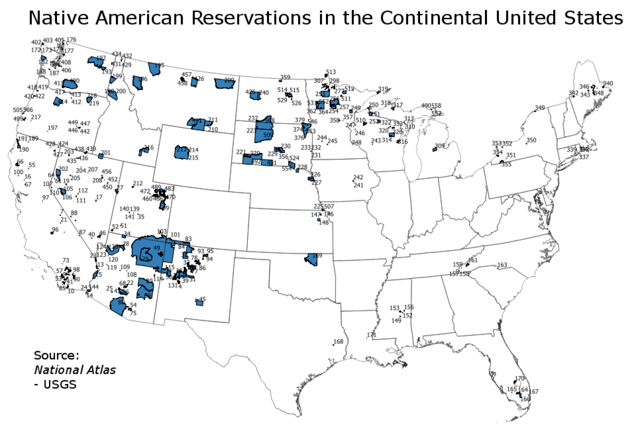
Yes, there are over 200 tribal law enforcement agencies that are outside of the control of the states.

Tribally operated law enforcement agencies provide a broad range of public safety services. They respond to calls for service, investigate crimes, enforce traffic laws, execute arrest warrants, serve process, provide court security, and conduct search and rescue operations. 

So let’s go back to NamUs and see how it works with these agencies.

To encourage tribal law enforcement participation, the NamUs system is pre-loaded with information on more than 300 federally-recognized tribal law enforcement agencies so officers can quickly access cases and share information. 

(Over 200, over 300, we’ll figure the real number out later.)

In many cases, the relevant federal agencies merely operate as clearinghouses so that tribal, state, or other agencies can seamlessly work together to solve crimes. Because crime often crosses state (or reservation) borders, this collaboration is crucial. It lets the relevant law enforcement agencies achieve their common purpose:

…to increase the chances of case resolution.

The difference between biometrics and biometrics

(Part of the biometric product marketing expert series)

We’ll get to Bob a little later. But let me start off by telling you something.

AAABWTCI.

That stands for “acronyms are a bad way to convey information.”

But you didn’t know that.

Many of us like to use acronyms to quickly convey information, but we need to remember that different people use acronyms in different ways.

For example, in my circles, people generally understand “FBI” to refer to the United States Federal Bureau of Investigation.

But try telling that to the Faith Bible Institute, or to an employee of Frontier Booking International. (I’ll admit that the founder of the latter company, Ian Copeland, chose the company name deliberately. After all, his brother Miles founded I.R.S. Records, and their father worked for the Central Intelligence Agency.)

It’s best not to use acronyms at all and instead use full words. Because if you use full words, then (as Ed McMahon would say) you will ensure that EVERYONE knows exactly what you mean.

By photo by Alan Light, CC BY 2.0, https://commons.wikimedia.org/w/index.php?curid=3048124

Allow me to play the Johnny Carson role and say that Ed was WRONG.

By Johnny_Carson_with_fan.jpg: Peter Martorano from Cleveland, Ohio, USAderivative work: TheCuriousGnome (talk) – Johnny_Carson_with_fan.jpg, CC BY 2.0, https://commons.wikimedia.org/w/index.php?curid=12750959

After all, the great English philosopher Robert Plant (I told you we’d get to Bob eventually) noted,

“You know sometimes words have two meanings.”

“Stairway to Heaven.” https://genius.com/Led-zeppelin-stairway-to-heaven-lyrics

Take the word “biometrics.” In my circles, people generally understand “biometrics” to refer to one of several ways to identify an individual.

By Dawid Weber – Praca własna, CC BY 3.0, https://commons.wikimedia.org/w/index.php?curid=102148689

But for the folks at Merriam-Webster, this is only a secondary definition of the word “biometrics.” From their perspective, biometrics is primarily biometry, which can refer to “the statistical analysis of biological observations and phenomena” or to “measurement (as by ultrasound or MRI) of living tissue or bodily structures.” In other words, someone’s health, not someone’s identity.

Fun fact: if you go to the International Biometric Society and ask it for its opinion on the most recent FRVT 1:N tests, it won’t have an answer for you.

The terms “Biometrics” and “Biometry” have been used since early in the 20th century to refer to the field of development of statistical and mathematical methods applicable to data analysis problems in the biological sciences.

Recently, the term “Biometrics” has also been used to refer to the emerging field of technology devoted to the identification of individuals using biological traits, such as those based on retinal or iris scanning, fingerprints, or face recognition. Neither the journal “Biometrics” nor the International Biometric Society is engaged in research, marketing, or reporting related to this technology. Likewise, the editors and staff of the journal are not knowledgeable in this area.  

From https://www.biometricsociety.org/about/what-is-biometry

This can confuse people when I refer to myself as a biometric proposal writing expert or a biometric content marketing expert. I’ve been approached by people who wanted my expertise, but who walked away disappointed that I had never written about a clinical trial.

Despite this, there are some parallels between biometrics and biometrics. After all, both biometrics and biometrics take body measurements (albeit for different reasons), and therefore some devices that can be used for biometry can sometimes also be used for identification, and vice versa.

But only sometimes. Your run-of-the-mill optical fingerprint reader won’t contribute to any medical diagnosis, and I’m still on the fence regarding whether brain waves can be used to identify individuals. I need a sample size larger than 50 people before I’ll claim brain waves as a reliable biometric.

Of course, a biometric device such as an Apple Watch can not only measure your biometrics, but also your geolocation, which is another authentication factor.

Technological rapidity and #COVID19 #Omicron responses

So I took almost a week off from “bredemarketing,” but it’s not like anything happened.

Well, except for a new COVID-19 variant and the attending travel shutdowns and other changes.

And now people are wondering when Omicron will hit the United States. Frankly, it’s probably already here.

But as we become more familiar with things, and as our technology improves, our responses are quicker.

Take this Thermo Fisher Scientific press release.

Thermo Fisher Scientific Inc. (NYSE:TMO)…today confirmed that its polymerase chain reaction (PCR) TaqPath COVID-19 Combo Kit*, and TaqPath COVID-19 CE-IVD RT-PCR Kit*, which test for the presence of SARS-CoV-2, are not impacted by the emerging B.1.1.529, or Omicron variant, enabling accurate test results.

https://thermofisher.mediaroom.com/2021-11-29-Thermo-Fisher-Scientific-Confirms-Detection-of-SARS-CoV-2-in-Samples-Containing-the-Omicron-Variant-with-its-TaqPath-COVID-19-Tests

That’s quick.

But test results are one thing; minimization of harm is another.

Moderna is already at work on a treatment to address the Omicron variant. Within the next few weeks, he said the company will know whether the new strain will require an altogether new vaccine, a specially formulated booster, or simply a higher dose of vaccines currently available.

From https://www.newsweek.com/moderna-estimates-weeks-before-omicron-vaccine-resistance-understood-variant-spreads-1653983

Considering how long it took to develop the first vaccines (which were already developed at a breakneck pace), that’s quick also.

FindBiometrics didn’t find THIS biometric

On Monday, FindBiometrics posted its annual “year in review” survey of biometrics professionals, asking a number of questions.

FindBiometrics asked about face and finger, the most commonly used biometric modalities. But there were also questions that touched upon voice biometrics, behavioral biometrics, and several other biometric modalities.

You could echo the late Ed McMahon and say that FindBiometrics covered EVERY meaningful biometric modality in its 2021 year in review survey.

Allow me to play the Johnny Carson role and say that Ed was WRONG.

By Johnny_Carson_with_fan.jpg: Peter Martorano from Cleveland, Ohio, USAderivative work: TheCuriousGnome (talk) – Johnny_Carson_with_fan.jpg, CC BY 2.0, https://commons.wikimedia.org/w/index.php?curid=12750959

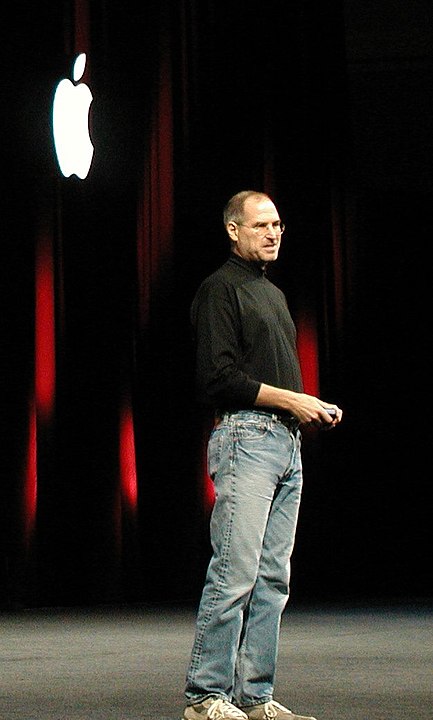
Or let me play the role of Steve Jobs and say that there’s ONE MORE THING.

By mylerdude – Flickr, CC BY 2.0, https://commons.wikimedia.org/w/index.php?curid=182423

So, what did FindBiometrics miss in its year in review? Only the “one more thing” that will revolutionize law enforcement forever.

Two announcements that changed law enforcement booking (in some states, anyway)

By Mauroesguerroto – Own work, CC BY-SA 4.0, https://commons.wikimedia.org/w/index.php?curid=35919357

I’ve written about rapid DNA before (for example, after the Surfside building collapse). Rapid DNA is a process that automatically generates a DNA profile in less than two hours, as opposed to more manual-intensive procedures that could take much longer, especially when huge backlogs result in many months’ wait before DNA can be processed.

Rapid DNA cannot be used for every DNA application (commingled DNA is “an extremely critical challenge” and very difficult to process automatically), but there’s one instance in which DNA can technically be used, and that’s in the arrest/booking process.

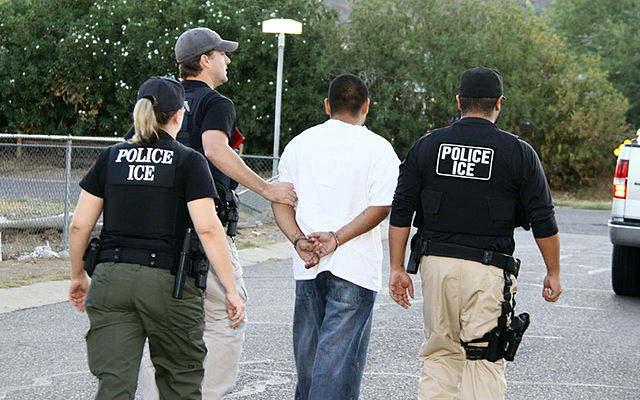
By U.S. Immigration and Customs Enforcement (Department of Homeland Security) – http://www.ice.gov/news/galleries/index.htm#tab_stories, Public Domain, https://commons.wikimedia.org/w/index.php?curid=20745424

What if, at the same time that an arrested person provides the state with his or her fingerprints, the person also provides a DNA sample?

Then, at the same time that the fingerprints are searched against local, statewide, and national databases to verify the person’s identity and (via “reverse searches”) see if the person is responsible for additional crimes, the DNA can also be searched against various databases.

However, even in states that authorized DNA collection for some arrests, the U.S. Federal Bureau of Investigation wouldn’t allow rapid DNA profiles collected in a booking environment (as opposed to a crime laboratory) to be searched against its database.

Until February 2021.

Effective February 1, 2021, ANDE received approval from the FBI for its technology to be deployed in booking stations to support processing of DNA samples from qualifying arrestees and the automatic upload and searching of these DNA IDs against the National DNA Index System (NDIS). 

ANDE (formerly NetBio) is one of two manufacturers of rapid DNA systems. The other manufacturer, Thermo Fisher Scientific (formerly the independent company IntegenX), followed with its own announcement in July.

The U.S. Federal Bureau of Investigation (FBI) has approved Thermo Fisher Scientific’s Applied Biosystems RapidHIT ID DNA Booking System for use by law enforcement booking stations to automatically process, upload and search DNA reference samples from qualifying arrestees against the U.S. National DNA Index System (NDIS) CODIS database.

This means that today’s multimodal booking environments, which already support capture of friction ridges (fingerprints and palmprints), faces, and occasionally irises, can now also capture DNA.

Now I’ll grant that the continued expansion of mobile driver’s licenses to more states, as well as the final approval of the ISO/IEC 18013-5 standard, will have a greater impact on society at large. After all, the number of people with driver’s licenses is much larger than the number of people who get arrested. (Currently.)

But quadmodal booking biometrics deserves a mention. If we’re going to talk about quadmodal learning, let’s talk about quadmodal biometrics (finger, face, iris, DNA) also.

Maybe FindBiometrics will devote more time to DNA in its 2022 year in review.

OK, two MORE things

By the way, if you want more information about when the FBI authorizes rapid DNA and when it does not, as well as the standards that apply, check this page.

The FBI did not have anything to do with this video, which is tangential to the topic at hand, but I’m sharing it because Bob Mothersbaugh not only has a tasty guitar solo, but also a prominent singing part.

What are you creating in December to generate January sales?

How many of you are thinking about 2022?

By Anthony Quintano from Hillsborough, NJ, United States – Working New Years Eve Social Media for NBC, CC BY 2.0, https://commons.wikimedia.org/w/index.php?curid=37961644

How many of you are ALREADY working toward accomplishing your 2022 goals?

I recently sent an email to someone…actually more than one email to more than one someone…that listed some of the things that some companies are already doing in November 2021 to ensure that they start 2022 on the right foot. I happen to know what these companies are doing, because Bredemarket is helping them to do these things.

  • 13 service descriptions
  • A library of standard RFP responses
  • Two case studies
  • Two statements of work
  • A response to an RFI
  • A white paper
  • An article featuring a technology partner
  • Analyses of NIST test results
  • An unsolicited proposal letter template
  • A pitch deck

As Bredemarket completes these projects (some of them are already completed), these companies are positioning themselves for increased business in 2022. Perhaps one of those two case studies, or that unsolicited proposal letter template, will help a company win a new customer.

What about your firm? What content does your firm need to get out your message?

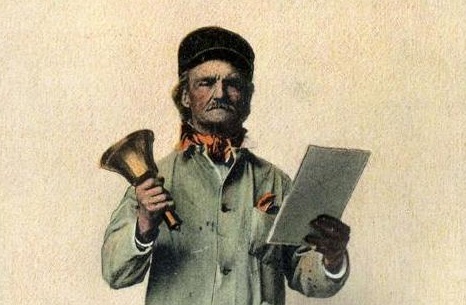
Yes, it’s the town crier again. I like the guy. By Unknown author – postcard, Public Domain, https://commons.wikimedia.org/w/index.php?curid=7691878

November is almost gone, but there’s still time in December to prepare your 2022 content. And as your regular staff takes holiday vacations, perhaps a contractor may prove useful to you.

That’s where Bredemarket can help you. Whether you need a case study, a white paper, a proposal response, or something else (look at “what I do“), Bredemarket can provide you with that important holiday season assistance to get ready for 2022. If you can use Bredemarket’s assistance:

But as for me, I have a statement of work to write.

Another reason to repurpose old content

Earlier this week I was asked about one of the posts that I wrote in the Bredemarket blog. I had to confess that I hadn’t thought about the topic much recently.

After this conversation, I realized that the referenced post was written back in July.

Because I’ve written over 200 posts in the Bredemarket blog over the past year-plus, some of them kind of get merged together in my mind.

And in this particular case, my thoughts on the original topic have evolved since the summer.

So if you see a future post that revises and updates something I wrote about four months ago, now you know why.

I hope that the new post won’t be dramatically different from the old one.

The dangers of removing facial recognition and artificial intelligence from DHS solutions (DHS ICR part four)

And here’s the fourth and final part of my repurposing exercise. See parts one, two, and three if you missed them.

This post is adapted from Bredemarket’s November 10, 2021 submitted comments on DHS-2021-0015-0005, Information Collection Request, Public Perceptions of Emerging Technology. As I concluded my request, I stated the following.

Of course, even the best efforts of the Department of Homeland Security (DHS) will not satisfy some members of the public. I anticipate that many of the respondents to this ICR will question the need to use biometrics to identify individuals, or even the need to identify individuals at all, believing that the societal costs outweigh the benefits.

By Banksy – One Nation Under CCTV, CC BY-SA 2.0, https://commons.wikimedia.org/w/index.php?curid=3890275

But before undertaking such drastic action, the consequences of following these alternative paths must be considered.

Taking an example outside of the non-criminal travel interests of DHS, some people prefer to use human eyewitness identification rather than computerized facial recognition.

By Zhe Wang, Paul C. Quinn, James W. Tanaka, Xiaoyang Yu, Yu-Hao P. Sun, Jiangang Liu, Olivier Pascalis, Liezhong Ge and Kang Lee – https://www.frontiersin.org/articles/10.3389/fpsyg.2015.00559/full, CC BY 4.0, https://commons.wikimedia.org/w/index.php?curid=96233011

However, eyewitness identification itself has clear issues of bias. The Innocence Project has documented many cases in which eyewitness (mis)identification has resulted in wrongful criminal convictions which were later overturned by biometric evidence.

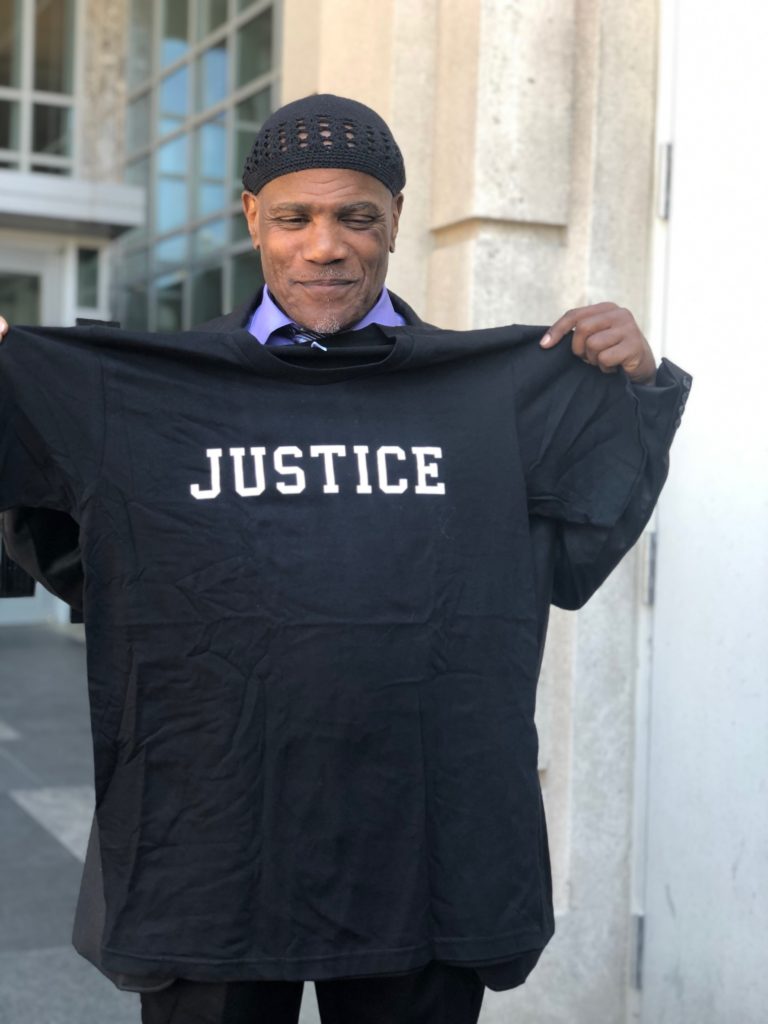
Archie Williams moments after his exoneration on March 21, 2019. Photo by Innocence Project New Orleans. From https://innocenceproject.org/fingerprint-database-match-establishes-archie-williams-innocence/

Mistaken eyewitness identifications contributed to approximately 69% of the more than 375 wrongful convictions in the United States overturned by post-conviction DNA evidence.

Inaccurate eyewitness identifications can confound investigations from the earliest stages. Critical time is lost while police are distracted from the real perpetrator, focusing instead on building the case against an innocent person.

Despite solid and growing proof of the inaccuracy of traditional eyewitness ID procedures – and the availability of simple measures to reform them – traditional eyewitness identifications remain among the most commonly used and compelling evidence brought against criminal defendants.”

Innocence Project, Eyewitness Identification Reform, https://innocenceproject.org/eyewitness-identification-reform/

For more information on eyewitness misidentification, see my November 24, 2020 post on Archie Williams (pictured above) and Uriah Courtney.

Do we really want to dump computerized artificial intelligence and facial recognition, only to end up with manual identification processes that are proven to be even worse?