
Yes, I’m finally to THAT issue: hidden watermarks inserted by Anthropic’s Claude (and by other AI tools via content credentials…sometimes). So let’s look at those first before looking at Claude, because that will be instructive.
Credentials from the Coalition for Content Provenance and Authenticity
Let’s go back to last November, when I noticed that LinkedIn inserted a symbol on a Google Gemini image I uploaded.

LinkedIn had detected image metadata that revealed the origin of the image.

I did not freak out over the revelation that the image in question was created by Google generative AI. I usually disclose such things anyway.
Unfortunately, this metadata is not always there, and not always revealed. If I download an image and then directly upload it to LinkedIn, the content credentials symbol appears. But if I directly upload it to Facebook or WordPress, it doesn’t. And if I upload it to WordPress then download it, the content credentials are often stripped.
To fix this we need durable content credentials…but we’re not there yet.
The Claude watermark
Which brings us to Claude.
Why did Claude do this anyway? According to Superpath, the European Union.
“The EU recently put the AI Act in place to regulate AI products and protect normies like you and me from potential risks of nefarious AI use. They’re mostly trying to prevent stuff like manipulation (e.g., deepfakes) and classification (e.g., facial recognition databases).
“Part of the AI Act forces LLMs like Claude to clearly label when content has been processed by AI.”
So Claude did it because it wanted to stay on the EU’s good side. Heck, even Apple abandoned the Lightning connector to appease the EU.
What is “processed”?
To understand what “processed” means, we need to understand the three uses of AI-generated text.
- Don’t use AI-generated text at all.
- Only use AI-generated text.
But the two extremes are rarely used (except for Bredebot). Instead we opt for the third choice.
- Use a mixture of human-written and AI-generated text.
As you know from what I’ve shared before, I use AI for ideation (before I write a single word) and touch ups (after I have drafted it). So if the ALL CAPS material below represents AI-generated text, the true origins of my content may appear like this:
INCREASING REVENUE WITH Focused Messaging
HOW DO YOU GET PROSPECTS TO BUY? NOT WITH messaging that wanders through the plains like a drunken wildebeest.
So if some tool analyzed text that was partially written by Claude, you would get a confusing mishmash in which every fourth word was written by Claude and the other words weren’t.
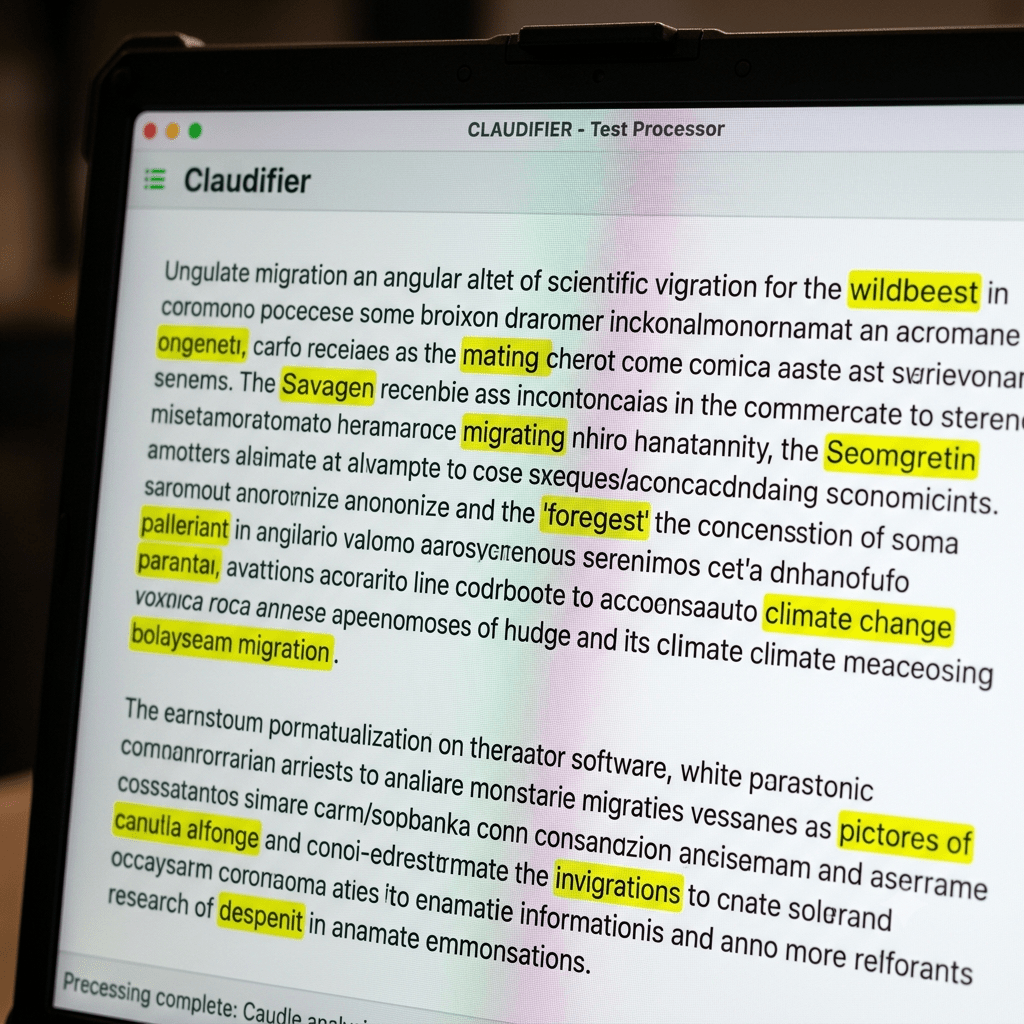
Assuming you pasted the Claude output into your document. But what if you just read Claude’s suggestions…and manually typed them in yourself? No one would know.
What does this mean?
Now let’s look at the effects of Claude and other watermarks. Here’s what Superpath says:
“I am willing to put my stellar reputation on the line and confidently predict this will have little-to-no impact for B2B content folks who use (or don’t use) AI.”
Think about it.
- The folks who insist that you should never ever use AI, Wikipedia, or Cliffs Notes already get bent out of shape when they see a single em dash—and they’ll continue to freak out if they discover Claude corrected the spelling of “ephemeral.”
- The folks who are already freaked out over Bredebot’s 100% AI writings will continue to freak.
- Everyone else won’t care. You would think that Bredemarket’s clients would want to know if I was really writing all my stuff for them, but as long as they like the output they never ask. (And I’m an opinionated writer anyway.) In fact, one client set me up with a paid Perplexity account to help in my analysis work for the client.
So I’ve dispensed with that tempest in a teapot and can move on to more important things…such as cultural appropriation in AI images.



 Bredemarket