On Data Sharing, Flock, and Other Entities

Jim was at his desk when the phone call came in.

“Hey, Jim! This is Charlie!”

Jim hadn’t talked to Charlie in years.

“Hey, um, Jim, I understand that your agency has some license plate recognition capabilities.”

Jim confirmed this.

“Um, mind if I take a look at it?”

Jim asked what Charlie wanted to see.

“You know…stuff.”

If you boil down the controversies about Flock Safety, Clearview AI, and other investigative software packages, some of them come down to these data sharing issues.

Flock Safety may sign a contract with a particular local police department, the police department may use the software only for authorized purposes, and may ensure that department personnel are trained not to use the software to stalk ex-girlfriends and the like.

But in law enforcement, there’s a long-standing tradition of law enforcement agencies helping each other out.

“Interagency collaboration in law enforcement is the process of multiple agencies working together to share resources, coordinate responses, and improve public safety outcomes. From routine operations to large-scale emergencies, collaboration between agencies is essential for effective policing.”

As long as the two agencies have similar purposes, no problem.

But what if the second agency has different priorities than the first?

Let’s take an extreme example.

  • Agency 1 uses Flock Safety data ONLY to find people who run red lights or speed.
  • Agency 2 uses Flock Safety data to find people who are not running red lights, but are going to suspicious places and associating with suspicious people.

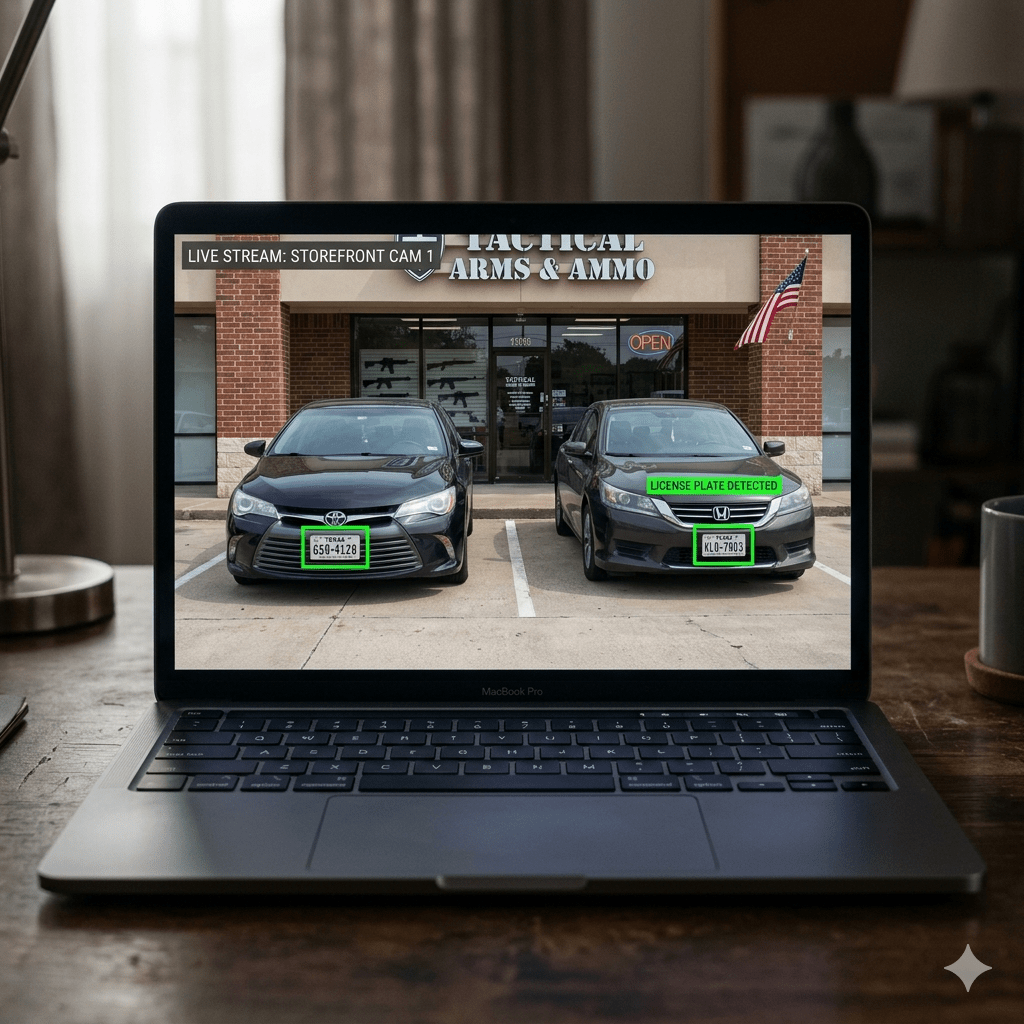
Is this justified investigation, or overreaching surveillance?

And, more importantly, does Agency 1 agree with these uses?

Just thinking out loud…what if the Flock licenses with these agencies prohibited agencies from letting other agencies use the software? There’s even an economic justification for it: every agency that borrows the Flock account of the first agency is a potential loss of sales to Flock.


John E. Bredehoft, (Semi) Super IC

I read Tamara Grominsky’s weekly newsletter, and the 177th edition caught my eye.

It opened as follows:

What does the future of PMM leadership look like?

“The Super IC role is so hot right now.”

For those unfamiliar with the “IC” acronym, Grominsky was referring to an individual contributor, as opposed to a manager of people.

The Super IC

Grominsky credits Elena Verna with the “Super IC” concept:

“I’m talking about employees with no direct reports who can do work that used to take a whole team (all while still getting paid like a leader). I’ve been calling this new role the High-Impact Individual Contributor.”

But I prefer “Super” to “High-Impact,” because it’s a lot more visual.

Google Gemini.

Perhaps I got a little too carried away with Tamara Grominsky’s “Super IC” idea. But at least you can’t accuse me of imposter syndrome.

But one distinguishing feature of both Grominsky’s and Verna’s definitions is an extremely capable lone wolf who, due to today’s tools, can do what used to require an entire team. Grominsky expressed it as follows, using the common “PMM” acronym to refer to a product marketing manager:

“Now, with tools like Claude Code, a PMM can vibe code the landing page, build an interactive demo, create a dashboard, and ship experiments themselves. The work that used to require a team and a few weeks can happen in an afternoon.”

In Verna’s case, she is currently living the “Hi-C” dream.

“My role is basically to parachute in and out of different projects and teams wherever I can create the most leverage. But mostly, I just have a huge block of IC work that I’m doing on my own. I’m running campaigns. Driving partnerships (did you see my latest LinkedIn x Lovable perk?). I’m coding my own growth optimizations and product updates. These are things that I used to rely on a large Growth org to do… now, I can do it all with just me, myself, and I.”

Now I’m not sure that I can do this for an organization as an outside consultant, unless I am REALLY embedded into the organization. Sure I can perform a number of the required tasks (although my vibe coding needs a bit of work).

Google Gemini.

But I don’t know that I can do this on behalf of an organization that does not employ me. The organization would be understandably leery of an outsider having all that power.

But certainly an organization’s EMPLOYEE with appropriate experience and authority can take the reins and call the shots, contributing directly to growth.

What about a SEMI Super IC?

But things are not binary, and it’s possible to be somewhere on the continuum of IC-dom: a SEMI Super IC, as it were.

In that case, I as the Semi Super IC would take care of most of the work, and just toss a completed artifact over to my consulting client for the final steps.

Google Gemini.

In this case, I (as Bredemarket) take over as much of the load as possible.

Google Gemini.
  • I do NOT require you to provide me with a briefing book. I use my own questions to effectively assemble everything that a brief would contain.
  • While I DO need you to review what I delivered, there have been many times when my clients have accepted my drafts without question.
  • The one big barrier to a lone wolf delivery model is the need to access your tools for the final distribution. One of my clients actually gave me privileges within the company blog and the company LinkedIn account, and I regularly posted things directly to LinkedIn on behalf of the company. In any case, there was no need to transfer content from my Microsoft Word document to the client’s own tools.

So you can see how Bredemarket can serve as a powerful “super” individual contributor, freeing you for other priorities.

If you need my superpowers within your organization, why not set up a meeting with me?

Google Gemini.

Sorry for sharing it again, but now I’m strutting around proud.

My Out-of-schedule Appearance in Biometric Update in 2026

This was NOT supposed to happen.

I broke the rule that I would only appear in Biometric Update every ten years.

  • While with MorphoTrak, I appeared in the publication in 2015.
  • While with Bredemarket, I wrote a guest post in 2025.
  • So I wasn’t supposed to appear until 2035.

But I did appear early…in 2026. 9 years early. You’d think I was a North Korean spy or something. (Again, I’m not.)

Google Gemini. It’s a long story.

My outreach, and my listing

Back to my breaking the ten year rule.

I contacted Biometric Update this morning and asked to be added to Biometric Update’s list of biometrics consulting solutions. And they answered.

Bredemarket’s entry is here.

Bredemarket, biometrics consulting solution.
From Biometric Update.

So there I am, along with Acuity Market Intelligence, Goode Intelligence, and Liminal.

And yes, I privately disclosed—although I guess now it isn’t private any more—my self-centered motivation for appearing with other leading biometric product marketing consultants on this page, and elsewhere.

The first company named in Gemini’s answer is Acuity Market Intelligence, C. Maxine Most’s company. I definitely can’t argue with that.

Next is Goode Intelligence. Can’t argue with that either.

Third is Liminal. Ditto….

Guess who Gemini did NOT explicitly mention?

The biometric product marketing expert.

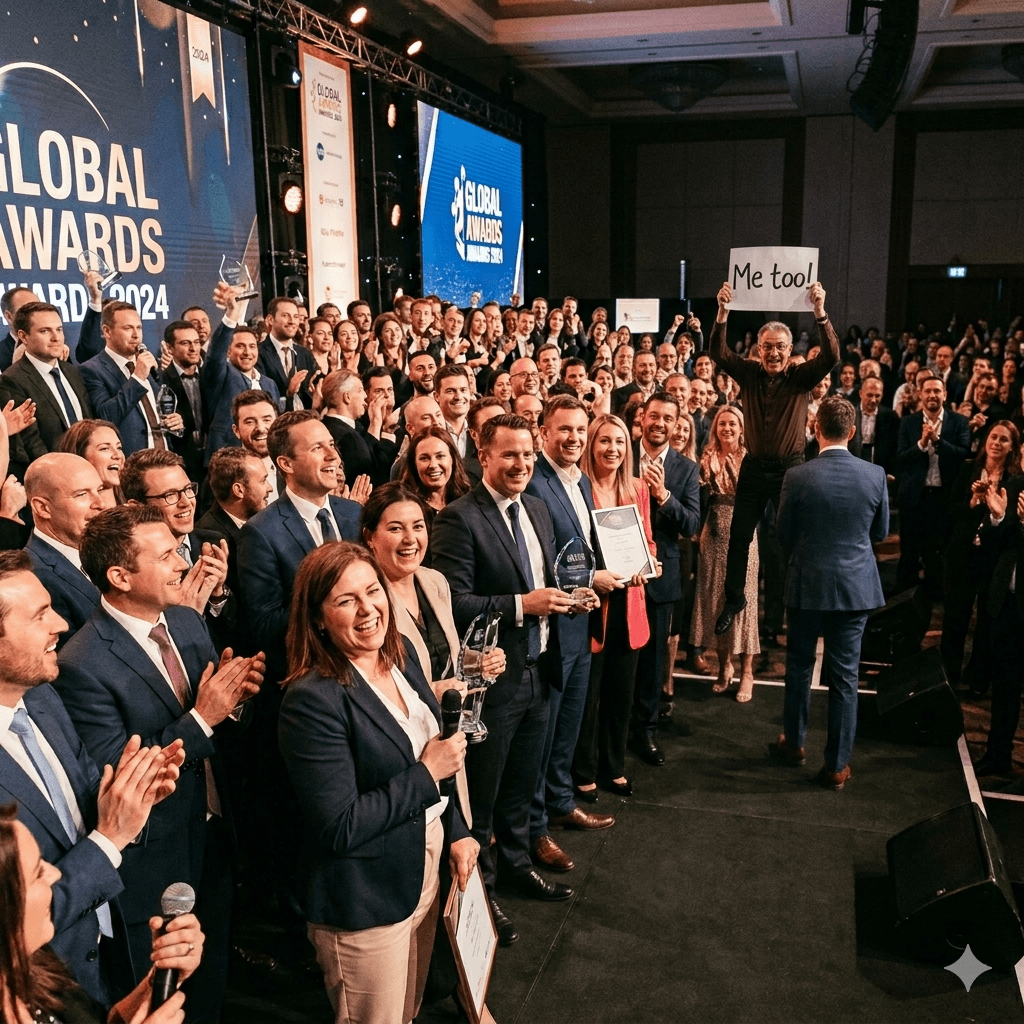
I want to be “me too” when this question is asked.

“Revealed,” Google Lyria, Public Domain.

“Always Be Selling”

As I previously noted, I can provide consulting clients with discussions of privacy, algorithmic bias, and both business-to-government (B2G) and business-to-business (B2B) issues.

If I can help your identity/biometric firm in these and other biometric product marketing areas, including content, proposals, and analysis, schedule a meeting with me.

Google Gemini.

The Prospect Conversation

Businesses are learning the difference between a word and a question.

  • Way back a decade ago, if we wanted something, we would choose the proper word or words—maybe something like “biometric product marketing expert”—and search for those words.
  • Today, we go to our favorite large language model tool and ask a question—maybe something like “Who is a biometric product marketing expert?”—and get an answer to our question.

But don’t take my word for it. Here is what Moxie (just north of me in Upland) says:

“People talk to AI differently than they type into Google. We optimize your content to match conversational, long-tail questions (e.g., “Who is an affordable estate lawyer near Claremont?”), positioning your website as the exact source material AI tools use to answer users.”

What questions are your prospects asking? Do you want to discuss this? Talk to Bredemarket.

Bredemarket.

Or if you’re sick of me, talk to Moxie. It (actually she: Stephanie Munson) has REAL Google Business Listing expertise that I do not offer.

https://www.needmoxie.com/contact

Despite the Friction, I Read This Message Anyway. And Wished I Hadn’t.

I simplified my social life a few months ago by no longer posting on Instagram. I don’t even have Instagram on my phone any more.

But Instagram Meta-relative Facebook is “nice” enough to inform me when I receive Instagam messages, as well as unsolicited Instagram message requests. Which I obvously can’t read on my phone (in part because I also removed Meta for Business).

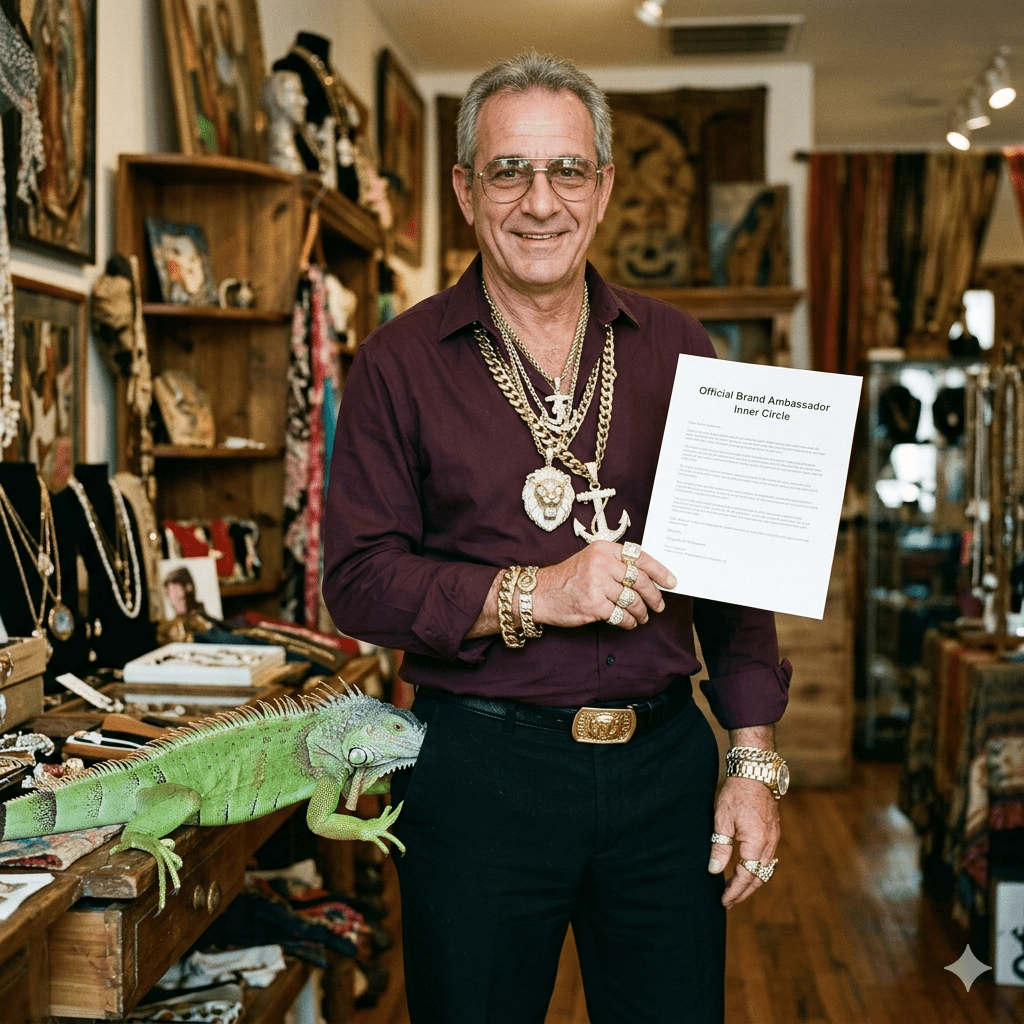
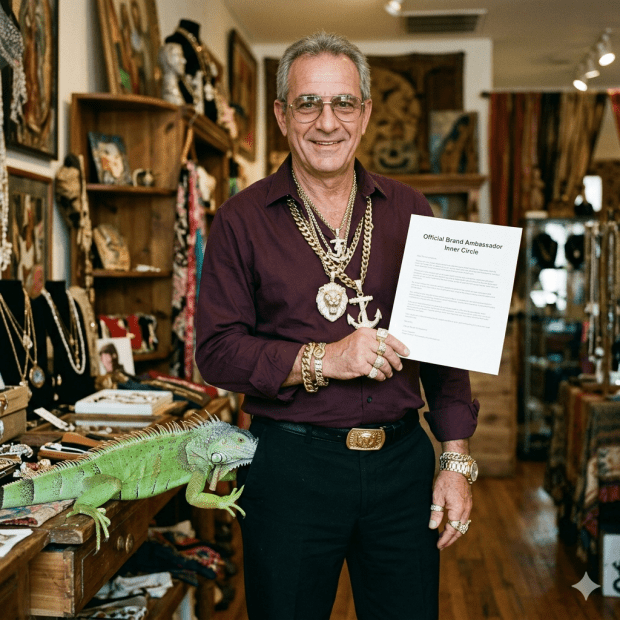
Joining the “brand ambassador” inner circle

So one day when I happened to be on my laptop, I brought up my Instagram account. I wanted to see the latest message request, reportedly from “Navin Nandra”…even though I already knew it was in a languge using the Cyrillic alphabet. And probably wouldn’t bring Bredemarkeet a ton of business.

So here’s what I had to do:

  • Go from my phone to my laptop.
  • Log in to Instagram.
  • Find my message requests.
  • Translate the message request that I received.

After translating, I was right in guessing that this was a waste of time. Here is how the message began:

“Good day! This is the brand manager for the clothing brand PRIME Wear

“I’m messaging you from a tech/alternative account—we use these to avoid getting blocked by Instagram Direct limits.

“We absolutely love your style and the content on your blog!

We would love to invite you to join our inner circle of PRIME brand ambassadors.”

Um, no. These “we love your style” messages are always amusing to me. Especially when account number one tells you to contact account number two. Because reasons.

Google Gemini.

Yeah, “ambassador.” My last name isn’t Jenner, and my look isn’t Jenner either.

Google Gemini.

The underlying scams

So I asked Google Gemini about the scam behind these amazing offers, because I suspected a scam. To please me, Google Gemini said that there are scams related to this. I could have fact-checked this on a live web page, but I had already wasted too much time on this.

Here’s one of Gemini’s reported scams:

You are told you have been “hand-picked” to represent the brand. They offer to send you jewelry, sunglasses, or clothing for “free” so you can take photos with it.

  • The Catch: They give you a discount code that brings the item’s cost to $0, but you have to pay $10 to $15 for shipping.
  • The Reality: The brand is usually a front for a dropshipping operation. They buy the items from bulk wholesale sites for less than $1. Your “shipping fee” actually covers the cost of the item and gives the scammer a profit.
  • The Outcome: You paid full retail price (or more) for a low-quality, cheap item, while giving them free advertising.

Bad enough, but it could get a lot worse.

Some requests are much more malicious. A “talent scout” or “brand manager” will message you offering high-paying sponsorships ($500+ per post), even if you only have a few hundred followers.

  • The Catch: To “set up the partnership” or “verify your account,” they send you a link to a portal or ask for your 2FA (Two-Factor Authentication) code.
  • The Reality: The link leads to a fake Instagram login page designed to harvest your password. If you give them a 2FA code, they will immediately change the email associated with your account, lock you out, and hold your account hostage or use it to scam your friends.

So “Navin Nandra” is now blocked. And I can avoid Instagram again for a while.

Commodity Futures Trading (Wink Wink) and Virtual Private Networks

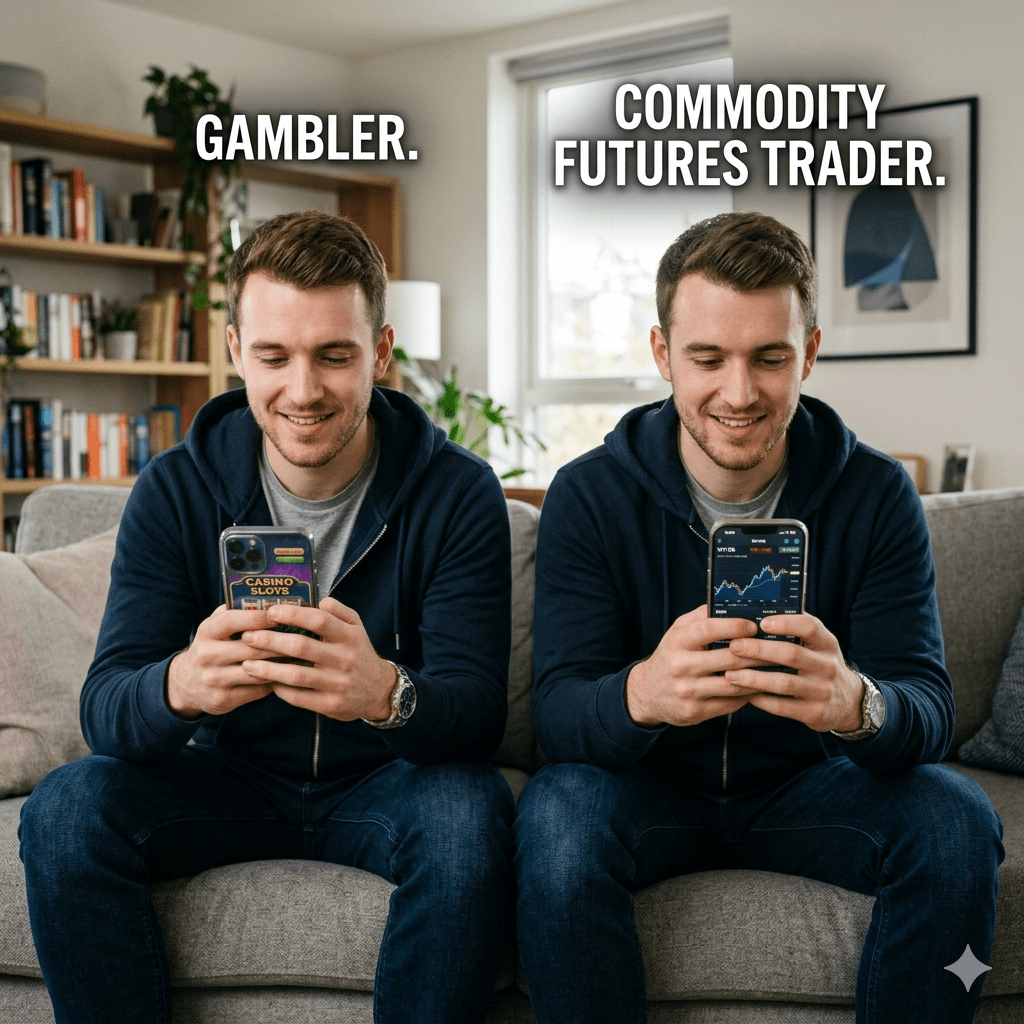
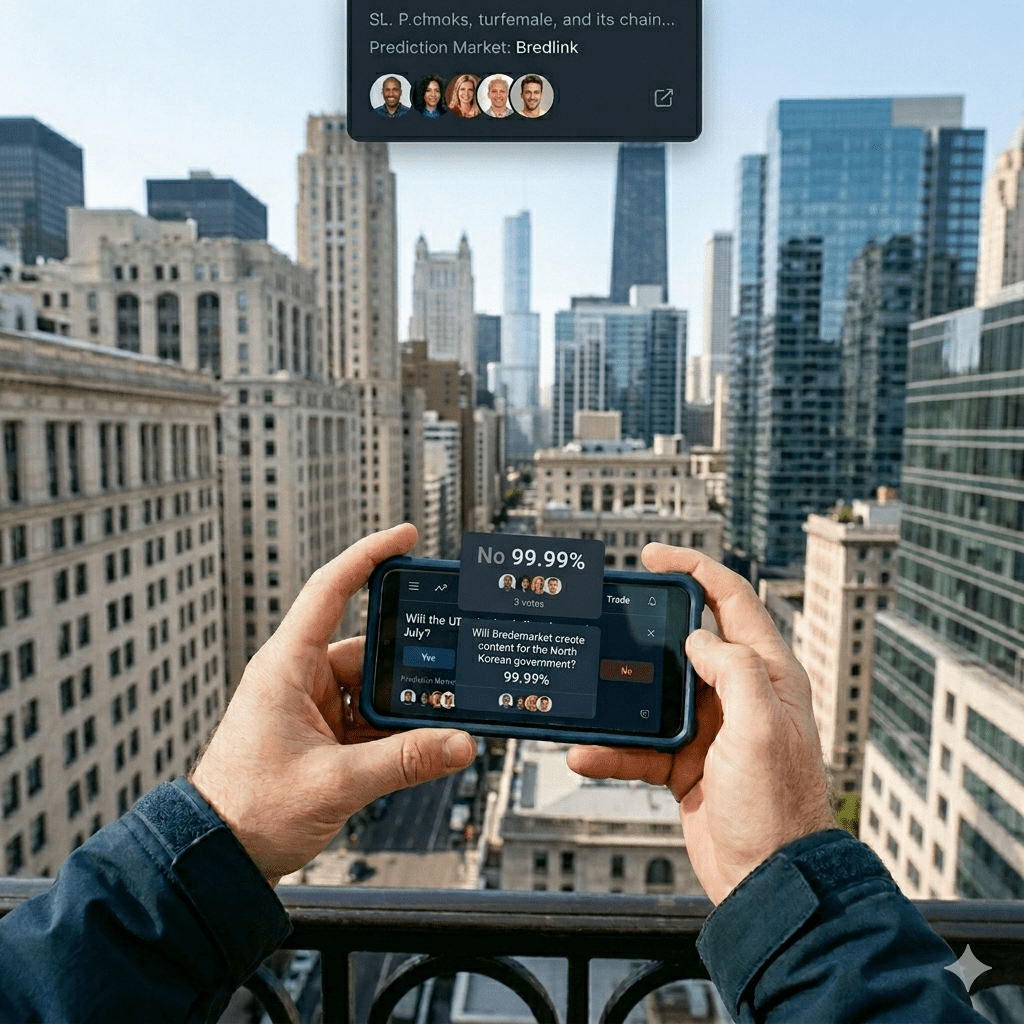
This post begins with an image of a gambler and a commodity futures trader. But if you think the two people are identical, you are sadly mistaken.

Because commodity futures trading is obviously NOT gambling.

And anyone who says “Polymarket and Kalshi are gambling apps” is clearly misinformed.

Google Gemini.

The two referenced apps are part of the prediction market. People buy particular predictions that either make or lose money.

The fact that these predictions are not tangible commodities, but instead relate to future events such as sports games, is entirely coincidental and immaterial to how these apps should be regulated.

Despite what several states claim, regulation of prediction apps properly falls under the Commodity Futures Trading Commission (CFTC), as explained by the President of the United States in a statement.

“It is critically important that the CFTC’s exclusive authority over Prediction Markets is maintained, and that they will thrive. Under my leadership, we are setting “rules of the road” that are the Gold Standard for the States. We cannot have SCUM like Chris Christie, Letitia James, Tim Walz, and JB Pritzker setting the rules! Other Countries are after this new form of Financial Market, and we want to remain at the top.”

Under current federal law (state law is a different issue), markets regulated by the CFTC are legal in all 50 states.

Google Gemini.

Mere gambling apps use geolocation to determine whether a user can legally place a bet. For example, if an app is only legal in Nevada, you technically shouldn’t be able to use it if you and your smartphone are in Bullhead City, Arizona, or anywhere else outside Nevada.

People in CFTC markets don’t have to worry about geolocation, since they can be used in Alabama, or Oregon, or Illinois.

Or do they need to worry?

Polymarket and Virtual Private Networks (VPNs)

Anthony Kimery of Biometric Update wrote an article about “Polymarket’s VPN Crackdown.” Reportedly Polymarket is implementing “tighter enforcement against VPN use.”

“But wait, John,” you’re asking. “Who would use a VPN if Polymarket is legal in all 50 states?”

People located in any of 200 or so other countries.

Google Gemini.

“Polymarket is reportedly blocked or restricted in dozens of countries.

“And this makes VPN detection a central compliance issue. A platform can say it does not allow access from restricted jurisdictions, but that policy is only as strong as its ability to detect users who mask their location.”

Of course any restrictions to prevent illegitimate users also cause adverse friction for legitimate users. In the long term:

“The larger takeaway is that prediction markets are being pushed toward a compliance architecture that looks much more like financial services than the open, permissionless model associated with decentralized crypto platforms.”

So prediction markets, like crypto, are becoming less of a “wild West” and more of a regulated area where everybody, including federal regulators, knows your name.

Google Gemini.