
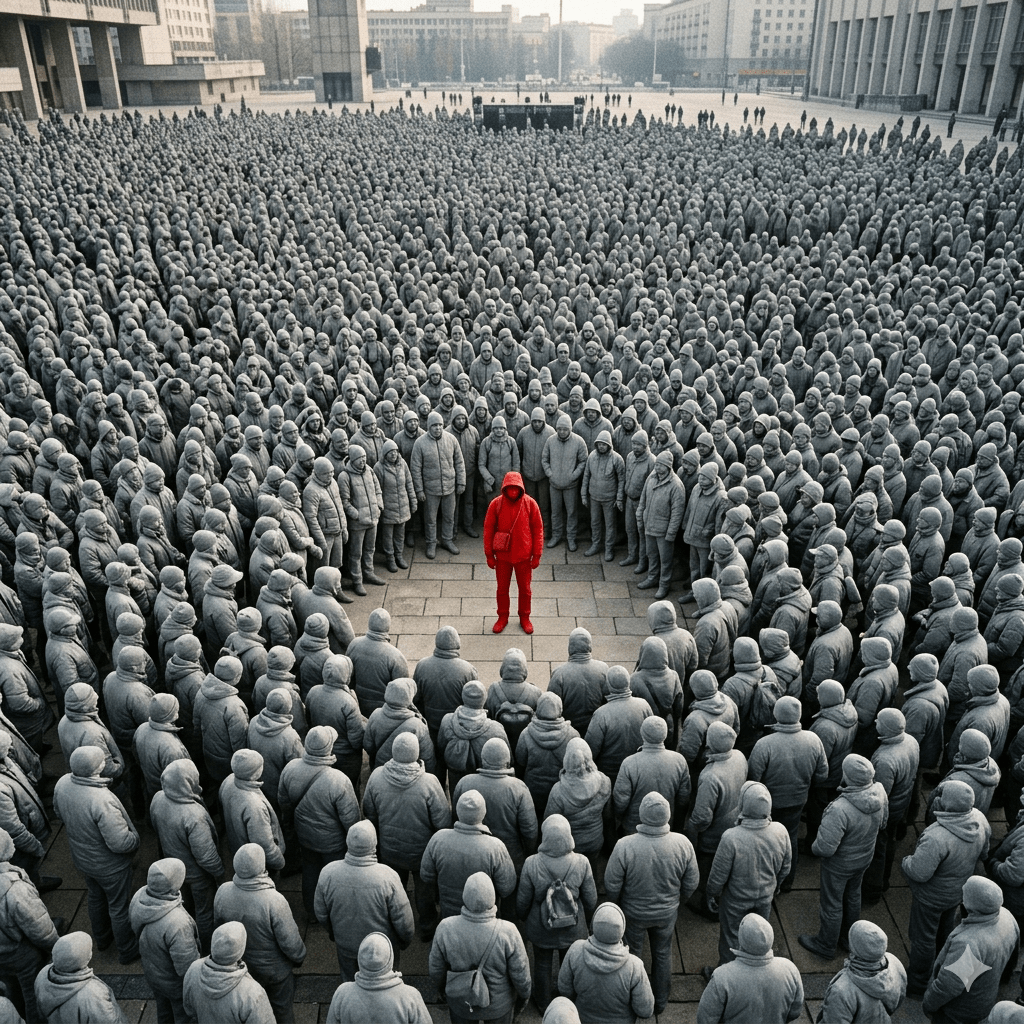
I just reshared Tom Topol’s latest LinkedIn article to my Bredemarket Identity Firm Services readers on LinkedIn and Facebook, focusing on this quote:
“Between October 2025 and April 2026, the EES registered over 52 million border crossings. Entry was refused more than 27,000 times, including to almost 700 people who were identified as posing a security threat to the EU. Several thousand additional travelers were flagged for overstaying the Schengen 90/180-day rule…”
Is Europe over-emphasizing the threat?
But that isn’t how he begins the article.
“Europe’s Biometric Border and the Price of 700 Threats in 52 Million Crossings”
I did the math, and if you only count ACTUAL security threats, rather than visa overstays that COULD become security threats, you’re talking about a very small percentage: 0.0013461538%.
Topol asks:
“The question is not whether the EES caught anything. It is whether what it caught justifies what it costs: in financial terms, in operational disruption, and in the permanent erosion of informational privacy for hundreds of millions of innocent travelers.”
Let’s look at operational disruption. Topol cites GDPR Article 35’s requirement that “a Data Protection Impact Assessment must justify the necessity, suitability, and proportionality of any system processing biometric data at scale.” Topol cites a Spanish case that failed to obtain the required assessment (covered by Biometric Update), then extrapolates that EES is a net burden.
Topol acknowledges the deterrent effect—if fraudsters know their biometrics will be captured, they won’t attempt the fraud—but then notes that the argument “is also entirely unverifiable, and it has historically been used to justify the expansion of every surveillance system ever built.”
Bringing it all back home
Take the experience in my own country.
This isn’t a border issue, but when I joined the biometric industry in 1994, Los Angeles County was beginning to use fingerprint biometrics to ensure that the right people received government benefits—and the wrong people didn’t. Back in those pre-iPhone days only criminals gave their fingerprints, so this and other programs had an unsavory taint in the public’s eye. Yes the county saved money, but was this because fraudsters stayed away, or because legitimate users feared their fingerprints would go to the LAPD? The use of fingerprints for welfare benefits has disappeared today.
Returning to border crossings, our own entry-exit system has been justified by statements such as Senator Lindsey Graham’s 2015 claim about the 9/11 terrorists:
“All the hijackers who attacked — attacked us on 9/11 were visa overstays. So it’s more than just the border. You have got to control your visa program.”
According to FactCheck, Graham was off by 89%. Only two of the 19 terrorists were visa overstays. While the terrorists took advantage of flaws in the visa system, they had the visas.
Emotionally, I’m not convinced
Having spent over 30 years in this industry, I’m not about to chuck security out the window.
Emotionally I can’t do it.
And not because of the OVERLY emotional arguments, the “Jane never celebrated her seventh birthday because a cold-blooded smelly killer took her life.”
I’m talking about run-of-the-mill emotion.
And I have a challenge for you.
Tonight, when you go to bed, leave the front door of your house unlocked. After all, the chances of harm from an unlocked front door are minuscule.
I bet Topol locks HIS door at night.

 Bredemarket
1 Comment