In part because when I first tried to get a mobile driver’s license (mDL), I used my OLD physical driver’s license AFTER I had renewed my driver’s license online (but before I received the new physical license). Data mismatch. Rejected.
And in part because I kept on forgetting to perform the additional steps to confirm my identity.
And in part because I didn’t truly NEED the mDL—I haven’t flown anywhere since April 2023, and for some strange reason no vendor of age-controlled products has insisted on carding me.
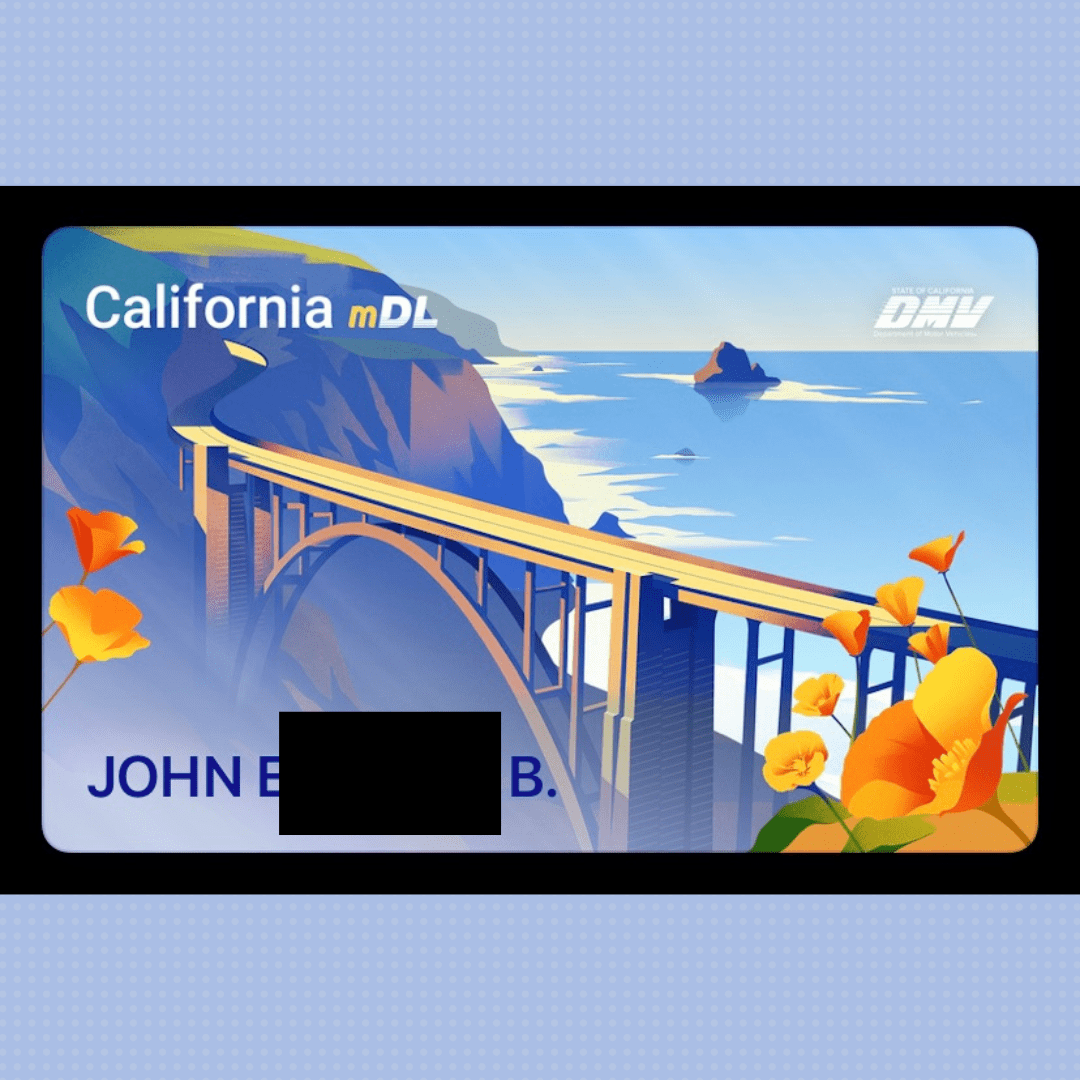
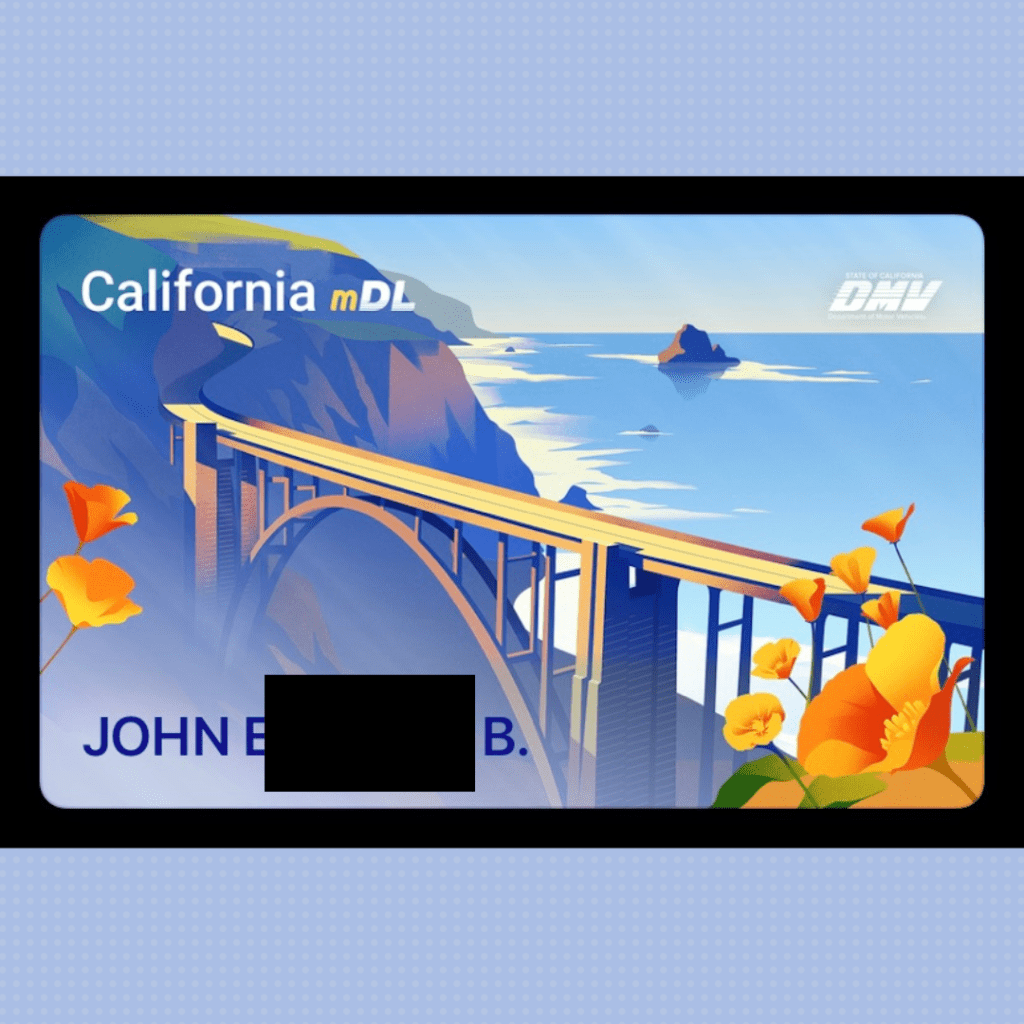
California mobile driver’s license (mDL).
But I now have a California mDL. After talking about mDLs for years as a former IDEMIA employee.
I’ve previously espoused the benefits of mDLs. For example, when a retailer DOES check my age before I buy a beer, the retailer doesn’t learn my address or my (claimed) height and weight. The retailer only needs to confirm that I am old enough to buy a beer.
Oddly enough, I had to block out certain information on my displayed mDL in the image above. Because MY privacy requirements obviously don’t conform to California’s privacy requirements.
While updating my resume today, I discovered that I have now written over 700 blog posts on the Bredemarket site alone. This is number 725, in case you’re keeping score.
And that doesn’t count the myriad of blog posts I’ve written for consulting clients or employers, plus the posts I’ve written for other blogs over the years dating back to 2003.
So in case you’re wondering: yes, I’ve written blog posts before.
And I can augment your company’s resources by writing blog posts (for example, via the Bredemarket 400 Short Writing Service) that drive awareness, consideration, and/or conversion.
While the words “consolidation” and “contraction” have a similar sound and are often linked, they are actually two separate conditions, as you can see in the identity/biometric industry.
Consolidation occurs when separate entities become one. Ping Identity and ForgeRock (Ping Identity). Sagem Morpho and Motorola’s Biometric Business Unit (MorphoTrak). Digital Biometrics and Identix and Viisage and Visionics and Iridian and ComnetiX and don’t forget the ID part of Digimarc and many others (L-1 Identity Solutions).
Contraction occurs when an existing entity becomes smaller. Hikvision’s reported layoff of 1,000 employees is a recent and relevant example.
“Ah, but Hikvision is a special case,” you may be saying. “They’re linked to human rights abuses and sanctioned by Western governments. Many identity/biometric players are not sanctioned.”
But I’m not hearing loud celebrations from these other firms.
I’ve privately heard three separate stories, one of which I just heard on Monday, involving major identity/biometric companies. All three stories involve firms that are not sanctioned. In all three cases the firms perform major business with Western governments. And all three stories involve contraction which would have been unthinkable a mere five years ago.
Not too long ago I compiled a list of four significant events that positively impacted the identity/biometric industry. That list included 9/11, the Boston Marathon bombings, Apple’s Touch ID, and COVID.
I’m starting to wonder whether that last event was, in the long term, a net positive or a net negative.
Do you believe in intentional ignorance, stupidity, and idiocy?
Let me put it another way:
Do you believe in the “death of passwords”?
The rationale behind the decades-long death of passwords movement is that passwords do not provide 99.99999% security, therefore NO ONE should EVER EVER EVER use a password, or ANY other form of knowledge (PIN, first pet, what a traffic light looks like, college GPA, favorite RGB value).
I have a different view.
Knowledge CAN be part of a robust multi-factor identity verification or authentication solution.
Just like biometrics CAN be part of a robust multi-factor identity verification or authentication solution. Oh, you think biometrics should be the SOLE (geddit?) factor? I hate to break this to you, but biometrics do not provide 99.99999% security either.
And for the simpler use cases (such as garage sale money boxes), knowledge-based authentication such as a combination lock is a viable security system.
Don’t rely on passwords alone…
…but don’t completely ban them either. Knowledge ain’t dead.
Not enough attention is paid to the critical importance of zip codes for U.S. tech product marketing job applicants. Identity experts know that geolocation can serve as one of the five factors of authentication. But geolocation (via zip code) can also serve as a factor of disqualification.
This video doesn’t directly have to do with Bredemarket—my clients ARE remote-friendly—but since it involves my status as a biometric product marketing expert I thought I’d share it here.
For more detail, see my LinkedIn post from earlier this morning.
My last post included a fake press release with a fake quote from a fake CEO named Silas Phelps.
Some of you may have recognized the name. I’ll explain who Silas Phelps is, why he’s inconsequential, how his story (well, not HIS story) relates to a piece of music I shared in my last post…and what this all means for marketing writers.
The title character has been traveling with a runaway slave named Jim, who has disappeared. When Huck went to look for him, he learned that Jim had been captured. Here is Huck in his own voice (he is the narrator of the novel):
Pretty soon I went out on the road, trying to think what I better do, and I run across a boy walking, and asked him if he’d seen a strange [REDACTED] dressed so and so, and he says:
“Yes.”
“Whereabouts?” says I.
“Down to Silas Phelps’ place, two mile below here. He’s a runaway [REDACTED], and they’ve got him.
The reader eventually meets Silas Phelps, and his family, and his extended family. But they are relatively minor in the story, as Huck continues “trying to think what I better do.”
Because Huck knows that in the eyes of society, he is a terrible scoundrel.
And at last, when it hit me all of a sudden that here was the plain hand of Providence slapping me in the face and letting me know my wickedness was being watched all the time from up there in heaven, whilst I was stealing a poor old woman’s [REDACTED] that hadn’t ever done me no harm, and now was showing me there’s One that’s always on the lookout, and ain’t a-going to allow no such miserable doings to go only just so fur and no further, I most dropped in my tracks I was so scared.
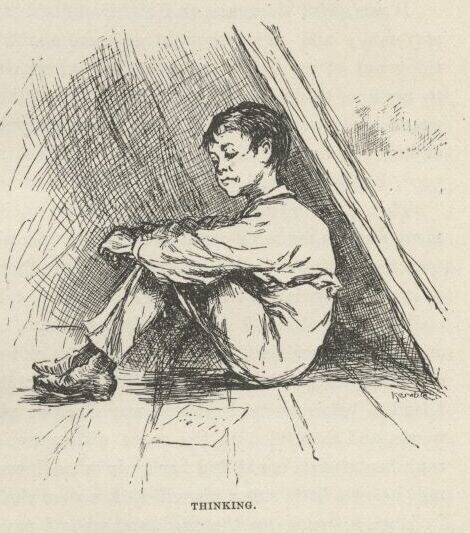
Huck knows what he SHOULD do…but he doesn’t. Well, he STARTS to write a letter up north to let Jim’s owner know where he was…but then he looks at the paper.
It was a close place. I took it up, and held it in my hand. I was a-trembling, because I’d got to decide, forever, betwixt two things, and I knowed it. I studied a minute, sort of holding my breath, and then says to myself:
“All right, then, I’ll go to hell”—and tore it up.
And this is the end of the book, but not the end of the story.
Clemens still had to wrap up all the loose ends of the story, and introduce some new ones (when Huck Finn finally meets Silas Phelps, he has to adopt the name “Tom Sawyer”), but it’s all inconsequential.
I think I can give the ending away after over a century, but it turns out that Jim was already a free man, having been freed in Miss Watson’s will.
And Huck was also free, because his tormenting father was dead (something Jim knew all along but kept from Huck at the time). Compared to these revelations, Silas Phelps’ story was truly inconsequential.
Huckleberry Finn’s declaration of what is right is central to the novel. While it was written years after the Civil War had ended, in some sense the Civil War has never ended.
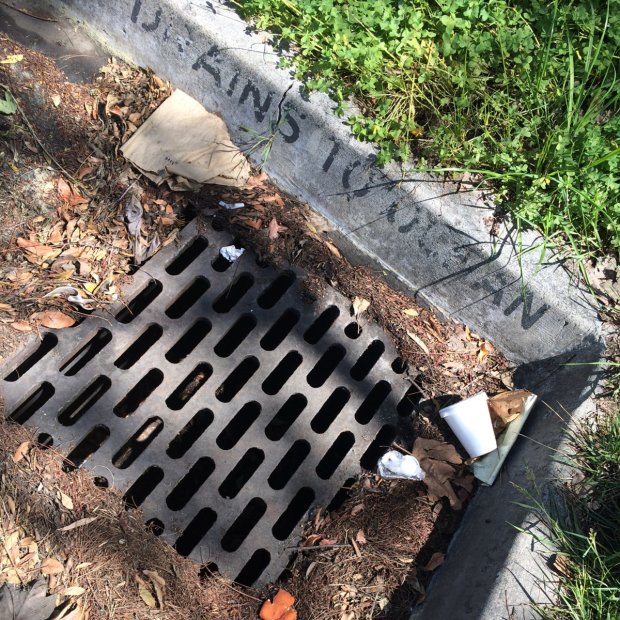
The idea of a story reaching its climax long before its end stuck with me back when I wrote “For a Meaningful Apocryphal Animation” for the 2017 Ontario Emperor album “Drains to Ocean.”
The song, by the way, is about those fake inspirational stories. For example, if someone wrote up the story about the hiring manager who made a bunch of job applicants wait all day and hired the only one who stuck it out. These stories are never attributed to a reliable source, and in most cases they were probably made up. But someone is bound to take the fake story and put it to soothing music and create a video and get a lot of clicks. “For a Meaningful Apocryphal Animation” was meant to go with one of those fake stories, but I haven’t gotten around to writing the story yet.
And there’s also something musically going on.
When I wrote the song, I channeled my inward Samuel Clemens. Because Ontario Emperor is to music what Mark Twain is to literature. (Well, that’s what the marketing flack would say.)
If you examine the piece, it’s four minutes and thirty-five seconds long.
Which is almost two minutes longer than it should be.
By the time you get to the three percussive snaps at about the 2:40 mark, the piece is pretty much done.
Sure, it goes on for nearly two more minutes, and I play around with the melody for a bit, and I include the greatest musical fade in 21st century music (so the marketing flack says), but I’ve said all that I wanted to say.
Well, at least until the next song on the album, “Climbing.”
The 21st century marketing writer
But let’s return to text. Not novels, but marketing text.
When you write marketing text, you have one key point that you want to make.
Some marketing “experts” say that you need to make the point in the beginning.
Other “experts” say you need to save the point until the end.
None of the “experts” say that your key point should be in the middle.
I don’t really care. If you want to make your point in the middle, using the preceding text to lead up to it, and using the following text to dispose of any other stuff, that’s fine with me.
Just make the point.
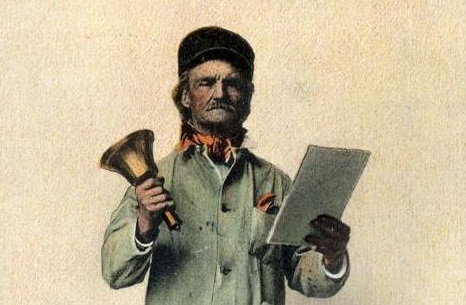
Tim Conway (Sr.), as repeatedly played during Jim Healy’s old radio show. Sourced from the Jim Healy Tribute Site.









 Bredemarket