The Big 3, or 4, or 5? Through the Years

On September 30, FindBiometrics and Acuity Market Intelligence released the production version of the Biometric Digital Identity Prism Report. You can request to download it here.
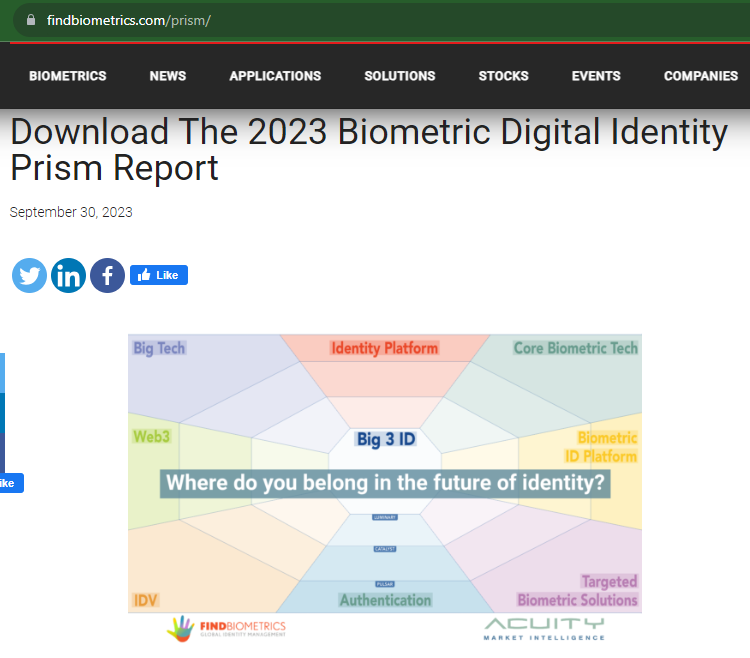
From https://findbiometrics.com/prism/ as of 9/30/2023.

Central to the concept of the Biometric Digital Identity Prism is the idea of the “Big 3 ID,” which the authors define as follows:

These firms have a global presence, a proven track record, and moderate-to-advanced activity in every other prism beam.

From “The Biometric Digital Identity Prism Report, September 2023.”

The Big 3 are IDEMIA, NEC, and Thales.
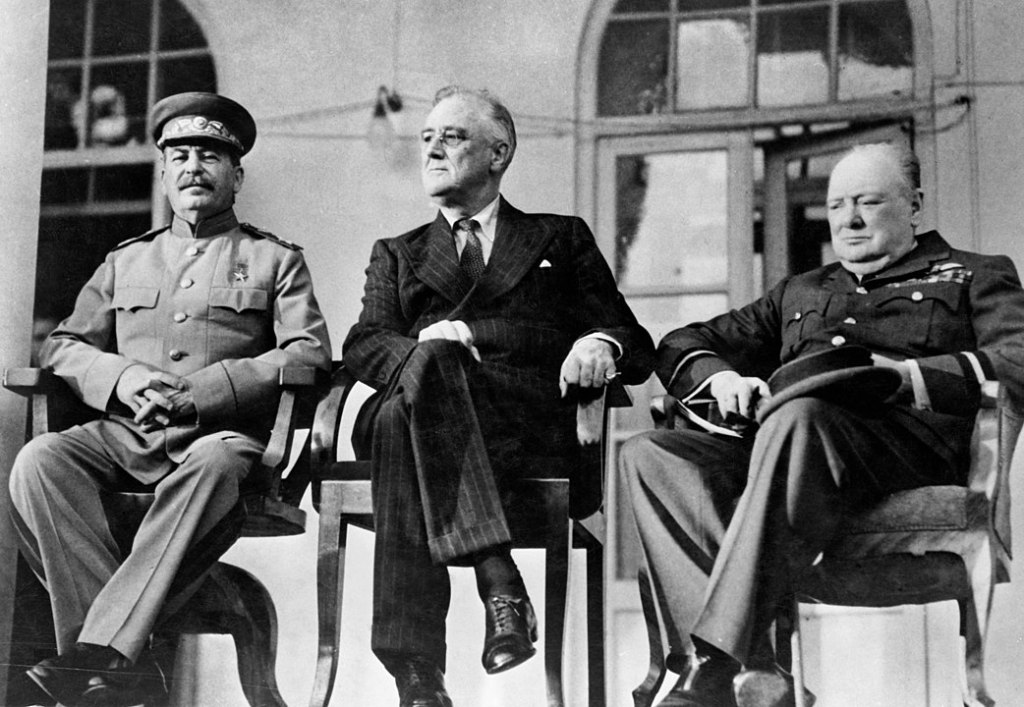
Whoops, wrong Big Three, although the Soviet Union/Russia and the United Kingdom have also been heavily involved in fingerprint identification. By U.S. Signal Corps photo. – http://hdl.loc.gov/loc.pnp/cph.3a33351 http://teachpol.tcnj.edu/amer_pol_hist/thumbnail381.html, Public Domain, https://commons.wikimedia.org/w/index.php?curid=538831

But FindBiometrics and Acuity Market Intelligence didn’t invent the Big 3. The concept has been around for 40 years. And two of today’s Big 3 weren’t in the Big 3 when things started. Oh, and there weren’t always 3; sometimes there were 4, and some could argue that there were 5.

So how did we get from the Big 3 of 40 years ago to the Big 3 of today?

The Big 3 in the 1980s

Back in 1986 (eight years before I learned how to spell AFIS) the American National Standards Institute, in conjunction with the National Bureau of Standards, issued ANSI/NBS-ICST 1-1986, a data format for information interchange of fingerprints. The PDF of this long-superseded standard is available here.
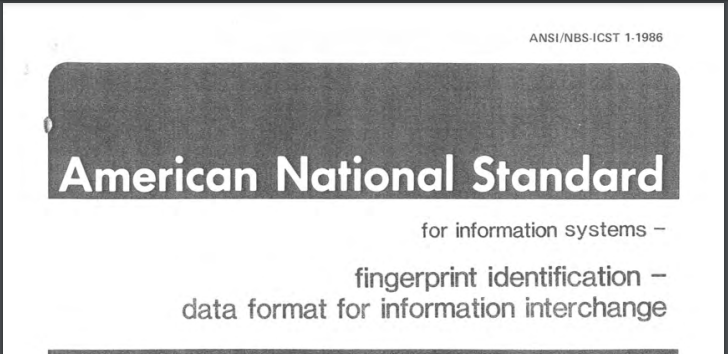
Cover page of ANSI/NBS-ICST 1-1986. PDF here.

When creating this standard, ANSI and the NBS worked with a number of law enforcement agencies, as well as companies in the nascent fingerprint industry. There is a whole list of companies cited at the beginning of the standard, but I’d like to name four of them.

  • De La Rue Printrak, Inc.
  • Identix, Inc.
  • Morpho Systems
  • NEC Information Systems, Inc.

While all four of these companies produced computerized fingerprinting equipment, three of them had successfully produced automated fingerprint identification systems, or AFIS. As Chapter 6 of the Fingerprint Sourcebook subsequently noted:

  • De La Rue Printrak (formerly part of Rockwell, which was formerly Autonetics) had deployed AFIS equipment for the U.S. Federal Bureau of Investigation and for the cities of Minneapolis and St. Paul as well as other cities. Dorothy Bullard (more about her later) has written about Printrak’s history, as has Reference for Business.
  • Morpho Systems resulted from French AFIS efforts, separate from those of the FBI. These efforts launched Morpho’s long-standing relationship with the French National Police, as well as a similar relationship (now former relationship) with Pierce County, Washington.
  • NEC had deployed AFIS equipment for the National Police Academy of Japan, and (after some prodding; read Chapter 6 for the story) the city of San Francisco. Eventually the state of California obtained an NEC system, which played a part in the identification of “Night Stalker” Richard Ramirez.
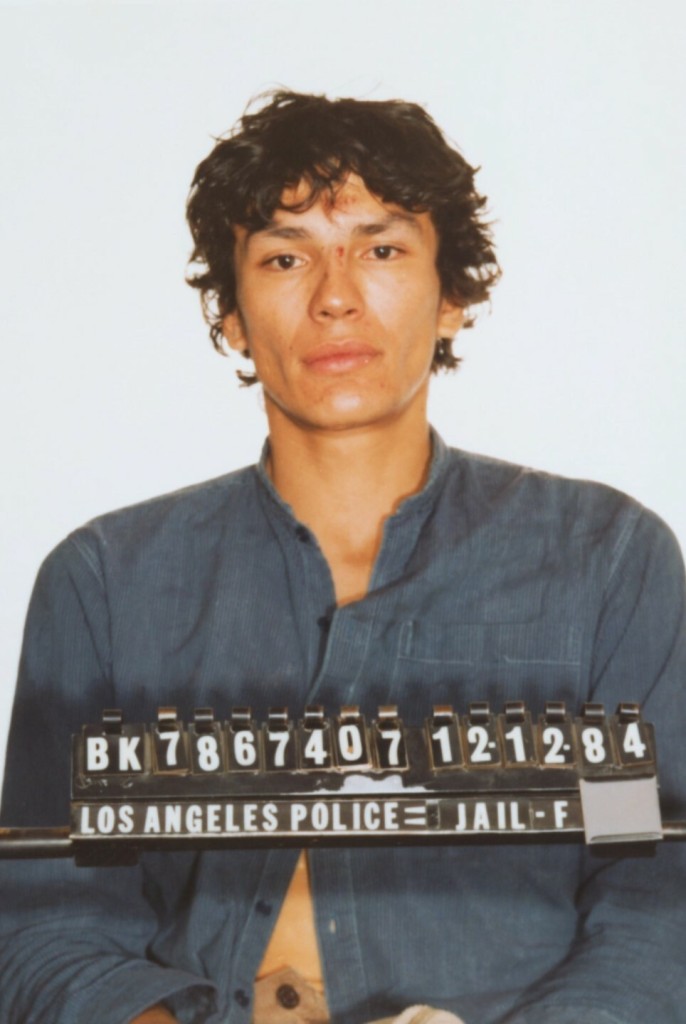
Richard Ramirez mug shot, taken on 12 December 1984 after an arrest for car theft. By Los Angeles Police Department – [1], Public Domain, https://commons.wikimedia.org/w/index.php?curid=29431687

After the success of the San Francisco and California AFIS systems, many other jurisdictions began clamoring for AFIS of their own, and turned to these three vendors to supply them.

The Big 4 in the 1990s

But in 1990, these three firms were joined by a fourth upstart, Cogent Systems of South Pasadena, California.

While customers initially preferred the Big 3 to the upstart, Cogent Systems eventually installed a statewide system in Ohio and a border control system for the U.S. government, plus a vast number of local systems at the county and city level.

Between 1991 and 1994, the (Immigfation and Naturalization Service) conducted several studies of automated fingerprint systems, primarily in the San Diego, California, Border Patrol Sector. These studies demonstrated to the INS the feasibility of using a biometric fingerprint identification system to identify apprehended aliens on a large scale. In September 1994, Congress provided almost $30 million for the INS to deploy its fingerprint identification system. In October 1994, the INS began using the system, called IDENT, first in the San Diego Border Patrol Sector and then throughout the rest of the Southwest Border.

From https://oig.justice.gov/reports/plus/e0203/back.htm

I was a proposal writer for Printrak (divested by De La Rue) in the 1990s, and competed against Cogent, Morpho, and NEC in AFIS procurements. By the time I moved from proposals to product management, the next redefinition of the “big” vendors occurred.

The Big 3 in 2003

There are a lot of name changes that affected AFIS participants, one of which was the 1988 name change of the National Bureau of Standards to the National Institute of Standards and Technology (NIST). As fingerprints and other biometric modalities were increasingly employed by government agencies, NIST began conducting tests of biometric systems. These tests continue to this day, as I have previously noted.

One of NIST’s first tests was the Fingerprint Vendor Technology Evaluation of 2003 (FpVTE 2003).
For those who are familiar with NIST testing, it’s no surprise that the test was thorough:

FpVTE 2003 consists of multiple tests performed with combinations of fingers (e.g., single fingers, two index fingers, four to ten fingers) and different types and qualities of operational fingerprints (e.g., flat livescan images from visa applicants, multi-finger slap livescan images from present-day booking or background check systems, or rolled and flat inked fingerprints from legacy criminal databases).

From https://www.nist.gov/itl/iad/image-group/fingerprint-vendor-technology-evaluation-fpvte-2003

Eighteen vendors submitted their fingerprint algorithms to NIST for one or more of the various tests, including Bioscrypt, Cogent Systems, Identix, SAGEM MORPHO (SAGEM had acquired Morpho Systems), NEC, and Motorola (which had acquired Printrak). And at the conclusion of the testing, the FpVTE 2003 summary (PDF) made this statement:

Of the systems tested, NEC, SAGEM, and Cogent produced the most accurate results.

Which would have been great news if I were a product manager at NEC, SAGEM, and Cogent.

Unfortunately, I was a product manager at Motorola.

The effect of this report was…not good, and at least partially (but not fully) contributed to Motorola’s loss of its long-standing client, the Royal Canadian Mounted Police, to Cogent.

The Big 3, 4, or 5 after 2003

So what happened in the years after FpVTE was released? Opinions vary, but here are three possible explanations for what happened next.

Did the Big 3 become the Big 4 again?

Now I probably have a bit of bias in this area since I was a Motorola employee, but I maintain that Motorola overcame this temporary setback and vaulted back into the Big 4 within a couple of years. Among other things, Motorola deployed a national 1000 pixels-per-inch (PPI) system in Sweden several years before the FBI did.

Did the Big 3 remain the Big 3?

Motorola’s arch-enemies at Sagem Morpho had a different opinion, which was revealed when the state of West Virginia finally got around to deploying its own AFIS. A bit ironic, since the national FBI AFIS system IAFIS was located in West Virginia, or perhaps not.

Anyway, Motorola had a very effective sales staff, as was apparent when the state issued its Request for Proposal (RFP) and explicitly said that the state wanted a Motorola AFIS.

That didn’t stop Cogent, Identix, NEC, and Sagem Morpho from bidding on the project.

After the award, Dorothy Bullard and I requested copies of all of the proposals for evaluation. While Motorola (to no one’s surprise) won the competition, Dorothy and I believed that we shouldn’t have won. In particular, our arch-enemies at Sagem Morpho raised a compelling argument that it should be the chosen vendor.

Their argument? Here’s my summary: “Your RFP says that you want a Motorola AFIS. The states of Kansas (see page 6 of this PDF) and New Mexico (see this PDF) USED to have a Motorola AFIS…but replaced their systems with our MetaMorpho AFIS because it’s BETTER than the Motorola AFIS.”

But were Cogent, Motorola, NEC, and Sagem Morpho the only “big” players?

Did the Big 3 become the Big 5?

While the Big 3/Big 4 took a lot of the headlines, there were a number of other companies vying for attention. (I’ve talked about this before, but it’s worthwhile to review it again.)

  • Identix, while making some efforts in the AFIS market, concentrated on creating live scan fingerprinting machines, where it competed (sometimes in court) against companies such as Digital Biometrics and Bioscrypt.
  • The fingerprint companies started to compete against facial recognition companies, including Viisage and Visionics.
  • Oh, and there were also iris companies such as Iridian.
  • And there were other ways to identify people. Even before 9/11 mandated REAL ID (which we may get any year now), Polaroid was making great efforts to improve driver’s licenses to serve as a reliable form of identification.

In short, there were a bunch of small identity companies all over the place.

But in the course of a few short years, Dr. Joseph Atick (initially) and Robert LaPenta (subsequently) concentrated on acquiring and merging those companies into a single firm, L-1 Identity Solutions.

These multiple mergers resulted in former competitors Identix and Digital Biometrics, and former competitors Viisage and Visionics, becoming part of one big happy family. (A multinational big happy family when you count Bioscrypt.) Eventually this company offered fingerprint, face, iris, driver’s license, and passport solutions, something that none of the Big 3/Big 4 could claim (although Sagem Morpho had a facial recognition offering). And L-1 had federal contracts and state contracts that could match anything that the Big 3/Big 4 offered.

So while L-1 didn’t have a state AFIS contract like Cogent, Motorola, NEC, and Sagem Morpho did, you could argue that L-1 was important enough to be ranked with the big boys.

So for the sake of argument let’s assume that there was a Big 5, and L-1 Identity Solutions was part of it, along with the three big boys Motorola, NEC, and Safran (who had acquired Sagem and thus now owned Sagem Morpho), and the independent Cogent Systems. These five companies competed fiercly with each other (see West Virginia, above).

In a two-year period, everything would change.

The Big 3 after 2009

Hang on to your seats.
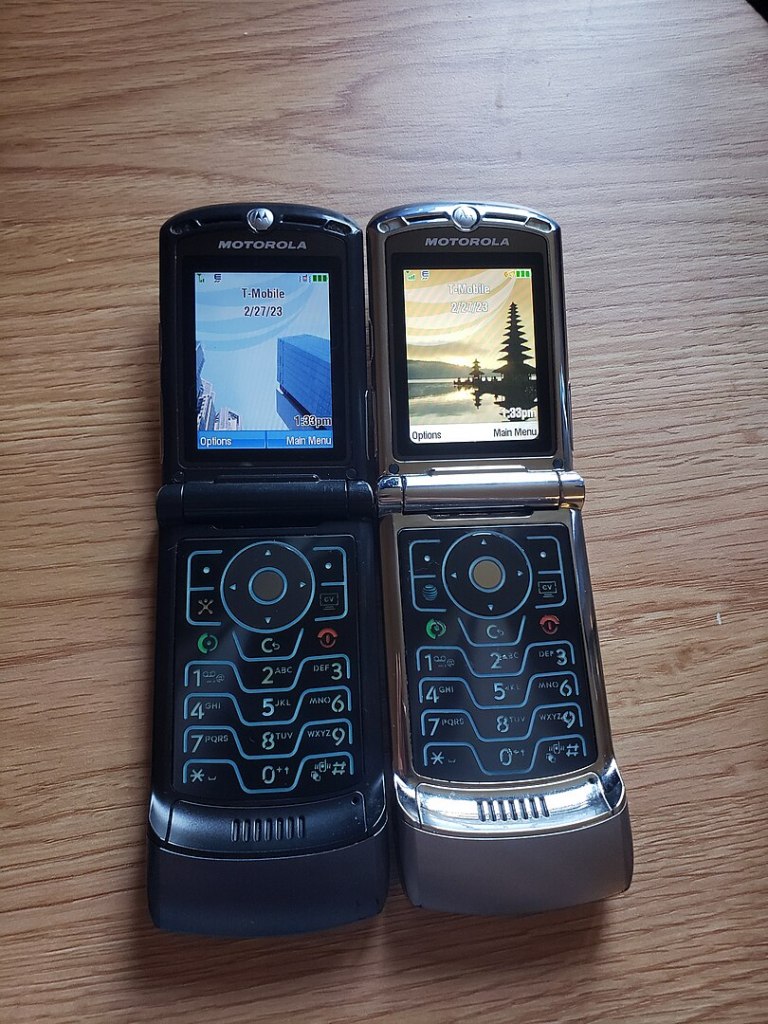
The Motorola RAZR was hugely popular…until it wasn’t. Eventually Motorola split into two companies and sold off others, including the “Printrak” Biometric Business Unit. By NextG50 – Own work, CC BY-SA 4.0, https://commons.wikimedia.org/w/index.php?curid=130206087

If you’re keeping notes, the Big 5 have now become the Big 3: 3M, Safran, and NEC (the one constant in all of this).

While there were subsequent changes (3M sold Cogent and other pieces to Gemalto, Safran sold all of Morpho to Advent International/Oberthur to form IDEMIA, and Gemalto was acquired by Thales), the Big 3 has remained constant over the last decade.

And that’s where we are today…pending future developments.

  • If Alphabet or Amazon reverse their current reluctance to market their biometric offerings to governments, the entire landscape could change again.
  • Or perhaps a new AI-fueled competitor could emerge.

The 1 Biometric Content Marketing Expert

This was written by John Bredehoft of Bredemarket.

If you work for the Big 3 or the Little 80+ and need marketing and writing services, the biometric content marketing expert can help you. There are several ways to get in touch:

  • Book a meeting with me at calendly.com/bredemarket. Be sure to fill out the information form so I can best help you. 
Five Topics a Biometric Content Marketing Expert Needs to Understand

As a child, did you sleep at night dreaming that someday you could become a biometric content marketing expert?

I didn’t either. Frankly, I didn’t even work in biometrics professionally until I was in my 30s.

If you have a mad adult desire to become a biometric content marketing expert, here are five topics that I (a self-styled biometric content marketing expert) think you need to understand.

Topic One: Biometrics

Sorry to be Captain Obvious, but if you’re going to talk about biometrics you need to know what you’re talking about.

The days in which an expert could confine themselves to a single biometric modality are long past. Why? Because once you declare yourself an iris expert, someone is bound to ask, “How does iris recognition compare to facial recognition?”

Only some of the Biometrics Institute’s types of biometrics. Full list at https://www.biometricsinstitute.org/what-is-biometrics/types-of-biometrics/

And there are a number of biometric modalities. In addition to face and iris, the Biometrics Institute has cataloged a list of other biometric modalities, including fingerprints/palmprints, voice, DNA, vein, finger/hand geometry, and some more esoteric ones such as gait, keystrokes, and odor. (I wouldn’t want to manage the NIST independent testing for odor.)

As far as I’m concerned, the point isn’t to select the best biometric and ignore all the others. I’m a huge fan of multimodal biometrics, in which a person’s identity is verified or authenticated by multiple biometric types. It’s harder to spoof multiple biometrics than it is to spoof a single one. And even if you spoof two of them, what if the system checks for odor and you haven’t spoofed that one yet?

Topic Two: All the other factors

In the same way that I don’t care for people who select one biometric and ignore the others, I don’t care for some in the “passwords are dead” crowd who go further and say, “Passwords are dead. Use biometrics instead.”

Although I admire the rhyming nature of the phrase.

If you want a robust identity system, you need to use multiple factors in identity verification and authentication.

  • Something you know.
  • Something you have.
  • Something you are (i.e. biometrics).
  • Something you do.
  • Somewhere you are.

Again, use of multiple factors protects against spoofing. Maybe someone can create a gummy fingerprint, but can they also create a fake passport AND spoof the city in which you are physically located?

From https://www.youtube.com/shorts/mqfHAc227As

Don’t assume that biometrics answers all the ills of the world. You need other factors.

And if you master these factors, you are not only a biometric content marketing expert, but also an identity content marketing expert.

Topic Three: How biometrics are used

It’s not enough to understand the technical ins and outs of biometric capture, matching, and review. You need to know how biometrics are used.

  • One-to-one vs. one-to-many. Is the biometric that you acquire only compared to a single biometric samples, or to a database of hundreds, thousands, millions, or billions of other biometric samples?
  • Markets. When I started in biometrics, I only participated in two markets: law enforcement (catch bad people) and benefits (get benefit payments to the right people). There are many other markets. Just recently I have written about financial identity and educational identity. I’ve worked with about a dozen other markets personally, and there are many more.
  • Use cases. Related to markets, you need to understand the use cases that biometrics can address. Taking the benefits example, there’s a use case in which a person enrolls for benefits, and the government agency wants to make sure that the person isn’t already enrolled under another name. And there’s a use cases when benefits are paid to make sure that the authorized recipient receives their benefits, and no one else receives their benefits.
  • Legal and privacy issues. It is imperative that you understand the legal ramifications that affect your chosen biometric use case in your locality. For example, if your house has a doorbell camera that uses “familiar face detection” to identify the faces of people that come to your door, and the people that come to your door are residents of the state of Illinois, you have a BIG BIPA (Biometric Information Privacy Act) problem.

Any identity content marketing expert or biometric content marketing expert worth their salt will understand these and related issues.

Topic Four: Content marketing

This is another Captain Obvious point. If you want to present yourself as a biometric contet marketing expert or identity content marketing expert, you have to have a feel for content marketing.

Here’s how HubSpot defines content marketing:

The definition of content marketing is simple: It’s the process of publishing written and visual material online with the purpose of attracting more leads to your business. These can include blog posts, pages, ebooks, infographics, videos, and more.

From https://blog.hubspot.com/marketing/content-marketing

Here are all the types of content in which one content marketer claims proficiency (as of July 27, 2023, subject to change):

Articles • Battlecards (80+) • Blog Posts (400+) • Briefs/Data/Literature Sheets • Case Studies (12+) • Competitive Analyses • Email Newsletters (200+) • Event/Conference/Trade Show Demonstration Scripts • FAQs • Plans • Playbooks • Presentations • Proposal Templates • Proposals (100+) • Quality Improvement Documents • Requirements • Scientific Book Chapters • Smartphone Application Content • Social Media (Facebook, Instagram, LinkedIn, Threads, TikTok, Twitter) • Strategic Analyses • Web Page Content • White Papers and E-Books

From https://www.linkedin.com/in/jbredehoft/, last updated 7/27/2023.

Now frankly, that list is pretty weak. You’ll notice that it doesn’t include Snapchat.

But content marketers need to be comfortable with creating at least one type of content.

Topic Five: How L-1 Identity Solutions came to be

Yes, an identity content marketing expert needs to thoroughly understand how L-1 Identity Solutions came to be.

I’m only half joking.

Back in the late 1990s and early 2000s (I’ll ignore FpVTE results for a moment), the fingerprint world in which I worked recognized four major vendors: Cogent, NEC, Printrak (later part of Motorola), and Sagem Morpho.

And then there were all these teeny tiny vendors that offered biometric and non-biometric solutions, including the fierce competitors Identix and Digital Biometrics, the fierce competitors Viisage and Visionics, and a bunch of other companies like Iridian.

Wel, there WERE all these teeny tiny vendors.

Until Bob LaPenta bought them all up and combined them into a single company, L-1 Identity Solutions. (LaPenta was one of the “Ls” in L-3, so he chose the name L-1 when he started his own company.)

So around 2008 the Big Four (including a post-FpVTE Motorola) became the Big Five, since L-1 Identity Solutions was now at the table with the big boys.

But then several things happened:

  • Motorola started selling off parts of itself. One of those parts, its Biometric Business Unit, was purchased by Safran (the company formed after Sagem and Snecma merged). This affected me because I, a Motorola employee, became an employee of MorphoTrak, the subsidiary formed when Sagem Morpho de facto acquired “Printrak” (Motorola’s Biometric Business Unit). So now the Big Five were the Big Four.
  • Make that the Big Three, because Safran also bought L-1 Identity Solutions, which became MorphoTrust. MorphoTrak and MorphoTrust were separate entities, and in fact competed against each other, so maybe we should say that the Big Four still existed.
  • Oh, and by the way, the independent company Cogent was acquired by 3M (although NEC considered buying it).
  • A few years later, 3M sold bits of itself (including the Cogent bit) to Gemalto.
  • Then in 2017, Advent International (which owned Oberthur) acquired bits of Safran (the “Morpho” part) and merged them with Oberthur to form IDEMIA. As a consequence of this, MorphoTrust de facto acquired MorphoTrak, ending the competition but requiring me to have two separate computers to access the still-separate MorphoTrust and MorphoTrak computer networks. (In passing, I have heard from two sources, but have not confirmed myself, that the possible sale of IDEMIA is on hold.)
  • And Gemalto was acquired by Thales.

So as of 2023, the Big Three (as characterized by Maxine Most and FindBiometrics) are IDEMIA, NEC, and Thales.

Why do I mention all this? Because all these mergers and acquisitions have resulted in identity practitioners working for a dizzying number of firms.

As of August 2023, I myself have worked for five identity firms, but in reality four of the five are the same firm because the original Printrak International kept on getting acquired (Motorola, Safran, IDEMIA).

And that’s nothing. One of my former Printrak coworkers (R.M.) has also worked for Digital Biometrics (now part of IDEMIA), Cross Match Technologies (now part of ASSA ABLOY), Iridian (now part of IDEMIA), Datastrip, Creative Information Technology, AGNITiO, iTouch Biometrics, NDI Recognition Systems, iProov, and a few other firms here and there.

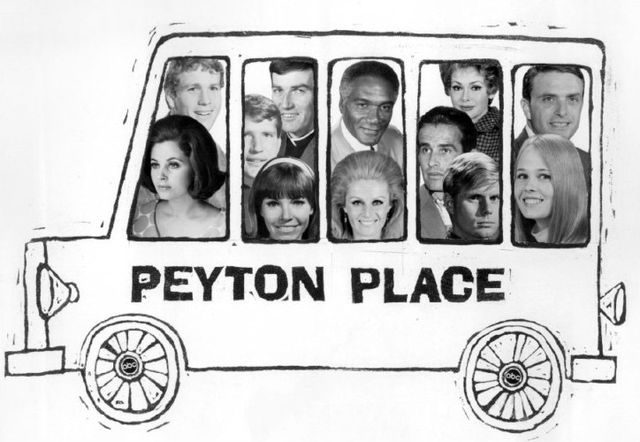
The point is that everybody knows everybody because everybody has worked with (and against) everybody. And with all the job shifts, it’s a regular Peyton Place.

By ABC Television – eBay itemphoto frontphoto back, Public Domain, https://commons.wikimedia.org/w/index.php?curid=17252688

Not sure which one is me, which one is R.M., and who the other people are.

Do you need an identity content marketing expert today?

Do you need someone who not only knows biometrics and content marketing, but also all the other factors, their uses, and even knows the tangled history of L-1?

Someone who offers:

  • No identity learning curve?
  • No content learning curve?
  • Proven results?

If I can help you create your identity content, contact me.

connect:ID 2021 is coming

I have not been to an identity trade show in years, and sadly I won’t be in Washington DC next week for connect:ID…although I’ll be thinking about it.

I’ve only been to connect:ID once, in 2015. Back in those days I was a strategic marketer with MorphoTrak, and we were demonstrating the MorphoWay. No, not the Morpho Way; the MorphoWay.

At connect:ID 2015.

Perhaps you’ve seen the video.

Video by Biometric Update. https://www.youtube.com/watch?v=mqfHAc227As

As an aside, you’ll notice how big MorphoWay is…which renders it impractical for use in U.S. airports, since space is valuable and therefore security features need a minimum footprint. MorphoWay has a maximum footprint…just ask the tradespeople who were responsible for getting it on and off the trade show floor.

I still remember several other things from this conference. For example, in those days one of Safran’s biometric competitors was 3M. Of course both Safran and 3M have exited the biometric industry, but at the time they were competing against each other. Companies always make a point of checking out the other companies at these conferences, but when I went to 3M’s booth, the one person I knew best (Teresa Wu) was not at the booth. Later that year, Teresa would leave 3M and (re)join Safran, where she remains to this day.

Yes, there is a lot of movement of people between firms. Looking over the companies in the connect:ID 2021 Exhibitor Directory, I know people at a number of these firms. Obviously people from IDEMIA, of course (IDEMIA was the company that bought Safran’s identity business), but I also know people at other companies, all of whom who were former coworkers at IDEMIA or one of its predecessor companies:

  • Aware.
  • Clearview AI.
  • GET Group North America.
  • HID Global.
  • Integrated Biometrics.
  • iProov.
  • NEC.
  • Paravision.
  • Rank One Computing.
  • SAFR/RealNetworks.
  • Thales.
  • Probably some others that I missed.

And I know people at some of the other companies, organizations, and governmental entities that are at connect:ID this year.

Some of these entities didn’t even exist when I was at connect:ID six years ago, and some of these entities (such as Thales) have entered the identity market due to acquisitions (in Thales’ case, the acquisition of Gemalto, which had acquired 3M’s biometric business).

So while I’m not crossing the country next week, I’m obviously thinking of everything that will be going on there.

Incidentally, this is one of the last events of the trade show season, which is starting to wind down for the year. But it will ramp up again next spring (for you Northern Hemisphere folks).

Bredemarket remembers the Southern Hemisphere, even though Bredemarket only does business in the United States. https://www.youtube.com/watch?v=HtZCQiN3n50

Regardless of where you are, hopefully the upcoming trade show season will not be adversely impacted by the pandemic.

Today’s “biometrics is evil” post (Amazon One)

I can’t recall who recorded it, but there’s a radio commercial heard in Southern California (and probably nationwide) that intentionally ridicules people who willingly give up their own personally identifiable information (PII) for short-term gain. In the commercial, both the husband and the wife willingly give away all sorts of PII, including I believe their birth certificates.

While voluntary surrender of PII happens all the time (when was the last time you put your business card in a drawing bowl at a restaurant?), people REALLY freak out when the information that is provided is biometric in nature. But are the non-biometric alternatives any better?

TechCrunch, Amazon One, and Ten Dollars

TechCrunch recently posted “Amazon will pay you $10 in credit for your palm print biometrics.

If you think that the article details an insanely great way to make some easy money from Amazon, then you haven’t been paying attention to the media these last few years.

The article begins with a question:

How much is your palm print worth?

The article then describes how Amazon’s brick-and-mortar stores in several states have incorporated a new palm print scanner technology called “Amazon One.” This technology, which reads both friction ridge and vein information from a shopper’s palms. This then is then associated with a pre-filed credit card and allows the shopper to simply wave a palm to buy the items in the shopping cart.

There is nothing new under the sun

Amazon One is the latest take on processes that have been implemented several times before. I’ll cite three examples.

Pay By Touch. The first one that comes to my mind is Pay By Touch. While the management of the company was extremely sketchy, the technology (provided by Cogent, now part of Thales) was not. In many ways the business idea was ahead of its time, and it had to deal with challenging environmental conditions: the fingerprint readers used for purchases were positioned near the entrances/exits to grocery stores, which could get really cold in the winter. Couple this with the elderly population that used the devices, and it was sometimes difficult to read the fingers themselves. Yet, this relatively ancient implementation is somewhat similar to what Amazon is doing today.

University of Maryland Dining Hall. The second example occurred to me because it came from my former employer (MorphoTrak, then part of Safran and now part of IDEMIA), and was featured at a company user conference for which I coordinated speakers. There’s a video of this solution, but sadly it is not public. I did find an article describing the solution:

With the new system students will no longer need a UMD ID card to access their own meals…

Instead of pulling out a card, the students just wave their hand through a MorphoWave device. And this allows the students to pay for their meals QUICKLY. Good thing when you’re hungry.

This Pay and That Pay. But the most common example that everyone uses is Apple Pay, Google Pay, Samsung Pay, or whatever “pay” system is supported on your smartphone. Again, you don’t have to pull out a credit card or ID card. You just have to look at your phone or swipe your finger on the phone, and payment happens.

Amazon One is the downfall of civilization

I don’t know if TechCrunch editorialized against Pay By Touch or [insert phone vendor here] Pay, and it probably never heard of the MorphoWave implementation at the University of Maryland. But Amazon clearly makes TechCrunch queasy.

While the idea of contactlessly scanning your palm print to pay for goods during a pandemic might seem like a novel idea, it’s one to be met with caution and skepticism given Amazon’s past efforts in developing biometric technology. Amazon’s controversial facial recognition technology, which it historically sold to police and law enforcement, was the subject of lawsuits that allege the company violated state laws that bar the use of personal biometric data without permission.

Oh well, at least TechCrunch didn’t say that Amazon was racist. (If you haven’t already read it, please read the Security Industry Association’s “What Science Really Says About Facial Recognition Accuracy and Bias Concerns.” Unless you don’t like science.)

OK, back to Amazon and Amazon One. TechCrunch also quotes Albert Fox Cahn of the Surveillance Technology Oversight Project.

People Leaving the Cities, photo art by Zbigniew Libera, imagines a dystopian future in which people have to leave dying metropolises. By Zbigniew Libera – https://artmuseum.pl/pl/kolekcja/praca/libera-zbigniew-wyjscie-ludzi-z-miast, CC BY-SA 3.0, https://commons.wikimedia.org/w/index.php?curid=66055122.

“The dystopian future of science fiction is now. It’s horrifying that Amazon is asking people to sell their bodies, but it’s even worse that people are doing it for such a low price.”

“Sell their bodies.” Isn’t it even MORE dystopian when people “give their bodies away for free” when they sign up for Apple Pay, Google Pay, or Samsung Pay? While the Surveillance Technology Oversight Project (acronym STOP) expresses concern about digital wallets, there is a significant lack of horror in its description of them.

Digital wallets and contactless payment systems like smart chips have been around for years. The introduction of Apple Pay, Amazon Pay, and Google Pay have all contributed to the e-commerce movement, as have fast payment tools like Venmo and online budgeting applications. In response to COVID-19, the public is increasingly looking for ways to reduce or eliminate physical contact. With so many options already available, contactless payments will inevitably gain momentum….

Without strong federal laws regulating the use of our data, we’re left to rely on private companies that have consistently failed to protect our information. To prevent long-term surveillance, we need to limit the data collected and shared with the government to only what is needed. Any sort of monitoring must be secure, transparent, proportionate, temporary, and must allow for a consumer to find out about or be alerted to implications for their data. If we address these challenges now, at a time when we will be generating more and more electronic payment records, we can ensure our privacy is safeguarded.

So STOP isn’t calling for the complete elimination of Amazon Pay. But apparently it wants to eliminate Amazon One.

Is a world without Amazon One a world with less surveillance?

Whenever you propose to eliminate something, you need to look at the replacement and see if it is any better.

In 1998, Fox fired Bill Russell as the manager of the Los Angeles Dodgers. He had a win-loss percentage of .538. His replacement, Glenn Hoffman, lasted less than a season and had a percentage of .534. Hoffman’s replacement, true baseball man Davey Johnson, compiled a percentage of .503 over the next two seasons before he was fired. Should have stuck with Russell.

Anyone who decides (despite the science) that facial recognition is racist is going to have to rely on other methods to identify criminals, such as witness identification. Witness identification has documented inaccuracies.

And if you think that elimination of Amazon One from Amazon’s brick-and-mortar stores will lead to a privacy nirvana, think again. If you don’t use your palm to pay for things, you’re going to have to use a credit card, and that data will certainly be scanned by the FBI and the CIA and the BBC, B. B. King, and Doris Day. (And Matt Busby, of course.) And even if you use cash, the only way that you’ll preserve any semblance of your privacy is to pay anonymously and NOT tie the transaction to your Amazon account.

And if you’re going to do that, you might as well skip Whole Foods and go straight to Dollar General. Or maybe not, since Dollar General has its own app. And no one calls Dollar General dystopian. Wait, they do: “They tend to cluster, like scavengers feasting on the carcasses of the dead.”

I seemed to have strayed from the original point of this post.

But let me sum up. It appears that biometrics is evil, Amazon is evil, and Amazon biometrics are Double Secret Evil.

(Bredemarket Premium) The drawbacks of a FOCI-mitigated subsidiary

Those portions of the U.S. government that deal with critical infrastructure are naturally concerned about foreign encroachment into U.S. Government operations, even from “friendly” nations. Therefore, the U.S. Government takes steps to mitigate the effects of “Foreign Ownership, Control or Influence” (FOCI).

I’ve worked for two companies that needed to undertake FOCI mitigation, and I know of others that have also done this. And while FOCI mitigation offers benefits to the United States, there are also drawbacks of which everyone involved should be aware.

Subscribe to get access

Subscribe to Bredemarket Premium to access this premium content.

  • Subscriptions just $5 per month.
  • Access Bredemarket’s expertise without spending hundreds or thousands of dollars.