An IMEI Number Is NOT Unique to Each Mobile Phone

(Imagen 3)

Have you ever used the phrase “sort of unique”? Something is either unique or it isn’t. And International Mobile Equipment Identity (IMEI) numbers fail the uniquness test.

Claims that International Mobile Equipment Identity (IMEI) numbers are unique

Here’s what a few companies say about the IMEI number on each mobile phone. Emphasis mine.

  • Thales: “The IMEI (International Mobile Equipment Identity) number is a unique 15-digit serial number for identifying a device; every mobile phone in the world has one.”
  • Verizon: “An IMEI stands for International Mobile Equipment Identity. Think of it as your phone’s fingerprint — it’s a 15-digit number unique to each device.”
  • Blue Goat Cyber: “In today’s interconnected world, where our smartphones have become an indispensable part of our lives, it is essential to understand the concept of IMEI – the International Mobile Equipment Identity. This unique identifier plays a crucial role in various aspects of our mobile devices, from security to tracking and repairs.”

These and other descriptions of the IMEI prominently use the word “unique.” Not “sort of unique,” but “unique.”

Which means (for non-person entities, just like persons) that if someone can find a SINGLE reliable instance of more than one mobile phone having the same IMEI number, then the claim of uniqueness falls apart completely.

Examples of non-uniqueness of IMEI numbers on mobile phones

People who claim IMEI uniqueness obviously didn’t read my Bredemarket blog post of April 1, in which I WASN’T fooling.

  • I talked about an incident in India in which a cyber fraud operation “specialised in IMEI cloning.”
  • And an incident in Canada in which someone was scammed out of C$1,000, even though the phone had a valid IMEI.

IMEICheck.net even tells you (at a high level) how to clone an IMEI. It’s not easy, but it’s not impossible.

“In theory, hackers can clone a phone using its IMEI, but this requires significant effort. They need physical access to the device or SIM card to extract data, typically using specialized tools.

“The cloning process involves copying the IMEI and other credentials necessary to create a functional duplicate of the phone. However, IMEI number security features in modern devices are designed to prevent unauthorized cloning.”

So don’t claim an IMEI is unique when there is evidence to the contrary. As I said in my April post:

NOTHING provides 100.00000% security. Not even an IMEI number.”

What does this mean for your identity product?

If you offer an identity product, educate your prospects and avoid unsupportable claims. While a few prospects may be swayed by “100%” claims, the smarter ones will appreciate more supportable statements, such as “Our facial recognition algorithm demonstrated a 0.0022 false non-match rate in the mugshot:mugshot NIST FRTE 1:1 laboratory testing.”

When you are truthful in educating your prospects, they will (apologizes in advance for using this overused word) trust you and become more inclined to buy from you.

If you need help in creating content (blog posts, case studies, white papers, proposals, and many more), work with Bredemarket to create the customer-focused content you need. Book a free meeting with me.


Pharma Early Stage Commercialization With Syneos Health

While I’ve previously addressed pharma commercialization in terms of ensuring that patients use (and purchase) their medications, commercialization occurs long before that. After all, for a prescription drug to be available on the market, it has to get to the market in the first place.

Here’s how Syneos Health presents the issue.

“Early-stage biopharma companies have traditionally had limited options for getting their first asset to market. In most cases, they pursue deals with larger partners and lose or limit rights to their asset, or become a fully integrated company through heavy investment and a great deal of risk.”

Syneos Health has a solution for that. To learn the details of Syneos Health’s full-service pharma commercialization solution, visit this page.

Oh, and the company also has case studies.

“We helped build a European commercial capability via a comprehensive commercialization partnership, introducing a Commercial Leadership function to support the design and execution of the overall launch plan and integrate other services. We were able to scale quickly and establish commercial operations, designed a European launch plan and forecast and launched within three months in one EU country, with a subsequent sequenced launch through Europe, despite the ambiguities of COVID-19.

“In 12 weeks, we provided a full virtual infrastructure that included Field Teams, MSLs, Access Teams, Marketplace and Access/Pricing Consulting, Advertising, Public Relations and Medical Communications, increasing operational efficiencies through integrated Communications teams to reduce duplication in effort across promotional channels and recruiting, training and deploying sales reps, achieving an annual run rate of >$200 million.

“We partnered with the commercial team to provide all commercial launch services, offering crucial global leadership that enabled the team to dynamically scale up and down to respond to changing launch timelines and to balance short- and long-term financial objectives. With a heavy emphasis on market development, we empowered the customer to be fully engaged and aligned with all communities and show an in-depth understanding of market dynamics.”

What can Syneos Health do for you?

If you’re a pharma leader, of course.

Open and Shut Case Study Solutions…and Results

I seem to be on a kick on writing about case studies.

If you want your happy customers to say nice things about you, but don’t know where to begin to assemble your own case studies, maybe Bredemarket can help. Talk to me.

Six recent Bredemarket posts on case studies

In the meantime, read on to see where I’ve gotten my kicks lately.

1: Make your prospects stop and eat

Cool service. Have your happy customers tell prospects about it.

“Let Bredemarket help you take the blindfolds off. We can work together to fill your content black hole with blogs, articles, case studies, white papers, and other written words that make your prospects stop and eat.”

The Difference Between Busy and Too Busy – Bredemarket

2: Collaboration, collaboration, collaboration 

“We had to collaborate between myself, a few people from the firm, and representatives of the firm’s customers who could provide the facts.”

Working With Your Customers on Case Studies – Bredemarket

3: This solution provides results

“Tasks that used to take minutes or hours now only take seconds.”

AI-Analyzing Computed Tomography (CT) Scans – Bredemarket

4: You don’t need the STAR method

Case studies and other deliverables.

“Rather than arrange our case studies into four parts, my client and I agreed on a three-part outline that effectively combined “S” and “T.” Our outline? Problem, Solution, and Result. The STAR people were horrified, but we didn’t care. The client was a maverick anyway.”

You Have the Interview Transcript for a Case Study. Now What? – Bredemarket

5: Solutions that are specific

“Bredemarket is targeting tech CMOs with the specific problem of needing help, or a push, to create the marketing content their firms require. Before your competitors steal your prospects from you. You know what you need: perhaps awareness (who you are), perhaps consideration (why your competitors suck). And you will get it through through case studies, or blog posts, or white papers, or LinkedIn articles, or proposals, or something else.”

Making Case Studies (and Other Content) Specific So Prospects Act – Bredemarket

6: Three tips for creating case studies, and three tips for getting them approved

“So how do you expedite case study creation and approval?”

Easing the Pain of Case Study Creation and Approval – Bredemarket

Do you want the results that case studies deliver?

Talk to Bredemarket about the case study creation solution I provide to solve your awareness or consideration problem. Click below.

Easing the Pain of Case Study Creation and Approval

Case studies are powerful marketing collateral for companies.

Why?

Because if you select your subjects carefully, your prospects will say, “That subject is just like me. And the company’s solution solved the subject’s problem. Perhaps the solution will solve my problem also.”

Imagen 4

Ideally a company would want to publish dozens of case studies, so their prospects could find one case study—or perhaps two or three—that describe the exact same problem the prospect is encountering.

It’s hard to create case studies

But case studies are by definition more difficult for a company to create. 

  • For other types of content, the approval process resides completely within the company itself. 
  • But case studies by definition require approval by two companies…even if the end customers in the case studies remain anonymous.

Perhaps that’s why there are so few published, recent case studies.

On Tuesday I had the occasion to visit four technology websites.

  • One had 5 case studies, all written in 2024.
  • One had 4 case studies, all written in 2023 and all anonymous.
  • One had 8 case studies, all written in 2021.
  • One had no case studies at all, even though the company had clients who could be referenced.

And the approvals don’t just involve the end customer.

Imagen 4

A former friend interviewed many customers but was only able to complete one case study; the approvals from company legal, other company executives, and the end customers were overwhelming, delaying the other case studies.

So how do you expedite case study creation and approval?

Three tips for creating case studies

Here are three tips to expedite the creation of case studies.

Creation tip 1: Get the facts first

If the sales rep, program manager, or the subject itself can provide the basic facts beforehand, then the interview can simply consist of confirming facts and filling gaps.

Creation tip 2: Outline the case study and tell your story

Imagen 4

Whether you use the STAR method (situation, task, action, result) or some other method (I prefer the simpler problem, solution, result), take the facts you gathered above. Then fit them into the outline and into the story you want to tell. Then see what pieces of the story are missing.

Creation tip 3: Obtain a meeting transcript

Since the subject has already consented to the case study, they should consent to the meeting being recorded.

The most efficient way to do this is with one of the popular AI note takers, which lets the case study writer review the actual words from the interview without going back and forth through a video recording.

And AI note takers are more efficient than the way I used to transcribe case study interviews.

Three tips for approving case studies

Here are three tips to expedite the approval of case studies.

Approval tip 1: Read the contract

The language of the contract with the subject may have clauses regarding publicity.

If the subject wrote the contract, then it may prohibit any promotional publicity whatsoever, or it may dictate that any publicity must be approved by a high-level governing board in a foreign country.

If the provisions are onerous or impossible, don’t use that subject and find another.

Approval tip 2: Get pre-approvals, or at least grease the wheels

Let your approvers know what’s coming, and when you think it will come.

Once I submitted a case study for pre-approval even before the results were available. This subject had a lengthy approval process, so I wanted the approvers to see the first part of the case study as soon as possible.

Approval tip 3: Use every ethical method to get those approvals

Imagen 4

While the case study may be critically important to you, it may be merely important (or even inconsequential) to the lawyer with 50 other tasks.

From the lawyer’s perspective, it may be better if the company does NOT publish the case study. Fewer potential lawsuits that way.

Do everything you can to expedite the approval. If the CEO is demanding a published case study in three days, say so.

If not…well, that’s why you’re a salesperson. Oh, you’re NOT a salesperson? You are now.

One final tip

You don’t have to go it alone. If your staff is stretched, or if your staff has never written a case study before, Bredemarket can help. Visit my content for tech marketers page.

Making Case Studies (and Other Content) Specific So Prospects Act

(Imagen 4)

Tech CMOs want to move their prospects to act and buy world-changing offerings (products or services) from their firms…and I want to move my tech CMO prospects to act and buy marketing and writing services from Bredemarket. So tech CMOs, I definitely feel your pain. But how can you move your prospects…and how can I move you?

Failure of a vague problem, solution, and results

In my recent post about converting an end customer interview into a case study, I discussed a “problem, solution, results” simple case study outline.

Justin Welsh just discussed the same thing, but with better words.

“I copy/pasted a spreadsheet of over 100 posts I’ve written that created real impact for my readers into ChatGPT, and I found a pattern:

“Specific struggle + specific transformation = lasting change

“Not some vague tension. Not a generic transformation. Specific moments where everything shifted.”

My specific solution

Of course the dozen case studies I ghostwrote for my client were implicitly specific. But it’s helpful to make that word “specific” explicit.

Imagen 4.
  • Because my client had a specific problem. The client needed its prospects to understand how its offering could solve nagging prospect problems. Riots. Car thefts. Robberies.
  • And my client had a specific solution. I can’t reveal the solution without giving the client away, but let’s just say the the solution simultaneously addressed the end customers’ dual needs of speed and accuracy, as well as other end customer concerns.
  • As for specific results, I confess I don’t know. In this case my client never got back to me and said, “John, case study 3 attracted a prospect that ended up buying an annual contract.” And my primary contact at the client subsequently moved to another firm. But the fact that the client stuck with me for a dozen case studies and some subsequent NIST FRTE analysis work indicates that I did something right.

You see what I did there. Well, as much as I could while preserving my ghostwriter status and my client’s anonymity.

What is your specific problem?

This section of the blog post is specifically addressed to tech CMOs and other marketers. The rest of you can skip this part and watch this entertaining video instead.

Imagen 4.

Now I know I’ve loaded this post with links to previous Bredemarket content that addresses the…um…specific topics in much more detail. Maybe you clicked on the links, or maybe you didn’t. I will find out.

But if you are ready to move forward, this is the one link you need to click. (“Now you tell me, John!”) It lets you set up a meeting with Bredemarket to discuss your specific needs.

You Have the Interview Transcript for a Case Study. Now What?

(Imagen 4)

Back in May 2021 I was in the midst of ghostwriting case studies for a Bredemarket client. I didn’t know at the time that I’d end up creating a dozen of them.

At the time I wrote about how I obtained the raw material for the case study.

“As part of the work that I do for one of my clients, I participate in half-hour interviews with the client’s customers and ask them questions about the client’s software. Before the interview begins, the client asks the customer for permission to record the conversation. After the interview is over, I can then refer to that recording to extract nuggets of information.”

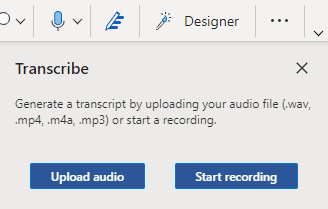
Except that I didn’t refer to the recording, but to a TRANSCRIPT of the recording in Microsoft Word. I describe how I created the transcript here.

From Microsoft Office 365.

But that was in 2021. Four years later we can access easy-to-use generative AI transcribers.

Now what?

But obtaining the raw interview material is only the beginning. 

Now you need to extract relevant text and fit in into the STAR method: Situation, Task, Action, and Result.

No you don’t.

Rather than arrange our case studies into four parts, my client and I agreed on a three-part outline that effectively combined “S” and “T.” Our outline? Problem, Solution, and Result. The STAR people were horrified, but we didn’t care. The client was a maverick anyway.

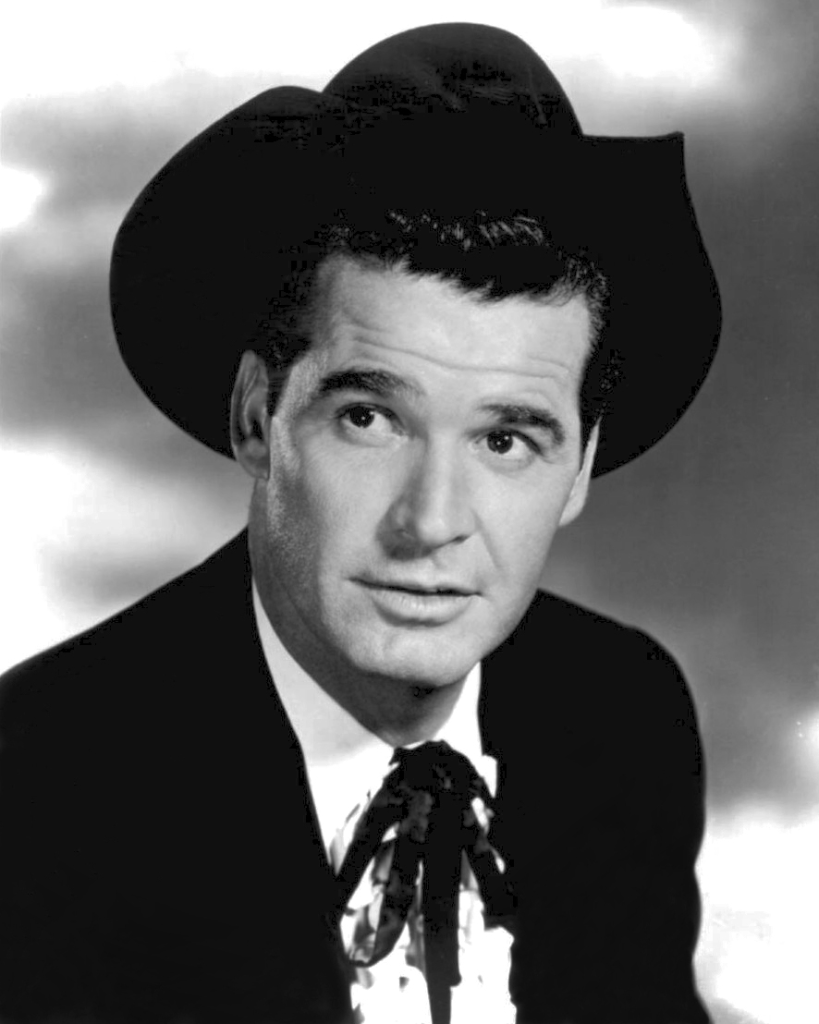
Not the other maverick. By Warner Brothers Television – eBayfrontback, Public Domain, https://commons.wikimedia.org/w/index.php?curid=30035548.

I should note that before the interview took place, the client had already provided me with a general idea of what its end customer faced: the problem, the application of the client’s solution, and the results that solved the problem. 

So we already knew what we wanted the case study to say, and the interview let us concentrate on the sexy points and correct any facts we had wrong before the interview. Yes, the client’s software delivered the solution in 8.675309 seconds. No, it didn’t use laser technology to do it.

So when I drafted the case study, I wrote it in the problem, solution, results format. And then I increased its effectiveness by sprinkling customer quotes throughout the case study.

Adapted slightly.

Since the original transcribed text looked like this:

“(SPEAKER 3) So then I um submit the search and the system gave me a candidate list pretty quickly like in 5 seconds or so excuse me I still got this cold sorry and um the boyfriend was second on the list.”

In my draft the raw text was reworded ever so slightly.

“According to Sgt. Preston of the Yukon Detachment, ‘I submitted the face search to SuperInvestigator, and the system gave me a candidate list in 5 seconds. Connie’s boyfriend was second on the list, giving us an investigative lead for further analysis.’”

(Because you ALWAYS have to treat facial recognition results as investigative leads.)

Once my text was combined with the end customer’s quotes and the client’s graphics, we had a collection of powerful case studies that resonated with the client’s prospects. Because bad boyfriends are in many jurisdictions.

What about your prospects?

So that’s how my client and I worked together to create effective case studies.

Can I work with you?

Content for tech marketers.

Why I always write the first draft

As a postscript, I want to provide a peek into how this post came to be.

Actually, I already provided the peek in an early morning post in the Bredemarket Technology Firm Services Facebook group. I’ll just give you the TL;DR version: here’s what Google Gemini gave me for a title and abstract.

“From Conversation to Conversion: Leveraging Interview Transcripts for Marketing Magic

“Abstract: The spoken word holds immense value for your marketing content, especially with the rise of transcription tools. This post examines how to transform raw audio from customer interviews into compelling case studies, testimonials, and other marketing assets. We’ll discuss the process of extracting key insights and transforming them into persuasive written content, bridging the gap between customer conversations and tangible marketing results.”

As you can see, I avoided some of the wording (“marketing magic”???) but kept the basic idea.

Thanks Danie. And if I’m stuck for future content I have four additional ideas.

AI-Analyzing Computed Tomography (CT) Scans

From Philips’ announcement of a case study.

“Imagine a radiology department with over one hundred staff members analyzing thousands of CT images daily. Every minute of efficiency gain and workflow improvement means radiologists can spend more time with patients. Several years back, the radiology department at the Hospices Civils de Lyon (HCL) in France began a research collaboration journey with Philips to advance task automation using AI. Many of the algorithms generated in this clinical partnership are now available to radiologists everywhere via Advanced Visualization Workspace….

“‘“We perform many chest CT scans in the hospital. Most patients only need a scan of a specific body area: the neck, thorax, or abdominal. The more specific we can target, the better we are able to minimize the X-ray dose. In our first study, we developed an algorithm to classify the thorax, abdominal, or neck during a thoracic CT scan. This method has helped us raise awareness among radiology technicians to limit exploration to the region of interest only. Reducing the margin could reduce the X-ray dose on average by 20 per cent.’”

An additional result? Tasks that used to take minutes or hours now only take seconds.

For more information, see https://www.philips.com/a-w/about/news/archive/case-studies/co-creating-ai-solutions-that-free-up-time-to-spend-with-patients.html

My Latest Writings on Content and Proposals

Bredemarket’s latest writings on

If you can use my services in any of these areas, book a free 30 minute content needs assessment and talk to Bredemarket. https://bredemarket.com/mark/

Working With Your Customers on Case Studies

On Tuesday I published a LinkedIn article as part of Bredemarket’s “The Wildebeest Speaks” series. The title: “Does Word-of-Mouth Eliminate the Need for Bredemarket?

Once I answered that question (I think you can guess my answer), I talked about how you can effectively combine word-of-mouth and corporate efforts via “casetimonials“—either case studies or testimonials that allow the happy customer to have their say, while your company helps to shape the message.

Focusing on case studies, I said the following:

Case studies require more collaboration, as I found out when I wrote a dozen case studies for a firm.

So yes, much has changed over the last few years, but the need for you to communicate with your prospects remains.

Which is why you should solicit Bredemarket’s assistance. I can help create content for tech marketers. Contact me.

Content for tech marketers.