MCLEAN, Va., May 2, 2023 /PRNewswire/ — The West Virginia University Research Corporation (WVURC) and Pangiam, a leading trade a travel technology company, announced a new partnership to conduct research and develop new, cutting-edge artificial intelligence, machine learning and computer vision technologies for commercial and government applications.
Pangiam and WVURC will work together to launch Pangiam Bridge, a cutting-edge artificial intelligence driven solution for customs authorities worldwide. Pangiam Bridge will allow customs officials to automate portions of the customs inspection process for baggage and cargo. Jim McLaughlin, Pangiam Chief Technology Officer, said, “we are excited to grow Pangiam’s artificial intelligence work in partnership with West Virginia University and continued development of Pangiam Bridge for customs authorities.”
Pangiam Bridge is obviously not ready for prime time yet; it’s not even mentioned on Pangiam’s Products and Services page, nor is it mentioned anywhere else on Pangiam’s website. The only mention of Pangiam Bridge is in this press release, which isn’t surprising considering that this is a research effort. But if the research holds out, then many of the manual processes used by customs agents may be significantly reduced or eliminated entirely.
Project DARTMOUTH is the collaboration between Pangiam and Google Cloud, named after the 1956 Dartmouth Summer Research Project on Artificial Intelligence. Project DARTMOUTH utilizes AI and pattern analysis technologies to digest and analyze vast amounts of data in real-time and identify potential prohibited items in carry-on baggage, checked baggage, airline cargo and shipments.
As some of you know, I’m applying for full-time employment. Every one of my cover letters has a variation on this sentence.
I am in Southern California, five miles from Ontario International Airport, and can easily travel throughout the United States or to other countries as needed.
You will note that I explicitly state that Ontario International Airport is in Southern California, not Canada. Although the phrase “Ontario CA” can be interpreted as referring to the city in the state of California, or the province in the country of Canada, depending upon how you look at it.
Not that anybody pays attention to my explicit California reference. When I was sharing pictures from the February 18 Ontario Art Walk, and labeling the pictures as originating from Ontario, California, I was still asked to promote one of the pictures on a Canadian Instagram page.
The curse that we endure in the town of the Chaffeys. I bet Mildura doesn’t have this problem.
While Ontario International Airport is not the only airport in the Inland Empire, it is (at present) the largest one, and thus has a dramatic effect on those of us who live here.
One impact? Well, in the same way that I can board a flight from ONT to my future employer in San Francisco or Austin or Paris or wherever, visitors can board flights to ONT.
And some of those visitors are business visitors. Years ago, I was one of them, flying from Portland, Oregon to some town I had never heard of before for a job interview. Not only did I fly into the airport (Terminal 1 in those days), but I also stayed at the Red Lion Inn and spent other money while I was in town for the interview.
Ontario International Airport Terminal 1 as of September 2021, 20 years after airport traffic changed forever.
Postscript: I got the job. And other jobs after that.
The economists assign a monetary impact to the activity attributable to the airport.
The impact of economic activity taking place at Ontario International Airport itself, including the activity of the airport authority, airlines and their suppliers, government workers, airport concessions, and logistics companies is estimated at $3.8 billion in 2022. This will support $2.2 billion in GDP and 27,800 jobs. The bulk of these impacts—71% of the GDP impacts and 76% of the jobs impacts— reflect the impact of visitor spending in the region.
But don’t forget the government, which gets its own goodies.
This $2.2 billion of local economic activity (GDP) will result in a total of $571 million in tax impact. This consists of $319 million in federal tax impacts and $253 million in state and local impacts. As with the GDP impacts, the majority (71%) of these tax impacts are driven by the spending of visitors to the region.
And this doesn’t count the impact of the Inland Empire’s logistics industry.
The total economic impact of the logistics activity in the eight zip codes adjacent to Ontario International Airport was $17.8 billion of economic output, $9.9 billion of GDP, and 122,200 jobs. This activity generated $2.3 billion in federal, state, and local taxes.
But what of non-monetary impacts? As the description of the Ontario International Airport – Inter Agency Collaborative (ONT-IAC) makes clear, some of those impacts are negative.
The ONT-IAC implements the policies and criteria of the Airport Land Use Compatibility Plan (ALUCP) to prevent future incompatible land uses surrounding ONT and minimizing the public’s exposure to excessivie noise and safety hazards.
There’s always a balancing act between positive and negative impacts. While I might appreciate the ability to board a flight to Dallas at 6:00 in the morning, someone who lives near the airport may not be as appreciative. And the referenced “incompatible land uses” restrict the types of businesses that can be located near the airport.
While the Amazon LGB3 warehouse in Eastvale, California is some distance from Ontario International Airport, the airport’s presence has a positive impact on the warehouse and its workers.
But the relatively large amount of open space near the airport (again, our beloved warehouses) has helped to ensure that ONT does not need to implement the severe flight restrictions found at John Wayne and our former airport overlord Los Angeles International Airport.
And for better or worse the airport will remain for some time. It’s not like it’s going to close down or anything.
Although 9/11, the 2008 recession, and COVID tried to close it.
And one more thing about your business…
Does your firm need to create content for Inland Empire residents, Inland Empire visitors, and others who use your firm’s services?
Are you ready to take your Ontario, Eastvale, or Inland Empire firm to the next level with a compelling message that increases awareness, consideration, conversion, and long-term revenue?
Military pilots have a huge reputation for supersized egos. Not that I necessarily have a problem with egos, but this must be recognized. And the phrase above bears it out.
Scott is the pilot, in charge of things.
God is the co-pilot, subservient to Scott’s every command. Heck, since Scott runs the show, God might as well be a mere passenger.
But this is not only a religious issue.
Who controls artificial intelligence?
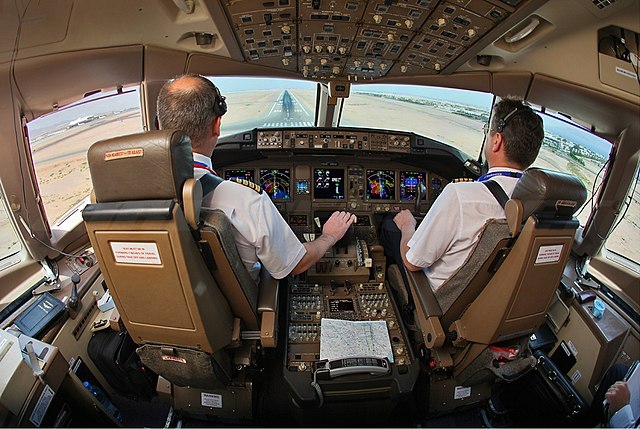
If you’re going to employ generative artificial intelligence (generative AI) to create your written work, you need to decide who will be the pilot, and who will be the co-pilot.
You could send the prompt off to your favorite generative AI tool and let it shape the words you will communicate to your customers. In this case, the tool is the pilot, and you’re just the co-pilot.
Or you could take the approach that I have taken. (See my post “The Temperamental Writer’s Two Suggestions and One Rule for Using Generative AI” if you’re not familiar with my views.) In this case you are clearly the pilot, and the generative AI tool is merely the co-pilot to assist you will small tasks here and there.
(The perceptive ones among you have already noted that I treat text and images differently. In the image above, I clearly took the co-pilot’s seat and let Freepik pilot the process. My raving egotism does not extend to my graphic capabilities.)
This concept of AI as a co-pilot rather than a pilot is not just my egotistical opinion.
When GitHub implemented its generative AI coding solution, it named the solution “GitHub Copilot.” The clear implication is that the human coder is still running the show, while GitHub Copilot is helping out its boss.
But enough about generative AI. Heaven knows I’ve been spouting off about that a lot lately. Let’s turn to another topic I spout off about a lot—how you should work with your content creator to generate your content marketing text.
Who should pilot a content marketing project?
Assume for the moment that your company has decided NOT to entrust its content marketing text to a generative AI tool, and instead has contracted with a human content marketing expert to create the text.
Again, there are two ways to approach the task.
The first approach is to yield all control to the expert. You sit back, relax, and tell your content marketing consultant to do whatever they want. They provide the text, and you pay the consultant with no questions asked. The content marketing consultant is the pilot here.
The second approach is to retain all control yourself. You tell the content marketing consultant exactly what you want, and exactly what words to say to describe your best-of-breed, game-changing, paradigm-shifting, outcome-optimizing solution. (That last sentence was painful to write, but I did it for you.) The content marketing consultant follows your exact commands and produces the copy with the exact words you want. You are the pilot here.
So which of these two methods is the best way to create content?
Bredemarket’s preferred content creation process is a collaborative one, in which you and I both control the process. While in the end you are the de facto pilot since you control the purse-strings, Bredemarket emphasizes and follows this collaborative approach.
It continues as we move through the process, and I create copies of the text for your review (two review cycles if you use my Bredemarket 400 package, three if you use my Bredemarket 2800 package).
Throughout this collaborative and iterative package we both pilot the process, and we both contribute our unique strengths to produce the final written product.
Are you ready to collaborate?
If you have content marketing needs that Bredemarket can help you achieve, let me know and we’ll talk about how to pilot a content marketing project together.
This post is adapted from Bredemarket’s November 10, 2021 submitted comments on DHS-2021-0015-0005, Information Collection Request, Public Perceptions of Emerging Technology. See my first and second posts on the topic.
DHS asked respondents to address five questions, including this one:
(2) will this information be processed and used in a timely manner;
Here is part of my response.
I am answering this question from the perspective of a person crossing the border or boarding a plane.
During the summer of 2017, CBP conducted biometric exit facial recognition technical demonstrations with various airlines and airports throughout the country. Here, CBP Officer Michael Shamma answers a London-bound American Airlines passenger’s questions at Chicago O’Hare International Airport. Photo by Brian Bell. From https://www.cbp.gov/frontline/cbp-biometric-testing
From this perspective, you can ask whether the use of biometric technologies makes the entire process faster, or slower.
Before biometric technologies became available, a person would cross a border or board a plane either by conducting no security check at all, or by having a human conduct a manual security check using the document(s) provided by an individual.
Unless a person was diverted to a secondary inspection process, automatic identification of the person (excluding questions such as “What is your purpose for entering the United States?”) could be accomplished in a few seconds.
However, manual security checks are much less accurate than technological solutions, as will be illustrated in a future post.
With biometric technologies, it is necessary to measure both the time to acquire the biometric data (in this case a facial image) and the time to compare the acquired data against the known data for the person (from a passport, passenger manifest, or database).
The time to acquire biometric data continues to improve. In some cases, the biometric data can be acquired “on the move” as the person is walking toward a gate or other entry area, thus requiring no additional time from the person’s perspective.
The time to compare biometric data can vary. If the source of the known data (such as the passport) is with the person, then comparison can be instantaneous from the person’s perspective. If the source of the known data is a database in a remote location, then the speed of comparison depends upon many factors, including network connections and server computation times. Naturally, DHS designs its systems to minimize this time, ensuring minimal or no delay from the person’s perspective. Of course, a network or system failure can adversely affect this.
In short, biometric evaluation is as fast if not faster than manual processes (provided no network or system failure occurs), and is more accurate than human processes.
Automated Passport Control kiosks located at international airports across the nation streamline the passenger’s entry into the United States. Photo Credit: James Tourtellotte. From https://www.cbp.gov/travel/us-citizens/apc
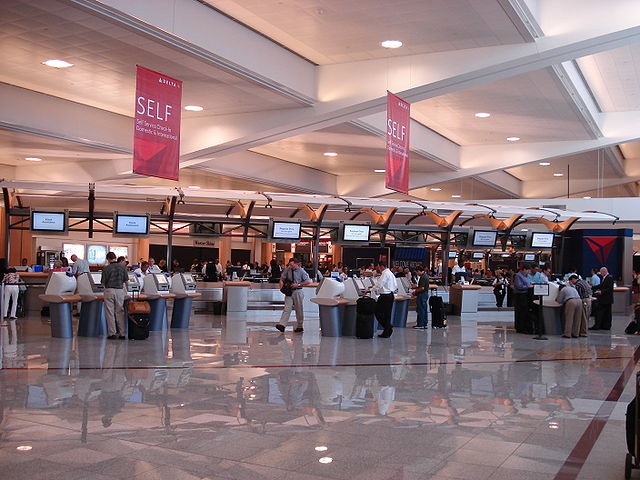
Delta Airlines, the Transportation Security Administration (TSA), and a travel tech company called Pangiam have partnered up to bring facial recognition technology to the Hartsfield–Jackson Atlanta International Airport (ATL).
As of next month, Delta SkyMiles members who use the Fly Delta app and have a TSA PreCheck membership will be able to simply look at a camera to present their “digital ID” and navigate the airport with greater ease. In this program, a customer’s identity is made up of a SkyMiles member number, passport number and Known Traveler Number.
Of course, TSA PreCheck enrollment is provided by three other companies…but I digress. (I’ll digress again in a minute.)
Forbes goes on to say that this navigation will be available at pre-airport check in (on the Fly Delta app), bag drop (via TSA PreCheck), security (again via TSA PreCheck), and the gate.
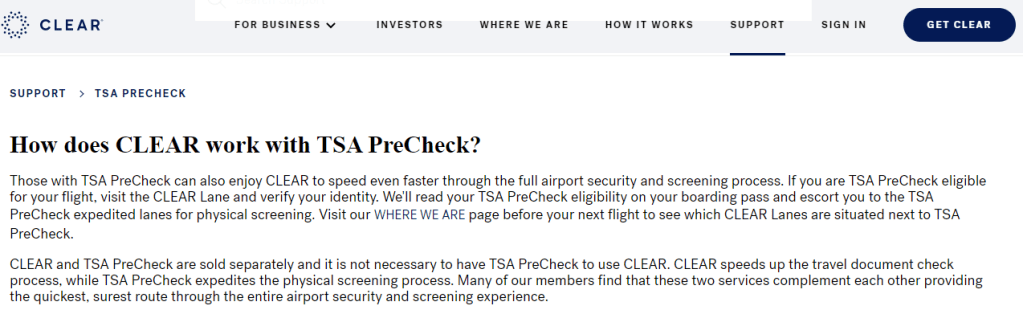
Incidentally, this illustrates how security systems from different providers build upon each other. Since I was an IDEMIA employee at the time that IDEMIA was the only company that performed TSA PreCheck enrollment, I was well aware (in my super-secret competitive intelligence role) how CLEAR touted the complementary features of TSA PreCheck in its own marketing.
I learned some fun facts during Eren Cello’s presentation to the Greater Ontario Business Council this morning, and filed those in my brain along with some other facts that I have collected over the years.
Cello is the Director of Marketing and Communications for Ontario International Airport in Ontario, California. Which, incidentally, is not in Canada.
Ontario International Airport in the 1980s and 1990s
I first became aware of Ontario International Airport in October 1983, when I flew in from Portland, Oregon for a job interview. Back in those days, you didn’t walk from the airplane straight into the terminal. Instead, you walked to a flight of stairs, went down the stairs, then walked across the runway to enter the terminal.
As Ontario and the surrounding area grew over the years, the then-owner of Ontario International Airport (Los Angeles World Airports) decided that an ambitious expansion of the airport was in order, including modern, multi-level terminals with check-in and baggage claim on the first floor, and the gates and shops on the second floor. Instead of renovating the existing terminal, LAWA decided to build two brand new terminals. These terminals were opened in 1998 and were designated “Terminal 2” and “Terminal 4.” As soon as traffic increased to the required level, LAWA would go ahead and build Terminal 3 between the two terminals.
And the old terminal, now “Terminal 1,” was closed.
Ontario International Airport Terminal 1 as of September 2021, 20 years after airport traffic changed forever.
It sounded like a sensible design and a sensible plan. What could go wrong?
Ontario International Airport in the 2000s and 2010s
Well, three years after Terminals 2 and 4 opened, 9/11 happened. This had two immediate effects.
First, the anticipated increase in passenger traffic needed to open Terminal 3 didn’t happen.
There were other alleged reasons for this which eventually led to the separation of Ontario International Airport from LAWA, but those are beyond the scope of this post. I wrote about them in a personal blog at the time; here’s an example.
Second, increased security meant that the second floors of Terminals 2 and 4 were accessible to passengers only.
The days of walking to the gate to send off departing passengers and greet arriving ones were gone forever.
And for all of those businesses that were located on the second floors of the two terminals, their customer base was cut dramatically, since non-ticketed individuals were confined to the first floors of the terminals. Until recently, those first floors only included the random vending machine to serve visitors. Only now is the situation starting to improve.
According to Cello, Ontario International Airport now serves 11 passenger airlines with nonstop flights to destinations in the United States, Mexico, Central America, and Asia.
The second most fascinating fun fact
But of all the fun facts I learned today, the second most fascinating fun fact was the reason why the international airlines are based in Terminal 2 rather than Terminal 4. No, it’s not because Southwest has so many flights in Terminal 4 that there is no room for anyone else. Actually, parts of Terminal 4 are closed; if you see a film with someone at Gate 412, you know the film is staged. See 15:08 of this video.
The reason why the international airlines are based in Terminal 2 is because that terminal is the only one designed for the large wide-body jets that go to international destinations.
Southwest Airlines, of course, has a different operating model that doesn’t need a lot of wide-body jets.
International services in the future and in the past
Incidentally, there are both short-term and long-term plans to improve the facilities for international passengers, who currently can depart from Terminal 2 but have to arrive at a completely separate “international arrivals terminal” (reviews) and go through security there.
And if you’re wondering why Ontario International Airport doesn’t have optimum service for international passengers, the “international” in the airport’s designation merely means that there is at least one existing flight to an international destination. For Ontario, trans-Pacific cargo flights existed back in the 1940s, and the first passenger flight from an international destination occurred (according to Wikipedia) on May 18, 1946, when a Pacific Overseas Airlines flight arrived from Shanghai. (This was the Pacific Overseas Airlines based in Ontario, California, not the Pacific Overseas Airlines in Siam. The Ontario company appears to have only been in existence for a year or so.)
Of course, back in 1946, international passengers didn’t have great expectations. Leaving the plane by going down a flight of stairs was the normal mode of operations; none of this walking from the airplane straight into the airport building.
The Beatles arrive at the former Idlewild Airport on February 7, 1964. Note the stairway in the background. By United Press International, photographer unknown – This image is available from the United States Library of Congress’s Prints and Photographs division under the digital ID cph.3c11094.This tag does not indicate the copyright status of the attached work. A normal copyright tag is still required. See Commons: Licensing for more information., Public Domain, https://commons.wikimedia.org/w/index.php?curid=4532407
The MOST fascinating fun fact
Oh, and in case you’re wondering why the wide-body jet service is only the second most fascinating fun fact, I learned something else today.
The “Paw Squad” at Ontario International Airport has their own trading cards!
I’m sure that many people imagine that standards are developed by a group of reasonable people, sitting in a room, who are pursuing things for the good of the world.
You can stop laughing now.
As I noted back in 2013, and again in February, there are many instances in which standards do not evolve from a well-designed process. In reality, standards emerge via that process that I referred to in February as “brute force.”
For those who are not familiar with the “brute force” process, I’ll provide two illustrations.
If a lot of people like something, it’s a standard.
If a trillion dollar company likes something, and I like something different, then the thing that the trillion dollar company likes is a standard.
If two trillion dollar companies like two different things…it can get messy.
Back in February, I was just beginning to talk about something that I called “health passports” at the time. Later, I personally decided that “health passports” is a poor choice of words, and have instead gravitated to using the phrase “vaccine certificate.”
Regardless, my concern back in February was that there were all sorts of these things floating around. Even back then, Clear had its own solution, IATA had one, IBM had one, iProov had one, Daon had one, and there were many, many more.
So what happens if I have a Clear vaccine certificate but the airline or building that I’m approaching supports the iProov certificate? Can the iProov certificate read the Clear certificate? Or do I have to get multiple certificates?
This post looks at a new development in the vaccine certificate brouhaha. I’m not talking about what vaccines are honored by the vaccine certificate, but about acceptability of the vaccine certificates themselves. In particular, I’m talking about acceptance of one certificate, the EU Digital COVID Certificate (EUDCC).
How do international air transport folks feel about the EUDCC?
While the EUDCC can conceivably be used for a number of use cases, such as entering a private business like a restaurant, one of the most popular use cases for the EUDCC is to board an airplane that is crossing an international border.
So if there was an organization that was dedicated to the business of flying airplanes across international borders, and if that organization thought that the EUDCC was pretty cool, then that endorsement would have as much pull as Google (and Facebook) endorsing a web image format.
Now those who read my February post will recall that IATA was one of those groups that was already developing its own vaccination certificate. So how does the EUDCC compare with the the IATA Travel Pass?
The DCC…is fully supported by IATA Travel Pass.
But in addition to mere self-interest, there is another reason why IATA is endorsing the EUDCC: it’s supported by a lot of countries inside the EU, and other countries are looking at the EUDCC as a model.
The EU DCC is implemented in the 27 EU Member states and a number of reciprocal agreements have been agreed with other states’ own vaccination certificates, including Switzerland, Turkey, and Ukraine. In the absence of a single global standard for digital vaccination certificates, up to 60 other countries are looking to use the DCC specification for their own certification.
Oh no, I’m just looking
However, it’s one thing to be “looking” at something, and another thing entirely to actually “do” something.
Before assuming that the EUDCC will become the de facto DCC, consider how two countries in particular will approach it.
This image or media was taken or created by Matt H. Wade. To see his entire portfolio, click here. @thatmattwade This image is protected by copyright! If you would like to use it, please read this first. – Own work, CC BY-SA 3.0, https://commons.wikimedia.org/w/index.php?curid=5004719
One of those countries is my own, the United States of America. While one can argue whether or not the U.S. enjoys the same level of power that it enjoyed immediately after the end of the Cold War, it is still a major player in world economic and travel affairs. And regardless of who the President of the United States is at any given time, the U.S. has often decided to go its own way. Couple this with the power of individual U.S. states in my country’s federal system, and it’s quite possible that even if the U.S. goes along with IATA, and some form of the EUDCC is adopted by our Transportation Security Administration, that does not necessarily mean that the same certificate can be used as it is in Europe to grant access to museums, sporting events, and concerts.
The other country that may have an issue with the EUDCC is China. If the United States is potentially a waning world power, China is potentially a gaining world power. The relationship between China and the rest of the world varies from time to time and from issue to issue. China may decide that it’s not in its best interest to adhere to an international standard for certifications of COVID vaccination, testing, or contraction. And if it’s not in China’s best interest, China won’t do it.
So before declaring that IATA endorsement of the EUDCC settles the issue…we’ll see.
And there are a ton of ramifications and unintended consequences.
Covishield and the EUDCC
When I last looked at the EUDCC, I examined its effect on travel from people outside of the European Union. The question at the time was what would happen to people who were vaccinated with something other than the European Medicines Agency-approved vaccines, thus rendering them ineligible for the EUDCC.
In particular, people who were vaccinated with the Covishield vaccine were not eligible for the EUDCC. Depending upon whom you asked, Covishield is either just the same as the EMA-approved AstraZeneca vaccine (now referred to as “Vaxzervria” in EU-speak), or it has a radically different manufacturing process that disqualifies it from automatic acceptance.
This non-recognition of Covishield has a great impact on African nations, because that vaccine is popular there. However, EUDCC disapproval has been offset by the actions of several individual countries to recognize Covishield as a vaccine. For example, Greece recognizes ten vaccines (including Covishield) as opposed to the EU’s four. Of course, you have to go through additional paperwork to get authorization to enter a specific country.
But Joseph Atick notes that there’s another issue that adversely impacts the ability of Africans to enter Europe.
Linking a vaccination to a person
Assume for the moment that you have received an EU-authorized vaccine. This is only part of the battle, because the act of vaccination has to be tied to you as a person.
One of the biggest barriers to setting up these systems—and one that could greatly complicate digital health certificates – involves traceability, which for an official digital ID means documenting one’s birth event.
In Africa, not everyone has a birth certificate, and many struggle to trace their identity to the birth event.
If you cannot prove to the satisfaction of the European Union (or whoever) that you were the actual person who received a vaccine, then you may face barriers to entering Europe (or wherever).
And what are the ramifications of this?
A digital health certificate has appeal as an efficient and effective way to manage COVID-19 risks. But if we don’t pause now to consider the implications of getting it wrong and look for ways to get it right, these marvellous digital innovations could also be supremely effective at creating a binary world of those who can prove their COVID-19 risk status and those who cannot.
The requirement for a digital identity
Oh, and there’s another issue that Atick didn’t address, but which bears noting.
All of the health vaccination solutions listed above assume as a given that people will be the owners of a unique, government-authorized digital identity.
In my country, both some people on the left and some people on the right believe that “governmental digital identity” naturally equates to “governmental digital surveillance,” and that governments shouldn’t be abusing the data that they can obtain from all the vaccinations you get, all the places you travel, all the things you buy, and all the other things that you do.
(Well, except for voting. Some on the right fervently believe that government identities are essential to voting, even if they’re not essential to any other activity.)
But are people truly banned from travel?
So where does this leave the people who cannot prove that they were vaccinated with an authorized vaccine, or perhaps were never vaccinated at all?
In many cases travel for the unvaccinated is not banned, but they have to go through additional hoops to travel. Using one example, unvaccinated U.S. citizens can travel to Austria if they “have recovered from COVID-19 in the past 180 days; or present a negative COVID-19 PCR or antigen test result procured within 72 or 48 hours of travel.” For more country-by-country specifics as of August 13, click here.
But how will the unvaccinated get to Europe, or anywhere else?
United Airlines isn’t requiring passengers to be vaccinated. Employees? That’s another matter.
But on the other hand, a vaccination in and of itself is not a guarantee that you can travel. Norway has a long list of requirements that an incoming person must satisfy, vaccination or not. This isn’t the time for an American to go on a sightseeing tour to Oslo.
So a binary division into the “travels” and “travel nots” may not become a reality. Instead, it will be a gradation of travel allowances and non-allowances, based upon a variety of factors.
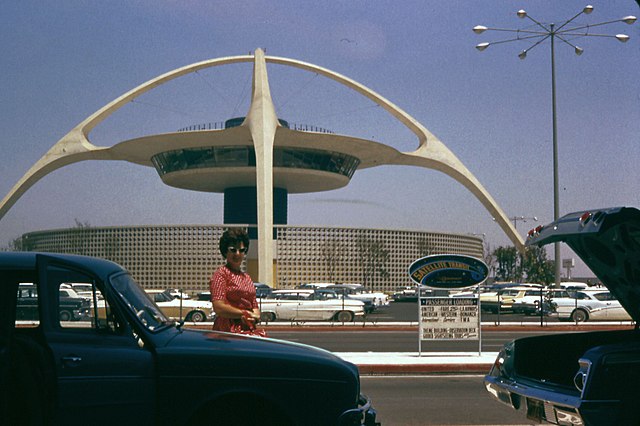
I live only five miles from an airport, but over forty miles away from a BIG airport—Los Angeles International Airport. And for those times in which I have to use LAX, it’s a bear to get there, and getting worse.
It used to be that I could take a shuttle to LAX, and the shuttle would get me there most of the time. But my former shuttle service quit operations a few years ago (although it looks like it’s kinda sorta coming back).
I’ve never really been a big fan of the gig economy rideshare services, and it turns out that the driver’s aren’t big fans of them either, despite the favorable legislation that has been enacted in California. Uber and Lyft are experiencing what is called a “driver shortage,” which in essence means that the work isn’t paying enough to get people to return to it post-COVID. In other words, there’s no driver shortage that can’t be overcome by jacking up payments to those people who work “with” Uber and Lyft. Of course if the drivers get more money, the rates for passengers go up dramatically. (In effect, the model is not self-sustaining. But I digress.)
Of course, the rideshare services have already done their damage to the taxi industry. Taxi drivers had a lot of costs that rideshare drivers didn’t have, such as medallion fees. And those costs continued even as the pandemic reduced the number of taxi passengers to near zero.
So with fewer shuttles, rideshares, and taxis, the best way to get to LAX is to drive your own car.
[O]fficials gathered on the outskirts of [Los Angeles International] airport to break ground on a $900-million Airport Metro Connector project that by 2024 will link the county’s fast-growing rail network to a people mover system being built at LAX.
Yes, friends, in only three short years it will be possible to take a train to one of the largest airports in the country.
Never mind that it’s taken seven years so far (the project was approved in 2014) with another three years to go. These things take time.
This not only makes it easy for Los Angeles Metro riders to get to the airport, but users of other services such as Metrolink can also get to the airport more easily. Even way out here in Ontario, I have two Metrolink stations within three miles of my home, which means that I can get to LAX via car, Metrolink, and Metro. (And yes, there’s the FlyAway bus, but Metro trains run much more frequently.)
And perhaps if the mass transit systems aren’t decimated by budget cuts between now and 2024, Southern Californians will actually be able to get to our biggest airport without having to get in a car.
Meanwhile, it’s still a little difficult to get to my local airport using mass transit, and the ideas to improve the situation are frankly rather boring.
So for the last few months we’ve been saying “we need travelers.” And now that we’re about to get travelers, people are getting worried.
The European Union’s system of digital COVID-19 travel certificates is due to come into force on Thursday, but airports group ACI and airlines representative bodies A4E, IATA and ERA warned in a letter to EU national leaders of a “worrying patchwork of approaches” across the continent.
Of course, we’ve known for some time that the EU Digital COVID Certificates are being implemented on a national basis. But now the airport and airline industries are warning that checking the certificates can be dizzying.
The letter said the only way to avoid huge queues and delays during the peak summer season was to implement a system whereby both the vaccination certificate and passenger locator forms are processed remotely before the passenger arrives at the airport.
Checks must only take place in the country of departure and not on arrival and national governments should manage the health data and provide equipment to check the QR codes, the letter said.
So there will be some confusion on Thursday. But will the confusion outweigh the benefits of increased travel?

















 Bredemarket