Scary to think about it, but even after I quit renewing the paid Bredemarket domain, the Bredemarket blog will live on under a WordPress URL.
Until Automattic isn’t.

Identity/biometrics/technology marketing and writing services

Scary to think about it, but even after I quit renewing the paid Bredemarket domain, the Bredemarket blog will live on under a WordPress URL.
Until Automattic isn’t.
I recently mentioned again how ALL the identity verification companies use the following two elements in their product marketing:
If you read three marketing messages from three IDV vendors, I defy you to tell them apart. Admittedly my last comparison took place years ago, so I took a fresh look at the 2026 versions. Here are two:
“Industry-leading AI-driven Technology”
“We make it easy to safeguard your customers with AI-driven identity verification.”
Thankfully the companies are finally mentioning differentiators other than trust, but the magic letters AI still persist.
But you can’t really blame the IDV vendors when everyone is injecting the two letter word in their messaging.
20 years ago, anyone who talked about an AI-powered vacuum cleaner would have been relegated to the back of the hall and told to put on his Vulcan ears.
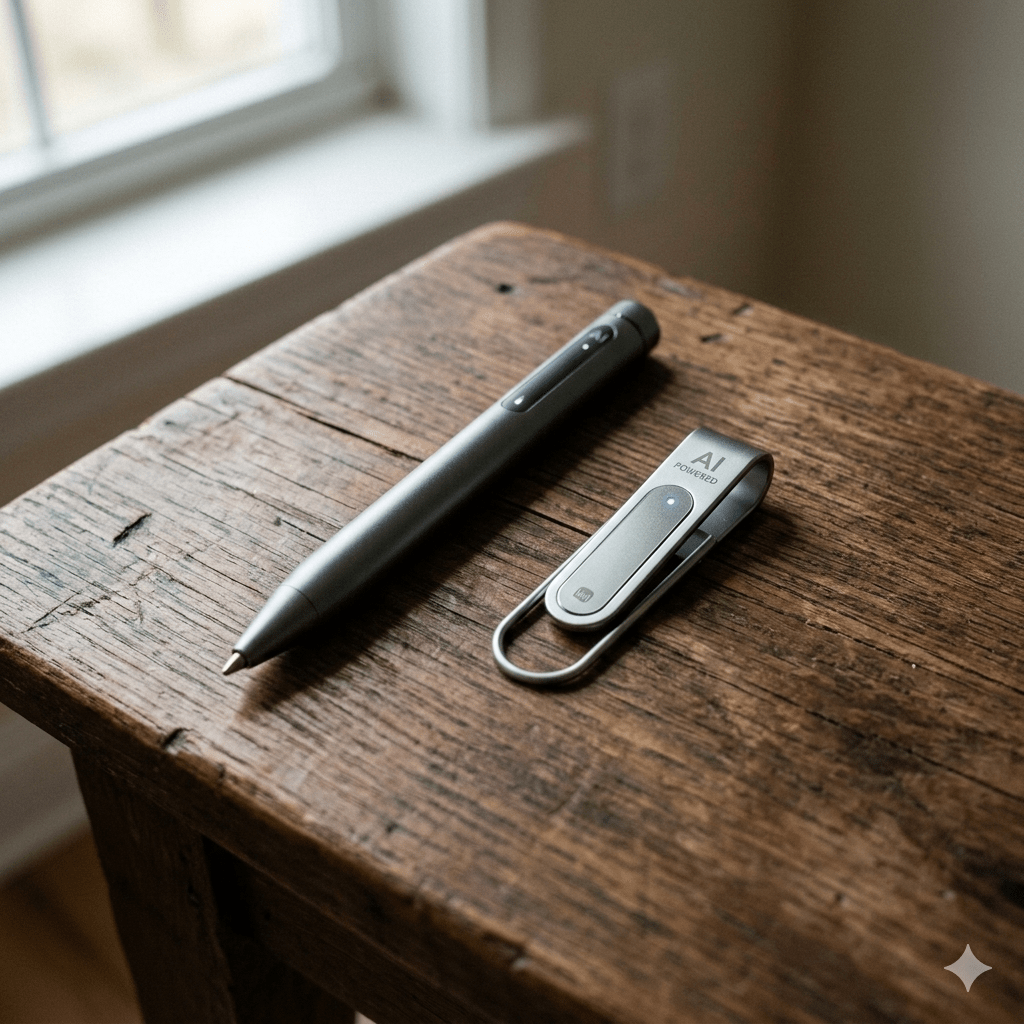
Now we have things like AI pens.
“Handwrite only the critical points. Let Flowtica AI summarize and visualize the rest-audio, photo and even your sketches – into insights. Stay focused in the flow”
And lest you think that such efforts are fringe, Open AI and Jony Ive are reportedly working on one.
But AI pens make as much sense as AI influencers. If you have AI, why do you need the influencers? And if you have AI, why have a pen?
But that won’t stop people from hawking AI pens, and pencils, and erasers, and 3 hole punches, and maybe even…paperclips.
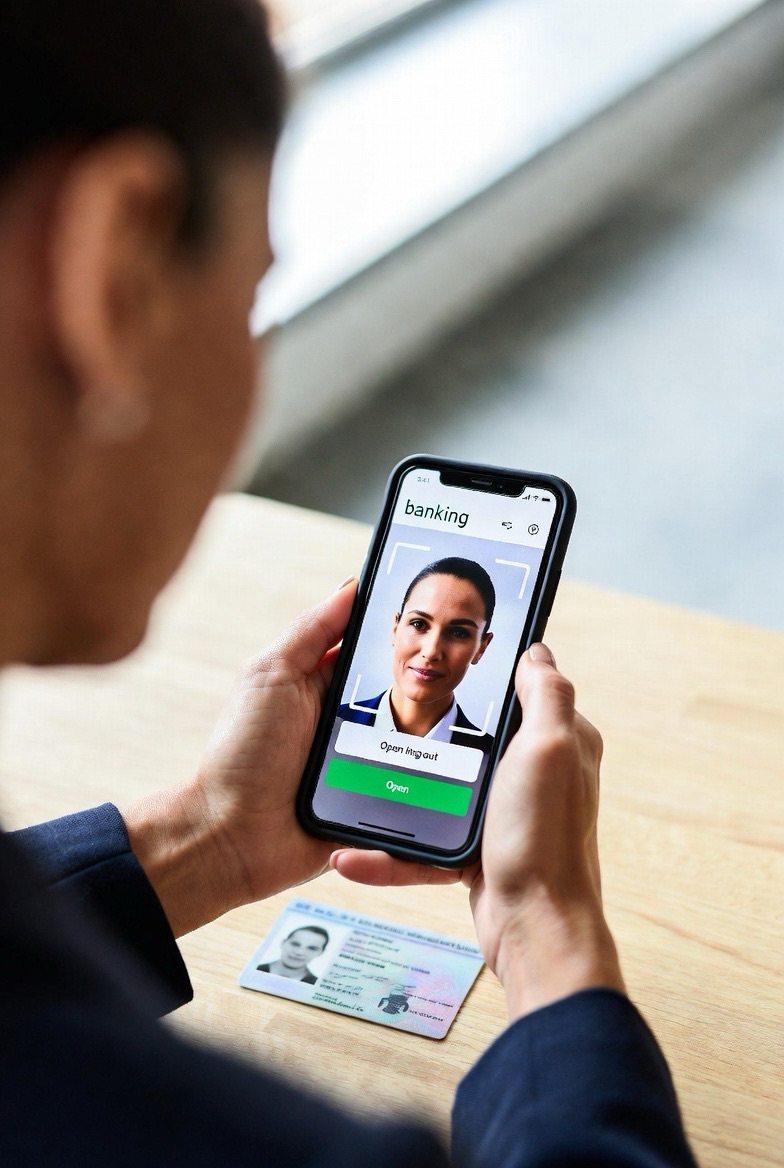
Which IDV solution is this?
I will give you another hint. In addition to using the word “AI” in its product marketing, the company also uses the word trust.

Hope that narrows it down for you.

I remember when I was working in Anaheim and keeping track of the latest BIPA lawsuits, back when you could count them on one hand…then on two hands…then there were too many.
I feel the same way about my previous attempts to track the vendors that offer solutions that conform to ISO 30107-3 Presentation Attack Detection Level 3. I thought I’d found them all, then I’d find another one.
So here’s my current (Friday afternoon) list of the PAD 3 conforming solutions.
| Vendor | Modality | Confirming Lab | Link/Date |
| Aware | Face | BixeLab | November 2025 |
| FaceTec | Face | BixeLab | October 2025 |
| Paravision | Face | Ingenium | September 2025 |
| Yoti | Face | iBeta | January 2026 |
While Google Gemini informed me that Veridas had also received Level 3 confirmation from iBeta, that turned out to be a hallucination. Veridas realizes the importance of Level 3, though, as do other selected vendors, so I suspect this table will be outdated soon.
Oh, and just to confuse things further, some of the other tests, such as CEN/TS 18099 injection attack detection tests, also may apply in some way to presentation attacks. Or maybe not. We’ll see.

If your product marketing pitch to your prospects concentrates on the complex technology in your product, your prospects KNOW that you don’t get it.
Put yourself in your prospects’ shoes.
Understand the problems your prospects face. Ask questions.
Demonstrate a customer focus and talk about how your product benefits your customers.
And craft the correct product marketing content.

(Patti Smith picture by Harald Krichel – Own work, CC BY-SA 4.0, https://commons.wikimedia.org/w/index.php?curid=151929930.)
My very first bad blog joke (back in October 2003) was tangentially related to knowledge-based authentication:
“When Patti Smith married Fred Smith, did she take her husband’s last name, or keep her maiden name?”
Because Patti didn’t change her name, but many people do.
Which means that even if a name is unique, it is not as accurate a form of identification as, say, irises.
If you don’t believe me, ask Richard Meyers and Thomas Joseph Miller.
Better known as Richard Hell and Tom Verlaine.
This morning I loudly proclaimed that three companies had received independent assessments of conformance to Level 3 Presentation Attack Detection (liveness detection).
This is important, because Level 3 conveys an enhanced certainty that the face the software sees (the face that is “presented”) is a real face and not some type of deepfake.
And as I loudly proclaimed, products from three companies had received the Level 3 designation.
But I was wrong.
As I noted several hours later, FOUR companies have received that PAD Level 3 designation: Aware, FaceTec, Paravision, and Yoti.
There are three ways to correct a mistake:
I chose the third option, just in case someone remembers that I initially said three.
This morning’s post listed three companies with independently demonstrated conformance to ISO 30107-3 presentation attack detection level 3: Aware, FaceTec, and Yoti.
The independent evaluators were BixeLab and iBeta.
But Ingenium provides PAD level 3 conformance assessments also.
And Ingenium testified to Paravision’s conformance.
So that’s a total of four companies at PAD Level 3: Aware, FaceTec, Paravision, and Yoti.
Who else did I miss?
And I will revisit my earlier question. Will consumers perceive that THEIR data is valuable enough to warrant Level 3 liveness detection? And avoid the solutions with “only” Level 2 conformance?
Four companies (so far) are betting on it.

Do you want your company’s message to appear in your blog…someday?
If it’s acceptable to your company to get a message out within 90 days, then don’t even bother to read the rest of this post. It’s going to sound ridiculous to you, and probably pretty scary, and frankly it will seem rather rushed.
But could you put me in contact with your competitors? Because while you’re delaying, your competitors are acting.
And can get messages out within 14 days.
So while you’re deciding when you will decide whether you want to say something, your competitor has already said it.
This is the exact process I follow with my clients with my Bredemarket 400 Short Writing Service.
If your competitor wants to get its message out now rather than later, have your competitor talk to me.
Make sure your competitors know that blogging provides benefits.

And Bredemarket can provide blogging services.
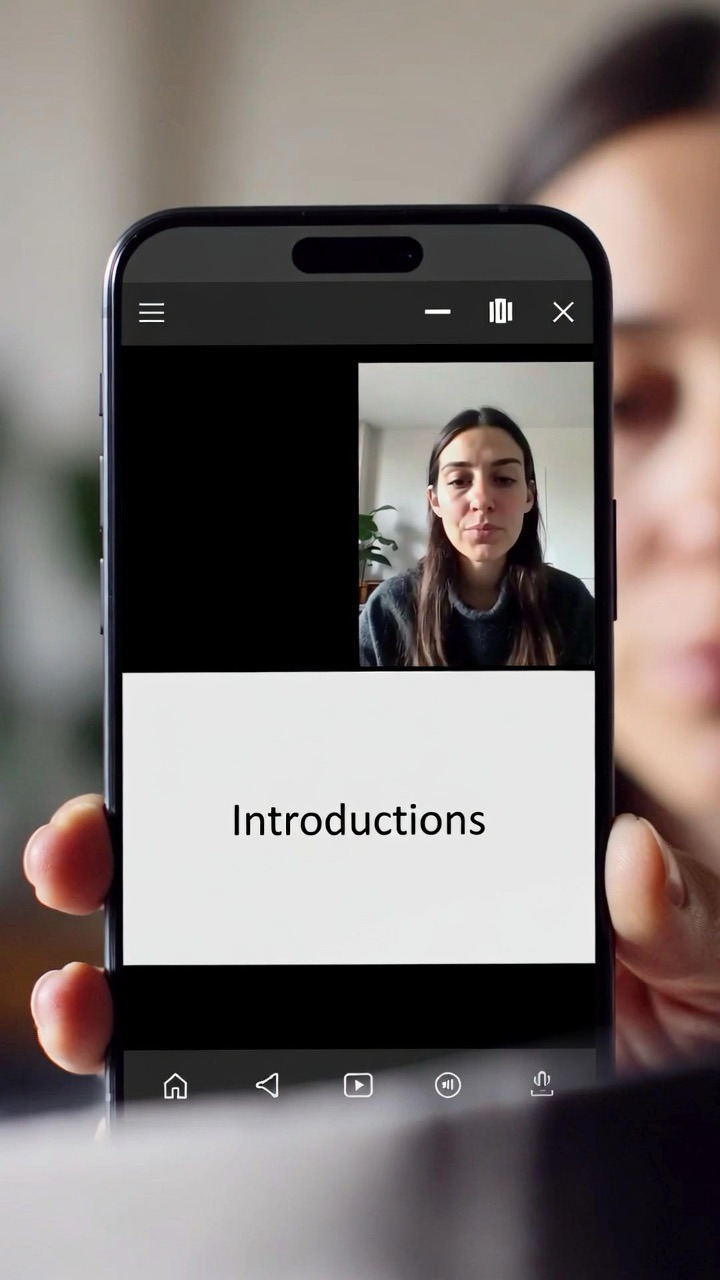
Maybe this happened to you recently…say, within the last two hours.
You join a webinar that you’ve long anticipated. The host introduces the webinar, then introduces his first guest.
The first guest introduces herself.
Then…nothing.
The first guest remains on screen, smiling but not saying a thing.
We expect the host to reappear on screen to introduce the second guest, but he doesn’t.
The screen remains silent for a few more seconds.
Finally, the second guest introduces himself, and proceeds with the webinar by asking a question of the first guest.
The two guests move the webinar forward for the next few minutes, until the host reappears.
As you probably guessed, the host had technical difficulties, was booted from the webinar, and had to rejoin.
But his guests were proactive and proceeded with the webinar without a host.
Don’t wait. Act.

 Bredemarket