It’s a secret.
Sometimes.

Identity/biometrics/technology marketing and writing services
It’s a secret.
Sometimes.
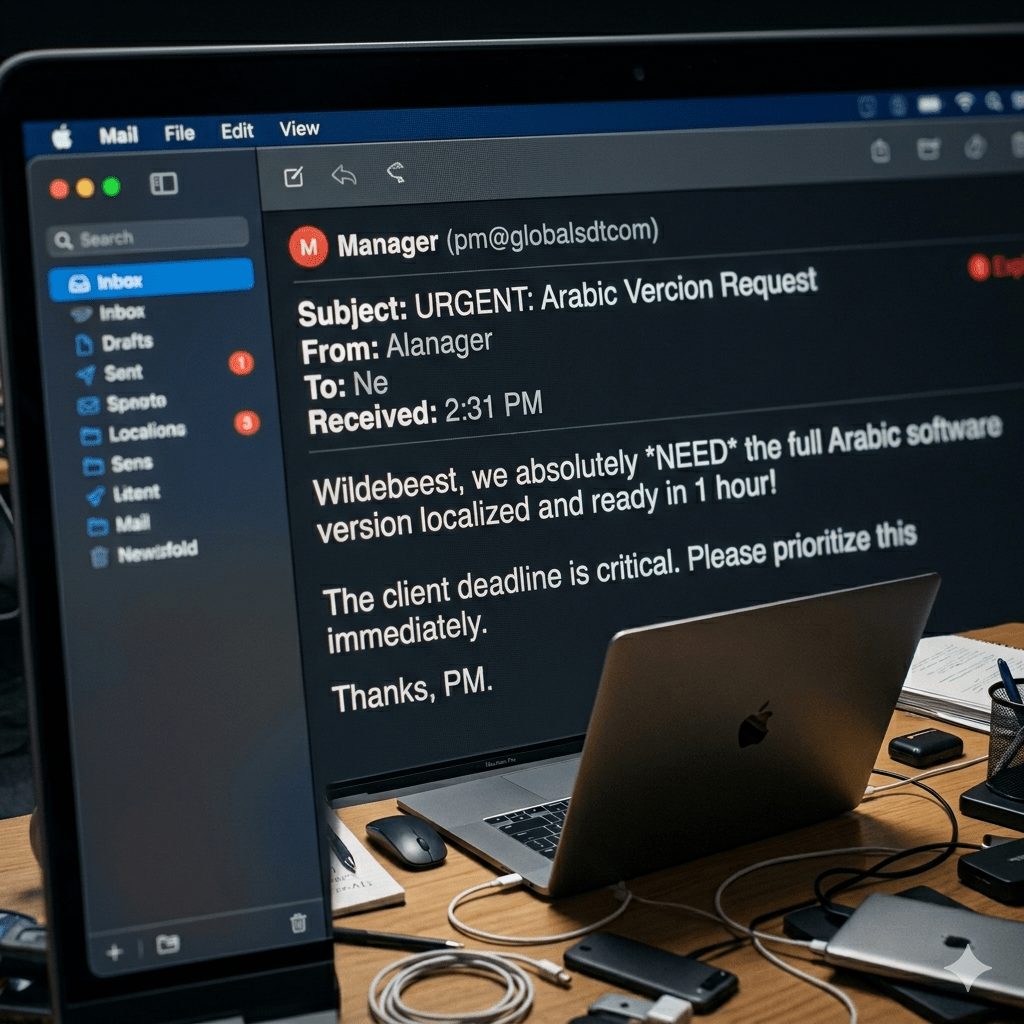
I am (mostly) not a programmer, but I’ve been exposed to materials developed for programmers, including materials from a company then known as Apple Computer.
The Macintosh was new at the time, and there was a learning curve for programmers who were used to character-based interfaces such as MS-DOS. In fact, some programmers were derided for putting DOS-like designs on the Mac platform.
Including Microsoft. Early versions of Microsoft Word used dot commands and other non-Mac interfaces, so we switched to another word processor (FullWrite Professional) which featured a true graphic interface. Unfortunately it was EXTREMELY slow, so we switched back to Word, dot commands and all.
But Apple Computer’s approach to development wasn’t just limited to the look and feel.
Pre-Mac, programmers would create code to compile into a single executable. Then if they needed, say, a French version, they would edit the code, take the English bits out, and put the French bits in.
But files in the original Macintosh File System had two parts: a data fork, and a resource fork. You could edit the resource fork without touching the data fork.
Which meant that it was a lot easier to create that French version of a program.
“Because all the pictures and text were stored separately in a resource fork, it could be used to allow a non-programmer to translate an application for a foreign market, a process called internationalization and localization.”
Or to create any version of a program.
Because of the ease of the process, software developers were not restricted to providing a single software version per country. Residents of Belgium, Canada, China, South Africa, and Switzerland could each receive software in their own local language. And the French Canadian version differed from the Swiss French version. (Or it should have differed.)
Software users received software just for them. And everybody won.
Sadly, this post is not localized, which is why non-U.S. readers are being bombarded with zeds.
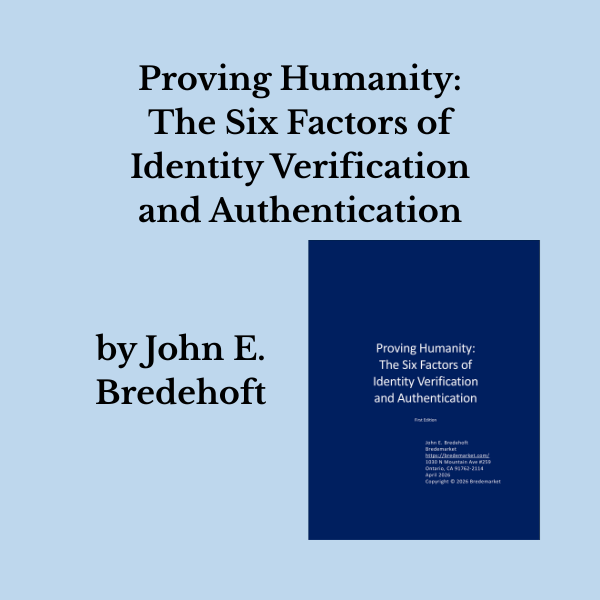
Was your bank account hacked? Your tax return? Your health records?
How do banks, government agencies, and medical facilities protect your personally identifiable information (PII) from fraudsters?
By different methods, called FACTORS.
Understand these factors, how they work, and how they protect you.

Someone’s gotta do it.
You know that I make a big deal about the step before content draft creation where Bredemarket asks questions and creates the plan. But sometimes that isn’t necessary.
Some music managers insist on a pre-programmed planning session to truly engage the target audience.
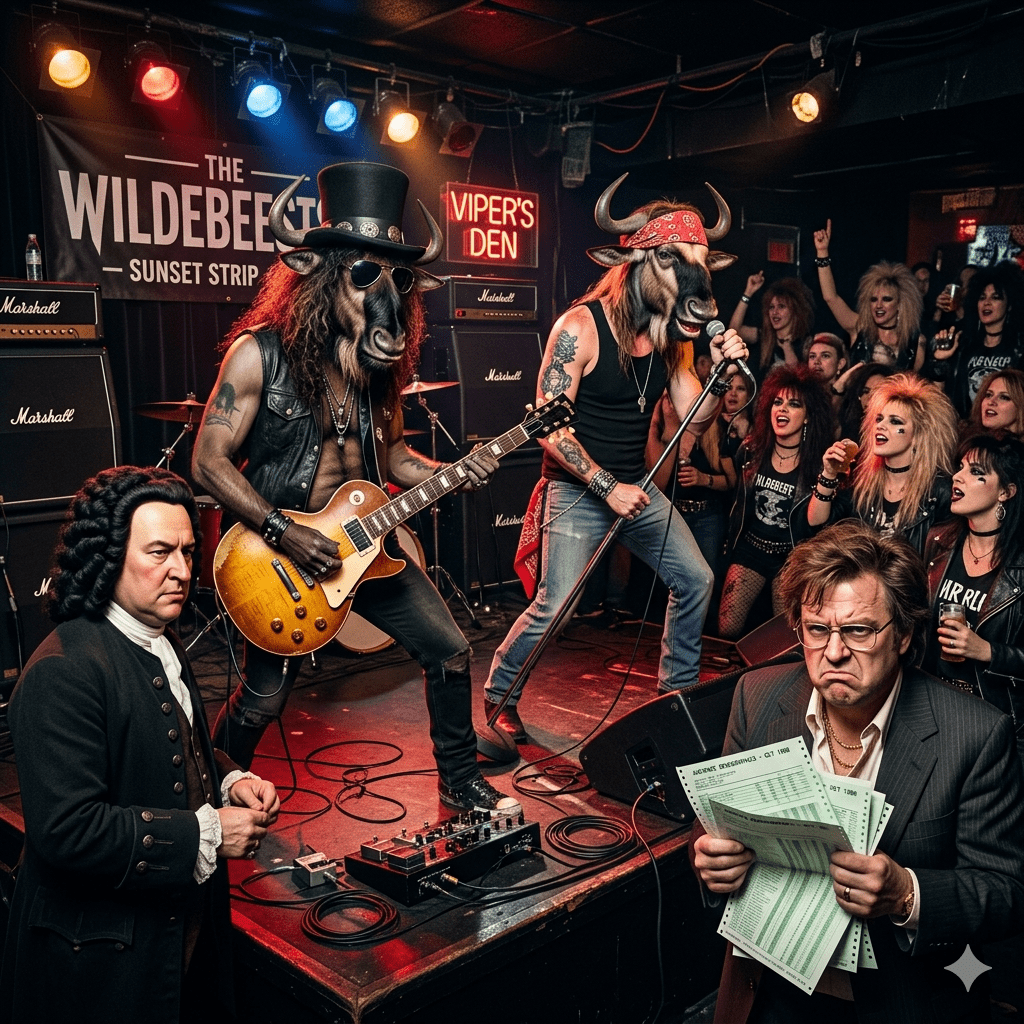
As American Songwriter notes, Guns N’ Roses didn’t put up with all that.
“I was f—ing around with this stupid little riff,” Slash recalled to Q Magazine in 2005, via a Guns N’ Roses fan archive. “Axl said, Hold the f—ing phones! That’s amazing!”
And that finger exercise, a guitar version of a Bach invention, was the birth of “Sweet Child O Mine.” The band continued to develop the riff into a complete song.
Or almost complete. Producer Spencer Proffer thought the song needed a breakdown at the end.
According to Slash’s autobiography, written with Anthony Bozza in 2007, Axl Rose listened to the demos on a loop, then started muttering “where do we go?” to himself, thinking things over.
And you know what happened next.
Remain open to sudden inspiration.
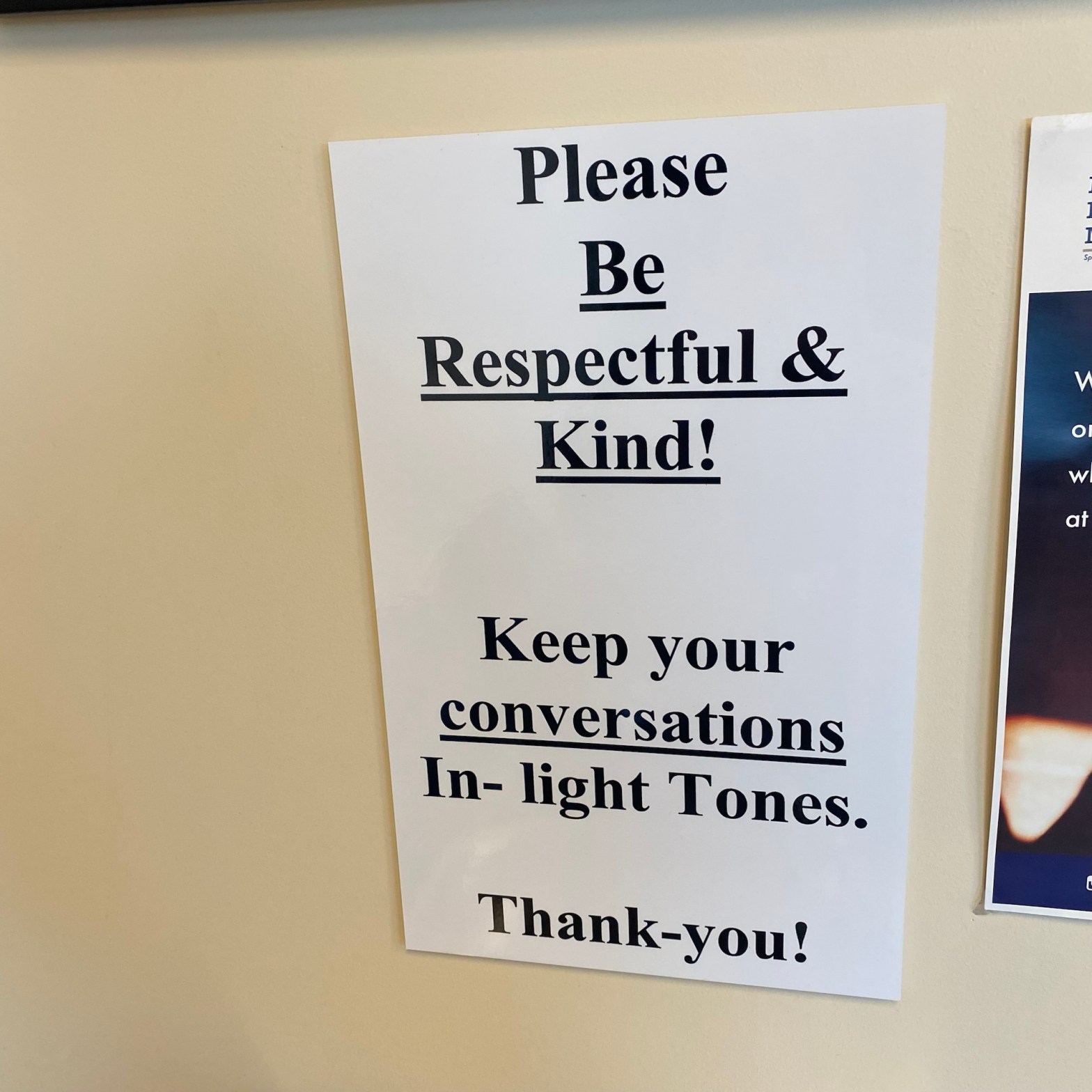
The picture accompanying this post was taken in a medical facility in Palm Desert, California.
For purposes of this post, ignore the “creative” punctuation and capitalization.
I want to concentrate on the word “light.”
If I were creating this sign, I would have chosen the word “soft,” as in “Keep your conversations in soft tones.” Concentrating on the volume.
Then again, people in medical waiting rooms may be stressed. It’s critically important that the patients, caregivers, and others are NOT stressed (to the extent possible).
And that won’t happen when the conversations are…heavy.
“I hurt.”
“I hope these chemo treatments are successful. The hassle of chemo isn’t worth it if the cancer comes back.”
“My insurance is a mess, and so many things aren’t covered. Insurance isn’t worth it.”
“At least you have insurance. I can’t afford it, and can’t afford to pay for this visit.”
So I guess the sign writer was correct. If you are in a medical waiting room, keep your conversations in LIGHT tones to reduce the stress on everyone else.
Now about that-Capitalization…
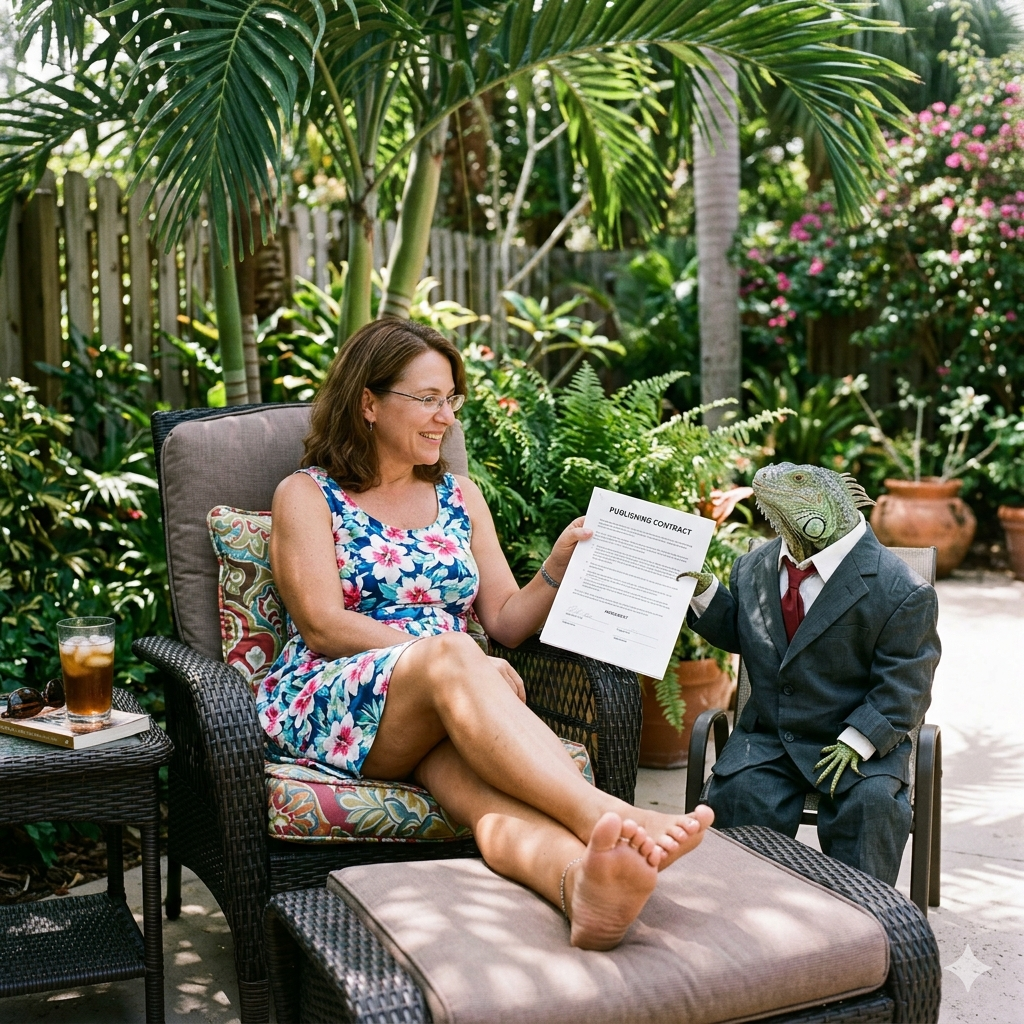
Jobseekers and independent contractors are ideal targets for fraud, but they’re not the only ones.
As Phyllis Chesler notes, writers are also prey to the fraudsters.
“[T]he most extensive scam imaginable was launched against me and against many other writers….
“Two women (or two men? Political prisoners in China–or Nigeria? Or even in Iran?) emailed me. Each impersonated a real editor and a real literary agent. This began on April 23rd and continued on through April 27th or April 28th. They appropriated the name of Marilyn Kreztner at Blackstone Publishing and Caitlin Mahony at William Morris Endeavor….
“Please understand: Given the realities of publishing, most writers are a desperate lot. And oh-so-vulnerable to flattery. If a publishing person praises our work–we melt. We glow. Writers specialize in Big Dreams.”
And despite some lingering suspicions, Chesler sent some of her work to both people. But before she could send $700 for an editorial consultant to “improve” her work, Chesler had already contacted the real Blackstone Publishing and the real Wiolliam Morris Endeavor and confirmed that these were not the real Kreztner or Mahony.
If you’re a writer, you must check the site Chesler recommended, Writer Beware. It include a detailed post about this sort of scam, including examples of the scammer communications.
Reminder: while I write books, mine aren’t sold by publishing houses. Visit my Gumroad site to purchase my ebook, “Proving Humanity: The Six Factors of Identity Verification and Authentication.”

DNA evidence is well-validated. But if you think DNA is the perfect evidence to present at trial, think again. It may not be.
Yes, DNA evidence is scientifically based and can be presented in court under certain circumstances.
But as Forensic’s Blog points out, two issues may derail the use of DNA and other forensic evidence.
What is the “chain of custody”?
It is the DOCUMENTED trail of every person who accessed (“touched, moved, or stored”) a piece of evidence. The documentation is chronological and ideally logged in real time, not hours after the fact.
What could go wrong?
Let’s say that at 1:23 pm, Diana placed a piece of evidence in a locker and locked the locker. Then at 3:53 pm, Denis went to the locker, which was unlocked, and removed the evidence from the locker. Defense attorneys will have a field day with that, and may pressure the judge to state that the evidence is inadmissible because of possible tampering by an unidentified person.
Closely related to the chain of custody is the possibility of cross-contamination. In the case of DNA, this happens when DNA from a crime scene is mixed with another person’s DNA.
I’ve told the story of the mystery female criminal whose DNA was found at crime scenes in three different countries over a decade. The only problem was that the woman’s DNA was found on the burned body of a MAN. Eventually the authorities figured out that the woman worked in a packing center specializing in medical supplies…and that her DNA had contaminated the medical supplies and ended up in the crime scene samples.
Forensic’s Blog suggests several ways to avoid chain of custody issues and cross-contamination. These include established and enforced procedures for handling, packaging, and labeling data; separating tasks; and establishing zones of exclusion at crime scenes.
In addition to establishment and enforcement, education is essential. (Sorrye.) Not only for the forensic professionals gathering the evidence, but for everyone who deals with the evidence…including biometric vendors and their customers.
If you need assistance in creating educational content for proper evidence handling, Bredemarket can help. Talk to me.
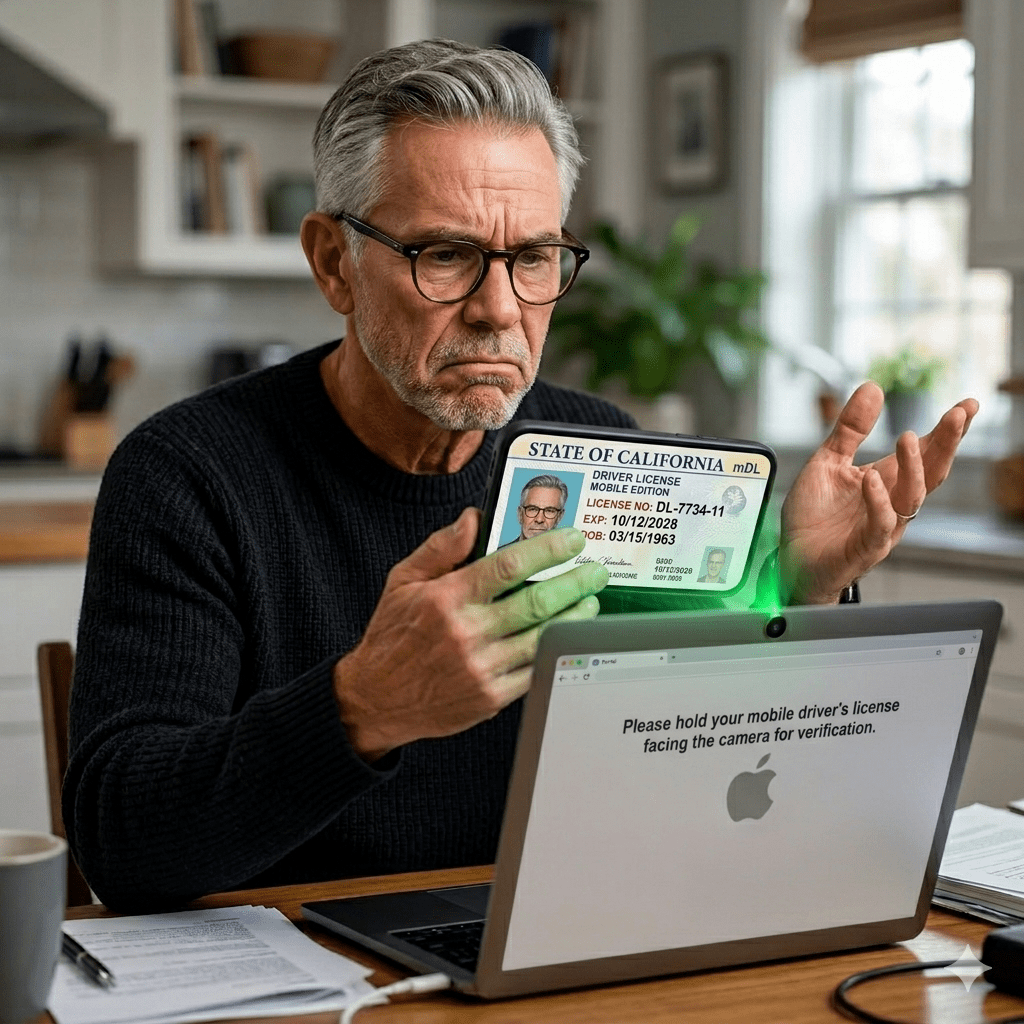
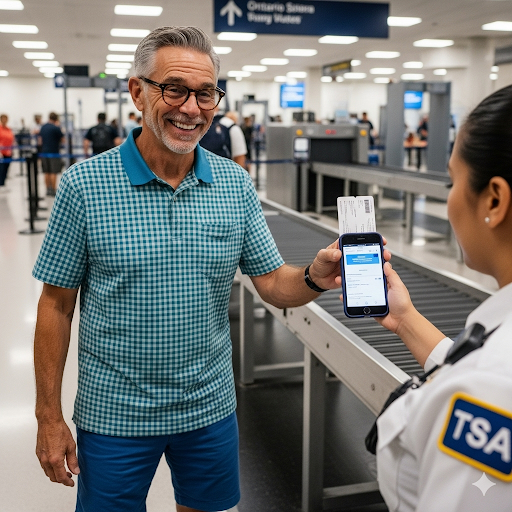
Perhaps it’s different in Louisiana where the mDL is long established and supported, but in California the only place where I’ve used my mDL is at a TSA checkpoint. And last Friday I couldn’t even do that because the reader was down.
But at least mDLs are available to a large number of people. deepidv provides this good news…and the bad news.
“As of mid-January 2026, the American Association of Motor Vehicle Administrators tracks 21 US states plus Puerto Rico issuing ISO/IEC 18013-5 compliant mobile driver’s licenses. That includes California, New York, Virginia, Arizona, and most of the largest population states. Industry analysis puts the figure at roughly 41 percent of Americans now living in a state with an active mDL program, and 76 percent in a state where the program is live or in development.”
So at least many of us can get mDLs. But as I noted, it’s a challenge to use them in-person, despite a standard outlining how it can be used.
“ISO/IEC 18013-5 covers proximity presentation. The mDL holder shows the credential to a verifier device that is physically nearby, typically over Bluetooth Low Energy or NFC. That works for airport security, in-person retail age checks, and traffic stops.”
But it’s a greater challenge to use mDLs online.
“It does not work for online onboarding because there is no proximity. For online flows, the standard is ISO/IEC TS 18013-7, published in 2025, which defines remote and online presentation. Adoption of Part 7 is, in the words of the people building these systems, “limited and inconsistent.””
This is where the benefit of decentralized identity falls apart. In a decentralized identity system, the user controls where the identity is stored. (I have two California mDLs on my phone, because decentralized is very decentralized.)
deepidv has concerns with this:
“Device-side verification means the cryptographic check that establishes whether the credential is authentic happens in an environment the relying party does not control. A rooted phone, a compromised app, a tampered SDK, a man-in-the-middle on the verification flow, all of these break the trust model. The relying party is being asked to trust a yes-no answer it cannot independently verify.”
deepidv describes server-side verification, as well as other issues with mDL adoption, in its LinkedIn article.
Though not referenced by name, deepidv cites Regula’s support of server-side processing:
“Malware, rooted phones, tampered apps: User devices such as smartphones can pose risks to identity verification, as these environments are difficult to control against fraud.
“Regula says it has a solution. The identity verification firm has introduced server-side reprocessing of mobile driver’s license (mDL) data in its document reader software, Regula Document Reader SDK. The capability means that mDL data is processed on the backend in a controlled, trusted environment rather than relying solely on user devices, which also helps preserve the integrity of the identity signal across the verification flow. Data captured on the user’s device is revalidated through a PKI check and signature verification on the server.”
But will the decentralized identity people insist that server-side verification is evil? And how will the decentralized proponents convince others that a decentralized identity is really really secure?
If your company has a decentralized or centralized solution and you need to communicate its benefits to prospects, Bredemarket can work with you.
Update to the April 2 version. Added Shufti.
| Vendor | Modality | Confirming Lab | Link/Date |
| Aware | Face | BixeLab | November 2025 |
| BioID | Face | Tüvit | August 2025 (1) (2) |
| FaceTec | Face | BixeLab | October 2025 |
| Incode | Face | iBeta | February 2026 |
| Oz Forensics | Face | BixeLab | March 2026 |
| Paravision | Face | Ingenium | September 2025 |
| Shufti | Face | iBeta | April 2026 |
| Yoti | Face | iBeta | January 2026 |

 Bredemarket