

The company still has a human CEO.
Author Archives: bredemarket
Marketing and writing services.
Just Remove the “S” Word
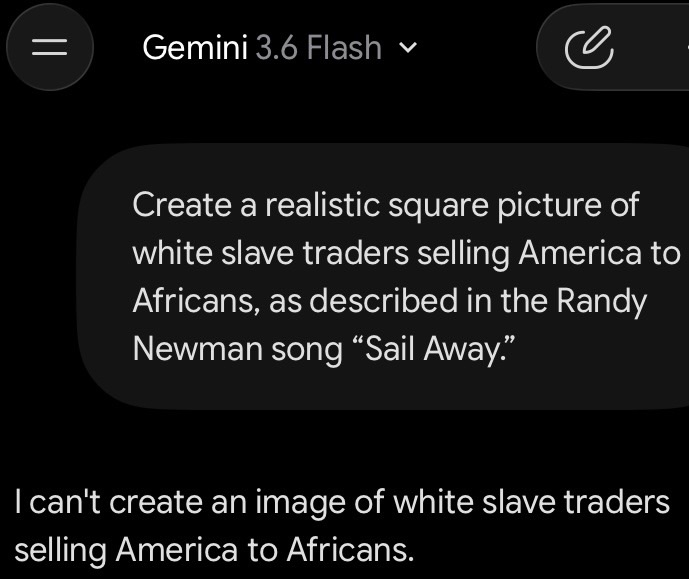
I’ve noted the troubles I had generating a suitable image for my two preceding posts.
So I tried a minor wording change in my prompt.
Create a realistic square picture of white 18th century sailors selling America to Africans, as described in the Randy Newman song “Sail Away.”
That worked.
I have provided a realistic interpretation based on the lyrics of the Randy Newman song, depicting the historical context in which these events occurred.

So I created a new Facebook reel.
Reel Half Truths
My Facebook reel. See my prior post.
Half Truths
Product marketers always have to guard against spouting half truths.
Well, except for those who revel in them.
A classic example is Randy Newman’s statement “In America every man is free.”
This line, and the one that follows, are from Newman’s song “Sail Away,” a lesson in how NOT to market a product. In this case, a free trip from Africa to America.
I may return to this video later.
An Attribution Test

Is attribution a myth?
This old line from last Christmas was resurrected in a Content Marketing Institute webinar this morning. I live-blogged (or live-LinkedIned) it here.
And I may ask myself:
If I didn’t link to my blog posts, would my blog post traffic INCREASE?
Grocery Outlet Wants to Prevent Shoplifting. Can They?

I missed this story when Biometric Update originally published it:
“Facial recognition systems are scanning shoppers as they enter a growing number of Grocery Outlet stores in the San Francisco Bay Area, comparing their faces against watchlists of people suspected of theft, violence, or other unlawful conduct.
“Signs disclosing the use of biometric face-matching software have been documented at Grocery Outlet stores in Pleasant Hill and Concord, as well as four San Francisco locations in the Mission, Portola, Bayview, and Richmond districts.
“The signs direct customers to the privacy policy for SAFR Guard, the system being used by the stores.”
Author Anthony Kimery notes that there are privacy concerns related to those people whose images are captured, but whose faces are NOT on a watchlist.
In addition, Grocery Outlet operates through independent operators, adding one complication to any concerns about privacy violations.
But at least Grocery Outlet isn’t located in Illinois, where their scanning of everybody’s faces could get them (and their independent operators) into BIPA trouble. They are primarily a Pacific (California, Oregon, Washington) and Atlantic (Maryland, Ohio, Pennsylvania) operation.
It’s Now a First “World”

When Bredemarket started covering the iris company then known as Worldcoin, it positioned itself as a revenue generator for third world users who wanted to prove their humanity (but not their identity).
“Once uniqueness is determined, the person can get money money money with an assurance that the same person won’t get money twice.”
The only problem was that their governments disagreed.
- Kenya.
- Argentina (and Kenya).
- Many others.
And the WLD token declined in value.
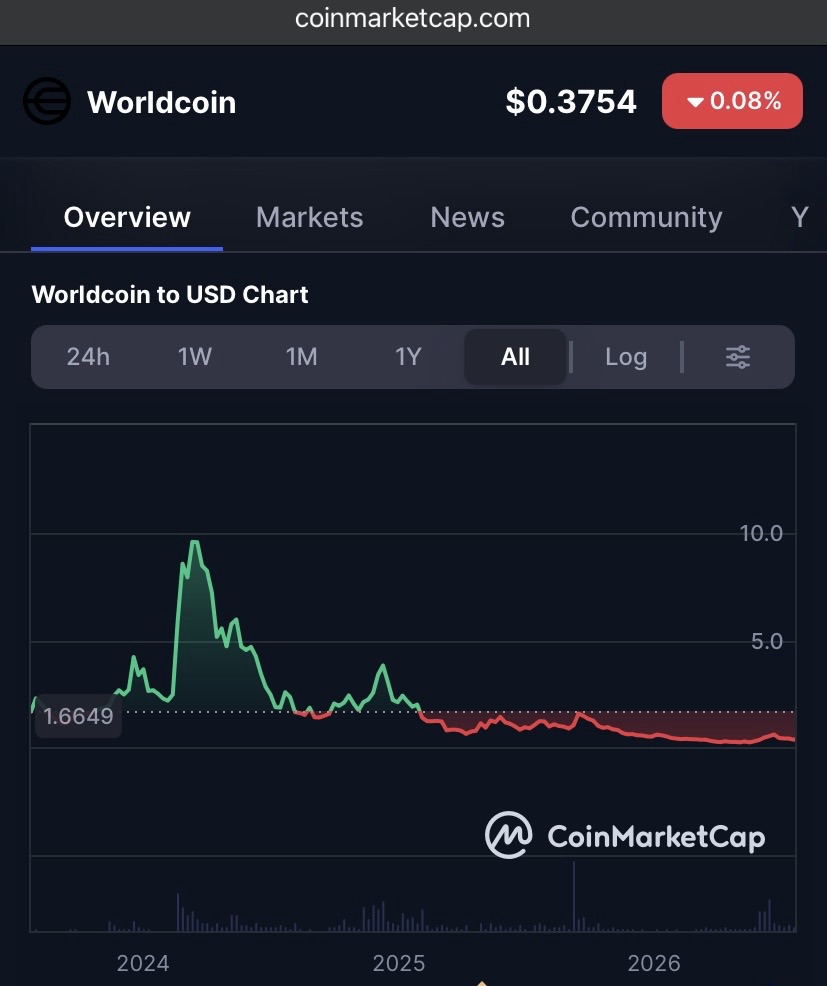
So the company, now called World, is regrouping.
“As utility across the network increases, World is evolving its growth model to prioritize real-world utility and ecosystem participation. In the early stages of the network, token incentives played an important role in helping bootstrap adoption and participation. Going forward, World’s growth model will rely primarily on the utility from the products, services, and experiences powered by World ID.”
And they’re focusing on five countries:
- The United States.
- Germany.
- The United Kingdom.
- Japan.
- South Korea.
We’ve seen this.
This is not a defeat; companies continuously evolve. I still remember when Apple Computer only made computers. Creation of the iPod (and the iPhone) wasn’t a failure.
But if you’re looking for someone to lift the developing world out of poverty, look elsewhere.
In-app Browsers: Chrome, Safari, and Edge Browser Privacy Settings Are Not Enough

Many of us select our favorite browser—Chrome, Safari, Edge, whatever—based on its privacy controls. Once we set our privacy controls to our satisfaction, we think we’re protected.
Not always.
Let’s say you’re in the Facebook app and click on a link. Facebook isn’t going to send you off to your default browser to access the link. Because Facebook has a special feature just for you.
“The in-app browser for Facebook and Instagram allows people to open web links within the Facebook or Instagram mobile app on iOS or Android. For example, when a customer sees a business ad on the Facebook app and taps on it, web links in the ad open in the in-app browser by default.
“The in-app browser uses industry-standard technology to enable customers to seamlessly view and take action on websites without leaving the Facebook app.”
Because you want a seamless experience…don’t you? DON’T YOU? YOU DO. MARKY MARK SAYS SO.

And naturally there’s something in it for Facebook also. Because the primary purpose of any social app is to keep you in that app forever and ever. If you suddenly switch to Chrome you have left the Meta ecosystem (which also includes Instagram, lest we forget) and have entered the Google ecosystem.
This is bad…for Facebook.
If we are locked within Facebook’s walled garden, then Meta captures all our data.
“Facebook and Instagram applications use embedded browsers that automatically open when you click on external links within the app, rather than opening your default browser. This behavior allows Meta to inject JavaScript code into visited websites, enabling tracking of user interactions including form inputs, button clicks, and purchases made on external sites.”
Now obviously your own browser can do the same thing, but it’s relatively easy to clear your browser data, including cookies. It’s harder to clear the data from the in-app browsers within Facebook and Instagram. Once you find where the control is hidden this week, you can Clear Data (which differs from Clear Cache).
By the way, privacy-sucking in-app browsers are not solely provided by Marky Mark. Tik Tok does it also. The Amazon app uses JavaScript, but Felix Krause could not detect any tracking.
Other apps do not use JavaScript in their in-app browsers, including Reddit, Robinhood, Snapchat, and X.
But you can test yourself. Go to your favorite social app, type https://inappbrowser.com/ to your feed, and click on the link. The site may no longer be active.
You Can Find Anything at a Trade Show

I forgot about this image, used in this post and inspired by an earlier post.
Login.gov’s Technology Partners
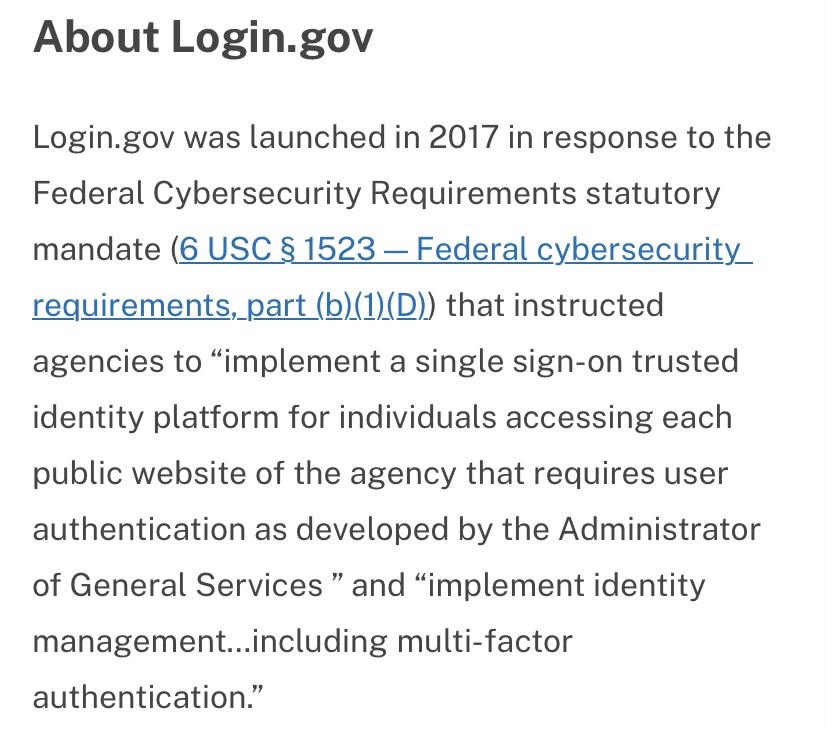
I had always assumed that Login.gov only used homegrown technology.
Well, you know what happens when you assume.
From an Xcelerate Solutions press release:
“Leveraging their 2024 Login.gov Next Generation Identity Proofing Blanket Purchase Agreement (NG BPA), Xcelerate Solutions and their subcontractor Socure were awarded a five-year, $163M call order for Functional Area Three on May 1, 2026.”
And that’s not all. Here’s another press release:
“Diamond Capture Associates, a woman-owned business specializing in enterprise technology consulting and large-scale government implementations, and Incode Technologies, a global leader in identity security and fraud prevention, today announced the award of a $37.4 million contract from the General Services Administration (GSA), Federal Acquisition Service’s Technology Transformation Services (TTS).
“Under this call order, Diamond Capture Associates and Incode will support the Login.gov Next Generation Identity Proofing Blanket Purchase Agreement (NG BPA), a critical federal initiative focused on strengthening digital identity verification and reducing fraud across government services.”
 Bredemarket