While he does not explicitly talk about the myriad of facial recognition algorithms that were NOT addressed in the study, he does have some additional details about the test dataset.
The three algorithms that were tested
Here’s what FindBiometrics says about the three algorithms that were tested in the Israeli study.
The researchers described (the master faces) as master keys that could unlock the three facial recognition systems that were used to test the theory. In that regard, they challenged the Dlib, FaceNet, and SphereFace systems, and their nine master faces were able to impersonate more than 40 percent of the 5,749 people in the LFW set.
While it initially sounds impressive to say that three facial recognition algorithms were fooled by the master faces, bear in mind that there are hundreds of facial recognition algorithms tested by NIST alone, and (as I said earlier) the test has NOT been duplicated against any algorithms other than the three open source algorithms mentioned.
…let’s look at the algorithms themselves and evaluate the claim that results for the three algorithms Dlib, FaceNet, and SphereFace can naturally be extrapolated to ALL facial recognition algorithms….NIST’s subsequent study…evaluated 189 algorithms specially for 1:1 and 1:N use cases….“Tests showed a wide range in accuracy across developers, with the most accurate algorithms producing many fewer errors.”
In short, just because the three open source algorithms were fooled by master faces doesn’t mean that commercial grade algorithms would also be fooled by master faces. Maybe they would be fooled…or maybe they wouldn’t.
What about the dataset?
The three open source algorithms were tested against the dataset from Labeled Faces in the Wild. As I noted in my prior post, the LFW people emphasize some important caveats about their dataset, including the following:
Many groups are not well represented in LFW. For example, there are very few children, no babies, very few people over the age of 80, and a relatively small proportion of women. In addition, many ethnicities have very minor representation or none at all.
In the FindBiometrics article, Weiss provides some additional detail about dataset representation.
…there is good reason to question the researchers’ conclusion. Only two of the nine master faces belong to women, and most depicted white men over the age of 60. In plain terms, that means that the master faces are not representative of the global public, and they are not nearly as effective when applied to anyone that falls outside one particular demographic.
That discrepancy can largely be attributed to the limitations of the LFW dataset. Women make up only 22 percent of the dataset, and the numbers are even lower for children, the elderly (those over the age of 80), and for many ethnic groups.
Valid points to be sure, although the definition of a “representative” dataset varies depending upon the use case. For example, a representative dataset for a law enforcement database in the city of El Paso, Texas will differ from a representative dataset for an airport database catering to Air France customers.
So what conclusion can be drawn?
Perhaps it’s just me, but scientific entities that conduct studies are always motivated by the need for additional funding. After a study is concluded, it seems that the entities always conclude that “more research is needed”…which can be self-serving, because as long as more research is needed, the scientific entities can continue to receive necessary funding. Imagine the scientific entity that would dare to say “Well, all necessary research has been conducted. We’re closing down our research center.”
But in this case, there IS a need to perform additional research, to test the master faces against different algorithms and against different datasets. Then we’ll know whether this statement from the FindBiometrics article (emphasis mine) is actually true:
Any face-based identification system would be extremely vulnerable to spoofing…
(This is the third post in a series. The first post (from July 8) can be found here, the second (from July 12) here.)
Most people who started new businesses did not start them during a pandemic. Those of us who did had a different experience than older firms. Some things those older firms did weren’t necessary for the COVID firms.
Until now.
Starting a business during a pandemic
When I started Bredemarket, I wasn’t creating tangible collateral.
When would I use it?
I wasn’t driving to clients’ offices to pitch my services. I was sitting in my home office, communicating with people online, and never visiting them. I had not met any of my clients in-person in years, and some of my clients have never met me in-person at all.
I wasn’t mailing things to clients or potential clients…well, not through the U.S. Postal Service anyway. I’m using email, LinkedIn, and other electronic communication methods to interact with my clients. Bredemarket’s inventory doesn’t even include a single stamp.
And in my case I wasn’t traveling on any real business trips. (I didn’t go to last week’s International Association for Identification conference.) For me, my only “business trips” so far have been to:
You can’t blame me for thinking that tangible collateral was on the way out, because I was conducting most of my business without physically entering a location. My city business license, my fictitious business name application, and even my business bank account were all applied for online.
Tangible collateral was of far less importance than my QR code.
And now I’m printing tangible collateral
So what changed?
Well, I’m going to an in-person event next week. For my younger readers (i.e. those who developed awareness after 2019), an “in-person event” is something where you are actually in the same room as the people that you are meeting, rather than looking at them in boxes on your computer screen.
After I registered for the in-person event, I realized that I needed to obtain something, preferably before the meeting.
I needed business cards.
And the business cards had to be Bredemarket business cards. I still have some business cards from my former employer, but they’re obviously not going to do me any good.
Now travel back to those long-ago days of 2019 and try to imagine any firm, even a service-based firm, conducting business for almost a year without bothering to print business cards.
Since I haven’t really dealt with business cards in a couple of years, it’s time for me to brush up on business card etiquette:
Cards should not be handed out by the left hand, should never be written on and should always be translated to the language of the specific country they are being handed out in on the rear of the card. They should never be carried loose and presented in the best condition.
(By the way, don’t you think that last sentence needs a comma?)
Anyway, I have finally ordered some business cards, which should arrive before my in-person event next week.
And I’ll also be ready for a SECOND in-person event.
Unless a future Mu or Nu variant of COVID sends us all back home.
Modern “journalism” often consists of reprinting a press release without subjecting it to critical analysis. Sadly, I see a lot of this in publications, including both biometric and technology publications.
This post looks at the recently announced master faces study results, the datasets used (and the datasets not used), the algorithms used (and the algorithms not used), and the (faulty) conclusions that have been derived from the study.
Oh, and it also informs you of a way to make sure that you don’t make the same mistakes when talking about biometrics.
In facial recognition, there is a concept called “master faces” (similar concepts can be found for other biometric modalities). The idea behind master faces is that such data can potentially match against MULTIPLE faces, not just one. This is similar to a master key that can unlock many doors, not just one.
This can conceivably happen because facial recognition algorithms do not match faces to faces, but match derived features from faces to derived features from faces. So if you can create the right “master” feature set, it can potentially match more than one face.
Ever thought you were being gaslighted by industry claims that facial recognition is trustworthy for authentication and identification? You have been.
The article goes on to discuss an Israeli research project that demonstrated some true “master faces” vulnerabilities. (Emphasis mine.)
One particular approach, which they write was based on Dlib, created nine master faces that unlocked 42 percent to 64 percent of a test dataset. The team also evaluated its work using the FaceNet and SphereFace, which like Dlib, are convolutional neural network-based face descriptors.
They say a single face passed for 20 percent of identities in Labeled Faces in the Wild, an open-source database developed by the University of Massachusetts. That might make many current facial recognition products and strategies obsolete.
Sounds frightening. After all, the study not only used dlib, FaceNet, and SphereFace, but also made reference to a test set from Labeled Faces in the Wild. So it’s obvious why master faces techniques might make many current facial recognition products obsolete.
Right?
Let’s look at the datasets
It’s always more impressive to cite an authority, and citations of the University of Massachusetts’ Labeled Faces in the Wild (LFW) are no exception. After all, this dataset has been used for some time to evaluate facial recognition algorithms.
But what does Labeled Faces in the Wild say about…itself? (I know this is a long excerpt, but it’s important.)
DISCLAIMER:
Labeled Faces in the Wild is a public benchmark for face verification, also known as pair matching. No matter what the performance of an algorithm on LFW, it should not be used to conclude that an algorithm is suitable for any commercial purpose. There are many reasons for this. Here is a non-exhaustive list:
Face verification and other forms of face recognition are very different problems. For example, it is very difficult to extrapolate from performance on verification to performance on 1:N recognition.
Many groups are not well represented in LFW. For example, there are very few children, no babies, very few people over the age of 80, and a relatively small proportion of women. In addition, many ethnicities have very minor representation or none at all.
While theoretically LFW could be used to assess performance for certain subgroups, the database was not designed to have enough data for strong statistical conclusions about subgroups. Simply put, LFW is not large enough to provide evidence that a particular piece of software has been thoroughly tested.
Additional conditions, such as poor lighting, extreme pose, strong occlusions, low resolution, and other important factors do not constitute a major part of LFW. These are important areas of evaluation, especially for algorithms designed to recognize images “in the wild”.
For all of these reasons, we would like to emphasize that LFW was published to help the research community make advances in face verification, not to provide a thorough vetting of commercial algorithms before deployment.
While there are many resources available for assessing face recognition algorithms, such as the Face Recognition Vendor Tests run by the USA National Institute of Standards and Technology (NIST), the understanding of how to best test face recognition algorithms for commercial use is a rapidly evolving area. Some of us are actively involved in developing these new standards, and will continue to make them publicly available when they are ready.
So there are a lot of disclaimers in that text.
LFW is a 1:1 test, not a 1:N test. Therefore, while it can test how one face compares to another face, it cannot test how one face compares to a database of faces. The usual law enforcement use case is to compare a single face (for example, one captured from a video camera) against an entire database of known criminals. That’s a computationally different exercise from the act of comparing a crime scene face against a single criminal face, then comparing it against a second criminal face, and so forth.
The people in the LFW database are not necessarily representative of the world population, the population of the United States, the population of Massachusetts, or any population at all. So you can’t conclude that a master face that matches against a bunch of LFW faces would match against a bunch of faces from your locality.
Captured faces exhibit a variety of quality levels. A face image captured by a camera three feet from you at eye level in good lighting will differ from a face image captured by an overhead camera in poor lighting. LFW doesn’t have a lot of these latter images.
I should mention one more thing about LFW. The researchers allow testers to access the database itself, essentially making LFW an “open book test.” And as any student knows, if a test is open book, it’s much easier to get an A on the test.
Now let’s take a look at another test that was mentioned by the LFW folks itself: namely, NIST’s Face Recognition Vendor Test.
This is actually a series of tests that has evolved over the years; NIST is now conducting ongoing tests for both 1:1 and 1:N (unlike LFW, which only conducts 1:1 testing). This is important because most of the large-scale facial recognition commercial applications that we think about are 1:N applications (see my example above, in which a facial image captured at a crime scene is compared against an entire database of criminals).
In addition, NIST uses multiple data sets that cover a number of use cases, including mugshots, visa photos, and faces “in the wild” (i.e. not under ideal conditions).
It’s also important to note that NIST’s tests are also intended to benefit research, and do not necessarily indicate that a particular algorithm that performs well for NIST will perform well in a commercial implementation. (If the algorithm is even available in a commercial implementation: some of the algorithms submitted to NIST are research algorithms only that never made it to a production system.) For the difference between testing an algorithm in a NIST test and testing an algorithm in a production system, please see Mike French’s LinkedIn article on the topic. (I’ve cited this article before.)
With those caveats, I will note that NIST’s FRVT tests are NOT open book tests. Vendors and other entities give their algorithms to NIST, NIST tests them, and then NIST tells YOU what the results were.
So perhaps it’s more robust than LFW, but it’s still a research project.
Let’s look at the algorithms
Now that we’ve looked at two test datasets, let’s look at the algorithms themselves and evaluate the claim that results for the three algorithms Dlib, FaceNet, and SphereFace can naturally be extrapolated to ALL facial recognition algorithms.
This isn’t the first time that we’ve seen such an attempt at extrapolation. After all, the MIT Media Lab’s Gender Shades study (which evaluated neither 1:1 nor 1:N use cases, but algorithmic attempts to identify gender and race) itself only used three algorithms. Yet the popular media conclusion from this study was that ALL facial recognition algorithms are racist.
Compare this with NIST’s subsequent study, which evaluated 189 algorithms specially for 1:1 and 1:N use cases. While NIST did find some race/sex differences in algorithms, these were not universal: “Tests showed a wide range in accuracy across developers, with the most accurate algorithms producing many fewer errors.”
In other words, just because an earlier test of three algorithms demonstrated issues in determining race or gender, that doesn’t mean that the current crop of hundreds of algorithms will necessarily demonstrate issues in identifying individuals.
So let’s circle back to the master faces study. How do the results of this study affect “current facial recognition products”?
The answer is “We don’t know.”
Has the master faces experiment been duplicated against the leading commercial algorithms tested by Labeled Faces in the Wild? Apparently not.
Has the master faces experiment been duplicated against the leading commercial algorithms tested by NIST? Well, let’s look at the various ways you can define the “leading” commercial algorithms.
For example, here’s the view of the test set that IDEMIA would want you to see: the 1:N test sorted by the “Visa Border” column (results as of August 6, 2021):
Now you can play with the sort order in many different ways, but the question remains: have the Israeli researchers, or anyone else, performed a “master faces” test (preferably a 1:N test) on the IDEMIA, Paravision, Sensetime, NtechLab, Anyvision, or ANY other commercial algorithm?
Maybe a future study WILL conclude that even the leading commercial algorithms are vulnerable to master face attacks. However, until such studies are actually performed, we CANNOT conclude that commercial facial recognition algorithms are vulnerable to master face attacks.
So naturally journalists approach the results critically…not
But I’m sure that people are going to make those conclusions anyway.
While Matt Schneier doesn’t go to the extreme of saying that all facial recognition algorithms are now defunct, he does classify the research as “fascinating” WITHOUT commenting on its limitations or applicability. Schneier knows security, but he didn’t vet this one.
Gizmodo, on the other hand, breathlessly declares (in “‘Master Face’: Researchers Say They’ve Found a Wildly Successful Bypass for Face Recognition Tech”) that “you’d be safe to add (the study) to the growing body of literature that suggests facial recognition is bad news for everybody except cops and large corporations.” Apparently Gizmodo never read the NIST gender/race test results that I cited earlier.
Does anyone even UNDERSTAND these studies? (Or do they choose NOT to understand them?)
How can you avoid the same mistakes when communicating about biometrics?
As you can see, people often write about biometric topics without understanding them fully.
Even biometric companies sometimes have difficulty communicating about biometric topics in a way that laypeople can understand. (Perhaps that’s the reason why people misconstrue these studies and conclude that “all facial recognition is racist” and “any facial recognition system can be spoofed by a master face.”)
Are you about to publish something about biometrics that requires a sanity check? (Hopefully not literally, but you know what I mean.)
Well, why not turn to a biometric content marketing expert? Use the identity/biometric blog expert to write your blog post, the identity/biometric case study expert to write your case study, or the identity/biometric white paper expert to…well, you get the idea. (And all three experts are the same person!)
Wrapping up a few loose ends about the whole 28th parallel thingie (where I posted/shared multiple content items in a short period to see what would happen).
I just completed a podcast episode about it. (TL;DR: no huge effect.)
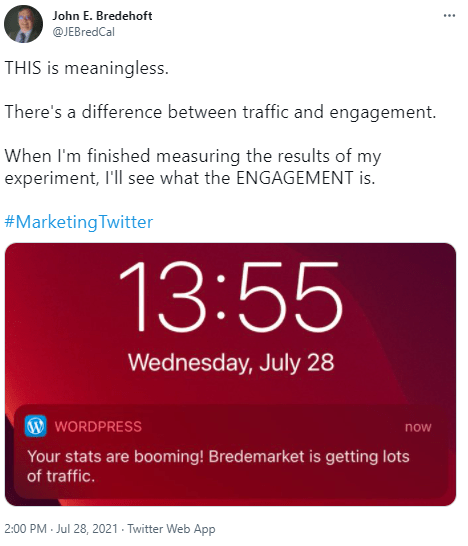
Yesterday, I made an observation about traffic vs. engagement on my business Twitter account.
Conclusion? In the short term it didn’t help, but it didn’t harm either. And I may exercise the flexibility to increase my content sharing when warranted.
And all four of those posts were also shared to my Twitter account, the Bredemarket Identity Firm Services showcase page on LinkedIn, and the Bredemarket Identity Firm Services group on Facebook.
Will my 140+ blog subscribers, 250+ Twitter followers, 120+ showcase page followers, and 9 group followers (yeah, Facebook lags the other platforms) be overwhelmed by this blast of content? Or will they like it? Or will they even notice?
Because of the way social media feeds work, it is questionable that many of the followers will even notice. Social media feeds are presented to readers in order of importance, and Bredemarket isn’t the most important thing to ANY of these followers. (Except for me. Maybe.)
My Bredemarket activities allow me to eat my own wildebeest food, trying out activities that I can potentially duplicate for my clients.
One of these activities is a content calendar, in which I strive to balance my own content between the various foci of Bredemarket. This ensures that I don’t neglect talking about certain things that I do.
One problem that I DON’T have is generating enough content about identity topics. In fact, over the last few days I’ve built up several posts that discuss identity. Under normal circumstances, it would take a couple of weeks to post all of them.
I’m not going to do that.
I’m going to post several of them this afternoon. Especially since a couple of them are interrelated, and it’s easier to interrelate things when you post them at about the same time.
Be prepared for the identity posts that will appear on the Bredemarket blog, and in the relevant (i.e. identity-related) social media channels.
Will this abundance of content result in MORE engagement, or LESS? (Not that I’m planning to create 100 posts over the next couple of hours, but perhaps some may be overwhelmed.)
In case you’re interested in the entire slew of content, I’m going to tag all of this afternoon’s posts with the tag 28thparallel.
And if you have to ask whether I’m referring to the 28th parallel north or the 28th parallel south, the answer is…north.
Anyway, it turns out that I will have an inside view of all the brouhaha.
Why?
Because I have rejoined (actually RE-rejoined) the Association of Proposal Management Professionals. (Or at least that’s what the organization is called right now. The name may change, of course.)
Why does my renewed membership in the Association of Proposal Management Professionals matter to Bredemarket clients? And how can it benefit those who DON’T use Bredemarket for proposal services?
I’ll tell you why/how in this post.
So I re-rejoined the APMP
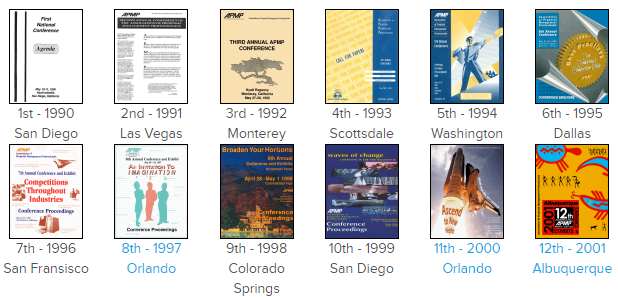
As I previously noted, this will be my third term as a member of the APMP (or, membership Version 3.0).
I initially joined the APMP while I was a proposal writer at Printrak, but I let my membership lapse when I became a product manager. I couldn’t justify having my employer pay for a proposal organization membership when I was a product manager who only occasionally contributed to proposals. (Although some of those proposals, such as West Virginia’s first state AFIS, were critical to the company.)
I subsequently rejoined the APMP when the initial MorphoTrak corporate reorganization resulted in my move from product management to proposal management. After joining in 2012, I (again) let my membership lapse in 2015 after I became a strategic marketing manager, because (again) I couldn’t justify having my employer pay for a proposal organization membership when I was a marketing manager who only occasionally contributed to proposals. (Although some of those proposals, such as Michigan’s first cloud AFIS, were critical to the company.)
Obviously, back in those days corporate reimbursement for professional memberships depended upon the policies of the corporation in question. Well, now I’m not an employee of a large corporation, so I don’t have to justify my memberships to a corporate supervisor or accountant. Instead, as a sole proprietor I have to justify my memberships to myself (and the Internal Revenue Service, and the California Franchise Tax Board).
And since much of Bredemarket’s consulting revolves around proposal services, it makes sense for me to re-rejoin the APMP.
If you are a former member but cannot access your account, PLEASE: Do not register as a new member….If you cannot access your past email address, contact our Member Services team (or call +1 866/466-2767, then dial 0). Within one business day (or sooner), you will receive a link with which you can pay for a new membership using your existing account.
So I contacted APMP’s Member Services team, who associated my lapsed membership with my NEW email address.
And I paid my dues, time after time, I’ve done my sentence but committed no crime…whoops, I seem to have digressed from the discussion of my new APMP membership. But in my defense, I’m not the first to associate the old Queen song with the APMP.
Anyway, I’m now an APMP member…again.
Just call me 3143. (Want to fire up a copy of Microsoft Word 97 while you do that?)
In fact, I guess you could say that I am a general expert in…winning business.
So what?
Since I spend so much of my time talking about benefits, I’m sure that some Bredemarket clients are asking about the benefits to THEM of my APMP/AWBP/whatever membership. Yes, this internal dialogue is taking place with some of you right now.
ME: “I am a member of the Association of Proposal Management Professionals again!”
To answer this, I’ll state that my APMP membership will benefit my clients because I can provide them with superior services—superior proposal services, AND superior non-proposal services—that will help my clients to, um, win business. (As you’ve probably already noticed, I’ve found myself using those words a lot over the last few weeks.) My renewed affiliation with APMP will reintroduce me to beneficial outside education, general knowledge, and contacts.
For my Bredemarket clients who depend upon me for proposal support, the benefits are obvious. The things that I learn (and relearn) from APMP will help me provide better contributions to my clients’ proposals, hopefully helping the clients secure more proposal awards and business.
But there are benefits for my Bredemarket clients who DON’T depend upon me for proposal support, but instead depend upon me for content marketing or other marketing and writing services. The same strategies and tactics that contribute to a more effective proposal can be extrapolated to apply to other areas, thus contributing to better white papers, better case studies, better blog posts, better social media posts, better marketing plans, etc., etc., etc. Again, this can help my clients win business.
We’ll have to see exactly HOW my APMP membership directly benefits my Bredemarket clients.
While Bredemarket sends its solicitations to a (targeted) group of businesses, Bredemarket itself receives solicitations from other businesses. However, sometimes it seems that the solicitations that I receive aren’t targeted that well.
(Of course, perhaps some of the recipients of my solicitations would claim that my targeting attempts are also deficient, so I should watch out about casting stones.)
If you ignore the completely off-the-wall solicitations that I receive, some of the more serious solicitations just do not match Bredemarket’s needs.
For example, I’ve received at least one pitch from a company that offers to provide all of the human resources services that Bredemarket needs for a low monthly fee.
A fine service to be sure…but since Bredemarket is a sole proprietorship that doesn’t engage other people as either employees or subcontractors, a human resources service would be overkill.
The United States Small Business Administration (SBA) defines a “small business” as a company with fewer than 1,500 employees and an average of $38.5 million in average annual receipts. My one-person company certainly has fewer than 1,500 employees, and I’m probably not revealing any confidential information when I say that Bredemarket’s average annual receipts are less than $38.5 million.
So I guess Bredemarket is a “very” small business.
But there are even smaller businesses.
Nano-small businesses of the past
Just to put things into perspective, Bredemarket has a city business license, has filed a fictitious business name statement with San Bernardino County, has a published address at which it receives mail, has received an Employer Identification Number from the Internal Revenue Service (IRS), and files quarterly estimated taxes with both the IRS and California’s Franchise Tax Board.
Years ago, I operated a much smaller business that didn’t have any of those things.
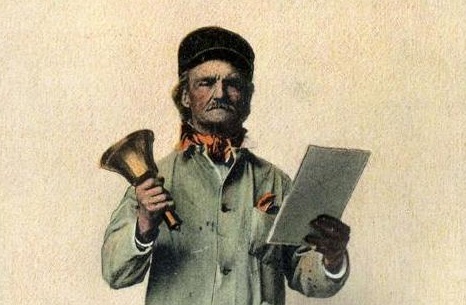
Specifically, I was a paperboy.
Several decades before my time, but you get the drift. By Ruddy, Marjorie Georgina (1908-1980) – Whitby Public Library, Reference No. ruddymg_050_002, Public Domain, https://commons.wikimedia.org/w/index.php?curid=4548723
Way back in the Dark Ages (before the Kardashian/Jenner women became famous independent of O.J. Simpson), newspapers were delivered by people under the age of 18. These days, the few physical newspaper deliveries that I see are performed by adults driving cars and throwing papers out the window. Former papergirl Molly Snyder explains the shift:
The shift in carriers’ age was due partly to the disappearance of evening newspapers that provided student-friendly delivery times. The accessibility of internet news, growing concerns for the safety of un-escorted kids, and new distribution procedures also affected the change.
“To remain profitable, we phased out the ‘neighborhood shacks’ and home drop offs and migrated to larger distribution centers dealing solely with adult distributors,” said Ronald Zinda, distribution supervisor for the Milwaukee Journal Sentinel of 45 years.
Nano-small businesses of the present
Even with the disappearance of paperpeople, there are a number of jobs today that fly under the radar of the Internal Revenue Service, city business license departments, and other government regulatory bodies. Here are a few examples; while some of these types of business may actually comply with government reporting requirements, many of them don’t.
The person on the street corner selling fruit treats.
The person on the street corner selling flowers.
The teenager who comes up to your door selling candy for a school club, a sports team, or as part of a supposed program to keep kids out of trouble by having them walk around neighborhoods and sell stuff after dark.
The person who sells homemade crafts.
Bredemarket can’t really serve these nano-small businesses. When your products (fruit treats, flowers, or whatever) only cost a few dollars, you’re not going to pay Bredemarket hundreds of dollars to create content for your website or social media outlet. In fact, you probably don’t even HAVE a website or a social media outlet.
Which businesses NEED Bredemarket’s services?
Let’s move up a step and look at small businesses that have an established online identity, do their best to comply with business requirements, and meet the IRS definition of a (non-hobby) ongoing concern.
Now any of those businesses COULD use Bredemarket’s services…but many of them don’t NEED Bredemarket. A number of small businesses are doing just fine in meeting their business goals, and are perfectly capable of taking care of the written communications necessary to keep the business profitable.
But what about the businesses that have particular goals that they can’t meet? Specifically, what about businesses that need targeted, regular online content to make customers aware of the business, but the business owners don’t have the time (or the inclination) to create the necessary online content?
If you own a business and need a consultant to help you create online content for your website, your Facebook or LinkedIn page, or for another communication method (even paper), Bredemarket can help. My “What I Do” page lists the types of written content that I can create for your business, including both short length (400-600 word) and medium length (2800-3200 word) content. (No, I don’t author individual tweets, but I guess I could author a thread if you like.)
If you’re interested in using my marketing and writing services, talk to me. I can collaborate with you to ensure that your business goals are met and your business messages are disseminated.
Just a few days ago I wrote a post dedicated to marketing intangible products, in which I said things like this:
…when I started attending trade shows in the mid 1980s, I would go by booths and pick up company case studies and white papers and stuff them into a bag. (Booths and sponsors that provided such bags were VERY important.) Today, some vendors don’t even have printed case studies and white papers in their booths any more; the attendees simply request electronic copies.
and:
In the old days of product marketing collateral, you could get into big discussions about the quality, weight, and finish of the paper that you used to print your collateral. Today, those discussions are for the most part irrelevant, since the recipients print the collateral on their own printers, if they print the collateral at all.
My priorpost definitively stated that all of that printed collateral stuff was a relic of the past.
Then I went to an event on Friday.
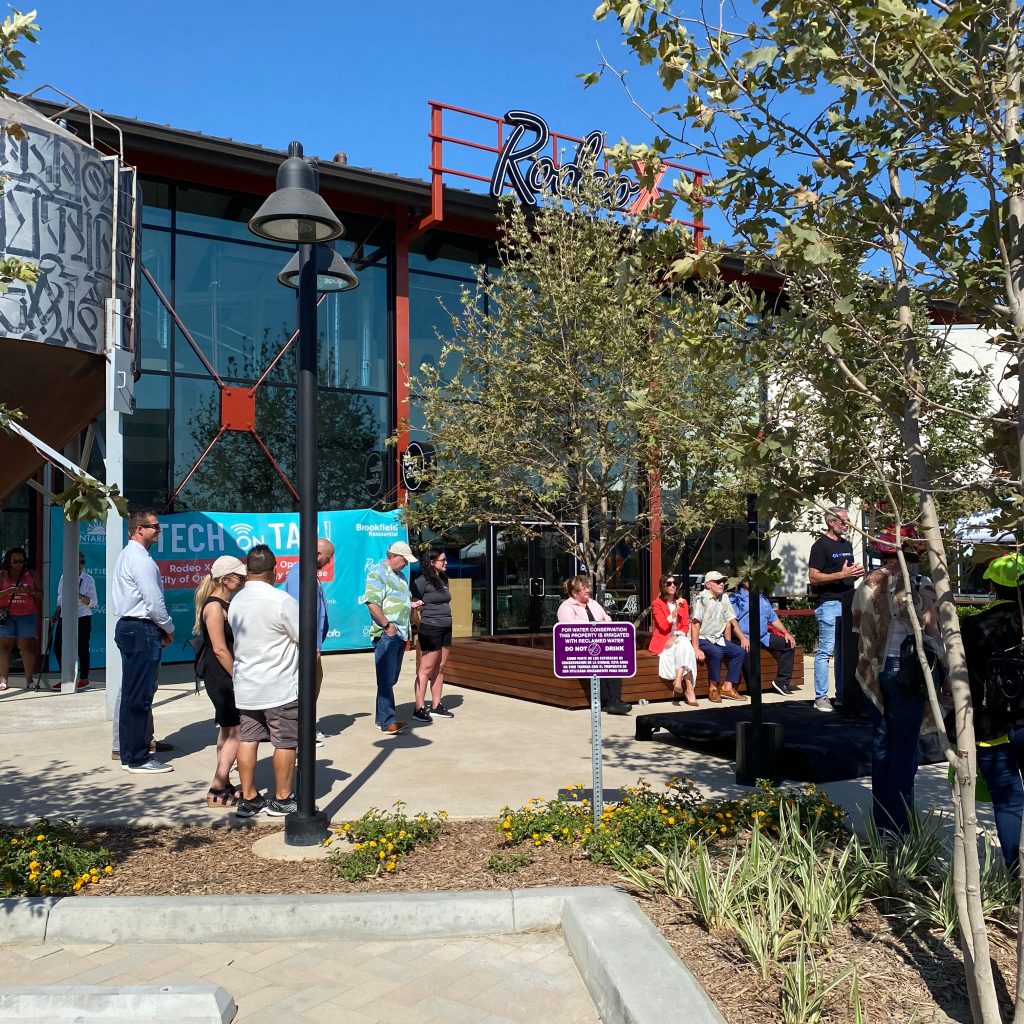
The event was here in the city of Ontario, although it was way on the other side of the city and it took me 25 minutes to drive there. It was called “Tech on Tap,” and was held at the New Haven Marketplace, a shopping center next to a new residential development in the former agricultural reserve.
The event started with a half hour of speeches, followed by the ribbon cutting for a new microbrewery. Rather than listening to all the speeches, I spent my time visiting all the “Tech on Tap” booths.
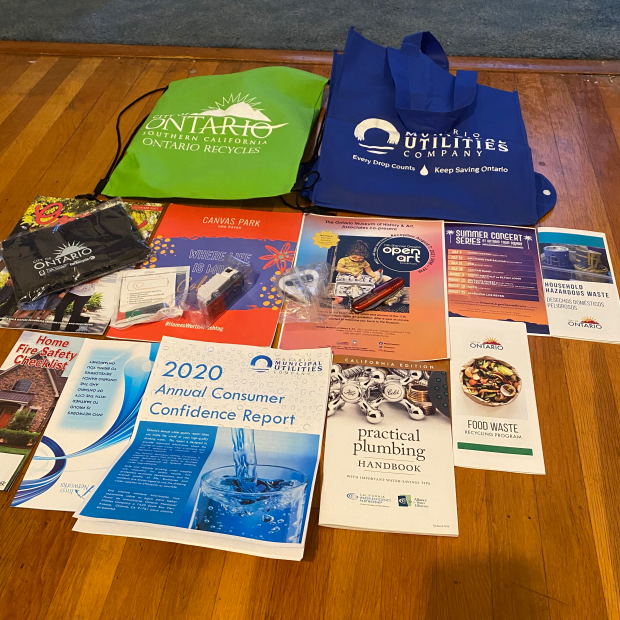
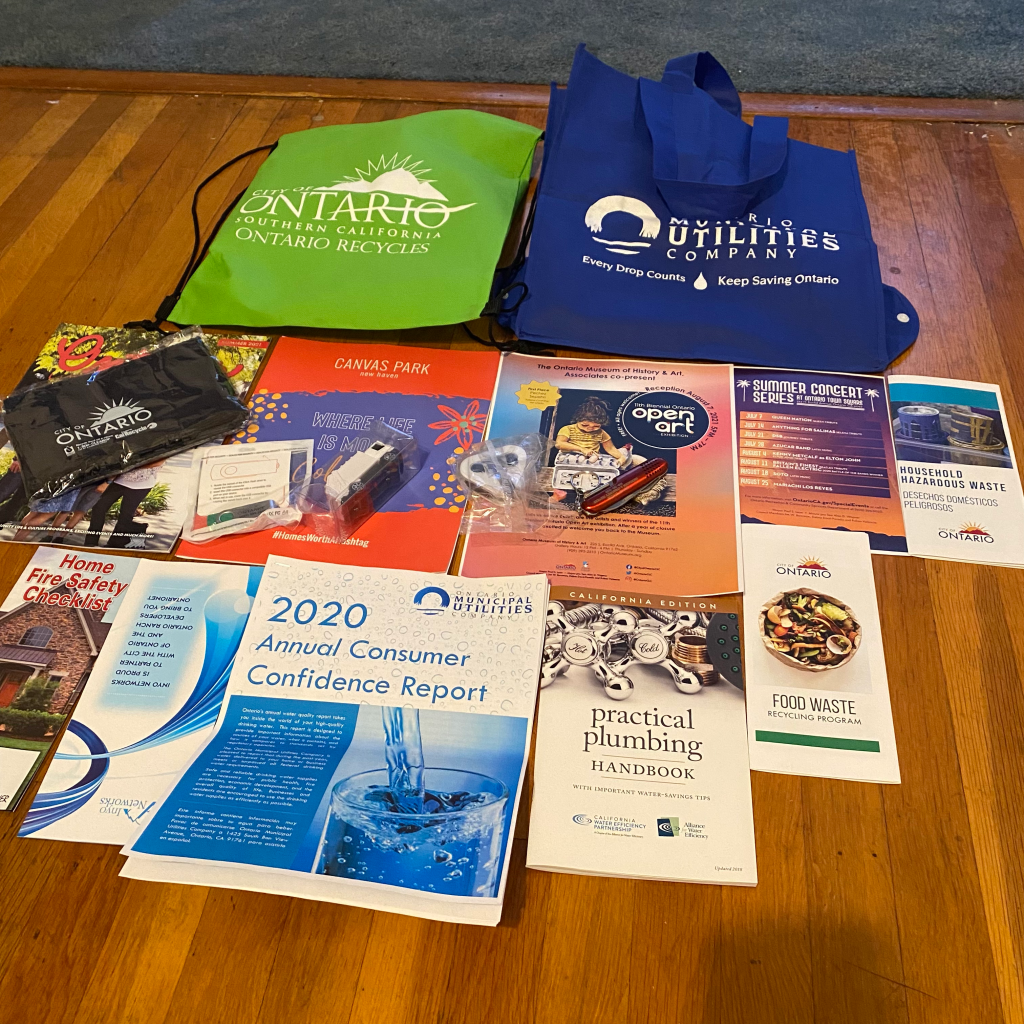
When I went home, I realized that I had accumulated a BIT of tangible collateral.
OK, a LOT of tangible collateral.
So much for Mr. “Everything is Intangible.”
So WHY was I spectacularly wrong? I think there were two reasons:
I am normally used to attending events in the B2G/B2B space. The city’s event was clearly a B2C event, and individual consumers have different expectations than business/government attendees. (Even for B2G/B2B events, how many attendees end up snatching booth swag for their kids?)
While a number of the booths at “Tech on Tap” were staffed by tech companies (robots, ISPs, and the like), about half of the booths were staff by departments of the city of Ontario. Sometimes cities do not rush into tech as quickly as businesses do, and sometimes the citizens of a government do not EXPECT cities to rush into tech.
If you look closely at my loot, you will see that most of it is from city agencies. And there were a lot of agencies represented, including city utilities, police, fire, and recreation.
Oh, and if you look closely at my loot, you will see that I ended up with TWO bags, BOTH from the same agency, the Ontario Municipal Utilities Company. This agency had two separate booths on opposite ends up the area, one staffed by the recycling/trash folks, the other by the water folks. After I had already obtained the green bag from the recycling/trash booth, the person at the water booth insisted on giving me the blue bag (which folds up; nice). And when I started to put the blue bag inside my already-filled green bag, he convinced me that I should do the opposite.
I’m still amused that I, the proclaimer that there will be no “death of passwords,” was myself equally insistent about the “death of tangible collateral.” Neither is going to happen.
These days, more and more of us are marketing products that are intangible. But most of the essentials of marketing intangible products don’t differ much from marketing tangible ones.
Many, many years ago, the phrase “intangible product” seemed like a lot of nonsense. How could something be a product if you couldn’t touch it? Could you grab a product out of thin air?
I’m not even going to, um, touch the NFT world, but clearly things that we used to think of as tangible products are now moving to the intangible realm. I’ll give you two examples from my experience:
When I started selling automated fingerprint identification systems (AFIS) in the 1990s, a law enforcement agency’s AFIS consisted of a set of computer servers in the agency’s computer room, coupled with a set of some fairly expensive workstations in the agency’s work areas. But even then, there were several states that had minimal computer servers at the state agencies, with most of the servers located in the state of California. The Western Identification Network model was duplicated in later years by other agencies who would host their biometric server “products” at faraway Amazon or Microsoft locations.
Similarly, when I started attending trade shows in the mid 1980s, I would go by booths and pick up company case studies and white papers and stuff them into a bag. (Booths and sponsors that provided such bags were VERY important.) Today, some vendors don’t even have printed case studies and white papers in their booths any more; the attendees simply request electronic copies.
Yet for the most part the marketing of these intangible products isn’t much different from the way that the old tangible versions were marketed. The differences are minor:
When Printrak sold AFIS servers, care was taken to place a Printrak logo prominently on the server, where it would compete with the Digital Equipment Corporation logo from the server manufacturer. The logo even appeared as a component on an extended Bill of Materials. Now, purchasers of cloud solutions from the biometric companies don’t need to worry about placing logos on physical servers.
In the old days of product marketing collateral, you could get into big discussions about the quality, weight, and finish of the paper that you used to print your collateral. Today, those discussions are for the most part irrelevant, since the recipients print the collateral on their own printers, if they print the collateral at all.
The important thing in each case is the content. Fewer and fewer law enforcement agencies care WHERE their biometric data is stored, as long as it meets certain security, accuracy, and response time requirements. Similarly, people who collect marketing collateral are much more concerned with WHAT the collateral says than the weight of the paper used to print it.
I have been accused of preferring substance over style, and I plead guilty. While style is clearly important, the substance of the product must excel or the style is wasted.
Sometimes this requires the product creator to take a step back from the nitty gritty of collateral creation, and decide what the collateral is supposed to do, and why the customer should care. Rather than saying “give me a case study that tells how the widget is exactly 70 mm high,” my clients are now asking to “give me a case study that tells our customers why our product will let them sleep securely at night.”
If you would like to explore these topics for your next piece of collateral, whether it be a case study, white paper, proposal, or some other marketing written work, Bredemarket can help you explore. Bredemarket uses a collaborative process with its clients to ensure that the final written product communicates the client’s desired message. Often the client provides specific feedback at certain stages of the process to ensure that the messaging is on track. I combine the client’s desires with my communications expertise to create a final written product that pleases both of us.
Contact me and we can discuss how to work together to realize your goals.
















 Bredemarket