In case you missed it, I reshared Ricardo Amper’s announcement on LinkedIn.
Then re-reshared it on Instagram and elsewhere.
Incode’s announcement is here.

Identity/biometrics/technology marketing and writing services
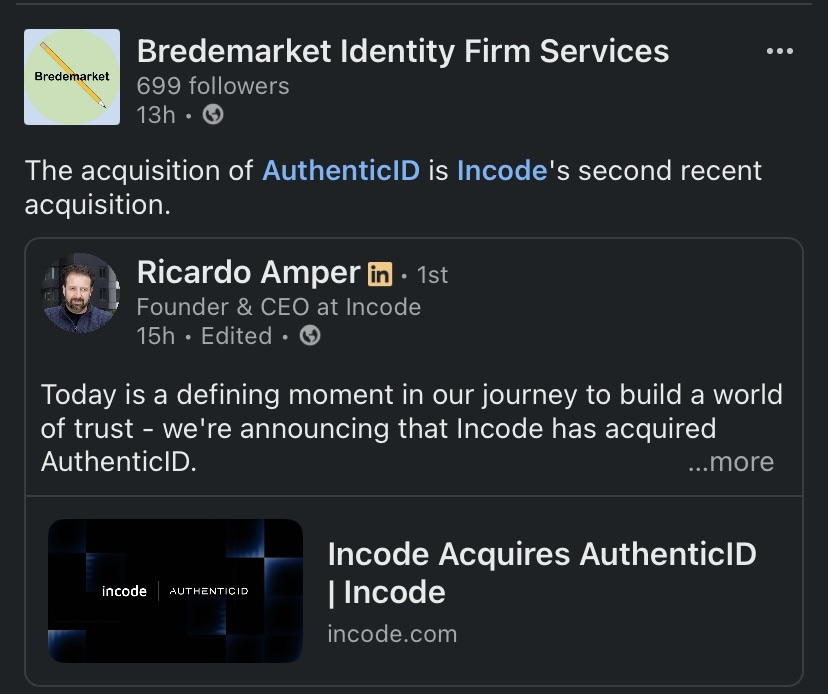
In case you missed it, I reshared Ricardo Amper’s announcement on LinkedIn.
Then re-reshared it on Instagram and elsewhere.
Incode’s announcement is here.

(Imagen 4)
Told you it was going to be a busy day.
Although my first of my three meetings started at 7:30 am, my day actually started three hours earlier with light Things To Accomplish. Suffice it to say that the Bredemarket blog will have daily content until Monday, August 4.

My first two meetings were followed by content creation (including a personal LinkedIn article on product marketing strategy) and other tasks.
I took a mid-afternoon break before my third meeting, the Inland Empire BizFest in Montclair. I wrote about that here and here, plus on the Bredemarket socials.
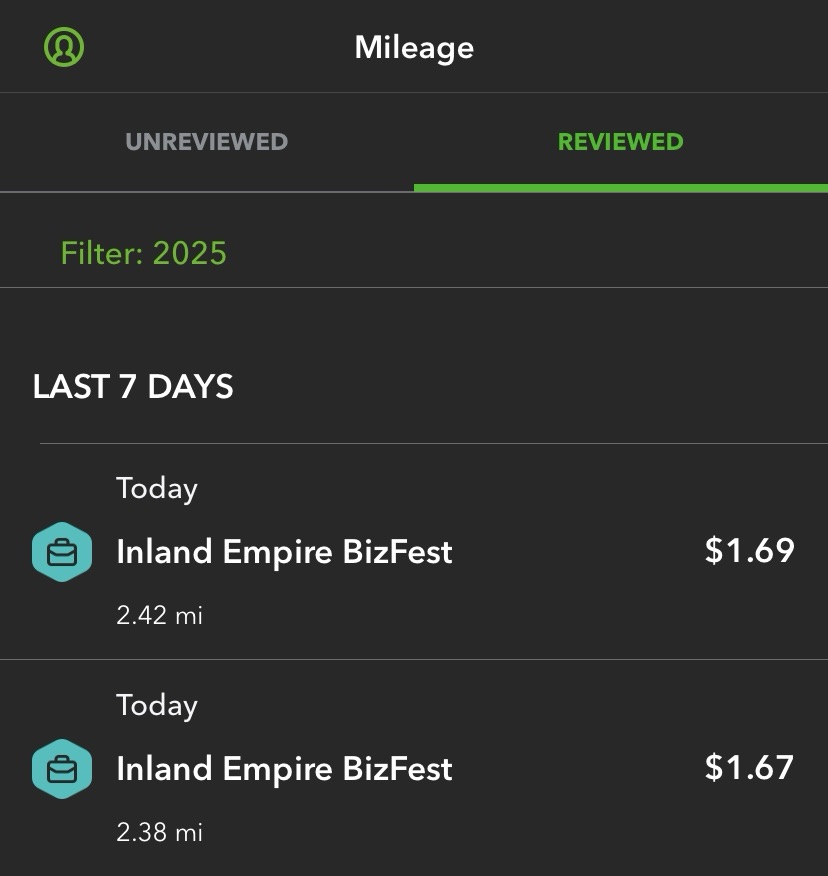
In fact I knew I would be so busy today that I declined a personal invite at 10 this morning. Good thing I declined, because I was neck deep in a requirements workbook (yeah, Microsoft Excel again) for a Bredemarket client’s end customer. (Can you say TOT? I knew you could.)
Anyway, I left Montclair Place before 7:30 pm and called it a night after a long day.
Thankfully the first day of August only includes a single meeting.
Which starts at 7:00 am.

(Imagen 4)
Tech CMOs want to move their prospects to act and buy world-changing offerings (products or services) from their firms…and I want to move my tech CMO prospects to act and buy marketing and writing services from Bredemarket. So tech CMOs, I definitely feel your pain. But how can you move your prospects…and how can I move you?
In my recent post about converting an end customer interview into a case study, I discussed a “problem, solution, results” simple case study outline.
Justin Welsh just discussed the same thing, but with better words.
“I copy/pasted a spreadsheet of over 100 posts I’ve written that created real impact for my readers into ChatGPT, and I found a pattern:
“Specific struggle + specific transformation = lasting change
“Not some vague tension. Not a generic transformation. Specific moments where everything shifted.”
Of course the dozen case studies I ghostwrote for my client were implicitly specific. But it’s helpful to make that word “specific” explicit.

You see what I did there. Well, as much as I could while preserving my ghostwriter status and my client’s anonymity.
This section of the blog post is specifically addressed to tech CMOs and other marketers. The rest of you can skip this part and watch this entertaining video instead.

Now I know I’ve loaded this post with links to previous Bredemarket content that addresses the…um…specific topics in much more detail. Maybe you clicked on the links, or maybe you didn’t. I will find out.
But if you are ready to move forward, this is the one link you need to click. (“Now you tell me, John!”) It lets you set up a meeting with Bredemarket to discuss your specific needs.

(Imagen 4)
(Author’s preface: I was originally going to schedule this post for the middle of next week. But by the time I wrote it, the end of the post referenced a current event of astronomical proportions. Since said current event may be forgotten by the middle of next week, I am publishing it now.)
As a proponent of identity verification and a biometric product marketing expert I should like this…but I don’t.
You get a message on a platform from someone you don’t know. The message may look something like this:
“John ,
“I hope this message finds you well. I came across your profile and was truly impressed by your background. While I’m not a recruiter, I’m assisting in connecting talented professionals with a startup that is working on a unique initiative.
“Given your experience, I believe you could be a fantastic fit for their senior consultant role. If you’re open to exploring this opportunity, I’d be happy to share more details and introduce you to the team directly. Please let me know if you’re interested!”
Let’s count the red flags in this message, which is one I actually received on May 30 from someone named David Joseph:
But I wasn’t really concerned with the message. I get these messages all the time.
So what concerned me?
The note attached to the message by the platform that hosted the message.
“Don’t know David? Ask David to verify their profile information before responding for added security.”
The platform, if you haven’t already guessed, is LinkedIn, the message a LinkedIn InMail.
Let’s follow the trail.
Now the one thing in LinkedIn’s favor is that LinkedIn—unlike Meta—lets its users verify their profiles for free. Meta charges you for this.
But again, why should I do LinkedIn’s dirty work?
Why doesn’t LinkedIn prevent users from sending InMails unless their profiles are verified?
The answer: LinkedIn makes a ton of money selling InMails to people without verified profiles. And thus makes money off questionable businesspeople and outright scammers.
Instead of locking down the platform and preventing scammers from joining the platform in the first place.
It’s like LinkedIn openly embraces scammers.
And everyone knows it.

(Imagen 4)
Unless you’re in the surveillance industry, surveillance sounds like a dirty word. I once knew an identity/biometric CEO who forcefully declared that HIS company would NEVER work in the surveillance industry.

But as Goddard Technologies notes, surveillance can be useful even if you’re NOT chasing bad people.
But before I describe how, I’m going to reveal my age.
Let’s talk about a singer who went by the name Rockwell. This was supposedly to conceal the fact that his last name was Gordy (he is Berry’s son). But he didn’t really conceal the fact that one of the uncredited backup vocalists on his wonderful one hit was a man named Michael Jackson. This was in the 1980s, when Michael Jackson was kinda sorta popular. OK, now do you remember the song?
This excerpt from the lyrics provides the sinister tone of the song:
People call me on the phone, I’m trying to avoid
But can the people on TV see me, or am I just paranoid?
But that was the 1980s, when there was always a person in the surveillance loop. Even if there was a video camera hidden in Rockwell’s shower, some person was looking at the feed.
Things have changed.
Now non-person entities (NPEs) are no longer the stuff of science fiction, and they can do things that only humans could do 40 years ago.
Sandra Krombacher shared one example from a LinkedIn article by Jon Kaplan of Goddard Technologies.
Kaplan’s theme:
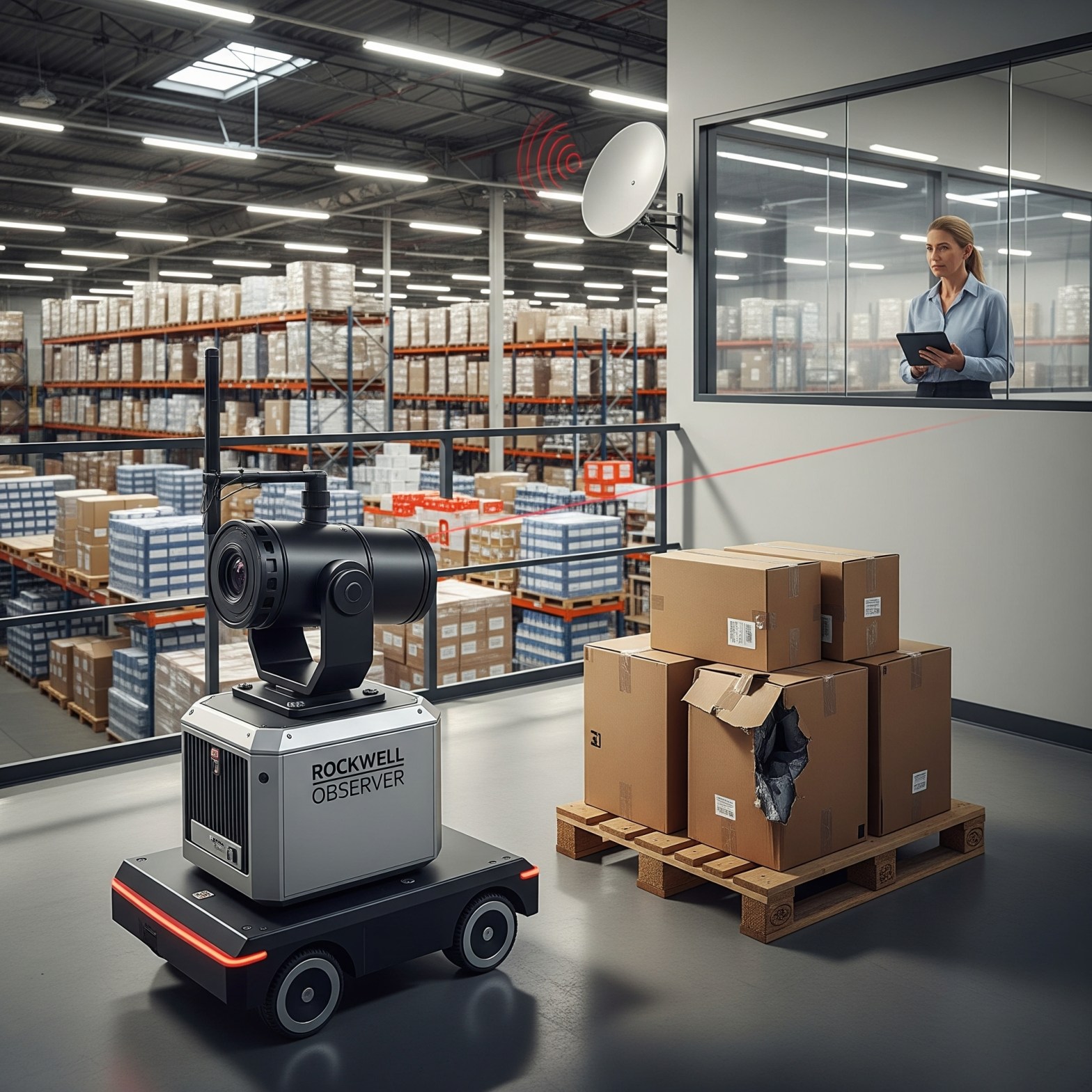
“While much of the attention has gone to robots that do something (cleaning, welding, lifting), there’s a quieter, equally important shift happening: the rise of robots that observe.”
But what do they observe?
“These robots navigate environments, gather data, and report back. Think of them as mobile sensors with wheels, legs or propellers that identify open doors, check for damage, verify inventory, or confirm environmental conditions.”
Kaplan then notes that there are human beings that perform similar tasks, and that therefore these observer bots “align with how many industrial jobs actually work.” After the observations are collected, then humans—or perhaps other bots—can act upon the observations.
Does this affect how you perceive non-person entities? How do you feel about non-person entities that merely collect data for others to act? This is technically “surveillance,” but it could potentially reduce costs, increase profits, or even save lives.
Jon Kaplan used a LinkedIn article to tell his story about Goddard Technologies’ activities with observing robots.
But maybe your firm has your own story to tell.

Why haven’t you written a LinkedIn article about your product? This lets you reach B2B prospects who are more likely on LinkedIn than on TikTok. In fact, I wrote a LinkedIn article about LinkedIn articles. (I wrote it so long ago that I only asked my clients six questions rather than seven questions.) And I’ve also written LinkedIn articles for Bredemarket clients.
Do you need help in writing that LinkedIn article that tells the world about your product? Maybe you could become one of my clients, since I help create content for tech marketers. Contact me.

On Tuesday I published a LinkedIn article as part of Bredemarket’s “The Wildebeest Speaks” series. The title: “Does Word-of-Mouth Eliminate the Need for Bredemarket?“
Once I answered that question (I think you can guess my answer), I talked about how you can effectively combine word-of-mouth and corporate efforts via “casetimonials“—either case studies or testimonials that allow the happy customer to have their say, while your company helps to shape the message.
Focusing on case studies, I said the following:
Case studies require more collaboration, as I found out when I wrote a dozen case studies for a firm.
So yes, much has changed over the last few years, but the need for you to communicate with your prospects remains.
Which is why you should solicit Bredemarket’s assistance. I can help create content for tech marketers. Contact me.

My written content usually targets a PRIMARY channel:
This content has a new target: my Substack “subscriber chat” https://open.substack.com/pub/johnebredehoft/chat
Because unlike the others, Substack subscriber chat is DESIGNED as a community.
A community that I’m not currently utilizing, but one that I should in the future.
By the way, if you want to read my Substack, visit https://substack.com/@johnebredehoft

Does your LinkedIn content look like this?

Fix that, before your competitors steal your rightful revenue.
Schedule a meeting with Bredemarket to discuss your needs at https://bredemarket.com/cpa/.
And if you want to see Bredemarket’s LinkedIn content, visit:
(Imagen 4)

Remember last month when I created the Meta AI character N. P. E. Bredemarket? “He” identifies as “wisdom in technology, at your service.” Although I need to train him more, he is fairly good at illuminating technology topics.

But he doesn’t make me money.
To make money, I need an influencer to promote Bredemarket.
I created a second Meta AI non-person entity. This one, named JaneCPAInfluencer.

“She” is still in anti-hallucination training; at one point she said that I was the past president of the International Biometric Association (whatever that is). But she’s getting better.
Will she drum up business for Bredemarket? Probably not, since my Instagram influence pales in comparison to my Facebook and LinkedIn influence. But I’m curious to try it.

 Bredemarket