Remember last month when I created the Meta AI character N. P. E. Bredemarket? “He” identifies as “wisdom in technology, at your service.” Although I need to train him more, he is fairly good at illuminating technology topics.
N. P. E. Bredemarket.
But he doesn’t make me money.
To make money, I need an influencer to promote Bredemarket.
But not a macro-influencer like a Kardashian or Jenner.
“She” is still in anti-hallucination training; at one point she said that I was the past president of the International Biometric Association (whatever that is). But she’s getting better.
Will she drum up business for Bredemarket? Probably not, since my Instagram influence pales in comparison to my Facebook and LinkedIn influence. But I’m curious to try it.
It was Sunday afternoon, and I was reading my LinkedIn feed. (Yes, I know; the first step is admitting you have a problem.)
Except that I was seeing stuff that was weeks old. Posts about “upcoming” trade shows that already took place. News about the “upcoming” Prism Project deepfake report that was released long ago.
I don’t know why LinkedIn’s algorithm thinks I need to read ancient history. What’s next…reports that Enron may be a fraud?
The chronological feed
So I decided to bypass the algorithm and access the tried and true chronological feed. You know, the way things used to work before we supposedly got “smart.”
(As an aside, I remember when FriendFeed would AUTOMATICALLY update the chronological feed when new content was posted. The way that the pitchforks were raised, you would have thought the world ended. As it turned out, the world wouldn’t end until August 10, 2009…or April 10, 2015. But I digress.)
Anyway, I went to the feed to look for the switch to swap to chronological…but could find no such switch.
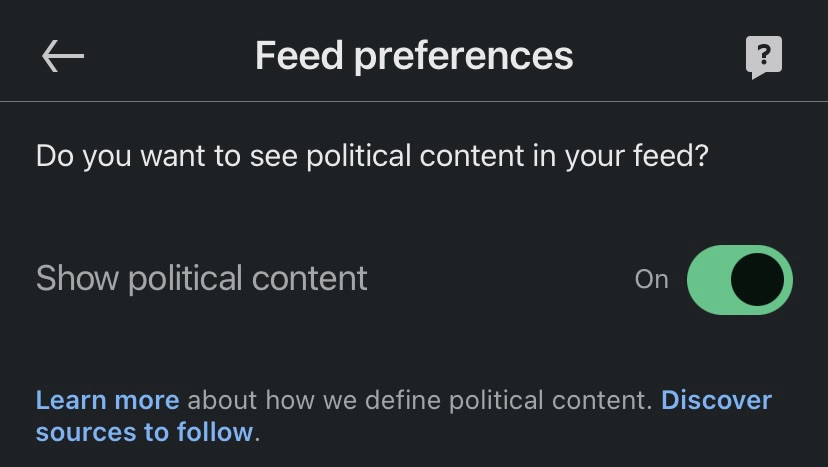
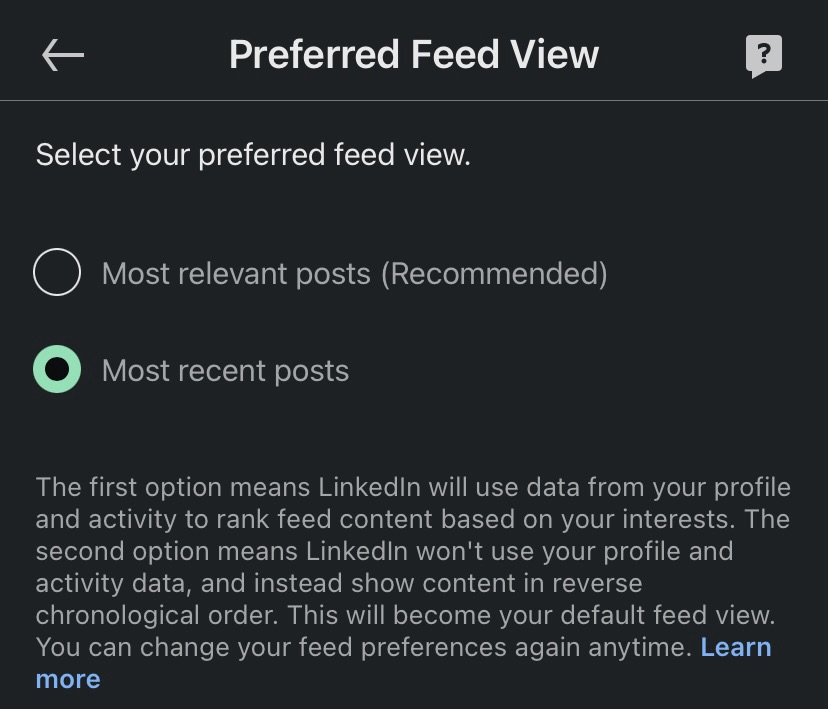
So I checked Google Gemini, and discovered that the “Most Recent” feed switch was buried in the Settings. For mobile LinkedIn users, it was in the “Account preferences” section, in the “Feed preferences.”
Except that it wasn’t.
Whack a Mole
“Feed preferences” only governed display or non-display of political content. The option below “Feed preferences,” “Preferred feed view,” was the one I wanted.
Preferred feed view.
Color me conspiratorial, but I think everyone in the Really Big Bunch—Microsoft (LinkedIn), Meta (Facebook), and the others—likes to play “Whack a Mole” with the location of the chronological feed setting so that we give up and stick with the algorithmic feed of The Things We Are Supposed To See.
So the instructions here, written on June 22, 2025, may be invalid on June 22, 2026. Or July 22, 2025. Or June 23, 2025.
But for this moment I have the chronological feed set on LinkedIn, and since it takes effort to change it back, I don’t know when I will.
Update
When I returned to LinkedIn to share a LinkedIn version of this post, my preferred feed view had been reset to “most relevant.”
Last Friday I shared my beef with the so-called LinkedIn “experts” and their championing of generic pablum.
“The ideal personal communication is this: ‘I am thrilled and excited to announce my CJIS certification!’”
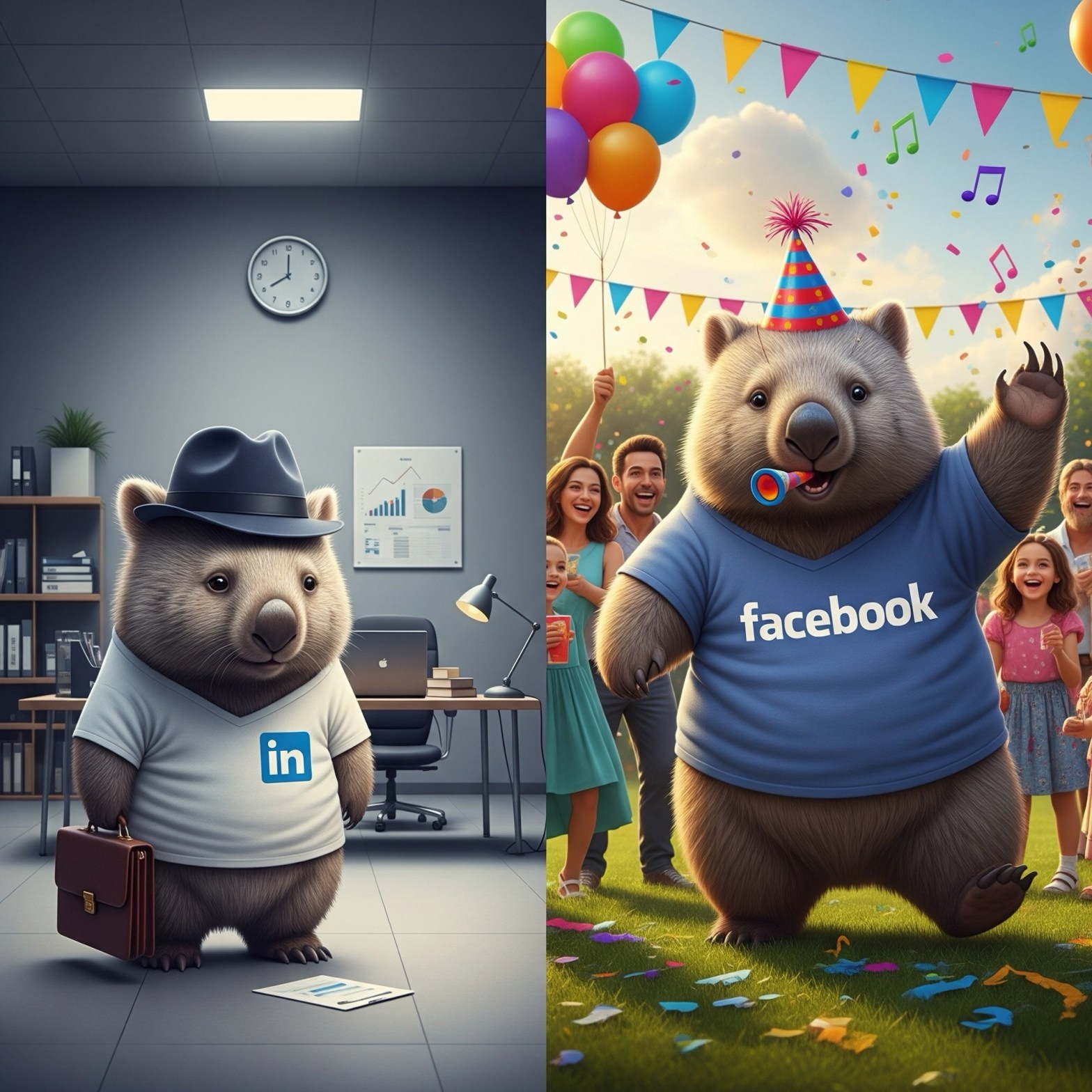
This drivel is rooted in the idea that LinkedIn is a business network…and anything else is just “Facebook.”
Oddly enough, my Bredemarket consulting blog gets much more traffic from Facebook than it does from LinkedIn.
Despite me emphasizing LinkedIn more than Facebook for Bredemarket social media.
And despite the fact that Bredemarket’s LinkedIn pages have many more followers than Bredemarket’s Facebook page and groups.
It appears that Facebook users are more willing to click on links (and leave the walled garden).
Perhaps that’s not “businesslike” on LinkedIn.
Therefore, despite my issues with the Metabot at times, I’m paying more attention to Facebook these days.
And if Facebook users pay more attention to Bredemarket than LinkedIn users…well, I won’t impede on the LinkedIn users as they perform thrilling and exciting things.
In the distance.
By the way, I probably won’t post an anti-LinkedIn “experts” diatribe on the Bredemarket blog next Friday…
I spend a lot of time on LinkedIn and therefore endure the regular assault from the so-called LinkedIn “experts.”
You know them.
The people who get all bent out of shape over this character—because it’s certain proof that you use “ChatGPT” (because there is no other generative AI tool) because no human ever uses em dashes.
And then in the next breath the LinkedIn “experts” slam people who don’t use “ChatGPT” to increase productivity. For example, jobseekers should use “ChatGPT” to “beat the ATS,” automatically fine-tune their resumes for every individual application, and apply to thousands of positions.
Oh, but the LinkedIn “experts” say you shouldn’t spray and pray. Tap into the hidden job market via our members-only gated website.
But that’s not the worst thing they say.
Formulate Safe Generic Pablum
When they’re not commanding you to avoid the em dash, the LinkedIn “experts” remind us that LinkedIn is a professional network. And that our communications must be professional.
No cat pictures.
No “life sucks” posts.
Nothing that would cause anyone any offense.
The ideal personal communication is this: “I am thrilled and excited to announce my CJIS certification!”
The ideal business communication is this:
Yes, the “experts” wish that businesses said nothing at all. But if they do say something, a statement like this optimizes outcomes: “WidgetCorp is dedicated to bettering the technology ecosystem.”
Such a statement is especially effective if all your competitors are saying the same thing. This unity of messaging positions you as an industry leader.
Which enables you to…argh, I can’t do this any more. I am hating myself more and more with each word I type. Can I throw up now? This is emotionally painful.
Derek Hughes just sent me an email that describes this generic pablum. It read, in part:
“Everything reads like it was written by a robot on decaf.
“Same recycled tips. Same recycled tone. Somehow, it’s all… grey.”
Obliterate Safe Generic Pablum
If your company wants conversions—and I assume that you do—avoid the generic pablum and say something.
This will bring your hungry people (target audience) to you.
And for the prospects that despise humanness and glory in generic pablum…if their focus is elsewhere, your focus won’t impede. Let them roam in the distance.
If you are a jobseeker on LinkedIn, you have probably seen people claim to be recruiters from well-known companies, when in truth they are nothing of the kind.
Faking your employer has existed for a long time. Just ask the Delaware State Police, who for some reason isn’t keen on people who impersonate police officers.
“[A] 23-year-old man from Laurel, Delaware…reported that he had been driving eastbound on Nine Foot Road, east of Laurel Road, when a white Dodge Magnum with Arizona registration pulled behind him and activated flashing red and blue lights. As the victim began to pull over, the Dodge passed him and continued driving.”
Because Arizona police officers patrol Delaware all the time.
The 23 year old was rightfully concerned, called 911, reported the incident, and described the vehicle. But that wasn’t the end of it.
“Shortly after, the driver of the Dodge pulled up next to the victim and verbally confronted him. The victim did not engage, and the suspect eventually fled the scene.”
After an investigation, the Delaware State Police arrested Blayden Rose of Selbyville, Delaware, for impersonating a police officer.
The real Blayden Rose, courtesy the Delaware State Police. The police like to take pictures of special people.
Not sure if Rose can get off on a technicality (“I wasn’t claiming to be a cop, I was just doing a strobe show”), but it reminds us that we have to trust, but verify.
Anthropic states (possibly in self-interest) that unemployment could hit 20% in five years.
One quarter of all programming jobs already vanished in the last two years.
A LinkedIn executive echoed the pessimism about the future (while LinkedIn hypes its own AI capabilities to secure the dwindling number of jobs remaining).
The Federal Reserve cited high college graduate rates of unemployment (5.8%) and underemployment (41.2%).
I’m moving in a different direction on social media. Well, personal social media anyway.
There are multiple schools of thought about whether small companies with well-known leaders should share content on their company platforms or their personal social media platforms.
On one extreme, companies only share content on company channels, to better establish the brand of WidgetCorp or whatever.
On the other extreme, company heads only share content on their personal channels because their personal connections are so important to the company’s success. In fact, these company heads may not even bother to create separate company pages.
Obviously, most companies and company heads adopt a “do both” tactic. Maybe the company head reshares company posts. Or maybe the company reshares company head posts.
Or they do something that John Bredehoft and Bredemarket have done in the past: share the same content on both the company and the personal channels.
I might not do that any more.
The experiment
The rationale behind sharing company posts on your personal channels is that your personal friends like you and will engage with your company posts.
But this rationale ignores one very pertinent fact: most of my friends have NO interest in identity, biometrics, cybersecurity, or related technologies.
Why would they engage with such content if it doesn’t interest them?
I’d share Bredemarket Facebook content to my personal Facebook feed…and with very few exceptions I’d end up with crickets.
Or I’d share some Bredemarket LinkedIn content to my personal LinkedIn account. Often…crickets.
But most painful of all was when I would share Bredemarket Instagram posts to my Instagram stories. Higher impressions then the same stories on the Bredemarket account…but absolutely no engagement. Crickets again.
So on Monday afternoon I intentionally conducted an experiment on my personal Facebook, Instagram, and LinkedIn accounts, where together I have a combined 3,396 connections. My Monday afternoon identity/biometric and product marketing-related content received a total of 9 engagements…and that’s counting the Instagram user who requested “Can u share it @canadian.icon”).
Even acccounting for the three algorithms involved…that’s low.
And it…um, prompted me to ask myself a “why” question.
Why share corporate content on personal feeds?
Good question.
So for now I’m “moving in a different direction” (a few of you know where THAT phrase originated) and not bothering to share Bredemarket content on my personal feeds. At least for now.
Those who are dying to see Bredemarket content will subscribe to the appropriate Bredemarket Facebook, Instagram, or LinkedIn feeds.
But frankly, my friends have no need or desire to see Bredemarket content, so they won’t.
In my case, my high school friends, church friends, and even some of my former coworkers (who left the identity/biometric industry years ago) are NOT Bredemarket’s hungry people. So I’ll spare them the parade of wildebeests, wombats, and iguanas.
A lot of U.S. identity, biometric, and technology marketers like baseball. But some of you don’t know about the time that Paul Olden asked losing Dodgers manager Tommy Lasorda a now-infamous question, “What’s your opinion of [Dave] Kingman’s performance?” (Lasorda’s response—edited—can be heard here.)
(Incidentally, while the picture of Lasorda looks realistic, it is not. Imagen 4 generated it.)
But any of us who write online worry about our own performance, whether we publicly admit it or not.
Why do the wrong things enjoy stellar performance?
Take Becca Chambers, who like the rest of us wants to perform well, but observed:
“There’s a direct inverse relationship between how much time I spend on a post and how well it performs.”
It’s happened to Becca, it’s happened to me, and it’s probably happened to you. Chances are that this post and its social reshares will NOT reach tens of thousands of views, but my trivial observations about silly stuff will.
Similarly, this Bredemarket blog post that mentions both the Shipley Business Development Lifecycle and the ? and the Mysterians song “96 Tears” (geddit?) continues to rack up views week after week, having amassed over 3,000 views since its 2021 publication.
But in the end, do impressions matter? I constantly remind myself not to chase impressions, and to that end offered this comment on Chambers’ post:
“Depends upon how you measure “performance.”
“If you measure performance based solely on impressions, then you can realize great performance by random succinct thoughts on ghosting or the em dash or whatever.
“But if you measure performance by your paying consulting client saying that they liked your post on an obscure topic that only you and the client care about…then say what you need to say to your hungry people (target audience) and don’t worry about getting 20,000 impressions or 500 likes.”
And if we need any confirmation about the temporary nature of impressions, let’s look at Dave Kingman’s performance for the Chicago Cubs on May 14, 1978. “Three homers, 8 RBI, 3 runs, 4 hits, 1 walk, 13 Total bases.” Plus an uncountable number of expletives from manager Lasorda.
By 1981 Kingman was a New York Met.
What about your performance?
So how do you create content that truly matters to people who will buy from you? By asking yourself some important questions and then developing the content.
And if you’re an identity, biometric, or technology firm that needs help to get content out now (rather than never), talk to Bredemarket. Not about bridges, but about your prospects. Book a free meeting: https://bredemarket.com/cpa/











 Bredemarket