Oops. I broke my own embargo.
I can keep your secrets, but I can’t keep my own.
Cover image by Lorelei7, CC BY-SA 3.0, https://commons.wikimedia.org/w/index.php?curid=3164780

Identity/biometrics/technology marketing and writing services

Oops. I broke my own embargo.
I can keep your secrets, but I can’t keep my own.
Cover image by Lorelei7, CC BY-SA 3.0, https://commons.wikimedia.org/w/index.php?curid=3164780

This is the second time that I’ve seen something like this, so I thought I’d bring attention to it.
Biometric Update recently published a story about an Australian agency that is no longer using Cognitec facial recognition software.
Why? Because the facial recognition software the agency has is not accurate enough.
Note “the facial recognition software the agency has.” There’s a story here.
Police and Counter-terrorism Minister Yasmin Catley clarifies that Cognitec has released numerous updates to the product since its deployment, but the police did not purchase them. As with other developers, Cognitec’s legacy algorithms have higher error rates for various demographic groups.
Important clarification.
Now perhaps the agency had its reasons for not upgrading the Cognitec software, and for using other software instead.
But governments and enterprises should not use old facial recognition software. Unless they have to run the software on computers running PC-DOS. Then they have other problems.
(A little aside: when I prompted Google Gemini to create the Imagen 3 image for this post, I asked it to create an image of a 1980s IBM PC running MS-DOS. Those in the know realize my prompt was incorrect. I should have requested a 1980s IBM PC running PC-DOS, not MS-DOS. PC-DOS was the version of MS-DOS that IBM licensed for its own computers, leaving Microsoft able to provide MS-DOS to the “clone computers” that eventually eclipsed IBM’s own offering.)

Remember in January when OpenAI announced some great achievement, and then a few days later we learned that the Chinese firm DeepSeek could boast the same performance, only much better?
These Chinese leapfrogs don’t only happen in artificial intelligence.
In February, I wrote about something that I initially heard of via Biometric Update. My post, “How to Recognize People From Quite a Long Way Away,” told of an effort at Heriot-Watt University in Edinburgh, Scotland in which the researchers used light detection and ranging (LiDAR) to capture and evaluate faces from as far as a kilometer away.
In normal circumstances, we capture faces from a distance of mere meters. So one kilometer facial capture is impressive.
Or is it?
Some Chinese researchers replied, “Hold my Tsingtao,” according to a Chinese Journal of Lasers paper (in Chinese) that was reported on by Live Science (in English). (And again, I learned of this via Biometric Update.)
Scientists in China have created a satellite with laser-imaging technology powerful enough to capture human facial details from more than 60 miles (100 kilometers) away….
According to the South China Morning Post, the scientists conducted a test across Qinghai Lake in the northwest of the country with a new system based on synthetic aperture lidar (SAL), a type of laser radar capable of constructing two-dimensional or three-dimensional images.
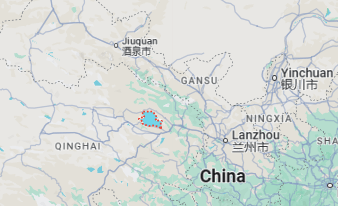
Writers will note that the acronym SAL incorporates the L from the acronym LiDAR. This is APO, or acronym piling on.
Since I cannot read the original report, I don’t know if the researchers actually performed tests with actual faces. But supposedly SAL “detected details as small as 0.07 inches (1.7 millimeters),” based in part upon the benefits of its technology:
[T]his new system operates at optical wavelengths, which have much shorter wavelengths than microwaves and produce clearer images (though microwaves are better for penetrating into materials, because their longer wavelengths aren’t scattered or absorbed as easily).
All the cited articles make a big deal about the 100 kilometer distance’s equivalence to the boundaries of space. But before you get too excited, remember that a space-hosted SAL will be ABOVE any human subjects, and therefore will NOT capture the face at an optimal angle…

…unless you’re lying on the beach sunbathing and therefore facing TOWARD space where all the Chinese satellites can see you.

Oh, and one more thing. The Chinese tests were conducted in optimal weather conditions, and obviously you can’t get the same results in bad weather.
But in the ideal conditions, perhaps you CAN be identified remotely.
(Snowman from Imagen 3)
If I become known for anything in biometrics, I want to be known for my extremely frequent use of the words “investigative lead.”
Whether you are talking about DNA or facial recognition, these types of biometric evidence should not be the sole evidence used to arrest a person.
For an example of why DNA shouldn’t be your only evidence, see my recent post about Amanda Knox.
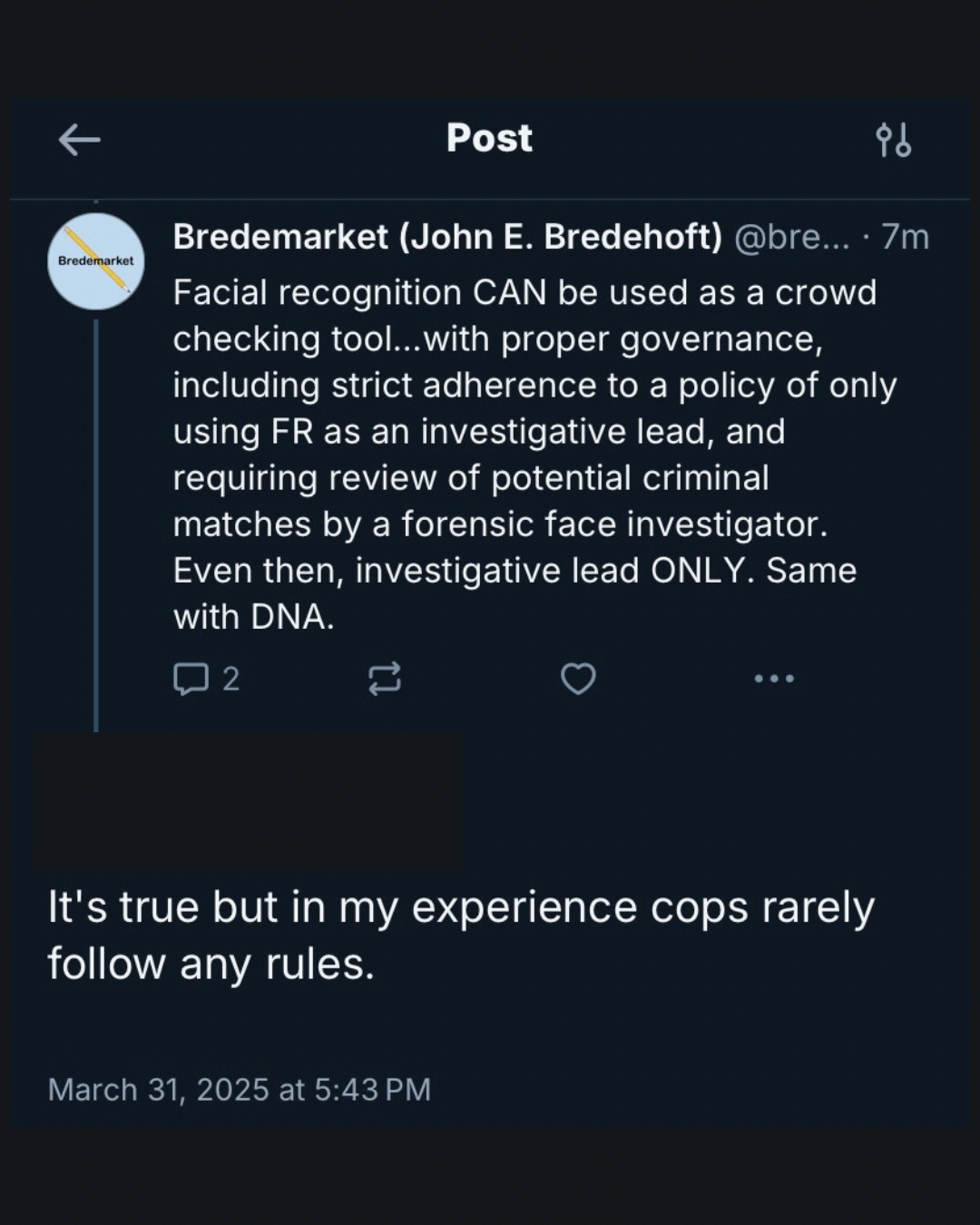
Regarding facial recognition, I wrote this in a social media conversation earlier today:
“Facial recognition CAN be used as a crowd checking tool…with proper governance, including strict adherence to a policy of only using FR as an investigative lead, and requiring review of potential criminal matches by a forensic face investigator. Even then, investigative lead ONLY. Same with DNA.”
I received this reply:
“It’s true but in my experience cops rarely follow any rules.”
Now I could have claimed that this view was exaggerated, but there are enough examples of cops who DON’T follow the rules to tarnish all of them.
I’ve already addressed the sad story of Robert Williams, who was “wrongfully arrested based upon faulty facial recognition results.”
At the time, I did not explicitly share the circumstances behind Williams’ arrest:
“The complaint alleges that the surveillance footage is poorly lit, the shoplifter never looks directly into the camera and still a Detroit Police Department detective ran a grainy photo made from the footage through the facial recognition technology.”
There’s so much that isn’t said here, such as whether a forensic face examiner made a definitive conclusion, or if the detective just took the first candidate from the list and ran with it.
But I am willing to bet that there was no independent evidence placing Williams at the shop location.
The thing that concerns me about all this? It just provides ammo to the people who want to ban facial recognition entirely.
Not realizing that the alternative—manual witness (mis)identification—is far more inaccurate and far more racist.
But the controversy would pretty much go away if criminal investigators only used facial recognition and DNA as investigative leads.
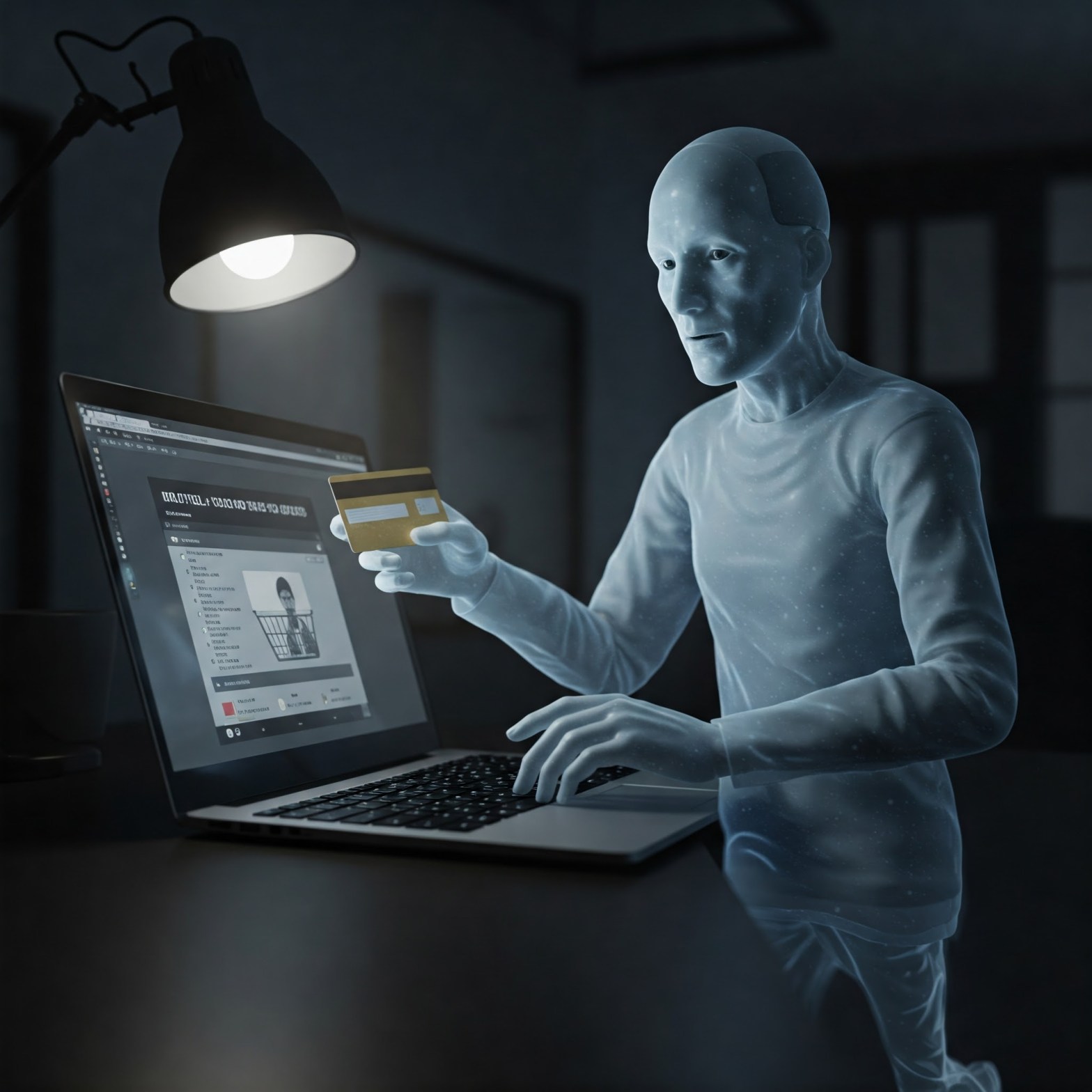
Identity firms really hope that prospects understand the threat posed by synthetic identity fraud, or SIF.
I’m here to help.
(Synthetic identity AI image from Imagen 3.)
In an early synthetic identity fraud post in 2020, I referenced a Thomson Reuters (not Thomas Reuters) article from that year which quoted synthetic identity fraud figures all over the map.
Oh, and a later post that I wrote quoted a $20 billion figure for synthetic identity fraud losses in 2020. Plus this is where I learned the cool acronym “SIF” to refer to synthetic identity fraud. As far as I know, there is no government agency with the acronym SIF, which would of course cause confusion. (There was a Social Innovation Fund, but that may no longer exist in 2025.)
Back to synthetic identity fraud, which reportedly resulted in between $6 billion and $20 billion in losses in 2020.
But that was 2020.
What about now? Let’s visit Socure again:
The financial toll of AI-driven fraud is staggering, with projected global losses reaching $40 billion by 2027 up from US12.3 billion in 2023 (CAGR 32%)., driven by sophisticated fraud techniques and automation, such as synthetic identities created with AI tools.
Again this includes non-synthetic fraud, but it’s a good number for the high end. While my FTC fraud post didn’t break out synthetic identity fraud figures, Plaid cited a 2023 $1.8 billion figure for the auto industry alone, and Mastercard cited a $5 billion figure.
But everyone agrees on a figure of billions and billions.
(I had to stop writing this post for a minute because I received a phone call from “JP Morgan Chase,” but the person didn’t know who they were talking to, merely asking for the owner of the phone number. Back to fraud.)
In a 2023 post, I cataloged four ways to fight synthetic identity fraud:
Ideally an identity verification solution should use multiple methods, and not just one. It doesn’t do you any good to forge a driver’s license if AAMVA doesn’t know about the license in any state or provincial database.
And if you need an identity content marketing expert to communicate how your firm fights synthetic identities, Bredemarket can help with its content-proposal-analysis services.


(Part of the biometric product marketing expert series)
OK, here’s another “KYx” acronym courtesy Facephi…Know Your Passenger.
And this is a critical one, and has been critical since…well, about September 11, 2001.
I saw Steve Craig’s reshare of the Facephi press release, which includes the following:
Currently, passengers must verify their identity at multiple checkpoints throughout a single journey, leading to delays and increased congestion at airports. To address this challenge, Facephi has developed technology that enables identity validation before arriving at the airport, reducing wait times and ensuring a seamless and secure travel experience. This innovation has already been successfully tested in collaboration with IATA through a proof of concept conducted last November.
The idea of creating an ecosystem in which identity is known throughout the entire passenger journey is not new to Facephi, of course. I remember that Safran developed a similar concept in the 2010s before it sold off Morpho, MorphoTrust, MorphoTrak, and Morpho Detection. And I’ve previously discussed the SITA-IDEMIA-Indico “Digital Travel Ecosystem.”
But however it’s accomplished, seamless travel benefits everyone…except the terrorists.

(From imgflip)
Yes, I broke a cardinal rule by placing an undefined acronym in the blog post title.
99% of all readers probably concluded that the “NPE” in the title was some kind of dangerous drug.
And there actually is something called Norpseudoephedrine that uses the acronym NPE. It was discussed in a 1998 study shared by the National Library of Medicine within the National Institutes of Health. (TL;DR: NPE “enhances the analgesic and rate decreasing effects of morphine, but inhibits its discriminative properties.”)

But I wasn’t talking about THAT NPE.
I was talking about the NPEs that are non-person entities.
But not in the context of attribute-based access control or rivers or robo-docs.
I was speaking of using generative artificial intelligence to write text.
My feelings on this have been expressed before, including my belief that generative AI should NEVER write the first draft of any published piece.
A particular freelance copywriter holds similar beliefs, so she was shocked when she received a rejection notice from a company that included the following:
“We try to avoid employing people who use AI for their writing.
“Although you answered ‘No’ to our screening question, the text of your proposal is AI-generated.”
There’s only one teeny problem: the copywriter wrote her proposal herself.
(This post doesn’t name the company who made the false accusation, so if you DON’T want to know who the company is, don’t click on this link.)
Face it. (Yes, I used that word intentionally; I’ve got a business to run.) Some experts—well, self-appointed “experts”—who delve into the paragraph you’re reading right now will conclude that its use of proper grammar, em dashes, the word “delve,” and the Oxford comma PROVE that I didn’t write it. Maybe I’ll add a rocket emoji to help them perpetuate their misinformation. 🚀
Heck, I’ve used the word “delve” for years before ChatGPT became a verb. And now I use it on purpose just to irritate the “experts.”
And the company’s claim about the copywriter’s authorship is not only misinformation.
It’s libel.
I have some questions for the company that falsely accused the copywriter of using generative AI to write her proposal.
If this raises to the level of personal injury, perhaps an attorney should get involved.
Seriously: if you’re accused of something you didn’t do, push back.
After all, humans who claim to detect AI have not been independently measured regarding their AI detection accuracy.
And AI-powered AI detectors can hallucinate.
So be safe, and take care of yourself, and each other.

I can’t find it, and I failed to blog about it (because reasons), but several years ago there was a U.S. effort to recognize people from quite a long way away.
Recognize, not recognise.
The U.S. effort was not a juvenile undertaking, but from what I recall was seeking solutions to wartime use cases, in which the enemy (or a friend) might be quite a long way away.
I was reminded of this U.S. long-distance biometric effort when Biometric Update reported on efforts by Heriot-Watt University in Edinburgh, Scotland and other entities to use light detection and ranging (LiDAR) to capture and evaluate faces from as far as a kilometer away.
At 325 metres – the length of around three soccer pitches – researchers were able to 3D image the face of one of their co-authors in millimetre-scale detail.
The same system could be used to accurately detect faces and human activity at distances of up to one kilometre – equivalent to the length of 10 soccer pitches – the researchers say.
(I’m surprised they said “soccer.” Maybe it’s a Scots vs. English thing.)
More important than the distance is the fact that since they didn’t depend upon visible light, they could capture faces shrouded by the environment.
“The results of our research show the enormous potential of such a system to construct detailed high-resolution 3D images of scenes from long distances in daylight or darkness conditions.
“For example, if someone is standing behind camouflage netting, this system has the potential to determine whether they are on their mobile phone, holding something, or just standing there idle. So there are a number of potential applications from a security and defence perspective.”
So much for camouflage.
But this is still in the research stage. Among other things, the tested “superconducting nanowire single-photon detector (SNSPD)” only works at 1 degree Kelvin.
That’s cold.

(Injection attack syringe image from Imagen 3)
Not too long after I shared my February 7 post on injection attack detection, Biometric Update shared a post of its own, “Veridas introduces new injection attack detection feature for fraud prevention.”
I haven’t mentioned VeriDas much in the Bredemarket blog, but it is one of the 40+ identity firms that are blogging. In Veridas’ case, in English and Spanish.
And of course I referenced VeriDas in my February 7 post when it defined the difference between presentation attack detection and injection attack detection.
Biometric Update played up this difference:
To stay ahead of the curve, Spanish biometrics company Veridas has introduced an advanced injection attack detection capability into its system, to combat the growing threat of synthetic identities and deepfakes….
Veridas says that standard fraud detection only focuses on what it sees or hears – for example, face or voice biometrics. So-called Presentation Attack Detection (PAD) looks for fake images, videos and voices. Deepfake detection searches for the telltale artifacts that give away the work of generative AI.
Neither are monitoring where the feed comes from or whether the device is compromised.
I can revisit the arguments about whether you should get PAD and…IAD?…from the same vendor, or whether you should get best in-class solutions to address each issue separately.
But they need to be addressed.
(Injection attack syringe image from Imagen 3)
Having realized that I have never discussed injection attacks on the Bredemarket blog, I decided I should rectify this.
When considering falsifying identity verification or authentication, it’s helpful to see how VeriDas defines two different types of falsification:
- Presentation Attacks: These involve an attacker presenting falsified evidence directly to the capture device’s camera. Examples include using photocopies, screenshots, or other forms of impersonation to deceive the system.
- Injection Attacks: These are more sophisticated, where the attacker introduces false evidence directly into the system without using the camera. This often involves manipulating the data capture or communication channels.
To be honest, most of my personal experience involves presentation attacks, in which the identity verification/authentication system remains secure but the information, um, presented to it is altered in some way. See my posts on Vision Transformer (ViT) Models and NIST IR 8491.
In an injection attack, the identity verification/authentication system itself is compromised. For example, instead of taking its data from the camera, data from some other source is, um, injected so that it look like it came from the camera.
Incidentally, I should tangentially note that injection attacks greatly differ from scraping attacks, in which content from legitimate blogs is stolen and injected into scummy blogs that merely rip off content from their original writers. Speaking for myself, it is clear that this repurpose is not an honorable practice.
Note that injection attacks don’t only affect identity systems, but can affect ANY computer system. SentinelOne digs into the different types of injection attacks, including manipulation of SQL queries, cross-site scripting (XSS), and other types. Here’s an example from the health world that is pertinent to Bredemarket readers:
In May 2024, Advocate Aurora Health, a healthcare system in Wisconsin and Illinois, reported a data breach exposing the personal information of 3 million patients. The breach was attributed to improper use of Meta Pixel on the websites of the provider. After the breach, Advocate Health was faced with hefty fines and legal battles resulting from the exposure of Protected Health Information(PHI).
Returning to the identity sphere, Mitek Systems highlights a common injection.
Deepfakes utilize AI and machine learning to create lifelike videos of real people saying or doing things they never actually did. By injecting such videos into a system’s feed, fraudsters can mimic the appearance of a legitimate user, thus bypassing facial recognition security measures.
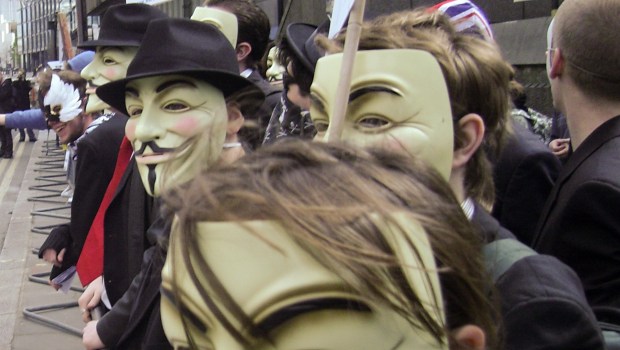
Again, this differs from someone with a mask getting in front of the system’s camera. Injections bypass the system’s camera.
Do how do you detect that you aren’t getting data from the camera or capture device that is supposed to be providing it? Many vendors offer tactics to attack the attackers; here’s what ID R&D (part of Mitek Systems) proposes.
These steps include creating a comprehensive attack tree, implementing detectors that cover all the attack vectors, evaluating potential security loopholes, and setting up a continuous improvement process for the attack tree and associated mitigation measures.
And as long as I’m on a Mitek kick, here’s Chris Briggs telling Adam Bacia about how injection attacks relate to everything else.
As you can see, the tactics to fight injection attacks are far removed from the more forensic “liveness” procedures such as detecting whether a presented finger is from a living breathing human.
Presentation attack detection can only go so far.
Injection attack detection is also necessary.
So if you’re a company guarding against spoofing, you need someone who can create content, proposals, and analysis that can address both biometric and non-biometric factors.
Learn how Bredemarket can help.
Not that I’m David Horowitz, but I do what I can. As did David Horowitz’s producer when he was threatened with a gun. (A fake gun.)
(February 2026: Independent testing of the capability to withstand injection attacks)

 Bredemarket