Your company probably spends a lot of money exhibiting and presenting at trade shows and conferences. And you probably email your prospects and customers about your participation in these events.
But what about the people not on your mailing list?
You can do what the Biometrics Institute has done and create an events page on your website. As I write this, the Biometrics Institute’s events page lists upcoming appearances from March to June, including both in-person events and (for those of us nowhere near Sydney) online events.
How many Biometrics Institute members (and non-members) have their own events pages? One major identity firm (I won’t name it) has an events page…with no events.
But even if you don’t have a web page per se, you can email your prospects and customers as mentioned above. Another identity firm just sent me an email listing several future events, their dates, their locations, and why I would want to go to any of these events.
Do your prospects know about your upcoming events? Bredemarket can help you create a blog post, social media post, email, or even some web page content so that your prospects can see you. Let’s talk.
By the way, here are all the services Bredemarket provides.
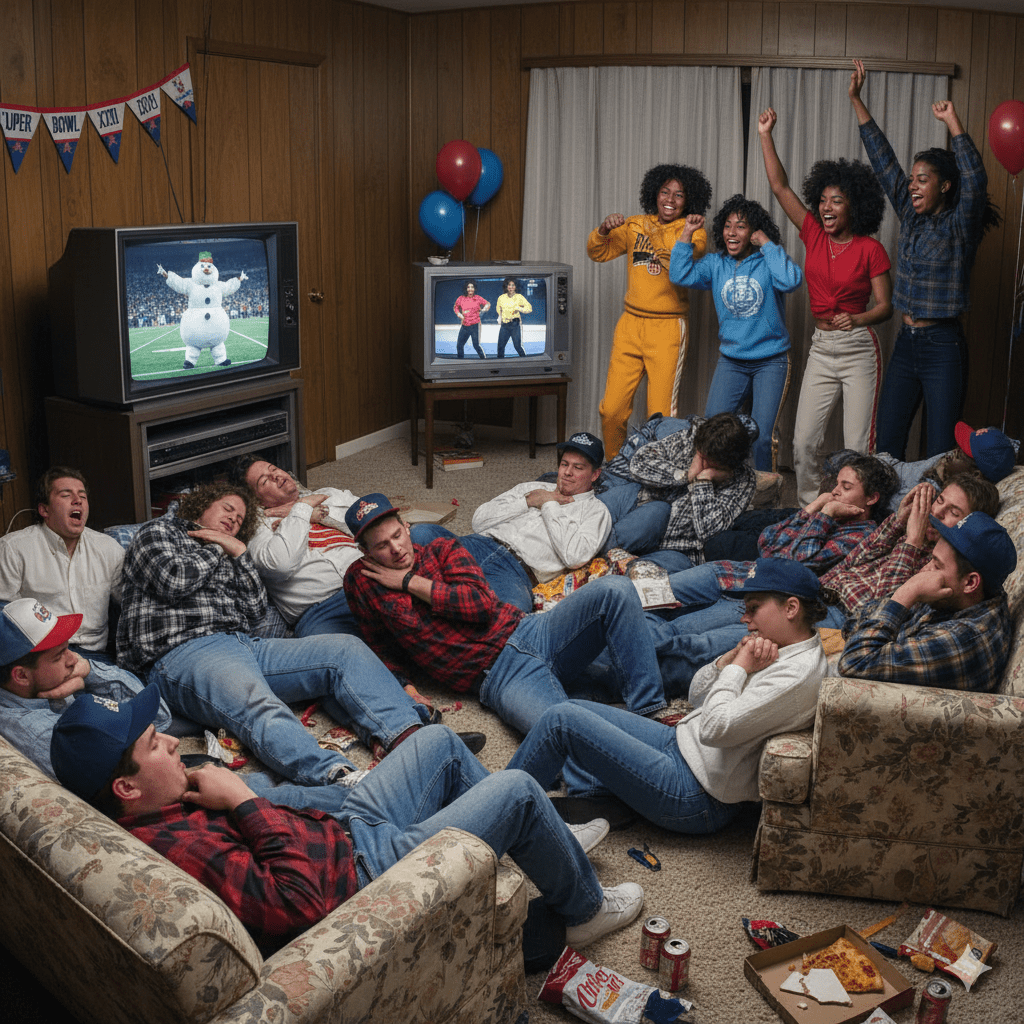
Because of something that happened during halftime at the 2026 Super Bowl, a lot of people are looking at something that happened during halftime at the 1992 Super Bowl.
You know, the story about how NO ONE watched the official 1992 halftime show and EVERYONE watched an unofficial one.
Except…that’s not what happened.
Marching bands at halftime
I was in my high school marching band, initially as a flute player, later as a drum major. I therefore performed in multiple football game halftime shows, entertaining the crowd with such classics as a Star Wars medley and a marching band arrangement of “Disco Duck.” (Cara and Jackie remember that one.)
And that was pretty much par for the course for football halftime shows. Not just at the high school level.
For example, let’s take a look at the Super Bowl. I will choose…Super Bowl XXVI.
It was a little fancier than my high school. Gloria Estefan sang during halftime. But the show also featured figure skaters Brian Boitano and Dorothy Hamill, the 1980 U.S. Olympic Hockey Team…and the University of Minnesota Marching Band. The theme was “Winter Magic.” Not sure how Miami-associated Estefan (who didn’t even appear until 10 minutes in) fit the theme.
Winter Magic.
Back in those days, the Winter Olympics were held on leap years, the same as the Summer Olympics. And therefore the Winter Olympics were just weeks away on CBS, the same network airing the Super Bowl. So this halftime show, in the middle of the Super Bowl, was guaranteed to get high viewership.
But not as high as expected.
The fourth network
Back when I was styling in my marching band uniform, the United States was dominated by three commercial television networks. A few years later a fourth network emerged, Fox.
Back in those days the name “Fox” was associated with innovation, and the fourth network definitely innovated with shows like the anti-Cosby “Married…with Children.” There was also a variety show, “The Tracey Ullman Show,” which spun off a cartoon show, The Samsons or something. And there was also comedy show with mostly black actors called “In Living Color.”
But the Big Three had one thing that Fox didn’t: NFL football. Those agreements were locked in place: the NFC on CBS, the AFC on NBC, and Monday Night Football on ABC. By 1985, Super Bowl telecasts began to rotate between these three networks, with CBS getting the 1992 slot.
“During In Living Color’s first season, a marketing impresario named Jay Coleman approached Fox with an idea that would draw even bigger ratings and stick it to CBS, the NFL rights holder and Super Bowl carrier that Murdoch had in his sights: a special episode of In Living Color that would air opposite the Super Bowl intermission.”
An audacious idea, which they executed in a way to ensure that people could turn to Fox at halftime, then turn back to CBS for the second half of the game.
“[Jim] Carrey started by revealing a 26-minute countdown clock at the left bottom corner of the screen that would let viewers know when to switch back for the second half. “You won’t miss any of the senseless brutality!”
And they were off with a show that blew the marching band away in terms of creativity.
In Living Color.
But not in terms of ratings.
CBS won the time slot
The way the story is told today, you would think no one watched Estefan et al.
But statistics show that 79 million people watched the Super Bowl broadcast. 22 million watched In Living Color at halftime.
It’s uncertain how many people watched the Winter Magic portion of the CBS broadcast, but it’s quite possible that as many as 57 million stuck around.
Read that again.
57 million people.
Which is much more than 22 million people.
Of course, maybe all 57 million people didn’t stick around. Perhaps everyone not watching the Homeboy Shopping Network used the time for a bathroom break.
But it’s safe to say that more than 22 million people kept their TVs on CBS during halftime. Probably many, many more.
So on the surface the counter programming failed.
However, 22 million people is a lot of people to lose. In a more recent example, 2026 Turning Point counter programming drew no more than 5 million viewers. Although to be fair, it wasn’t even on TV, but on something called Ew Tube or something like that. And who would watch something on a computer or a phone?
But let’s go back to 1992. Maybe the NFL show won the ratings, but “The Shield” was shamed into revamping next year’s show.
They decided to can the marching band and ONLY go with a singer.
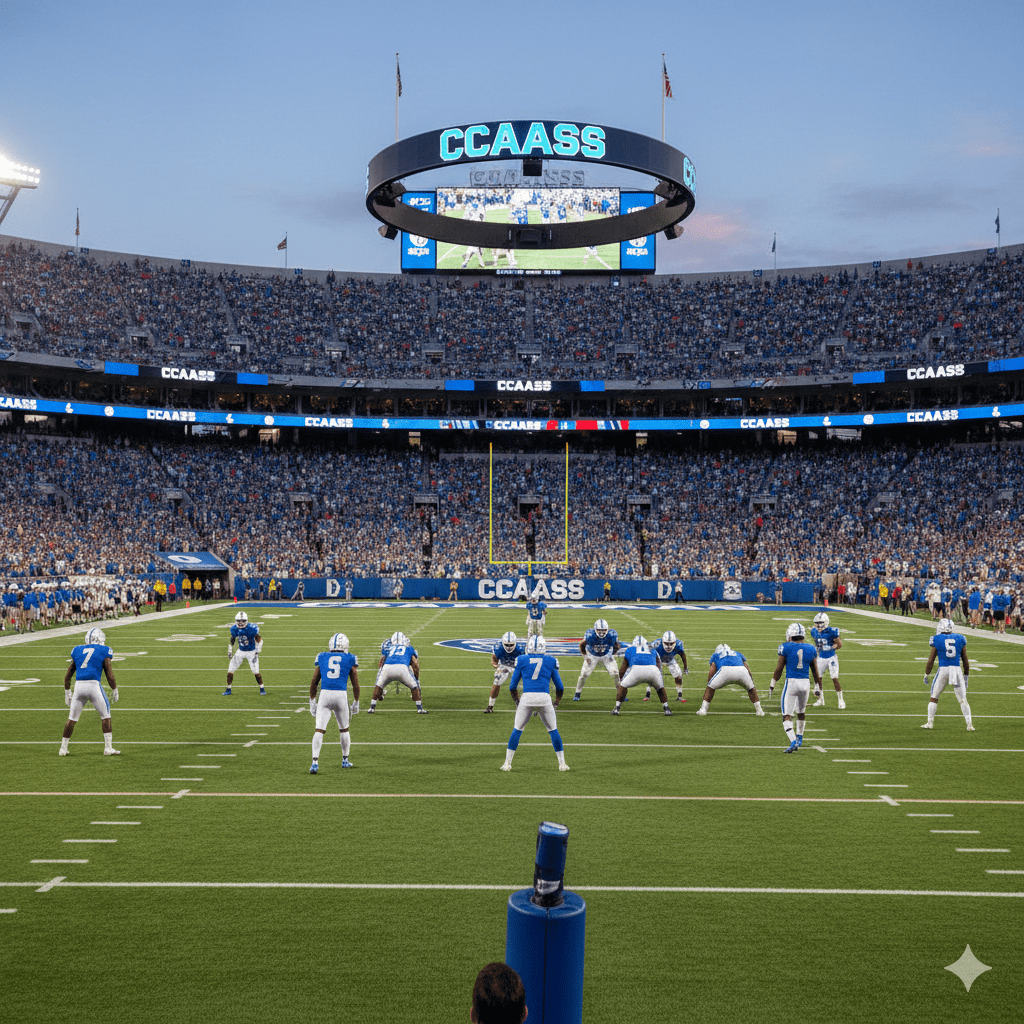
“Commercials, Concerts, And a Sports Show”(tm) is a trademark of Bredemarket. CCAASS may be freely used by any entity to refer to the sporting event taking place in Santa Clara, California on Sunday, February 8, 2026. This saves you from having to refer to The Big Game or The Bowl That Will Not Be Named. See FindLaw for the legalities: https://www.findlaw.com/legalblogs/small-business/legal-to-use-super-bowl-in-ads-for-your-biz/
As a Commanders fan, I have no wildebeest in the hunt.
Bredemarket has no current clients in the states of Massachusetts or Washington.
There are former IDEMIA employees in both states.
Ex Incode employee (and ex employee of a former Bredemarket client) Gene Volfe lives in an NFC West city, but the team in that city is a bitter rival of the Seahawks.
With no clear preference, I lean toward the NFC rather than the AFC in the CCAASS.
Illinois music lovers, wanna see a concert? Sounds like you may have to surrender your BIPA protections.
Specifically, if the concert venue uses Ticketmaster (who doesn’t?), and if the concert venue captures your biometric data without your consent, you may not have legal recourse.
“These Terms of Use (“Terms”) govern your use of Live Nation and Ticketmaster’s websites and applications…
“The Terms contain an arbitration agreement and class action waiver—along with some limited exceptions—in Section 14, below. Specifically, you and we agree that any dispute or claim relating in any way to the Terms, your use of the Marketplace, or products or services sold, distributed, issued, or serviced by us or through us, will be resolved by binding arbitration, rather than in court…
“By agreeing to arbitration, you and we each waive any right to participate in a class action lawsuit or class action arbitration, except those already filed and currently pending as of August 12, 2025.”
When your company attends events, you’ll want to maximize your event return on investment (ROI) by creating marketing content that you publish before, during, and after the event.
The two things (first, second) you need to do NOW, well before your event.
And I’ll spill a couple of secrets along the way.
The first secret (about events)
I’m going to share two secrets in this post. OK, maybe they’re not that secret, but you’d think they ARE secrets because no one acknowledges them.
The first one has to do with event attendance. You personally might be awed and amazed when you’re in the middle of an event and surrounded by hundreds, or thousands, or tens of thousands of people. All of whom are admiring your exhibit booth or listening to your CEO speak.
Technically not a CEO (Larry Ellison’s official title is Chief Technology Officer, and the CEO is Safra Catz), but you get the idea. By Oracle PR Hartmann Studios – CC BY 2.0, https://commons.wikimedia.org/w/index.php?curid=47277811.
But guess what?
Many, many more people are NOT at the event.
They can’t see your exhibit booth, and can’t hear your speaker. They’re on the outside, TRYING to look in.
And all the money you spent on booth space and travel and light-up pens does NOTHING for the people who aren’t there…
Unless you bring the event to them. Your online content can bring the event to people who were never there.
But you need to plan, create, and approve your content before, during, and after the event. Here’s how you do that.
Three keys to creating event-related content
Yes, you can just show up at an event, take some pictures, and call it a day. But if you want to maximize your event return on investment, you’ll be a bit more deliberate in executive your event content. Ideally you should be:
Before the event begins, you need to plan your content. While you can certainly create some content on a whim as opportunity strikes, you need to have a basic idea of what content you plan to create.
Before the event. Why should your prospects and customers care about the event? How will you get prospects and customers to attend the event? What will attendees and non-attendees learn from the event?
During the event. What event activities require content generation? Who will cover them? How will you share the content?
Some dude creating Morphoway-related content for Biometric Update at the (then) ConnectID Expo in 2015.
After the event. What lessons were learned? How will your prospects and customers benefit from the topics covered at the event? Why should your prospects buy the product you showcased at the event?
Creating your event content
Once you have planned what you want to do, you need to do it. Before, during, and after the event, you may want to create the following types of content:
Blog posts. These can announce your attendance at the event before it happens, significant goings-on at the event (such as your CEO’s keynote speech or the evening party launching your new product), or lessons learned from the event (what your CEO’s speech or your new product means for your prospects and clients). Blog posts can be created relatively quickly (though not as quick as some social media posts), and definitely benefit your bottom line.
Social media. Social media such as Facebook, Instagram, and LinkedIn can also be used before, during, and after the event. Social media excels at capturing the atmosphere of the event, as well as significant activities. When done right, it lets people experience the event who were never there.
E-mails. Don’t forget about e-mails before, during, and after the event. I forgot about e-mails once and paid the price. I attended an event but neglected to tell my e-mail subscribers that I was going to be there. When I got to the event, I realized that hardly any of the attendees understood the product I was offering, and were not the people who were hungry for my product. If I had stocked the event with people from my e-mail list, the event would have been more productive for me.
Data sheets. Are you announcing a new product at an event? Have the data sheet ready.
Demonstration scripts. Are you demonstrating a new or existing product at the event? Script out your demonstration so that your demonstrators start with the same content and make the points YOU want them to make.
Case studies and white papers. While these usually come into play after the event, you may want to release an appropriate case study or white paper before or during the event, tied to the event topic. Are you introducing a new product at an industry conference? Time your product-related white paper for release during the conference. And promote the white paper with blog posts, social media, and e-mails.
Other types of content. There are many other types of content that you can release before, during, or after an event. Here’s a list of them.
Approving your event content
Make sure that your content approval process is geared for the fast-paced nature of events. I can’t share details, but:
If your content approval process requires 24 hours, then you can kiss on-site event coverage goodbye. What’s the point in covering your CEO’s Monday 10:00 keynote speech if the content doesn’t appear until 11:00…on Tuesday?
If your content approval process doesn’t have a timeline, then you can kiss ALL event coverage goodbye. There have been several times when I’ve written blog posts announcing my company’s attendance at an event…and the blog posts weren’t approved until AFTER the event was already over. I salvaged the blog posts via massive rewrites.
So how are you going to generate all this content? This brings us to my proposed solution…and the second secret.
The rest of this post talks about one of Bredemarket’s services, the Bredemarket 2800 Medium Writing Service. For those who haven’t heard about it, it’s a service where I provide between 2,800 and 3,200 words of written text.
“But John,” you’re asking. “How is a single block of 3,200 words of text going to help me with my event marketing?”
Time to reveal the second secret…
You can break up those 3,200 words any way you like.
For example, let’s say that you’re planning on attending an event. You could break the text up as follows:
One 500-word blog post annnouncing your attendance at the event.
Three 100-word social media posts before the event.
One 500-word blog post as the event begins.
One 300-word product data sheet prepared before the event and released on the second day of the event.
One 500-word blog post announcing the new product.
Three 100-word social media posts tied to the new product announcement.
One 500-word post-event blog post with lessons learned.
Three 100-word social media posts after the event.
For $2,000 (as of June 2024), you can benefit from written text for complete event coverage, arranged in any way you need.
So how can you and your company receive these benefits?
Read about the Bredemarket 2800 Medium Writing Service
First, read the data sheet for the Bredemarket 2800 Medium Writing Service so you understand the offer and process.
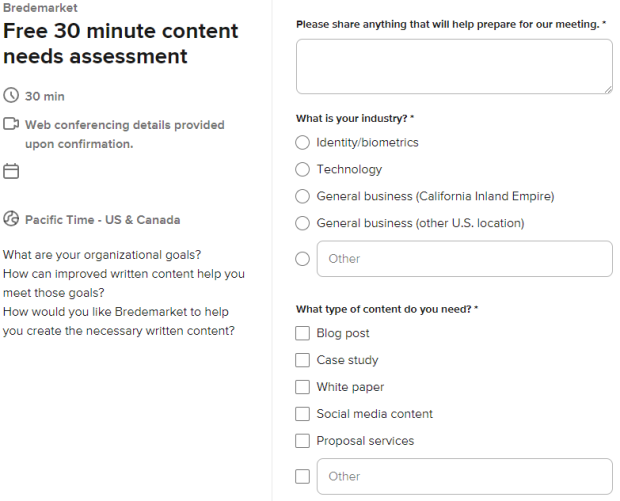
Second, contact Bredemarket to get the content process started well BEFORE your event. Book a meeting with me at calendly.com/bredemarket. Be sure to fill out the information form so I can best help you.
There is a LOT going on in Ontario, California that escapes the attention of most of us. For example, only dedicated boxing fans may know what is happening here on May 14.
Former world champion and light heavyweight Mexican boxing star Gilberto “Zurdo” Ramírez (43-0, 29 KOs) of Mazatlán, Mexico, will face former WBA Interim Light Heavyweight World Champion Dominic Boesel (32-2, 12 KOs) of Freyburg, Germany on Saturday, May 14….The event will take place at Toyota Arena in Ontario, CA, and will stream live exclusively on DAZN.
And the Toyota Arena is certainly promoting it. (“Zurdo” is Ramirez’s nickname.) Notice the prominent “BUY TICKETS” call to action. The Toyota Arena wants you to attend the event in-person.
And the DAZN streaming service is obviously talking about it and hoping that you sign up for the service. The yellow “SIGN UP NOW” buttons (two of them in this screen alone) are hard to miss. Unlike the Toyota Arena, DAZN doesn’t require you to be in person to view this fight.
What the Toyota Arena and the DAZN streaming service DIDN’T do when marketing the fight
Let’s look at one aspect of how the fight is being marketed.
Have you ever noticed that some companies believe that the best way to market themselves is to talk about themselves? They’re worse than a self-obsessed narcissist on a date.
Major Frank Burns (portrayed by Larry Linville) of M*A*S*H fame. (Major Margaret “Hot Lips” Houlihan not pictured.) By CBS Television – eBayfrontbackeBayphoto front & release, Public Domain, https://commons.wikimedia.org/w/index.php?curid=30082123
If the “my company is most important” people were promoting this fight, the Toyota Arena could have started its Zurdo vs. Boesel page with the text below.
Toyota Arena, built and owned by the City of Ontario, operated by ASM Global, can accommodate over 11,000 guests. The 225,000 square foot venue features 36 luxury suites located on two levels and a continuous concourse hosting a variety of concession and refreshment stands, merchandise kiosks, the VIP Club and other fan amenities. Toyota Arena hosts over 125 events annually including concerts, family shows, and sporting competitions. The Arena is home to several sport teams including: Ontario Reign (American Hockey League), Ontario Fury (Major Arena Soccer League), Aqua Caliente Clippers of Ontario (G League Basketball), and LA Temptation (Legends Football League).
This text appears on the arena’s “About Us” page. Why not also put it on the page for the fight, to ensure that the readers see it and realize the sheer awesomeness of the arena, the City of Ontario, and ASM Global?
Why not talk about the arena at the beginning of the fight announcement? Because fight promoters are smart. Fight promoters know that to make a sale, they need to maintain a customer focus.
Let’s say that you’re a boxing promoter and YOU have to promote this fight. Which of the following two facts is more important?
Gilberto “Zurdo” Ramírez has a boxing record of 43-0 with 29 knockouts.
The Toyota Arena is a 225,000 square foot facility.
Now perhaps the janitorial staff that has to service the Toyota Arena is more concerned about item 2, but if you want boxing fans to buy tickets or streaming access, you’re going to aggressively promote item 1 and maintain your customer focus.
So what is MY call to action to YOU?
If I were to ask you, there is a high probability that you are not a boxing promoter. I know this because I’m not submitting this post to The Ring as a press release, but am instead sharing it in various Inland Empire West business channels.
However, there is a pretty good probability that you own or manage a local business, and you have your own news that you want to get out.
And this news must resonate with your customers.
Perhaps you want to share a customer success story, case study, or testimonial—a casetimonial, if you will. This document must appeal to your customers, speak to their needs, and ideally lead to them considering your company’s services or products.
Or perhaps you want to share a white paper that addresses your customers’ needs, but also drives them to consider your business. For example, you might distribute a white paper that lists seven critical criteria for customer success—and coincidentally, your company’s offering satisfies all seven critical criteria. (What an amazing coincidence!)
I, John E. Bredehoft, through my Ontario-based DBA Bredemarket, can write casetimonials, white papers, and other types of content, working with you to answer these and other critical questions BEFORE producing the content:
Why, how, and what do you do?
What is the topic of the content?
What is the goal that you want to achieve with the content?
What are the benefits (not features, but benefits) that your end customers can realize by using your product or service?
What is the target audience for the content?
After you’ve provided the relevant information to me, I’ll create the first iteration of the content, and we’ll work together to create your final content. The specifics of how we will work together depend upon whether you have elected the Bredemarket 400 Short Writing Service, the Bredemarket 2800 Medium Writing Service, or something else.
When we’re done, that final content is yours (a “work for hire” arrangement).
If I can help your business, or if you have further questions about Bredemarket’s B2B content creation services, please contact me.
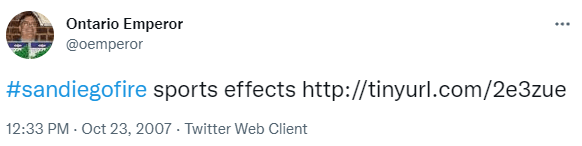
Back on October 23, 2007, I used my then-active Twitter account to tweet about the #sandiegofire. The San Diego fire was arguably the first mass adoption of hashtags, building upon pioneering work by Stowe Boyd and Chris Messina and acted upon by Nate Ritter and others.
The tinyurl link directed followers to my post detailing how the aforementioned San Diego Fire was displacing sports teams, including the San Diego Chargers. (Yes, kids, the Chargers used to play in San Diego.)
So while I was there at the beginning of hashtags, I’m proudest of the post that I wrote a couple of months later, entitled “Hashtagging Challenges When Events Occur at Different Times in Different Locations.” It describes the challenges of talking about the Rose Parade when someone is viewing the beginning of the parade while someone else is viewing the end of the parade at the same time. (This post was cited on PBWorks long ago, referenced deep in a Stowe Boyd post, and cited elsewhere.)
Hashtag use in business
Of course, hashtags have changed a lot since 2007-2008. After some resistance, Twitter formally supported the use of hashtags, and Facebook and other services followed, leading to mass adoption beyond the Factory Joes of the world.
Ignoring personal applications for the moment, hashtags have proven helpful for business purposes, especially when a particular event is taking place. No, not a fire in a major American city, but a conference of some sort. Conferences of all types have rushed to adopt hashtags so that conference attendees will promote their conference attendance. The general rule is that the more techie the conference, the more likely the attendees will use the conference-promoted hashtag.
I held various social media responsibilities during my years at MorphoTrak and IDEMIA, some of which were directly connected to the company’s annual user conference, and some of which were connected to the company’s attendance at other events. Obviously we pulled out the stops for our own conferences, including adopting hashtags that coincided with the conference theme.
And then when the conference organizers adopt a hashtag, they fervently hope that people will actually USE the adopted hashtag. As I said before, this isn’t an issue for the technical conferences, but it can be an issue at the semi-technical conferences. (“Hey, everybody! Gather around the screen! Someone used the conference hashtag…oh wait a minute, that’s my burner account.”)
A pleasant surprise with exhibitor/speaker adoption of the #connectID hashtag
Well, I think that we’ve finally crossed a threshold in the biometric world, and hashtags are becoming more and more acceptable.
As I previously mentioned, I’m not attending next week’s connect:ID conference in Washington DC, but I’m obviously interested in the proceedings.
I was pleasantly surprised to see that nearly two dozen exhibitors and speakers were using the #connectID hashtag (or referenced via the hashtag) as of the Friday before the event, including Acuity Market Intelligence, Aware, BIO-key, Blink Identity, Clearview AI, HID Global, IDEMIA, Integrated Biometrics, iProov, Iris ID, Kantara, NEC and NEC NSS, Pangiam, Paravision, The Paypers, WCC, WorldReach Software/Entrust, and probably some others by the time you read this, as well as some others that I may have missed.
And the event hasn’t even started yet.
At least some of the companies will have the presence of mind to tweet DURING the event on Tuesday and Wednesday.
Will yours be one of them?
But company adoption is only half the battle
While encouraging to me, adoption of a hashtag by a conference’s organizers, exhibitors, and speakers is only the beginning.
The true test will take place when (if) the ATTENDEES at the conference also choose to adopt the conference hashtag.
According to Terrapin (handling the logistics of conference organization), more than 2,500 people are registered for the conference. While the majority of these people are attending the free exhibition, over 750 of them are designated as “conference delegates” who will attend the speaking sessions.
How many of these people will tweet or post about #connectID?






 Bredemarket