First, the video is 3 minutes and 40 seconds long, which for me is long. And why you won’t see it on Bluesky or Instagram. But you will see it here; it’s already scheduled.
Oh, and I talk. The video alternates between shots of me at Bredemarket world headquarters and shots of textual/image descriptions incorporating Canva’s finest AI-generated music. If you’ve seen my other videos you know the…um…score.
I start by introducing the subject of “marketing and writing services” and identifying MY hungry people (target audience).
Then I explain, in detail, what Bredemarket’s “CPA” services are NOT…and what they ARE.
Then I do something that some sales professionals would NEVER do—reveal my pricing up front.
Finally, my call to action is for interested prospects to book a meeting with me on my CPA page. If you don’t already have the link to that page, you’ll get it on Monday.
Well, that’s that. Come back Monday at 8:00 am Pacific Standard Time / 1600 GMT.
You could be well on the way to creating your 2025 content already: blog posts, articles, case studies, white papers, proposals, analyses.
It’s not too late to start.
Or you could wait until next week, next month…
But if you want to learn how Bredemarket can work with you to create the identity/biometric content you need now, schedule a free meeting with me to move forward now.
(Ready, fire, aim wildebeest via Imagen 3/Google Gemini)
If I had to choose between acting too quickly and acting too slowly, I would choose the former. You already know I don’t like it when things never get done. But the ready, fire, aim method introduces problems of its own. Let’s look at how ready, fire, aim can adversely affect both external and internal content.
External content
If you haven’t figured it out already, I create a lot of external prospect/customer facing content. Not only for Bredemarket’s clients, but also for Bredemarket itself so I can get more clients. This blog post is an example.
Sometimes I meticulously plan a full campaign via a myriad of Asana tasks covering multiple blog and social media posts. Sometimes the entire project appears in a day or two, sometimes it takes a week, and one recent project took 3 weeks including teaser content, the main content, and follow-up content.
Yes, sometimes I meticulously plan. And other times I just do stuff.
Last Saturday I was struck with an idea for a 2 minute and 20 second landscape video about biometrics and Bredemarket. I knew it was long and many who encountered it wouldn’t watch the whole thing, but I wanted to make my statement and reserve it for bottom of funnel activities.
Only AFTER I posted the video did I realize that this was the logical second part to a 30 second video that I had previously created for biometric clients.
If I had thought this through, I could have started with the 30 second video, THEN introduced the longer video as the logical next step. Like a funnel, if you believe in funnels.
The proper first video
Well, better late than never.
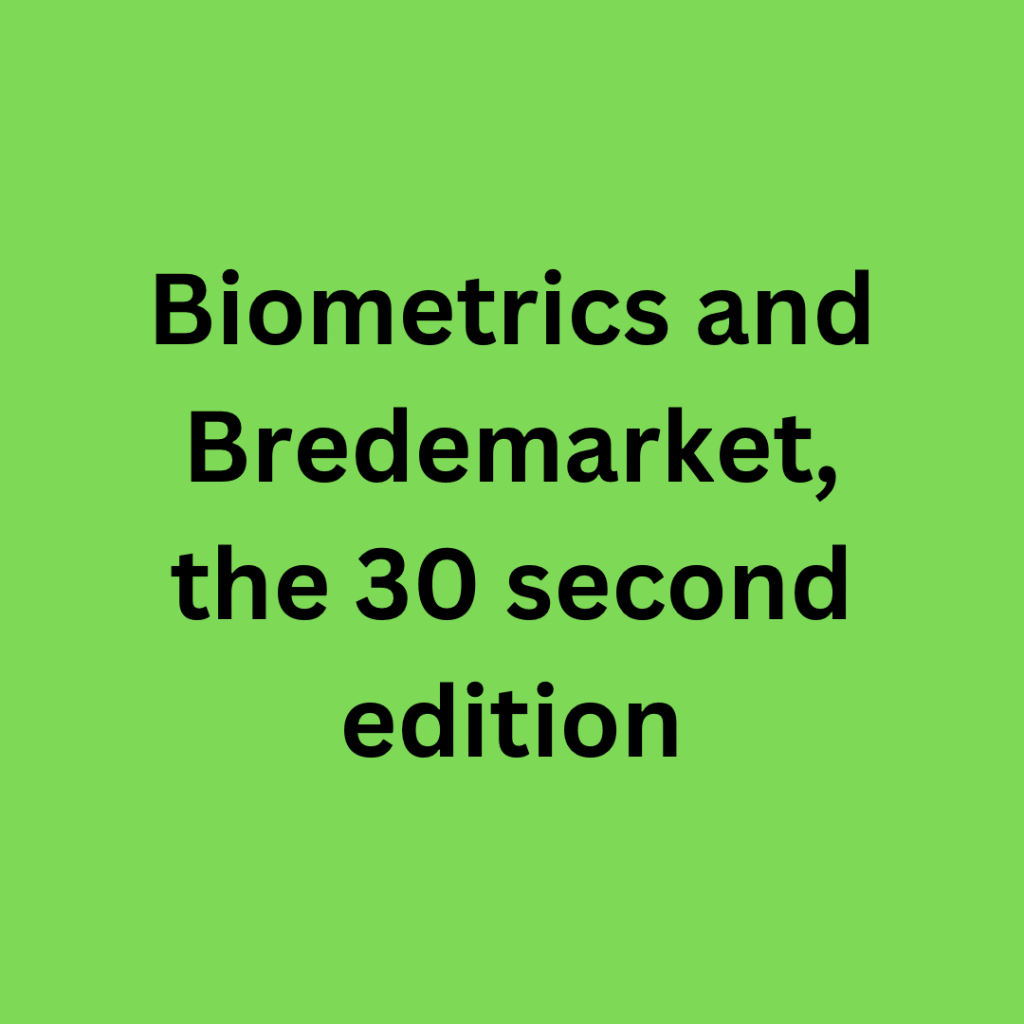
The 30 second edition.
Watch this 30 second video that I made for Bredemarket’s biometric prospects and clients.
For Biometric Clients.
The proper second video
Hey, did you like that video? Would you like to learn more?
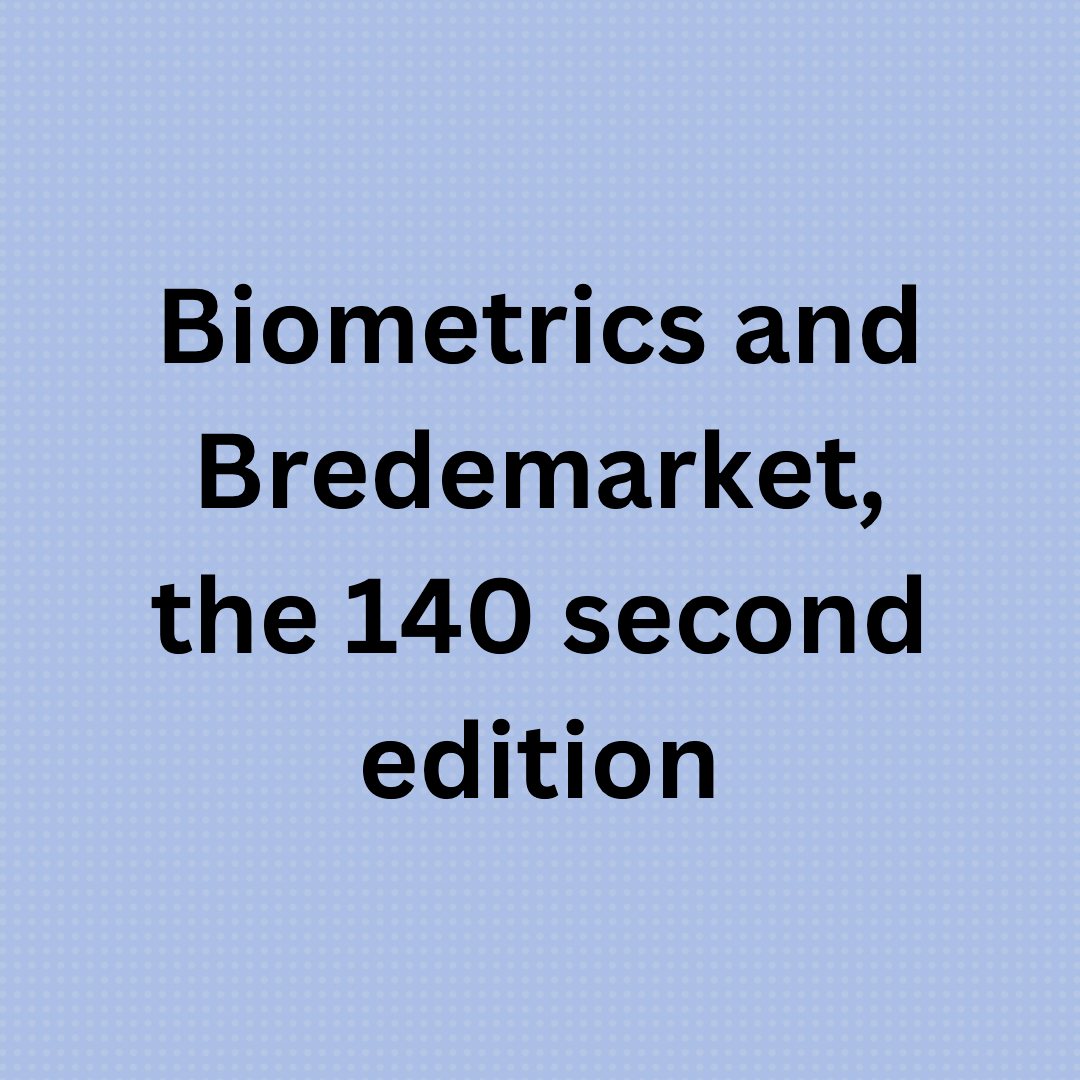
The 140 second edition.
Watch this 140 second video that I made for Bredemarket’s extra special biometric prospects and clients.
Well, that’s what I should have done in the first place so I wouldn’t have to make this clumsy fix later.
But there’s still time to fix a future internal campaign before it happens.
Internal content
Because this content is internal I can’t really talk about it, but I anticipate that Bredemarket will be invited to a future event…and I am already planning NOT to attend.
There are a number of stakeholders associated with this event, and in a TLOI kind of way they will have different reactions to my non-attendance. Some of them probably don’t give a you-know-what whether I attend or not. But perhaps there are those who do care, ranging from mild curiosity about why I’m not going, to the other extreme of demanding to know how I could bypass this important event.
So I drafted three messages in case I was asked about my non-attendance: (1) a brief two-paragraph message, (2) a longer message, and (3) a detailed message which delved into my concerns.
But what if I don’t know which message to send? What if I unloaded my deepest darkest fears via the long message, when the stakeholder merely wanted to know if I had other commitments at the time of the event?
So I rewrote the messages so that they build on one another.
Let’s say Bob asks why I’m not attending. I would simply send Bob the first, brief message. If this satisfies Bob’s curiosity, we’re done.
If Bob asks more, then I will send those portions of the second message that weren’t part of the first one—namely, the 3rd and 4th paragraphs of the second message. (The first 2 paragraphs of the second message are identical to the entire first message.
If Bob still questions, I will unload parts of the third message on him—namely the stuff absent from the second (and first) message.
There’s my funnel. And if needed I can skip directly to the third message with certain stakeholders.
And if no one asks why I’m skipping the event, I don’t send ANY communication—and know that my decision to skip the event was the right one.
Future content
So in the future, whether creating external or internal content, I need to pause and think about how it fits into the tons of content I’ve already created.
So that I can tell the best stories.
And so I will achieve ready, aim, fire rather than ready, fire, aim.
(Company J) “To protect against fraud and financial crime, businesses online need to know and trust that their customers are who they claim to be — and that these customers continue to be trustworthy.”
(Company M) “Trust is the core of any successful business relationship. As the digital revolution continues to push businesses and financial industries towards digital-first services, gaining digital trust with consumers will be of utmost importance for survival.”
(Company O) “Create trust at onboarding and beyond with a complete, AI-powered digital identity solution built to help you know your customers online.”
(Company P) “Trust that users are who they say they are, and gain their trust by humanizing the identity experience.”
(Company V) “Stop fraud. Build trust. Identity verification made simple.”
This isn’t effective. Trust me.
But prospective customers aren’t the only ones who are turned off by “me-too” messaging.
Further ramifications of lack of differentiation
What about prospective employees who don’t want to apply to your company because they see no compelling reason to do so?
I’ll grant that the tech job market is so out of balance right now that people are applying to ANYTHING.
But the more choosy ones are…more choosy in their applications. Just like choosy mothers choose…you know.
I recently received this message from a product marketer after I shared a particular identity/biometric job description with them.
Not so sure that company is well positioned for evolving identity landscape.
From a selfish perspective, this benefits me, because I DID apply for this position while they DIDN’T. Reducing the competition increases my chances of getting the job.
But the company (which I’m not naming) doesn’t benefit, because at least one experienced identity verification product marketer doesn’t want to work for them.
Now Bredemarket can’t help you with your job search, because I’m certainly not an expert in that. But I can ask you questions that help you create content that conveys that your product is great and your competitors’ products…are not so good.
Visit Bredemarket’s “CPA” page to learn how I can help your firm’s content (and analysis, and proposals), and to schedule a meeting.












 Bredemarket