(Company J) “To protect against fraud and financial crime, businesses online need to know and trust that their customers are who they claim to be — and that these customers continue to be trustworthy.”
(Company M) “Trust is the core of any successful business relationship. As the digital revolution continues to push businesses and financial industries towards digital-first services, gaining digital trust with consumers will be of utmost importance for survival.”
(Company O) “Create trust at onboarding and beyond with a complete, AI-powered digital identity solution built to help you know your customers online.”
(Company P) “Trust that users are who they say they are, and gain their trust by humanizing the identity experience.”
(Company V) “Stop fraud. Build trust. Identity verification made simple.”
This isn’t effective. Trust me.
But prospective customers aren’t the only ones who are turned off by “me-too” messaging.
Further ramifications of lack of differentiation
What about prospective employees who don’t want to apply to your company because they see no compelling reason to do so?
I’ll grant that the tech job market is so out of balance right now that people are applying to ANYTHING.
But the more choosy ones are…more choosy in their applications. Just like choosy mothers choose…you know.
I recently received this message from a product marketer after I shared a particular identity/biometric job description with them.
Not so sure that company is well positioned for evolving identity landscape.
From a selfish perspective, this benefits me, because I DID apply for this position while they DIDN’T. Reducing the competition increases my chances of getting the job.
But the company (which I’m not naming) doesn’t benefit, because at least one experienced identity verification product marketer doesn’t want to work for them.
Now Bredemarket can’t help you with your job search, because I’m certainly not an expert in that. But I can ask you questions that help you create content that conveys that your product is great and your competitors’ products…are not so good.
Visit Bredemarket’s “CPA” page to learn how I can help your firm’s content (and analysis, and proposals), and to schedule a meeting.
Some time ago I read a story (which may or may not have been true) about an employer who called multiple job applicants to the office for a morning interview. As time passed and the employer didn’t interview anyone, some of the applicants got tired of waiting and left. At the end of the day, only one applicant remained. That applicant got the job.
The person who told the story thought that it demonstrated that perseverance pays off.
Most of the readers thought that it demonstrated that the employer was a jerk and that the work environment was probably toxic.
If this were to happen in real life, the employer would paradoxically lose out on the BEST candidates who had better things to do than sit around an office all day.
Why?
Because people avoid friction. If job applicants can obtain jobs without playing silly games, they will.
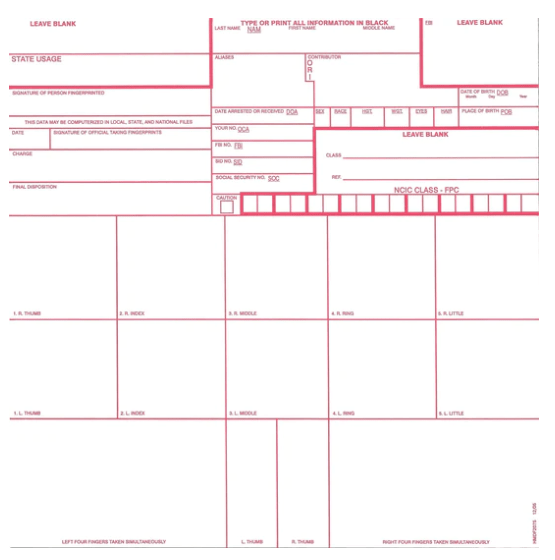
When I started in the biometric industry 30 years ago, many police agencies were capturing fingerprints by putting ink on a person’s fingers and rolling/slapping the prints on a card.
That was messy and time-consuming, so companies like Digital Biometrics and Identix developed “livescan” devices, which did not require ANY ink and which let police agencies capture fingerprints by rolling/slapping the prints on a glass platen. This process could require a minute or two for the livescan operator to capture all fourteen images.
That’s a long time.
As I’ve previously noted, it was TOO long for some people in the federal government, who began asking in 2004 if technology could capture a complete set of fingerprints in 15 seconds.
20 years later, we can capture fingerprints (at least 8 of them) in a couple of seconds.
How?
By avoiding friction. Rather than forcing people to place their fingerprints on a card or a platen, “contactless” technology lets the “wave” (or “fly”) their fingers over a capture device, or hold their fingerprints in front of a smartphone camera.
When a prospect wants to find out about your biometric solution, how does silence help you?
Let’s say that a prospect hears that MegaCorp offers a biometric solution, but MegaCorp’s blog and social media haven’t posted anything lately.
What are the chances that the prospect will search far and wide to find out about MegaCorp’s biometric solution?
Actually, the chances are better that the prospect won’t search at all, and will turn to the competitors who are NOT silent.
Are you going to look for the information that is easily available, or the information that is hard to obtain?
Friction is bad.
Eating my own wildebeest food
I’m trying to reduce friction in Bredemarket’s own practices.
While I still use landing pages for some thing that require further explanation for some prospects, I’m trying to avoid them in some instances.
I’m working on a marketing campaign for a client, and my first “draft 0.5” of the campaign was loaded with friction.
The prospect had to open an email.
In the email, the prospect had to click on a landing page.
On the landing page, the prospect had to fill out a form to book a meeting.
Huge numbers of people drop out of the process at every step. So why not eliminate a step, and let the prospect book a meeting in a form embedded in the email?
Friction is bad.
And I’m applying this same principle to this post.
If your identity/biometric firm is desperate for content to convert prospects into paying customers, why don’t you schedule a free 30-minute meeting with Bredemarket to discuss your needs and what I can offer?
Incidentally, while I often repurpose blog content on Bredemarket’s social media channels, this post WON’T be one of them. I can’t embed a Calendly form into an Instagram or LinkedIn post.
In my circles, people generally understand ‘biometrics’ to refer to one of several ways to identify an individual.
But for the folks at Merriam-Webster, this is only a secondary definition of the word “biometrics.” From their perspective, biometrics is primarily biometry, which can refer to “the statistical analysis of biological observations and phenomena” or to “measurement (as by ultrasound or MRI) of living tissue or bodily structures.” In other words, someone’s health, not someone’s identity.
Fun fact: if you go to the International Biometric Society and ask it for its opinion on the most recent FRVT 1:N tests, it won’t have an answer for you.
So Abbott salespeople, real or imagined, won’t be interested in what I’ve been doing for the last 30 years. ‘Cause you know sometimes words have two meanings.
But those of you who use biometrics (and other factors) for individualization WILL be interested. Click on the image to find out more.
Drive content results with Bredemarket Identity Firm Services.
This week has been a busy week in Bredemarket-land, including work on some of the following client projects:
Creating the first deliverable as part of a three-part series of deliverables.
Reworking that first deliverable for more precision.
Preparing to start work on the second deliverable.
Drafting a blog post for a client.
Gathering information for an email newsletter for a client.
Following up on a couple of consulting opportunities that take advantage of my identity/biometric expertise.
Creating a promotional reel based upon the grapes in my backyard. (Yet another reel. I plan to reveal it next week.)
Engaging in other promotional activities on Bredemarket’s key social media channels.
Plus I’ve been working on some non-Bredemarket deliverables and meetings with a significant time commitment.
But there’s one more Bredemarket deliverable that I haven’t mentioned—because I’m about to discuss it now.
The task
Without going into detail, a client required me to repurpose a piece of third-party government-authored (i.e. non-copyrighted) text, originally written for a particular market.
Shorten the text so it would be more attractive to the new market.
Simplify the presentation of the text to make it even more attractive to the new market.
The request was clear, and I’ve already completed the first draft of the text and am working on the second draft.
But I wanted to dive into the three steps above—not regarding this particular client writing project, but in a more general way.
Step 1: Rewrite
When you’ve worked in a lot of different industries, you learn that each industry has its own language, including things you say—and things you don’t say.
I’ll give you an example that doesn’t reflect the particular project I was working on, but does reflect why rewriting is often necessary.
When I started in biometrics, the first two industries that I wrote about were law enforcement and benefits administration.
Law enforcement’s primary purpose is to catch bad people, although sometimes it can exonerate good people. So when you’re talking about law enforcement applications, you frequently use a lot of terms that are negative in nature, such as “surveillance,” “suspect,” and “mugshot.”
Benefits administration’s primary purpose is to help good people, although sometimes it can catch bad people who steal benefits from good people. So when you’re talking about benefits administration applications, you tend toward more positive terms such as “beneficiary.” And if you take a picture of a beneficiary’s face, for heaven’s sake DON’T REFER TO THE FACIAL IMAGE AS A “MUGSHOT.”
These two examples illustrate why something originally written for “market 1” must often be rewritten for “market 2.”
But sometimes a simple rewrite isn’t enough.
Step 2: Shorten
Now I don’t play in the B2C market in which crisp text is extremely necessary. But it’s needed in the various B2G and B2B markets also—some more than others.
If you are writing for more scientific markets, your readers are more accustomed to reading long, academic, “Sage”-like blocks of text.
But if you are writing for other markets, such as hospitality, your readers not only don’t want to read long blocks of text, but actively despise it.
You need to “get to the point.”
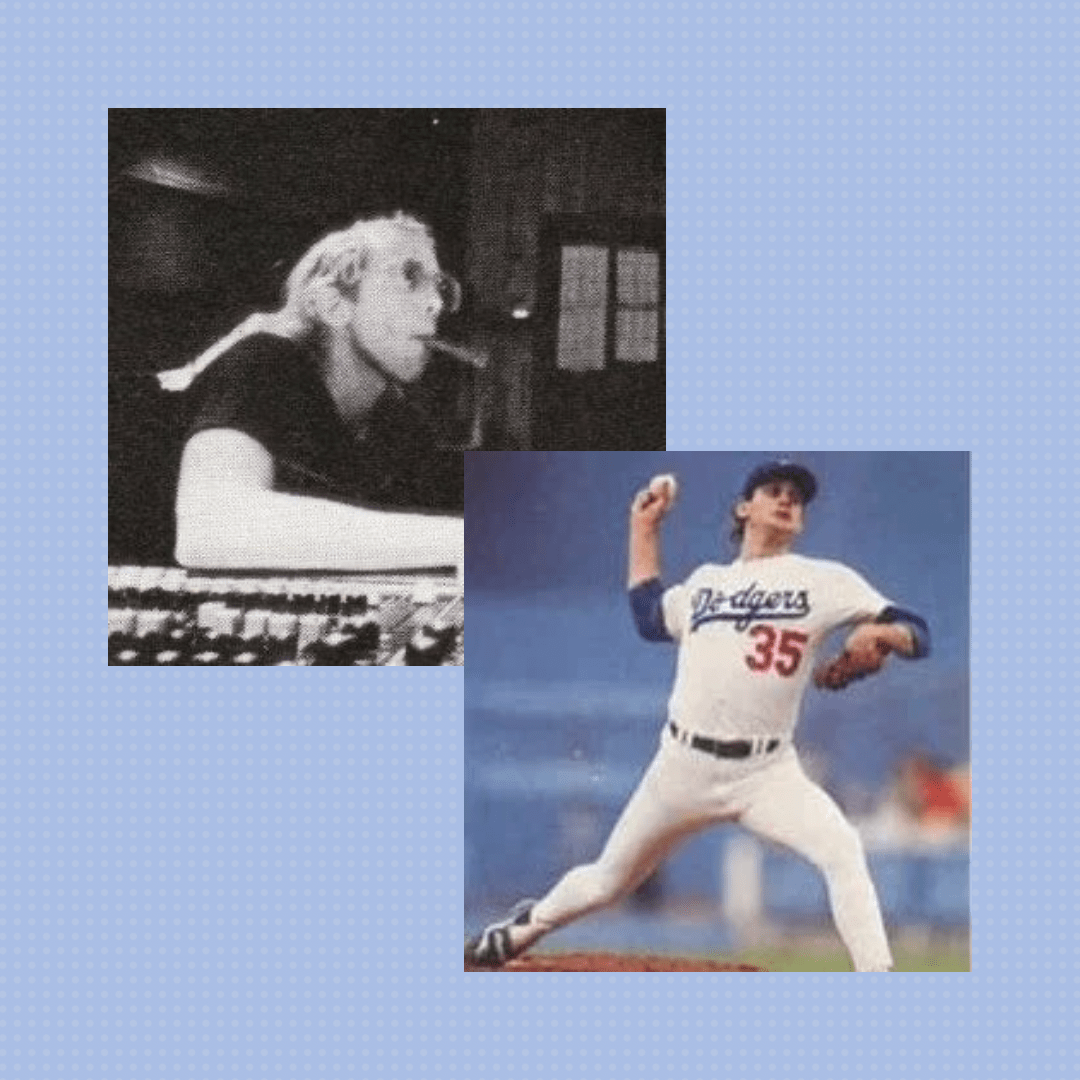
Tim Conway (Sr.), as repeatedly played during Jim Healy’s old radio show. Sourced from the Jim Healy Tribute Site.
In my particular project, “market 1” was one of those markets that valued long-windedness, while “market 2” clearly didn’t. So I had to cut the text down significantly, using the same techniques that I use when rewriting my “draft 0.5” (which a client NEVER sees) to my “draft 1” (which I turn over to the client).
But sometimes a simple shorten isn’t enough.
Step 3: Simplify
If you know me, you know I’m not graphically inclined.
Someday I will reach this level of graphic creativity. Originally created by Jleedev using Inkscape and GIMP. Redrawn as SVG by Ben Liblit using Inkscape. – Own work, Public Domain, link.
But I still pay attention to the presentation of my words.
Remember those long blocks of text that I mentioned earlier? One way to break them up is to use bullets.
Bullets break up long blocks of text into manageable chunks.
Bullets are easier to read.
So your reader will be very happy.
But as I was editing this particular piece of content, sometimes I ran into long lists of bullets, which weren’t really conducive to the reading experience.
Question
Answer
What does this mean?
Why are long lists of bullets bad?
Because with enough repetition, they’re just as bad as long blocks of text.
Your readers will tune you out.
How can you format long lists of bullets into something easier to read?
One way is to convert the bullets into a table with separate entries.
Your readers will enjoy a more attractive presentation.
What do tables do for your reader?
They arrange the content in two dimensions rather than one.
The readers’ eyes move in two directions, rather than just one.
Hey, wait a minute…
Yeah, I just plugged my seven questions again by intentionally using the first three: why, how, and what.
You can go here to download the e-book “Seven Questions Your Content Creator Should Ask You.”
I don’t have the skill to make WordPress tables look as attractive as Microsoft Word tables. But even this table breaks up the monotony of paragraphs and lists, don’t you think?
So what happened?
After I had moved through the three steps of rewriting, shortening, and simplifying the original content, I had a repurposed piece of content that was much more attractive to the “hungry people” (target audience) who were going to read it.
These people wouldn’t fall asleep while reading the content, and they wouldn’t be offended by some word that didn’t apply to them (such as “mugshot”).
So don’t be afraid to repurpose—even for a completely different market.
I do it all the time.
Look at two of my recent reels. Note the differences. But note the similarities.
The identity/biometrics version of the reel.
The Inland Empire version of the same reel.
So which of Bredemarket’s markets do you think will receive the “grapes” reel?
I wanted to share the latter on NextDoor, but that service wouldn’t accept the video.
Thinking the 45 second length was the issue, I decided to create a 15 second version of the Inland Empire video…and a 15 second version of the (50 second) identity/biometrics video while I was at it.
For those of you who would like to”a nice surprise…every once in a while.”
Identity/biometric.
Inland Empire.
By the way, I’m considering creating a new Inland Empire video…with an agricultural theme. (Fruits, not cows.)
As Identity and biometrics solution providers know, their applications are found in a variety of vertical markets.
A LARGE variety of vertical markets.
Seven of these markets include financial services, travel and hospitality, government services, education, health, criminal applications, and venues. (Among others.)
Which three vertical markets does the Prism Project examine?
To start this post, I’m going to cheat and “appropriate” the work already performed by the Prism Project.
This effort is managed by Maxine Most’s Acuity Market Intelligence and supported by a variety of partners (including industry partners).
The Prism Project has identified 3 (so far) critical vertical markets for identity and biometrics. While this doesn’t pretend to be a comprehensive list, it’s a good starting point to illustrate the breadth of markets that benefit from identity and biometrics.
The Prism Project has already released its report for financial services, which businesses can download here.
The Prism Project has started to develop its report for travel and hospitality. You can preview the report here.
Finally, the Prism Project plans to release a report addressing government services later in the year. For the latest status of this report, visit the Prism Project home page.
As you can see, identity and biometrics apply in wildly diverging vertical markets. You can use identity verification to open a bank account, enter your hotel room, or pay your taxes.
But those aren’t the only markets that use identity and biometrics.
Let me school you on two other markets, education and health
Let’s look at two markets that the Prism Project hasn’t covered…yet.
Education
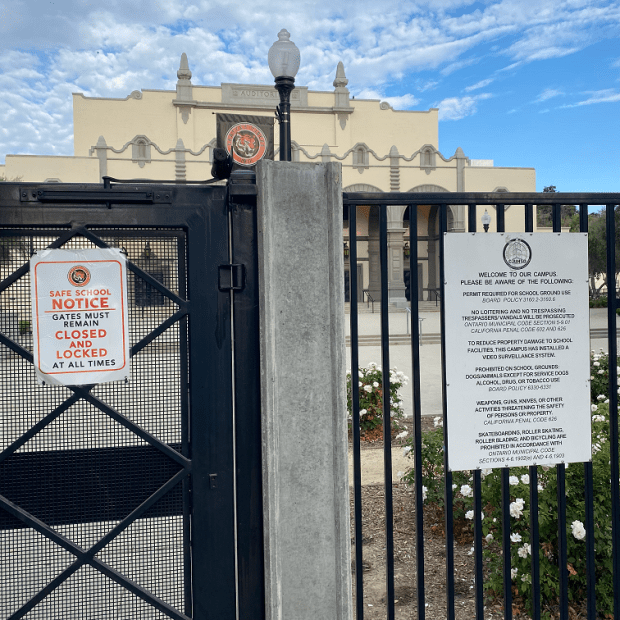
Chaffey High School, Ontario, California.
Another example of a market that uses identity and biometrics is the education market.
Who is allowed on a physical campus? Students? Teachers? Staff? Parents and guardians?
Who is NOT allowed on a physical campus? Expelled students? Fired faculty and staff?
Who is taking that remotely-administered online test?
Bredemarket has written several posts about educational applications for identity and biometrics. You can read all my education writing on Bredemarket’s “Educational Identity” information page.
Health
What, did you expect me to post a Marcus Welby picture here? I’m sharing a real medical professional: Jonas Salk administering the polio vaccine. By Yousuf Karsh, photographer – Wisdom Magazine, Aug. 1956 (Vol 1, No. 8), PD-US, https://en.wikipedia.org/w/index.php?curid=27746788.
Similarly Bredemarket has written several posts about healthcare applications for identity and biometrics, including some that dwell on the unique privacy legislation that covers healthcare. You can read all my health writing on Bredemarket’s “Health” information page. (It’s not called “Health Identity” because healthcare has both identity and technology aspects.)
Another source on finance
By the way, Bredemarket also has a page on “Financial Identity,” but the Prism Project’s content is more comprehensive.
But wait…there’s more!
So this is the point where Ed McMahon intones, “So Acuity Market Intelligence and Bredemarket have identified all five of the markets that benefit from the use of identity and biometrics!”
So let’s look at two more markets that benefit from the use of identity and biometrics-two markets that I know very well from the beginning and end of my time at Printrak/Motorola/MorphoTrak/IDEMIA.
Criminal applications
There are government services, and then there are government services.
I started my biometric journey over 29 years ago when I wrote proposals addressed to law enforcement agencies who wanted to find out who left their fingerprints on a crime scene, and whether the person being arrested was who they said they were.
I don’t know if Maxine Most is going to classify criminal applications as a subset of government services, but there are clear reasons that she may not want to do this.
When you pay your taxes or apply for unemployment benefits, you WANT the biometric system to identify you correctly.
When you steal a car or rob a bank, you do NOT want the biometric system to identify you correctly.
Big difference.
Stadiums, concert halls, and other venues
If someone asked me in late 2019 what my career five year plan was, I would have had a great story to tell.
As I was wrapping up over 24 years in identity and biometrics, I was about to help my then-employer IDEMIA enter a new market, the venue market. This market, which CLEAR was already exploring at the time, replaced the cumbersome ticketing process with the use of frictionless biometrics to enter sports stadiums, concert halls, trade shows, and related venues. Imagine using your face or IDEMIA’s contactless fingerprint solution MorphoWave to enter a venue, enter secure restricted areas, or even order food and beverages.
Imagine the convenience that benefit consumer and venue operator alike.
What could go wrong? I mean, the market was robust, and we certainly would NEVER face a situation in which all the stadiums and all the concert halls and all the trade shows would suddenly close down.
Since early 2020 when a worldwide pandemic DID shut down a lot of things, many identity/biometric firms have entered the venue market with a slew of solutions to benefit fans, teams, and venues alike.
And still more
There are many more vertical markets than these seven, ranging from agriculture to automobile access to computer physical/logical access to construction to customer service (mainly voice) to critical infrastructure to gaming (computer gaming) to gaming (gambling) to the gig economy to manufacturing to real estate to retail to telecommunications to transportation (planes, trains, buses, taxis, and cruise ships).
And all these markets have a biometric story to tell.
Can Bredemarket help you describe how your identity/biometric solution addresses one or more of these markets?
Who are the competitors in the market for my product?
Which features do competitive products offer? How do they compare to the features my product offers?
Which industries do competitors target? How do they compare with the industries my company targets?
Which contracts have the competitors won? How do they compare with the contracts my company has won?
How effective is my company’s product marketing? My website? My social media? My key employees’ social media?
Bredemarket can help you answer these questions.
Types of analyses Bredemarket performs
For those who don’t know, or who missed my previous discussion on the topic, Bredemarket performs analyses that contain one or more of the following:
Analysis of one or more markets/industries for a particular product or product line.
Analysis of one or more (perhaps tens or hundreds) of competitors and/or competitive products for a particular product or product line.
Analysis of a firm’s own product or product line, including how it is marketed.
How Bredemarket conducts its analyses
Bredemarket analyses only use publicly available data.
I’m not hacking websites to get competitor prices or plans.
I’m not asking past employees to violate their non-disclosure agreements.
How Bredemarket packages its analyses
These analyses can range in size from very small to very large. On the very small side, I briefly analyzed the markets of three prospect firms in advance of calls with them. On the large side, I’ve performed analyses that take between one and six weeks to complete.
For the small self-analyses (excluding the very small quick freebies before a prospect call), I deliver these under my Bredemarket 404 Web/Social Media Checkup banner. When I first offered this service in 2020, I had a complex price calculation mechanism that depended upon the number of pages I had to analyze. Now I’ve simplified it and charge one of two flat rates.
Because the larger analyses are of undetermined length, I offer these at an hourly rate under my Bredemarket 4000 Long Writing Service banner. These reports can number 40 pages or more in length, sometimes accompanied by a workbook describing 700 or more competitor products or contracts.
Obviously I can’t provide specifics upon the analyses I’ve already performed since those are confidential to my customers, but I always discuss the customers’ needs before launching the analysis to ensure that the final product is what you want. I also provide drafts along the way in case we need to perform a course correction.
Do you need a market, competitor, or self analysis? Contact me. Or book a meeting with me at calendly.com/bredemarket to talk about your needs (and check the “Market/competitor analysis” check box).
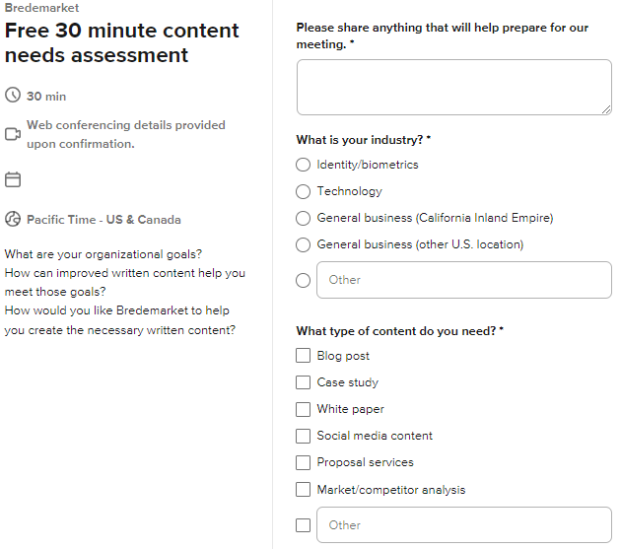
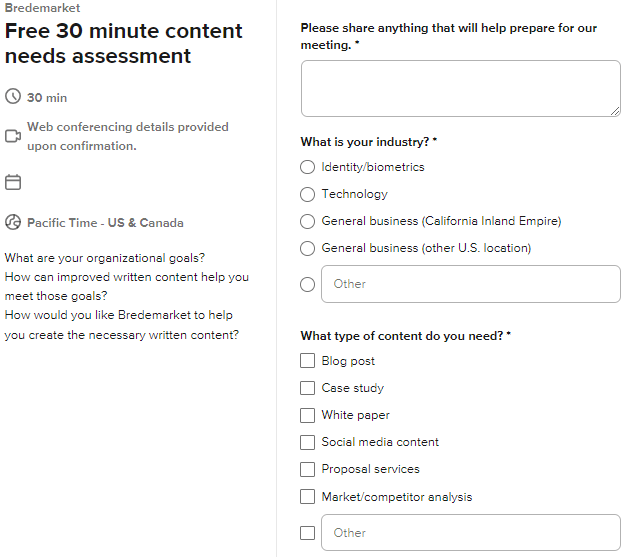
If you book a free 30 minute meeting with Bredemarket, you’ll now find an additional option in the “What Type of Content Do You Need?” section: Market/competitor analysis. I’ve done these for years, but never added the option to the form.
My analyses ONLY use publicly available information that is NOT subject to NDA. So you won’t get access to the analyses I’ve performed for other clients, and they won’t get access to the analysis I prepare for you.
While I primarily provide these analyses in the identity/biometrics industry, I’m open to discussing analysis needs in other industries.












 Bredemarket