In my circles, people generally understand ‘biometrics’ to refer to one of several ways to identify an individual.
But for the folks at Merriam-Webster, this is only a secondary definition of the word “biometrics.” From their perspective, biometrics is primarily biometry, which can refer to “the statistical analysis of biological observations and phenomena” or to “measurement (as by ultrasound or MRI) of living tissue or bodily structures.” In other words, someone’s health, not someone’s identity.
Fun fact: if you go to the International Biometric Society and ask it for its opinion on the most recent FRVT 1:N tests, it won’t have an answer for you.
So Abbott salespeople, real or imagined, won’t be interested in what I’ve been doing for the last 30 years. ‘Cause you know sometimes words have two meanings.
But those of you who use biometrics (and other factors) for individualization WILL be interested. Click on the image to find out more.
Drive content results with Bredemarket Identity Firm Services.
Perhaps I was a little agitated or excited this afternoon.
Perhaps I was a little agitated because five (or maybe more; I lost count) scammers had sent me LinkedIn DMs when they gravitated to my #opentowork LinkedIn banner…like flies speeding to a carcass. (Which gave me an excuse to write about identity management on LinkedIn.)
Or perhaps I was a little excited because a Never Search Alone participant had shared an identity management product marketing position with me.
The bot says hello
After applying for said job, I was reading the company’s website to learn about its identity management product when the company’s bot kept on messaging me.
At 2:30 pm Chat Bot says: Hello, this is an AI Rep from [COMPANY]. If you need any assistance, feel free to ask.
At 2:30 pm Chat Bot says: Saw that you’re interested in our SaaS management and identity governance software. Any questions?
Being the curious type (after all, I worked for IDEMIA), I wondered how the chat bot would deal with what I REALLY wanted to ask about.
Not about a demo.
Not about the company’s recent funding round. (Series B, $35 million.)
At 2:47 pm I say: With 30 years’ identity experience and 9 years as a PMM, I just applied for your Sr PMM Identity Management role. So the only question that I have is when you will interview me.
And yes, my assumption that the company would immediately drop everything and interview me may have been a little overconfident. But it’s better than imposter syndrome.
And after all, this was just a bot. I assumed that the bot would be completely confused by my question, so no harm would come from overconfidence.
You know what they say about people who assume?
The bot exceeds expectations
At 2:47 pm Chat Bot says: Thanks for applying for the Sr PMM Identity Management role! Could you provide your email address so we can follow up on your application status?
One note here: the bot parroted my response back to me. The company’s job description does not include a job title with the “PMM” acronym.
Regardless, I was pleasantly surprised. The bot was trained to respond to job applicants. So I provided the email address that I used for my job application.
The bot does not meet expectations
That’s when I was UNPLEASANTLY surprised.
At 2:47 pm Chat Bot says: Thank you for your interest. Please provide a business email address so we can follow up on your application status.
Apparently the training wasn’t thorough enough. Think about it; if you’re an individual applying for a job, why would you apply with a “business email address”? Which one? From your current employer? THAT is not a good idea.
But as it turns out, I DO have a business email address-the one for Bredemarket. So I entered that, even though that email address does not appear anywhere on the job application that I had just submitted.
At 2:47 pm Chat Bot says: Thank you for providing your email. Our team will review the conversation and follow up if necessary. How else can I assist you today?
So it will be interesting to see whether the company contacts me at both of my email addresses.
(Post image generated at craiyon.com)
Postscript for those who don’t click on every link in a Bredemarket post
You missed Brian May’s collaboration with the Weebl folks.
This resonated with me because in mid-September I spent some Instagram time thinking about the word “flash” (as in how fast a human can create content).
This video is, in marcom words, “for immediate release.”
Proven.
It was fun to convert my Never Search Alone “candidate-market fit” text statement into a video with AI-generated music.
The text version:
“Proven Senior Product Marketing Manager who drives growth. Expert in identity/biometrics. Seeking an individual contributor role on a co-creative team delivering exceptional business results.”
Except that’s not the COMPLETE version.
To see the full version, you’ll have to watch the video. Then you will know why I had to change one of my hashtags this month.
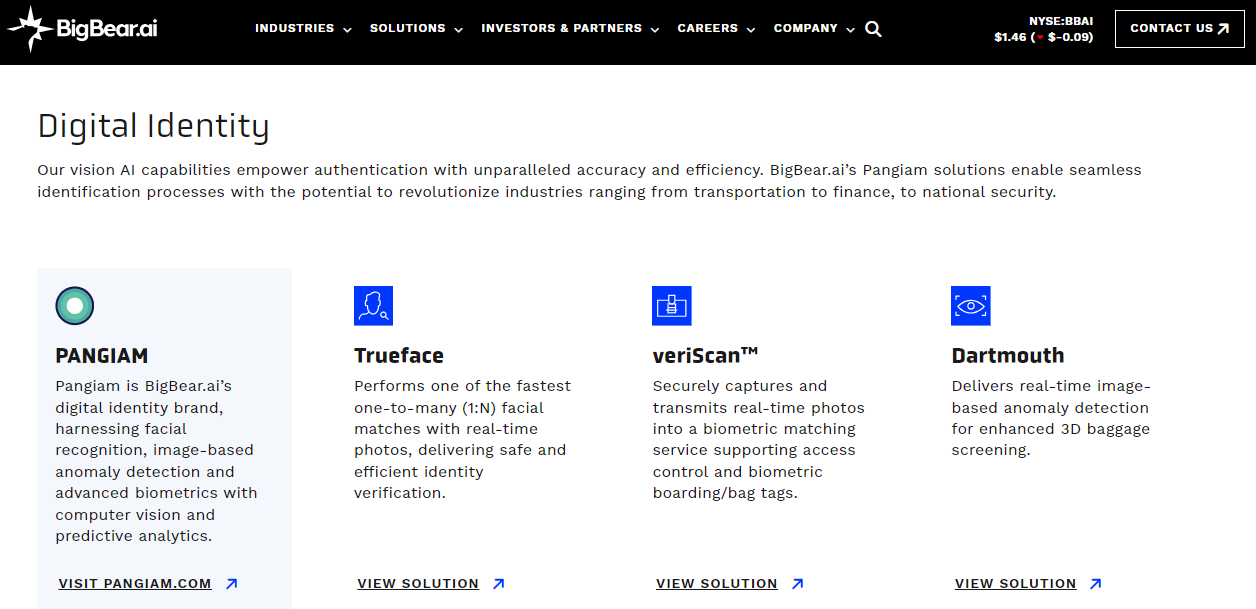
Pangiam is BigBear.ai’s digital identity brand, harnessing facial recognition, image-based anomaly detection and advanced biometrics with computer vision and predictive analytics.
Trueface Performs one of the fastest one-to-many (1:N) facial matches with real-time photos, delivering safe and efficient identity verification.
veriScan™ Securely captures and transmits real-time photos into a biometric matching service supporting access control and biometric boarding/bag tags.
Dartmouth Delivers real-time image-based anomaly detection for enhanced 3D baggage screening.
All these products, including Dartmouth, were developed before the BigBear.ai acquisition. (Where is Pangiam Bridge?)
To install iOS 18 on my older 64GB IPhone I had to offload or outright remove many apps, including most of my game apps.
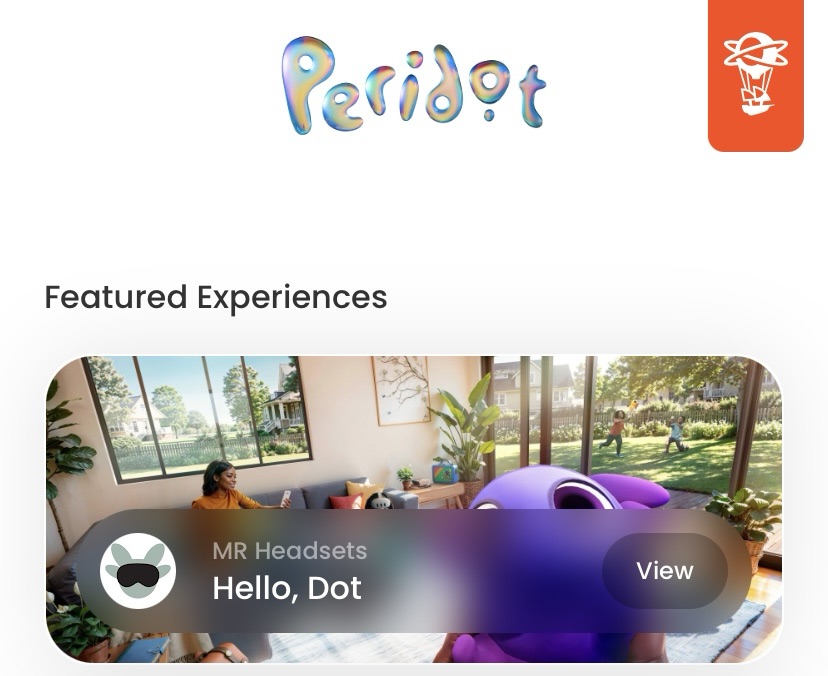
One of those game apps was Niantic’s most recent location-based app, Peridot. Like many other Niantic games, Peridot encourages outdoor activity—and heavy smartphone use while playing the game.
Today was the first day that I took my usual Saturday morning walk WITHOUT Peridot on my phone. Ordinarily, my phone desperately needs a charge at the end of my walk. Today, despite filming a number of video clips for a personal October video, I returned home with over 75% battery remaining.
But with a paucity of virtual sandwiches, flowers, and tomatoes.
My current two categories for go-to-market collateral, “external” and “internal,” are not sufficient. I want to fix that, but I’m still thinking through things, such as what to call the third category. As of this moment, my best option is “intrinsic,” based upon my conversations with my good buddy Gemini.
My current two categories for go-to-market collateral
Based upon go-to-market efforts that stretch back a decade (even before I formally became a Product Marketing Manager), I have traditionally divided go-to-market output into two categories.
22 types of content Bredemarket can create.
External content for your hungry people (target audience), such as articles, blog posts, social media, case studies, white papers, and proposals. This content goes to CEOs, marketers, engineers, IT staff, and many others at the companies that buy from you.
Internal content for the people in the company who talk to your hungry people, such as battlecards, sales playbooks, and scripts for trade show demonstrations. This content goes to salespeople, marketers, product managers, customer success folks, and many other employees and contractors.
Some content can either be external or internal, depending upon the audience.
Simple and straightforward, right?
My emerging third category
But during a current go-to-market effort for a client, I realized that these two categories are insufficient, since both the client and I are creating content that will never been seen by either the external clients or the internal clients.
I’ll give you two heavily redacted and anonymized examples for a #fakefakefake machine.
AI-generated by Google Gemini.
Bob wrote a Word document that listed the pain points that MegaCorp’s client encounter when trying to put green round widgets on their end customers’ beanie caps.
Judy created a picture with stick figures that showed how clients can use the MegaCorp WidgetPlacer 2000 for their beanie cap production needs.
Bob and Judy (names from this song) are NEVER going to show that document or that picture to the customers, or even to the company’s own account managers.
So why create it?
Because they will be the initial guides as the go-to-market team creates all the other external and internal collateral for the effort.
These foundation documents are a critical part of the go-to-market effort. Without them, the subsequent go-to-market collateral will be a contradictory mishmash of stuff, and you’ll need to undertake a lot of effort to align all the content after the fact.
And the third category is…
…well, I don’t know what to call this third category yet.
“Internal internal content” seems a bit silly.
“Foundational content” seems a bit grandiose.
“Bob and Judy” content seems like an independent TV show.
If we call the first category “external” marketing content for customers, and we call the second category “internal” marketing content for employees, then what do we call the third category which is only for the people who create marketing content for customers and employees?
Gemini’s first batch of answers:
Internal Marketing Content for Marketing Teams
Marketing Team Communication
Marketing Team Resources
Internal Marketing Tools
Brevity is NOT a strength of generative AI. Even when I specifically instructed Gemini to provide single word responses, I got hyphenated words:
Intra-marketing (combining “intra” for within and “marketing”)
Meta-marketing (implying a higher-level perspective on marketing)
Team-marketing (emphasizing its focus on the marketing team)
The fatal flaw is that not all the people on a go-to-market team are marketers. (This is my fault because of the prompt I wrote.)
And if I lop off the last part of each compound phrase, two of my options are “team” (too generic) and “meta” (NO).
And “intra” is too close to “internal internal.” But perhaps it’s a start. So I asked Gemini for words similar to “intra-” and got this response:
The prefix “intra-” means “within,” “inside,” or “inner.” Here are 12 words that convey a similar meaning:
Inward: Turning or moving toward the inside.
Internal: Existing or occurring within something.
Inner: Situated or located within.
Intrinsic: Belonging to or inherent in the nature of something.
Interior: The inside part of something.
Intramural: Occurring within a school or institution.
Intranet: A private computer network within an organization.
Intravenous: Administered into a vein.
Intracranial: Situated or occurring within the skull.
Intracellular: Existing or occurring within a cell.
Intralingual: Relating to or occurring within a language.
Intrajugular: Situated or occurring within the jugular vein.
I kind of like “intrinsic,” but I’ll sleep on it.
In the meantime, what would YOU call the third category?















 Bredemarket