I didn’t attend the actual festivities, and the pre-produced video below doesn’t include the event itself, but it’s a nice mix of old and new.
(Well, without Amy’s Farm, to no one’s surprise.)

Identity/biometrics/technology marketing and writing services
I didn’t attend the actual festivities, and the pre-produced video below doesn’t include the event itself, but it’s a nice mix of old and new.
(Well, without Amy’s Farm, to no one’s surprise.)
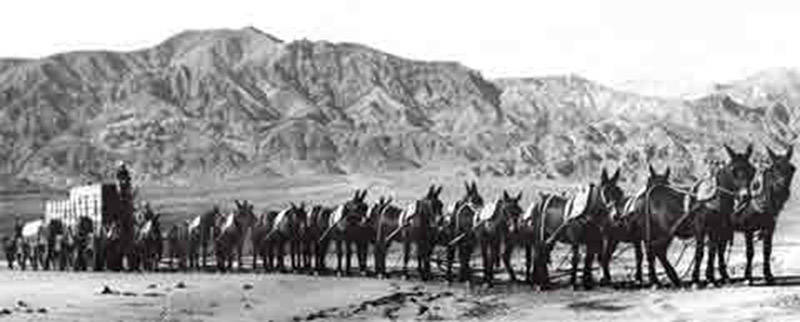
Even people who live in Ontario, California may not know the story of the “mule car” in the median of Euclid Avenue at B St. You can see the mule car behind me in the “Cloudy days at the mule car” video below.
(And yes, sometimes the sun DOESN’T shine in Southern California.)
There are four things about the mule car that we know as fact.
The single-car train line connected Ontario, North Ontario (North Ontario was later known as Upland), and San Antonio Heights (near 24th and Mountain today), and benefited local residents by providing an easy way to travel between the three establishments. As the Historical Marker Database website notes, more and more people settled on the master-planned Euclid Avenue in the years after Ontario was established in 1882, and the train line provided an easy way to travel north and south.
For those who are not familiar with San Antonio Heights, Upland, or Ontario, the northernmost community (San Antonio Heights) is near the mountains, and (according to the Electric Railway Historical Association) there is an elevation drop of 1200 feet over the ten miles from San Antonio Heights to Ontario.
Of course, from the southern perspective of Ontario (see this Pacific Electric Railway page for a picture of the railway looking north), there is an increase in elevation of 1200 feet, which is why the mules were needed to pull the train up the hill. The uphill climb took about an hour.
Once the train reached San Antonio Heights and began its descent back to Ontario, the mules were no longer needed to pull the car.
[O]n the return trip the motive power climbed aboard a tiny trailer and coasted down with the car.
From http://www.erha.org/peeosah.htm
The downhill descent for the passengers (and the mules) took only 20 minutes. We’ll return to this later.
Since this is the Bredemarket blog, I can’t let this story pass without discussing the benefits of this system:
(For additional information on benefits, click here.)
After several years, the train was electrified and the mules were no longer needed to power the train. This is when the train celebrated its heyday.
A thirty-acre amusement park was built by the company of San Antonio Heights, with a powerhouse adjoining. Heavy crowds were transported along Euclid Ave. in the early days, for the line connected Ontario with Upland, provided connections between the (Southern Pacific) Station at Ontario and the Santa Fe Station at Upland, and cared for the thongs bound for pleasure-seeking at the Park.
From http://www.erha.org/peeosah.htm
Unfortunately, I haven’t been able to find any additional information about the original 30-acre amusement park. Today’s “San Antonio Park” has ball fields, BBQ, picnic tables, a picnic shelter/gazebo, a playground, and restrooms, plus the historical San Antonio Heights Railroad Company Waiting Station. Fun, but not THAT fun.
And, of course, this provided benefits to various stakeholders:
(For additional information on benefits, click here.)
Ownership of the train line passed from the Ontario Electric Company to the Pacific Light & Power Corporation in 1908, and eventually to Southern Pacific in 1912, where it became the Pacific Electric Ontario & San Antonio Heights Line.
Eventually this rail line, like all rail lines in Southern California, ran into hard times because of our growing adoption of motor bus and automobile travel.
Line cut back to La Cima on 4 July 1924; on 1 November 1924, cut back to Upland. On 6 October. 1928, Ontario-Upland Line abandoned…. In the abandonment hearing in 1928, PE produced records which tended to show that this line was hopelessly incapable of earning even operating expenses.
From http://www.erha.org/peeosah.htm
If you visit the mule car at Euclid and B and wonder at how well-preserved it is, that’s because this isn’t the original 1887 mule car, which was lost to the winds of history. This is a replica, built in 1956-1957 and restored in approximately 1974. As the inscription on the plaque notes:

In 1956, William Richardson headed a group of citizens to have a replica of the original Mule Car constructed for the city’s 75th anniversary in 1957. With donated funds “a couple of prop guys from the MGM Studios in Hollywood” recreated it, working from old photos. After the 1957 Mule celebration, the Mule Car was stored in the City Yards, abandoned and forgotten.
In memory of their son Donald, who worked for the City of Ontario, Kip and Elinore Carlson and their friends restored the Mule Car and constructed this facility. On April 28, 1974, this Mule Car was dedicated “to the whole community.”
From https://www.hmdb.org/m.asp?m=37512
There is one thing about the mule car that may or may not be true, but it makes for a good story. Both hmdb.org and erha.org, as well as other sites such as our local Best Western website, tell the story of what happened to the mules after the train route was electrified and the mules were no longer needed.
According to the sources, the mules were sold to a farmer, who put the mules to work on his farm. This worked out for the farmer…half of the time. When the mules were required to plow uphill, they did so with no complaints.
However, according to the story, the mules refused to work downhill.
They expected a ride for the downhill part.
The U.S. Census provides “quick facts” about U.S. jurisdictions, including business facts. While the business facts are ten years old, they still provide an indication of business health.
For Ontario, the U.S. Census Bureau has documented over 14,000 firms, over $4 billion in manufacturers shipments, and over $4 billion in retail sales. These figures have presumably increased in the last ten years.
If you own or manage one of these thousands of businesses, and you need to let other businesses know about your offerings, perhaps you should turn to the Ontario, California content marketing expert. Bredemarket can assist your firm with the following:
If I can help your business, or if you have further questions about Bredemarket’s B2B content creation services, please contact me.
I don’t know if this is true in other parts of the country, but catalytic converter theft is rampant in the Ontario, California area. Even if you capture the license plate of the alleged thief, you still have to find the car. Which is where automated license plate recognition, or ALPR, comes in handy.
This was released on the Ontario Police Department’s Nixle account. (A separate press release on another event clarifies that Ontario uses Flock cameras for ALPR investigative leads.)
Ontario, CA – Ontario Police arrested two suspects in connection with multiple catalytic converter thefts.
On Friday, April 8th, 2022, at 5:37 P.M., Ontario Police officers received an alert from an automated license plate reader (ALPR) of a vehicle suspected to be involved in catalytic converter thefts. Officers responded to the area of Milliken Avenue and 4th Street where they located the suspect vehicle occupied by a female passenger in an adjacent parking lot.
While conducting surveillance, officers observed a male lurking between cars before returning to the suspect vehicle and attempting to drive away. Officers stopped the suspects and recovered five catalytic converters, an electric saw, and a floor jack. Officers confirmed two of the catalytic converters were missing off a vehicle where the suspects were parked. Both suspects were arrested for grand theft, felony vandalism, and conspiracy to commit a felony.
The suspects have been identified as Carlos Gerardo Morales (age 25) and Alexis Lena Sanchez (age 25). Both suspects are from San Bernardino.
The Ontario Police Department has partnered with Flock Safety to place multiple ALPR cameras at strategic locations throughout the city. This is just one example of how OPD is using technology to deter and reduce crime throughout the city.
Anyone with information about this incident is asked to contact the Ontario Police Department at (909) 986-6711. Information can also be reported anonymously by calling WE-TIP at (800) 78-CRIME or online at www.wetip.com
Address/Location
Ontario Police Department, California
2500 S Archibald Ave
Ontario, CA 91761
Contact
Emergency: 9-1-1
Non-emergencies: 909-395-2001
I recently learned that Bill Fries passed away earlier this month. You may not recognize his name, but people of a certain age are very familiar with his voice.
Fries, an advertising executive, provided the voice of the character “C.W. McCall” in the 1970s song “Convoy,” which dealt with truckers using citizens band (CB) radio to communicate with each other about driving conditions and “smokeys” (police officers enforcing the then-universal 55 mph speed limit). The music was provided by Chip Davis, famous today for Mannheim Steamroller.
Even today, truckers are an essential part of goods distribution in the United States.
Across the United States, more than 70% of all goods used in our daily lives—from food to manufactured products—are transported to our stores and homes by trucks. As the nation’s demand for goods continues to reach record levels, our cities are facing an increase in congestion, noise, and air pollution.
From https://www.lightsproject.com/
The statement on trucking above was taken from the Volvo LIGHTS website. LIGHTS is an acronym for Low Impact Green Heavy Transport Solutions, where “Low Impact” aims to reduce impacts on congestion, noise, and air pollution.
How? Via electricity. Specifically, via Volvo’s VNR Electric truck.

Regardless of how you feel about the good and bad points of fossil fuels, battery power, solar power, nuclear power, coal power, etc., battery power is a part of our transportation solutions. The Volvo LIGHTS project lists five community benefits from using electric trucks. All five are listed here, but I’m only going to highlight one of them.
Less Congestion from being able to make deliveries at night with much quieter truck engines
From https://www.lightsproject.com/community-benefits/
This particular benefit addresses both congestion and noise, and the other four benefits address these two impacts as well as the impact of air pollution.
Volvo LIGHTS is performing several proofs of concept, three of which are taking place in the Inland Empire.
From Volvo LIGHTS (additional details here, including the vehicles deployed and the charging infrastructure):
TEC Equipment owns the West Coast’s largest network of full service, heavy-duty truck dealerships. Through the Volvo LIGHTS project, they introduced a comprehensive sales and service strategy for battery electric trucks and provided fleet operators the opportunity to lease battery electric trucks from TEC Equipment for real-world trials.
In August 2021, TEC Equipment was named Volvo Trucks’ first EV Certified Dealer in North America, indicating that their maintenance and repair crew at their Fontana dealership is fully trained and equipped to meet the service needs of fleets operating these advanced zero-emission trucks.
Back in 2020, TEC Equipment commented on the initiative on its website:
“We are proud that our Fontana dealership will be first in in North America to pilot the Volvo VNR Electric model,” said David Thompson, president and CEO of TEC Equipment. “Through the Volvo LIGHTS project, we are gaining valuable hands-on experience for our drivers and maintenance staff to ensure that we are well prepared to support the widescale deployment of these advanced, zero-emission trucks throughout the Southern California freight corridor.”
From Volvo LIGHTS (additional details here):
Dependable is demonstrating the ability for battery electric trucks and equipment to successfully transport goods in its daily routes, as well as at its warehouse facilities. To ensure the ongoing reliability of the trucks and maximize uptime, DHE is road testing Volvo’s remote diagnostic onboard technology, which will alert TEC Equipment in advance when its battery electric trucks need maintenance.
The onsite smart chargers use Greenlots’ cloud software to integrate with Volvo’s truck telematics to balance the needs of the vehicle, facility, and utility grid. To further mitigate grid impacts and energy costs, DHE also integrated onsite solar panels and hopes to garner the benefits of second-life batteries.
In this Vimeo, Dependable’s drivers identity other benefits of electric trucks, including an increased ability to hear emergency vehicles, as well as a decrease in smelly fuel-saturated clothes after your shift is over.
Incidentally, the references to “Greenlots” on the Volvo LIGHTS website for Dependable (and for NFI, below) are outdated. Shell acquired Greenlots in 2019, which now does business as Shell Recharge Solutions. Shell isn’t putting all of its eggs in the fossil fuels basket.
From Volvo LIGHTS (additional details here):
NFI is demonstrating the ability for battery electric trucks and equipment to successfully transport goods in its daily routes, as well as at its warehouse facilities. Having confidence that the trucks can reliably complete their routes was critical for NFI. Their fleets are road testing Volvo’s self-learning driveline control algorithms enabling drivers to optimize energy usage and range.
The onsite smart chargers use Greenlots’ cloud software to integrate with Volvo’s truck telematics to balance the needs of the vehicle, facility, and utility grid. To further mitigate grid impacts and energy costs, NFI continues to explore the viability of onsite solar panels.
NFI is working with Volvo, Daimler, and others on an ambitious project to “[o]perate the first 100% zero-emission drayage fleet in the U.S. with the deployment of 60 battery-electric tractors.” NFI wants to achieve this by 2023.
These and other initiatives allow trucking companies to realize the benefits described above, from improved distribution to nicer smelling uniforms. The initiatives also allow flexibility should our diesel supplies be threatened.
And the Inland Empire, with its extensive warehousing footprint, provides an ideal proving ground to see whether these technologies will work in practice.
But I don’t know that electric trucks will give us any good songs.
A minor refresh to what I wrote on March 31, including an updated brochure.
Here’s the text I recently added to my home page.
Bredemarket presently offers its services to identity/biometrics, technology, and general business firms, as well as to nonprofits. I offer my services to firms in my hometown of Ontario, California, as well as firms in Eastvale, Fontana, Montclair, Rancho Cucamonga, Upland, other cities of the Inland Empire West, and throughout the United States.
From https://bredemarket.com/
This post concentrates on the services that Bredemarket can provide to businesses in my local area. Read on if you own a small, arty business in the Emporia Arts District of Ontario…

…or perhaps a larger, less arty business north of Holt in Ontario, or perhaps even a business in one of the other cities that I mentioned, or one of the ones I didn’t (sorry Narod).
Even if you don’t count sole proprietors (such as myself) or freelancers, there are somewhere around 7.7 million businesses in the United States. (This figure is from 2016; I’m not sure if it’s gone up or gone down in the last five years.) Now if you include sole proprietors in the total, then you’re talking about 32 million businesses. (This particular number may have actually increased over time.)
Obviously I can’t target them all. Well, I could try, but it would be a little ridiculous.
So what if I took a subset of those 32 million businesses and tried to see if Bredemarket could serve that subset?
When you want to market to a particular group, you develop a persona that represents that group. You can then develop a profile of that persona: the persona’s needs, aspirations, and expectations; the persona’s underlying goals and values; and perhaps some other elements. The persona may be developed via extensive research, or perhaps via…a little less quantification.
When I initially looked at this topic last September, I concentrated on a particular persona, but my thoughts on this topic have evolved over time. While I will still serve artists as I initially proposed last September, I’m now thinking of other businesses that can best use the type of content that I provide.
For example, the business may be an incorporated business that is based on the Inland Empire West, provides its products or services to customers in the local area, provides excellent service that is loved by its existing customers, and needs to get the word out to new potential customers by creating content that can be downloaded from a company website, shared via a company social media account, or handed out at a trade show or other in-person event.
Regarding the values of this particular persona, you can probably already deduce some of them based upon the customer love for the company.
But what does this business need in terms of types of content? For my example, these businesses are ones that need customer-facing content such as the following:
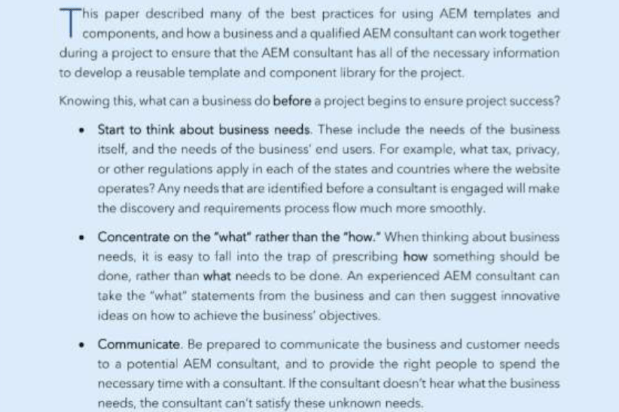
These types of documents are more valuable to some businesses than to others. Your average convenience store has little need for a 3,000 word white paper. But perhaps your business has this sort of need.
When I originally wrote this last September, I started off by discussing my two standard packages, based on word length. But now that I’ve thought about it a bit more, there are some questions that you need to ask BEFORE deciding on the content length. (We’ll get to content length later.)
(Owen Lovejoy) “How long should a man’s legs be in proportion to his body?”
(Abraham Lincoln) “I have not given the matter much consideration, but on first blush I should judge they ought to be long enough to reach from his body to the ground.”
Thomas Lowery, quoted at https://thelogcabinsage.com/how-long-should-a-mans-legs-be-and-2-other-lincoln-stories/

So how far away is the ground? Let’s ask some other questions first before we determine the answer to content length.
Before I create a single word, I start by asking you some questions about your content to make sure our project starts on the right foot. (Even though I am left-footed.)

Once I’ve asked you these and other questions (such as a potential outline), we will both have a good idea of how long the final piece needs to be.
The length of the content also dictates the length and complexity of the review process.
Once we have a good idea of the content length, there are three options that we can pursue to actually create the content.
| If your content consists of 400 to 600 words, then I create the content using the process detailed in my Bredemarket 400 Short Writing Service. https://bredemarket.com/bredemarket-400-short-writing-service/ This has two review cycles with up to three days per review cycle. |  Bredemarket 400 Short Writing Service |
| If your content is longer, say 2800 to 3200 words, then I create the content using a similar (but more detailed) process through my Bredemarket 2800 Medium Writing Service. https://bredemarket.com/bredemarket-2800-medium-writing-service/ This has three review cycles with up to seven days per review cycle. |  Bredemarket 2800 Medium Writing Service |
| If your content falls between these two lengths, or is longer than 3200 words, or needs a more rapid delivery time, we’ll talk and come up with a solution. | (And we’ll even come up with a spiffy name if you like) |
If I can help your business, or if you have further questions about Bredemarket’s B2B content creation services, please contact me.
Another Friday, another all-day event.

FTR FST (“future fest”), sponsored by 4th Sector Innovations, SwoopIn, and several other organizations, will be held on Friday, November 12 in downtown Ontario, California. While I’m primarily going for the “professional development” part, FTR FST also features creative expression (including food trucks, which appropriately fall into the “creative expression” category), collaboration, and a tech showcase.
The professional development schedule includes the following sessions, among others:
Biomimicry is the practice of learning from and emulating life’s genius to create more efficient, elegant, and sustainable designs. It’s a problem-solving method, a sustainability ethos, an innovation approach, a change movement, and a new way of viewing and valuing nature. In practice it’s dedicated to reconnecting people with nature, and aligning human systems with biological systems.
As such, our aim is to connect a spectrum of innovation where human and biological system designs interact together seamlessly. Our team offers education and consulting to apply biological insights to systematic sustainability challenges. Our collaborative partnerships and services support interdisciplinary dialogue across industry sectors and regions, while reconnecting all of us to the local ecosystem that supports us.
OK, at this point some of you are saying to yourselves, “THAT kind of conference.”

But frankly, there’s just as much value in approaching problems from a futuristic sustainability view as there is in approaching problems from a more traditional program management process (or Shipley process, or whatever), or even from a more old school sustainability view as espoused by Broguiere’s and the late Huell Howser.

See, it all ties together. After all, the new school 4th Sector Innovations is less than a mile from the decidedly old school Graber Olive House (featured in one of Howser’s “Louie, take a look at this!” TV shows.)
I seem to have strayed from my original topic…
Anyway, let’s refocus and return to some of the other professional development sessions at this Friday’s FTR FST.
After 3:00 pm, FTR FST transitions to less intensive sessions. Bring the kids! The complete schedule can be found here.
You can register for FTR FST here. Oh, and one new wrinkle: attendance at the professional development sessions is now FREE, thanks to the event sponsors.
FTR FST will be at 4th Sector Innovations, 404 N Euclid Avenue in Ontario.

My local area is undergoing a transformation, with a number of new businesses appearing in the area. Oddly enough, I keep on seeing two distinctly different types of businesses appearing here.
Over the last couple of years, a number of coffee shops have opened in downtown Ontario (California, not Canada). I’m unintentionally going to leave many of them off this list, but a few of the new coffee shops include Mestiza Cakehouse and Cafe, Special Needz Coffee (with a second location inside 4th Sector Innovations), and Starbucks.
At the same time, a number of new hair stylists and barber shops have opened in downtown Ontario. Trust me, there’s a bunch of them.
I don’t know if this is public knowledge (it’s been discussed at the Ontario IDEA Exchange and other B2B forums), but downtown Ontario is even on track to have an establishment that combines the two business types. (Of course, a few of you have already figured out who I’m talking about.)
I guess that’s real life.
If you have a business and need to stand out from the crowd:




 Bredemarket