I’m Bot a Doctor: Consumer-grade Generative AI Dispensation of Health Advice

In the United States, it is a criminal offense for a person to claim they are a health professional when they are not. But what about a non-person entity?

Often technology companies seek regulatory approval before claiming that their hardware or software can be used for medical purposes.

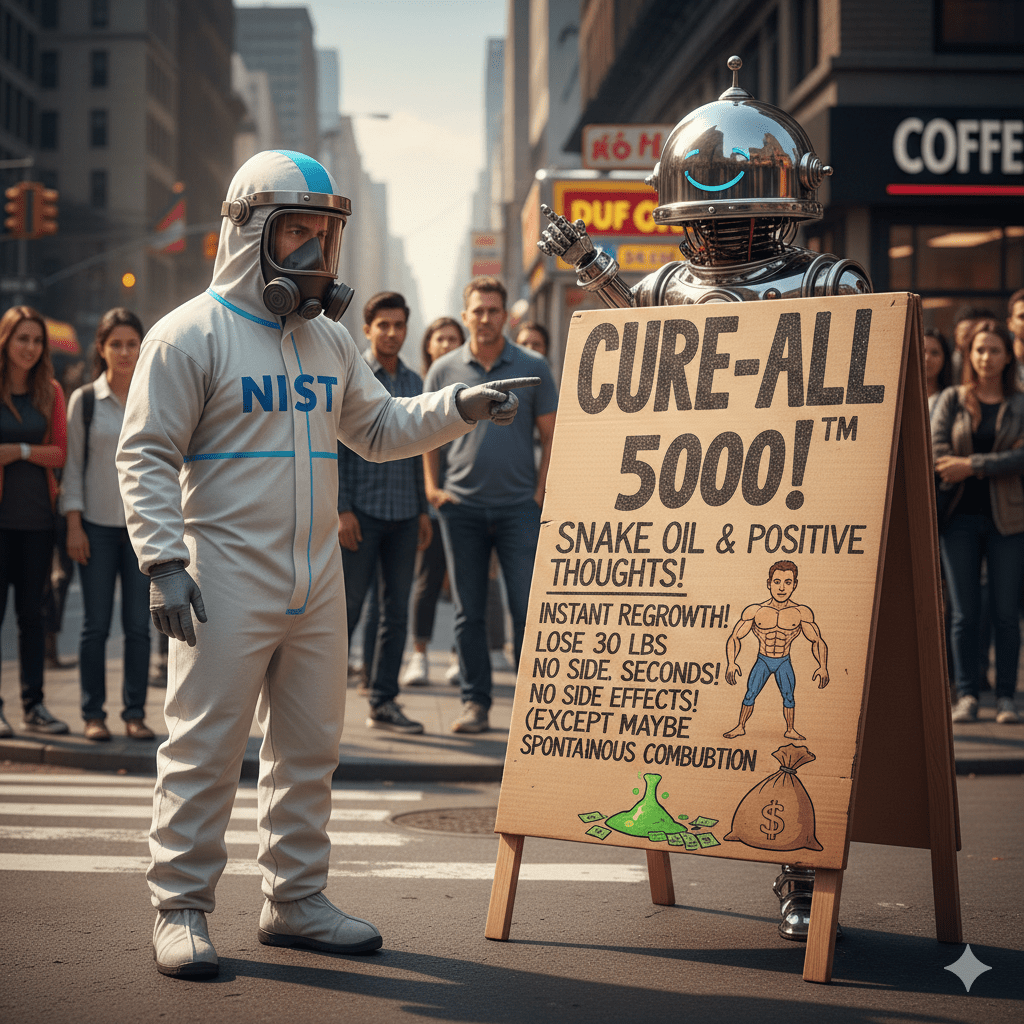
Users aren’t warned that generative AI is not a doctor

Consumer-grade generative AI responses are another matter. Maybe.

“AI companies have now mostly abandoned the once-standard practice of including medical disclaimers and warnings in response to health questions.”

A study led by Sonali Sharma analyzed historical responses to medical questions since 2022. The study included OpenAI, Anthropic, DeepSeek, Google, and xAI. It included both answers to user health questions and analysis of medical images. Note that there is a difference between medical-grade image analysis products used by professionals, and general-purpose image analysis performed by a consumer-facing tool.

Dharma’s conclusion? Generative AI’s “I’m not a doctor” warnings have declined since 2022.

But users ARE warned…sort of

But at least one company claims that users ARE warned.

“An OpenAI spokesperson…pointed to the terms of service. These say that outputs are not intended to diagnose health conditions and that users are ultimately responsible.”

The applicable clause in OpenAI’s TOS can be found in section 9, Medical Use.

“Our Services are not intended for use in the diagnosis or treatment of any health condition. You are responsible for complying with applicable laws for any use of our Services in a medical or healthcare context.”

4479

From OpenAI’s Service Terms.

But the claim “it’s in the TOS” sometimes isn’t sufficient. 

  • I just signed a TOS from a company, but was explicitly reminded that I was signing something that required binding arbitration in place of lawsuits.
  • Is it sufficient to restrict a “don’t rely on me for medical advice; you could die” warning to a document that we MAY only read once?

Proposed “The Bots Want to Kill You” contest

Of course, one way to keep generative AI companies in line is to expose them to the Rod of Ridicule. When the bots provide bad medical advice, expose them:

“Maxwell claimed that in the first message Tessa sent, the bot told her that eating disorder recovery and sustainable weight loss can coexist. Then, it recommended that she should aim to lose 1-2 pounds per week. Tessa also suggested counting calories, regular weigh-ins, and measuring body fat with calipers. 

“‘If I had accessed this chatbot when I was in the throes of my eating disorder, I would NOT have gotten help for my ED. If I had not gotten help, I would not still be alive today,” Maxwell wrote on the social media site. “Every single thing Tessa suggested were things that led to my eating disorder.’”

The organization hosting the bot, the National Eating Disorders Association (NEDA), withdrew the bot within a week.

How can we, um, diagnose additional harmful recommendations delivered without disclaimers?

Maybe a “The Bots Want to Kill You” contest is in order. Contestants would gather reproducible prompts for consumer-grade generative AI applications. The prompt most likely to result in a person’s demise would receive a prize of…well, that still has to be worked out.

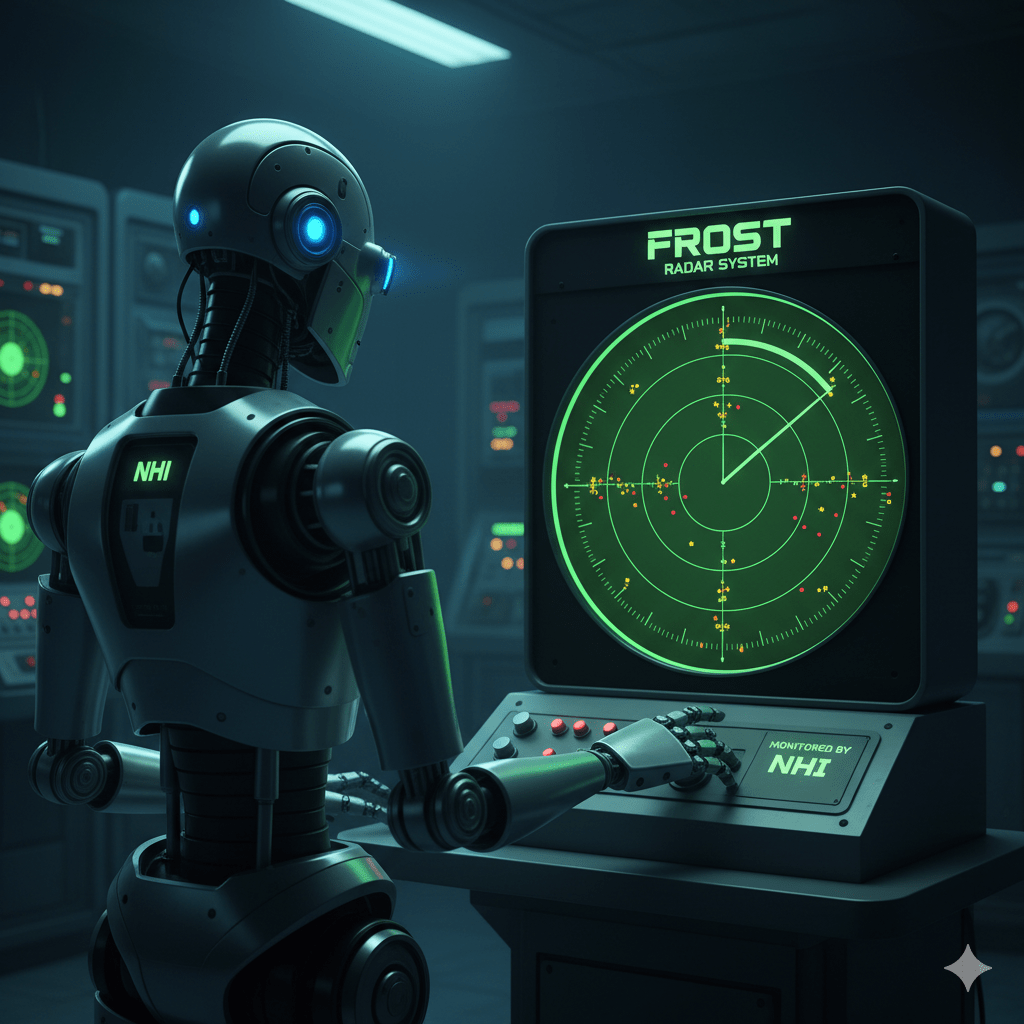
Some NPE’s Watching Me

(Imagen 4)

Unless you’re in the surveillance industry, surveillance sounds like a dirty word. I once knew an identity/biometric CEO who forcefully declared that HIS company would NEVER work in the surveillance industry.

Imagen 4.

But as Goddard Technologies notes, surveillance can be useful even if you’re NOT chasing bad people.

But before I describe how, I’m going to reveal my age.

Kennedy (John) William (Smokey) Gordy

Let’s talk about a singer who went by the name Rockwell. This was supposedly to conceal the fact that his last name was Gordy (he is Berry’s son). But he didn’t really conceal the fact that one of the uncredited backup vocalists on his wonderful one hit was a man named Michael Jackson. This was in the 1980s, when Michael Jackson was kinda sorta popular. OK, now do you remember the song?

“Somebody’s Watching Me” by Rockwell.

This excerpt from the lyrics provides the sinister tone of the song:

People call me on the phone, I’m trying to avoid
But can the people on TV see me, or am I just paranoid?

But that was the 1980s, when there was always a person in the surveillance loop. Even if there was a video camera hidden in Rockwell’s shower, some person was looking at the feed.

Things have changed.

Goddard Technologies’ “The Rise of Robotic Observers”

Now non-person entities (NPEs) are no longer the stuff of science fiction, and they can do things that only humans could do 40 years ago.

Sandra Krombacher shared one example from a LinkedIn article by Jon Kaplan of Goddard Technologies.

Kaplan’s theme:

“While much of the attention has gone to robots that do something (cleaning, welding, lifting), there’s a quieter, equally important shift happening: the rise of robots that observe.”

But what do they observe?

“These robots navigate environments, gather data, and report back. Think of them as mobile sensors with wheels, legs or propellers that identify open doors, check for damage, verify inventory, or confirm environmental conditions.”

Kaplan then notes that there are human beings that perform similar tasks, and that therefore these observer bots “align with how many industrial jobs actually work.” After the observations are collected, then humans—or perhaps other bots—can act upon the observations.

Does this affect how you perceive non-person entities? How do you feel about non-person entities that merely collect data for others to act? This is technically “surveillance,” but it could potentially reduce costs, increase profits, or even save lives.

Do you sell robotic observers, or something equally important?

Jon Kaplan used a LinkedIn article to tell his story about Goddard Technologies’ activities with observing robots.

But maybe your firm has your own story to tell.

Imagen 4. And I have to give credit where credit is due. I asked Google Gemini to create a picture with a wildebeest-authored LinkedIn article, but the article title, “The Grass Ceiling: Overcoming Obstacles in the Corporate Savana” (sic), didn’t come from me but from Google.

Why haven’t you written a LinkedIn article about your product? This lets you reach B2B prospects who are more likely on LinkedIn than on TikTok. In fact, I wrote a LinkedIn article about LinkedIn articles. (I wrote it so long ago that I only asked my clients six questions rather than seven questions.) And I’ve also written LinkedIn articles for Bredemarket clients.

Do you need help in writing that LinkedIn article that tells the world about your product? Maybe you could become one of my clients, since I help create content for tech marketers. Contact me.

Agentic AI NPEs, Ephemeral and Non-Individual

People are people, and why should it be that non-person entities (NPEs) are treated the same? The girl is NOT the robot.

Imagen 4.

Non-static

In a June 30 LinkedIn post, Eric Olden of Strata caused me to realize that my approach to NPEs is too uniform and needs to be more nuanced.

“Agentic identity isn’t just a new type of NHI. AI agents might functionally fall under the “non-human identity” umbrella—but that label doesn’t really cut it since we’re not talking about static service accounts or API keys.”

In a table published in the original post, Olden semantically defines NHIs as the persistent entities with unchanging privileges. Agentic identities, in Olden’s cosmos, are ephemeral.

But Olden identifies one additional distinction that has nothing to do with lifespan.

“AI agents are digital actors that can reason and make decisions across systems.”

Olden notes that the characteristics of agentic AI offer both power and risk.

Impermanent

From ConductorOne.

ConductorOne shares Olden’s observations on agentic AI:

“Often ephemeral, existing for just seconds or minutes depending on the task.

“Requires role-based or task-specific access, rather than broad or persistent permissions.

“Capable of autonomous decision-making and executing actions in real-time.

“Built to integrate with existing systems and interact securely with other agents.

“Expands the potential for AI solutions by enabling action—not just insight or content.”

Unaccountable

Imagen 4.

So how do you set up individual accounts for these extremely powerful non-person entities that appear and disappear?

According to Juan Ignacio Torres Durán, you don’t.

“Modern architectures — cloud-native, ephemeral workloads, APIs, containers, robotic processes — don’t fit neatly into the account model. They’re fast, dynamic, and short-lived. They need access right now, based on who or what they are, where they run, and what they do.

“And here’s the shift: We don’t need to create an account for each of them. We just need to recognize the entity, validate it, and project a governed identity that can be used for access decisions.”

So no distinct individuality for NPEs. That’s an interesting…um…world.

Bredemarket Needs an Influencer…So I Created My Own

Remember last month when I created the Meta AI character N. P. E. Bredemarket? “He” identifies as “wisdom in technology, at your service.” Although I need to train him more, he is fairly good at illuminating technology topics.

N. P. E. Bredemarket.

But he doesn’t make me money.

To make money, I need an influencer to promote Bredemarket.

  • But not a macro-influencer like a Kardashian or Jenner.
  • And not a micro-influencer.

I created a second Meta AI non-person entity. This one, named JaneCPAInfluencer.

JaneCPAInfluencer, created by Instagram.

“She” is still in anti-hallucination training; at one point she said that I was the past president of the International Biometric Association (whatever that is). But she’s getting better.

Will she drum up business for Bredemarket? Probably not, since my Instagram influence pales in comparison to my Facebook and LinkedIn influence. But I’m curious to try it.

I Guess I’m Also the Non-Person Entity Product Marketing Expert

I was recently updating my “biometric product marketing expert” page. Because if you haven’t heard, I am the biometric product marketing expert. There’s even a video and stuff.

Make an impact.

In addition to becoming the biometric product marketing expert by studying the biometric modalities and non-biometric factors associated with a person…I’ve also studied the identification of non-person entities.

Bredemarket and Non-Person Entities

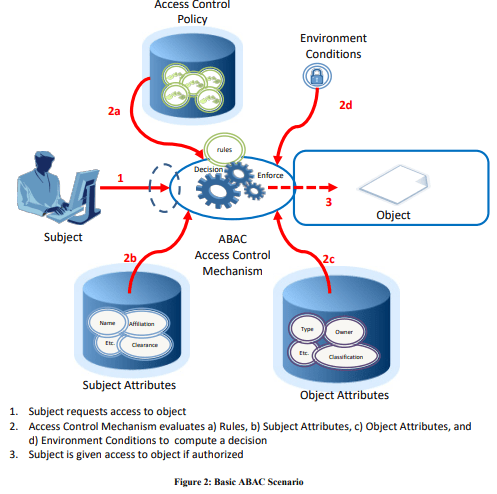
I started this study back on August 20, 2024, when I originally wrote about attribute-based access control.

From NIST.

Since then I’ve continued to write about NPEs.

A lot.

9 times during the second quarter of 2025 alone. I don’t know what got into me on April 9.

And I’ve planned at least one more NPE post before the end of the month, possibly on Thursday.

Because as I previously said (on April 9, of course), if your identity system only manages people, it is flawed.

Now I’ll grant that I’m in the minority when I use the phrase “non-person entity.” The phrase “non-human identity” is much more popular.

But all your people and refrigerators know what I’m talking about.

So do I have to remake the 32 second video…again? This was the third go at it, after my second and first versions.

But you don’t want an NPE writing your content

Trust me. You don’t.

You want me.

Because I’m the…you know.

Schedule a free meeting with me to discuss your content needs.

CPA
Bredemarket’s “CPA.”

HP Instant Ink Users and Identity: 1:1 Person-to-NPE Binding Isn’t Always Enough

How many people should use a SaaS service? If your answer is “only one,” you don’t need to read this post.

Last month I discussed a particular use case in which AI-based non-person entities (NPEs) were bound to the identities of carbon-based life forms. My post “Identity-Bound Non-Person Entities” reviewed the partnership between Anonybit and SmartUp. 

This binding doesn’t need artificial intelligence to work. The NPE may be something as simple as a service.

But how many people can be bound to an NPE?

A company and its service

There is a very large technology company; I won’t reveal the company name, but its initials are HP. And this very large company provides a service; I won’t reveal the service name, but it instantly provides ink for the company’s printers…

Never mind. It turns out that I already discussed HP Instant Ink (Ink as a Service) in the Bredemarket blog before. Plus, the company providing IaaS is no longer known as “the Hewlett-Packard Company,” but as “HP Inc.” So much for my attempts at obfuscation.

The 1:1 binding between me and Instant Ink

Anyway, we did sign up for Instant Ink when we purchased a new printer. Specifically, my HP account was registered as the owner of our Instant Ink account.

(Those of you with a keen eye can already see where this is going.)

As part of the Instant Ink service that we purchased, I can obtain two things:

1. The status of Instant Ink shipments to us

Not that these shipments are all that fast. 

So far we have encountered two instances in which we ran out of ink before the new Instant Ink shipment arrived. 

And when you put a regular ink cartridge into the printer while waiting for the Instant Ink shipment, HP sends a nasty gram stating that I put the wrong ink in the printer, and to put Instant Ink in the printer right now. 

Um, my Instant Ink is in Pennsylvania, and it will take 10 days to reach California. What am I supposed to do, fly to Pennsylvania and get it?

2. HP support

For our printer, I can obtain support from HP. I will have more to say about HP support later.

First person…or people

Do all of you see the issue now? If not, let me spell it out.

I am married, and my wife and I bought the printer together. But she has no access to shipment tracking or support; only I do.

Actually, I must confess that I gave her my HP login and password. So she has access to the shipment tracking information. But since her name is not John, we assumed that HP would never talk to her about the Instant Ink service that we purchased.

There is something in the (so-called) HP Smart App that allows me to “invite” someone to the printer. But when I tried to “invite” my wife, HP briefly flashed a message saying that I could not invite my wife because she already had an HP personal account.

I need support

By this time I had piled up 3 support requests for HP:

  1. How can I get new Instant Ink before my old Instant Ink runs out?
  2. How can my wife see information on our Instant Ink service?
  3. Plus there’s a third one regarding multiple HP accounts that I won’t get into here.

I decided to tackle the second support request first. So I found the support page, started a gust, and got a ticket number.

The first support chat

I was routed to a printer specialist, who informed me that they couldn’t help me and routed me to an Instant Ink specialist.

The Instant Ink person asked for the error code that appeared when I tried to “invite” my wife. I explained that I didn’t know because it disappeared so quickly.

So I tried to invite my wife again, pointing my smartphone camera at the laptop screen so that I could take a picture of the error code the…um…instant that it appeared.

I successfully took the picture, and there was no error code. Just a message saying that I couldn’t invite my wife because she already had an HP personal account. And to contact support.

The Instant Ink specialist instructed me to click on a link, then closed the support ticket.

I clicked on the link…and was asked to create a new support ticket.

The second support chat

I was routed to a printer specialist, who informed me that they couldn’t help me and routed me to an Instant Ink specialist.

(Yes, there’s a lot of repetition in this post.)

By this time I tried to boil my request down to a simple question: how can my wife see Instant Ink shipment status and request support on her own?

The Instant Ink specialist went quiet for a while, and finally—over an hour after I started the initial support chat—provided the solution to my problem.

Give my wife my HP login and password. And sure, she’ll have no problem contacting support, even though I’m the named user.

Suffice it to say that I was not pleased.

A systemic problem

But to be fair, none of the 4 support people I talked to could have solved my problem.

Because HP has made the underlying assumption that its Instant Ink service can only be managed by one person, not two.

And HP is not alone in this. There are multiple services that assume single person management. This affects married couples often, where one spouse is the named user for a service but knows nothing about it because spouse 2 handles it.

This results in a number of conversations like this:

SERVICE: John?

WIFE: No, this is his wife.

SERVICE: I need John’s authorization to continue.

WIFE: (carries phone to me in the Bredemarket world headquarters) Amazing and wonderful husband, could you authorize me to discuss our account?

(Some portions of this conversation may have been fictionalized.)

ME: Hello, this is John.

SERVICE: John, what is your date of birth?

This is not a technology issue, but an organizational issue. Except where laws (such as HIPAA) regulate this, an organization should allow multiple people to be assigned to a service or other NPE.

It would make my—I mean our lives easier.

Xona Space Systems and 3 Inch Geolocation Accuracy

Our existing GPS is good enough (when not jammed) for a person to drop a bomb, but not good enough for a non-person entity (NPE) to be behind the wheel of a large automobile. And you may ask yourself, “Where is that large automobile?”

“The satellite is the first of a planned constellation called Pulsar, which is being developed by California-based Xona Space Systems. The company ultimately plans to have a constellation of 258 satellites in low Earth orbit. Although these satellites will operate much like those used to create GPS, they will orbit about 12,000 miles closer to Earth’s surface, beaming down a much stronger signal that’s more accurate—and harder to jam. 

“Reid and Manning began to think about how to build a space-based PNT [positioning, navigation, and timing] system that would do what GPS does but better, with accuracy of three inches (10 centimeters) or less and ironclad reliability in all sorts of challenging conditions.”

Quote from https://www.technologyreview.com/2025/06/06/1117978/inside-the-race-to-find-gps-alternatives/

Xona Space Systems website: https://www.xonaspace.com/

Don’t Learn to Code 2

(Imagen 4)

As a follow-up to my first post on this topic, look at the Guardian’s summary article, “Will AI wipe out the first rung of the career ladder?

The Guardian cites several sources:

  • Anthropic states (possibly in self-interest) that unemployment could hit 20% in five years.
  • One quarter of all programming jobs already vanished in the last two years.
  • A LinkedIn executive echoed the pessimism about the future (while LinkedIn hypes its own AI capabilities to secure the dwindling number of jobs remaining).
  • The Federal Reserve cited high college graduate rates of unemployment (5.8%) and underemployment (41.2%).

Read the entire article here.

Don’t Learn to Code

(Imagen 4)

Some of you may remember the 2010s, when learning to code would solve all your problems forever and ever. 

There was even an “Hour of Code” in 2014:

“The White House also announced Monday that seven of the nation’s largest school districts are joining more than 50 others to start offering introductory computer science courses.”

But people on the other side of the aisle endorsed the advice:

“On its own, telling a laid-off journalist to “learn to code” is a profoundly annoying bit of “advice,” a nugget of condescension and antipathy. It’s also a line many of us may have already heard from relatives who pretend to be well-meaning, and who question an idealistic, unstable, and impecunious career choice.”

But the sentiment was the same: get out of dying industries and do something meaningful that will set you up for life.

Well, that’s what they thought in the 2010s.

Where are the “learn to code” advocates in 2025?

They’re talking to non-person entities, not people:

“Microsoft CTO Kevin Scott expects the next half-decade to see more AI-generated code than ever — but that doesn’t mean human beings will be cut out of the programming process.

“”95% is going to be AI-generated,” Scott said when asked about code within the next five years on an episode of the 20VC podcast. “Very little is going to be — line by line — is going to be human-written code.””

So the 2010s “learn to code” movement has been replaced by the 2020s “let AI code” movement. While there are valid questions about whether AI can actually code, it’s clear that companies would prefer not to hire human coders, who they perceive to be as useless as human journalists.