Marketing Identity Product Privacy

When marketing digital identity products secured by biometrics, emphasize that they are MORE secure and more private than their physical counterparts.

When you hand your physical driver’s license over to a sleazy bartender, they find out EVERYTHING about you, including your name, your birthdate, your driver’s license number, and even where you live.

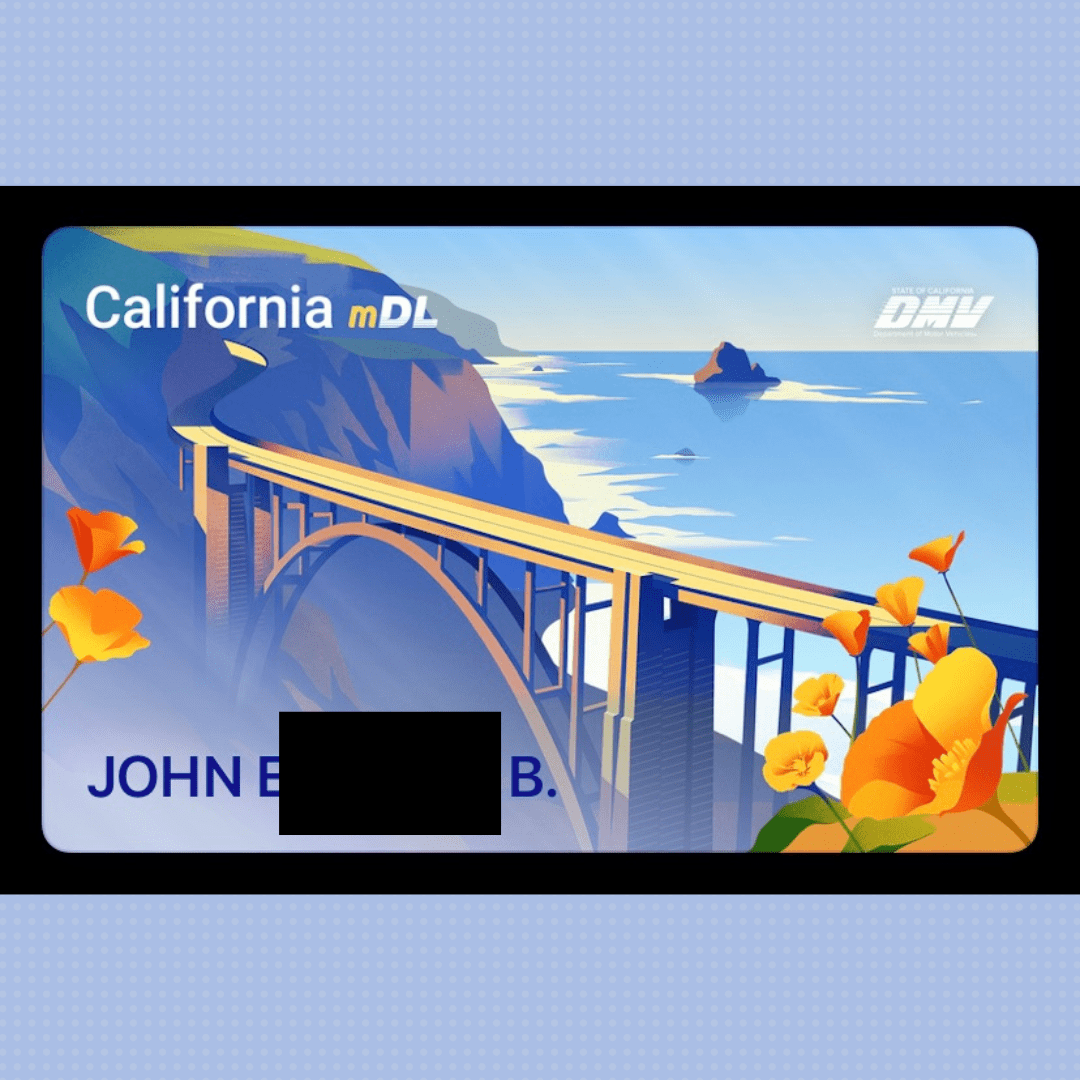
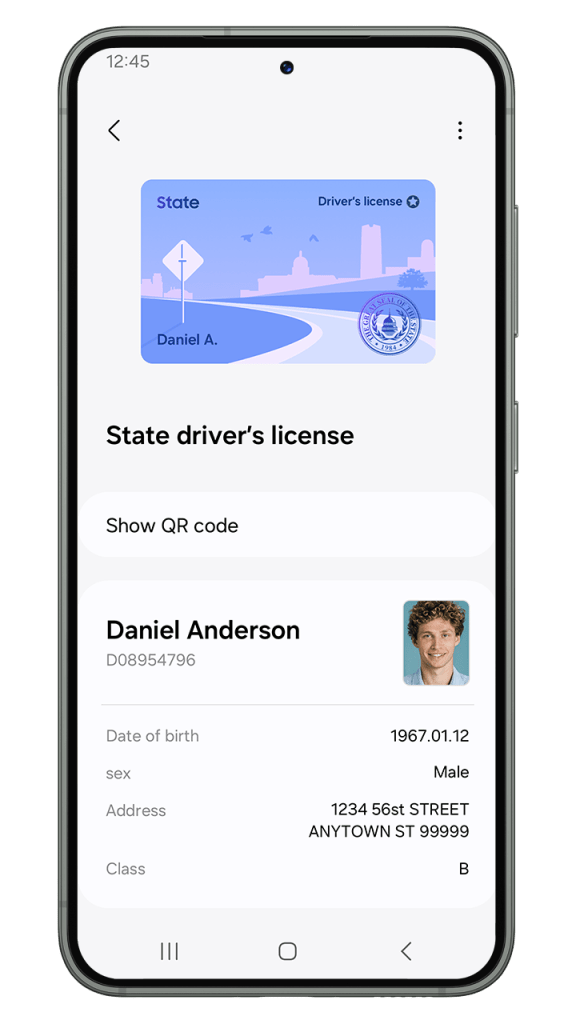
When you use a digital mobile driver’s license, bartenders ONLY learn what they NEED to know—that you are over 21.

Image source: GET Group NA, https://apps.apple.com/us/app/get-mobile-verify/id1501552424

Oh, Florida (mobile driver’s licenses)

I should properly open this post by stating any necessary disclosures…but I don’t have any. I know NOTHING about the goings-on reported in this post other than what I read in the papers.

“I know NOTHING.” By CBS Television – eBayfrontback, Public Domain, https://commons.wikimedia.org/w/index.php?curid=73578107.

However, I do know the history of Thales and mobile driver’s licenses. Which makes the recent announcements from Florida and Thales even more surprising.

Gemalto’s pioneering mobile driver’s license pilots

Back when I worked for IDEMIA from 2017 to 2020, many states were performing some level of testing of mobile driver’s licenses. Rather than having to carry a physical driver’s license card, you would be able to carry a virtual one on your phone.

While Louisiana was the first state to release an operational mobile driver’s license (with Envoc’s “LA Wallet”), several states were working on pilot projects.

Some of these states were working with the company Gemalto to create pilots for mobile driver’s licenses. As early as 2016, Gemalto announced its participation in pilot mDL projects in Colorado, Idaho, Maryland, and Washington DC. As I recall, at the time Gemalto had more publicly-known pilots in process than any other vendor, and appeared to be leading the pack in the effort to transition driver’s licenses from the (physical) wallet to the smartphone.

Thales’ operational mobile driver’s license

By the time Gemalto was acquired by and absorbed into Thales, the company won the opportunity to provide an operational (as opposed to pilot) driver’s license. The Florida Smart ID app has been available to both iPhone and Android users since 2021.

From https://www.flhsmv.gov/floridasmartid/ as of July 12. No idea whether this image will still be there on July 15.

What just happened?

This morning I woke up to a slew of articles (such as the LinkedIn post from PEAK IDV’s Steve Craig, and the Biometric Update post from Chris Burt) that indicated the situation had changed.

One of the most important pieces of new information was a revised set of Frequently Asked Questions (or “Question,” or “Statement”) on the “Florida Smart ID” section of the Florida Highway Safety and Motor Vehicles website.

The Florida Smart ID applications will be updated and improved by a new vendor. At this time, the Florida Department of Highway Safety and Motor Vehicles is removing the current Florida Smart ID application from the app store. Please email FloridaSmartID@flhsmv.gov to receive notification of future availability.

Um…that was abrupt.

But a second piece of information, a Thales statement shared by PC Mag, explained the abruptness…in part.

In a statement provided to PCMag, a Thales spokesperson said the company’s contract with the FLHSMV expired on June 30, 2024.

“The project has now entered a new phase in which the FLHSMV requirements have evolved, necessitating a retender,” Thales says. “Thales chose not to compete in this tender. However, we are pleased to have been a part of this pioneering solution and wishes it continued success.”

Now normally when a government project transitions from one vendor to another, the old vendor continues to provide the service until the date that the new vendor’s system is operational. This is true even in contentious cases, such as the North Carolina physical driver’s license transition from IDEMIA to CBN Secure Technologies.

But in the Florida case:

  • Thales chose not to bid on the contract renewal.
  • The new vendor and/or the State of Florida chose not to begin providing services when the Thales contract expired on June 30.
  • Thales and/or the State of Florida chose not to temporarily renew the existing contract until the new vendor was providing services in 2025.

This third point is especially odd. I’ve known of situations where Company A lost a renewal bid to Company B, Company B was unable to deliver the new system on time, and Company A was all too happy to continue to provide service until Company B (or in some cases the government agency itself) got its act together.

Anyway, for whatever reason, those who had Florida mobile driver’s licenses have now lost them, and will presumably have to go through an entirely new process (with an as-yet unknown vendor) to get their mobile driver’s licenses again.

I’m not sure how much more we will learn publicly, and I don’t know how much is being whispered privately. Presumably the new vendor, whoever it is, has some insight, but they’re not talking.

Reasonable Minds Vehemently Disagree On Three Biometric Implementation Choices

(Part of the biometric product marketing expert series)

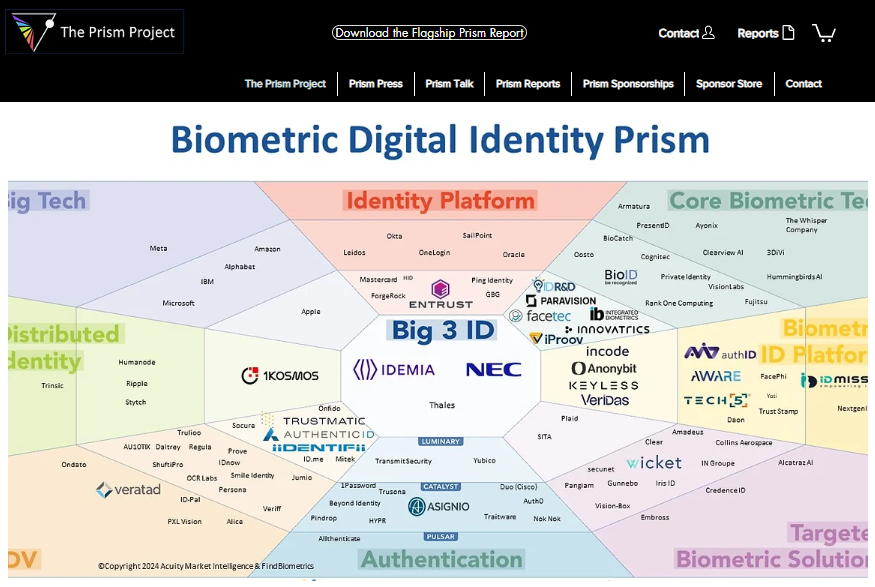
There are a LOT of biometric companies out there.

The Prism Project’s home page at https://www.the-prism-project.com/, illustrating the Biometric Digital Identity Prism as of March 2024. From Acuity Market Intelligence and FindBiometrics.

With over 100 firms in the biometric industry, their offerings are going to naturally differ—even if all the firms are TRYING to copy each other and offer “me too” solutions.

Will Ferrell and Chad Smith, or maybe vice versa. Fair use. From https://www.billboard.com/music/music-news/will-ferrell-chad-smith-red-hot-benefit-chili-peppers-6898348/, originally from NBC.

I’ve worked for over a dozen biometric firms as an employee or independent contractor, and I’ve analyzed over 80 biometric firms in competitive intelligence exercises, so I’m well aware of the vast implementation differences between the biometric offerings.

Some of the implementation differences provoke vehement disagreements between biometric firms regarding which choice is correct. Yes, we FIGHT.

MMA stands for Messy Multibiometric Authentication. Public Domain, https://commons.wikimedia.org/w/index.php?curid=607428

Let’s look at three (out of many) of these implementation differences and see how they affect YOUR company’s content marketing efforts—whether you’re engaging in identity blog post writing, or some other content marketing activity.

The three biometric implementation choices

Firms that develop biometric solutions make (or should make) the following choices when implementing their solutions.

  1. Presentation attack detection. Assuming the solution incorporates presentation attack detection (liveness detection), or a way of detecting whether the presented biometric is real or a spoof, the firm must decide whether to use active or passive liveness detection.
  2. Age assurance. When choosing age assurance solutions that determine whether a person is old enough to access a product or service, the firm must decide whether or not age estimation is acceptable.
  3. Biometric modality. Finally, the firm must choose which biometric modalities to support. While there are a number of modality wars involving all the biometric modalities, this post is going to limit itself to the question of whether or not voice biometrics are acceptable.

I will address each of these questions in turn, highlighting the pros and cons of each implementation choice. After that, we’ll see how this affects your firm’s content marketing.

Choice 1: Active or passive liveness detection?

Back in June 2023 I defined what a “presentation attack” is.

(I)nstead of capturing a true biometric from a person, the biometric sensor is fooled into capturing a fake biometric: an artificial finger, a face with a mask on it, or a face on a video screen (rather than a face of a live person).

This tomfoolery is called a “presentation attack” (becuase you’re attacking security with a fake presentation).

Then I talked about standards and testing.

But the standards folks have developed ISO/IEC 30107-3:2023, Information technology — Biometric presentation attack detection — Part 3: Testing and reporting.

And an organization called iBeta is one of the testing facilities authorized to test in accordance with the standard and to determine whether a biometric reader can detect the “liveness” of a biometric sample.

(Friends, I’m not going to get into passive liveness and active liveness. That’s best saved for another day.)

Well…that day is today.

A balanced assessment

Now I could cite a firm using active liveness detection to say why it’s great, or I could cite a firm using passive liveness detection to say why it’s great. But perhaps the most balanced assessment comes from facia, which offers both types of liveness detection. How does facia define the two types of liveness detection?

Active liveness detection, as the name suggests, requires some sort of activity from the user. If a system is unable to detect liveness, it will ask the user to perform some specific actions such as nodding, blinking or any other facial movement. This allows the system to detect natural movements and separate it from a system trying to mimic a human being….

Passive liveness detection operates discreetly in the background, requiring no explicit action from the user. The system’s artificial intelligence continuously analyses facial movements, depth, texture, and other biometric indicators to detect an individual’s liveness.

Pros and cons

Briefly, the pros and cons of the two methods are as follows:

  • While active liveness detection offers robust protection, requires clear consent, and acts as a deterrent, it is hard to use, complex, and slow.
  • Passive liveness detection offers an enhanced user experience via ease of use and speed and is easier to integrate with other solutions, but it incorporates privacy concerns (passive liveness detection can be implemented without the user’s knowledge) and may not be used in high-risk situations.

So in truth the choice is up to each firm. I’ve worked with firms that used both liveness detection methods, and while I’ve spent most of my time with passive implementations, the active ones can work also.

A perfect wishy-washy statement that will get BOTH sides angry at me. (Except perhaps for companies like facia that use both.)

Choice 2: Age estimation, or no age estimation?

Designed by Freepik.

There are a lot of applications for age assurance, or knowing how old a person is. These include smoking tobacco or marijuana, buying firearms, driving a cardrinking alcoholgamblingviewing adult contentusing social media, or buying garden implements.

If you need to know a person’s age, you can ask them. Because people never lie.

Well, maybe they do. There are two better age assurance methods:

  • Age verification, where you obtain a person’s government-issued identity document with a confirmed birthdate, confirm that the identity document truly belongs to the person, and then simply check the date of birth on the identity document and determine whether the person is old enough to access the product or service.
  • Age estimation, where you don’t use a government-issued identity document and instead examine the face and estimate the person’s age.

I changed my mind on age estimation

I’ve gone back and forth on this. As I previously mentioned, my employment history includes time with a firm produces driver’s licenses for the majority of U.S. states. And back when that firm was providing my paycheck, I was financially incentivized to champion age verification based upon the driver’s licenses that my company (or occasionally some inferior company) produced.

But as age assurance applications moved into other areas such as social media use, a problem occurred since 13 year olds usually don’t have government IDs. A few of them may have passports or other government IDs, but none of them have driver’s licenses.

By Adrian Pingstone – Transferred from en.wikipedia, Public Domain, https://commons.wikimedia.org/w/index.php?curid=112727.

Pros and cons

But does age estimation work? I’m not sure if ANYONE has posted a non-biased view, so I’ll try to do so myself.

  • The pros of age estimation include its applicability to all ages including young people, its protection of privacy since it requires no information about the individual identity, and its ease of use since you don’t have to dig for your physical driver’s license or your mobile driver’s license—your face is already there.
  • The huge con of age estimation is that it is by definition an estimate. If I show a bartender my driver’s license before buying a beer, they will know whether I am 20 years and 364 days old and ineligible to purchase alcohol, or whether I am 21 years and 0 days old and eligible. Estimates aren’t that precise.

How precise is age estimation? We’ll find out soon, once NIST releases the results of its Face Analysis Technology Evaluation (FATE) Age Estimation & Verification test. The release of results is expected in early May.

Choice 3: Is voice an acceptable biometric modality?

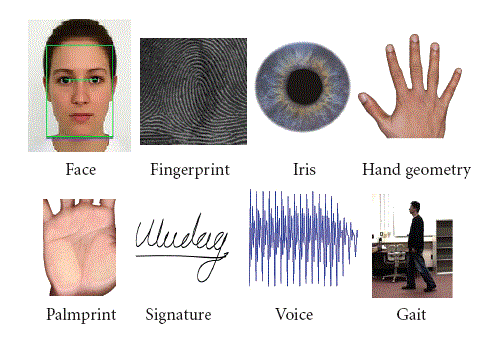
From Sandeep Kumar, A. Sony, Rahul Hooda, Yashpal Singh, in Journal of Advances and Scholarly Researches in Allied Education | Multidisciplinary Academic Research, “Multimodal Biometric Authentication System for Automatic Certificate Generation.”

Fingerprints, palm prints, faces, irises, and everything up to gait. (And behavioral biometrics.) There are a lot of biometric modalities out there, and one that has been around for years is the voice biometric.

I’ve discussed this topic before, and the partial title of the post (“We’ll Survive Voice Spoofing”) gives away how I feel about the matter, but I’ll present both sides of the issue.

White House photo by Kimberlee Hewitt – whitehouse.gov, President George W. Bush and comedian Steve Bridges, Public Domain, https://commons.wikimedia.org/w/index.php?curid=3052515

No one can deny that voice spoofing exists and is effective, but many of the examples cited by the popular press are cases in which a HUMAN (rather than an ALGORITHM) was fooled by a deepfake voice. But voice recognition software can also be fooled.

(Incidentally, there is a difference between voice recognition and speech recognition. Voice recognition attempts to determine who a person is. Speech recognition attempts to determine what a person says.)

Finally facing my Waterloo

Take a study from the University of Waterloo, summarized here, that proclaims: “Computer scientists at the University of Waterloo have discovered a method of attack that can successfully bypass voice authentication security systems with up to a 99% success rate after only six tries.”

If you re-read that sentence, you will notice that it includes the words “up to.” Those words are significant if you actually read the article.

In a recent test against Amazon Connect’s voice authentication system, they achieved a 10 per cent success rate in one four-second attack, with this rate rising to over 40 per cent in less than thirty seconds. With some of the less sophisticated voice authentication systems they targeted, they achieved a 99 per cent success rate after six attempts.

Other voice spoofing studies

Similar to Gender Shades, the University of Waterloo study does not appear to have tested hundreds of voice recognition algorithms. But there are other studies.

  • The 2021 NIST Speaker Recognition Evaluation (PDF here) tested results from 15 teams, but this test was not specific to spoofing.
  • A test that was specific to spoofing was the ASVspoof 2021 test with 54 team participants, but the ASVspoof 2021 results are only accessible in abstract form, with no detailed results.
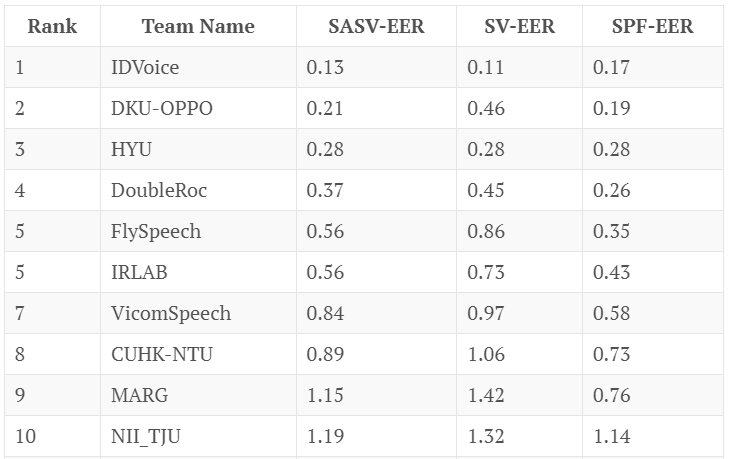
  • Another test, this one with results, is the SASV2022 challenge, with 23 valid submissions. Here are the top 10 performers and their error rates.

You’ll note that the top performers don’t have error rates anywhere near the University of Waterloo’s 99 percent.

So some firms will argue that voice recognition can be spoofed and thus cannot be trusted, while other firms will argue that the best voice recognition algorithms are rarely fooled.

What does this mean for your company?

Obviously, different firms are going to respond to the three questions above in different ways.

  • For example, a firm that offers face biometrics but not voice biometrics will convey how voice is not a secure modality due to the ease of spoofing. “Do you want to lose tens of millions of dollars?”
  • A firm that offers voice biometrics but not face biometrics will emphasize its spoof detection capabilities (and cast shade on face spoofing). “We tested our algorithm against that voice fake that was in the news, and we detected the voice as a deepfake!”

There is no universal truth here, and the message your firm conveys depends upon your firm’s unique characteristics.

And those characteristics can change.

  • Once when I was working for a client, this firm had made a particular choice with one of these three questions. Therefore, when I was writing for the client, I wrote in a way that argued the client’s position.
  • After I stopped working for this particular client, the client’s position changed and the firm adopted the opposite view of the question.
  • Therefore I had to message the client and say, “Hey, remember that piece I wrote for you that said this? Well, you’d better edit it, now that you’ve changed your mind on the question…”

Bear this in mind as you create your blog, white paper, case study, or other identity/biometric content, or have someone like the biometric content marketing expert Bredemarket work with you to create your content. There are people who sincerely hold the opposite belief of your firm…but your firm needs to argue that those people are, um, misinformed.

And as a postscript I’ll provide two videos that feature voices. The first is for those who detected my reference to the ABBA song “Waterloo.”

From https://www.youtube.com/watch?v=4XJBNJ2wq0Y.

The second features the late Steve Bridges as President George W. Bush at the White House Correspondents Dinner.

From https://www.youtube.com/watch?v=u5DpKjlgoP4.

Age Assurance Meets Identity Assurance (Level 2)

I’ve talked about age verification and age estimation here and elsewhere. And I’ve also talked about Identity Assurance Level 2. But I’ve never discussed both simultaneously until now.

I belatedly read this March 2024 article that describes Georgia’s proposed bill to regulate access to material deemed harmful to minors.

A minor in Georgia (named Jimmy Carter) in the 1920s, before computers allowed access to adult material. From National Park Service, https://www.nps.gov/jica/learn/historyculture/early-life.htm.

The Georgia bill explicitly mentions Identity Assurance Level 2.

Under the bill, the age verification methods would have to meet or exceed the National Institute of Standards and Technology’s Identity Assurance Level 2 standard.

So if you think you can use Login.gov to access a porn website, think again.

There’s also a mention of mobile driver’s licenses, albeit without a corresponding mention of the ISO/IEC 18013-5:2021.

Specifically mentioned in the bill text is “digitized identification cards,” described as “a data file available on a mobile device with connectivity to the internet that contains all of the data elements visible on the face and back of a driver’s license or identification card.”

So digital identity is becoming more important for online access, as long as certain standards are met.

Android mobile driver’s licenses? It’s complicated.

At least in the United States, the mobile driver’s license world is fragmented.

Because driver’s license issuance in the U.S. is a state and not a federal responsibility, each state has to develop its own mobile driver’s license implementation. Subject to federal and international standards, of course.

To date there have been two parties helping the states with this:

  • mDL vendors such as Envoc and IDEMIA, who work with the states to create mDLs.
  • Operating system vendors such as Apple and Google, who work with the states to incorporate mDLs in smartphone wallets.

But because the Android ecosystem is more fragmented than the iOS ecosystem, we now have a third party that is involved in mDLs. In addition to mDL vendors and operating system vendors, we also have really large smartphone providers.

Enter Samsung:

Samsung Electronics America today announced it is bringing mobile driver’s licenses and state IDs to Samsung Wallet. Arizona and Iowa will be the first states to offer a mobile version of its driver’s license to their residents. The update expands the Samsung Wallet experience by adding a convenient and secure way to use state-issued IDs and driver’s licenses

From https://news.samsung.com/us/samsung-idemia-bring-mobile-drivers-licenses-samsung-wallet-arizona-iowa-first-states-rollout/

(For those who have seen prior references to Samsung in the Bredemarket blog, rest assured that this information is public and Samsung won’t get harmed if you feed it to ChatGPT or Bard or whoever.)

In this particular case Samsung is working with IDEMIA (the mDL provider for Arizona and Iowa), but Samsung announced that it is working with other states and with the Transportation Security Administration (TSA).

While there are underlying standards (most notably ISO/IEC 18013-5, previously discussed here) that govern the implementation of mobile driver’s licenses, there is still a dizzying array of options.

On a personal note, I’m still working on validating my driver’s license for California’s pilot mDL program. It probably didn’t help that I renewed my physical driver’s license right in the middle of the mDL validation process.

About THAT Reuters article

I intentionally chose an obscure title for this post.

I could have entitled the post “Ricardo Montalban.” Just because.

In a more relevant way, I could have entitled the post “Former IDEMIA employee weighs in on Advent’s possible sale of the company.” That would have got some clicks, to be sure.

But it would have misled the reader, because the reader would have gotten the idea that I have some expertise in corporate acquisitions, and an abillity to predict them.

And as past history has shown, I do not have any such expertise.

  • In 2000, I was completely and totally surprised when I learned that Printrak wanted to sell itself to Motorola. I didn’t have a clue that any such thing was going to happen.
  • In 2008, I was reading online late one evening and was completely and totally surprised when I learned that Motorola wanted to sell off half of Printrak to the French company Safran, the Sagem Morpho folks. Yes, Motorola was in trouble, but I didn’t have any idea that we would be sold off.
  • Years later, I was kinda sorta surprised when Safran decided that it wanted to get rid of its entire identity and security business, and was completely and totally surprised when the buyer was an American investment firm that owned Oberthur Technologies.

So my record on really understanding these acquisitions is pretty low.

With that caveat, I’ll go ahead and use a really eye-catching SUBtitle. Better late than never.

Former IDEMIA employee weighs in on Advent’s possible sale of the company

Impressive, isn’t it?

But before proceeding, I should let you know about THAT Reuters article that I referenced in the real post title.

On Friday, Reuters published an exclusive article entitled “Advent gears up for $4.6 bln sale of French biometrics firm IDEMIA – sources.”

So who is Advent?

Advent (actually, Advent International) is the American investment firm that I mentioned earlier. As an investment firm, its purpose in life is to buy businesses, improve them, and sell them for a profit.

Back in 2011, Advent bought Oberthur Technologies with this intent. To that end, Advent announced in 2015 that Oberthur Technologies planned an Initial Public Offering. Within a month, those plans were shelved. Advent determined that an Oberthur IPO wouldn’t do so well.

So Advent began thinking about ways to make Oberthur more attractive.

At the same time, Safran was trying to decide what to do with its identity and security business. The purchase of Printrak was just a blip in Safran’s plans, as it acquired L-1 Identity Solutions (renamed MorphoTrust) and other businesses. But Safran is not an identity and security company. It’s a “de plane” company.

By ABC Television – eBay itemphoto frontphoto back, Public Domain, https://commons.wikimedia.org/w/index.php?curid=20143137

And Safran is also a defense company to protect France and other countries from evil forces.

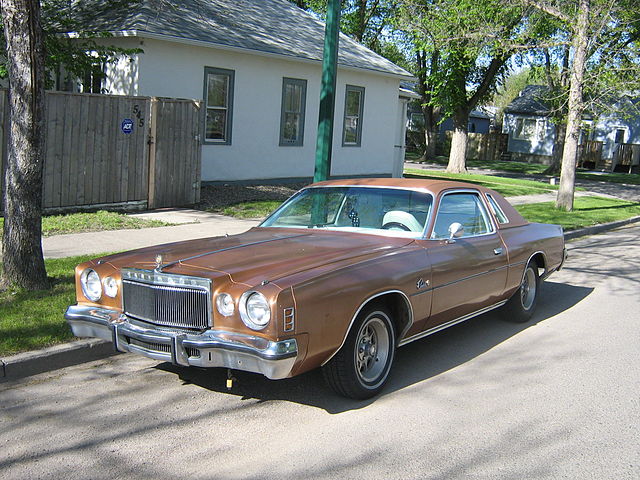
The identity part of the business was clearly the odd one out. Heck, rich Corinthian leather would have fit better into the Safran product line.

By dave_7 – originally posted to Flickr as Chrysler Cordoba, CC BY 2.0, https://commons.wikimedia.org/w/index.php?curid=6890171

OK, I’ll stop now.

Anyway, in the end Advent announced in 2016 that it had entered into an agreement to negotiate the purchase of Safran’s identity and security business. The purchase was completed on May 31, 2017, and Advent combined Oberthur (OT) and the portion of Safran (Morpho) into OT-Morpho, which was quickly renamed IDEMIA.

I was an employee of IDEMIA at the time, and I don’t think I’m spilling any company secrets if I reveal that Advent wanted IDEMIA to do really really well, so that it could make a profit on the two acquisitions. I wasn’t at the highest executive level that was setting the high-level strategy, but I was often working on initiatives to help realize Advent’s profitability goal.

The possibility of an IDEMIA IPO or sale receded somewhat in early 2020. Among other things, COVID adversely affected two of IDEMIA’s core businesses in the United States, TSA PreCheck (nobody was flying) and driver’s licenses (the DMV offices were all closed).

Back to THAT Reuters article

Fast forward to 2022 and Reuters’ exclusive revelations.

Advent International is looking to sell its French biometrics and fingerprint identification firm IDEMIA in a deal worth up to $4.6 billion as it seeks to capitalise on growing demand for cybersecurity assets in Europe, two sources told Reuters.

The U.S. buyout fund is reviewing a series of options to sell IDEMIA, including a possible break-up of the company which was formed in 2016 by combining Safran’s identity and security business with Oberthur Technologies, the sources said.

From https://www.reuters.com/business/exclusive-advent-gears-up-46-bln-sale-french-biometrics-firm-idemia-sources-2022-02-04/

As you, the wise reader, know, Reuters goofed here.

IDEMIA was NOT formed in 2016. The formation of IDEMIA was ANNOUNCED in 2016, but the deal wasn’t actually COMPLETED until 2017. Hey, at least Biometric Update got it right.

Anyway, if you read either Reuters or Biometric Update, you’ll learn that nothing is going to happen immediately (France is holding an election in April, and the composition of the new government could impact any sale), and that the possible split-up may separate the part of the business that sells to governments from the part that sells to commercial firms.

Of course, the big question about any sale of IDEMIA would be the identity of the buyer. Would Advent try (again) to issue an IPO, or would Advent look for one or more existing companies to purchase IDEMIA?

Both Reuters and Biometric Updare speculate that Thales could be a potential buyer. While Safran was slimming down to concentrate on its aircraft business, Thales has been beefing to to diversify its business, most notably in its purchase of Gemalto. (As people in my industry know, that purchase provided Thales with the technology of the old Cogent Systems.)

However, there are two possible issues with a Thales purchase of all or part of IDEMIA.

  • Antitrust issues. Automated fingerprint identification systems isn’t the only product that Thales and IDEMIA have in common. For example, both companies provide driver’s licenses in the United States. As any Thales purchase of IDEMIA is considered by the United States, France, and dozens of other countries, the deal could be opposed on antitrust grounds. This can be mitigated by limiting what Thales can buy, but it could complicate matters.
  • Thales is French. Some of the driver’s license and biometric technology that IDEMIA sells was developed in the United States, and is used by many government agencies, including the Federal Bureau of Investigation and the Department of Homeland Security. At present, while IDEMIA is headquartered in France, it is primarily owned by Americans, so there’s a teeny bit of comfort in that. But what if a French firm were to own IDEMIA? The horror! (Many years ago, when Cogent Systems first sold itself, it intentionally chose a U.S. buyer, 3M, for this very reason.) Never mind that the U.S. government has been using French (and Japanese) technology for years, and that some very specific arrangements have been set up to mitigate the risks of foreign ownership. Some Senator or another is guaranteed to raise a big stink if U.S. government institutions are dependent upon a French company.

So perhaps Thales could buy all or part of IDEMIA, or perhaps it may pass. But if Thales passes, are there any U.S.-owned companies that may have an interest in IDEMIA’s technology?

Because of my biometric bias, the first thing that I would consider would be American companies that are active in the biometric market. However, many of the U.S. companies are small, and don’t have a few billion dollars lying around to buy IDEMIA. So don’t look for Aware, Clearview AI, Paravision, Rank One Computing, or the like to be a buyer.

There are of course much bigger U.S. firms in high tech that have dipped their fingers into the biometrics market. Amazon, Apple, Facebook, Google, and Microsoft all come to mind. However, those same customers that are of prime concern to U.S. Senators are also or prime concern to the employees of some of those firms, who don’t want their employers to do business with the “evil” Department of Homeland Security or even the “evil” local police departments that should all be defunded. (Amazon quit selling Rekognition to police agencies, for example.) Even Apple, which is developing its own digital driver’s license technology, is probably reluctant to own IDEMIA.

But there’s one tech company that intrigues me as possibly having an interest in IDEMIA.

Oracle.

It’s big enough to make the purchase, certainly likes to make acquisitions, and has no hesitation about working with government agencies.

ANY government agency.

After all, the name “Oracle” came from a database project that Ellison worked on before founding the company with the same name.

His client was the Central Intelligence Agency.

If you’ve paid attention to this article, then you already know that since I have speculated that Oracle could purchase IDEMIA, that puts the chances of Oracle actually purchasing IDEMIA at zero.

And for all we know, Reuters’ two sources might be unreliable, or something else might happen (another COVID variant?) that could cause Advent to hold on to IDEMIA for a few more years.

So we’ll have to see what happens.

(Bredemarket Premium) Another mobile driver’s license pilot…but this one may move forward and become the real thing

When looking at U.S. state implementations of mobile driver’s licenses, there are various gradations of these implementations.

  • Some states have only performed pilots.
  • Some states have implemented production versions of mobile driver’s license, but their acceptance is limited and you still have to carry your physical driver’s license with you.
  • I don’t think any state has reached the level where the mDL is acceptable for ALL state purposes, and you DON’T have to carry your physical license with you any more.
  • NO state has reached the level where the mDL is acceptable for state AND federal purposes (such as boarding planes). That is still in process.
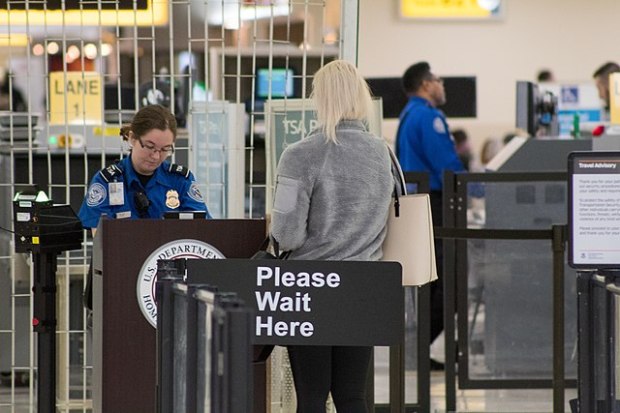
Transportation Security Administration Checkpoint at John Glenn Columbus International Airport. By Michael Ball – Own work, CC0, https://commons.wikimedia.org/w/index.php?curid=77279000

This post looks at what is going on in one state, what may happen in the future, and what resistance the state may (or may not) meet from its own residents.

Subscribe to get access

Subscribe to Bredemarket Premium to access this premium content.

  • Subscriptions just $5 per month.
  • Access Bredemarket’s expertise without spending hundreds or thousands of dollars.

You will soon deal with privacy stakeholders (and they won’t care about the GYRO method)

(Part of the biometric product marketing expert series)

I’ve written about the various stakeholders at government agencies who have an interest in biometrics procurements- not only in this post, but also in a post that is available to Bredemarket Premium subscribers. One of the stakeholders that appeared on my list was this one.

The privacy advocate who needs to ensure that the biometric data complies with state and national privacy laws.

Broken Liberty: Istanbul Archaeology Museum. By © Nevit Dilmen, CC BY-SA 3.0, https://commons.wikimedia.org/w/index.php?curid=1115936

If you haven’t encountered a privacy advocate in your marketing or proposal efforts…you will.

Utah Gov. Spencer Cox has appointed Christopher Bramwell as the Department of Government Operations’ first privacy officer….As privacy officer, Bramwell will be responsible for surveying and compiling information about state agencies’ privacy practices to discern which poses a risk to individual privacy. He will also work with the personal privacy oversight commission and state privacy officer to provide government privacy practice reports and recommendations.

Obviously this affects companies that work with government agencies on projects such as digital identity platforms. After all, mobile driver’s licenses contain a wealth of personally identifiable information (PII), and a privacy advocate will naturally be concerned about who has access to this PII.

But what about law enforcement? Do subjects in law enforcement databases have privacy rights that need to be respected? After all, law enforcement agencies legally share PII all the time.

However, there are limitations on what law enforcement agencies can share.

  • First off, remember that not everyone in a law enforcement database is an arrested individual. For example, agencies may maintain exclusion databases of police officers and crime victims. When biometric evidence is found at a crime scene, agencies may compare the evidence against the exclusion database to ensure that the evidence does not belong to someone who is NOT a suspect. (This can become an issue in DNA mixtures, by the way.)
  • Second off, even arrested individuals have rights that need to be respected. While arrested individuals lose some privacy rights (for example, prisoners’ cells can be searched and prisoners’ mail can be opened), a privacy advocate should ensure that any system does not deny prisoners protections to which they are entitled.

So expect to see a raised concern about privacy rights when dealing with law enforcement agencies. This concern will vary from jurisdiction to jurisdiction based upon the privacy (and biometric) laws that apply in each jurisdiction, but vendors that do business with government agencies need to stay abreast of privacy issues.

A little more about stakeholders, or actors, or whoever

Whether you’re talking about stakeholders in a government agency, stakeholders at a vendor, or external stakeholders, it’s important to identify all of the relevant stakeholders.

Or whatever you call them. I’ve been using the term “stakeholders” to refer to these people in this post and the prior posts, but there are other common terms that could be used. People who construct use cases refer to “actors.” Marketers will refer to “personas.”

Whatever term you use, it’s important to distinguish between these stakeholders/actors/personas/whatever. They have different motivations and need to be addressed in different ways.

When talking with Bredemarket clients, I often need to distinguish between the various stakeholders, because this can influence my messaging significantly. For example, if a key decision-maker is a privacy officer, and I’m communicating about a fingerprint identification system, I’m not going to waste a lot of time talking about the GYRO method.

My time wouldn’t be wasted effort if I were talking to a forensic examiner, but a privacy advocate just wouldn’t care. They would just sit in silence, internally musing about the chances that a single latent examiner’s “green” determination could somehow expose a private citizen to fraud or doxxing or something.

This is why I work with my clients to make sure that the messaging is appropriate for the stakeholder…and when necessary, the client and I jointly develop multiple messages for multiple stakeholders.

If you need such messaging help, please contact Bredemarket for advice and assistance. I can collaborate with you to ensure that the right messages go to the right stakeholders.

Are unified digital IDs a thing?

I’ve been busy helping a client who needed summer fill-in help, but I’m finally making the time to catch up on my reading. And this article from Government Technology was on my reading list.

When I read the title “Mobile Driver’s Licenses Pave the Way for Unified Digital IDs,” I was intrigued by the last three words. I mean, there are more and more states releasing (non-pilot) mobile driver’s licenses, and the standard is coming along, and work is being done to prepare for federal acceptance.

But what about the “unified” part? How did David Raths address that?

Government uses of digital ID

Well, he listened to Eric Jorgensen, director of Arizona’s Department of Transportation.

“I actually hate the term ‘mDL’ because it doesn’t recognize the power of what we’re doing here….The whole concept is that we’re providing a way to remotely authenticate a person, to provide a trusted digital identity that doesn’t exist today. Once we provide that, we’re opening doors to enhanced government services. Also, the government can play a key role in facilitating commerce, providing a better citizen experience and providing for the security of that citizen — that goes way beyond what a driver’s license is about.”

Although all that Jorgensen is discussing is providing a trusted digital identity that is equivalent to a trusted physical identity. If you have to show your driver’s license when visiting a government office’s physical location, conceivably you can show your digital driver’s license when visiting a government office’s website.

Enterprise uses of digital ID

And there are applications beyond government. Delaware and other states are persuading private businesses to accept mobile driver’s licenses as valid forms of identification. There’s a powerful use case for age-restricted products, of course; since all that an alcohol-selling business needs to know is whether you are over the age of 21, the mobile driver’s license ONLY shows that you are over the age of 21. It doesn’t show your address, your weight, or even your birthdate.

But what about a true UNIFIED digital ID?

However, I semantically question whether this is truly a “unified” ID. This is just digitization of an existing government-endorsed ID. A “unified” ID would be one that would not only let me drive, vote, and buy alcohol, but would also serve as my ID to log into Facebook or buy Bitcoin. (Yes, I realize that use of a government ID to buy Bitcoin violates the space-time continuum in some way.)

And for that to happen, work may need to be done to make mobile IDs compatible with existing authentication/authorization methods such as OAuth and OpenID Connect.

And the whole “but what if I don’t have a digital ID?” question must be addressed.

And the whole “but what if I want to use a self-sovereign ID that is NOT government endorsed?” question must be addressed.

And presumably a myriad of other questions would need to be addressed also.

But for me, I can’t address unified digital IDs today. Just got a message from my summer-challenged client…

DHS TSA mDL Public Meeting general observations

As I previously noted, today (June 30, 2021) was the day for the Department of Homeland Security’s Transportation Security Administration to hold its public meeting on its Request for Comment on “Minimum Standards for Driver’s Licenses and Identification Cards Acceptable by Federal Agencies for Official Purposes; Mobile Driver’s Licenses.” (See PDF or text version. The second link contains the method for providing comments.)

I will not provide a recap of the comments made by participants during the meeting, but will instead provide some general observations.

Incidentally, the list of all meeting participants will be made public at some point, and it’s possible that the chat transcript from the meeting will also be made public at some point.

Agreement and disagreement among the participants

As can be expected, there were a variety of views expressed at the meeting, ranging from industry comments about the items that should be in the DHS standard, to privacy advocates who questioned why DHS was implementing a standard at all. One example:

  • Industry participants, such as myself, were enthusiastic about the ability of a mobile driver’s license (mDL) to automatically update itself when new information became available at the DMV. For example, if I move to a new address, the DMV can automatically update the mDL on my smartphone to reflect the new address.
  • Privacy participants were, to put it mildly, a bit less enthusiastic about this feature. Physical driver’s licenses are updated as infrequently as every ten years; why should digital driver’s licenses be any different?

But there was apparent agreement between the industry and privacy participants about one possible feature on mDLs – the ability to control the data that leaves the smartphone and is sent to the verifying official. Everyone seemed to agree that this information should be granular, and that the mDL should not automatically send ALL available information on the mDL.

Let me provide an example. When I go to a bar and use my physical driver’s license to prove my age, the verifier (Jane Bartender) is provided access to my name, my address, my date of birth, my height, my (claimed) weight, and all sorts of personal information that would freak out your average privacy advocate. NONE of this information is needed to prove my age, not even my date of birth. All that the verifier needs to know is whether I am over the age of 21. An mDL can be designed to specifically state ONLY that I am over the age of 21 without revealing my birthdate, my address, or my (claimed) weight.

(You’d think that the privacy advocates would be thrilled about this granularity and would urge people to use mDLs because of this privacy benefit, but privacy and security folks are naturally suspicious and have a hunch that all of the information is being provided in the background anyway through double-secret means.)

But are the participants ready to respond to the RFC?

I had one other observation from the meeting. Before sharing it, I should explain that the meeting allowed the participants to ORALLY share the views that they will subsequently express in WRITTEN comments on or before the July 30 deadline.

And based upon the oral comments that I heard, some of the participants are ready to share their written comments…and others are not.

There were participants who spoke to the DHS about their items of interest, not only briefly stating these items, but WHY these items should be important to the DHS and to the general public.

And then there were participants who concentrated on unimportant details that were NOT of interest to the DHS or the general public. I won’t provide specific examples, but let’s just say that some participants talked about themselves rather than about DHS’ needs.

If these participants’ written comments are of the same tone as their oral comments, I can assure you that their comments will not influence the DHS in any way. Although I guess they can go back to their organizations and proudly proclaim, “We told the DHS how important we are!”

The DHS doesn’t care how important you are. In the DHS’ mind, you are not important. Only the DHS is important. (Oh, and the Congresspeople who fund the DHS are important, I guess.)

Perhaps in the next 30 days these other participants will take a look back at their message drafts and ask themselves the “So what?” question. What will motivate the DHS to incorporate desired features into the standard? And why should they?

And, as always, I can help. If nothing else, I can confidentially review your draft comments before submission and provide some suggestions. (Yes, it’s shameless plug time.)

If I can help you with your RFC response:

Or perhaps you are ready to respond now. I guess we’ll all find out when the DHS publishes its final standards, which may or may not reflect your priorities.