“Thales is pleased to announce its continued partnership with the State of Alaska Department of Motor Vehicles (DMV) with the launch of the Alaska Mobile ID.Seen as aninnovative digital identity solution, it empowers residents to manage the use of their identification credentials securely and conveniently through their mobile devices.
“The Alaska Mobile ID leverages Thales’ sophisticated digital ID technology to provide Alaskans with a secure method for digital verification of their identity, age, and/or driving privileges. With this ‘cybersecurity by design’ solution, citizens benefit from a quick and secure way to digitally verify their identity while safeguarding their personal information. It also enables selective disclosure, meaning only some attributes of residents’ identities can be electronically verified. As an example, with Alaska Mobile ID, residents will be able to prove they are above 21 without revealing their exact age, which is impossible with physical ID.”
“A recent development is scammers using the name of legitimate companies that are hiring and approaching their victims through LinkedIn’s direct messaging feature. They then create counterfeit websites that look like the websites of the legitimate companies they are posing as and ask the job seekers for personal information…”
And you can guess what happens with that personal information. It doesn’t land you a real job, that’s for sure.
In addition to the tips that Scamicide provides, I have an additional one. BEFORE you provide your resume, before you send them a connection request, or definitely before you engage on Telegram or WhatsApp, ask this question:
“Can you provide me with your corporate email address?”
This usually shuts scammers up very quickly.
But don’t forget that while job applicants are avoiding fraudulent employers, legitimate employers are avoiding fraudulent applicants…perhaps from North Korea.
Each person has certain immutable attributes associated with them, such as their blood type. And other attributes, such as their fingerprints and iris characteristics, which are mostly immutable. (Although I defy anyone to change their irises.)
But other things associated with us are all too mutable. If we use these for identification, we’ll end up in trouble.
Elvis Presley, songwriter?
Let’s take one of the many attributes associated with Elvis Presley. If you haven’t heard of Presley, he was a popular singer in the mid 20th century. He’s even in Britannica.
(As a point of clarification, the song “Radio Radio” is associated with a DIFFERENT Elvis.)
Among many other songs, Presley is associated with the song “Don’t Be Cruel.”
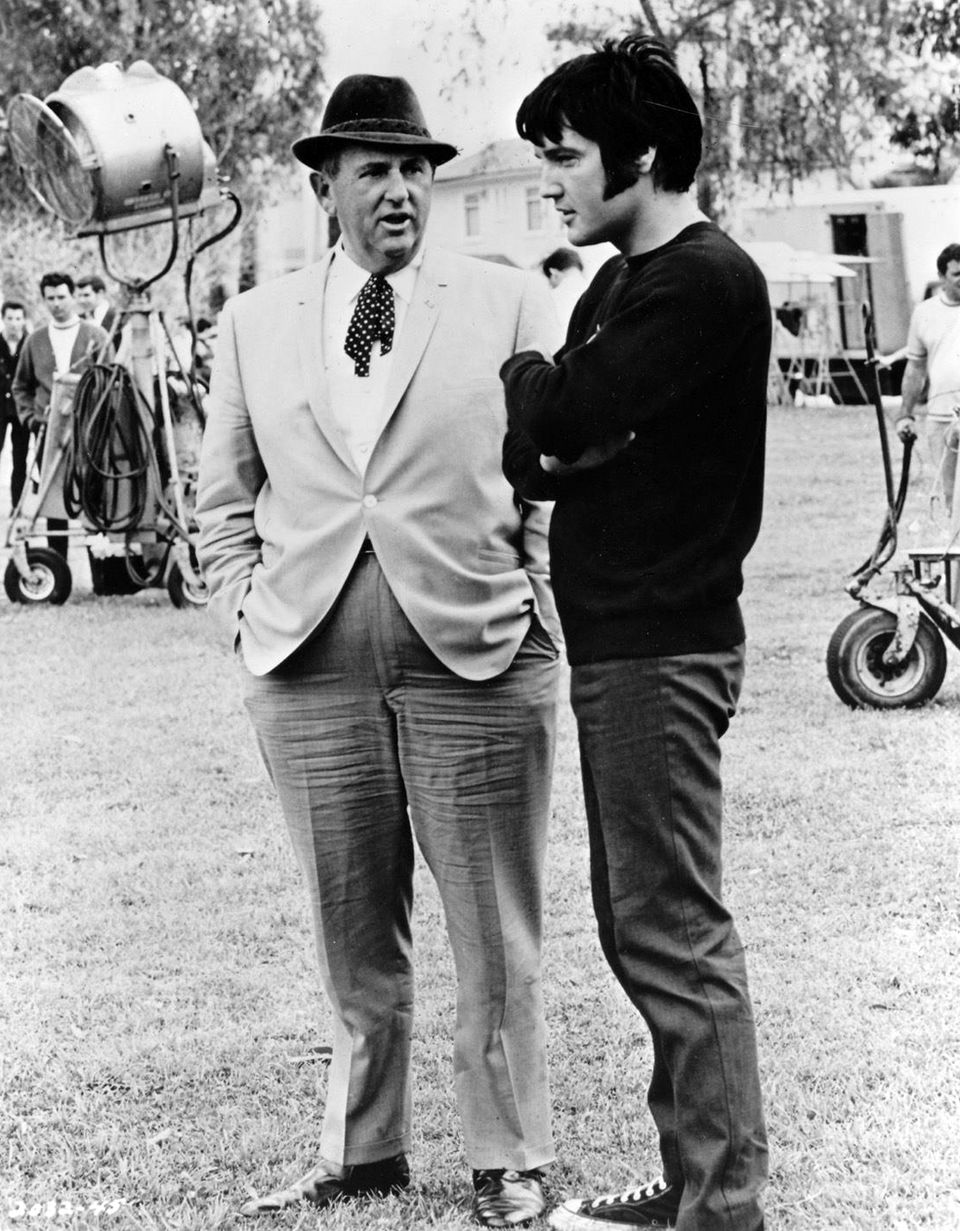
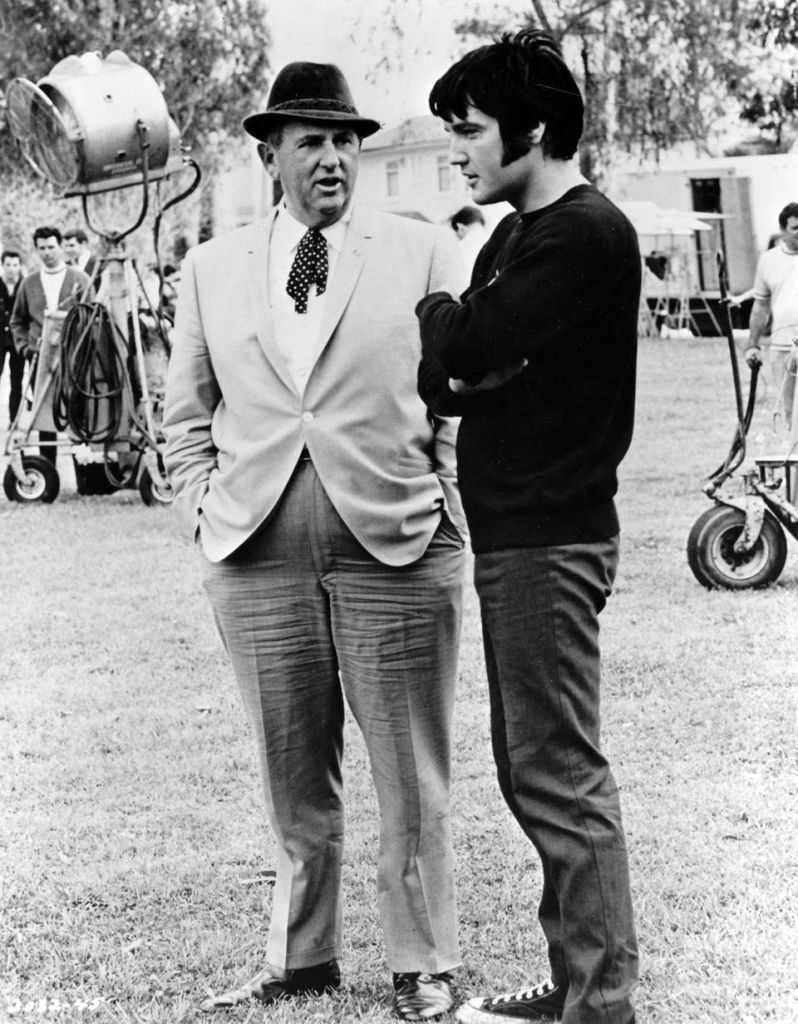
Elvis Presley.
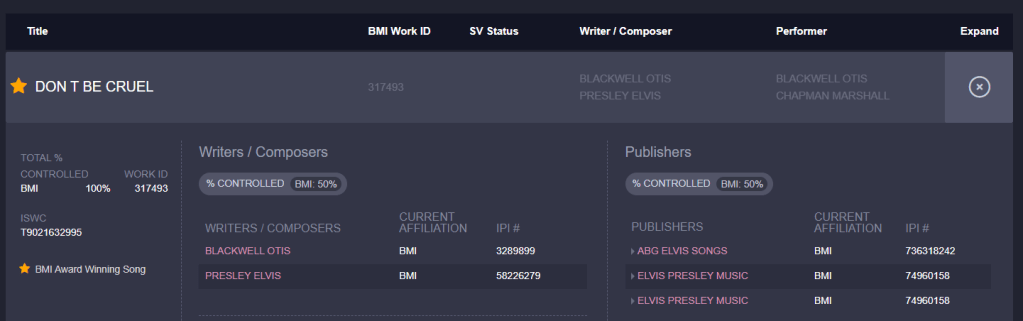
Presley was not only the performer, but also the credited co-songwriter.
After all, that’s what BMI says when you search its Songview database. See BMI work ID 317493.
“…he listened to a selection of acetate demos provided by Freddy Bienstock, the new song representative assigned to Elvis by his publishers, Hill and Range. He chose “Don’t Be Cruel” by an obscure Brooklyn-born r&b singer and songwriter, Otis Blackwell. As per Hill and Range’s contractual requirement, it came with the assignment of half the publishing to Elvis Presley Music and half the writer’s share to Elvis Presley, but as Blackwell, the first of Elvis’ great “contract” writers, was always quick to point out, it was the best deal he ever made.”
Many songs are credited to Presley as a songwriter, but in reality he wrote few if any of them. Yet the “songwriter” attribute is assigned to him. Do we simply accept what BMI says and move on?
But there are other instances in which there are no back room deals, yet a song is strongly associated with a musical entity who never wrote it.
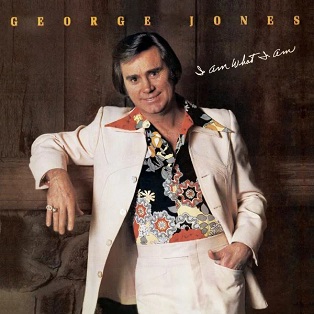
George Jones, not a songwriter
Take BMI Work ID 542061. The credited songwriters for this particular song are Robert Valentine Braddock and Claude Putnam, more commonly known as Bobby Braddock and Curly Putnam. According to RolandNote, Braddock and Putnam began writing this song on March 4, 1977 and finished it on October 18, 1977.
It was recorded by Johnny Russell on either March 7, 1978 (RolandNote), or January 18, 1979 (Second Hand Songs), or both (Classic Country Music Stories). But no recording was released.
Then George Jones recorded the song on February 6, 1980 with subsequent overdubs (“You know she came to see him one last time”) when he was more sober. His reaction?
“I looked [producer] Billy [Sherrill] square in the eye and said ‘nobody’s gonna buy that thing, it’s too morbid.’”
And morbid it was. Although popular music in general and country music in particular has never shied away from morbid songs.
Released the next month on March 18, the song was never associated with Braddock, Putnam, Russell, or Sherrill ever again. “He Stopped Loving Her Today” is completely associated with George Jones.
Now there’s a particular article that I wrote for a Bredemarket client a couple of years ago that used a slow reveal “reverse timeline” effect. Starting with 2022 and moving back in time to 2019, I slowly dropped the details about a missing person who was identified via biometric technology, finally solving the mystery of the person’s identity (Connerjack Oswalt).
The TL;DR…someone authenticates themselves after a delivery company request, but the actual delivery is made by a minor such as a younger brother or sister. As I noted, continuous authentication through the entire delivery process, rather than just at the beginning, nips this fraud in the bud.
“A TransUnion report indicates that weak identity verification processes are leaving gig platforms, workers and consumers exposed to fraud and safety risks.
“The 2026 Gig Economy Worker Report reveals that one in four gig workers has rented or sold access to their accounts, enabling unverified individuals to perform services under their names.”
Of course ID renting is not limited to the gig economy.
Google Gemini.
The whole “money mule” effort is designed to obfuscate the original seller of goods by inserting an intermediary, with the intermediary’s rented identification the ID of record.
Whenever you let someone borrow your identity, you’re endangering everyone.
But there are ways to stop this. If your company offers such a solution, Bredemarket can help you publicize it. Talk to me.
And in case you’re wondering, yes I do my own work.
My 2024 offboarding post discussed the short-term aspects of how Bredemarket wraps up business with its clients. But it didn’t cover the long-term aspects.
What I didn’t say in 2024
You’ll recall my description of the end of a particular contract.
In 2023 I signed a contract with a client in which I would bill them at an hourly rate. This was a short-term contract, but it was subsequently renewed.
Recently the client chose not to renew the contract for another extended period.
But there’s one thing I didn’t say.
The client (whom I’ll call Client 1) failed to tell me that it wasn’t renewing my contract. In fact, in my last discussion with the client, I did not perceive that it wasn’t planning to renew.
Surprise! In fact, I learned of the non-renewal from a third party, not the client itself.
Of course, the client had every right to choose not to renew without advance notice.
But read on.
What happened in 2025
Contrast that with my relationship with two other existing clients, both of whom contacted me personally and let me know that they weren’t renewing my contract.
Both took the time to explain why they were not renewing. Nothing to do with my performance, but having to do with internal issues at each company (which I am not at liberty to discuss).
I went through the aforementioned data scrub process with both clients, and my obligation to both was done.
But read on.
Two little twists
Add these facts.
There was an interesting connection between Client 2 and Client 3. My primary employee contact at Client 2 was previously a consultant at Client 3 until they were let go (again, not because of performance, but because of internal issues).
And a little while later, my employee contact at Client 2 was let go from Client 2 themselves (again, internal issues).
The long term
Bredemarket completed its contractual obligations to all three firms: the one that let me go in 2024 (Client 1), and the two that let me go in 2025 (Client 2 and Client 3).
But what happens after that?
It depends.
If my employee contact at Client 3 requests help, or if I see something of interest to Client 3, I’ll be more than happy to help or share.
If my employee contact formerly of Client 2 requests help, or if I see something of interest to Client 2, I’ll be more than happy to help or share.
If I see something of interest that affects Client 2, I may or may not share.
If I see something of interest that affects Client 1, I probably won’t share…except to Client 1’s competitors.
“The country of Uzbekistan will lift visa requirements for U.S. travelers starting Jan. 1, 2026, offering Americans another country to visit visa-free. The police change, which was recently confirmed by the government, will allow U.S. citizens to enter visa-free for up to 30 days.”
Just don’t bring your surfboards. Uzbekistan is double-landlocked.

















 Bredemarket