
As a child, did you sleep at night dreaming that someday you could become a biometric content marketing expert?

I didn’t either. Frankly, I didn’t even work in biometrics professionally until I was in my 30s.
If you have a mad adult desire to become a biometric content marketing expert, here are five topics that I (a self-styled biometric content marketing expert) think you need to understand.
Topic One: Biometrics
Sorry to be Captain Obvious, but if you’re going to talk about biometrics you need to know what you’re talking about.
The days in which an expert could confine themselves to a single biometric modality are long past. Why? Because once you declare yourself an iris expert, someone is bound to ask, “How does iris recognition compare to facial recognition?”

And there are a number of biometric modalities. In addition to face and iris, the Biometrics Institute has cataloged a list of other biometric modalities, including fingerprints/palmprints, voice, DNA, vein, finger/hand geometry, and some more esoteric ones such as gait, keystrokes, and odor. (I wouldn’t want to manage the NIST independent testing for odor.)
As far as I’m concerned, the point isn’t to select the best biometric and ignore all the others. I’m a huge fan of multimodal biometrics, in which a person’s identity is verified or authenticated by multiple biometric types. It’s harder to spoof multiple biometrics than it is to spoof a single one. And even if you spoof two of them, what if the system checks for odor and you haven’t spoofed that one yet?
Topic Two: All the other factors
In the same way that I don’t care for people who select one biometric and ignore the others, I don’t care for some in the “passwords are dead” crowd who go further and say, “Passwords are dead. Use biometrics instead.”
Although I admire the rhyming nature of the phrase.
If you want a robust identity system, you need to use multiple factors in identity verification and authentication.
- Something you know.
- Something you have.
- Something you are (i.e. biometrics).
- Something you do.
- Somewhere you are.
Again, use of multiple factors protects against spoofing. Maybe someone can create a gummy fingerprint, but can they also create a fake passport AND spoof the city in which you are physically located?
Don’t assume that biometrics answers all the ills of the world. You need other factors.
And if you master these factors, you are not only a biometric content marketing expert, but also an identity content marketing expert.
Topic Three: How biometrics are used
It’s not enough to understand the technical ins and outs of biometric capture, matching, and review. You need to know how biometrics are used.
- One-to-one vs. one-to-many. Is the biometric that you acquire only compared to a single biometric samples, or to a database of hundreds, thousands, millions, or billions of other biometric samples?
- Markets. When I started in biometrics, I only participated in two markets: law enforcement (catch bad people) and benefits (get benefit payments to the right people). There are many other markets. Just recently I have written about financial identity and educational identity. I’ve worked with about a dozen other markets personally, and there are many more.
- Use cases. Related to markets, you need to understand the use cases that biometrics can address. Taking the benefits example, there’s a use case in which a person enrolls for benefits, and the government agency wants to make sure that the person isn’t already enrolled under another name. And there’s a use cases when benefits are paid to make sure that the authorized recipient receives their benefits, and no one else receives their benefits.
- Legal and privacy issues. It is imperative that you understand the legal ramifications that affect your chosen biometric use case in your locality. For example, if your house has a doorbell camera that uses “familiar face detection” to identify the faces of people that come to your door, and the people that come to your door are residents of the state of Illinois, you have a BIG BIPA (Biometric Information Privacy Act) problem.
Any identity content marketing expert or biometric content marketing expert worth their salt will understand these and related issues.
Topic Four: Content marketing
This is another Captain Obvious point. If you want to present yourself as a biometric contet marketing expert or identity content marketing expert, you have to have a feel for content marketing.
Here’s how HubSpot defines content marketing:
The definition of content marketing is simple: It’s the process of publishing written and visual material online with the purpose of attracting more leads to your business. These can include blog posts, pages, ebooks, infographics, videos, and more.
From https://blog.hubspot.com/marketing/content-marketing
Here are all the types of content in which one content marketer claims proficiency (as of July 27, 2023, subject to change):
Articles • Battlecards (80+) • Blog Posts (400+) • Briefs/Data/Literature Sheets • Case Studies (12+) • Competitive Analyses • Email Newsletters (200+) • Event/Conference/Trade Show Demonstration Scripts • FAQs • Plans • Playbooks • Presentations • Proposal Templates • Proposals (100+) • Quality Improvement Documents • Requirements • Scientific Book Chapters • Smartphone Application Content • Social Media (Facebook, Instagram, LinkedIn, Threads, TikTok, Twitter) • Strategic Analyses • Web Page Content • White Papers and E-Books
From https://www.linkedin.com/in/jbredehoft/, last updated 7/27/2023.
Now frankly, that list is pretty weak. You’ll notice that it doesn’t include Snapchat.
But content marketers need to be comfortable with creating at least one type of content.
Topic Five: How L-1 Identity Solutions came to be
Yes, an identity content marketing expert needs to thoroughly understand how L-1 Identity Solutions came to be.
I’m only half joking.
Back in the late 1990s and early 2000s (I’ll ignore FpVTE results for a moment), the fingerprint world in which I worked recognized four major vendors: Cogent, NEC, Printrak (later part of Motorola), and Sagem Morpho.
And then there were all these teeny tiny vendors that offered biometric and non-biometric solutions, including the fierce competitors Identix and Digital Biometrics, the fierce competitors Viisage and Visionics, and a bunch of other companies like Iridian.
Wel, there WERE all these teeny tiny vendors.
Until Bob LaPenta bought them all up and combined them into a single company, L-1 Identity Solutions. (LaPenta was one of the “Ls” in L-3, so he chose the name L-1 when he started his own company.)
So around 2008 the Big Four (including a post-FpVTE Motorola) became the Big Five, since L-1 Identity Solutions was now at the table with the big boys.
But then several things happened:
- Motorola started selling off parts of itself. One of those parts, its Biometric Business Unit, was purchased by Safran (the company formed after Sagem and Snecma merged). This affected me because I, a Motorola employee, became an employee of MorphoTrak, the subsidiary formed when Sagem Morpho de facto acquired “Printrak” (Motorola’s Biometric Business Unit). So now the Big Five were the Big Four.
- Make that the Big Three, because Safran also bought L-1 Identity Solutions, which became MorphoTrust. MorphoTrak and MorphoTrust were separate entities, and in fact competed against each other, so maybe we should say that the Big Four still existed.
- Oh, and by the way, the independent company Cogent was acquired by 3M (although NEC considered buying it).
- A few years later, 3M sold bits of itself (including the Cogent bit) to Gemalto.
- Then in 2017, Advent International (which owned Oberthur) acquired bits of Safran (the “Morpho” part) and merged them with Oberthur to form IDEMIA. As a consequence of this, MorphoTrust de facto acquired MorphoTrak, ending the competition but requiring me to have two separate computers to access the still-separate MorphoTrust and MorphoTrak computer networks. (In passing, I have heard from two sources, but have not confirmed myself, that the possible sale of IDEMIA is on hold.)
- And Gemalto was acquired by Thales.
So as of 2023, the Big Three (as characterized by Maxine Most and FindBiometrics) are IDEMIA, NEC, and Thales.
Why do I mention all this? Because all these mergers and acquisitions have resulted in identity practitioners working for a dizzying number of firms.
As of August 2023, I myself have worked for five identity firms, but in reality four of the five are the same firm because the original Printrak International kept on getting acquired (Motorola, Safran, IDEMIA).
And that’s nothing. One of my former Printrak coworkers (R.M.) has also worked for Digital Biometrics (now part of IDEMIA), Cross Match Technologies (now part of ASSA ABLOY), Iridian (now part of IDEMIA), Datastrip, Creative Information Technology, AGNITiO, iTouch Biometrics, NDI Recognition Systems, iProov, and a few other firms here and there.
The point is that everybody knows everybody because everybody has worked with (and against) everybody. And with all the job shifts, it’s a regular Peyton Place.
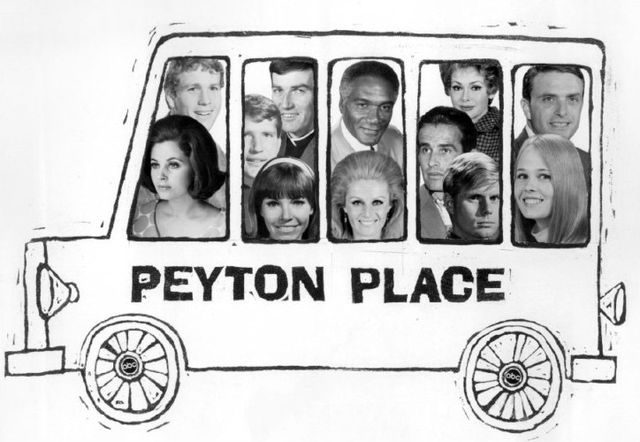
Not sure which one is me, which one is R.M., and who the other people are.
Do you need an identity content marketing expert today?
Do you need someone who not only knows biometrics and content marketing, but also all the other factors, their uses, and even knows the tangled history of L-1?
Someone who offers:
- No identity learning curve?
- No content learning curve?
- Proven results?
If I can help you create your identity content, contact me.
- Email me at john.bredehoft@bredemarket.com.
- Book a meeting with me at calendly.com/bredemarket.
- Contact me at bredemarket.com/contact/.
- Subscribe to my mailing list at http://eepurl.com/hdHIaT.

 Bredemarket