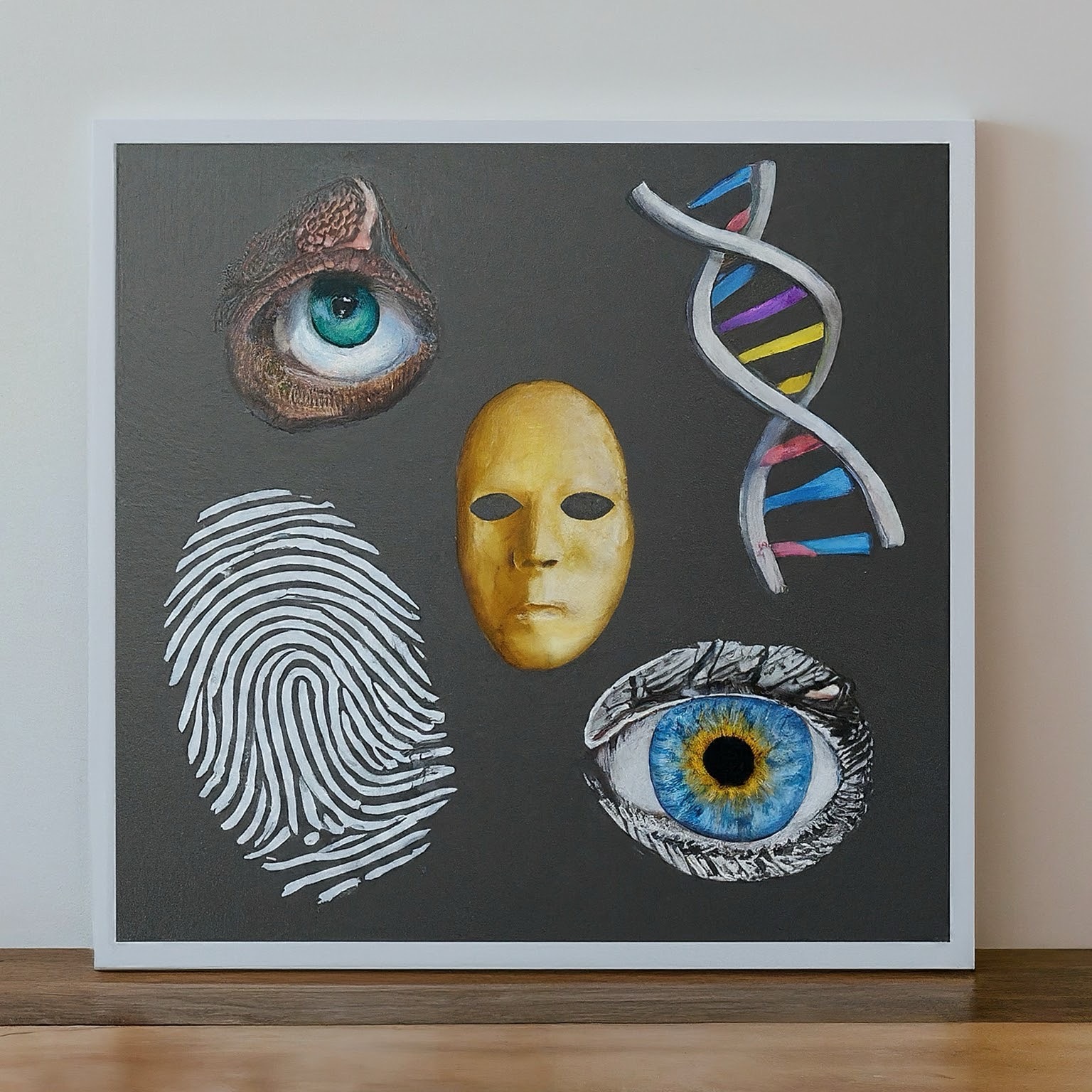
MFB = Multi Factor Biasification?

There’s a paper from Itiel Dror that I need to read. Its title is “Biased and Biasing: The Hidden Bias Cascade and Bias Snowball Effects.”

Here is a portion of the abstract:

“Cognitive bias…impacts each and every aspect of the justice and legal systems, from the initial engagement of police officers attending the crime scene, through the forensic examination, and all the way to the final outcome of the jurors’ verdict and the judges’ sentencing. It impacts not only the subjective elements in the justice and legal systems but also the more objective scientific elements, such as forensic fingerprinting and DNA….[S]uch errors in the final outcome rarely occur because they require that the shortcomings in each element be coordinated and aligned with the other elements. However, in the justice and legal systems, the different elements are not independent; they are coordinated and mutually support and bias each other, creating and enabling hidden bias cascade and bias snowball effects.”

Examples of Biometric Technology Misuse

If I become known for anything in biometrics, I want to be known for my extremely frequent use of the words “investigative lead.” 

Whether you are talking about DNA or facial recognition, these types of biometric evidence should not be the sole evidence used to arrest a person.

For an example of why DNA shouldn’t be your only evidence, see my recent post about Amanda Knox.

Facial recognition misuse in law enforcement

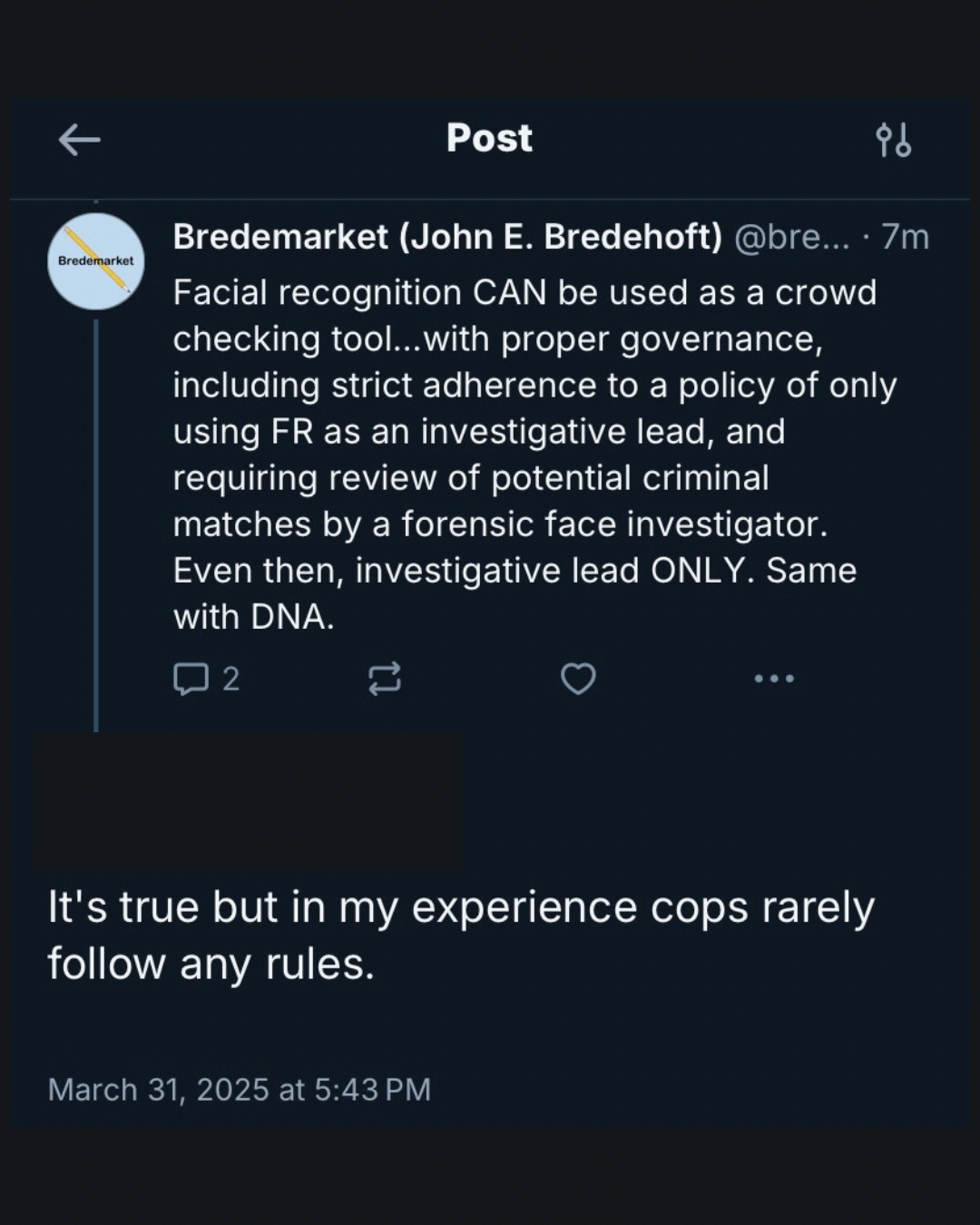
Regarding facial recognition, I wrote this in a social media conversation earlier today:

“Facial recognition CAN be used as a crowd checking tool…with proper governance, including strict adherence to a policy of only using FR as an investigative lead, and requiring review of potential criminal matches by a forensic face investigator. Even then, investigative lead ONLY. Same with DNA.”

I received this reply:

“It’s true but in my experience cops rarely follow any rules.”

Now I could have claimed that this view was exaggerated, but there are enough examples of cops who DON’T follow the rules to tarnish all of them. 

Revisiting Robert Williams’ Detroit arrest

I’ve already addressed the sad story of Robert Williams, who was “wrongfully arrested based upon faulty facial recognition results.”

At the time, I did not explicitly share the circumstances behind Williams’ arrest:

“The complaint alleges that the surveillance footage is poorly lit, the shoplifter never looks directly into the camera and still a Detroit Police Department detective ran a grainy photo made from the footage through the facial recognition technology.”

There’s so much that isn’t said here, such as whether a forensic face examiner made a definitive conclusion, or if the detective just took the first candidate from the list and ran with it.

But I am willing to bet that there was no independent evidence placing Williams at the shop location.

Why this matters

The thing that concerns me about all this? It just provides ammo to the people who want to ban facial recognition entirely.

Not realizing that the alternative—manual witness (mis)identification—is far more inaccurate and far more racist.

But the controversy would pretty much go away if criminal investigators only used facial recognition and DNA as investigative leads.

DNA Contamination Has Consequences. Ask Amanda Knox.

(Part of the biometric product marketing expert series)

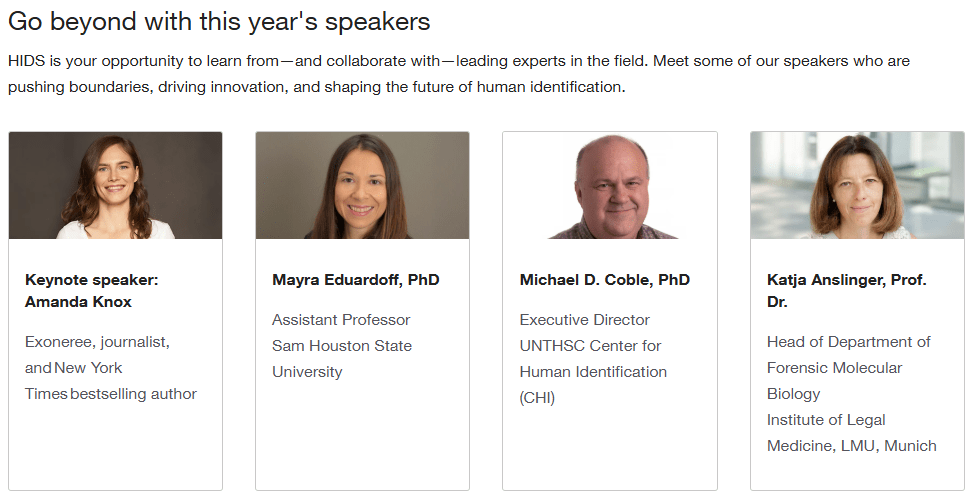
When Thermo Fisher Scientific announced Amanda Knox as one of its speakers at the HIDS 2025 conference (image from the HIDS 2025 conference page), I wondered why. All of knew of Knox was that she was imprisoned for a murder in Italy that she didn’t commit.

I then found the details.

Prosecution Exhibit #36 was a knife discovered in the kitchen drawer of Raffaele Sollecito’s apartment on November 6, 2007. The police claimed this knife, 31 m long with a 17.5 cm blade, to be the murder weapon. It was the only physical evidence linking Amanda Knox to the murder. The Scientific Police claimed to have found Knox’s DNA on the handle and [murder victim Meredith] Kercher’s DNA on the blade and called the knife the “double DNA knife.”

Because DNA proves all, Knox was sent off to prison.

Only there was one problem.

Later re-evaluation of the knife left little doubt that the DNA found on the knife was the result of contamination.

You see, DNA evidence is examined in a lab. So if someone takes DNA from a knife blade and compares it to DNA taken from Amanda Knox, and if the samples have a high probability of a match, then you can make a determination.

But what if there were a mixture of the DNA, and Knox’s sample was mixed with the knife sample at some point, or misidentified? Then Knox’s DNA would match to Knox’s DNA, but that may have nothing to do with the DNA that was originally on the knife.

And you know nothing.

Clean Fast Contactless Biometrics

(Image from DW)

The COVID-19 pandemic may be a fading memory, but contactless biometrics remains popular.

Back in the 1980s, you had to touch something to get the then-new “livescan” machines to capture your fingerprints. While you no longer had messy ink-stained fingers, you still had to put your fingers on a surface that a bunch of other people had touched. What if they had the flu? Or AIDS (the health scare of that decade)?

As we began to see facial recognition in the 1990s and early 2000s, one advantage of that biometric modality was that it was CONTACTLESS. Unlike fingerprints, you didn’t have to press your face against a surface.

But then fingerprints also became contactless after someone asked an unusual question in 2004.

“Actually this effort launched before that, as there were efforts in 2004 and following years to capture a complete set of fingerprints within 15 seconds…”

This WAS an unusual question, considering that it took a minute or more to capture inked prints or livescan prints. And the government expected this to happen in 15 seconds?

A decade later several companies were pursuing this in conjunction with NIST. There were two solutions: dedicated kiosks such as MorphoWave from my then-employer MorphoTrak, and solutions that used a standard smartphone camera such as SlapShot from Sciometrics and Integrated Biometrics.

The, um, upshot is that now contactless fingerprint and face capture are both a thing. Contactless capture provides speed, and even the impossible 15 second capture target was blown away. 

Fingers and faces can be captured “on the move” in airports, border crossings, stadiums, and university lunchrooms and other educational facilities.

Perhaps Iris and voice can be considered contactless and fast. 

But even “rapid” DNA isn’t that rapid.

DNA Chain of Custody

(Part of the biometric product marketing expert series)

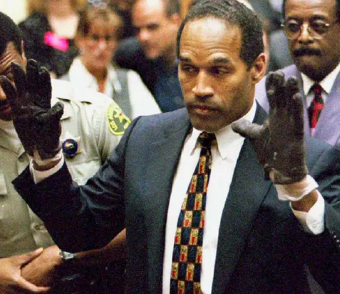
Gloves can play a big part in a variety of criminal investigations…including the ones that DON’T result in live coverage and international headlines.

The phrase of the day is “chain of custody,” because DNA evidence can be incredibly accurate…until it isn’t.

H/T CSIDDS for this story.

Sydney Criminal Lawyers shared the story of a police officer sent to prison for falsifying evidence.

“A property in Cairnlea, Melbourne, was identified as a safe house for…drugs, with police finding pieces of evidence — including a pair of gloves that had a man’s DNA on them. Despite only having the one source of DNA on the gloves, (former police detective Jye) Symes falsely reported that he found a woman’s DNA on the gloves.”

For the misconduct, Symes received “a full term of 3 years imprisonment with an 18-month non-parole period.”

Don’t mess with the evidence.

Don’t Miss the Boat

Bredemarket helps identity/biometric firms.

  • Finger, face, iris, voice, DNA, ID documents, geolocation, and even knowledge.
  • Content-Proposal-Analysis. (Bredemarket’s “CPA.”)

Don’t miss the boat.

Augment your team with Bredemarket.

Find out more.

Don’t miss the boat.

In Case You Missed My Incessant “Biometric Product Marketing Expert” Promotion

Biometric product marketing expert.

Modalities: Finger, face, iris, voice, DNA.

Plus other factors: IDs, data.

John E. Bredehoft has worked for Incode, IDEMIA, MorphoTrak, Motorola, Printrak, and a host of Bredemarket clients.

(Some images AI-generated by Google Gemini.)

Biometric product marketing expert.

When Rapid DNA Isn’t

(Part of the biometric product marketing expert series)

Have you heard of rapid DNA?

Perhaps not as fast as Brazilian race car driver Antonella Bassani, but fast enough.

This post discusses the pros and cons of rapid DNA, specifically in the MV Conception post mortem investigation.

DNA…and fingerprints

I’ve worked with rapid DNA since I was in Proposals at MorphoTrak, when our corporate parent Safran had an agreement with IntegenX (now part of Thermo Fisher Scientific). Rapid DNA, when suitable for use, can process a DNA sample in 90 minutes or less, providing a quick way to process DNA in both criminal and non-criminal cases.

By Zephyris – Own work, CC BY-SA 3.0, https://commons.wikimedia.org/w/index.php?curid=15027555

But as I explain below, sometimes rapid DNA isn’t so rapid. In those cases, investigators have to turn to boring biometric technologies such as fingerprints instead. Fingerprints are a much older identification modality, but they still work.

DNA, fingerprints…and dental records

Bredemarket recently purchased access to a Journal of Forensic Sciences article entitled “Advances in postmortem fingerprinting: Applications in disaster victim identification” (https://doi.org/10.1111/1556-4029.15513) by Bryan T. Johnson MSFS of the Federal Bureau of Investigation Laboratory in Quantico. The abstract (which is NOT behind the paywall) states the following, in part:

In disaster victim identification (DVI), fingerprints, DNA, and dental examinations are the three primary methods of identification….As DNA technology continues to evolve, RAPID DNA may now identify a profile within 90 min if the remains are not degraded or comingled. When there are true unknowns, however, there is usually no DNA, dental, or medical records to retrieve for a comparison without a tentative identity.

In the body of the paper itself (which IS behind the paywall), Johnson cites one example in which use of rapid DNA would have DELAYED the process.

DVI depends upon comparison of a DNA sample from a victim with a previous DNA sample taken from the victim. If this is not available, then the victim’s DNA is compared against the DNA of a family member.

Identifying foreign nationals aboard the MV Conception

MV Conception shortly before it sank. By National Transportation Safety Board – Screen Shot 2020-10-16 at 3.00.40 PM, Public Domain, https://commons.wikimedia.org/w/index.php?curid=95326656

When the MV Conception boat caught fire and sank in September 2019, 34 people lost their lives and had to be positively identified.

While most of the MV Conception victims were California residents, some victims were from Singapore and India. It would take weeks to collect and transport the DNA samples from the victims’ family members back to the United States for comparison against the DNA samples from the victims. Weeks of uncertainty during which family members had no confirmation that their relatives were among the deceased.

However, because the foreign victims were visitors to the United States, they had fingerprints on file with the Department of Homeland Security. Interagency agreements allowed the investigating agencies to access the DHS fingerprints and compare them against the fingerprints of the foreign victims, providing tentative identifications within three days. (Fingerprint identification is a 100+ year old method, but it works!) These tentative identifications were subsequently confirmed when the familial DNA samples arrived.

What does this mean?

The message here is NOT that “fingerprints rule, DNA drools.” In some cases the investigators could not retrieve fingerprints from the bodies and HAD to use rapid DNA.

The message here is that when identifying people, you should use ANY biometric (or non-biometric) modality that is available: fingerprints, DNA, dental records, driver’s licenses, Radio Shack Battery Club card, or anything else that provides an investigative lead or a positive identification.

And ideally, you should use more than one factor of authentication.

And now a word from our sponsor

By the way, if you have a biometric story to tell, Bredemarket can help…um…drive results. Perhaps not as fast as Bassani, but fast enough.

The Secret to Beating Half of All Fortune 500 Marketers and Growing Your Business

(Updated blog post count 10/23/2023)

Always take advantage of your competitors’ weaknesses.

This post describes an easy way to take advantage of your competitors. If they’re not blogging, make sure your firm is blogging. And the post provides hard numbers that demonstrate why your firm should be blogging.

Who uses blogging?

According to an infographic using 2017 data, 50% of the top 200 Fortune 500 companies had a public corporate blog.

Which means that half of those companies don’t have a public corporate blog.

The same infographic also revealed the following:

  • 86% of B2B companies are blogging. (Or, 14% are not.)
  • 68% of social media marketers use blogs in their social media strategy. (Or, 32% don’t.)
  • 45% of marketers saying blogging is the #1 most important piece of their content strategy.
  • Small businesses under 10 employees allocate 42% of their marketing budget to content marketing.

So obviously some firms believe blogging is important, while others don’t.

What difference does this make for your firm?

What results do blogging companies receive?

In my view, the figures above are way too low. 100% of all Fortune 500 companies, 100% of B2B companies should be blogging, and 100% of social media marketers should incorporate blogging.

Why? Because blogging produces tangible results.

Blogging produces awareness

Blogging is an ideal way to promote awareness of your firm and its offerings. From the same infographic:

  • 77% of internet users read blogs.
  • Internet users in the US spend 3x more time on blogs than they do on email.
  • Companies who blog receive 97% more links to their websites.
  • 70% of consumers learn about a company through articles rather than ads.
  • The average company that blogs generates 55% more website visitors.

Blogging produces leads

Awareness is nice, but does awareness convert into leads?

  • Small businesses that blog get 126% more lead growth than those who don’t.
  • B2B marketers that use blogs get 67% more leads than those who do not.

Blogging produces conversions

From https://www.youtube.com/watch?v=B8EnslW6Uao

Getting leads from blogging is nice, but show me the money! What about conversions?

  • Marketers who have prioritized blogging are 13x more likely to enjoy positive ROI.
  • 92% of companies who blog multiple times per day have acquired a customer from their blog.

Take a look at those last two bullets related to conversion again. Blogging is correlated with positive ROI (I won’t claim causation, but anecdotally I believe it), and blogging helps firms acquire customers. So if your firm wants to make money, get blogging.

What should YOUR company do?

With numbers like this, shouldn’t all companies be blogging?

But don’t share these facts with your competitors. Keep them to yourself so that you gain a competitive advantage over them.

Now you just need to write those blog posts.

How can I help?

And if you need help with the actual writing, I, John E Bredehoft of Bredemarket, can help.

From Sandeep Kumar, A. Sony, Rahul Hooda, Yashpal Singh, in Journal of Advances and Scholarly Researches in Allied Education | Multidisciplinary Academic Research, “Multimodal Biometric Authentication System for Automatic Certificate Generation.”
By Unknown author – postcard, Public Domain, https://commons.wikimedia.org/w/index.php?curid=7691878

In most cases, I can provide your blog post via my standard package, the Bredemarket 400 Short Writing Service. I offer other packages and options if you have special needs.

Authorize Bredemarket, Ontario California’s content marketing expert, to help your firm produce words that return results.

Bredemarket logo

Fill Your Company Gap With A Biometric Content Marketing Expert

Companies often have a lot of things they want to do, but don’t have the people to do them. It takes a long time to hire someone, and it even takes time to find a consultant that knows your industry and can do the work.

This affects identity/biometric companies just like it affects other companies. When an identity/biometric company needs a specific type of expertise and needs it NOW, it’s often hard to find the person they need.

If your company needs a biometric content marketing expert (or an identity content marketing expert) NOW, you’ve come to the right place—Bredemarket. Bredemarket has no identity learning curve, no content learning curve, and offers proven results.

Identity/biometric consulting in the 1990s

I remember when I first started working as an identity/biometric consultant, long before Bredemarket was a thing.

OK, not quite THAT long ago. I started working in biometrics in the 1990s—NOT the 1940s.

In 1994, the proposals department at Printrak International needed additional writers due to the manager’s maternity leave, and she was so valuable that Printrak needed to bring in TWO consultants to take her place.

At least initially, the other consultant and I couldn’t fill the manager’s shoes.

Designed by Freepik.
  • Both of us could write.
  • Both of us could spell “AFIS.”
  • Both of us could spell “RAID.” Not the bug spray, but the storage mechanism that stored all those “huge” fingerprint images.
  • But on that first night that I was cranking out proposal letters for something called a “Latent Station 2000,” I didn’t really know WHAT I was writing about.

As time went on, the other consultant and I learned much more—so much that the company brought both of us on as full-time employees.

After we were hired full-time, we spent a combined 45+ years at Printrak and its corporate successors in proposals, marketing, and product management positions, contributing to industry knowledge.

Which shows that learning how to spell “AFIS” can have long-term benefits.

Printrak’s problem

When Printrak needed biometric proposal writing experts quickly, it found two people who filled the bill. Sort of.

But neither of us knew biometrics before we started consuting at Printrak.

And I had never written a proposal before I started consulting at Printrak. (I had written an RFP. Sort of.)

But frankly, there weren’t a lot of identity/biometric consultants out in the field in the 1990s. There were the 20th century equivalents of Applied Forensic Services LLC, but at the time I don’t think there were any 20th century equivalents of Tandem Technical Writing LLC.

The 21st century solution

Unlike the 1990s, identity/biometric firms that need consulting help have many options. In addition to Applied Forensic Services and Tandem Technical Writing you have…me.

Mike and Laurel can tell you what they can do, and I heartily endorse both of them.

Let me share with you why I call myself a biometric content marketing expert who can help your identity/biometric company get marketing content out now:

  • No identity learning curve
  • No content learning curve
  • Proven results

No identity learning curve

I have worked with finger, face, iris, DNA, and other biometrics, as well as government-issued identity documents and geolocation. If you are interested, you can read my Bredemarket blog posts that mention the following topics:

No content learning curve

Because I’ve produced both external and internal content on identity/biometric topics, I offer the experience to produce your content in a number of formats.

  • External content: account-based marketing content, articles, blog posts (I am the identity/biometric blog expert), case studies, data sheets, partner comarketing content, presentations, proposals, sales literature sheets, scientific book chapters, smartphone application content (events), social media posts, web page content, and white papers.
  • Internal content: battlecards, competitive analyses, demonstration scripts (events), email internal newsletters, FAQs, multi-year plans, playbooks, project plans, proposal templates, quality improvement documents, requirements documents, strategic analyses, and website/social media analyses.

Proven results

Read about them here.

So how can you take advantage of my identity/biometric expertise?

If you need day-one help for an identity/biometric content marketing or proposal writing project, consider Bredemarket.