Why is a Customer Focus Important?

From the Gary Fly / Brooks Group article “7 Tips for Implementing a Customer-Centric Strategy,” at https://brooksgroup.com/sales-training-blog/7-tips-implementing-customer-centric-strategy/

When a customer approaches your firm to do business, the top-of-mind concern of the customer is the customer’s own problem.

  • If you begin your conversation with the customer by discussing the customer’s problem (and, once you understand the problem, how you can solve it), you will build an immediate rapport with the customer. After all, you are addressing what is important to the customer.
  • If you instead begin your conversation with the customer by talking about yourself, the customer will not care. You are not addressing what is important to the customer.

If you would like to know more, see this curated collection of Bredemarket blog posts on the topic of customer focus.

Nothing Bad Will Happen if You Don’t Update Your Content…Right?

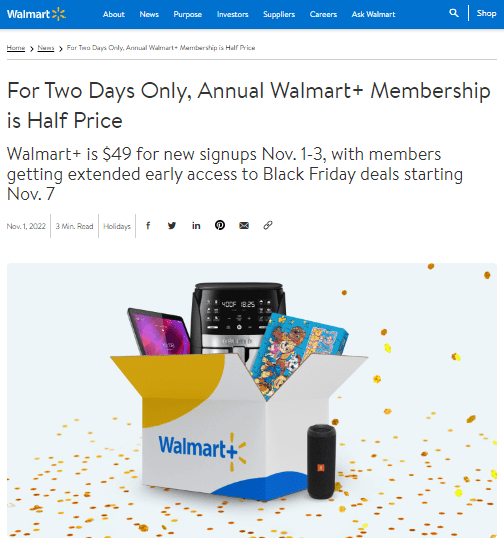
Before you rush to click https://corporate.walmart.com/news/2022/11/01/for-two-days-only-annual-walmart-membership-is-half-price, this half price deal was for 2022, not 2023. You missed out!

The marketing experts insist that calls to action must emphasize urgency.

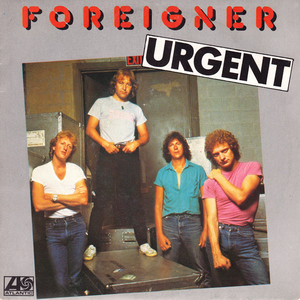
The cover art can be obtained from the record label., Fair use, https://en.wikipedia.org/w/index.php?curid=2404116

If you want a prospect to do something, stir up the necessary emotions: fear, fear of missing out (FOMO), anger, whatever. The call to action should emphasize that they act NOW. TV Tropes provides a few examples of these calls to action:

“If you call before midnight tonight, we’ll give you a special bonus!”

“Call in the next 5 minutes for a special bonus!”

“Call quickly because we’re only giving this offer to the first 100 callers.”

From https://tvtropes.org/pmwiki/pmwiki.php/Main/IfYouCallBeforeMidnightTonight

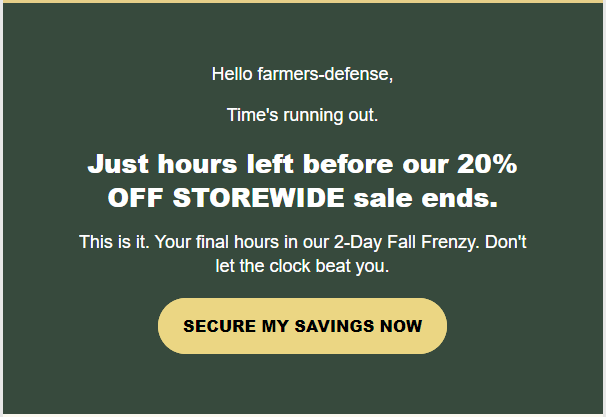
Of course, you don’t need to advertise on television to use these lines. It’s just as easy to use these messages online, as in the Walmart example above, or in this example.

A lot of marketers (and for that matter, a lot of scam artists) listen to the advice of marketing experts. As a result, we are bombarded with “act now” advertising.

In fact, we are bombarded with so much of this junk that we end up tuning it out.

Designed by Freepik.

In the end, NOTHING is urgent.

Or is it?

Is a task important?

Urgency is one thing, but importance is another. Which is why the Eisenhower matrix distinguishes between the two.

For example, your firm’s website may be in urgent need of an upgrade. Perhaps the information on the website is out of date or completely incorrect. (Maybe you DON’T support Windows XP any more.)

But is that important?

  • If an issue is urgent and important, you would have updated your website already to avoid being fired.
  • If an issue is urgent but not important, then it’s something that you could delegate to a content marketing expert. (Ahem. We’ll revisit this later.)

Incidentally, I have some thoughts about the use of “importance” in the Eisenhower matrix, but I’ll save those for another post.

Is a task urgent?

Of course, this assumes that the issue is urgent. Perhaps it’s not urgent at all. As I said before, a lot of sellers like to create a false sense of urgency.

As a consultant, I often find prospects and clients who believe that a particular issue is NOT urgent. You can easily get that Walmart+ membership a few days later, at a minimally higher price. And you can easily wait on updating your online content.

If something is not urgent, then you have two choices depending upon the issue’s importance.

  1. If an issue is not urgent and not important, then why bother taking care of it at all? Let it slide.
  2. If an issue is not urgent but is important, then you had better do it…but there’s no rush. You don’t have to take care of it before midnight tonight. Next week will do…or the week after that.
Designed by Freepik.

Compounding the issue is that if you DO update your website, you’re NOT going to see an immediate return on investment.

It takes longer than three days for content marketing to yield results. One source estimates four to five months. Another source says six to twelve months. Joe Pulizzi (quoted by Neil Patel) estimates 15 to 17 months. And all the sources say that their estimates may not apply to your particular case.

From https://bredemarket.com/2023/08/26/on-trust-funnels/

So if a content marketing update isn’t going to yield immediate results, what’s the rush? Spending time making the updates, or even spending the time managing someone else to make the updates, takes away from tasks that yield financial results NOW.

Designed by Freepik.

If it’s not urgent but is important…

If your outdated content is not urgent but is important, then there’s no rush to take care of the issue.

You can delay it for weeks or even for months, and you’re NEVER going to have a problem.

Until…

By hughepaul from London, UK – Children trying to steal some more bikes from Evans Chalk Farm, CC BY 2.0, https://commons.wikimedia.org/w/index.php?curid=16042615

…a competitor with up-to-date and accurate content swoops in and loots your prospects AND your existing customers away from you.

(Are you worried?)

Why would old content cause you to lose a customer? Because your outdated information demonstrates that you don’t care about your customers. After all, you’re not focused on your customers’ need for up-to-date information on your products and services.

(Are you angry?)

And if you lose enough prospects and customers to result in a revenue drop, then you may lose your job. Then you won’t have to worry about the company’s outdated content any more. Problem solved!

(Are you scared?)

By El mundo de Laura from Puebla, Mexico – Resanadita… pero a nuestra economía!, CC BY 2.0, https://commons.wikimedia.org/w/index.php?curid=7744198

But if it’s urgent but is not important…

Of course, there’s the other alternative that I discussed earlier in this post, in which your content issues are urgent, but they’re not important enough to devote your own resources to them.

In that case, you can contract the work out to someone who will perform the majority of the work in updating your content.

(While retaining a say in your content. That should make you happy.)

And I know where you can contract that work. Bredemarket.

Bredemarket can help you create content that converts prospects and drives content results. Why?

If you’re sold on using Bredemarket to create customer-focused messaging, there are three ways to move forward with your content project. Or you can just join the Bredemarket mailing list to stay informed.

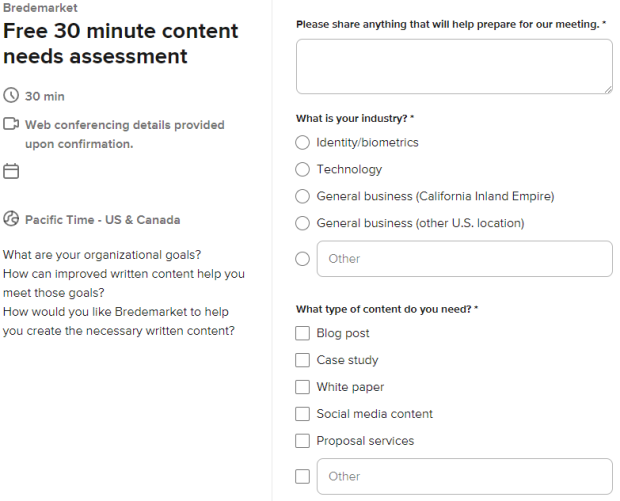
  • Book a meeting with me at calendly.com/bredemarket. Be sure to fill out the information form so I can best help you.

You’re Doing It Wrong™: One Piece of Collateral Isn’t Enough

If you create a single piece of collateral for your product or service and say that you’ve completed your job, “you’re doing it wrong™.”

Product marketers and content marketers know that you’re just starting.

John Bonini on content vs. channel

John Bonini advises that you separate the content from the channel.

What most companies practice is not actually content marketing. It’s channel marketing.

They’re not marketing the content. They’re marketing the channel.

From LinkedIn.

You can express a single thought on multiple channels. And as far as I’m concerned, the more the merrier.

Me on “expert” advice on social media channel adoption

Incidentally, that’s why I object to the “expert” advice that I master one social media channel first before branching out into others.

If I adopt that strategy and ONLY market on LinkedIn and ignore Instagram and TikTok, I am automatically GUARANTEEING that the potential Instagram and TikTok audiences will never hear about my offer.

“How I Expanded 1 Idea into 31 Pieces of Content”

I’ve expressed my thoughts on this social media “expert” advice before:

The latter post, entitled “How I Expanded 1 Idea into 31 Pieces of Content,” described how…well, the title is pretty self-explanatory. I created 31 pieces of content based on a single idea.

The 31 pieces of content, published both through the Bredemarket channels (see above) and via my personal channels (including my jebredcal blog and my LinkedIn page), all increased the chance that SOMEONE would see the underlying message: “Your prospects don’t care about your technology.” Each piece of content was tuned for the particular channel and its target audience, ensuring that the message would resonate.

By Christian Gidlöf – Photo taken by Christian Gidlöf, Public Domain, https://commons.wikimedia.org/w/index.php?curid=2065930

As I often say, repurposing is good.

Speaking of repurposing, I’ve already adapted the words above and published them in four different ways (this is the fourth)…and counting. No TikTok video yet though.

Can Bredemarket help you repurpose or create content?

And if I can do this for me, I can do this for you.

Bredemarket can help you create content that converts prospects and drives content results. Why?

If you’re sold on using Bredemarket to create customer-focused messaging (remember: your prospects don’t care about your technology), or even if you’re not and just want to talk about your needs, there are three ways to move forward with your content project. Or you can just join the Bredemarket mailing list to stay informed.

  • Book a meeting with me at calendly.com/bredemarket. Be sure to fill out the information form so I can best help you.
Bredemarket logo

When Your Firm’s Differentiation REPELS Your Customers

I constantly preach that firms should not adopt “me too” messaging. Ideally, a firm’s messaging should not copy its competitors, but should instead state why the firm is better than all others, and why all the other firms are worthless in comparison.

But when a firm differentiates itself, there is always a danger that the firm will forget one important thing: how will the customers react to the firm’s differentiated messaging? Will the differentiation turn the customers off?

Trust me, it can happen.

A multinational’s great idea that backfired

Some time ago, I was working for a multinational firm that clearly differentiated itself from all of its competitors. This multinational had been around for some time and was known for its particular tone.

I’m not going to reveal the name of the particular multinational firm, or the tone it radiated.
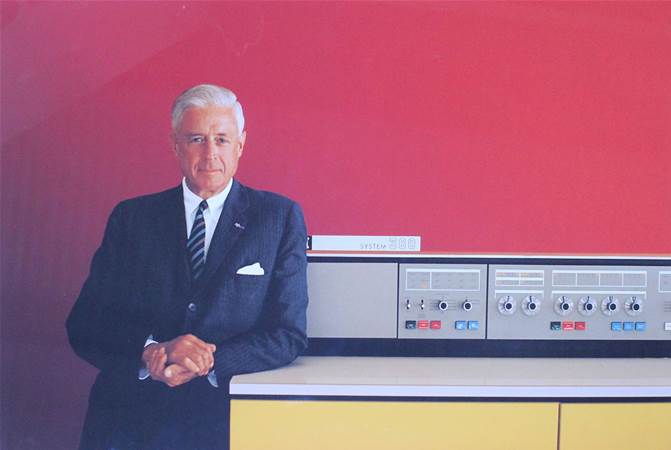
The IBM illustrative example

But the tone used by that multinational was just as powerful as the tone IBM exuded in the mid-20th century.

In the 1950s and 1960s, “Big Blue” meant a particular style.

The man and his machine: Thomas Watson Jr. strikes a pose to sell the System/360. From https://www.itnews.com.au/gallery/ibm-gets-hammered-inside-big-blues-huge-clearance-auction-531538

IBM acquired an image of an army of men (this was the mid-20th century, after all), all wearing blue suits and white shirts.

Even as late as the 1980s (and beyond), the men of IBM had the look:

The men of IBM didn’t wear facial hair and wore only white shirts….IBM wanted to make sure they did not offend a prospect or a customer. Research had shown them that some people don’t like facial hair…so no facial hair. Research had also shown that people assume a degree of professionalism with a white shirt that may not be assumed if a person wore a blue or yellow shirt. So white shirts it is!

From https://bulanetwork.com/4004-dont-be-offensive-ibms-white-shirt-strategy/
The look persists today. Won Sung-shik, general manager of IBM Korea (IBM Korea). From https://www.koreaherald.com/view.php?ud=20210708000919

Back to my multinational

Let’s leave the theoretical example and return to the situation at my distinctive multinational.

Now the multinational that employed me long ago didn’t have a “blue suit-white shirt” dress code, but in other ways the multinational had a distinctive tone that radiated from the executive level down to the ranks of the worker bees like myself.

  • We all embodied this tone.
  • We spoke in this tone.
  • And our marketing messages also spoke in this tone, regardless of the market segment to which our marketers were speaking.
  • Even if the market segment had a very different tone than the one the multinational was projecting. (Imagine the Military Police selling the Vietnam War in Haight-Ashbury.)
By By S.Sgt. Albert R. Simpson. Department of Defense. Department of the Army. Office of the Deputy Chief of Staff for Operations. U.S. Army Audiovisual Center. – This tag does not indicate the copyright status of the attached work. A normal copyright tag is still required. See Commons:Licensing., Public Domain, https://commons.wikimedia.org/w/index.php?curid=1111279

When my multinational sent its marketing collateral out to prospects who used a very different tone than that used by the multinational, the prospects hated it. The marketing department received multiple complaints from salespeople whose clients were repelled by the material.

By Mindaugas Danys from Vilnius, Lithuania, Lithuania – scream and shout, CC BY 2.0, https://commons.wikimedia.org/w/index.php?curid=44907034

One of my coworkers surveyed the negative campaign reaction with dismay. The coworker had joined the company after the marketing tone was adopted. My coworker asked a simple question: “What type of customer focus group testing was conducted before we used this tone on a marketing campaign?”

“We didn’t conduct any focus group testing,” my coworker was told. “We didn’t need any.”

In retrospect, I guess we did need to test the messaging before we delivered it.

Four ways to balance customer focus and a firm’s distinctive messaging

If you’ve been reading recent Bredemarket blog posts, you’re probably not surprised that this is turning into yet another blog post about customer focus. But how do you balance a firm’s distinctive differentiators with a focus on its customers?

  1. First, you need to ensure that you are truly focusing on the customer, and not what you think the customer is. If a military police officer were to try to put himself in the shoes of a hippie to imagine what the hippie’s life was like, the MP would fail utterly.
  2. Second, you need to ensure that your messaging to the customer is something the customer cares about. It’s fine to adopt your “big blue” tone, but make sure that your messaging resonates with the customer.
  3. Third, your messaging should also explain why you do what you do. Why did IBM create System/360 computers, after all?
  4. Fourth, your messaging needs some smarts. Just because your prospect bought a refrigerator on Monday doesn’t mean that they’ll want a second refrigerator on Tuesday.

If you follow these and similar steps, then it (almost) doesn’t matter if your firm’s generic messaging is antithetical to the values of your prospects. Because your prospects won’t get generic messaging, but messaging that is focused for them.

EBM (Etowah Brunch Market), not IBM. But close enough. From https://www.instagram.com/p/Cs_m-vNOAN3/

Customer Focus When You Are NOT the Customer

All of us talk about customer focus. Heck, I just spent the past few days talking about it 31 times, starting here.

But when you are talking about customer focus, make sure that you are talking about the customer’s true focus.

Let me explain.

Walking in the customer’s shoes is not a good fit

By Ericavalle – Own work, CC BY-SA 3.0, https://commons.wikimedia.org/w/index.php?curid=20018109

(See the alternate interpretation at the end of the post.)

Back in 2015, Scott Faucheux wrote a piece on what he called consumer focus. When talking about the voice of the consumer, Faucheux said this:

Many marketers (and most non-marketers), when asked to consider the VOC, will ask themselves, “What would I do if I were in that consumer’s shoes?”

From https://www.linkedin.com/pulse/wwcd-what-would-consumer-do-scott-faucheux/

Sounds reasonable, but Faucheux points out an inherent flaw in this approach.

[T]he perspective considered would be based on how I would respond if I were placed in that situation, which is still anchored in my own personal biography and is therefore subject to my own personal biases.

From https://www.linkedin.com/pulse/wwcd-what-would-consumer-do-scott-faucheux/

But what is the customer saying?

But even if you understand the true voice of the customer, you might go in the wrong direction. Bill McDonald describes what happens when you take VOC as gospel:

The basic concept behind “voice of the customer” calls for you to sell to his or her stated needs. After all, your customers (clients/prospects) know their situation and what they need.  Right?

From https://pleinairestrategies.com/2017/07/3-reasons-to-ignore-voice-of-customer/
By Created by Uwe Kils (iceberg) and User:Wiska Bodo (sky). – (Work by Uwe Kils) http://www.ecoscope.com/iceberg/, CC BY-SA 3.0, https://commons.wikimedia.org/w/index.php?curid=209674

But this assumes that the customer knows what they need. Often they may not know what they truly need.

To stand out from the crowd, you need a different approach. You need a way to lay the groundwork for change by telling prospects something they don’t already know about their status quo situation.

From https://pleinairestrategies.com/2017/07/3-reasons-to-ignore-voice-of-customer/

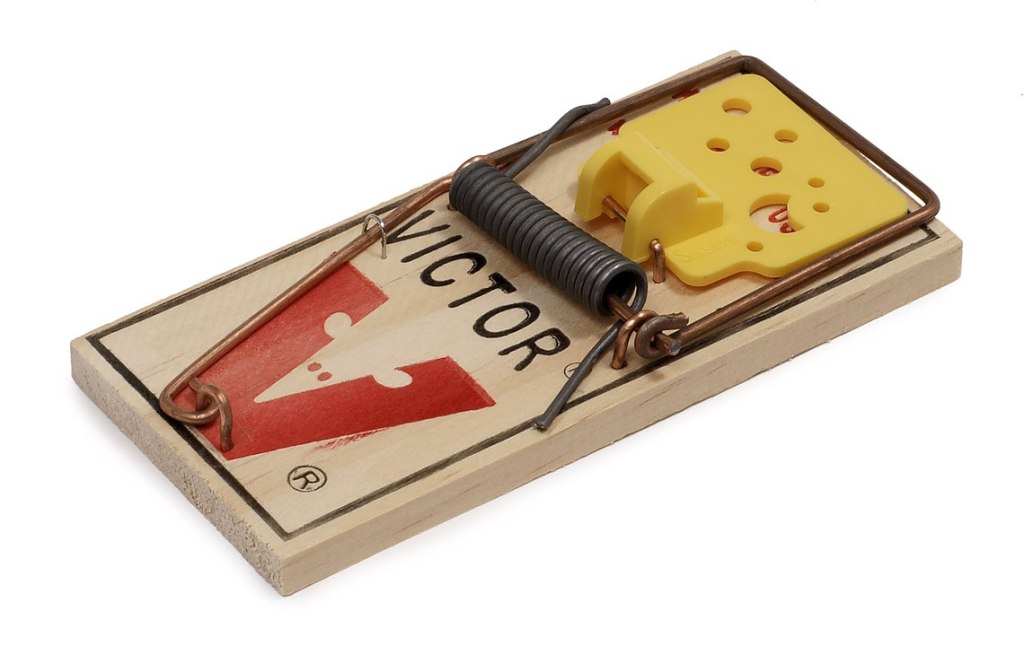
I won’t go as far as McDonald and say that VOC should be ignored. Instead, VOC should be augmented by probing questions—and responses—that go beyond “we need a better mousetrap” surface solutions.

By Evan-Amos – Own work, Public Domain, https://commons.wikimedia.org/w/index.php?curid=11489714

Maybe your customer needs a hungry cat.

By DecafPotato – Own work, CC BY-SA 4.0, https://commons.wikimedia.org/w/index.php?curid=125544790

“Walking in My Shoes” (Not Taylor’s version)

As for me, when I hear the phrase “walking in my shoes,” I don’t think about shoes. I think about a song.

From https://www.youtube.com/watch?v=GrC_yuzO-Ss

Your Prospects Don’t Care About Your Technology

Technologists, you know how tough it is to create a technology product.

  • You have to assemble the technology, or perhaps create the technology yourself.
  • You have to work on the most minute details and make sure that everything is just right.
  • It takes a great deal of effort.

What if your product story is ignored?

But when you want to tell the story about your product, and all the effort you put into it, your prospects ignore everything you say. You might as well not be there.

Designed by Freepik. And yes, you need to woo your prospects.

Do you know why your prospects are ignoring you?

Because they don’t care about you. It’s all about them.

People want to satisfy their own needs

But the “it’s all about me” attitude is actually a GOOD thing, if you can harness it in your messaging. Let’s face it; we all have an “it’s all about me” attitude because we want to satisfy our needs.

  • You want to satisfy your own needs because you only care about selling your product.
  • I want to satisfy my own needs because I only care about selling Bredemarket’s services. (I’ll get to the selling part later.)
  • And your prospects want to satisfy their own needs because they only care about their problems. And because of your customers’ self-focus, they’re only going to care about your product if it solves their problems.

So when it’s time to tell the story about your product, don’t talk about your technology.

Adopt a customer focus

Instead of talking about you, talk about them.

From the Gary Fly / Brooks Group article “7 Tips for Implementing a Customer-Centric Strategy,” at https://brooksgroup.com/sales-training-blog/7-tips-implementing-customer-centric-strategy/

Adopt a customer focus and talk about things that your prospects care about, such as how your product will solve their problems.

  • Do your customers struggle for visibility, or awareness? Will your technology help their visibility?
  • Do your customers struggle when considered against the competition? Will your technology help them stand out?
  • Do your customers struggle to make money (conversion)? Will your technology help them make money?
  • Do your customers require better ease of use, speed, accuracy, or other benefits? Do the features of your technology provide those benefits?

In short, your customers need to understand how you can solve their problems.

How do you adopt a customer focus?

But how can you make sure that your story resonates with your prospects?

Perhaps you need a guide to work with you to craft your story. Yes, I can serve as a guide to solve YOUR problem.

If you’re interested in how Bredemarket, the technology content marketing expert, can help you create a customer-focused story for your prospects, find out how to create technology content that converts

Does Self-Focus (Rather than Customer Focus) Lead to Blandness?

45 million years ago, in 2018, Amanda Retzki pointed out a danger that can occur when firms talk about their accomplishments rather than focusing on their customers’ needs: bland, “me too” text.

One of the biggest reasons so much marketing today sounds the same (“exceptional customer service,” “commitment to quality,” “expertise that adds value,” etc.) is that companies fall back on what’s easy and what they believe they’re supposed to do: talk about themselves.

Seems like it should make sense, but it doesn’t.

Turns out, this “learn more about us!” approach will put you in the fast lane to bland, overused, cookie-cutter marketing (and results)…. 

If everyone follows the same marketing approach, everyone ends up with the same results: mediocrity.

From https://www.weidert.com/blog/tips-to-differentiate-company-marketing
By Slastic – Own work, Public Domain, https://commons.wikimedia.org/w/index.php?curid=7260831

(UPDATE OCTOBER 23, 2023: “SIX QUESTIONS YOUR CONTENT CREATOR SHOULD ASK YOU IS SO 2022. DOWNLOAD THE NEWER “SEVEN QUESTIONS YOUR CONTENT CREATOR SHOULD ASK YOU” HERE.)

If I may talk about myself for a moment (but hopefully in a differentiating way), this is one of the main benefits of my inclusion of the “why” question as part of the six questions that I like to ask potential Bredemarket clients. When I ask one of my prospects why their company exists, I get some valuable answers that help differentiate the prospect from everyone else.

As I said in a previous post on product positioning:

If your product suddenly disappeared from the world, would your target audience (or, in marketing-speak, personas) care?

Would your target audience be just as happy with the competitive offerings, or would the target audience lose out if your product’s distinctive benefits were suddenly no longer available?

From https://bredemarket.com/2023/08/28/quick-thoughts-on-product-positioning/

Hopefully, the world WILL feel a loss if your product disappeared.

But too often a company’s products appear to be just like the products from all the other companies, which makes the consideration phase (where prospects try to differentiate between products) difficult.

For example, I am familiar with a particular industry that has over 80 competitors. And most of those competitors use the word “trust” as a key part of their marketing strategy. (Not just a tactic; a strategy.) Spend some time reading the websites of all of the companies in this particular industry, and you’ll see the word “trust” so many times that it will become mind-numbing.

Here are a few examples:

power a world of digital trust

The Ultimate Guide to Trust & Safety

Businesses have just 10 minutes to establish trust

Optimize Identity Verification for Growth, Innovation, Trust

how to prioritize trust and safety

Various sources.

How can you tell the companies apart?

Only one company dares to buck the trend: Black Ink Tech, who champions (and has trademarked) the slogan “Truth Over Trust.”

Then again, Bredemarket can’t talk. I shudder to think of the count of times that I’ve used some form of the word “collaborate.”

We all need to avoid blandness and stand out by exhibiting customer focus.

Bottles of Huy Fong Sriracha Hot Chili Sauce.
The pride of Irwindale. Fair use. From https://www.huyfong.com/

Do you need to differentiate your offering from others?

Authorize Bredemarket, Ontario California’s content marketing expert, to help your firm produce words that return results.

Quick Thoughts on Product Positioning

I’ve already talked about product launches in my recent On “Go-to-Market” post, but having worked in product marketing for some time, I know that there are a lot of tasks that your firm has to perform even when you’re not launching a new product.

One of those tasks is product positioning. And it’s important.

Product positioning isn’t quite as complex as global positioning (a factor of authentication, by the way). By Paulsava – Own work, CC BY-SA 4.0, https://commons.wikimedia.org/w/index.php?curid=47209685

Six questions for product positioning

There are some complex ways to define product positioning, probably even at the level of Shipley 96-step complexity. But when I can, I gravitate for the simple.

Here’s how I define product positioning:

(UPDATE OCTOBER 23, 2023: “SIX QUESTIONS YOUR CONTENT CREATOR SHOULD ASK YOU IS SO 2022. DOWNLOAD THE NEWER “SEVEN QUESTIONS YOUR CONTENT CREATOR SHOULD ASK YOU” HERE.)

  • Why your product (or service) exists.
  • How your product benefits your customers.
  • What your product is (but note that I asked the first two questions before this one).
  • Other facets of your product (goal, benefits, target audience—if this is new to you, catch up by reading my e-book on the six questions your content creator should ask you).

Why the questions matter

If your product suddenly disappeared from the world, would your target audience (or, in marketing-speak, personas) care?

Would your target audience be just as happy with the competitive offerings, or would the target audience lose out if your product’s distinctive benefits were suddenly no longer available?

Choose one (food) to go forever. Reproduced at https://josephmallozzi.com/2020/10/01/october-1-2020-lets-chat/

There are a number of popular memes that ask you to remove one popular food from a list of foods. What would happen if, instead of asking about pizza and tacos, you asked your target audience about your product and eight others? Would your product survive the cut, or would your prospects happily dump it?

Position your product so that it always remains top of mind for your prospects.

  • Answer the questions above.
  • Create content that is focused on the customer (not focused on your firm).
  • Create content that explains benefits (not features) to your prospects.

No, I Don’t Need Two Refrigerators

In some cases, a customer’s purchase of a particular product or service indicates possible future interest in that same product or service.

But this indicator only goes so far.

If you just purchased an expensive item such as a refrigerator or a car or a house, chances are you’re not in the market for a second refrigerator or car or house.

Arthur “Two Sheds” Jackson (a Monty Python character who became a beer) is a notable exception to the rule. From https://untappd.com/b/ganz-anders-brau-arthur-two-sheds-jackson/4055802

But some companies don’t understand that high priced items are not usually purchased in bulk. According to a parcelLabs emotional shipping experience study:

People have lost patience with brands who send incorrect or inaccurate marketing materials. In fact, brands that do this are driving their customers away.

Of the 49% that say they were incorrectly targeted to in the last six months, 42% said they immediately unsubscribed from the brand’s marketing content. Another 24% chose to block the brand on social media!

43% said that they received marketing for a product they’d already bought.

You have to be more intelligent in your customer focus. Once a customer has purchased an item, they may—or may not—need a second one. In a different context, I have referred to this as “somewhat you why,” or the need to understand the intent of what someone is doing.

If I’m standing outside my former employer’s office with some computer equipment, perhaps I’m returning equipment to my former employer.

If I’m purchasing a refrigerator, in most cases I’m not contemplating purchase of a second one immediately.

Although if I’m opening a chain of restaurants…

From By Id1337x – Own work, Public Domain, https://commons.wikimedia.org/w/index.php?curid=6354368