Your Prospects Don’t Care About Your Technology

Technologists, you know how tough it is to create a technology product.

  • You have to assemble the technology, or perhaps create the technology yourself.
  • You have to work on the most minute details and make sure that everything is just right.
  • It takes a great deal of effort.

What if your product story is ignored?

But when you want to tell the story about your product, and all the effort you put into it, your prospects ignore everything you say. You might as well not be there.

Designed by Freepik. And yes, you need to woo your prospects.

Do you know why your prospects are ignoring you?

Because they don’t care about you. It’s all about them.

People want to satisfy their own needs

But the “it’s all about me” attitude is actually a GOOD thing, if you can harness it in your messaging. Let’s face it; we all have an “it’s all about me” attitude because we want to satisfy our needs.

  • You want to satisfy your own needs because you only care about selling your product.
  • I want to satisfy my own needs because I only care about selling Bredemarket’s services. (I’ll get to the selling part later.)
  • And your prospects want to satisfy their own needs because they only care about their problems. And because of your customers’ self-focus, they’re only going to care about your product if it solves their problems.

So when it’s time to tell the story about your product, don’t talk about your technology.

Adopt a customer focus

Instead of talking about you, talk about them.

From the Gary Fly / Brooks Group article “7 Tips for Implementing a Customer-Centric Strategy,” at https://brooksgroup.com/sales-training-blog/7-tips-implementing-customer-centric-strategy/

Adopt a customer focus and talk about things that your prospects care about, such as how your product will solve their problems.

  • Do your customers struggle for visibility, or awareness? Will your technology help their visibility?
  • Do your customers struggle when considered against the competition? Will your technology help them stand out?
  • Do your customers struggle to make money (conversion)? Will your technology help them make money?
  • Do your customers require better ease of use, speed, accuracy, or other benefits? Do the features of your technology provide those benefits?

In short, your customers need to understand how you can solve their problems.

How do you adopt a customer focus?

But how can you make sure that your story resonates with your prospects?

Perhaps you need a guide to work with you to craft your story. Yes, I can serve as a guide to solve YOUR problem.

If you’re interested in how Bredemarket, the technology content marketing expert, can help you create a customer-focused story for your prospects, find out how to create technology content that converts

Does Self-Focus (Rather than Customer Focus) Lead to Blandness?

45 million years ago, in 2018, Amanda Retzki pointed out a danger that can occur when firms talk about their accomplishments rather than focusing on their customers’ needs: bland, “me too” text.

One of the biggest reasons so much marketing today sounds the same (“exceptional customer service,” “commitment to quality,” “expertise that adds value,” etc.) is that companies fall back on what’s easy and what they believe they’re supposed to do: talk about themselves.

Seems like it should make sense, but it doesn’t.

Turns out, this “learn more about us!” approach will put you in the fast lane to bland, overused, cookie-cutter marketing (and results)…. 

If everyone follows the same marketing approach, everyone ends up with the same results: mediocrity.

From https://www.weidert.com/blog/tips-to-differentiate-company-marketing
By Slastic – Own work, Public Domain, https://commons.wikimedia.org/w/index.php?curid=7260831

(UPDATE OCTOBER 23, 2023: “SIX QUESTIONS YOUR CONTENT CREATOR SHOULD ASK YOU IS SO 2022. DOWNLOAD THE NEWER “SEVEN QUESTIONS YOUR CONTENT CREATOR SHOULD ASK YOU” HERE.)

If I may talk about myself for a moment (but hopefully in a differentiating way), this is one of the main benefits of my inclusion of the “why” question as part of the six questions that I like to ask potential Bredemarket clients. When I ask one of my prospects why their company exists, I get some valuable answers that help differentiate the prospect from everyone else.

As I said in a previous post on product positioning:

If your product suddenly disappeared from the world, would your target audience (or, in marketing-speak, personas) care?

Would your target audience be just as happy with the competitive offerings, or would the target audience lose out if your product’s distinctive benefits were suddenly no longer available?

From https://bredemarket.com/2023/08/28/quick-thoughts-on-product-positioning/

Hopefully, the world WILL feel a loss if your product disappeared.

But too often a company’s products appear to be just like the products from all the other companies, which makes the consideration phase (where prospects try to differentiate between products) difficult.

For example, I am familiar with a particular industry that has over 80 competitors. And most of those competitors use the word “trust” as a key part of their marketing strategy. (Not just a tactic; a strategy.) Spend some time reading the websites of all of the companies in this particular industry, and you’ll see the word “trust” so many times that it will become mind-numbing.

Here are a few examples:

power a world of digital trust

The Ultimate Guide to Trust & Safety

Businesses have just 10 minutes to establish trust

Optimize Identity Verification for Growth, Innovation, Trust

how to prioritize trust and safety

Various sources.

How can you tell the companies apart?

Only one company dares to buck the trend: Black Ink Tech, who champions (and has trademarked) the slogan “Truth Over Trust.”

Then again, Bredemarket can’t talk. I shudder to think of the count of times that I’ve used some form of the word “collaborate.”

We all need to avoid blandness and stand out by exhibiting customer focus.

Bottles of Huy Fong Sriracha Hot Chili Sauce.
The pride of Irwindale. Fair use. From https://www.huyfong.com/

Do you need to differentiate your offering from others?

Authorize Bredemarket, Ontario California’s content marketing expert, to help your firm produce words that return results.

Quick Thoughts on Product Positioning

I’ve already talked about product launches in my recent On “Go-to-Market” post, but having worked in product marketing for some time, I know that there are a lot of tasks that your firm has to perform even when you’re not launching a new product.

One of those tasks is product positioning. And it’s important.

Product positioning isn’t quite as complex as global positioning (a factor of authentication, by the way). By Paulsava – Own work, CC BY-SA 4.0, https://commons.wikimedia.org/w/index.php?curid=47209685

Six questions for product positioning

There are some complex ways to define product positioning, probably even at the level of Shipley 96-step complexity. But when I can, I gravitate for the simple.

Here’s how I define product positioning:

(UPDATE OCTOBER 23, 2023: “SIX QUESTIONS YOUR CONTENT CREATOR SHOULD ASK YOU IS SO 2022. DOWNLOAD THE NEWER “SEVEN QUESTIONS YOUR CONTENT CREATOR SHOULD ASK YOU” HERE.)

  • Why your product (or service) exists.
  • How your product benefits your customers.
  • What your product is (but note that I asked the first two questions before this one).
  • Other facets of your product (goal, benefits, target audience—if this is new to you, catch up by reading my e-book on the six questions your content creator should ask you).

Why the questions matter

If your product suddenly disappeared from the world, would your target audience (or, in marketing-speak, personas) care?

Would your target audience be just as happy with the competitive offerings, or would the target audience lose out if your product’s distinctive benefits were suddenly no longer available?

Choose one (food) to go forever. Reproduced at https://josephmallozzi.com/2020/10/01/october-1-2020-lets-chat/

There are a number of popular memes that ask you to remove one popular food from a list of foods. What would happen if, instead of asking about pizza and tacos, you asked your target audience about your product and eight others? Would your product survive the cut, or would your prospects happily dump it?

Position your product so that it always remains top of mind for your prospects.

  • Answer the questions above.
  • Create content that is focused on the customer (not focused on your firm).
  • Create content that explains benefits (not features) to your prospects.

No, I Don’t Need Two Refrigerators

In some cases, a customer’s purchase of a particular product or service indicates possible future interest in that same product or service.

But this indicator only goes so far.

If you just purchased an expensive item such as a refrigerator or a car or a house, chances are you’re not in the market for a second refrigerator or car or house.

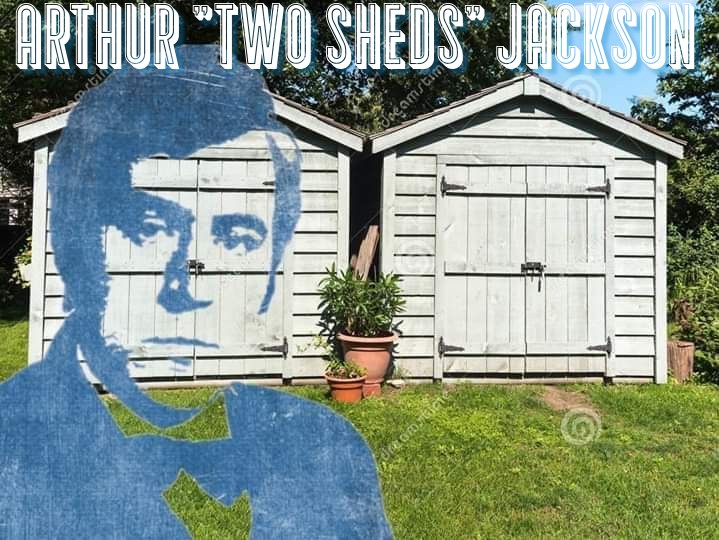
Arthur “Two Sheds” Jackson (a Monty Python character who became a beer) is a notable exception to the rule. From https://untappd.com/b/ganz-anders-brau-arthur-two-sheds-jackson/4055802

But some companies don’t understand that high priced items are not usually purchased in bulk. According to a parcelLabs emotional shipping experience study:

People have lost patience with brands who send incorrect or inaccurate marketing materials. In fact, brands that do this are driving their customers away.

Of the 49% that say they were incorrectly targeted to in the last six months, 42% said they immediately unsubscribed from the brand’s marketing content. Another 24% chose to block the brand on social media!

43% said that they received marketing for a product they’d already bought.

You have to be more intelligent in your customer focus. Once a customer has purchased an item, they may—or may not—need a second one. In a different context, I have referred to this as “somewhat you why,” or the need to understand the intent of what someone is doing.

If I’m standing outside my former employer’s office with some computer equipment, perhaps I’m returning equipment to my former employer.

If I’m purchasing a refrigerator, in most cases I’m not contemplating purchase of a second one immediately.

Although if I’m opening a chain of restaurants…

From By Id1337x – Own work, Public Domain, https://commons.wikimedia.org/w/index.php?curid=6354368

Is the Funnel Consideration Phase Quantitative or Qualitative?

From Venn Marketing, “Awareness, Consideration, Conversion: A 4 Minute Intro To Marketing 101.” (Link)

The picture above shows a simple sales funnel example. The second of the three items in the funnel is the “consideration” phase.

  • In that phase, those people who are aware of you can then consider your products and services.
  • If they like what they see, they move on to conversion and hopefully buy your products and services.

But how do prospects in the funnel consideration phase evaluate your offering as opposed to competitor offerings? Is it truly a quantitative and logical process, or is it in reality qualitative and emotional?

Quantitative consideration

For purposes of this post, let’s assume that there are two competing companies, Bredemarket and Debamarket, who are fighting each other for business.

OK, maybe not literally. I have never boxed in my life. By Royal Navy official photographer – http://media.iwm.org.uk/iwm/mediaLib//31/media-31189/large.jpg This photograph A 29806 comes from the collections of the Imperial War Museums., Public Domain, https://commons.wikimedia.org/w/index.php?curid=25124750

Second, let’s assume that Bredemarket and Debamarket offer similar services to their prospects and customers:

  • Blog posts
  • Case studies
  • White papers

Finally, let’s assume that a big government agency (the BGA) has issued a Request for Proposal (RFP) for blog/case study/white paper services, and Bredemarket and Debamarket are the two companies competing for the award.

Source selection

Now I’m not a big-time pre-acquisition consultant like Applied Forensic Services, but I’ve been around long enough to know how pre-acquisition consultants work—especially when working with big government agencies like BGA.

A pre-acquisition consultant will develop a Source Selection Plan (SSP). In competitive procurements such as the one in this example, the SSP will state exactly how proposals will be evaluated, and how the best proposal will be selected.

Here is the U.S. Government’s guidance on Source Selection Plans. (link)

SSPs can be very complex for certain opportunities, and not so complex for others. In all cases, the SSP dictates the evaluation criteria used to select the best vendor.

Michael Ropp of RFP360 has published a very simple example of how a particular group of proposal responses may be evaluated.

The weighted scoring approach breaks down your RFP evaluation criteria and assigns a value to each question or section. For example, your RFP criteria may consider questions of technical expertise, capabilities, data security, HR policies and diversity and sustainability. Weighted scoring prioritizes the criteria that are most important to your business by assigning them a point or percentage value. So your weighted scoring criteria may look like this: 

  • Technical expertise – 25%
  • Capabilities – 40%
  • Data security – 10%
  • HR policies – 10%
  • Diversity and sustainability – 15%
RFP360, “A guide to RFP evaluation criteria: Basics, tips and examples.” (Link)

Individual question evaluation

In most cases the evaluator doesn’t look at the entire technical expertise section and give it a single score. In large RFPs, the technical expertise section may consist of 96 questions (or even 960 questions), each of which is evaluated and fed into the total technical expertise score.

For example, the RFP may include a question such as this one, and the responses from the bidders (Bredemarket and Debamarket) are evaluated.

QuestionBredemarketDebamarket
96. The completed blog post shall include no references to 1960s songs.0.8 points awarded.

While many Bredemarket blog posts comply, “How Remote Work Preserves Your Brain” does not.
1.0 points awarded.

Debamarket fully complies.
Example evaluation of a proposal response to an individual RFP question.

Final quantitative recommendation for award

Now repeat this evaluation method for every RFP question in every RFP category and you end up with a report in which one of the vendors receives more points than the other and is clearly the preferred bidder. Here’s an example from a U.S. Nuclear Regulatory Commission proposal source selection process. (And you can bet that a nuclear agency doesn’t use an evaluation method that is, um, haphazard.)

From U.S. Nuclear Regulatory Commission, “FINAL EVALUATION RECOMMENDATION REPORT FOR
PROPOSALS SUBMITTED UNDER RFP NO. RQ-CIO-01-0290
ENTITLED, “INFRASTRUCTURE SERVICES AND SUPPORT
CONTRACT (ISSC).”” (link)

So what does this example show us? It shows that L-3 Communications/EER received a total score of 83.8, while its closest competitor Logicon only received a score of 80. So EER is the preferred bidder.

So in our example, BGA would evaluate Bredemarket and Debamarket, come up with a number for each bidder, and award the contract to the bidder with the highest evaluation score.

Quantitative recommendation for the little guys

Perhaps people who aren’t big government agencies don’t go to this level of detail, but many prospects who reach the consideration phase use some type of quantitative method.

For example, if the (non-weighted) pros for an item under consideration outnumber the cons, go for it.

“What are Pro and Con Lists?” (link)

Five pros and only three cons. Do it!

All quantative, objective, and straightforward.

If people really evaluate that way.

But is consideration quantitative?

Now of course the discussion above assumes that everyone is a logical being who solely evaluates based on objective criteria.

But even Sages such as myself may deviate from the objective norm. Here’s a story of one time when I did just that.

As I previously mentioned, I had never written a proposal response before I started consulting for Printrak. But I had written a Request for Proposal before I joined Printrak. For a prior employer (located in Monterey Park), I worked with an outside consultant to develop an RFP to help my employer select a vendor for a computer system. The questions posed to the bidders were not complex. Frankly, it was a simple checklist. Does your computer system perform function A? Does it perform function B?

The outside consultant and I sent the final RFP to several computer system providers, and received several proposals in response.

  • A few of the proposals checked every box, saying that they could do anything and everything. We threw those proposals out, because we knew that no one could meet every one of our demanding requirements. (“I can’t trust that response.”)
  • We focused on the proposals that included more realistic responses. (“That respondent really thought about the questions.”)

As you can see, we introduced a qualitative, emotional element into our consideration phase.

According to Kaye Putnam, this is not uncommon.

Qualitative consideration

Humans think that we are very logical when we consider alternatives, and that our consideration processes are logical and quantitative. Putnam has looked into this assertion and says that it’s hogwash. Take a look at this excerpt from Putnam’s first brand psychology secret:

Your brand has to meet people at that emotional level – if you want them to buy. (And I know you do!)  

Findings from several studies support this, but one of the most seminal was outlined in Harvard professor Gerald Zellman’s 2003 book, The Subconscious Mind of the Consumer. Zellman’s research and learnings prompted him to come to the industry-rocking conclusion that, “95 percent of our purchase decision making takes place in the subconscious mind.”

From Kaye Putnam, “7 Brand Psychology Secrets – Revealed!” (link)

But how can the subconscious mind affect quantitative evaluations?

While logic still has to play SOME role in a purchase decision (as Putnam further explains in her first and second brand psychology secrets), a positive or negative predisposition toward a bidder can influence the quantitative scores.

Imagine if the evaluators got together and discussed the Bredmarket and Debamarket responses to question 96, above. The back and forth between the evaluators may sound like this:

  • “OK, we’re up to question 96. That’s a no brainer, because no one would ever put song references in a BGA blog post.”
  • “Yeah, but did you see Bredemarket’s own post that has multiple references to the song ‘Dead Man’s Curve’?”
  • “So what? Bredemarket would never do that when writing for a government agency. That piece was solely for Bredemarket.”
  • “How do you KNOW that Bredemarket would never slip a song reference into a BGA post? You know, I really don’t trust that guy. He wore two different colored shoes to the orals presentation, a brown one and a black one. Someone as slopy as that could do anything, with huge consequences for BGA communications. I’m deducting points from Bredemarket for question 96.”
  • “OK. I think you’re being ridiculous, but if you say so.”

And just like that, your quantitative logical consideration process is exposed as a bunch of subconscious emotional feelings.

How does qualitative consideration affect you?

As you develop your collateral for the consideration phase, you need to go beyond logic (even if you have a Sage predisposition) and speak to the needs and pain points of your prospects.

Yes, pain.

Spock is behaving illogically. Jayenkai, “Pain – Star Trek Remix.” (link)

Here’s a example from my law enforcement automated fingerprint identificaiton system (AFIS) days.

  • If your prospect is a police chief who is sick and tired of burglars ransacking homes and causing problems for the police department, don’t tell your prospect about your AFIS image detail or independent accuracy testing results. After all, 1000 ppi and 99.967 accuracy are only numbers.
  • Provide the police chief with customer-focused benefit statements about how quickly your AFIS will clean up the burglary problem in the town, giving residents peace of mind and the police department less stress.

If you can appeal to those emotions, that police chief will consider you more highly and move on to conversion (purchase).

Can I help?

If your messaging concentrates on things your prospects don’t care about, most of them will ignore you and not shower you with money. Using the wrong words with your customers impacts your livelihood, and may leave you poor and destitute with few possessions.

Remember what I said about pain points? By Unknown author – Library of Congress[1], Public Domain, https://commons.wikimedia.org/w/index.php?curid=6237178

If you need a writer to work with you to ensure that your written content includes the right words that speak directly to your prospects, hire…Debamarket!

Oh wait. Debamarket is fictional.

OK, talk to Bredemarket then.

We Don’t Need Customer Focus Because Our Product Is So Great

It’s always good to question previous thoughts, and that’s what I’m doing right now.

In the past, I’ve stated that the best way to attract awareness (and eventually revenue) is to focus on customers and their needs.

But what if I’m wrong? (I’ve been wrong before.)

The benefits of product focus

What if a stellar product is all that is needed to attract business and gain revenue?

After all, aren’t the benefits of a great product obvious at first glance?

If we stop with the claptrap of understanding our target audiences and pain points and stuff, and just focus on ourselves and our great product, we’ll have a clearly focused message…

…um…

…that no one will give a hoot about.

“OK, I’m glad that your Super Duper Gizmo is so great, but so what? What’s in it for me? Why should I care?”

Never mind.

From https://www.youtube.com/watch?v=OjYoNL4g5Vg

I guess I was right when talking about customer focus.

Sure, talk about your product, but start with the customer first and their needs. Then say how your product benefits the customer, exceeds their needs, and delights them.

(So why did I write this piece of content? Neil Patel’s Ubersuggest…um, suggested that my website needed yet another article on customer focus. I thought I’d do something a little different this time.)

When You Wear a Blindfold, You Cannot See

I know that “when you wear a blindfold you cannot see” is one of those seemingly obvious truths, like “the heat was hot” (the band America) or “water is wet” (a preschool teacher).

You would never intentionally blindfold yourself while driving a car, or while performing any other activity that requires your vision.

By Sergeant Tracee L. Jackson – II Marine Expeditionary Force / United States Marine Corps (Photo ID: 200572693429), Public Domain, https://commons.wikimedia.org/w/index.php?curid=23006576

But when we conduct business, do we unintentionally blindfold ourselves when we don’t focus on our customers’ needs?

The client who lost $100 million

Sometimes we are oblivious of our own actions.

Ali Al-Faraj wrote a LinkedIn post about the importance of cultural awareness. He started the post as follows:

I had a client who lost a $100M investment–

Because of slamming his hand on a table.

From https://www.linkedin.com/posts/alfaraj_i-had-a-client-who-lost-a-100m-investment-activity-7042162614579163137-VyDr/

Al-Faraq’s client was a “hardcore” American salesperson who was presenting to a Middle Eastern investment firm. His hardcore presentation didn’t go well, especially when he started slamming his hand on the table.

To see how the investment firm reacted, see the original post. (Although I guess you already figured out that the client didn’t get the money. Al-Faraq didn’t bury the lede.)

What the client did BEFORE he slammed his hand on the table

But when I read Al-Faraq’s description of the meeting, I realized that his client lost his audience long before the client pounded the table. Al-Faraq’s post includes this key sentence.

He dove into the presentation.

From https://www.linkedin.com/posts/alfaraj_i-had-a-client-who-lost-a-100m-investment-activity-7042162614579163137-VyDr/

Middle Easterners value cultivating relationships. In fact, this source asserts that “[i]nitial meetings are all about relationship building.” Diving into a presentation during the first meeting before your audience knows about you is understandably upsetting.

But this is not limited to business with Middle Easterners.

Diving into a presentation without understanding your audience is a serious mistake in any culture.

The Work Lady does her homework

Many years ago, before Motorola Solutions and Motorola Mobility were formed, there was one Motorola. And one year when I was at Motorola, our Biometric User’s Conference engaged Jan McInnis, The Work Lady, as one of our speakers.

When she spoke at our conference, McInnis did not just dive into her morning presentation unprepared. Before her session, she spent some time with the conference organizers and asked questions about her audience, so that she could understand them better and why this “AFIS” thing was so important to these people.

She didn’t just do that for us. It’s a standard part of her process.

Prior to the event, Jan has a conference call with your conference committee to incorporate specific challenges your group is facing into her keynote!

From https://theworklady.com/

Her homework makes all the difference for her audiences.

Focus on the customer

McInnis, Al-Faraq, and many of you understand that to have success with a customer, you have to understand the customer. As Ali Al-Faraq says: “Knowing your audience is key!”

Don’t intentionally blindfold yourself before approaching your customer.

How Bredemarket’s Six Questions Support Strategic Content Marketing

(UPDATE OCTOBER 23, 2023: “SIX QUESTIONS YOUR CONTENT CREATOR SHOULD ASK YOU IS SO 2022. DOWNLOAD THE NEWER “SEVEN QUESTIONS YOUR CONTENT CREATOR SHOULD ASK YOU” HERE.)

Just for fun, I’m going to challenge my assertion that there are six questions that your content creator must ask you before creating content.

I ought to know about these six questions. As a content marketing expert, I wrote the book on the topic.

To download this e-book, go to https://bredemarket.com/2022/12/18/six-questions-your-content-creator-should-ask-you-the-e-book-version/.

If you haven’t read the e-book, the six questions are:

  1. Why?
  2. How?
  3. What?
  4. Goal?
  5. Benefits?
  6. Target Audience?

The idea is that your content creator hosts a kickoff session, asks you the six questions, and only then starts to create the content in question—the blog post, case study, or whatever.

Are the six questions overkill?

But simplicity advocates may argue that those six questions are five questions too many.

Analysis paralysis may prevent you from moving forward at all, much less realizing your content creation goal. Perhaps you should be more efficient and just put pen to paper and, as the shoe people say, just do it.

I found a content marketing expert who agreed with this assertion, and wrote a post entitled “In marketing, move quickly.”

That content marketing expert was…well, it was me.

I ran across a local company (which I will not name) that issued a press release in December 2021. In part, the press release mentioned the local company’s new dedication to the marketing function.

From https://bredemarket.com/2022/03/23/in-marketing-move-quickly/

The company had hired an international marketing firm “to develop comprehensive marketing strategies….We expect their work to incorporate a website redesign, brand refresh, new strategic messaging and content, as well as focused video and digital campaigns.”

So, when I wrote the “In marketing, move quickly” post three months later, what had this international marketing firm accomplished in the interim?

The website has a full slew of data sheets on the company’s products, and I found a 2017 brochure that effectively served as a white paper. But that’s it; no other white papers, and no case studies describing happy customers’ experiences.

The company’s YouTube channel has two videos from 2021.

The company’s Facebook page hasn’t posted anything since 2017.

Neither of the company’s LinkedIn pages (yes, the company has two LinkedIn pages) has any posts.

From https://bredemarket.com/2022/03/23/in-marketing-move-quickly/

Now I have no visibility into this particular company, but I’ve been around the block to guess that the international marketing firm was probably still in the analysis stage, optimizing synergies according to “out of the box” criteria, to ensure bleeding-edge revenue maximization.

No, the six questions aren’t overkill

After reviewing what I wrote before in that blog post, I realize that my e-book lacks a very important point.

Don’t spend three months answering the six questions.

I shouldn’t HAVE to say this, but perhaps it’s safer to explicitly say it.

Now practices can very from consultation to consultation, but it’s very likely that a content creator and their client can breeze through those six questions in half an hour or less.

Or maybe the client can answer the questions on their own before the meeting.

If your content marketing expert schedules six one-hour meetings (or worse still, workshops) to address the six questions, run away!

(Is the content marketing expert billing by the hour?)

And the six questions create a content strategy

There’s something else that I failed to explicitly say in my e-book.

Not only do the answers to the six questions benefit that one piece of content, but they benefit everything else that your company does.

For example, let’s say that a content marketing expert is working with a gourmet ice cream shoppe (not a shop, but a shoppe), and the proprietor (Jane Cold) answers the “how” question as follows:

At Jane’s Gourmet Ice Cream Shoppe, we keep the internal dining temperature below 50 degrees Fahrenheit to ensure that our guests enjoy ice cream as it was meant to be enjoyed. We inform our guests of our temperature policy beforehand to ensure they bring proper attire.

By Edward S. Curtis – This file was derived from: Inupiat Family from Noatak, Alaska, 1929, Edward S. Curtis.jpg, Public Domain, https://commons.wikimedia.org/w/index.php?curid=24953870

Now let’s say that the piece of content in question is a social media post describing a new farkleberry ice cream flavor. (Thanks, Live Eat Learn.)

By Eric Hunt – Own work, CC BY-SA 4.0, https://commons.wikimedia.org/w/index.php?curid=85068643

While the content marketing expert will use the answer to the “how” question to create the content, the ramifications go far beyond the social media post itself.

  • Perhaps the new flavor could be branded “Frigid Farkleberry” to suggest how the ice cream should best be enjoyed.
  • Maybe in addition to branding, the “how” answer may even influence pricing. Perhaps prices incorporate the number “32,” as in a single-scoop price of $4.32. (Yes that price is high, but after all this is an ice cream shoppe.)

And what of future social media posts?

Let me clue you in on a little secret: once your content marketing expert has asked the six questions for the first piece of content, the kickoff is much quicker for subsequent pieces of content.

Chances are the basic “why” and “how” won’t change, although some of the later questions such as the target audience could change for each individual piece of content.

So without explicitly trying to do so, the six questions have created a de facto content marketing strategy. After creating five pieces of content, you’ve essentially defined your company’s mission, purpose, and differentiators, and may have defined as many as five separate vertical markets along the way.

Not a bad investment of thirty minutes of time.

(But a terrible investment of three months of time.)

An exercise for you

Normally this is the point where I’d tell you to contact me if you want to use Bredemarket’s content marketing expertise. But this time I’m going to do something different.

  • Why don’t you think of a piece of content you want to create?
  • Once you’ve decided on that, why don’t you ask yourself the six questions?
  • Once you have the answers, why don’t you see what type of overall content marketing strategy you can shape, solely based on those six responses?