What You Don’t Know (About Your Identity/Biometric Company Website) Can Hurt You

The identity/biometric company (not named here) never formally learned why prospects shunned the outdated information on its website.

This is NOT the website I’m discussing in this post. The referenced identity company is not named here. This is the website of some other company, taken from https://www.webdesignmuseum.org/gallery/microsoft-1996.

The identity/biometric company never formally learned how its references to renamed companies and non-existent companies were repelling those very companies…and the prospects who knew the website information was inaccurate.

April 11, 2023: “It’s unclear what the change means for Twitter.” From https://www.seattletimes.com/business/twitter-company-no-longer-exists-is-now-part-of-musks-x/.

With those types of mistakes, the entire company’s positioning became suspect.

It could have learned…if it had met with me. But it chose not to do so.

NOTE TO SELF: INSERT STRONG FEAR UNCERTAINTY AND DOUBT PARAGRAPH HERE. TAKE OUT THESE TWO SENTENCES BEFORE POSTING THE FINAL VERSION!!!

(By the way…while the identity/biometric company never received this information formally, it did receive it informally…because such information is presumably critically important to the company.)

How many other companies are in the same situation, with:

(T)here are clues within the content itself as to its age, such as “Our product is now supported on Windows 7.”

My mini-survey shows that of the 40+ identity firms with blogs, about one-third of them HAVEN’T SAID A SINGLE THING to their prospects and customers in the last two months.

Is there a 29-year veteran of the identity industry, an identity content marketing expert who can help the companies fix these gaps?

Let’s talk.

And yes, the ALL CAPS paragraph was a setup. But I’m sure you can compose a FUD paragraph on your own without my help.

How Does Outsourced Content Writing Work?

How can your technology business work with an outsourced content writer?

Perhaps you should first ask WHY your technology business needs an outsourced content writer.

The need for content

Do your technology business website and social media channels DESPERATELY need written content?

  • Is your website a dreary collection of facts and awards that don’t address what your prospects REALLY care about?
Unnamed firm. Will this increase revenue by 50%? If not, so what?
  • Have you NEVER posted to your company LinkedIn page?
Unnamed firm. What does this LinkedIn page tell prospects?
  • Is your online presence a ghost town?
From https://www.youtube.com/watch?v=Ix8ocFEMa1o.

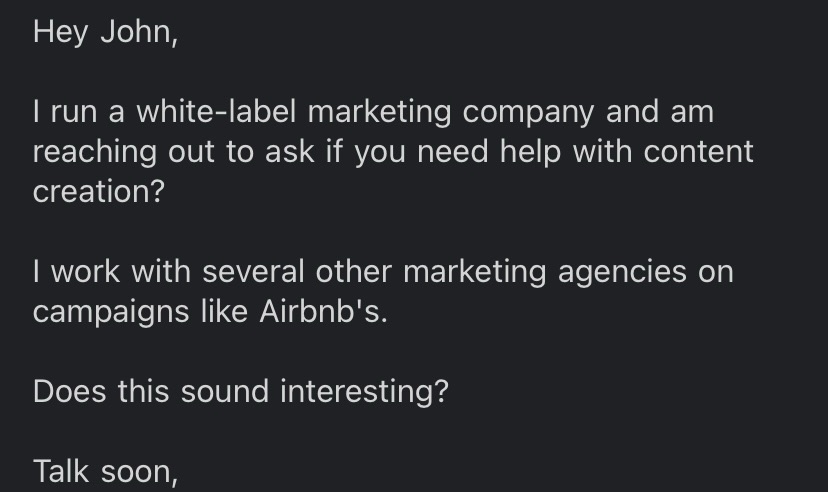
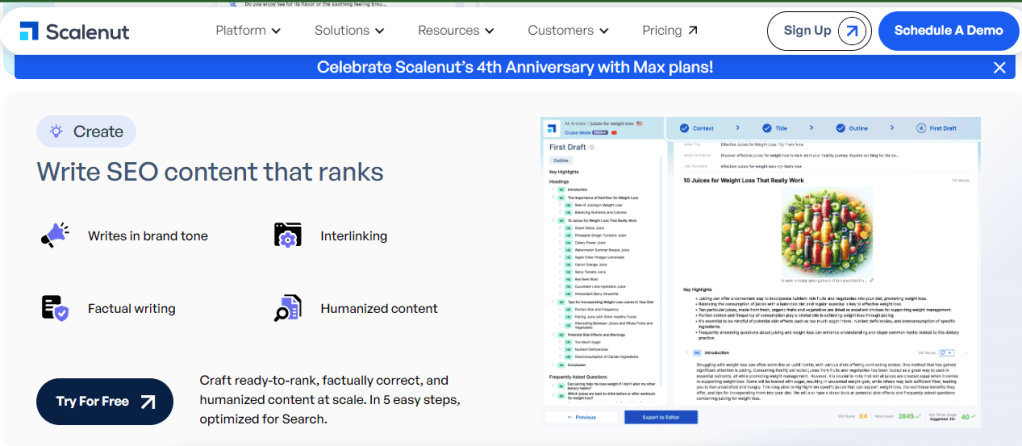
There may be a variety of reasons for this. Perhaps your current employees are too busy doing other things. Or perhaps writing terrifies them so much that they think ChatGPT-generated content is actually a GOOD thing. (Read the content. It isn’t good.)

So you’re thinking about outsourcing the work to a content writer. One who has created content for multiple technology firms, including 9 returning clients. Here are four examples.

But how does outsourced content writing work?

How Bredemarket works with you to create content

Maybe you need an outsourced content writer because your current textual content is not compelling to your prospects, or perhaps it’s non-existent (for example, a LinkedIn company page with zero posts).

If you approach Bredemarket with your outsourced content writing request, here’s how we will work together:

  1. Kickoff.
  2. First draft.
  3. First draft review.
  4. It depends.
  5. Finalize and publish.

For this example, let’s assume that you need between 400 to 600 words of text to post to your company blog or to your company LinkedIn account, and therefore are purchasing my Bredemarket 400 Short Writing Service.

Step 1: Kickoff

This is the most important step in the entire process, and I don’t write a word of text until you and I have some agreement on WHAT I am going to write.

I start by asking seven questions about the content, your product, and your company.

  • Why?
  • How?
  • What?
  • Goal?
  • Benefits?
  • Target Audience?
  • Emotions?

I ask some additional questions which I won’t discuss in detail here. For example, you may specify the subject matter experts or articles I need to consult.

Once we’ve worked through ALL the questions, either in a synchronous meeting or asynchronously via email, I have a good idea of what the written content needs to say.

Step 2: First draft

Now I write the first draft.

By Photo by Gnsin – Gnsin, CC BY-SA 3.0, https://commons.wikimedia.org/w/index.php?curid=234900.

I don’t ask a bot to write the first draft; I write it myself.

Why? Because I’m an opinionated, crotchety, temperamental writer, and a “you can pry my keyboard out of my cold dead hands” type.

This benefits you because I love doing this, communicating your benefits to your prospects using the framework upon which we agreed in the kickoff.

Unless we agree on a different schedule, I get that first draft to you in three days for the next important step.

Step 3: First draft review

This is where you come in. Your task is to review my draft within three days and provide comments. And if I don’t hear from you within three days, you’ll hear from me. Why?

  1. The first reason is my pure self-interest. The sooner I complete the project, the sooner I get paid. Those cold dead hands need some nice gloves.
  2. The second reason is of mutual interest. We want to complete the project while we’re focused on thinking about it, and while it is critically important to us.
  3. The third reason is for your own self-interest. You have a content gap, and it’s in your interest to fill that gap. If we get this draft reviewed and move forward, that gap will be filled quickly. If we don’t move forward, the gap will remain, your efforts to contract with Bredemarket will be for naught, and you’ll still have an uninteresting website and dead social media accounts.

Step 4: It depends

What happens after the first draft review varies from client to client.

  • Some of my clients love the first draft and don’t want to change a thing.
  • Some of my first drafts have embedded questions that you need to answer; once those questions are answered, the content is ready.
  • Some of my first drafts may need minor changes. In one case, I was asked to remove a reference to a successful hack that occurred at a well-known company; unbeknownst to me, the company was a customer of another division of the client in question. Whoops.
  • Occasionally more substantive changes are required, and I end up creating a second draft in three days, and you review it in three days.

In the end, we have a piece of content that is almost ready for publication.

Step 5: Finalize and publish

While the words may be ready, the entire piece is not.

I’m not a graphics person, and usually a written piece needs some accompanying images to drive the message home. I may suggest some images, or I may suggest that the client reuse an image from their website, or I may just ask the client to select an appropriate image.

Once the text and images are ready, you publish the piece. Normally I don’t have access to your website or social media accounts, so I can’t publish the piece for you. Only one client has given me such access, and even for that client I don’t have COMPLETE publishing permission.

For short projects such as a Bredemarket 400 project, I usually bill you when you publish the piece, although in certain circumstances I may bill you once the text is complete.

Are you ready to outsource your content marketing?

While other content marketers may work differently, we all have some type of process for our outsourced content writing.

If you’re ready to move forward with Bredemarket for outsourced content writing, contact me.

The Best Way to Talk About Complex Technology Features? Don’t.

Are you a product marketer or content marketer at an engineering-focused technology firm?

The ALMA correlator. The full system has four identical quadrants, with over 134 million processors, performing up to 17 quadrillion operations per second. By ESO – http://www.eso.org/public/images/eso1253a/, CC BY 4.0, https://commons.wikimedia.org/w/index.php?curid=23340651.

Have you been asked to tell your prospects about the marvelously complex features of your firm’s dazzling engineering products?

Well…why would you want to do that?

The complex product with a lengthy feature list

Many years ago I worked at a firm in which the products were driven by engineers, and therefore resulted in engineering marvels.

Two kinds of Segway PTs. By Source: aleehk82 [1]Derivative work: 丁 (talk) – https://www.flickr.com/photos/aleehk82/3144281707/, CC BY 2.0, https://commons.wikimedia.org/w/index.php?curid=11852469

I recall one product in particular (not a Segway, but a biometric product housed in a tower) that was an impressive fusion of algorithmic and mechanical excellence. The complex design that went into developing the tower product resulted in a device that performed its function superbly.

The complex engineering also caused the product to have such a high price that no one would ever buy it…but I digress.

But there was another issue with the product. I was writing proposals at the time, and we certainly could have written up a product description that emphasized the product’s lengthy set of features.

But the people receiving our proposals wouldn’t have cared one bit.

Prospects don’t care about lengthy feature lists

You see, prospects don’t care about lengthy feature lists.

And they don’t care about your product.

Altair 8800 advertisement. By MITS staff – Scanned from the May 1975 Radio-Electronics magazine by Michael Holley Swtpc6800, Public Domain, https://commons.wikimedia.org/w/index.php?curid=7219799

Frankly, they don’t even care about your company.

  • Even if your company has stellar engineers that develop wonderful products.
Elizabeth Holmes “invented a way to run 30 lab tests on only one drop of blood.” WIRED, February 2014, https://www.wired.com/2014/02/elizabeth-holmes-theranos/.
  • Even if your company has won prestigious awards for technical excellence, or as a great place to work, or whatever.
Business Week named Enron Chairman and CEO Ken Lay as one of the top 25 managers for 1999. From https://enroncorp.com/corp/pressroom/awards/executive.html
  • Even if your company just completed a successful funding round.
Transformco (post-bankruptcy parent of Sears and KMart) received $250 million in November 2019. From https://www.cnbc.com/2019/11/07/sears-owner-gets-250-million-lifeline-says-it-will-shut-another-96-stores.html.

It’s painful to admit it, but prospects only care about…themselves.

And the prospects focus on their problems, not your technical superiority.

For example, if your prospects work for certain government agencies, they really care about terrorists who try to board airplanes.

Aerial view of the Pentagon Building, September 14, 2001. By TSGT CEDRIC H. RUDISILL, USAF – http://www.dodmedia.osd.mil/Assets/Still/2004/Air_Force/DF-SD-04-12734.JPEG Alternate: http://www.af.mil/News/Photos/igphoto/2001289439/ archive, Public Domain, https://commons.wikimedia.org/w/index.php?curid=2152737

If your product stops terrorists from boarding airplanes, then and only then will they care about your company or your product.

If your product can’t stop terrorists from boarding airplanes, or if there is another product that is better at stopping terrorists from boarding airplanes, then your prospects won’t care about your product.

So how do you get prospects to care?

You don’t get prospects to care by talking about your extensive feature lists.

Let me give you a tip. If you find an employee at the prospect’s company who wants to spend a lot of time talking about your extensive feature lists, that employee probably DOESN’T have the authority to approve the purchase.

The people who DO have the authority to approve the purchase don’t have time to talk about extensive feature lists.

The approvers want to know, in 30 seconds or less, how your solution BENEFITS them.

Do you need help explaining your benefits?

Talking about benefits rather than features is just one tactic to successfully appeal to your prospects.

If you need help ensuring that your written materials (blog posts, white papers, web pages) resonate with your prospects, you can ask Bredemarket to help you.

More on the Messy Middle

I’ve previously written about the “messy middle,” or the way that people REALLY decide on what to purchase. It’s not as logical as the theories suggest.

Therefore, when Kevin Indig touched on the subject, I was naturally interested.

His article includes a section “What we missed about the Messy Middle”:

Different ways of doing SEO

Severe limitations of attribution models

The need to merge CRO and SEO

From https://www.growth-memo.com/p/messy-middle.

Kevin Indig’s article touches upon a lot of topics, most of which I won’t discuss. Read his article. Instead, I’m going to focus on the second of Indig’s three items (on attribution model limitations) because it intersects with my interests, including the trust funnel.

Surround sound

By TonyTheTiger at English Wikipedia, CC BY-SA 3.0, https://commons.wikimedia.org/w/index.php?curid=10473262

Indig notes the issues with revenue attribution, and how measurements of conversion touch points often end up as wild guesses.

So he proposes something different.

Instead of trying to figure out where to be, try to be everywhere. It’s more important to understand where your competitors are, and you’re not….The surround sound approach seems intuitive but is a very different approach to what’s happening at companies today….Surround Sound doesn’t mean to do everything, but to carefully observe where competitors are and pull even.

From https://www.growth-memo.com/p/messy-middle.

At this point I only want to interject that you should also carefully observe where competitors AREN’T.

But what are the analysts going to analyze? What they can.

We should also rethink the numbers we look at. Recurring visits and the average number of visits until conversion reflect user behavior and improvements better than bounce rate or pages per visit since users hop around so much.

From https://www.growth-memo.com/p/messy-middle.

While much of the activity remains invisible to us, we can still look at the activity that we CAN see.

Some things remain secret

And yes, much of the activity does remain invisible. A former coworker messaged me on Sunday with a question, and he closed his message with the following.

Btw, enjoy your posts

From a private message.

I’m tossing that message over to Bredemarket’s chief analyst.

Doing Double Duty (from the biometric product marketing expert)

I’ve previously noted that product marketers sometimes function as de facto content marketers. I oughta know.

sin, a one-man band in New York City. By slgckgc – https://www.flickr.com/photos/slgc/8037345945/, CC BY 2.0, https://commons.wikimedia.org/w/index.php?curid=47370848

For example, during my most recent stint as a product marketing employee at a startup, the firm had no official content marketers, so the product marketers had to create a lot of non-product related content. So we product marketers were the de facto content marketers for the company too. (Sadly, we didn’t get two salaries for filling two roles.)

Why did the product marketers end up as content marketers? It turns out that it makes sense—after all, people who write about your product in the lower funnel stages can also write about your product in the upper funnel stages, and also can certainly write about OTHER things, such as company descriptions, speaker submissions, and speaker biographies.

From https://bredemarket.com/2023/08/28/the-22-or-more-types-of-content-that-product-marketers-create/.

That’s from my post describing the 22 (or more) types of content that product marketers create. Or the types that one product marketer in particular has created.

So it stands to reason that I am not only the biometric content marketing expert, but also the biometric product marketing expert.

I just wanted to put that on the record.

And in case you were wondering what the 22 types of content are, here is the external content:

  • Articles
  • Blog Posts (500+, including this one)
  • Briefs/Data/Literature Sheets
  • Case Studies (12+)
  • Proposals (100+)
  • Scientific Book Chapters
  • Smartphone Application Content
  • Social Media (Facebook, Instagram, LinkedIn, Threads, TikTok, Twitter)
  • Web Page Content
  • White Papers and E-Books

And here is the internal content:

  • Battlecards (80+)
  • Competitive Analyses
  • Event/Conference/Trade Show Demonstration Scripts
  • Plans
  • Playbooks
  • Proposal Templates
  • Quality Improvement Documents
  • Requirements
  • Strategic Analyses

And here is the content that can be external or internal on any given day:

  • Email Newsletters (200+)
  • FAQs
  • Presentations

So if you need someone who can create this content for your identity/biometrics product, you know where to find me.

Telling Stories

One of the most unusual attractions at Disneyland is the Storybook Land Canal Boats.

By Boris Dzhingarov – Disneyland park – Anaheim Los Angeles California USAUploaded by dzhingarov, CC BY 2.0, https://commons.wikimedia.org/w/index.php?curid=28496999

Unlike some other attractions that bombard you with sight, sound, and speed, Storybook Land asks you to board a slow-moving boat while your host or hostess…tells stories.

The entire Disney empire, including its corporate acquisitions, is built on telling stories, from the mouse that piloted a steamboat to the basketball team that won an improbable sixth championship.

Board the Bredemarket canal boat

And many businesses depend on storytelling. My consultancy Bredemarket has helped many of them tell their stories.

Over the last month, Bredemarket has told the following stories for its clients:

  • Once upon a time, a faraway country passed legislation to protect its citizens from evil robbers. Here’s how [COMPANY]’s solution can help the country and its citizens stay safe from the big bad wolves. (Online content)
  • Once upon a time, a couple’s son disappeared and went on a long journey. Here’s how [COMPANY]’s solution helped reunite the family. (Online content)
  • Once upon a time, a firm paid a lot of money for some beans that appeared to be worthless. Here’s how [COMPANY]’s solution helped the beans to grow. (Online content)
  • Once upon a time, [COMPANY]’s solution was offered to some people, but [COMPANY] wanted to offer it to many more people. Here are some other people who could benefit from the solution. (Private market/competitor analysis)

It’s too early to tell if everyone lived happily ever after, but hopefully they will.

Can Bredemarket help your identity, technology, or local Inland Empire firm tell YOUR story?

Avoiding Antiquated Product Marketing

Identity/biometrics firms don’t just create social media channels for the firms themselves. Sometimes they create social media channels dedicated to specific products and services.

That’s the good news.

Here’s the bad news.

[REDACTED]

As I write this, it’s March 3. A firm hasn’t updated one of its product-oriented social media channels since February 20.

That’s February 20, 2020…back when most of us were still working in offices.

It’s not like the product no longer exists…but to the casual viewer it seems like it. As I noted in a previous post, a 2020 survey showed that 76% of B2B buyers make buying decisions primarily based on the winning vendor’s online content.

Now I’ll admit that I don’t always update all of Bredemarket’s social media platforms in a timely manner, but at least I update them more than once every four years. I even updated my podcast last month.

Sadly, I can’t help THIS product marketer, since Instagram posts are not one of my primary offerings.

If you’re an identity/biometric company that needs help with blogs, case studies, white papers, and similar text content, Bredemarket can work with you to deliver fresh content.

Why Customers Benefit: Bredemarket Asks the Right Questions

Whether I’m creating content for Bredemarket or creating product marketing material for an employer (past or future), it’s important to ask some critical questions first.

My LinkedIn profile contains the three simple words “why customers benefit.” Not “what producers feature”—why customers benefit. Those three words encapsulate my approach to marketing…well, until I come up with three different words. Or two.

Song by Annie Lennox. Original reel on the Bredemarket Instagram account.

Bredemarket asks the right questions.

Are You ConTENT? Balance Your Critical List With Your Prospects’ Critical Lists

Designed by Imgflip.

Normally I talk about CONtent, but today I’m talking about conTENT. (OK, a little bit about CONtent also.)

There are many prospects that may be CRITICALLY IMPORTANT (the highest of my three levels of importance) to your firm—perhaps too many. You can reduce your firm’s list of critically important prospects without losing them altogether. The extra time you receive benefits your firm and your TRUE critically important prospects. And eventually the other prospects may come around anyway.

Let them

You may pursue a prospect because you perceive they have a need. For example, there are identity/biometric companies that have not blogged in over a year, and these companies obviously have a need to increase their visibility with their own prospects by blogging.

But what if the identity/biometric prospects are not HUNGRY to satisfy that need? (Hungry people = true target audience.) Addressing the need may even be “important” to the prospects—but not CRITICALLY important.

  • Now I can create (and have created) content addressing this need and how to fill it. If a prospect searches for this content, they will find it.
  • I can even proactively initiate direct contact with these prospects, and maybe even contact them a second time.

But in most cases a prospect may respond with a “not interested” message—if the prospect even responds at all.

Mel Robbins has a response to this.

Let them.”

When you “Let Them” do whatever it is that they want to do, it creates more control and emotional peace for you and a better relationship with the people in your life.

From https://www.melrobbins.com/podcasts/episode-70.

If the prospect is not hungry for your services at this time, let them.

And at the same time move the prospect from your “critically important” category down to your “important” category. Focus on the critically important prospects, and be content (conTENT) with them rather than stressing out over the uncontrollable prospects.

But don’t eliminate the merely important prospects entirely, because some day they may become hungry for your services. Continue creating content (CONtent) such as your own blogs, plus social media without messaging the merely important people directly. When they DO get hungry, they will emerge from your trust funnel and contact YOU, asking for your services.

Becoming conTENT

What happens when you, in the words of Mel Robbins, “let them”?

You’re focused, your true critically important prospects are happy that you’re paying attention to them, your merely important prospects are happy that you’re no longer pestering them…

…and everyone is conTENT.

Two Measures to Generate Content in (Almost) Five Minutes

I issued myself a seemingly-impossible challenge eight months ago: to create content within five minutes. Why? Because I was scared.

What scared me?

I was scared by generative AI’s ability to quickly produce content. So I wrote this on LinkedIn:

I haven’t seen a lot of discussion of one aspect of #generativeai:

Its ability to write something in about a minute.

(OK, maybe five minutes if you try a few prompts.)…

What happens to us writers when a five-minute turnaround becomes the norm?

From https://www.linkedin.com/posts/jbredehoft_generativeai-activity-7065836499702861824-X8PO/.

    Never mind that the resulting generative AI content was wordy, crappy, and possibly incorrect. For some people the fact that the content was THERE was good enough. After all, can’t you hire a cheap copywriter to edit the generative AI dreck?

    Now I’ve argued that there are benefits to a slower (i.e. greater than five minutes) content production process that results in more mature content.

    But what if you need the content within five minutes? People aren’t going to wait for my dilly-dallying.

    In fact, my LinkedIn post eight months ago was prompted by an encounter with an impatient content customer. I was waiting for some information before I wrote the content, and someone got tired of my waiting and just asked a generative AI engine to write something. (I think I was supposed to thank them for helping me, but I didn’t.)

    This is not an isolated incident, and even with our lamentations that generative AI content blows monkey chunks, it’s still going to be “good enough” for some people.

    So if I’m going to continue to make my living as a temperamental writer who is a “you can pry my keyboard out of my cold dead hands” type, I need to create my content VERY quickly.

    And sometimes I’m going to have to take extreme measures to get that content out in five minutes.

    Measure one: don’t sleep on the content

    In the past, and in the present when I can, I like to let a draft rest as I “sleep on it.” And I give my customer an answer in the morning.

    From https://www.youtube.com/watch?v=C11MzbEcHlw.

    I then return to the content with a fresh pair of eyes and modify it (usually by removing huge chunks of text).

    But sometimes you have to take extreme measures, including skipping the sleep on it step.

    From https://www.youtube.com/watch?v=07Y0cy-nvAg.

    Of course to do this, you need to approach the “draft 0.5” correctly with a focused message.

    How do you jump straight to a polished piece? Meat Loaf and the Beastie Boys aren’t going to tell me. I need to go to the ancient Greeks.

    Measure two: let full-grown ideas spring out of your head

    Non-believers think that Christianity, Islam, and Judaism have some really weird practices. But frankly, they’re mild compared to ancient Greek mythology, which primarily consists of Zeus trying to be the Wilt Chamberlain of his time.

    Take the story of Zeus lusting after Metis and succeeding in his pursuit, until an oracle (unrelated to Larry Ellison) prophesied that Zeus and Metis’ second offspring would overthrow Zeus. To prevent this, Zeus swallowed Metis.

    Makes sense to me.

    Then the story gets REALLY weird.

    After a time, Zeus developed an unbearable headache, which made him scream out of pain so loudly it could be heard throughout the earth. The other gods came to see what the problem was. Hermes realized what needed to be done and directed Hephaestus to take a wedge and split open Zeus’s skull.

    From https://www.greekmythology.com/Myths/The_Myths/Birth_of_Athena/birth_of_athena.html.

    You won’t believe what happened next!

    By User:Bibi Saint-Pol – Own work, Public Domain, https://commons.wikimedia.org/w/index.php?curid=2061180

    Yup, Athena, as a full-grown adult (wearing armor, no less), popped out of Zeus’ head.

    Which was awfully convenient, since they didn’t have to go through potty training and learning the Greek language and all of that, because Athena was already mature.

    So if I can conceive of my content as a full-grown piece of work from the outset, it will make it easier (and hopefully faster) to create it.

    Results

    I wasn’t able to write this particular blog post in five minutes, and I still had to go through some back-and-forth to tweak things such as headings. But I executed this content more quickly than normal.

    More work to do to meet the five-minute goal.