Does Every Blog Post Need a Call to Action?

Does every blog post need a CTA?

No.

Let me explain.

What is a call to action?

No, not the Western Electric kind of call. By Jonathan Mauer – Own work, CC BY-SA 4.0, https://commons.wikimedia.org/w/index.php?curid=50534668

For those who are not familiar with the term, a “call to action,” abbreviated as CTA, is just what it sounds like: a summons to do something. So if you want to call it a STDS, feel free. (Although I wouldn’t.)

Of course, calls to action have been used long before the digital world appeared. For several decades, automobile dealer Cal Worthington (and his dog Spot) wanted people to come to his car dealerships, so in between the entertaining animals, the call to action “Go see Cal” was repeated in commercials like this one.

From https://www.youtube.com/watch?v=8hT2oP–NSU

And things haven’t changed in the 21st century, except that most of us have retired the dog Spot. For example, some of my blog posts include the following call to action:

These three bullets, when used, are preceded by a statement such as “If I can work with you to create your written content, please contact me.” Or whatever makes sense for the particular blog post.

But not all of my posts include the three CTA bullets.

Posts for awareness don’t need CTAs

(UPDATE 7/24/2023: Upon further reflection, I should have said “Posts for awareness don’t ALWAYS need CTAs.” See my updated blog post, “Awareness Calls to Action.”)

Take my post from last Saturday, “Candy Street Market is coming.”

Candy Street Market, 110 W Holt, Ontario, California

This post simply talked about a new candy store in Ontario, California, but never talked about Bredemarket’s content creation or proposal writing services.

So why did I write a post that doesn’t directly lead to business?

For the awareness.

The awareness of Bredemarket doesn’t equal the awareness of Kleenex. But I’m working on it. By kimubert – Flickr, CC BY 2.0, https://commons.wikimedia.org/w/index.php?curid=40263441

Ever since I exited some of my prior identity-related markets in the spring of 2022, I’ve pivoted my marketing activity and am concentrating more on serving local firms in California’s Inland Empire. This isn’t a new activity; I’ve targeted local businesses since September 2021. But since I am no longer serving my former clientele of companies that identify individuals using fingerprints, faces, and identity documents, the local business is obviously extremely important.

But the locals need to know that I’m here.

Hence I wrote about a local candy store to provide awareness to businesses that Bredemarket is out there.

If their curiosity is piqued, then perhaps they’ll subscribe to the blog or explore what I do to find out what Bredemarket can do for them.

And even if not, at least the readers know another place to get candy in downtown Ontario.

CTAs on some posts wouldn’t be prudent

And then there are posts in which a CTA plain doesn’t belong.

I already linked to one such post above: my April 22 post announcing my change in business scope.

In short, the post let people know all of the business that I wouldn’t accept in the future.

Why post a call to action after announcing that?

And how would I word it? “If you are a biometric identity company that needs content marketing or proposal writing services, don’t call me”?

It comes down to goals

But you don’t need to detailed list of do’s and don’ts to determine which blog posts need CTAs.

It all boils down to one simple question:

What is the goal of the blog post?

As I stated in October, one of the six questions that you (or your content creator) should ask before starting work is about the goal for the piece of content.

  • Do you want people to keep you in mind if they need your product or service in the future? (“That guy knows Ontario, and he writes content; maybe he can help me.”)
  • Do you want people get more information on something (such as a service description)?
  • Do you want people to contact you personally if they want more information?
  • Do you want people to pull out their credit card immediately and buy something?

The answers to those questions will shape the final content, whether a CTA is needed, and the type of CTA.

This post DOES have a CTA

So let’s say you’re an Inland Empire business that needs a content marketing expert to write a blog post for you.

And let’s say that you have specific goals for this blog post.

And you’re targeting a particular audience for this blog post. (Maybe candy lovers.)

And you realize that buyers aren’t persuaded by a list of features you offer, but by a list of benefits for them. (Yes, benefits are important.)

Before Bredemarket writes a blog post for you, I’ll ask you about these items and others (see the list here), to make sure that my work is aligned with what you need.

So do you want to talk to me about that blog post that your business needs?

Here’s the call to action. Talk to me.

Six questions your content creator should ask you

If you want a content marketing expert to write for your business, do you just say “Write this, and make it viral”?

Not THAT viral. (Too soon?) By Alexey Solodovnikov (Idea, Producer, CG, Editor), Valeria Arkhipova (Scientific Сonsultant) – Own work. Scientific consultants:Nikitin N.A., Doctor of Biological Sciences, Department of Virology, Faculty of Biology, Lomonosov Moscow State University.Borisevich S.S. Candidate of Chemical Sciences, Specialist in Molecular Modeling of Viral Surface Proteins, Senior Researcher, Laboratory of Chemical Physics, Ufa Institute of Chemistry RASArkhipova V.I., specialization in Fundamental and Applied chemistry, senior engineer, RNA Chemistry Laboratory, Institute of chemical biology and fundamental medicine SB RAS, CC BY-SA 4.0, https://commons.wikimedia.org/w/index.php?curid=104914011

Six words of instruction will not result in great content.

Even if you just say “Write this” and leave off the viral part, this will not work either.

You and your content creator have to have a shared understanding of what the content will be.

For example, as I indicated in a previous post, you and your content creator have to agree on the tone of voice to use in the content. The content creator could write something in a tone of voice that may not match your voice at all, which would mean that the content would sound horribly wrong to your audience.

Imagine a piece for financial executives written in the style of Crazy Eddie. Ouch.

From https://www.youtube.com/watch?v=Ml6S2yiuSWE

And that’s just one thing that could go wrong when you and your content creator are not on the same…um, page.

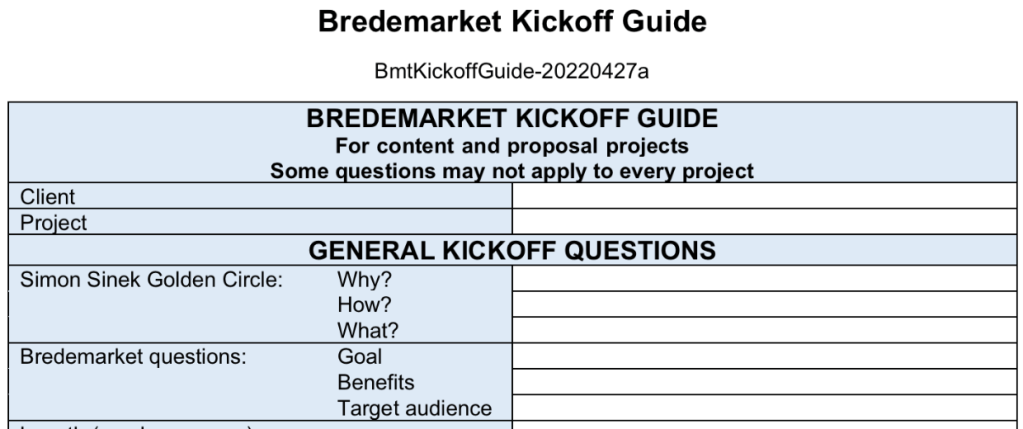
Bredemarket’s content creation process includes six questions

When Bredemarket works with you to create content, I use a content creation process. I’ve revised my original content creation process several times, and I’m sure I’ll revise it more as I work with more of you.

But as of today, Bredemarket’s kickoff meetings with clients begin with six high-level questions that set the scene for everything that follows.

Question One: Why?

As I noted in my Simon Sinek post, the “why?” question needs to be answered before any other question is asked.

Before you ask a content creator to write a case study about how your Magnificent Gizmo cures bad breath, you need to understand why you’re in the good breath business in the first place. Did you have an unpleasant childhood experience? Were you abandoned at the altar? WHY did you care enough to create the Magnificent Gizmo in the first place?

(As I write this post, I’m going to look at how each of these six questions can be answered for the post itself. After all, it’s fair to ask: Why does Bredemarket do what it does? Short answer: because I write. You can pry my keyboard out of my cold dead hands. For the longer answer, read the “Who I Am” page on the Bredemarket website.)

Question Two: How?

You also need to make sure your content creator can explain how you do what you do. Have you created your own set of algorithms that make breath good? Do you conduct extensive testing with billions of people, with their consent? How is your way of doing things superior to that of your competitors?

(Now if you’re asking the “how” of Bredemarket, my content creation process is the “how.” After these initial six questions, there are other things that I do, and things that you do. Here’s how I create content of 400 to 600 words. Here’s how I create content of 2,800 to 3,200 words.)

Question Three: What?

Once these are clear in your mind, you’re ready to talk about the “what.” As Sinek notes, many people start with the “what” and then proceed to the “how,” and may or may not even answer the “why.” But when you ask the “why” first and the “how” second, your “what” description is much better.

(Again, you may be asking what Bredemarket does. I craft the words to communicate with technical and non-technical audiences. For additional clarification, read “What I Do,” which also notes what I don’t do. Sorry, finger/face/ID document vendors.)

Question Four: Goal?

Once the Golden Circle is defined, we’re ready to dig a little deeper into the specific piece of content you want. We’re not ready to talk about page count and fonts, yet, though. There’s a few other things we need to settle.

What is the goal of the content? Simple awareness of the product or service you provide? Or are you ready for consideration? Or is it time for conversion? The goal affects the content dramatically.

(In the case of this post, the goal is primarily awareness, but if you’re ready for conversion to become a paying customer, I won’t turn you away.)

Question Five: Benefits?

I’ve written ad nauseum on the difference between benefits and features, so for this question five about benefits I’ll just briefly say that written content works best when it communicates how the solution will help (benefit) the customer. A list of features will not make a difference to a customer who has specific needs. Do you meet those needs? Maintain a customer focus.

(Bredemarket’s primary benefit is focused content that meets your needs. There are others, depending upon your industry and the content you require.)

Question Six: Target Audience?

This one is simple to understand.

  • If you’re a lollipop maker and you’re writing for kids who buy lollipops in convenience stores, you’ll write one way.
  • If you’re a lollipop maker and you’re writing to the convenience stores who could carry your lollipops, you’ll write another way.

Now sometimes content creators get fancy and create personas and all that (Jane Smith is a 54 year old single white owner of a convenience store in a rural area with an MBA and a love for Limp Bizkit), but the essential thing is that you understand who you want to read your content.

(This particular piece is targeted for business owners, executives, directors, and managers, especially in California’s Inland Empire, who have a need to create focused content that speaks to their customers. The target audience not only affects how I am writing this post, but also how I will distribute it.)

What if you use a different content creator?

I am forced to admit that not everyone chooses Bredemarket to create their content.

  • Maybe you create your content yourself.
  • Maybe you already have access to content creators.
  • Or maybe you have a limited budget and can only pay a penny a word to your content creator. Let’s face it, a five dollar blog post does sound attractive.

But that doesn’t mean that you can’t use these six questions. I did publish them, after all, and they’re based on questions that others have asked.

If you create your own content, ask yourself these six questions before you begin. They will focus your mind and make your final content better.

If you have someone else create your content, make sure that you provide the answers for your content creator. For example, if you seek a content creator on Upwork or Fiverr, put the answers to these questions in your request for quotes. Experienced writers will appreciate that you’re explaining the why, how, what, goal, benefits, and target audience at the very beginning, and you’ll get better quotes that way. If someone knows your target audience is crime scene examiners, then you’ll (hopefully) see some quotes that describe the writer’s experience in writing for crime scene examiners.

And if you provide the answers to those six questions and your content creator says, “That doesn’t matter. I write the same for everyone,” run away.

You’ve probably seen the film. By Wikifan75 – Own work, CC BY-SA 3.0, https://commons.wikimedia.org/w/index.php?curid=29042440

Maybe the resulting content will even go viral. (The good viral.)

What if you want to use Bredemarket?

Or perhaps you’ve decided that you don’t want to trust your content to someone on Upwork and Fiverr, and you want to work with me instead. After all, I can help you with white paperscase studiesblog postsproposal responses, or other written content. (Well, unless the written content involves finger, face, driver’s license, or related identity services. There’s the day job, you know.)

Ah, we’ve moved from awareness to consideration. Great.

If I can work with you to create your written content, please contact me.

And to make our meeting even smoother, start thinking about the answers to the six questions I posed above.

On gating casetimonials

In my Bredemarket consultancy, I’m involved in the creation of content for Inland Empire West and other businesses, including case studies / testimonials, white papers, and the like. But I generally don’t get involved in the distribution of the content. That’s for my clients to decide and manage.

At my new day job, I’m putting my fingers into both content creation and distribution, so I’m having to think about things that I haven’t thought about much before. For example, when you should gate content, and when you shouldn’t.

Bredemarket and gated content

Over the years I’ve created white papers, case studies, blog posts, and other content for Bredemarket clients. Some of this content has been “gated,” while other content has not.

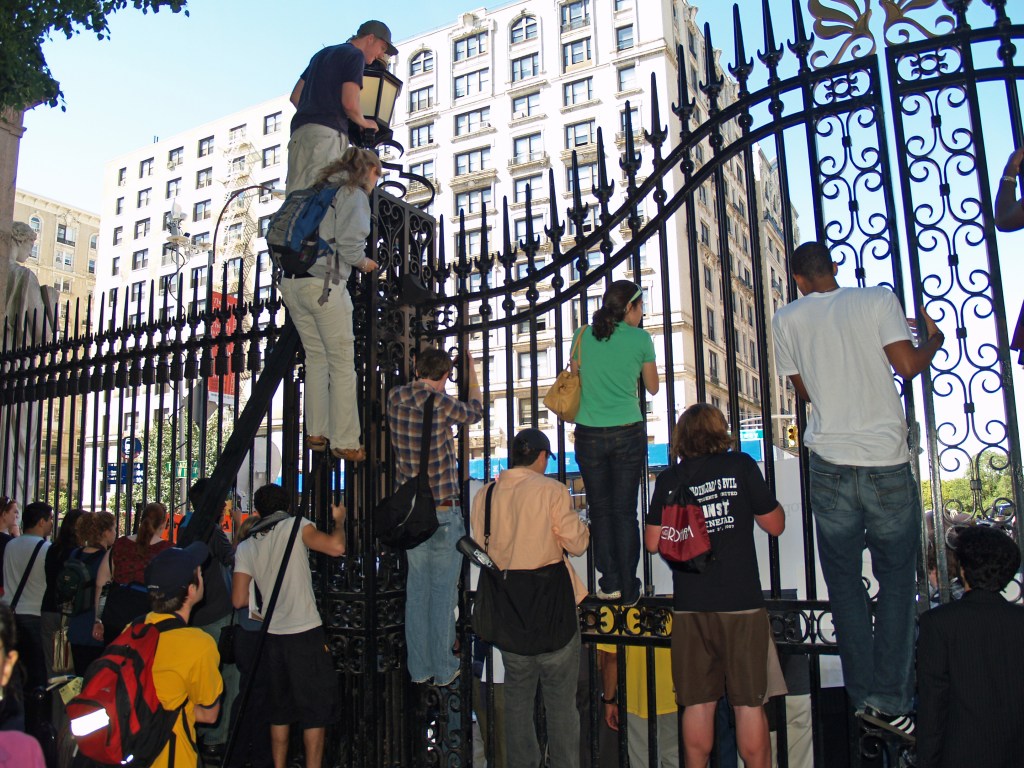
By David Shankbone – Own work, CC BY-SA 3.0, https://commons.wikimedia.org/w/index.php?curid=2808363

If you’re unfamiliar with the concept of gated content, “gating” is simply a way to obtain some information about a prospect before providing content to them.

  • This blog post, for example, is not gated content, because anybody can read it and I don’t necessarily know who is reading it.
  • In other cases, companies (including some of my Bredemarket clients) require you to provide a name, company, email address, and possibly other information before you can download the content.

Why gate content?

The “Case Study Buddy,” (Joel Klettke), in a post that asks whether case studies should be gated, outlines why gating is sometimes desirable.

These days, you have to look hard to find a website that doesn’t have some sort of pop-up or downloadable resource begging you to surrender your email.

For this post, we’re going to call that “Gating” – putting a gate in front of your content that someone has to deliberately go through….

If the information on the other end is enticing and relevant enough and the source is trustworthy enough, then giving up your email might be a small enough price to pay.

From https://casestudybuddy.com/blog/should-you-gate-your-case-studies/

The “sometimes” comes into play when you consider where the prospect is in the sales process. If the prospect is in an early awareness-building stage, they might not be willing to surrender their spammable email to just anyone. If the prospect is further along, they may want to provide that email to a few top-of-the-line companies to whom they’re willing to talk.

Should you gate case studies?

There are different views regarding whether case studies should be gated, but Joel Klettke the Case Study Buddy definitely has his thoughts.

Case studies are HUGE credibility builders. When done right, they prove you can get results for people just like your leads. Not only that, but they reveal by way of example what a lead should expect when working with you.

I can think of no better asset to show a lead in the awareness and evaluation stages than a well-written, beautifully designed customer success story.

So why on earth would you hide all of that credibility-building power behind a gate that a lead will need to trust you to open?

From https://casestudybuddy.com/blog/should-you-gate-your-case-studies/

Case studies vs. testimonials

If you’ve been reading the Bredemarket blog long enough, you’ll note that I often combine discussions of case studies and testimonials into a single “casetimonial” discussion. After all, case studies and testimonials accomplish the same thing, albeit in different lengths, formats, and authorships.

Testimonials are often written directly by customers themselves, although a company (or an independent consultant!) could ghostwrite the testimonial. Because they’re usually much shorter, they don’t necessarily include all of the components that you could find in a longer case study. Although there’s no reason why they couldn’t. Take a look at this particular testimonial, which some of you may have seen before:

“I just wanted to truly say thank you for putting these templates together. I worked on this…last week and it was extremely simple to use and I thought really provided a professional advantage and tool to give the customer….TRULY THANK YOU!”

From https://bredemarket.com/bredemarket-and-proposal-services/ (and other places)

Although there’s no explicit problem description in this testimonial, there’s an implied one. Since the testimonial author praises the template writer because the templates were simple to use, this implies that the pre-template proposal creation process was difficult.

Other than lacking an explicit problem description, the testimonial has the other aspects of a case study: identification of the solution that solved the problem, what happened when the solution was used, and the benefits of the solution.

Now a case study might go into much more detail, with extensive statistics and proof points. Testimonials usually don’t.

Should you gate testimonials?

No.

I can only think of one conceivable reason to gate a testimonial, and that would be when the testimonial contains sensitive information. For example, I doubt that most testimonials written by secret agents are publicly accessible.

“I just wanted to thank you for the Acme Long-Range Recording Device. Before using this device, it was impossible to record conversations in the Mordor Embassy. But after adopting this device, I was able to uncover a Nazgul plot and use Rohan agents to foil it. THANK YOU!”

From…nowhere, actually.

Now that’s a testimonial.

Are you opening the gate?

What content are you gating, and what content are you allowing to run free? And why? Feel free to comment.