If you’re examining a person’s fingerprints, palm prints, face, and irises, you need to understand melanin.
The Cleveland Clinic goes into great detail on melanin, but for now I’m going to concentrate on one item.
There are three types of melanin, two of which affect the skin, eyes, and hair.
Eumelanin. There are two types of eumelanin: black and brown. Eumelanin is responsible for dark colors in skin, eyes and hair. People with brown or black hair have varying amounts of brown and black eumelanin. When there’s no black eumelanin and a small amount of brown eumelanin, it results in blonde hair.
Pheomelanin. This type of melanin pigments your lips, nipples and other pinkish parts of your body. People who have equal parts eumelanin and pheomelanin have red hair.
Melanin obviously affects the coloration of your skin, although some parts of your body (such as your fingertips) may have less melanin than other parts (such as your face).
Concentrating on fingertips and faces (and ignoring irises for the moment), let’s look at a situation where we use an optical mechanism (such as an optical fingerprint reader or a camera), along with available illumination, to photograph fingers and faces of people with varying skin tones.
But what if your entire photographic system is based upon reference materials optimized for light melanin levels? As late as the 1970s, Kodak’s reference materials, called “Shirley cards” after the first model, used to exclusively white people.
In the 1970s, photographer Jim Lyon joined Kodak’s first photo tech division and research laboratories. He says the company recognized there was a problem with the all-white Shirley cards.
“I started incorporating black models pretty heavily in our testing, and it caught on very quickly,” he says. “It wasn’t a big deal, it just seemed like this is the right thing to do. I wasn’t attempting to be politically correct. I was just trying to give us a chance of making a better film, one that reproduced everybody’s skin tone in an appropriate way.”
So hopefully today optical devices are properly capturing fingers, faces, and irises of people at all melanin levels.
This is not a comment on the corrupt nature of politics, but a question.
Apparently people in Kennebunk, Maine are receiving emails from their “Board Commissioners.”
“The email claims the permit is ready and approved, but that the “Board Commissioners” just needs a payment of $4,000 via wire transfer to finish it.
“Lee Feldman, deputy director of community development for the department, said Thursday that the email also named a former board member to try to bolster its apparent legitimacy.”
But Kennebunk citizens are smart, and one reported the scam attempt.
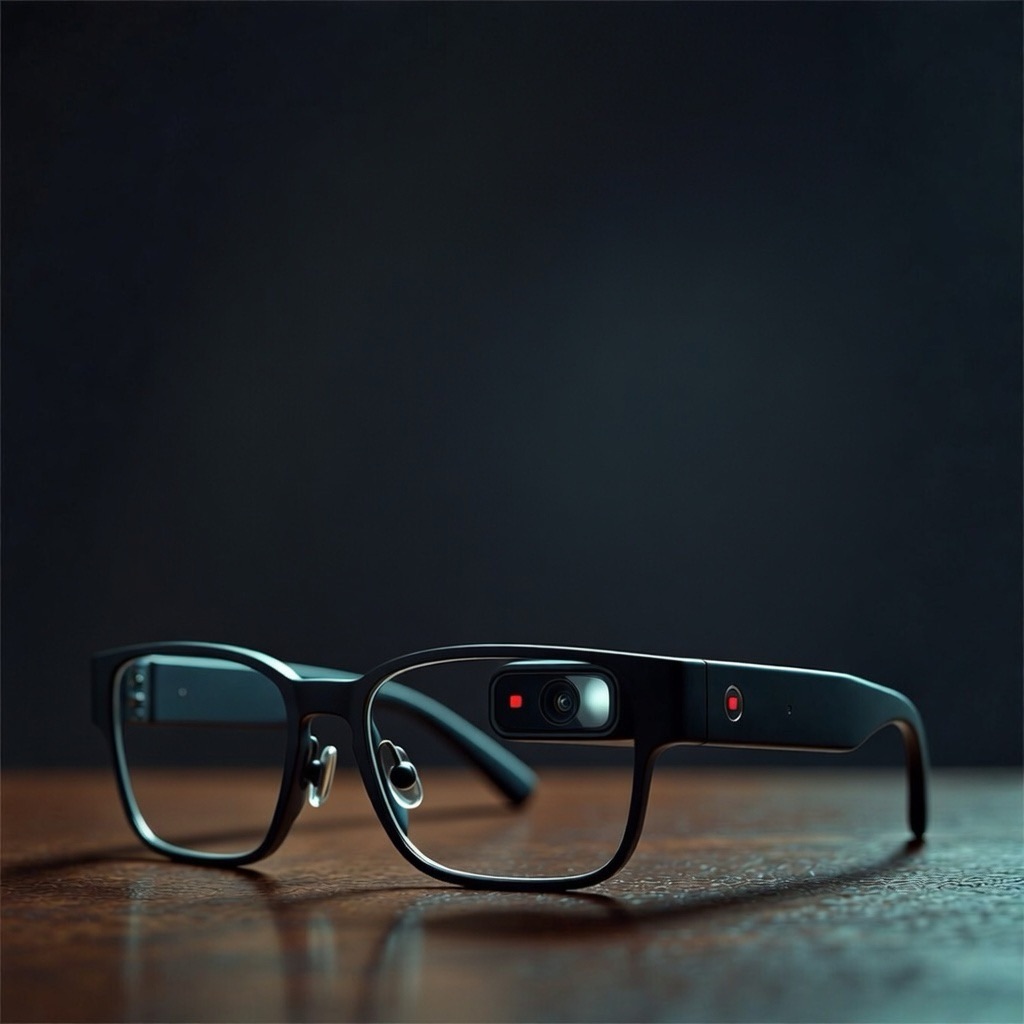
Before diving in, I should note that this is not just a Meta Ray Ban AI glasses issue.
This is an issue with ANY video feed that requires AI processing.
Because AI can’t do its job on its own.
To ensure that the AI is trained properly, an army of humans looks at the same data and uses data labeling to classify it.
We allow this when we sign those Terms of Service. And I personally believe it’s a good thing, since it helps correct errors from uncontrolled AI.
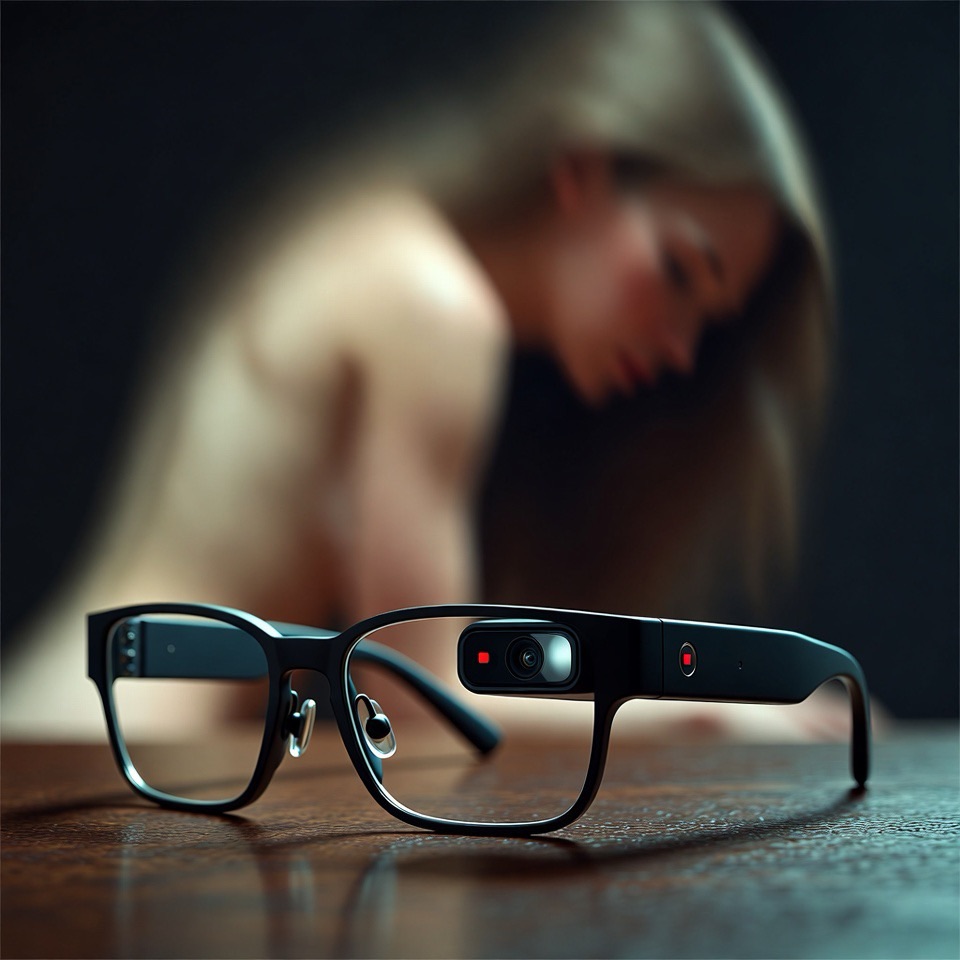
But Futurism notes the types of video feeds that the human data labelers have to label.
“I saw a video where a man puts the glasses on the bedside table and leaves the room,” one data annotator told the newspapers. “Shortly afterwards his wife comes in and changes her clothes.”
Grok.
Basically we record more than we should. One example: a bank card.
But regardless of whether data labelers are present or not, assume that any recording device will record anything, and potentially distribute it.
“In fast-moving markets, speed of execution beats perfect strategy almost every time. Businesses that test ideas quickly, implement improvements, and make decisions without weeks of deliberation create momentum. That momentum compounds into growth, visibility, and opportunity.”
Bredemarket’s processes can—with your cooperation—result in rapid delivery of prospect-focused content.
So let’s talk.
Or you can take a few seconds to learn about the questions I ask to speed your content delivery.
When I posted (twotimes) the fact that International Mobile Equipment Identity (IMEI) numbers are NOT a reliable way to ascertain the identity of a user, I was pooh-poohed.
Basil Hatto of NP (Neil Patel) Digital recently made the point that increased sales velocity reduces costs to the selling company, since the prospects reach decisions more quickly.
So how can a business like yours, or a business like Bredemarket, increase sales velocity?
Let’s discuss how Bredemarket’s marketing and writing services can help your content, proposal, and analysis needs.
In this video, the Cranky Cynic (Tom Peracchio) contemplates how the “rabbit hole” has evolved over the centuries, from Lewis Carroll to Jefferson Airplane to the Matrix to today’s so-called social media.
But as is true with anything, the technology is easy. The business part is the difficult part.
And most would argue that there is absolutely no way that a scam like this could be pulled off, especially since it would require inside cooperation.
Perhaps you’d better sit down.
August 9, 1974
Washington, DC was in a very confused state on August 9, 1974. When the day began, Richard Nixon was President and Gerald Ford was Vice President. Several hours later Ford would be President and there was no Vice President. (If Ford had suddenly died, Speaker of the House Carl Albert would have become President. If you thought the events of 1973 and 1974 were wild enough, imagine if Albert had become President.)
The morning of August 9 was carefully choreographed, but I am going to concentrate on two events involving Richard Nixon, Alexander Haig, and Henry Kissinger.
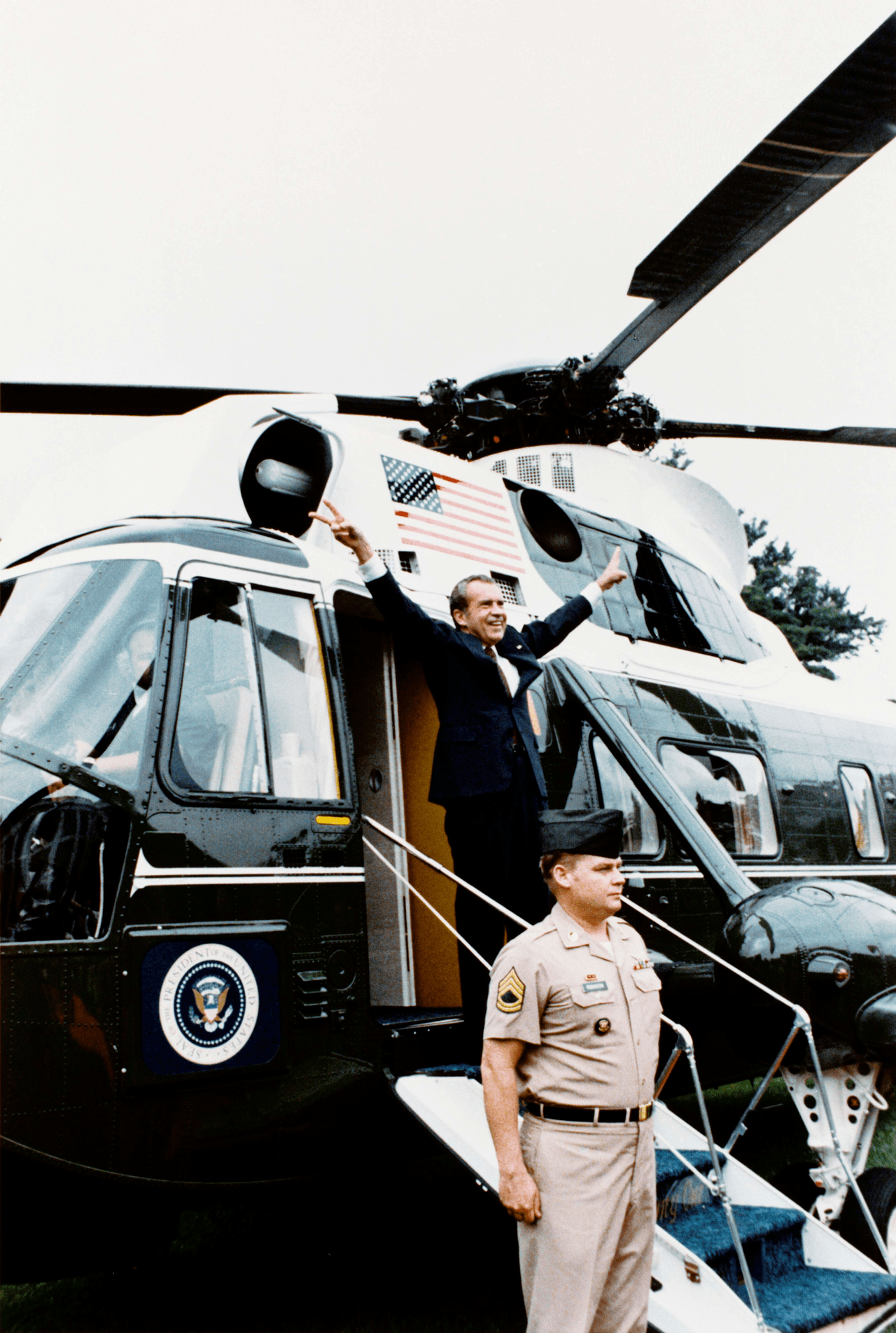
The first occurred at about 10:35 am when President Richard Nixon’s helicopter lifted off from the South Lawn, headed toward what was then Andrews Air Force Base.
The second occurred later, at about 11:35, when White House Chief of Staff walked into the office of Henry Kissinger, in Kissinger’s capacity as Secretary of State. Haig’s arrival was expected, as was the signed letter that he bore from President Nixon (en route to California). The letter was short.
“I hereby resign the Office of President of the United States.”
Kissinger indicated his receipt of the resignation and maintained communications with critical people, including Vice President Gerald Ford.
But there was one other critical person: the Secretary of Defense, James Schlesinger.
And there was one very important part of the choreography that wasn’t mentioned publicly that day.
Back to the Helicopter
I don’t know if “biscuits” existed in 1974, but footballs certainly did. And certainly the concept of continuity hadn’t yet matured to the Carter-Mondale level. But everyone agreed that according to the Constitution, on that day Richard Nixon remained President of the United States until he didn’t.
“Schlesinger feared that the president, who seemed depressed and was drinking heavily, might order Armageddon. Nixon himself had stoked official fears during a meeting with congressmen during which he reportedly said, “I can go in my office and pick up a telephone, and in 25 minutes, millions of people will be dead.” Senator Alan Cranston had phoned Schlesinger, warning about “the need for keeping a berserk president from plunging us into a holocaust.””
And Schlesinger acted. When a liberal Democratic Senator demands action from a conservative Administration, sometimes things happen.
While some of the 1974 actions of Schlesinger, Kissinger, and Haig during the “final days” are murky, there is general agreement that Schlesinger gave a rather unusual order to the military.
“[I]n the final days of the Nixon presidency he had issued an unprecedented set of orders: If the president gave any nuclear launch order, military commanders should check with either him or Secretary of State Henry Kissinger before executing them.”
This is entirely against the Constitution. If the Vice President and Cabinet doubted the sanity of the President, the proper avenue was a 25th Amendment removal—not an inferior official disobeying the instructions of the Commander-in-Chief.
However, in those strange days, in which many things happened in secret, one can understand why Schlesinger did what he did.
But there was one other critical decision that was made on August 9.
Remember when President Nixon boarded the helicopter?
“[T]he most critical tool of the modern presidency had already been taken away from him. He never noticed it, but the nuclear “football” didn’t travel with him as he boarded the helicopter, and later, Air Force One for his flight back to California.”
Yes, the football. The thing that was ALWAYS with the President because the USSR could launch a nuclear attack at any moment.
Remember that Nixon was still President an hour after boarding the helicopter, when Kissinger received a visit from Haig. But if the U.S. had been attacked during that hour, the President couldn’t respond.
And the Vice President didn’t have the power to respond.
The football appears to have been in the custody of military aides outside the East Room, awaiting the moment that Gerald Ford would take the oath of office. (Although he was already President once Kissinger indicated his receipt of the resignation letter.)
But…who controlled the football?
Schlesinger?
Kissinger?
Carl Albert?
In the end nothing bad happened, but it could have.
And it’s therefore entirely possible that the aforementioned “two Presidents” scenario could happen.
Last year I wrote about a biscuit and a football, but I wasn’t talking about the snack spread on game day.
Google Gemini.
I was talking about the tools the United States President uses (as Commander-in-Chief) for identity verification to launch a nuclear attack.
But sometimes you have to pass the football. If the President is temporarily or permanently incapacitated in an attack, the Vice President also has a football and a biscuit. Normally the Vice President’s biscuit isn’t activated, but when certain Constitutional criteria are met it becomes operative.
Other than this built-in redundancy, the system assumes one football, one biscuit, and one President.
If you’re a cybersecurity expert, you know this assumption is the assumption of a fool.
It is not impossible to have duplicate functional footballs and duplicate functional biscuits.
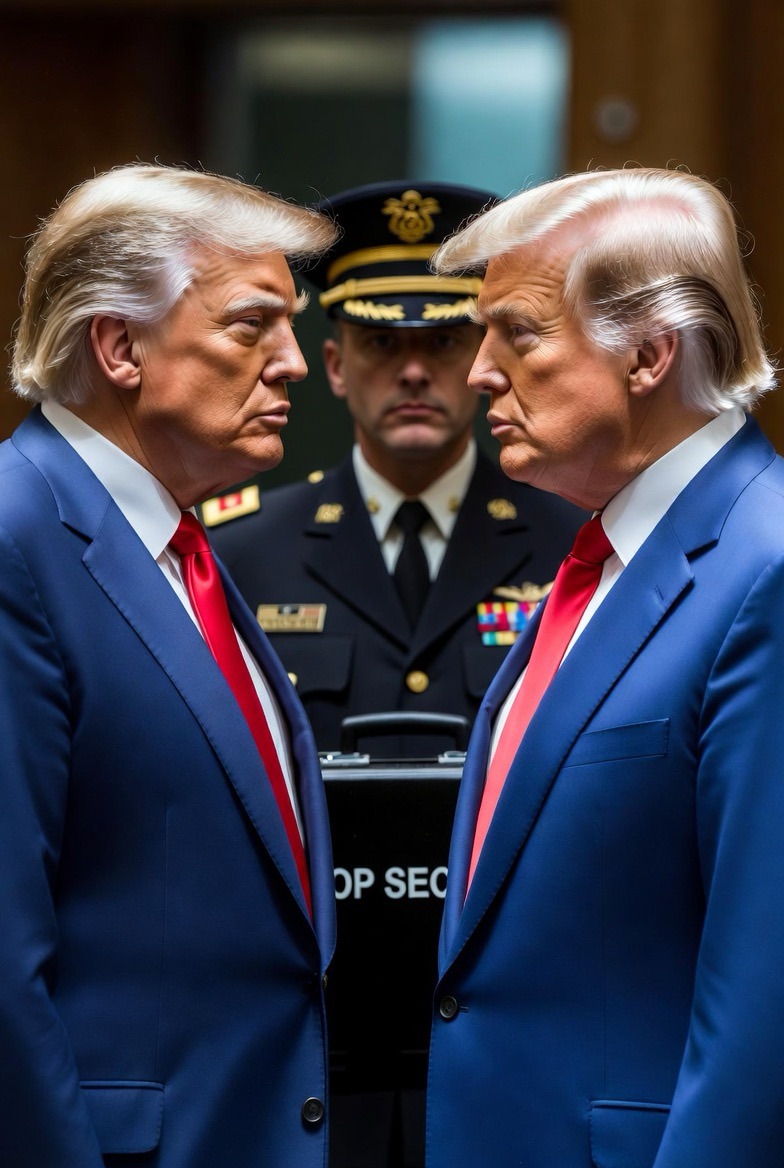
And it is not impossible to have duplicate functional Presidents, with identical face, voice, finger, and iris biometrics. Yes, it’s highly unlikely, but it’s not impossible. If the target is important enough, adversaries will spend the money.
Grok.
And most of us will never know the answer to this question, but how do government cybersecurity experts prevent this?









 Bredemarket