Oh, Florida (mobile driver’s licenses)

I should properly open this post by stating any necessary disclosures…but I don’t have any. I know NOTHING about the goings-on reported in this post other than what I read in the papers.

“I know NOTHING.” By CBS Television – eBayfrontback, Public Domain, https://commons.wikimedia.org/w/index.php?curid=73578107.

However, I do know the history of Thales and mobile driver’s licenses. Which makes the recent announcements from Florida and Thales even more surprising.

Gemalto’s pioneering mobile driver’s license pilots

Back when I worked for IDEMIA from 2017 to 2020, many states were performing some level of testing of mobile driver’s licenses. Rather than having to carry a physical driver’s license card, you would be able to carry a virtual one on your phone.

While Louisiana was the first state to release an operational mobile driver’s license (with Envoc’s “LA Wallet”), several states were working on pilot projects.

Some of these states were working with the company Gemalto to create pilots for mobile driver’s licenses. As early as 2016, Gemalto announced its participation in pilot mDL projects in Colorado, Idaho, Maryland, and Washington DC. As I recall, at the time Gemalto had more publicly-known pilots in process than any other vendor, and appeared to be leading the pack in the effort to transition driver’s licenses from the (physical) wallet to the smartphone.

Thales’ operational mobile driver’s license

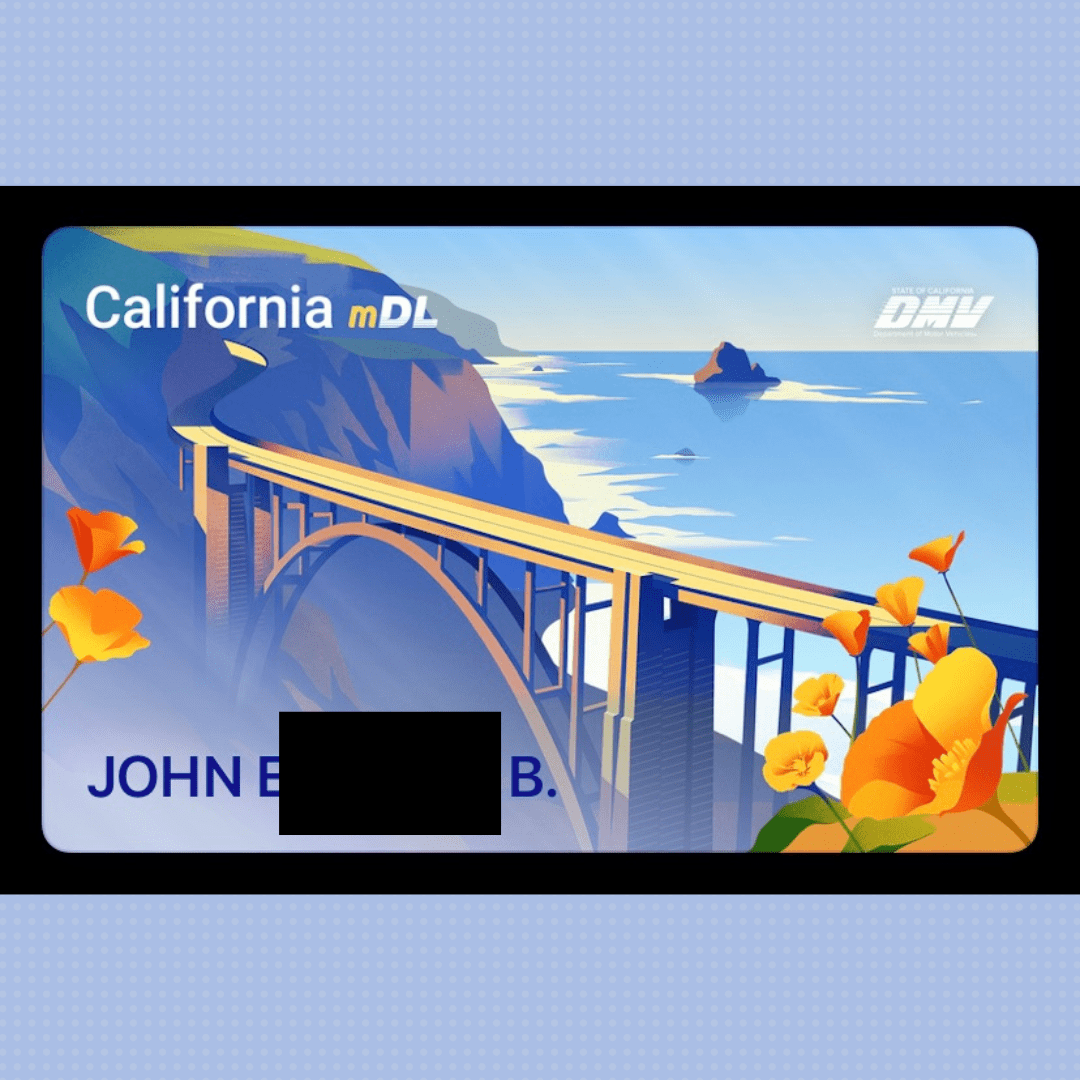
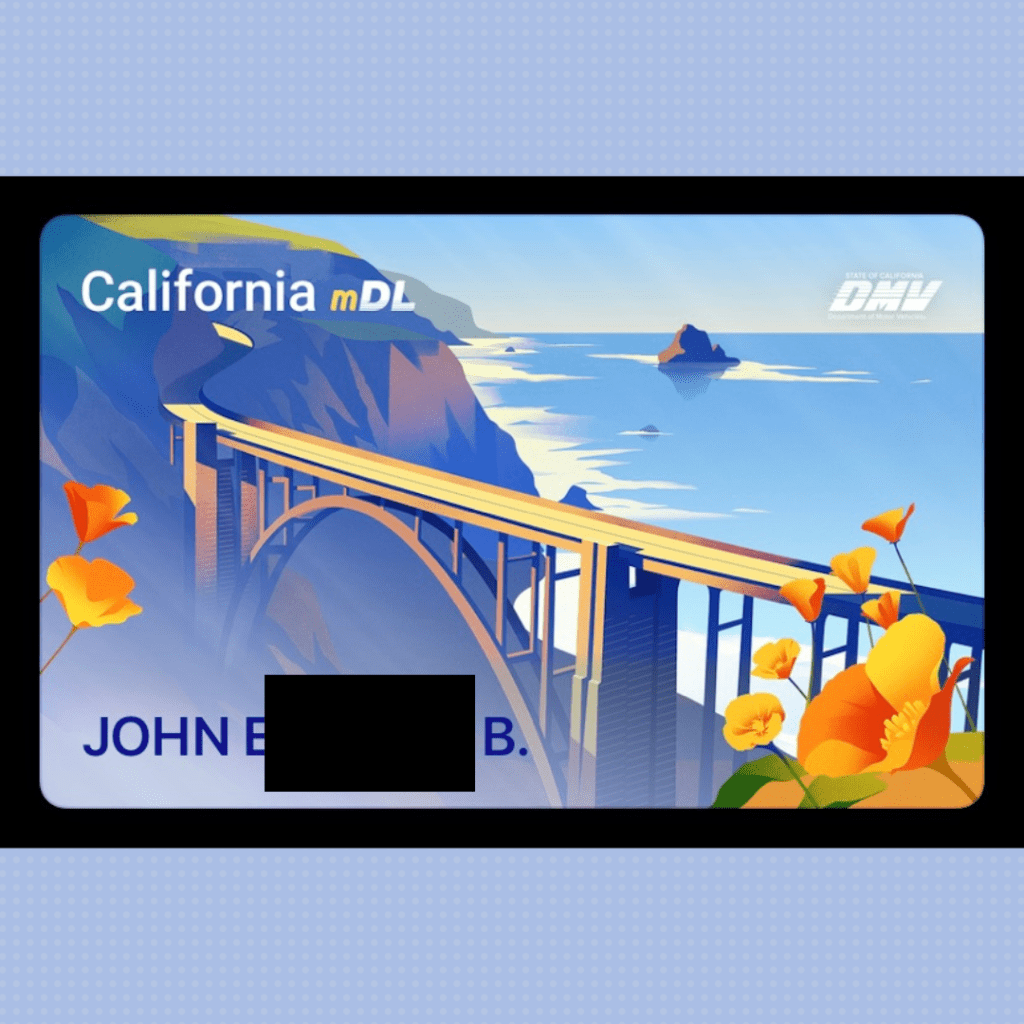
By the time Gemalto was acquired by and absorbed into Thales, the company won the opportunity to provide an operational (as opposed to pilot) driver’s license. The Florida Smart ID app has been available to both iPhone and Android users since 2021.

From https://www.flhsmv.gov/floridasmartid/ as of July 12. No idea whether this image will still be there on July 15.

What just happened?

This morning I woke up to a slew of articles (such as the LinkedIn post from PEAK IDV’s Steve Craig, and the Biometric Update post from Chris Burt) that indicated the situation had changed.

One of the most important pieces of new information was a revised set of Frequently Asked Questions (or “Question,” or “Statement”) on the “Florida Smart ID” section of the Florida Highway Safety and Motor Vehicles website.

The Florida Smart ID applications will be updated and improved by a new vendor. At this time, the Florida Department of Highway Safety and Motor Vehicles is removing the current Florida Smart ID application from the app store. Please email FloridaSmartID@flhsmv.gov to receive notification of future availability.

Um…that was abrupt.

But a second piece of information, a Thales statement shared by PC Mag, explained the abruptness…in part.

In a statement provided to PCMag, a Thales spokesperson said the company’s contract with the FLHSMV expired on June 30, 2024.

“The project has now entered a new phase in which the FLHSMV requirements have evolved, necessitating a retender,” Thales says. “Thales chose not to compete in this tender. However, we are pleased to have been a part of this pioneering solution and wishes it continued success.”

Now normally when a government project transitions from one vendor to another, the old vendor continues to provide the service until the date that the new vendor’s system is operational. This is true even in contentious cases, such as the North Carolina physical driver’s license transition from IDEMIA to CBN Secure Technologies.

But in the Florida case:

  • Thales chose not to bid on the contract renewal.
  • The new vendor and/or the State of Florida chose not to begin providing services when the Thales contract expired on June 30.
  • Thales and/or the State of Florida chose not to temporarily renew the existing contract until the new vendor was providing services in 2025.

This third point is especially odd. I’ve known of situations where Company A lost a renewal bid to Company B, Company B was unable to deliver the new system on time, and Company A was all too happy to continue to provide service until Company B (or in some cases the government agency itself) got its act together.

Anyway, for whatever reason, those who had Florida mobile driver’s licenses have now lost them, and will presumably have to go through an entirely new process (with an as-yet unknown vendor) to get their mobile driver’s licenses again.

I’m not sure how much more we will learn publicly, and I don’t know how much is being whispered privately. Presumably the new vendor, whoever it is, has some insight, but they’re not talking.

The (Biometric) Sound of Silence

Identity/biometrics marketers (some of you), why is your company so SILENT?

One way to communicate is by a company blog. Blogging provides clear benefits to the firms that use it consistently.

  • About one-third of them HADN’T SAID A SINGLE THING to their prospects and customers in the preceding two months.

Bredemarket can help those firms (you know who you are) start creating prospect/customer awareness content now.

Yes, I know we’re right in the middle of summer, and some of you will put this off until next week, or probably the week after next.

  • For me, that’s just as well. That gives me more time to create content for your competitors.
  • I recently had to delay working with a company because its competitor was ready to move first.
  • Good “problem” for Bredemarket to have…but not so good for the slower companies.

Contact Bredemarket…today.

P.S. Originally this was only going to be a social media post that merely cross-referenced part of an old blog post. Yes, I sometimes goof up myself.

And yes, this blog’s title (with a singular “Sound”) was intentional.

From https://youtu.be/nkUOACGtGfA?si=6nN5moOxoBerxT1a.

Do You Service These Seven Vertical Markets That Use Identity and Biometrics?

As Identity and biometrics solution providers know, their applications are found in a variety of vertical markets.

A LARGE variety of vertical markets.

Seven of these markets include financial services, travel and hospitality, government services, education, health, criminal applications, and venues. (Among others.)

Which three vertical markets does the Prism Project examine?

To start this post, I’m going to cheat and “appropriate” the work already performed by the Prism Project.

This effort is managed by Maxine Most’s Acuity Market Intelligence and supported by a variety of partners (including industry partners).

The Prism Project has identified 3 (so far) critical vertical markets for identity and biometrics. While this doesn’t pretend to be a comprehensive list, it’s a good starting point to illustrate the breadth of markets that benefit from identity and biometrics.

  • The Prism Project has already released its report for financial services, which businesses can download here.
  • The Prism Project has started to develop its report for travel and hospitality. You can preview the report here.
  • Finally, the Prism Project plans to release a report addressing government services later in the year. For the latest status of this report, visit the Prism Project home page.

As you can see, identity and biometrics apply in wildly diverging vertical markets. You can use identity verification to open a bank account, enter your hotel room, or pay your taxes.

But those aren’t the only markets that use identity and biometrics.

Let me school you on two other markets, education and health

Let’s look at two markets that the Prism Project hasn’t covered…yet.

Education

Chaffey High School, Ontario, California.

Another example of a market that uses identity and biometrics is the education market.

  • Who is allowed on a physical campus? Students? Teachers? Staff? Parents and guardians?
  • Who is NOT allowed on a physical campus? Expelled students? Fired faculty and staff?
  • Who is taking that remotely-administered online test?

Bredemarket has written several posts about educational applications for identity and biometrics. You can read all my education writing on Bredemarket’s “Educational Identity” information page.

Health

What, did you expect me to post a Marcus Welby picture here? I’m sharing a real medical professional: Jonas Salk administering the polio vaccine. By Yousuf Karsh, photographer – Wisdom Magazine, Aug. 1956 (Vol 1, No. 8), PD-US, https://en.wikipedia.org/w/index.php?curid=27746788.

Similarly Bredemarket has written several posts about healthcare applications for identity and biometrics, including some that dwell on the unique privacy legislation that covers healthcare. You can read all my health writing on Bredemarket’s “Health” information page. (It’s not called “Health Identity” because healthcare has both identity and technology aspects.)

Another source on finance

By the way, Bredemarket also has a page on “Financial Identity,” but the Prism Project’s content is more comprehensive.

But wait…there’s more!

So this is the point where Ed McMahon intones, “So Acuity Market Intelligence and Bredemarket have identified all five of the markets that benefit from the use of identity and biometrics!”

By photo by Alan Light, CC BY 2.0, https://commons.wikimedia.org/w/index.php?curid=3048124.

And you know how Johnny (Johnny Carson, or Johnny Bredehoft) would respond to that.

By Johnny_Carson_with_fan.jpg: Peter Martorano from Cleveland, Ohio, USAderivative work: TheCuriousGnome (talk) – Johnny_Carson_with_fan.jpg, CC BY 2.0, https://commons.wikimedia.org/w/index.php?curid=12750959.

So let’s look at two more markets that benefit from the use of identity and biometrics-two markets that I know very well from the beginning and end of my time at Printrak/Motorola/MorphoTrak/IDEMIA.

Criminal applications

There are government services, and then there are government services.

I started my biometric journey over 29 years ago when I wrote proposals addressed to law enforcement agencies who wanted to find out who left their fingerprints on a crime scene, and whether the person being arrested was who they said they were.

I don’t know if Maxine Most is going to classify criminal applications as a subset of government services, but there are clear reasons that she may not want to do this.

  • When you pay your taxes or apply for unemployment benefits, you WANT the biometric system to identify you correctly.
  • When you steal a car or rob a bank, you do NOT want the biometric system to identify you correctly.

Big difference.

Stadiums, concert halls, and other venues

If someone asked me in late 2019 what my career five year plan was, I would have had a great story to tell.

As I was wrapping up over 24 years in identity and biometrics, I was about to help my then-employer IDEMIA enter a new market, the venue market. This market, which CLEAR was already exploring at the time, replaced the cumbersome ticketing process with the use of frictionless biometrics to enter sports stadiums, concert halls, trade shows, and related venues. Imagine using your face or IDEMIA’s contactless fingerprint solution MorphoWave to enter a venue, enter secure restricted areas, or even order food and beverages.

Imagine the convenience that benefit consumer and venue operator alike.

What could go wrong? I mean, the market was robust, and we certainly would NEVER face a situation in which all the stadiums and all the concert halls and all the trade shows would suddenly close down.

Michael Jordan image from Yahoo Sports on X, https://x.com/YahooSports/status/1259846638639763459.

Since early 2020 when a worldwide pandemic DID shut down a lot of things, many identity/biometric firms have entered the venue market with a slew of solutions to benefit fans, teams, and venues alike.

And still more

There are many more vertical markets than these seven, ranging from agriculture to automobile access to computer physical/logical access to construction to customer service (mainly voice) to critical infrastructure to gaming (computer gaming) to gaming (gambling) to the gig economy to manufacturing to real estate to retail to telecommunications to transportation (planes, trains, buses, taxis, and cruise ships).

And all these markets have a biometric story to tell.

Can Bredemarket help you describe how your identity/biometric solution addresses one or more of these markets?

Inland Empire Firms: Does Anyone Know Who You Are?

Inland Empire firms: does anyone know who you are?

Who can help your firm create content?

  • Blog posts?
  • Case studies?
  • White papers?
  • Social media?
  • Market and competitive analyses?

Contact Bredemarket: https://bredemarket.com/contact/

Bredemarket Inland Empire Services.

Can Your Firm Use Bredemarket’s Analysis Work?

(Part of the biometric product marketing expert series)

Is your firm asking the following questions?

  • Who are the competitors in the market for my product?
  • Which features do competitive products offer? How do they compare to the features my product offers?
  • Which industries do competitors target? How do they compare with the industries my company targets?
  • Which contracts have the competitors won? How do they compare with the contracts my company has won?
  • How effective is my company’s product marketing? My website? My social media? My key employees’ social media?

Bredemarket can help you answer these questions.

Types of analyses Bredemarket performs

For those who don’t know, or who missed my previous discussion on the topic, Bredemarket performs analyses that contain one or more of the following:

  • Analysis of one or more markets/industries for a particular product or product line.
  • Analysis of one or more (perhaps tens or hundreds) of competitors and/or competitive products for a particular product or product line.
  • Analysis of a firm’s own product or product line, including how it is marketed.

How Bredemarket conducts its analyses

Bredemarket analyses only use publicly available data.

  • I’m not hacking websites to get competitor prices or plans.
  • I’m not asking past employees to violate their non-disclosure agreements.

How Bredemarket packages its analyses

These analyses can range in size from very small to very large. On the very small side, I briefly analyzed the markets of three prospect firms in advance of calls with them. On the large side, I’ve performed analyses that take between one and six weeks to complete.

  • For the small self-analyses (excluding the very small quick freebies before a prospect call), I deliver these under my Bredemarket 404 Web/Social Media Checkup banner. When I first offered this service in 2020, I had a complex price calculation mechanism that depended upon the number of pages I had to analyze. Now I’ve simplified it and charge one of two flat rates.
  • Because the larger analyses are of undetermined length, I offer these at an hourly rate under my Bredemarket 4000 Long Writing Service banner. These reports can number 40 pages or more in length, sometimes accompanied by a workbook describing 700 or more competitor products or contracts.

Obviously I can’t provide specifics upon the analyses I’ve already performed since those are confidential to my customers, but I always discuss the customers’ needs before launching the analysis to ensure that the final product is what you want. I also provide drafts along the way in case we need to perform a course correction.

Do you need a market, competitor, or self analysis? Contact me. Or book a meeting with me at calendly.com/bredemarket to talk about your needs (and check the “Market/competitor analysis” check box).

Identity/Biometric Firms: Does Anyone Know Who You Are?

Identity/biometric firms: does anyone know who you are?

Who can help your firm create content?

Who knows identity/biometrics:

  • Biometric modalities?
  • Verification and authentication factors?

Who can provide content:

  • Blog posts?
  • Case studies?
  • White papers?
  • Social media?
  • Market and competitive analyses?

I know who can help.

Contact Bredemarket: https://bredemarket.com/contact/

Bredemarket Identity Firm Services, July 2024.

Identity Crisis

Identity professionals, what’s in a name?

You cannot uniquely identity someone by name alone.

What’s in a name?

A unique identification relies on multiple factors.

If your firm desires to tell a story about how your identity solution surpasses name-based solutions, Bredemarket can help.

22 Types of Content for Technology Firms

Technology marketers, do you need written content?

If you don’t use written content to communicate with your prospects and clients, save yourself some time and stop reading this.

But if you realize that written content is essential for prospect awareness, consideration, and especially conversion…

And if you need someone adept at creating a variety of written content, from blog posts and articles to case studies and white papers to smartphone application content and scientific book chapters…

Bredemarket can help.

Technology marketers, do you need written content?

I have created all of these types of content, plus internal content such as market/competitor analyses and proposal templates. And I can create this content for your company.

To address your content gaps today, talk to Bredemarket via my contact page, or book a meeting.

Bredemarket logo
Bredemarket marketing and writing services.

By the way, if you’d like nore information on the 22 types of content, read “The 22 (or more) Types of Content That Product Marketers Create.”