“Since launching the Gemini app, we’ve built tools to encourage creative expression through images and video. Today, we’re taking the next step: custom music generation. Lyria 3, Google DeepMind’s latest generative music model, is rolling out today in beta in the Gemini app.”
I used this prompt to generate a Lyria tune:
“Create music for a wildebeest using a laptop to compare a latent fingerprint to a tenprint fingerprint”
Google’s response:
“’I’ve created a unique atmospheric track for you that blends electronic data-processing sounds with the deep, resonant textures of a wildebeest’s world. You can play the music directly here in our chat!”
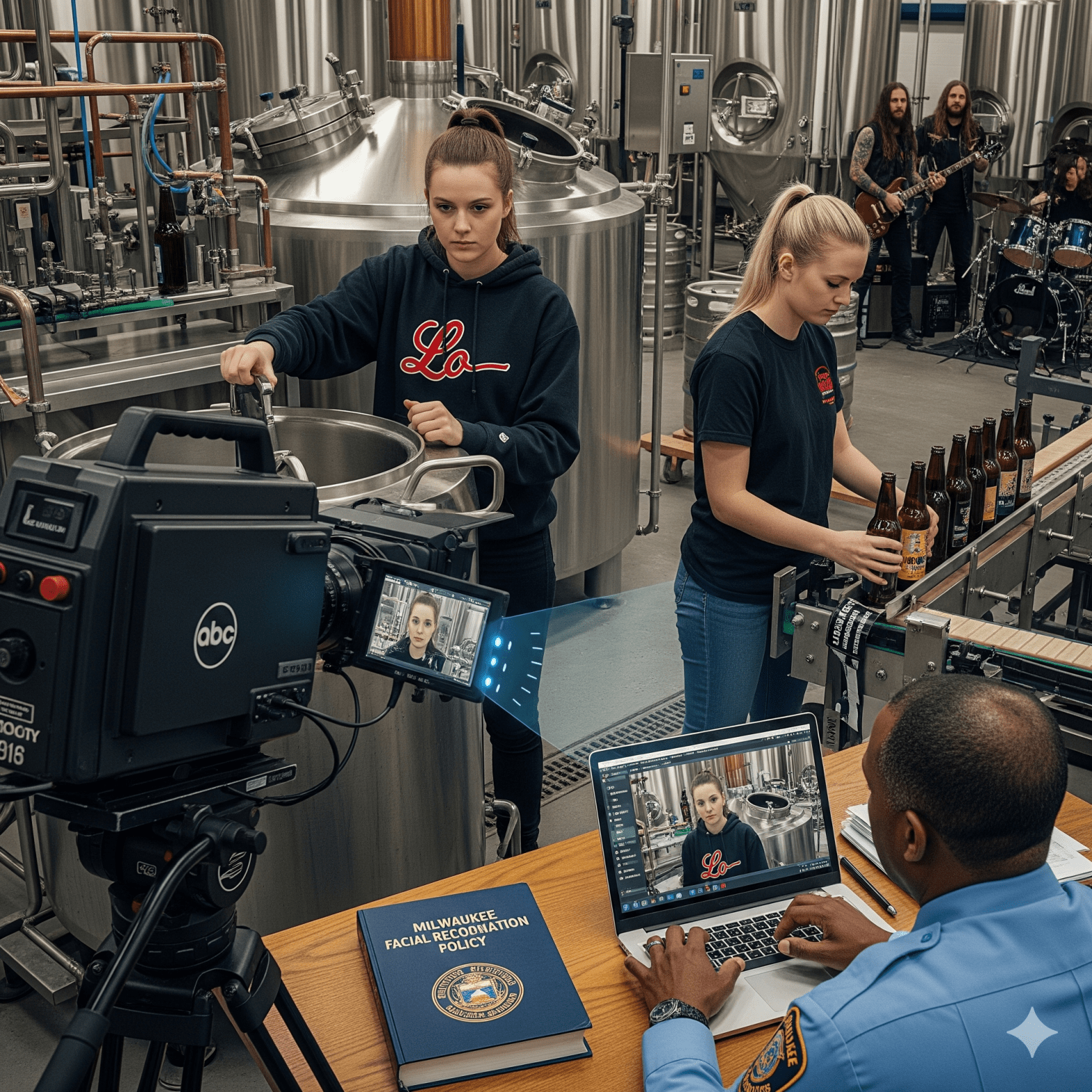
The facial recognition brouhaha in southeastern Wisconsin has taken an interesting turn.
According to Urban Milwaukee, the Milwaukee County Sheriff’s Office is pursuing an agreement with Biometrica for facial recognition services.
The, um, benefit? No cost to the county.
“However, the contract would not need to be approved by the Milwaukee County Board of Supervisors, because there would be no cost to the county associated with the contract. Biometrica offers its services to law enforcement agencies in exchange for millions of mugshots.”
“Milwaukee Police Department has also attempted to contract Biometrica’s services, prompting pushback, at least some of which reflected confusion about how the system works….
“The mooted agreement between Biometrica and MPD would have added 2.5 million images to the database.
“In theory, if MCSO signs a contract with Biometrica, it could perform facial recognition searches at the request of MPD.”
See Bredemarket’s previous posts on the city efforts that are now on hold.
No guarantee that the County will approve what the City didn’t. And considering the bad press from the City’s efforts, including using software BEFORE adopting a policy on its use, it’s going to be an uphill struggle.
While Bredemarket only conducts business in the United States (with one exception), my clients have no such constraints.
Who are my client’s prospects?
Because of my extensive business-to-government (B2G) experience, I often work with clients that sell products and services to government agencies throughout the world. Well, except to North Korea and a few other places.
And as those clients (or their marketing and writing consultants) identify their public sector prospects, terminology becomes an issue.
And they have to answer questions such as “which government agency or agencies in Country Y potentially use biometric authentication for passengers approaching a gate in an airline terminal?”
Hint: chances are it’s NOT called the “department of transportation.”
Ministry
Add one factor that is foreign (literally) to this United States product marketing consultant.
Many of these countries have MINISTRIES.
No, not religious ministers or preachers.
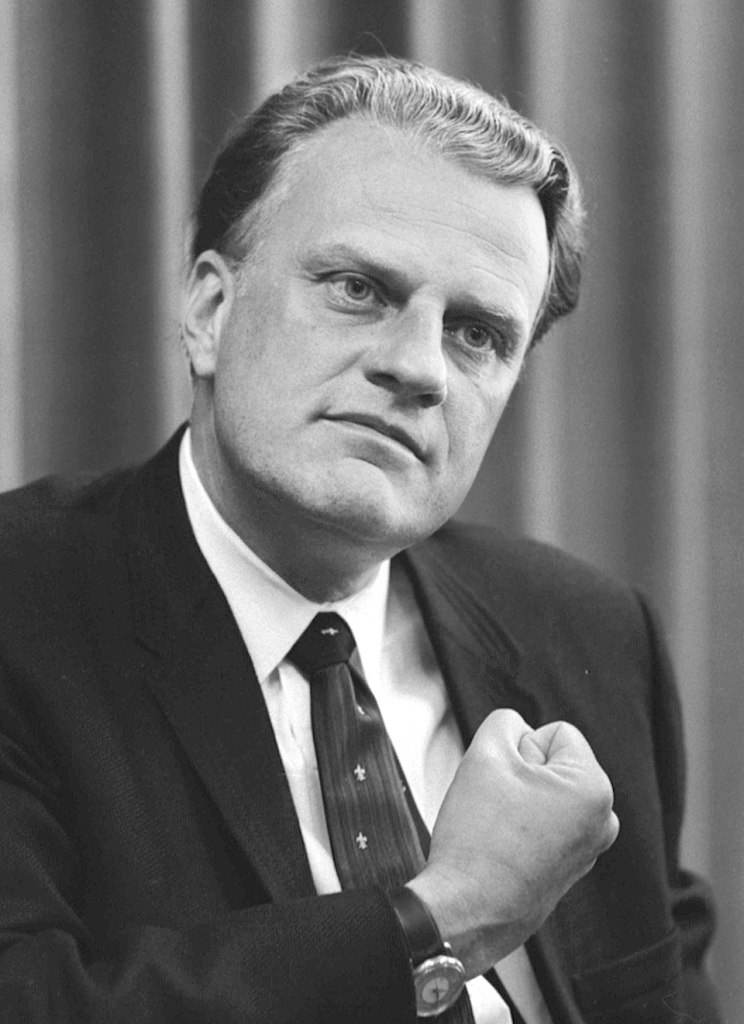
Billy Graham. By Warren K. Leffler – This image is available from the United States Library of Congress’s Prints and Photographs divisionunder the digital ID ppmsc.03261.This tag does not indicate the copyright status of the attached work. A normal copyright tag is still required. See Commons:Licensing., Public Domain, https://commons.wikimedia.org/w/index.php?curid=905632.
When I say “Minister” here I refer to government officials, often from the country’s legislature, who manage a portfolio of agencies that are the responsibility of a Minister.
Sisa
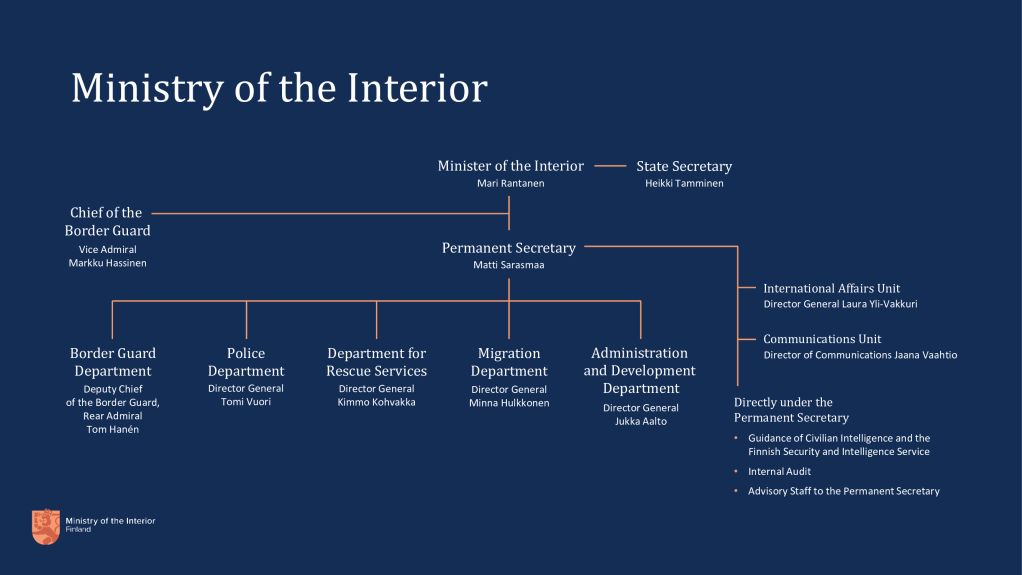
Let’s take one ministry as an example: Sisäministeriö. Oops, Finland’s Ministry of the Interior. This one ministry is currently headed by Mari Rantanen of the Finns Party (part of a four-party coalition ruling Finland).
“Minister Rantanen is also responsible for matters related to integration covered by the Labour Migration and Integration Unit of the Ministry of Economic Affairs and Employment.”
Back to Interior. One huge clarification for U.S. people: other countries’ ministries of the interior bear no relation to the U.S. Department of the Interior, which concerns itself with parks and Native Americans and stuff. Minister Rantanen’s sphere of responsibility is quite different:
“Under the Government Rules of Procedure, the Ministry of the Interior is responsible for:
public order and security, police administration and the private security sector
general preconditions for migration and regulation of migration, with the exception of labour migration, as well as international protection and return migration
Finnish citizenship
rescue services
emergency response centre operations
border security and maritime search and rescue services
national capabilities for civilian crisis management
joint preparedness of regional authorities for incidents and emergencies.”
These responsibilities result in this organization…whoops, organisation.
Border Guard Department, which is the national headquarters for the Border Guard
Administration and Development Department
The units reporting directly to the Permanent Secretary are the International Affairs Unit and Communications Unit.
Directly under the Permanent Secretary are also guidance of Civilian Intelligence and the Finnish Security and Intelligence Service, Internal Audit and Advisory Staff to the Permanent Secretary
So, who’s gonna buy your biometric product or service in each of the 200 or so countries in which you may conduct business?
Since I’m talking about presentation attack detection and injection attack detection a lot lately, I should briefly explain the difference between the two. This is from a Substack post I wrote last June.
Let’s say that you have an app on your smartphone that verifies that you are who you say you are.
Maybe it’s a banking app.
Maybe it’s an app that provides access to a government benefits account.
Maybe it’s an app that lets you enter a football stadium.
As part of its workflow, the app uses the smartphone camera to take a picture of your face.
But is that really YOUR face?
Presentation attack detection
A “presentation attack” occurs when the presented item is altered. In the case of a face presented to a smartphone camera, here are three examples of presentation attacks:
Your face is altered by makeup, a mask, or another disguise.
Your face is replaced by a printed photo of someone else’s face.
Your face is replaced by a digital photo or video on a monitor or screen.
Injection attack detection
But what if the image is NOT from the smartphone camera?
What if it is “injected” from another source, bypassing the camera altogether?
The victim doesn’t care
From the fraud victim perspective, it doesn’t matter whether a presentation attack or an injection attack is used.
The only thing that matters is that some type of deepfake fraud was used to fool the system.
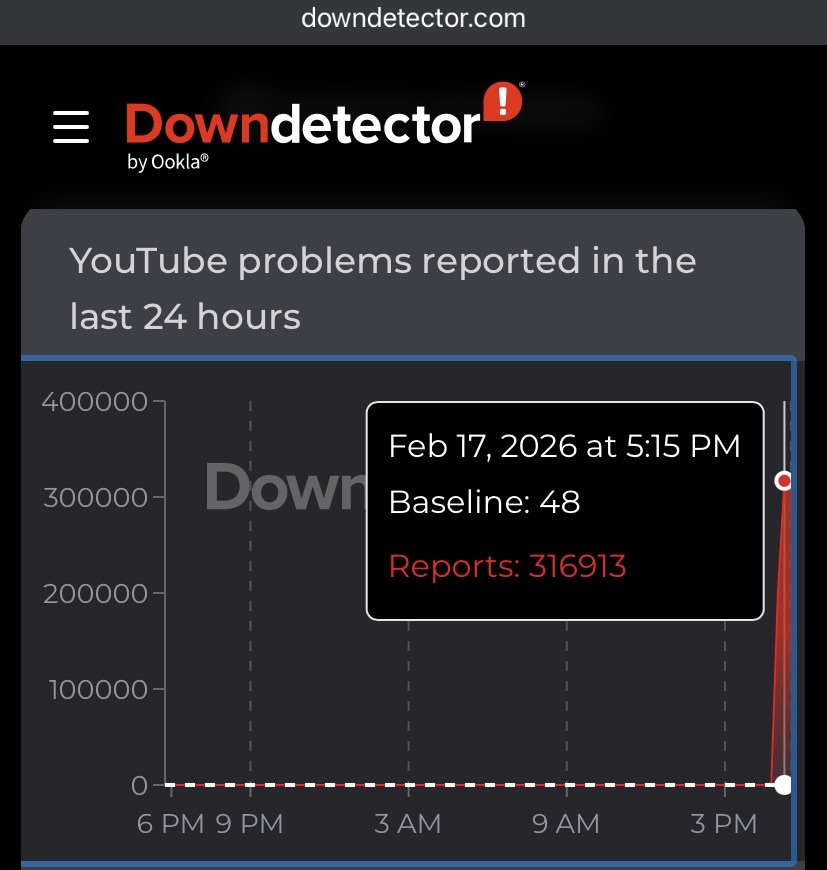
However, the only news from these sources was that hundreds of thousands of people were reporting the issue to Downdetector.
Downdetector, 5:15 pm PST yesterday.
However, the site wasn’t COMPLETELY down. If you had a direct link to a YouTube video, you could still watch it. I confirmed this by watching the YouTube version of one of my Bredemarket promotional videos.
“An issue with our recommendations system prevented videos from appearing across surfaces on YouTube (including the homepage, the YouTube app, YouTube Music and YouTube Kids).”
Since recommendations appear almost everywhere, just about everything was affected. Because YouTube, like most other social services, can’t just show “the site”; it has to show what it thinks you should see.
Think about it. What would YouTube look like if it couldn’t recommend anything?
Most technology publications, with the notable exception of IPVM, are at least partially funded by the companies they cover. Therefore there’s an unavoidable tension between keeping the advertisers happy and casting a critical eye on the industry.
I accept this tension because it applies to Bredemarket itself. Although my clients are absolutely wonderful, there may emerge a future situation where they may be less than perfect. So naturally I have to watch my tongue.
As does Biometric Update.
Remember when IDloop asserted it offered “the world’s first FBI-certified 3D contactless fingerprint scanner,” and Biometric Update reported the claim with no comment? I said at the time:
“Biometric Update reports news as reported, and I don’t think it’s Biometric Update’s purpose to poke holes in vendor claims.”
But then Biometric Update ran a more recent story.
They said that?
Bear in mind that Biometric Update’s advertisers include vendors who offer identity document validation solutions: either their own, or from a third party.
And Biometric Update’s recent story basically said that these solutions are a toxic dumpster fire.
OK, not in those words. Biometric Update is Canadian owned, and if the publication used the words “toxic dumpster fire” it would never stop apologizing.
Not just ineffective, DISASTROUSLY ineffective. Ouch.
For those not up in their acronyms, the Department of Homeland Security’s (DHS) latest annual round of tests was called the Remote Identity Validation Rally (RIVR).
DHS set performance goals for the submitted entries and publicized the (anonymous) results.
“Four of the seven subsystems tested met the goal for system error rate. Four did not meet the threshold for FRR, and five fell short in FAR. In other words, most systems let too few legitimate IDs through, even more passed too many fraudulent IDs, and six of seven fell short on one or both sides of the assessment.”
Google Gemini.
Biometric Update didn’t reveal the…um…identity of the one vendor that performed acceptably. But that vendor may self-reveal soon enough.
On anonymity
Why do testing entities sometimes allow participants to remain anonymous?
Because they want participants.
Some biometric tests are NOT designed to identify the best algorithms, but are instead designed to view the state of the industry. And that’s what this test performed with document validation.
Presumably a future test—POND, or Performance Of Notable Documents—will measure the future state-of-the-art of identity document validation.
Bredemarket has adopted two tactics to cut through the slop and ensure my clients’ messages reach those who need to hear it.
Tactic 1: Before I write, I ask
To bound the message I am about to create for an identity/biometric client (or any client), I ask a number of questions. These questions ensure that the question addresses the right people, their concerns, and their fears. I’ve shared seven of my questions elsewhere.
Seven Questions Your Content Creator Should Ask You.
When all the questions are answered, I have a clear roadmap to start writing.
I don’t feed the answers to Bredebot and have it churn out something. I pick the words myself.
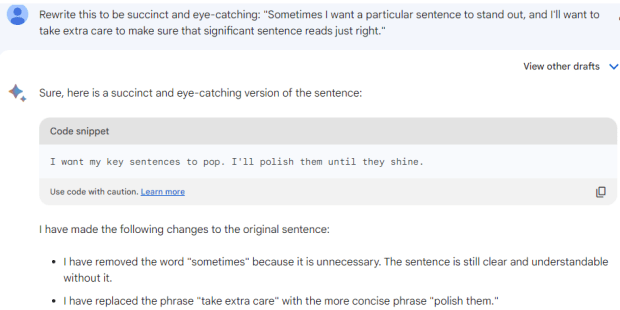
Rewrite this. Don’t write it.
Now perhaps I might use generative AI to tweak a phrase or two, but I remain in complete control of the entire creative process.
The result?
I believe, and my clients also believe, that this careful approach to content results in pieces that are differentiated from the mass-churned content of others.
So my clients stand out and aren’t confused with their competitors.
After all, even though Bredebot fakes thirty years of experience in identity and biometrics, it doesn’t really have such experience. I do. That’s why I’m the biometric product marketing expert.
So if you want me, not a bot, to polish your biometric product marketing sentences “until they shine,” let’s talk about how we can move forward.
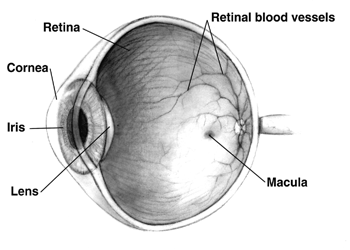
Second, while the iris can be used for biometric identification, so can the retina. People are identified by their blood vessels in their eyes. But there are complications, according to the Biometrics Institute:
“Retina recognition is one of the most accurate biometric applications but a number of common eye conditions and diseases (for example, cataracts, diabetes, glaucoma) can affect the arrangement of the blood vessels and consequently alter the pattern used for biometric recognition.”
An interesting Request for Information (Notice ID 70RDA126RFI000003) for a multi-biometric matching system was posted on SAM.gov on Friday, and it’s turning some heads. But is YOUR organization reading an RFI that is turning YOUR heads?
Bear in mind that this is a Request for INFORMATION, not a Request for PROPOSAL. And this is made clear in the document:
“This RFI is for planning purposes only and shall not be construed as an obligation on the part of the Government. This is NOT a Request for Quotations or Proposals. No solicitation document exists, and a formal solicitation may or may not be issued by the Government as a result of the responses received to this RFI.”
Forget the technical requirements…look at the BUSINESS requirements
Now I could get into the…um…minutiae of the request for information about a biometric matching system, the requirements for everything from presentation attack detection to on-premise/hybrid/cloud deployments, and a host of other things.
But in this case, the business requirements outweigh the technical requirements…by a LONG shot.
“The Department of Homeland Security (DHS) is seeking an enterprise-wide, scalable, and secure biometric matching software solution to support mission-critical identity verification, vetting, and investigative operations across all DHS Components, including CBP, ICE, TSA, USCIS, USSS, and Headquarters. The contractor will provide a DHS-wide enterprise license for multi-modal biometric matching software, along with all associated services, integration support, maintenance, and technical assistance necessary for full operational deployment.”
And in the next section:
“DHS is looking to acquire an enterprise-wide biometric matching software solution, including all licenses, services, and technical support necessary to enable seamless integration with all DHS biometric systems.”
Matching for ALL DHS components, and integration with ALL DHS biometric systems. This could just be a teeny system for limited operations…or it could be a super system. Since they’re asking about scalability, potential respondents should probably assume the latter.
So we’re talking loads of money.
Of course it could be scaled way down when or if a final RFP comes along. And maybe the vast expanse of the RFI is merely designed to get system integrators to drool.
Incidentally, Bredemarket offers proposal services to assist identity/biometric vendors in RFI and RFP responses such as this one. Over the years my proposals have won over $50 million in business. Presumably the respondents to this RFI have full proposal staffs (or maybe not), but if YOUR organization requires RFI and RFP assistance, schedule a meeting with Bredemarket.
Bredemarket services, process, and pricing.
(2/17/2026: See Anthony Kimery’s assessment of the RFI here.)
I missed this announcement in December, but it carries an important message.
“Gatekeeper Systems, a pioneer in intelligent theft prevention solutions, today announced a significant enhancement to its FaceFirst® platform with the integration of technology from ROC.”
That’s the firm formerly known as Rank One Computing.
The important message is deeper in the press release.
““Facial recognition in retail must be fast, accurate, and accountable,” said Robert Harling, CEO of Gatekeeper Systems. “By embedding ROC’s NIST-verified algorithm directly into FaceFirst, we’re giving retailers a system that performs in real time and stands up to public, operational, and legal scrutiny. It’s AI you can trust—and accuracy you can prove.””
The “accountable” and “prove” part comes from ROC’s demonstrated results in NIST FRTE testing. As well as the fact that people using Gatekeeper Systems now know whose facial recognition algorithm they’re using.
It still shocks me when a company says that they’re using an algorithm, but don’t say whose algorithm they’re using.











 Bredemarket