I’m putting myself in the shoes of someone reading stuff on LinkedIn or Facebook.
At one point, the reader may encounter a reference to “Bredemarket.”
At another point, the reader may encounter a reference to “Bredemarket Identity Firm Services.”
Are “Bredemarket” and “Bredemarket Identity Firm Services” two separate entities?
No.
They overlap.
“Bredemarket” is my actual company that provides marketing and writing services (content, proposals, analysis) to identity, biometric, technology, and general business firms in California’s Inland Empire and throughout the United States.
Bredemarket markets to identity/biometric firms that market to their own prospects.
And this quote from Aja Frost at HubSpot is relevant to anyone who markets to anyone, and wants to attract attention from people using Google Gemini, ChatGPT, and other large language models to answer questions. You need to practice answer engine optimization (AEO).
“In the old world, you’d be publishing ‘The Ultimate Guide to Content Marketing.’ And in the AEO world, you are publishing ‘The Ultimate Guide to Content Marketing If You Work at a Logistics Company in New Jersey’ because answer engines surface highly relevant, contextualized, tailored information to every person who is using them.“
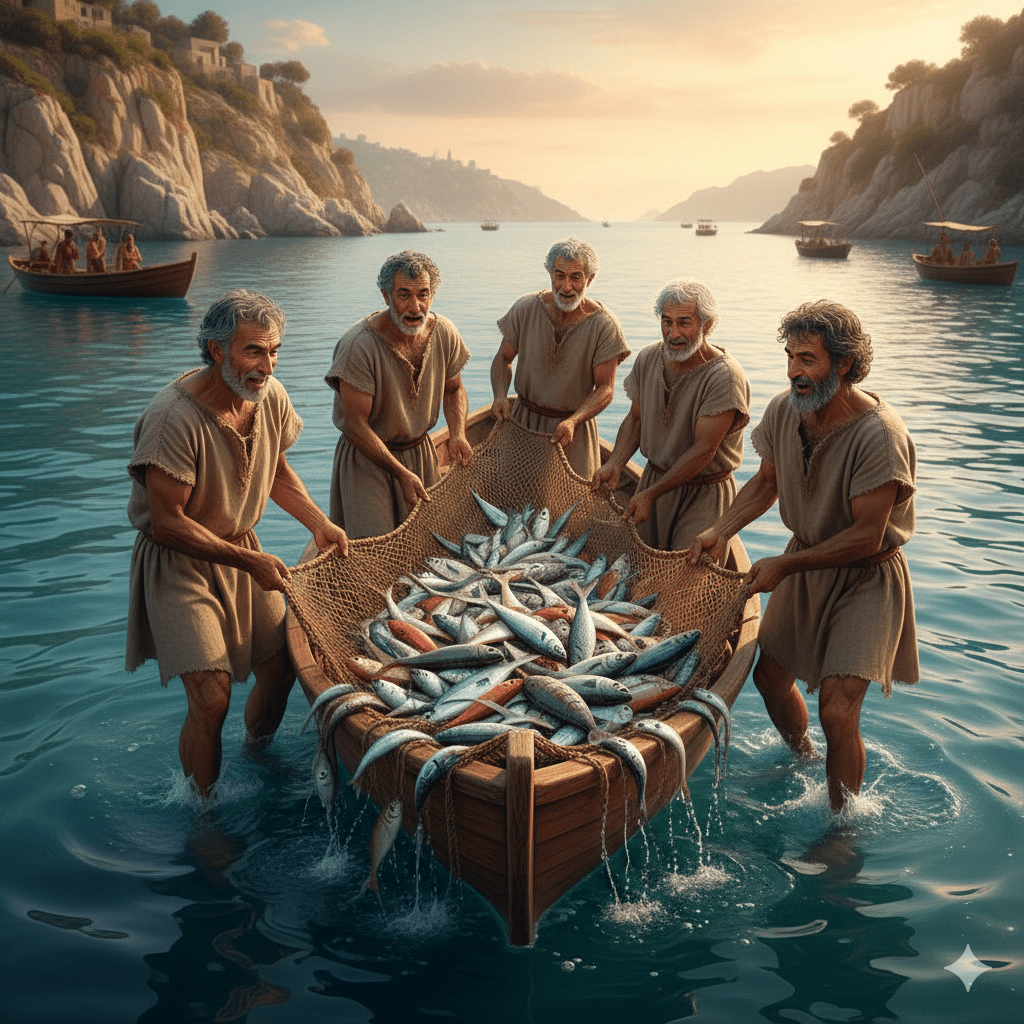
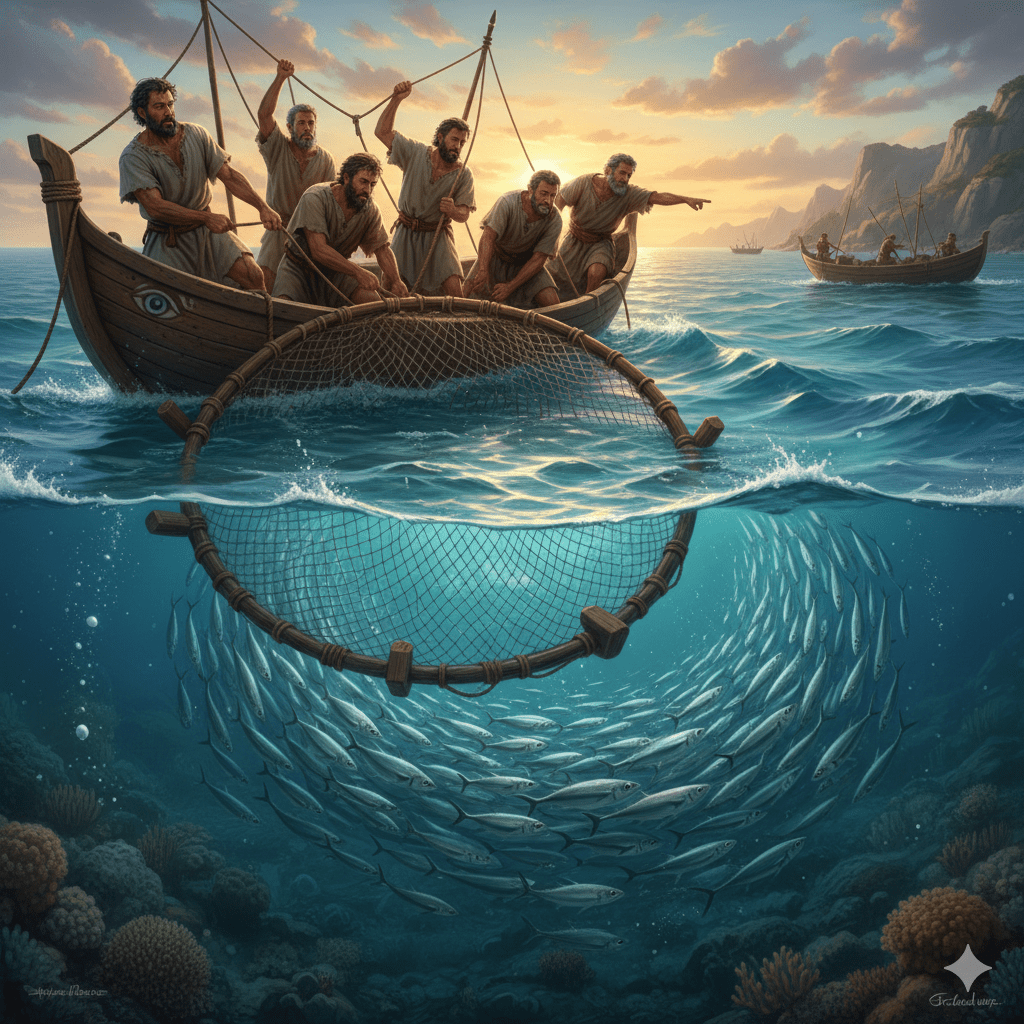
HubSpot preaches something very similar to Never Search Alone: when you cast a wide net, there are too many holes.
Google Gemini.
This reminded me that I need to narrow my focus whenever possible and address the issues important to marketing leaders at identity and biometric firms.
What types of “highly relevant, contextualized, tailored information” do identity/biometric prospects need?
A good chunk of her email was devoted to her statements on how much content should cost. It turns out that my rates are in the ballpark that she described.
Bredemarket’s services, process…and pricing.
But that’s not the most important part of the email. The key observation comes at the end.
“If you want to create high-quality blog posts, engaging videos, or targeted social media campaigns, you will need to pay for skilled writers, designers, videographers, and social media experts.
“No, it doesn’t come cheap. But remember that for every dollar spent on content marketing, you get 3 in return, and that content marketing brings 6x the ROI of other marketing tactics.”
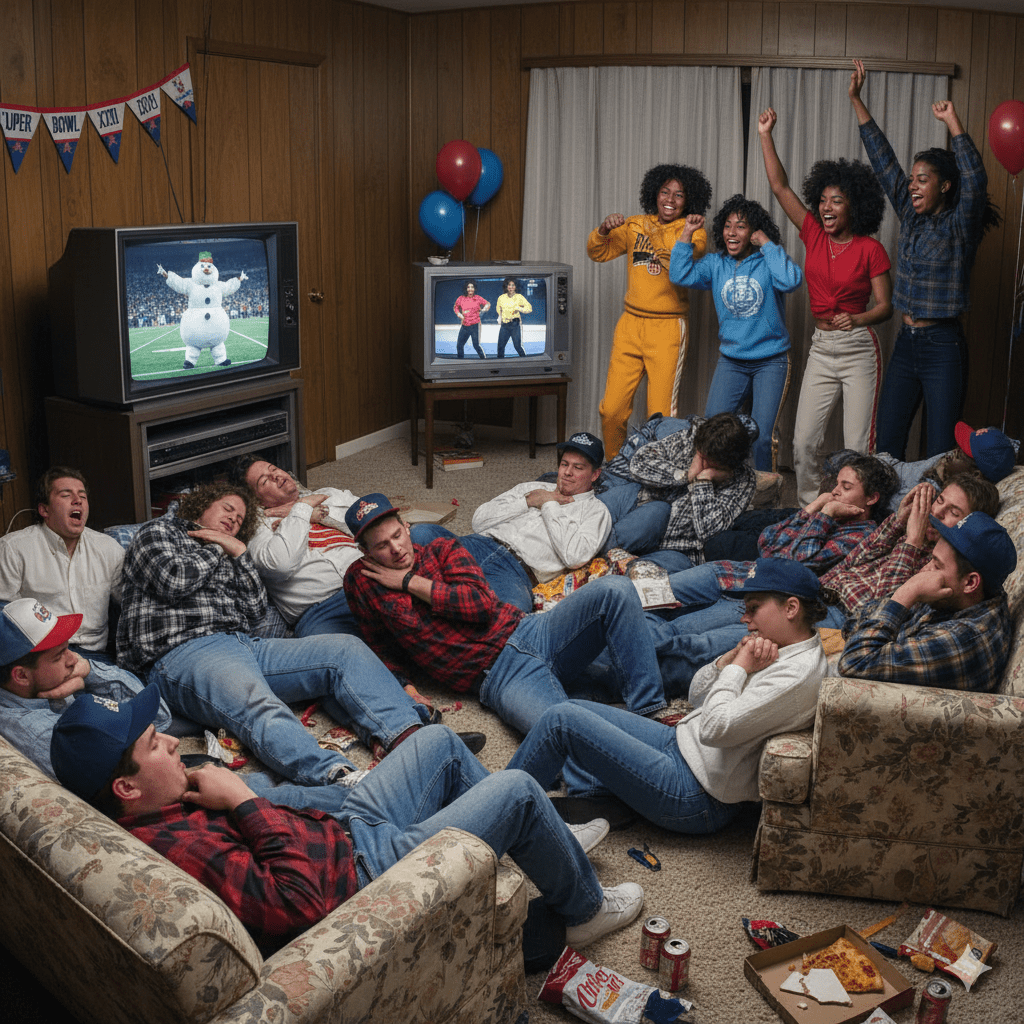
Because of something that happened during halftime at the 2026 Super Bowl, a lot of people are looking at something that happened during halftime at the 1992 Super Bowl.
You know, the story about how NO ONE watched the official 1992 halftime show and EVERYONE watched an unofficial one.
Except…that’s not what happened.
Marching bands at halftime
I was in my high school marching band, initially as a flute player, later as a drum major. I therefore performed in multiple football game halftime shows, entertaining the crowd with such classics as a Star Wars medley and a marching band arrangement of “Disco Duck.” (Cara and Jackie remember that one.)
And that was pretty much par for the course for football halftime shows. Not just at the high school level.
For example, let’s take a look at the Super Bowl. I will choose…Super Bowl XXVI.
It was a little fancier than my high school. Gloria Estefan sang during halftime. But the show also featured figure skaters Brian Boitano and Dorothy Hamill, the 1980 U.S. Olympic Hockey Team…and the University of Minnesota Marching Band. The theme was “Winter Magic.” Not sure how Miami-associated Estefan (who didn’t even appear until 10 minutes in) fit the theme.
Winter Magic.
Back in those days, the Winter Olympics were held on leap years, the same as the Summer Olympics. And therefore the Winter Olympics were just weeks away on CBS, the same network airing the Super Bowl. So this halftime show, in the middle of the Super Bowl, was guaranteed to get high viewership.
But not as high as expected.
The fourth network
Back when I was styling in my marching band uniform, the United States was dominated by three commercial television networks. A few years later a fourth network emerged, Fox.
Back in those days the name “Fox” was associated with innovation, and the fourth network definitely innovated with shows like the anti-Cosby “Married…with Children.” There was also a variety show, “The Tracey Ullman Show,” which spun off a cartoon show, The Samsons or something. And there was also comedy show with mostly black actors called “In Living Color.”
But the Big Three had one thing that Fox didn’t: NFL football. Those agreements were locked in place: the NFC on CBS, the AFC on NBC, and Monday Night Football on ABC. By 1985, Super Bowl telecasts began to rotate between these three networks, with CBS getting the 1992 slot.
“During In Living Color’s first season, a marketing impresario named Jay Coleman approached Fox with an idea that would draw even bigger ratings and stick it to CBS, the NFL rights holder and Super Bowl carrier that Murdoch had in his sights: a special episode of In Living Color that would air opposite the Super Bowl intermission.”
An audacious idea, which they executed in a way to ensure that people could turn to Fox at halftime, then turn back to CBS for the second half of the game.
“[Jim] Carrey started by revealing a 26-minute countdown clock at the left bottom corner of the screen that would let viewers know when to switch back for the second half. “You won’t miss any of the senseless brutality!”
And they were off with a show that blew the marching band away in terms of creativity.
In Living Color.
But not in terms of ratings.
CBS won the time slot
The way the story is told today, you would think no one watched Estefan et al.
But statistics show that 79 million people watched the Super Bowl broadcast. 22 million watched In Living Color at halftime.
It’s uncertain how many people watched the Winter Magic portion of the CBS broadcast, but it’s quite possible that as many as 57 million stuck around.
Read that again.
57 million people.
Which is much more than 22 million people.
Of course, maybe all 57 million people didn’t stick around. Perhaps everyone not watching the Homeboy Shopping Network used the time for a bathroom break.
But it’s safe to say that more than 22 million people kept their TVs on CBS during halftime. Probably many, many more.
So on the surface the counter programming failed.
However, 22 million people is a lot of people to lose. In a more recent example, 2026 Turning Point counter programming drew no more than 5 million viewers. Although to be fair, it wasn’t even on TV, but on something called Ew Tube or something like that. And who would watch something on a computer or a phone?
But let’s go back to 1992. Maybe the NFL show won the ratings, but “The Shield” was shamed into revamping next year’s show.
They decided to can the marching band and ONLY go with a singer.
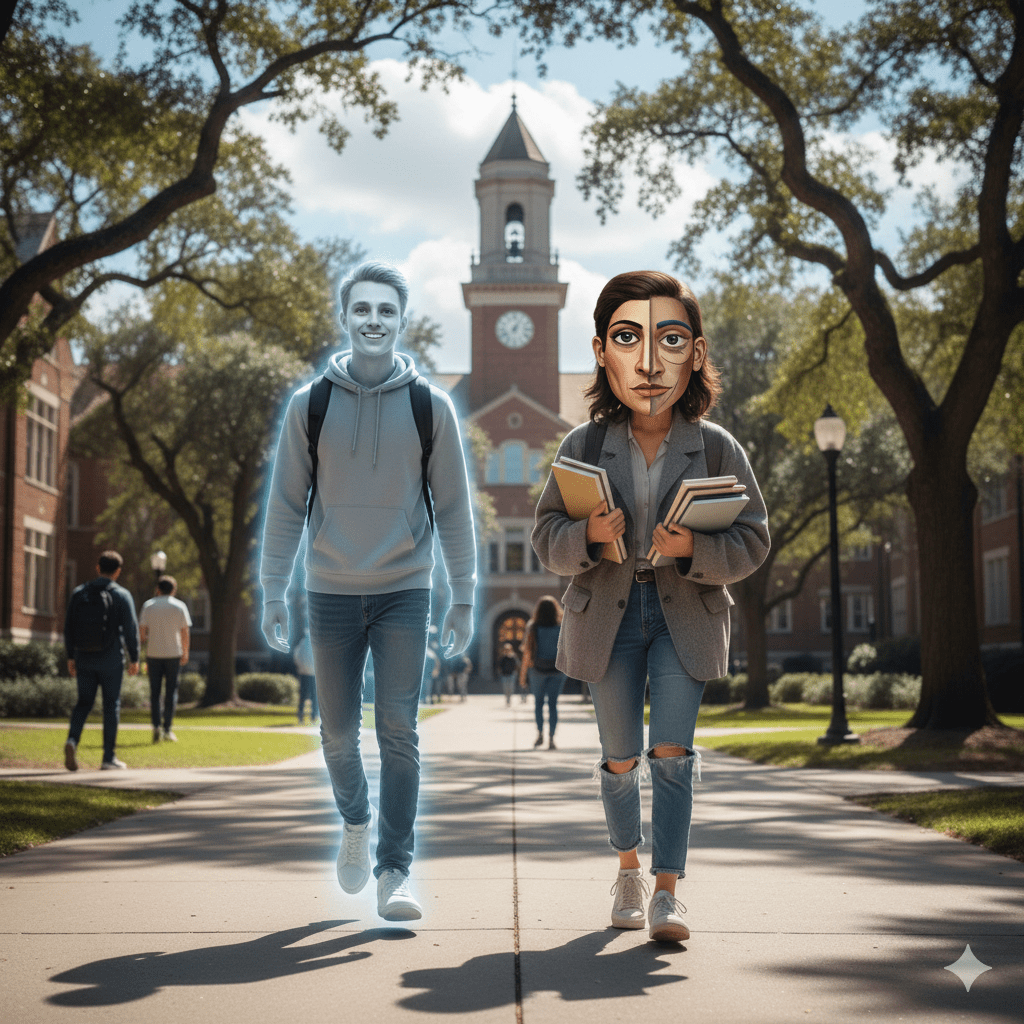
These are the no-good characters from my Bredemarket blog post earlier today, “Why is Educational Identity Important?” That post quoted from 1Kosmos and Fischer Identity:
“Higher education institutions are increasingly targeted by identity fraud schemes, including “ghost students,” synthetic identities, and financial aid fraud.”
Don’t let these fraudsters rip your university off.
As I write this, contactless fingerprint scanners cannot submit their prints to the U.S. Federal Bureau of Investigation’s (FBI) Next Generation Identification (NGI) system.
But the FBI does certify such scanners under a special category.
“Hungarian border police are exploring the use of contactless biometric technology made by German startup IDloop in border control and law enforcement….
“The product [CFS flats] was first introduced in 2024 and is the world’s first 3D contactless fingerprint scanner certified by the FBI, according to the firm.”
Note the last four words.
Biometric Update reports news as reported, and I don’t think it’s Biometric Update’s purpose to poke holes in vendor claims. So they just says that THE FIRM SAYS it’s certified, and it’s the first.
Well, IDloop is half right.
Is IDloop’s CFS flats FBI certified?
The way to check certification is to go to the Certified Products List web page at the FBI Biometric Specifications website. You can go there yourself: https://fbibiospecs.fbi.gov/certifications-1/cpl
And if you do, scroll down to the “Firm” area and look for IDloop in the list of firms.
Yes, it’s there, and it has a certification under the Personal Identity Verification (PIV) specification, originally dated 10/30/2024, modified 1/28/2026.
From the CPL.
Here’s the description:
“CFS flats contactless, up to 4-finger, capture device at 500 ppi (PIV-071006) (original 10/24; algorithm update 1/26) Note: Device images a 3-dimensional object, but testing was primarily 2-dimensional – Not for use with CJIS systems.”
Again, the FBI isn’t allowing contactless submissions to CJIS systems such as NGI, in part because the Appendix F specifications assume analysis of fingerprint images on a 2-dimensional object. Obviously very, very difficult with contactless devices that capture 3-dimensional objects.
“Introducing CFS flats—the world’s first FBI-certified 3D contactless fingerprint scanner.“
Um…perhaps I should share a bit of my personal history, for those who don’t know.
From 2009 to 2017 I worked for a company called MorphoTrak. Know where this is going?
But I’m not going to focus on my former employer.
Initial CPL search
Remember that unusual sentence that appears in IDloop’s description of its PIV certification?
“Device images a 3-dimensional object, but testing was primarily 2-dimensional”
I assert that if we can find ANY contactless product in the Certified Products List that uses that same language and was certified before 10/30/2024, then IDloop’s claim of being first is…somewhat inaccurate.
So I checked.
From the CPL.
Two products received PIV certification before October 2024, MorphoWave XP (July 2020) and MorphoWave TP (May 2024). The first was originally certified over 4 years BEFORE the IDloop product.
“MorphoWave XP (formerly MorphoWave Compact) contactless, up to 4-finger, livescan device at 500 ppi (PIV-071006) (alternate enrollment processing 6/23; name change 2/22; contrast stretch 9/21; original 7/20) Note: Device images a 3-dimensional object, but testing was primarily 2-dimensional – Not for use with CJIS systems.”
Subsequent CPL search
And what if you search for the word “contactless” instead and just look at the 4-finger PIV certifications?
If you do so, you can find certifications from 2019 and earlier for products from Advanced Optical Systems (October 2015 May 2017), Safran Morpho (November 2015, under the original name “Finger On The Fly”), and Thales (May 2019). All years BEFORE the IDloop product.
IDloop, meet Advanced Optical Systems
While Advanced Optical Systems is no more, let’s look at the description for that original AOS product.
“ANDI OTG
contactless, up to 4-finger, livescan capture system at 500ppi (PIV-071006). Note: Device images a 3-dimensional object, but testing was only 2-dimensional – Not for use with CJIS systems”
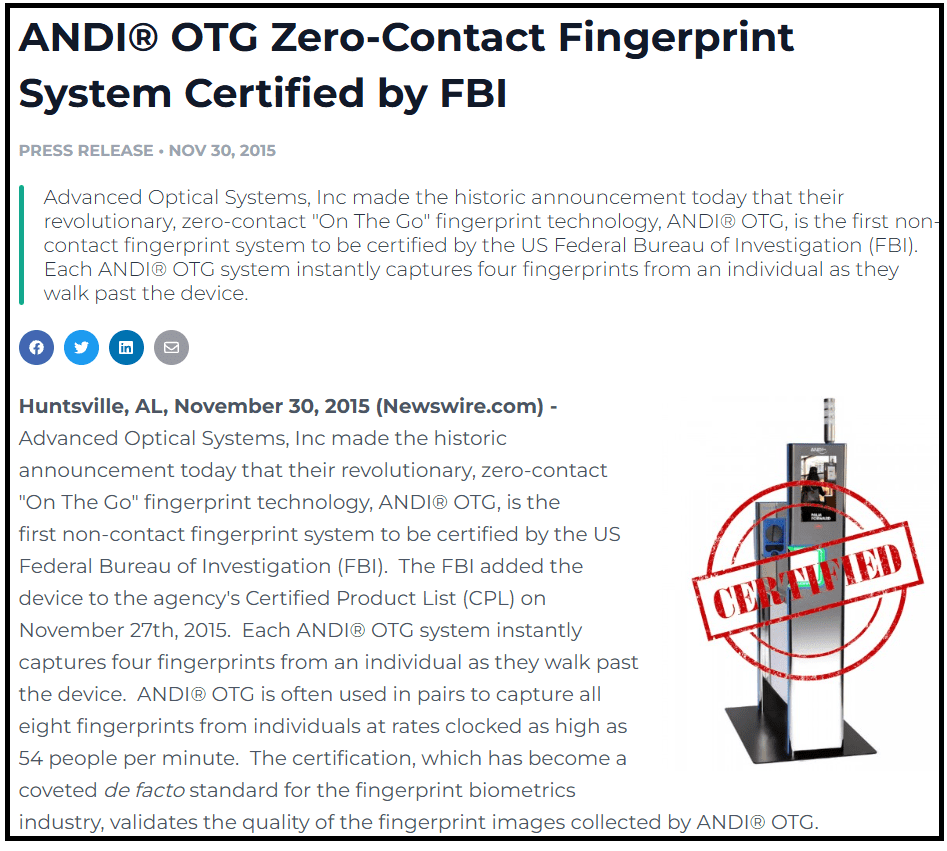
“Huntsville, AL, November 30, 2015 (Newswire.com) –Advanced Optical Systems, Inc made the historic announcement today that their revolutionary, zero-contact “On The Go” fingerprint technology, ANDI® OTG, is the first non-contact fingerprint system to be certified by the US Federal Bureau of Investigation (FBI). The FBI added the device to the agency’s Certified Product List (CPL) on November 27th, 2015.”
“Higher education institutions are increasingly targeted by identity fraud schemes, including “ghost students,” synthetic identities, and financial aid fraud. At the same time, universities must support digital access for students, alumni, faculty, and staff across fragmented IAM environments that span legacy systems, modern cloud platforms, and third-party services.”
Let’s look at the what.
Verify student, alumni, and staff identities using high-assurance proofing and biometric verification
Reduce financial aid and enrollment fraud caused by synthetic or stolen identities
Strengthen assurance across fragmented IAM environments spanning legacy and modern systems
Enable strong, passwordless authentication based on verified digital identity that is reusable and persists across enrollment, academic access, and alumni engagement
If your company provides educational identity solutions, and your message isn’t getting out to your prospects, perhaps you need to talk to the biometric product marketing expert, Bredemarket.
I tend to load my Bredemarket blog posts with a ton of outbound links, and if you didn’t look at my 7am post carefully, you may have missed one.
Tamara Grominsky recently wrote “The Operator,” or Why the strategic vs tactical PMM debate is a false choice.
One brief excerpt:
“If you’re only doing strategy, sitting in your ivory tower designing the future without grounding it in reality, you’re going to be out of touch….But it’s equally true that if you’re stuck in pure execution mode, you could be executing brilliantly on the wrong things.”
Identity/biometric marketing leaders have a lot on their hands, and the last thing they need is more work. Even if you outsource your product marketing, you must manage the resources.
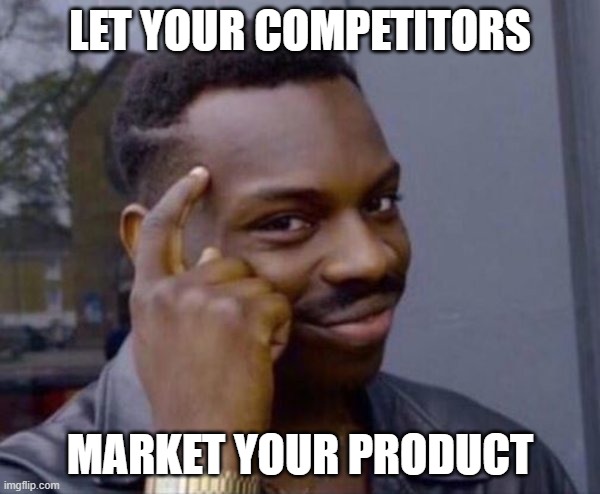
Rather than do this yourself, why not let your competitors do it?
Imgflip.
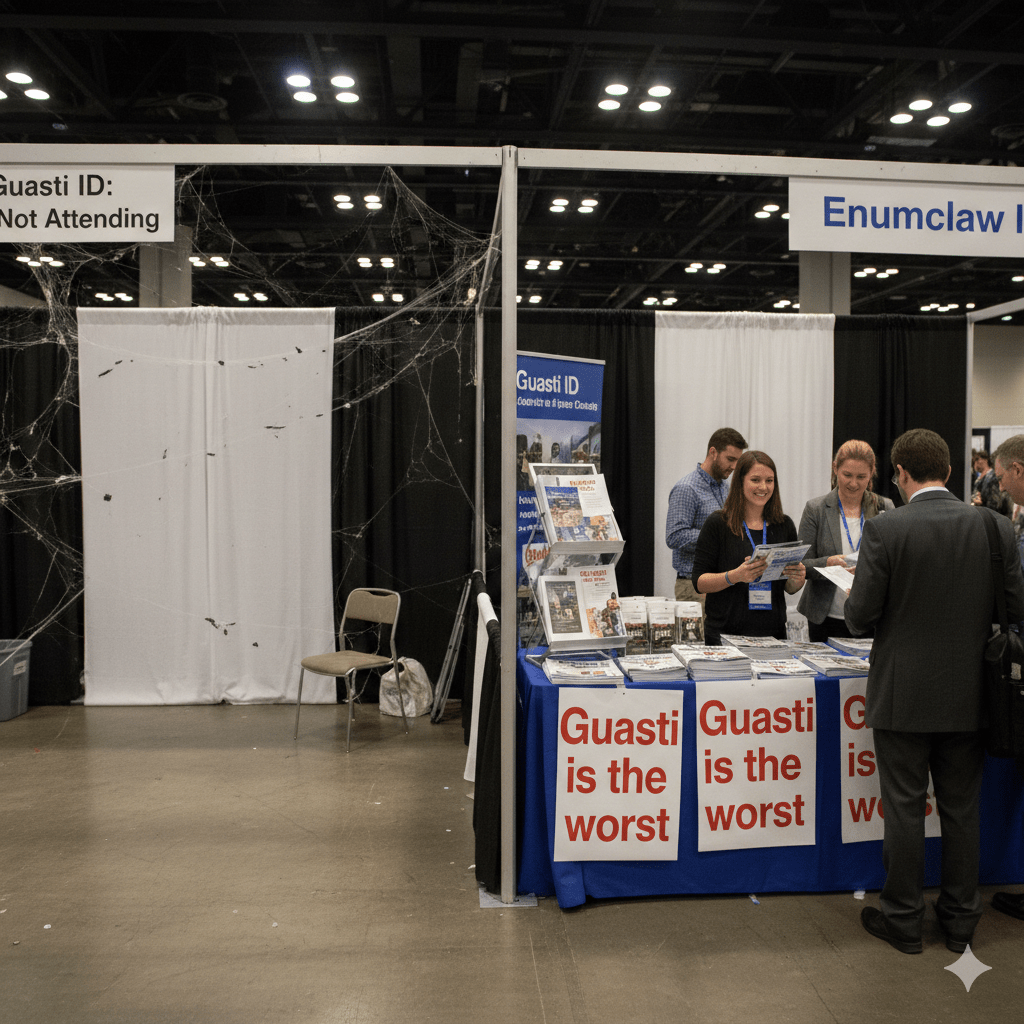
If your competitors market your identity/biometric product…
One: You save money. Why spend hundreds or thousands of dollars on go-to-market or sales enablement materials? Let your competitors incur those costs.
Two: You save time. The best product marketing initiatives occur in a joint process between the marketing leader and the product marketing consultant. But this requires commitment on your part: in initial project definition, draft review, and final publication.
Three: You save trouble. If your product marketing content has an effective call to action, there is the danger that a prospect may act on it, creating more work for your sales organization.
You can save money, time, and trouble by your silence. Let your competitors bear the burden of defining your product to your prospects. They will be more than happy to do so.
In fact, you should strongly encourage your competitors to contact Bredemarket about their identity/biometric product marketing needs. Bredemarket will make your competitors spend money and stay busy during and after content creation.










 Bredemarket