Last week I enjoyed a three-day vacation from my day job, so I had the opportunity to join SMA’s weekly Town Hall. (I am still officially an SMA Associate, on inactive status.)
SMA Town Halls usually begin with an “Art Talk,” and last week’s Art Talk focused on art in Las Vegas.
Coincidentally, I was leaving for Las Vegas later that day.
Sarah Kane’s presentation last week covered the Mob Museum.
Coincidentally, I had reservations to visit that museum on Saturday.
When I shared this in the Town Hall chat, Ajay Patel requested that I share pictures of my visit. Here they are.
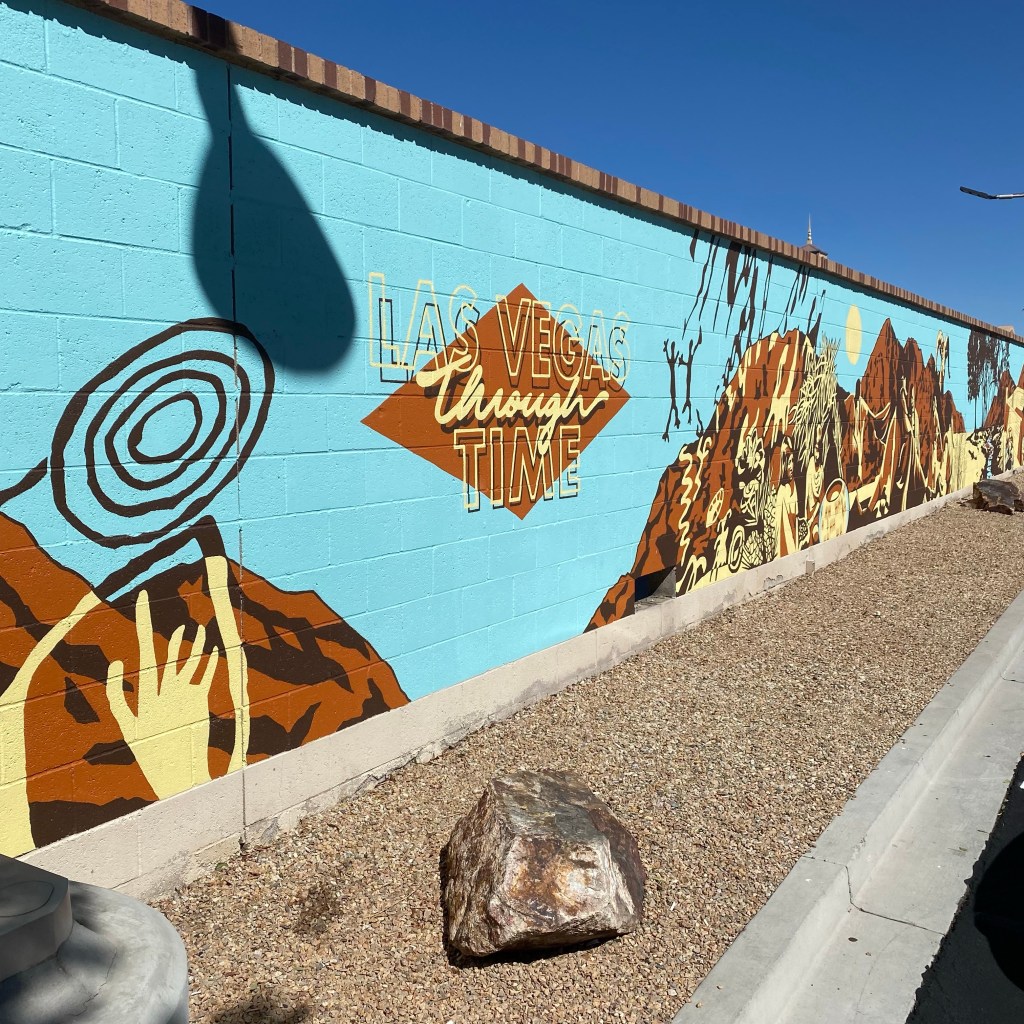
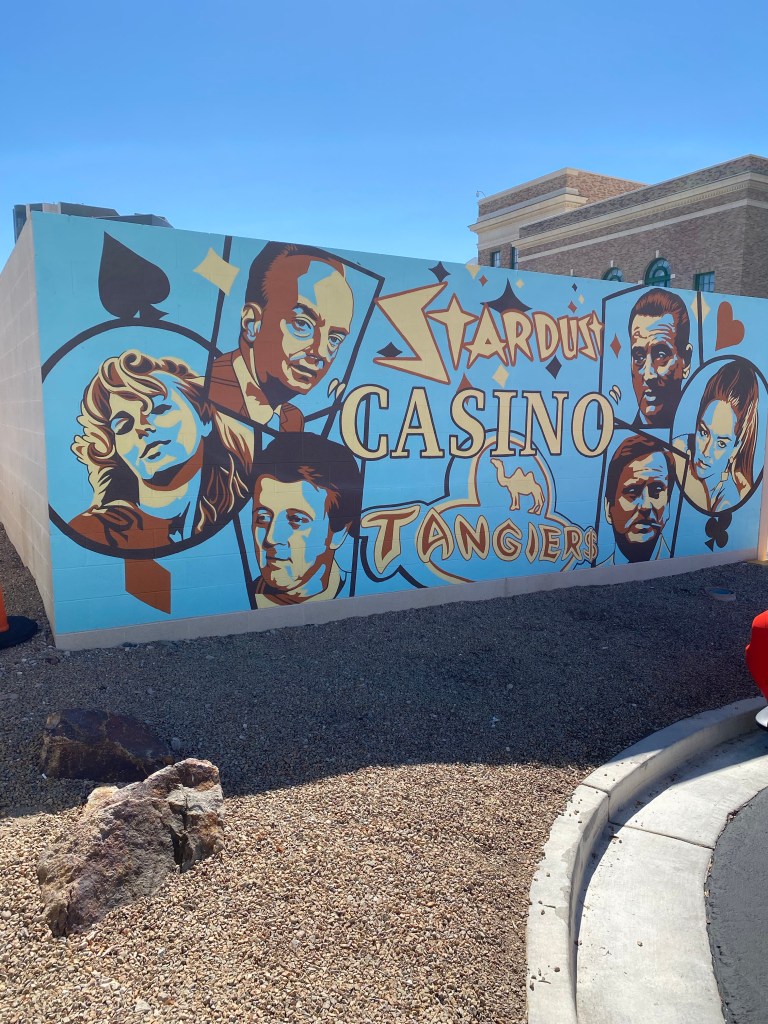
This parking lot wall depicts the history of Las Vegas. Kane had nicer pictures in her Art Talk; cars obscured much of the wall when I visited.
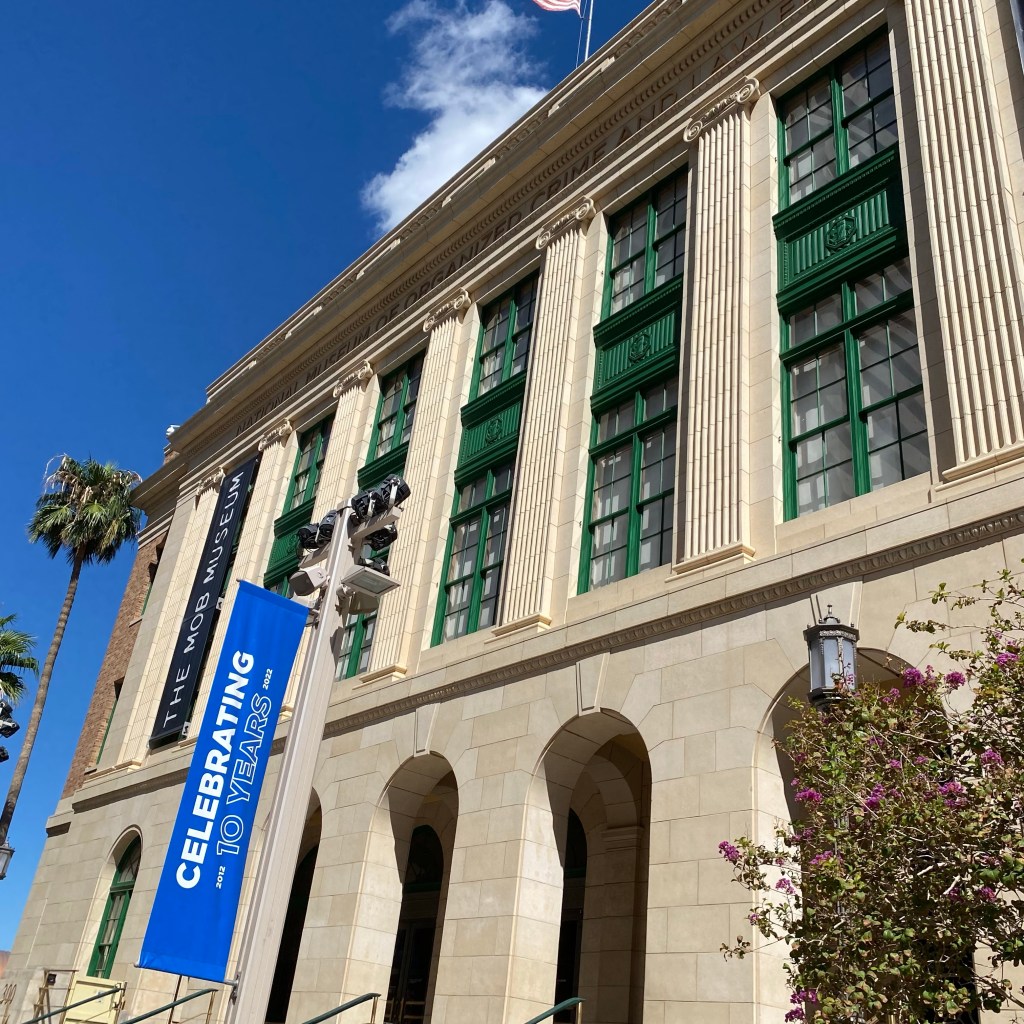
The museum is located in a historic Post Office building that also hosted a courtroom. More on that later.
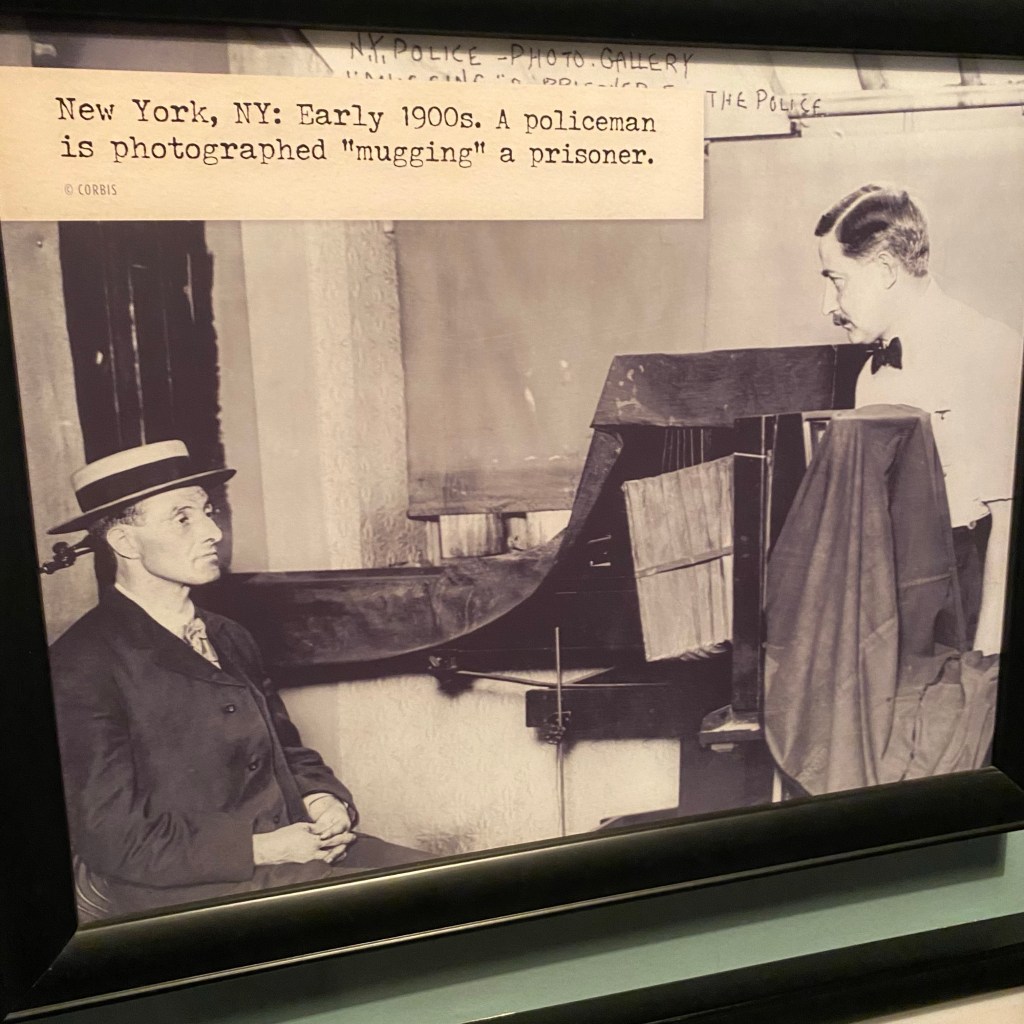
Mugshots, early 20th century.
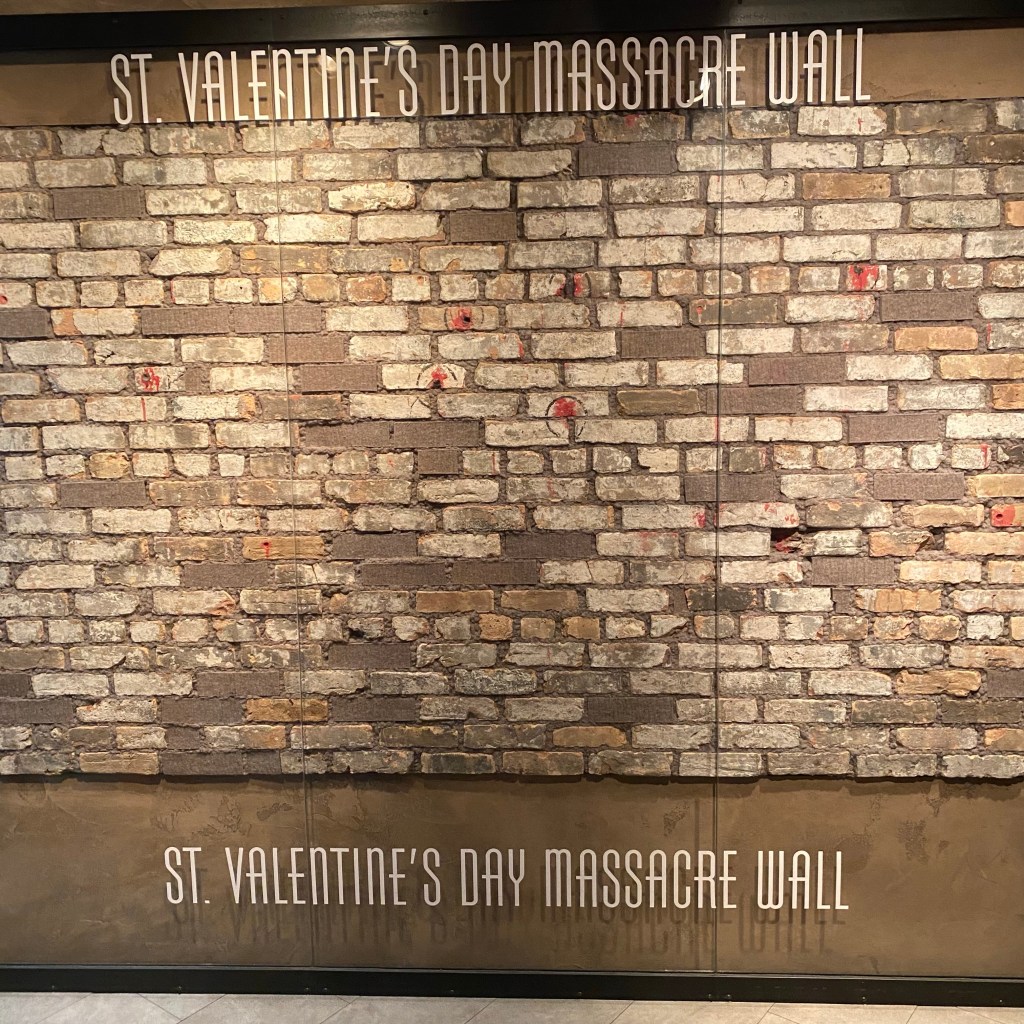
This wall was the backdrop from Chicago’s St. Valentine’s Day Massacre in 1929. The bricks were subsequently relocated to Las Vegas.
If you don’t know why this ticket from the 1919 World Series is in the National Mob Museum, look it up.
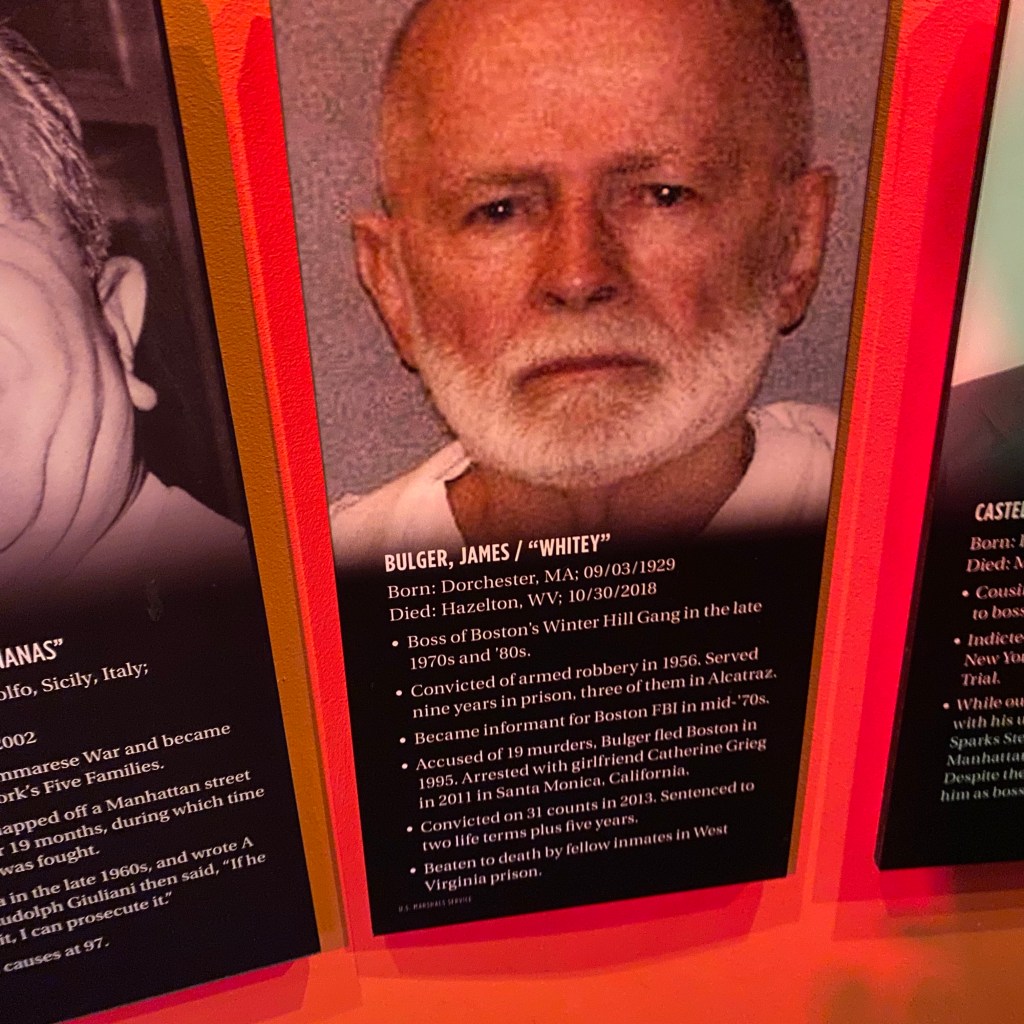
If you’ve worked for a couple of facial recognition/video surveillance companies (the I and N companies come to mind), you’ve probably compared a picture from an early Whitey Bulger arrest to a later picture of Bulger. He ended up in prison in his later years, and did not survive the experience.
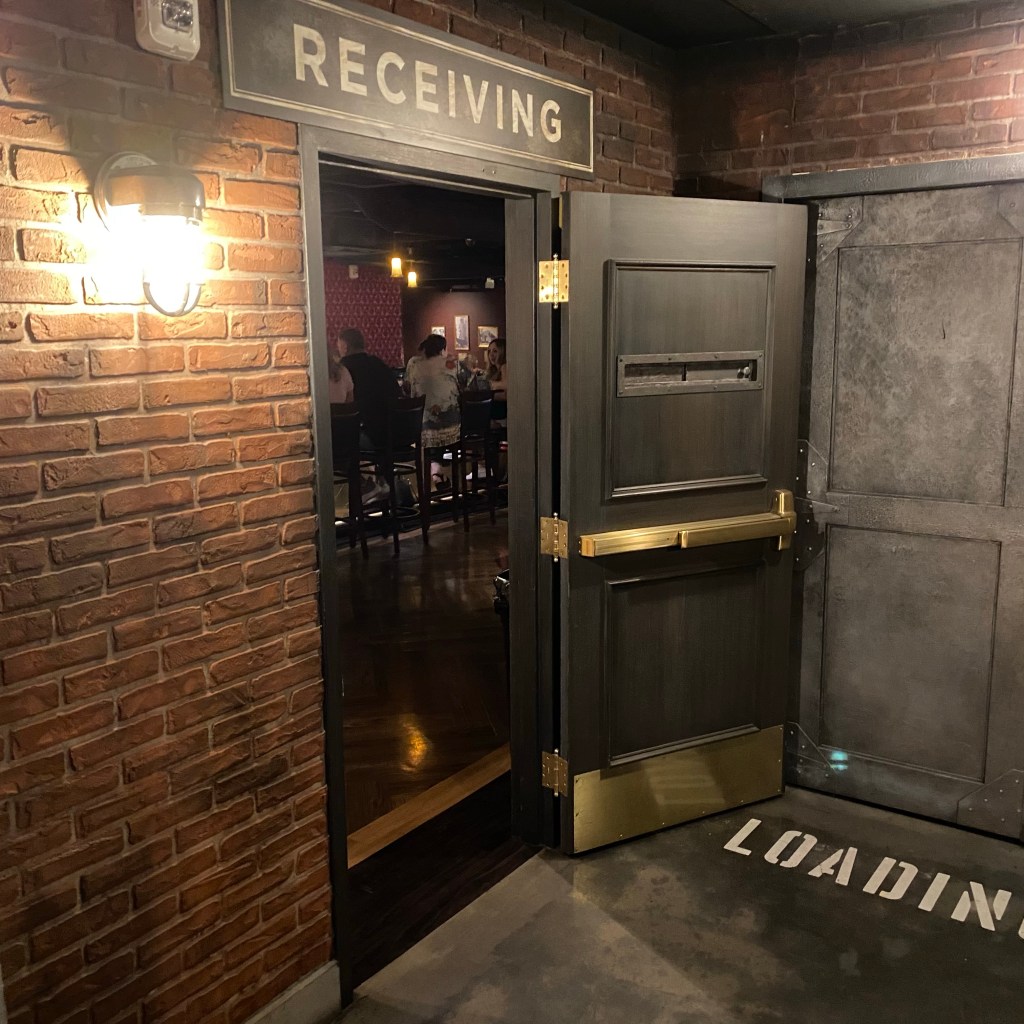
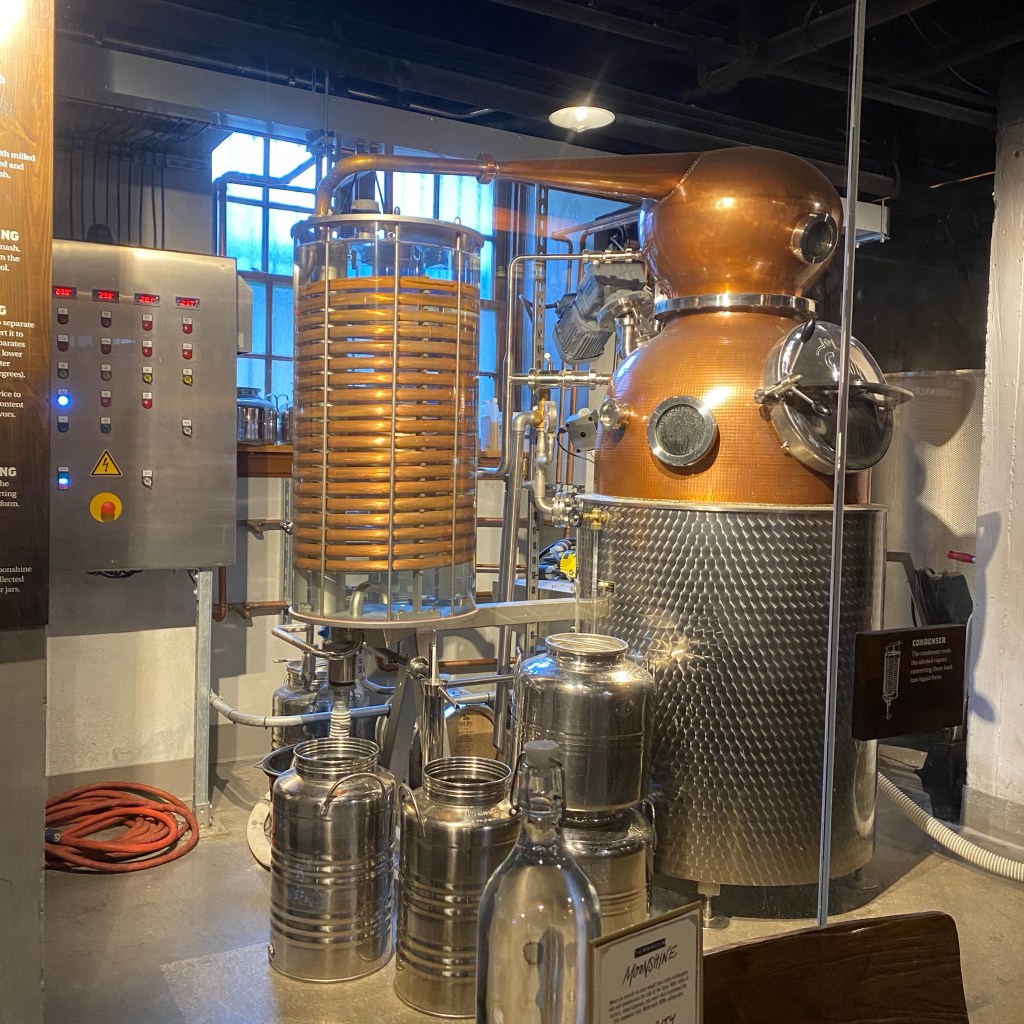
I finished my visit to the Mob Museum in a speakeasy. Special medicines may or may not have been consumed. Sorry, no pictures of any alleged consumption.
Bredemarket has always restricted its business to the United States. (Lately I’ve focused more on California’s Inland Empire West, but that’s another story.) So everyone in my target market is celebrating Labor Day today.
Theoretically.
It’s important to note that most other countries celebrate the contributions of labor on May 1, but for several reasons the United States chose a different day. The Massachusetts AFL-CIO page that explained this no longer exists, but I quoted from that page in a tymshft post a decade ago:
Despite the popularity of May Day and the appeal of an international holiday, the American Federation of Labor pushed to secure Labor Day as America’s primary celebration of its workers. This was due to the more radical tone that May Day had taken. Especially after the 1886 Haymarket riot, where several police officers and union members were killed in Chicago, May Day had become a day to protest the arrests of anarchists, socialists, and unionists, as well as an opportunity to push for better working conditions. Samuel Gompers and the AFL saw that the presence of more extreme elements of the Labor Movement would be detrimental to perception of the festival. To solve this, the AFL worked to elevate Labor Day over May Day, and also made an effort to bring a more moderate attitude to the Labor Day festivities. The AFL, whose city labor councils sponsored many of the Labor Day celebrations, banned radical speakers, red flags, internationalist slogans, and anything else that could shed an unfavorable light upon Labor Day or organized labor.
So for over a century, most Americans have chosen to celebrate Labor Day on the first Monday in September.
Well, some Americans.
I took a walk.
My employer for my day job is closed today (at least for its U.S. workers), so I kinda sorta took it a bit leisurely, waking up at…5:35 in the morning.
You see, this is the last week of my company’s wellness challenge, and because of the current heat wave in Southern California, I wanted to get my walking in while the temperatures were still in double digits (on the Fahrenheit scale; that’s something else that Americans do differently than the rest of the world).
I didn’t take any pictures of myself walking today, but here’s one that I took Saturday while I was walking inside (at the Ontario Mills indoor mall).
At Ontario Mills, Saturday, September 3, 2022. It was about 25 degrees cooler inside than it was outside.
Other people were working.
But while I took my early morning Labor Day walk, I ran across a lot of people…working.
There were the people at the Starbucks in downtown Ontario, busily supplying breakfast sandwiches and drinks to people.
There was the woman at a 7-Eleven in Ontario, letting me hydrate with a cold drink. (She may have been the owner, but owners deserve a day off too.)
Finally, I passed two men who have been working on and off on a residential wall, and today was apparently one of the “on” days. I hope they’re not working in the afternoon.
The truth is that, even in the midst of COVID, the entire workforce can’t shut down entirely. Some people have to work on days when many people don’t work. Remember that even in “blue law” states, preachers certainly work on Sundays.
Me too.
But still my morning walk was somewhat relaxing, because even though it was a weekday, I didn’t have to end the walk by 8:00 to start my day job. So while I got my steps in, I did so somewhat leisurely.
And after I write the post, there’s an email that I need to send.
So I guess I didn’t completely take the day off either.
But at least I’m not buliding a wall out of doors.
Oh, and I work on Saturday mornings also.
Of course, since I’m employed full-time, Bredemarket itself is a weekend job for me. My official office hours fall on Saturday mornings, for example.
While this is work, in a way it’s not work, because it’s a refreshing change from my normal work. (And since I enjoy my normal work, that isn’t so much work either. If you’re not working at something you enjoy, then you’re working.)
And if you don’t enjoy creating written content, let Bredemarket help you create it.
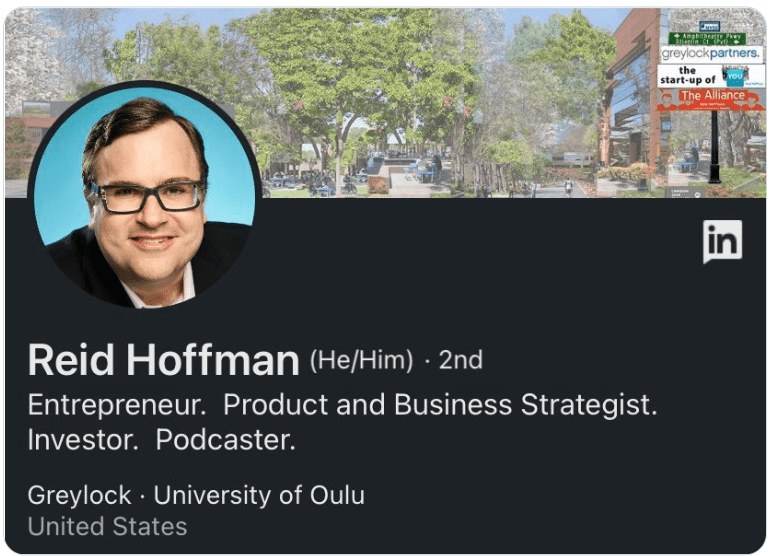
Most if not all of us on Twitter agreed with Brackeen, with some noting that an exception should be granted for opthamologists and optometrists. My contribution to the discussion was to note that Reid Hoffman, the co-founder of LinkedIn, didn’t call himself a visionary.
But there was something that I didn’t tweet regarding calling yourself a visionary. Namely, what visionaries say instead of saying “I’m a visionary.”
They’re more intent on communicating the vision, rather than their place as a visionary.
What Steve Jobs said about the successful iMac
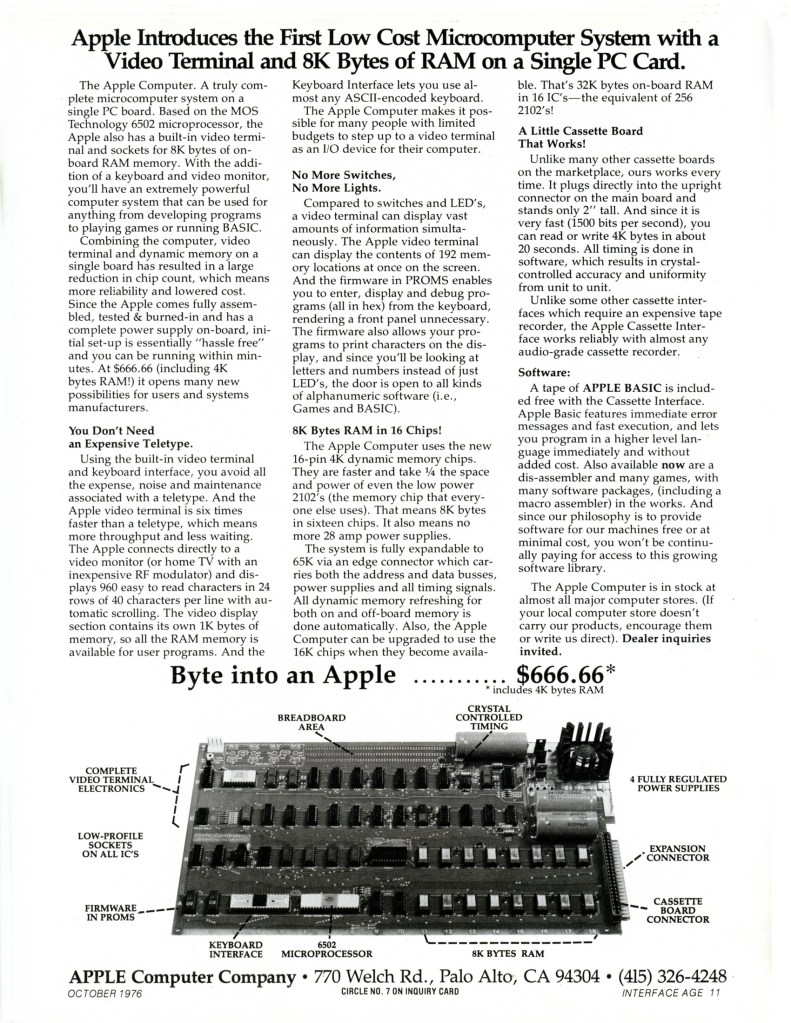
Let’s go back to the 1990s, when Steve Jobs returned to the company then known as Apple Computer.
By Rob Janoff – This vector image was created by converting the Encapsulated PostScript file available at Brands of the World (view • download).Remember not all content there is in general free, see Commons:Fair use for more.This tag does not indicate the copyright status of the attached work. A normal copyright tag is still required. See Commons:Licensing., Public Domain, https://commons.wikimedia.org/w/index.php?curid=10326626
While some would probably disagree, many would argue that Steve Jobs was truly a visionary. Throughout his life, he shared several visions for technology, many of which changed the world.
(The iMac) comes from the marriage of the excitement of the Internet with the simplicity of Macintosh. Even though this is a full-blooded Macintosh, we are targeting this for the #1 use consumers tell us they want a computer for, which is to get on the Internet, simply and fast.
No, his message was that consumers want to “get on the Internet, simply and fast.”
Of course, because it was Jobs, there also had to be a design component in the iMac, and this is the time that we learned that Jony could be spelled with only one “n” and no “h.”
By Stephen Hackett – 512 Pixels; license appears at footer, All iMac G3 images are licensed under a Creative Commons Attribution-ShareAlike 4.0 International License., CC BY-SA 4.0, https://commons.wikimedia.org/w/index.php?curid=98724350
In some ways, the iMac message was more compelling because the consumer market was catching up with Jobs’ vision.
When the original Macintosh was introduced, the market wasn’t necessarily convinced that an easy-to-use computer was a necessity. (The market would take a few years to catch up.)
But by the late 1990s, there was a strong desire for people to surf the World Wide Web on the Internet, and therefore people were more receptive to Jobs’ message.
What happened? The iMac was introduced, and while some predicted that the lack of a floppy drive would doom the product, it seemed that Internet access made the floppy drive less significant.
What John Sculley said about the unsuccessful Knowledge Navigator…or was it actually a success?
Now at the time, critics could argue that Apple Computer lacked customer focus. After all, why release a computer that didn’t have a floppy drive? That’s as customer-unfriendly as releasing a non-DOS computer in 1984.
But there’s a difference between short-term customer focus and long-term customer focus.
There are many points in Apple’s long history in which it could have opted for the safe and sane approach. And perhaps that could have yielded a nice quarterly profit without pouring all that money into silly stuff, including the 1987 Knowledge Navigator concept video.
Apple never built the Knowledge Navigator. I don’t think that even John Sculley expected Apple to build the Knowledge Navigator. And even if he had tried to get it built, the public loudly told him that the idea was stupid and he didn’t know what he was talking about.
But Sculley’s concept (for which he credited Alan Kay) had more customer focus than the customers of 1987 realized. Over the years, actual products were released that could trace their lineage back to Knowledge Navigator, ranging from Clippy to Google Assistant to Teams/Zoom/et al…
…to the iMac.
Sometimes it takes some time, and several visionaries, to realize the vision.
What Bredemarket says about communicating your vision
Perhaps you’re a visionary in the Inland Empire that is readying your own iMac or Knowledge Navigator or better pizza topping.
And you want to communicate your vision to potential customers via some type of written content.
But before you write a single word of that content, you need to ask yourself some questions (even for a short piece of content):
Why does your offering change your customers’ lives?
How will it change their lives?
What is the offering?
What is the goal of the piece of content?
What are the benefits (not the features, the benefits) of your offering?
Who is the target audience for this content?
When Bredemarket works with you to create written content, these are just some of the questions that I ask you to ensure that the final written product will achieve results.
If I can work with you to create your written content, please contact me.
I’ll admit that the case studies that I’ve produced, either under the Bredemarket name or under other names, have been relatively short in the two-page range. This is why I usually recommmend the Bredemarket 400 Short Writing Service for clients who want my case study services.
But there’s no law that says that a case study has to be that short. If you want to create a 1,000 page case study, you’re certainly entitled to do so.
But what about a 17 page case study?
That’s the length of the case study that greenlining.org prepared on a program here in the City of Ontario.
Since 2007, a coalition of residents, community-based organizations and the City of Ontario have been working together under the Healthy Ontario Initiative (HOI) to improve health outcomes and quality-of-life. HOI came together to address community health and build safe and vibrant neighborhoods, against a backdrop of high levels of poverty and chronic disease burdens.
At 17 pages, the case study goes into a great deal of detail on a variety of initiatives, including Healthy Ontario and the Vista Verde Apartments near Holt and Grove. The apartment complex and other projects all fit within the goals of improving “health outcomes and quality-of-life.”
After spending three years in semi-remote work (I was in an office, but my boss was in a separate office across the country), followed by over two years of near-complete remote work, I’ve realized that there are critical differences between the remote work experience and the traditional in-office experience.
For example, I spent all day last Friday working in my shorts, and none of my coworkers was the wiser. This is something that I never would have done if I were in an office. (Decades ago, one of my former coworkers turned up in shorts on a casual Friday and received glares from one of the executive secretaries all day.)
In the remote workplace, we present our physical personas via the cameras on our computers and smartphones, and all of the context outside of the camera range is lost. This post highlights one of these pieces of context, highly critical in in-person interactions, but almost completely obscured in remote interactions. Is the loss of this piece of context important?
My observation at late 1990s Printrak
Before explicitly talking about this lost piece of context, let me go back 25 years to the days when I drove to work at 1250 Tustin Avenue in Anaheim every day.
In those days I worked in Proposals, and the Proposals Department was not too far from the executive offices. This is where Richard Giles, Dave McNeff, Dan Driscoll, and others at the VP level and above worked.
Passing by the executives in the halls, one thing was very apparent. Most of the executives were taller than me. I happen to be over 6 feet tall myself, so these other executives were very tall indeed.
I should add a caveat that at Printak in the late 1990s, all of the executives except one were male. This skewed the height effect, since (as the study noted) the average height of women is shorter than the average height of men. (The study controlled for sex, as well as age, to compensate for these differences.)
But this doesn’t negate the fact that many executives are of above-average height…with some notable exceptions.
Which leads me to my observation about a key point of remote work.
I hope you’re sitting down as you read what I’m about to say.
Actually, that’s what I’m about to say. Most remote workers are seated.
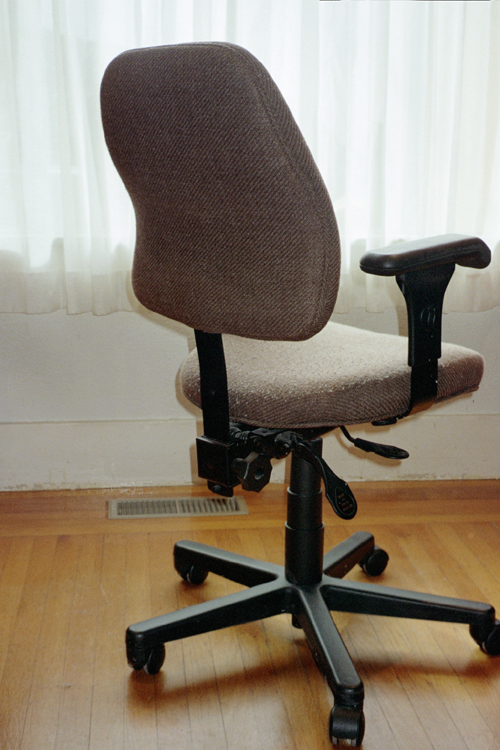
For remote workers, the desk chair is the great equalizer. By Emiellaiendiay at English Wikipedia – Transferred from en.wikipedia to Commons by Sreejithk2000 using CommonsHelper., Public Domain, https://commons.wikimedia.org/w/index.php?curid=10532585
During my years that I exclusively worked at my sole proprietorship Bredemarket, and during the subsequent months that I’ve been in full-time employment, I have never met most of my clients or coworkers in person. Unlike my coworkers and clients that I met in the hall in Printak’s Anaheim office, I have no idea if I’m taller or shorter than most of them. I have met some people at local events such as those sponsored by 4th Sector Innovations, and I anticipate that I’ll meet some of my new company’s coworkers at some point, but as of now I don’t know if most of the people that I interact with would look up to me in person, or if I would look up to them.
Does the height obfuscation of remote workers matter?
Since my associates and I usually don’t gather around water coolers, I’m missing the contextual information derived from our relative heights.
But is this important?
Short people will answer this question with a resounding “no,” believing that the height of a person is immaterial to their effectiveness.
Tall people who are honest will answer this question with a resounding “yes,” since height does have a psychological effect that is lost when everyone is sitting.
Perhaps the short people are right. As we conduct more and more remote work with people throughout the country and around the world, in-person interactions are naturally going to decrease and we’ll interact more via Zoom, Teams, and other videoconferencing methods.
If you’ve read the Bredemarket blog for any length of time, you already know that customer focus ensures that your customers will pay attention to your message. (TL;DR Customers are happier when you talk about them than when you talk about yourself.)
Did you know that customer focus also increases your revenue?
Personalization (or, for Coles and others on the other side of the pond, personalisation) potentially offers powerful benefits to banks (and other firms) who offer it.
For example, in the mortgage space there is likely to be a move away from standardised interest driven offerings, to a place where banks are considering offering mortgages which are more reflective of today’s societal makeup, for example intergenerational mortgages. This highlights how a customer centric focus is not only shifting the digitisation journey, but the underlying approach to the product offerings behind that next-generation innovation.
It can mean a lot to an auto dealer. Not only regarding the autos offered to consumers (the days of the black-only Model T are long gone), but also regarding financing, service, and other offerings that go beyond selling or leasing the auto itself.
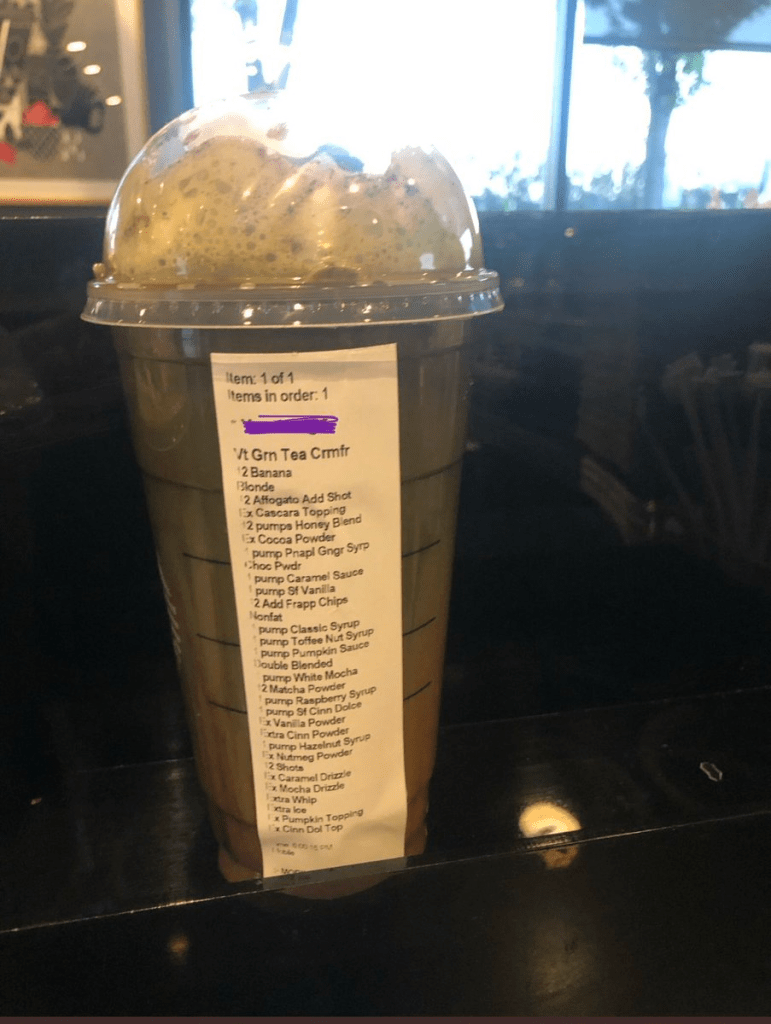
A certain company whose name rhymes with Fartrucks is well-known for the creative order customizations that its baristas receive. While there are divided opinions on some of the more extreme orders, it’s clear that some customers love this capability. Imagine if Starbucks only served “any kind of coffee, as long as it was black!”
If I may toot my own horn here, while I do have standard writing offerings, I can customize them as needed by increasing or decreasing review cycles or turnaround times.
Today’s acronym is ABM
Some companies choose to implement Account-based Marketing (ABM), which dictates how an entire company responds to particular customers. If Purchasing knows that a customer on “the list” needs something, Purchasing will strive to delight the customer.
Account-based marketing requires you to personalize everything (e.g. content, product information, communications, and campaigns) for each account you invest your resources in. Through this personalization and customization, your relevance among these accounts is maximized.
That’s because your content and interactions are tailored in a way that shows them how your specific products, services, and other offerings are what they need to solve their challenges. Meaning, ABM allows you to angle your business in a way that makes it the most relevant and ideal option for your target accounts.
Now obviously I don’t have the software to personalize this blog post for each of you. For example, everyone read my quote from HubSpot’s blog. Maybe you hate HubSpot with a passion and would prefer to read some other company’s take on ABM.
But if you would like to discuss your specific marketing needs, and how I can help you create the text to support those needs, talk to me. Maybe I can help you design a simple letter template that lets you include or omit paragraphs based upon a specific customer. If this intrigues you…
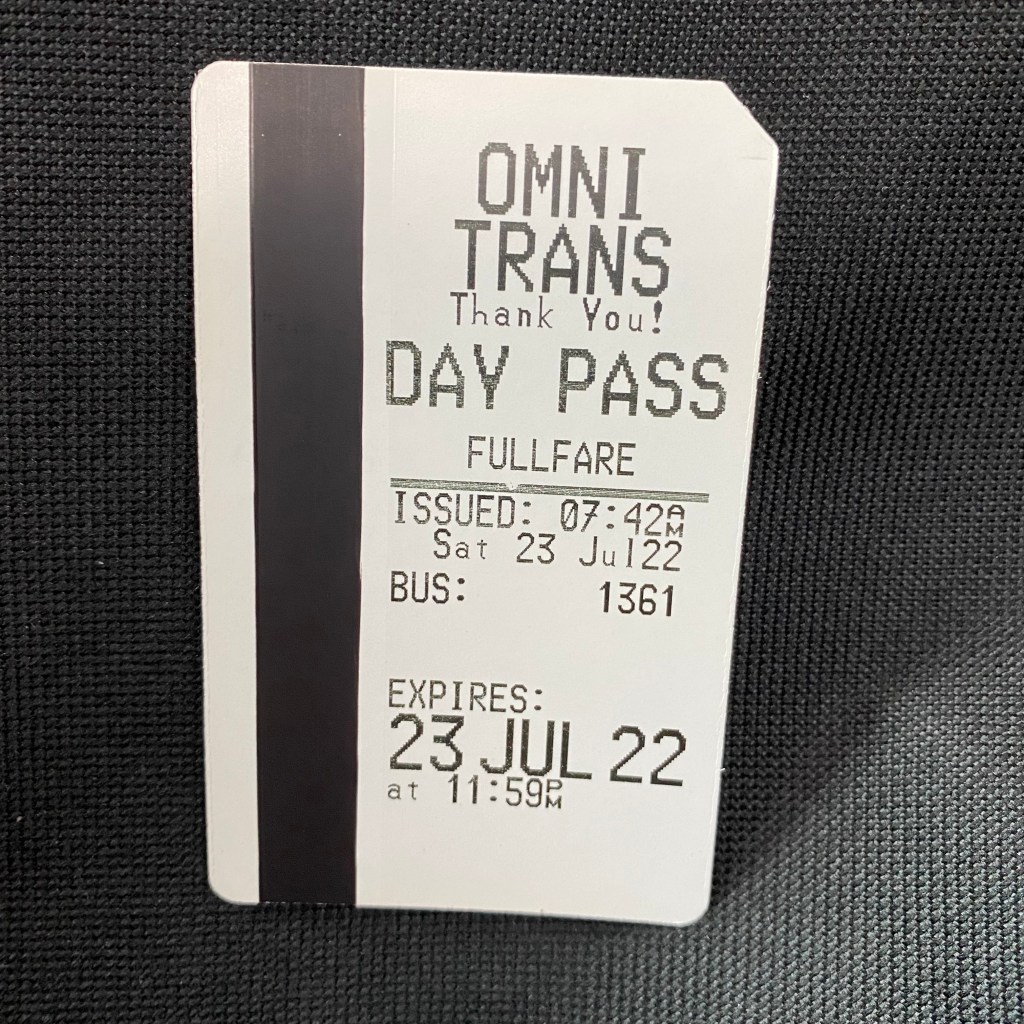
Now this is not the most robust proof of identity. As I recently noted in my JEBredCal blog (one of my other Google identities), it’s extremely easy for multiple people to use this day pass at different times during the day. Even the 7-day and 31-day passes, which must be signed and may be compared against an identity document, are not necessarily free from fraud.
However, this is not critical to Omnitrans, who would rather put up with a small amount of fraud than inconvenience its riders with multiple identity checks.
Identity proofing is more critical in some situations than it is in others.
Of course, if Omnitrans really wanted to, it could achieve the need for fraud prevention by using relatively frictionless forms of identity proofing. Rather than demaning to see a rider’s papers, Omnitrans could use passive methods to authenticate its riders. I won’t go into all the possible methods and their pros and cons here.
However, I would like to explore one possible identity proofing method to see if it would solve the Omnitrans pass use issue.
You’ll recall that many identity experts recognize five factors of authentication:
Something you know.
Something you are.
Something you have.
Something you do.
Somewhere you are.
Well, because I felt like it, I proclaimed a sixth factor of authentication.
Why?
I said, because I felt like it!
Whoops, “why?” is the sixth authentication factor. I still haven’t rendered it into the “somexxx you xxx” format yet.
Can Omnitrans use the “why?” factor to test the reasonableness that any particular trip is performed by the person who originally bought the pass?
Possibly.
Applying the “why?” question to bus boarding data
Assume the most challenging scenario, in which Omnitrans knows nothing about the person who purchases a 31-day pass. The person pays in cash and is wearing a face mask and sunglasses throughout the entire transaction. Therefore, the only identity information associated with the pass is the location where the pass was purchased, the date/time it was purchased, and some type of pass identification number. For this example, we’ll assume the pass number is 12345.
So Omnitrans really doesn’t know anything of importance about the holder of pass 12345…
…other than how it is used.
I’m making the assumption that Omnitrans logs information about every use of a pass. Since you don’t need to use your pass when you leave the bus, the only information available is when you board the bus.
So let’s look at some fake data.
Date and Time
Bus
Location
Monday, July 25, 2022, 6:39 am
87
Euclid & Holt, Ontario
Monday, July 25, 2022, 6:35 pm
87
Amazon LGB3, Eastvale
Tuesday, July 26, 2022, 6:39 am
87
Euclid & Holt, Ontario
Tuesday, July 26, 2022, 6:35 pm
87
Amazon LGB3, Eastvale
Wednesday, July 27, 2022, 8:42 am
87
Euclid & Holt, Ontario
Wednesday, July 27, 2022, 6:35 pm
87
Amazon LGB3, Eastvale
Thursday, July 28, 2022, 6:39 am
87
Euclid & Holt, Ontario
Thursday, July 28, 2022, 6:35 pm
87
Amazon LGB3, Eastvale
Thursday, July 28, 2022, 7:20 pm
61
Plum & Holt, Ontario
Thursday July 28, 2022, 9:52 pm
61
Ontario Mills, Ontario
Friday, July 29, 2022, 6:39 am
87
Euclid & Holt, Ontario
Friday, July 29, 2022, 8:35 am
87
Amazon LGB3, Eastvale
Friday, July 29, 2022, 10:00 am
66
Vineyard & Foothill, Rancho Cucamonga
Friday, July 29, 2022, 11:26 am
14
Fontana Metrolink
Friday, July 29, 2022, 11:53 am
82
Fontana Metrolink
Friday, July 29, 2022, 12:08 pm
66
Fontana Metrolink
Hypothetical logging of trips on Omnitrans Pass 12345.
Even if you are not familiar with California’s Inland Empire, you can probably classify these trips into the following categories:
Trips that are probably legitimate.
Trips that may or may not be legitimate.
Trips that are probably fraudulent.
Trips that are definitely fraudulent.
For the most part, you can’t know with certainty about the legitimacy of most of these trips. Here’s a story that fits the facts.
Jack Jones starts his new job at Amazon on Monday, and works Monday and Tuesday with no incident. Jack overslept on Wednesday and was written up. He made sure to arrive at work on time Thursday, and at the end of the day he celebrated with a dinner at a restaurant in the Ontario Mills shopping center. After arriving at work on Friday, Sara Smith picked his pocket and took his pass, fleeing the scene an hour later and making her way to Fontana. She creates several clones of the bus pass and sells them at a discount before fleeing herself. Therefore, all trips beginning on Friday at 8:35 am are fraudulent.
But that might not be the true story. This one also fits the facts.
Jack Jones starts his new job at Amazon on Monday, and works Monday and Tuesday with no incident. On Wednesday Jack calls in sick, but lets his housemate Bob Brown (who also works at Amazon) use his pass on Wednesday and Thursday. By Thursday evening, Jack is feeling better, retrieves his pass from his housemate, and goes to Ontario Mills for the evening. On Friday Jack goes to work and is fired. He boards the 87, misses his stop in Ontario, and stays on the bus until he reaches Rancho Cucamonga. Despondent, he decides to visit his friend in Fontana. However, his Fontana friend, Sara Smile, secretly created several clones of Jack’s bus pass and sells them at a discount. Therefore, the Wednesday trips, the Thursday day trips, and all Friday trips beginning at 11:26 am are fraudulent.
Or perhaps some other set of facts fit the data.
It’s possible that the pass was stolen before it was ever used and all of the trips are fraudulent.
Or perhaps every trip before arriving in Fontana is legitimate, but how can we tell which one (if any) of the three trips from Fontana was undertaken by the true passholder?
But the data that Omnitrans captured provides a way to challenge the pass holder for possibly fraudulent trips.
If Omnitrans is really suspicious for some reason, it may choose to challenge every trip that didn’t take place at the “regular” times of 6:39 am or 6:35 pm. “Why are you boarding the 87 bus at this hour of the morning?” “Why are you boarding the 61 bus?”
Or Omnitrans may assume that all of the trips are reasonable and don’t necessitate a challenge. Yes, someone can go to work late. Yes, someone can go to Ontario Mills for the evening. Well, all of them are reasonable until Friday at 11:53 am, when a passholder boards a bus at the same location where the same passholder supposedly departed at 11:26 am.
Now even if strict identity checks are used with the “why?” statement, the data alone can’t detect all fraud. If Jack Jones and Bob Brown both work the day shift at Amazon, but on alternate days, how can Omnitrans detect the days when Jack Jones leaves Ontario at 6:39 am, vs. the days when Bob Brown leaves Ontario at 6:39 am?
Again, no identity proofing method is 100% foolproof.
But the “why?” question may detect some forms of fraud.
Or are there really only five factors of authentication after all?
Now I’ll grant that “why?” might not be a sixth factor of authentication at all, but may fall under the existing “something you do” category. This factor is normally reserved for gestures or touches. For example, some facial liveness detection methods require you to move your head up, down, right, or left on command to prove that you are a real person. But you could probably classify boarding a bus as “something you do.”
Anyway, thank you for engaging my tangent. If I can think of a “why?” example that doesn’t involve something you do, I’ll post it here. That will help me in my hopeful (?) quest to become the inventor of the sixth factor of authentication.
What about the businesses in cities where my bus trips took place?
But back to the businesses in Ontario, Eastvale, Rancho Cucamonga, Fontana, and other cities: need some content help? I can create esoteric long-winded content like this, or (what you probably want) more concise, customer-focused content that conveys your important message. My regular work includes case studies, white papers, proposal services, and other types of content. If you need someone to help you create this content:
Remember the Which Wich in Eastvale that I wrote about in April?
Well, I actually saw it in person this morning.
Which Wich in Eastvale, California.
Based upon the limited hours, I am guessing that the original franchise owner hasn’t sold it yet.
Which Wich in Eastvale, California.
Some additional pictures from Eastvale, including a city informational kiosk and one very large Amazon distribution center.
Nice kiosk.Big building.
Reminder that if you’re an Eastvale business (or any business) of any type who can benefit from Bredemarket’s content marketing and/or proposal services:
But we don’t celebrate on the anniversary of that day. Instead we celebrate the anniversary of the day that the Continental Congress adopted the Declaration of Independence.
Which is why 4th and Euclid looks like this on Saturday morning.
4th and Euclid, July 2, 2022.
Come back Monday morning and it will look different, since 4th and Euclid is where Ontario’s Independence Day Parade begins.
















 Bredemarket