
My repurposing laid bare. Previously posted separately as biometric and local videos.
The B For Locals Only
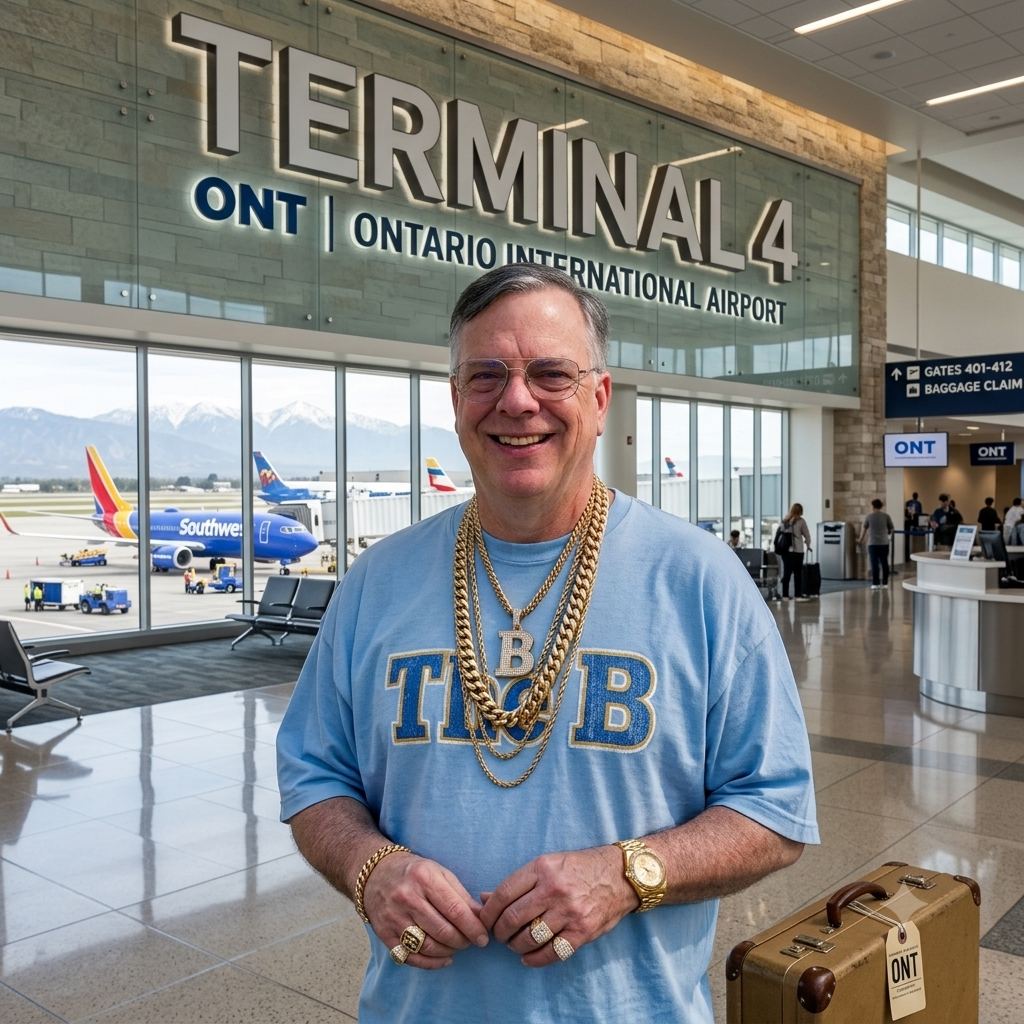
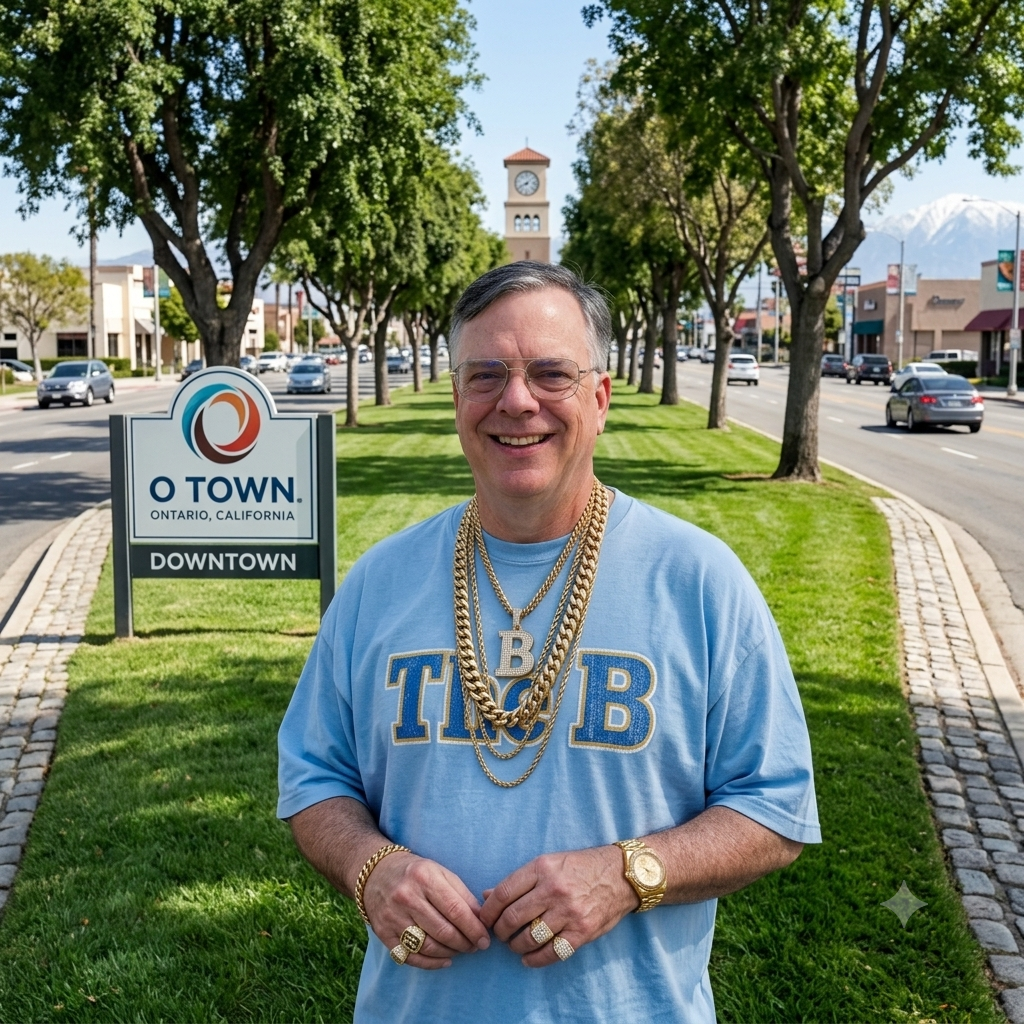
“The B From O Town” isn’t only the biometric product marketing expert. He also markets products for technology businesses in O Town and the rest of the Inland Empire West.
Uh huh.
Laying the music video aside, The B From O Town (or my usual handle, John E. Bredehoft) can contribute to the product marketing success of your IE firm.
What does your firm obtain when you use Bredemarket’s content-proposal-analysis services?
Compelling CONTENT Creation
- Blog posts. Among other projects, I’ve authored a multi-month blog series to attract business to a client.
- Case studies and testimonials. Among other projects, I’ve written a dozen case studies to justify a firm’s capabilities to its projects.
- LinkedIn articles and posts. The multi-month blog series was designed for repurposing as LinkedIn articles.
- White papers. My white papers have made the case for the superiority of my clients’ products and services.
Winning PROPOSAL Development
- Proposal services (managing, writing, editing, other). My proposals have won business for Bredemarket clients and for my former employers.
Actionable ANALYSIS
- Analysis services. My market, product, and competitive analyses for Bredemarket clients and former employers have not only gathered necessary information and insights, but have also suggested a path forward.
Let’s talk
For more information and to schedule a free meeting, visit https://bredemarket.com/mark/.
I promise I won’t try to rap.
Uh huh.
And if you’ve read both this post and the previous one, you understand the power of repurposing.
The B…PME
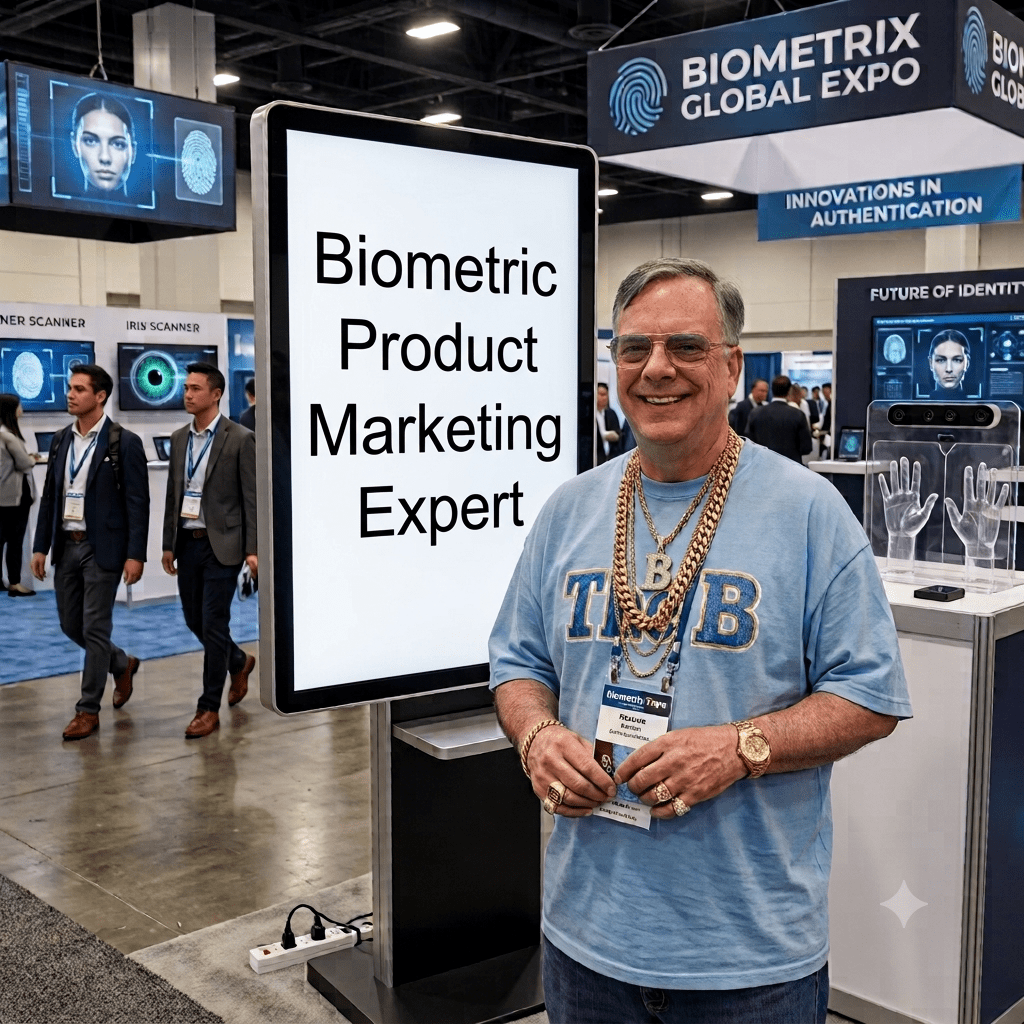
So if you’re wondering why I introduced “The B From O Town,” it’s because I needed him for a music video on THE biometric product marketing expert.
Uh huh.
Laying the music video aside, The B From O Town (or my usual handle, John E. Bredehoft) can contribute to the product marketing success of your identity/biometric firm.
As the biometric product marketing expert I’ve worked in this industry since 1994, marketing several different biometric modalities: fingerprint, face, iris, voice, DNA, and other biometrics. And I’ve also worked with non-biometric factors.
What does your firm obtain when you use Bredemarket’s content-proposal-analysis services?
Compelling CONTENT Creation
- Blog posts. Among other projects, I’ve authored a multi-month blog series to attract business to a client.
- Case studies and testimonials. Among other projects, I’ve written a dozen case studies to justify a firm’s capabilities to its projects.
- LinkedIn articles and posts. The multi-month blog series was designed for repurposing as LinkedIn articles.
- White papers. My white papers have made the case for the superiority of my clients’ products and services.
Winning PROPOSAL Development
- Proposal services (managing, writing, editing, other). My proposals have won business for Bredemarket clients and for my former employers.
Actionable ANALYSIS
- Analysis services. My market, product, and competitive analyses for Bredemarket clients and former employers have not only gathered necessary information and insights, but have also suggested a path forward.
Let’s talk
For more information and to schedule a free meeting, visit https://bredemarket.com/mark/.
I promise I won’t try to rap.
Uh huh.
The B From O Town
What motivates this persona?
You’ll find out in my upcoming music video.
And because I’m Southern Californian, it’s “The” B.
Fingerprints Take a Beach Break
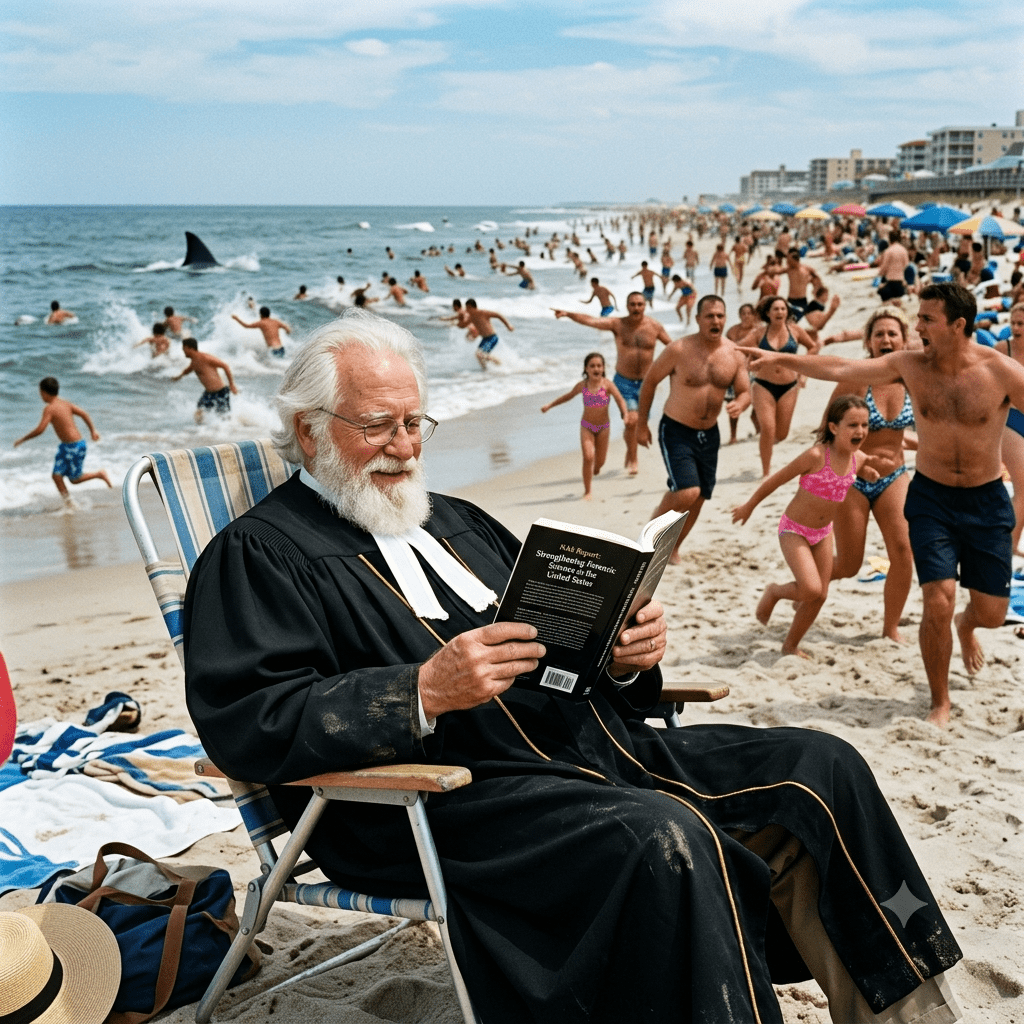
Just a reminder that Judge Carmen Messano won’t formally start to work on the evidentiary hearing on the acceptability of expert fingerprint evidence in New Jersey courts (State v. French Lee) until September.
Do Bots Like Bredemarket’s Pricing?
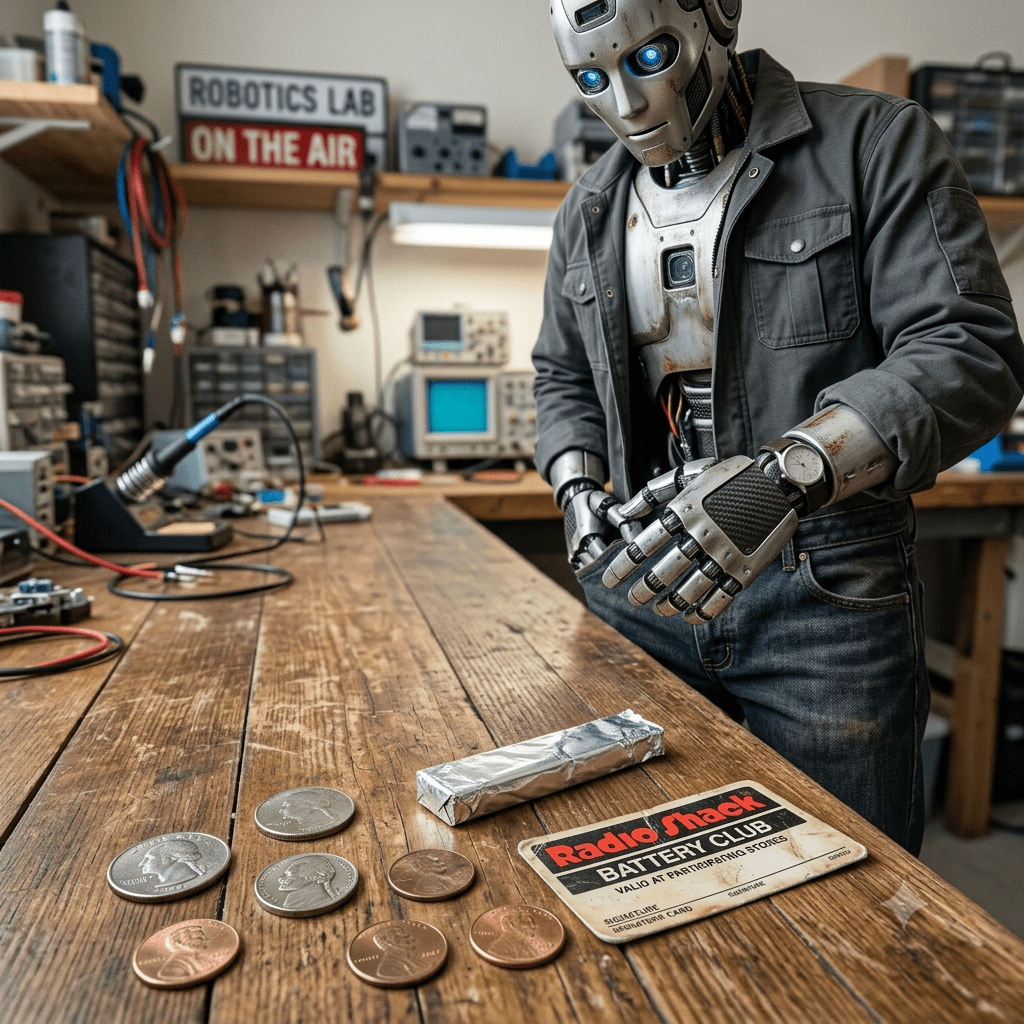
So I asked Google Gemini if Bredemarket is “affordable.“
Here’s part of what it said:
“For specialized B2B technology and biometric writing, its pricing sits in a clear middle ground—more expensive than entry-level freelance platforms, but much less costly than hiring a full-service marketing agency or full-time specialized writer.”
Regarding the latter option:
“For tech, identity, and biometric companies that require domain expertise, paying $100/hr or flat package rates can save tens of thousands compared to agency retainers or dedicated headcount.”
But you don’t care what the bot thinks. Judge for yourself.
How Other Experts Refer to “Somewhat You Why”
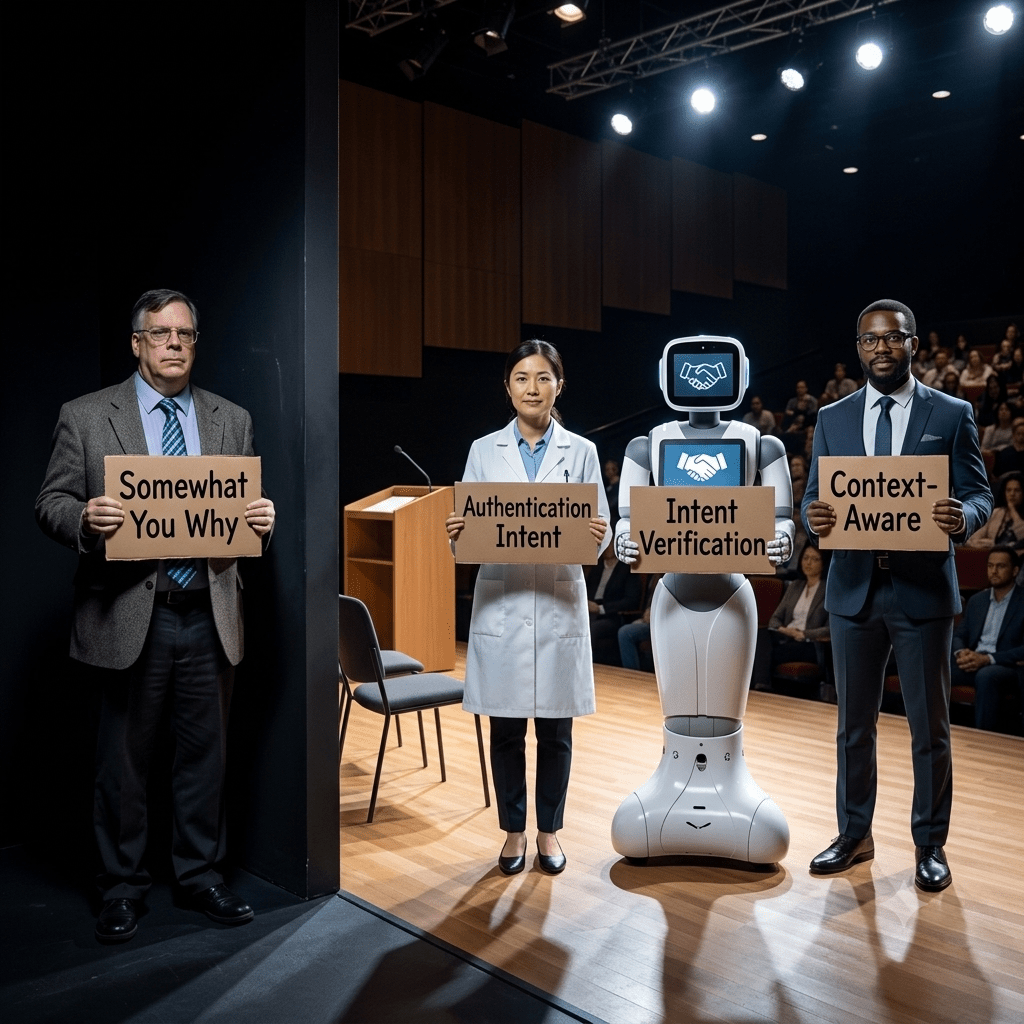
Unlike most other posts that appear under my name—Bredebot posts are another matter—this post breaks my 2023 rule because most of it was written by Google Gemini, not me.
But I figured that if I wrote a book specifically about SIX factors of authentication…
…it would be nice to know if other experts held similar thoughts.
My prompt to Gemini
Bredemarket has promoted “somewhat you why” as a sixth factor of identity verification / authentication. Has anyone else shared similar observations?
Gemini’s response
Here is the short answer: Yes, industry experts and security frameworks strongly agree with the core observation, though they call it “Authentication Intent,” “Intent Verification,” or “Context-Aware/Risk-Based Authentication” rather than using Bredemarket’s play-on-words.
John Bredehoft (Bredemarket) coined “somewhat you why” to fit the traditional naming convention (something you know, have, are, do, somewhere you are). His argument is that checking why an action or request is taking place—evaluating intent, transaction risk, or reasonableness—functions as a crucial safeguard, especially in an era of deepfakes and automated AI agents.
While the tongue-in-cheek name is unique to Bredemarket, the concept itself is widely discussed and implemented across the cybersecurity industry under three main paradigms:
1. “Authentication Intent” (NIST Standards)
The National Institute of Standards and Technology (NIST) explicitly addresses intent in NIST SP 800-63B.
- The Problem: A user might have a valid session token, biometrics, or physical key plugged in, but malware or a session hijack could trigger actions without the user’s conscious decision.
- The Solution: Systems require an explicit act of intent—like tapping a physical FIDO key, typing a PIN, or responding to a contextual prompt—proving that the user intended to execute that specific action at that moment.
2. Intent Verification for AI & Delegated Actions
With the rise of autonomous AI agents and automated workflows, identity security groups (like the Non-Human Identity/NHI movement) frequently discuss Intent Verification.
- Conventional authentication proves who logged in, but not whether the user meant to perform this specific action.
- Intent Verification bridges authentication and authorization by evaluating whether a transaction (e.g., a $35M wire transfer or an API call) aligns with the user’s actual current decision and business policy.
3. Context-Aware and Adaptive Authentication
Identity providers (like Palo Alto Networks, Okta, and Silverfort) build their Adaptive Multi-Factor Authentication (AMFA) around the “why” and “context”:
- Context Signals: What resource is being accessed? Is this normal business behavior? Does this request make sense given the time, value, and sensitivity?
- Dynamic Step-Up: If the “why” seems low-risk (e.g., checking internal docs during work hours), access is smooth. If the “why” is high-risk or suspicious (e.g., a wire transfer requested via video call), the system demands step-up verification.
How the Views Compare
While most identity security professionals treat “intent and context” as a governance or risk engine layer wrapping traditional factors rather than a 6th factor itself, everyone agrees with Bredemarket’s baseline premise: verifying who someone is without evaluating what and why they are trying to do it is no longer enough to stop modern fraud.

Bandcamp: Accept No Fraudulent Imitations
Most of you have probably never heard of Bandcamp. I have, since I posted several songs on the platform several years ago under the band names “Ontario Emperor” and “Wasp the Houseboy.” (If you want to avoid Bandcamp’s charges, I posted one of the songs, “For a Meaningful Apocryphal Animation,” on the Bredemarket website.)
Now my fellow Bandcampers and I are targeted by a fraudster, according to Drillmation.
“The current wave of attacks relies heavily on abusing legitimate contact forms to bypass standard email spam filters. Creators are receiving urgent emails coming from
noreply@bandcamp.com, which masks the malicious intent because the initial message delivery pipeline is technically authentic.“The emails claim that the platform’s security team has “registered several requests to your account from unknown devices” and demand immediate identity verification to prevent account suspension.”
Note the urgency, which is a typical tactic of fraudsters.
Be safe out there.
When Businesses Rise From the Dead
Bredemarket provides marketing and writing services all year. So do grocery stores. Restaurants. Most other firms.
Other businesses are seasonal, but necessitate year-round facilities. Most baseball stadiums don’t host games in December, but host (or struggle to host) non-baseball events when the team isn’t playing. Graber Olive House would hire seasonal staff when the olives were harvested.
And then there is Spirit Halloween, where Joe Marver accidentally discovered how to take advantage of a fundamental truth at his Castro Valley, California women’s clothing store named Spirit.
“He’d put out a small Halloween section—just costumes and decorations to capture some seasonal traffic. That tiny corner of his store consistently outperformed the rest of his inventory combined.”
But he couldn’t just create a Halloween version of Spirit…or could he?
“Shopping malls and strip centers always had vacant spaces—stores that had closed, leaving landlords desperate for any revenue. He could negotiate dirt-cheap short-term leases, operate for 8-10 weeks, and disappear before the first rent increase.”
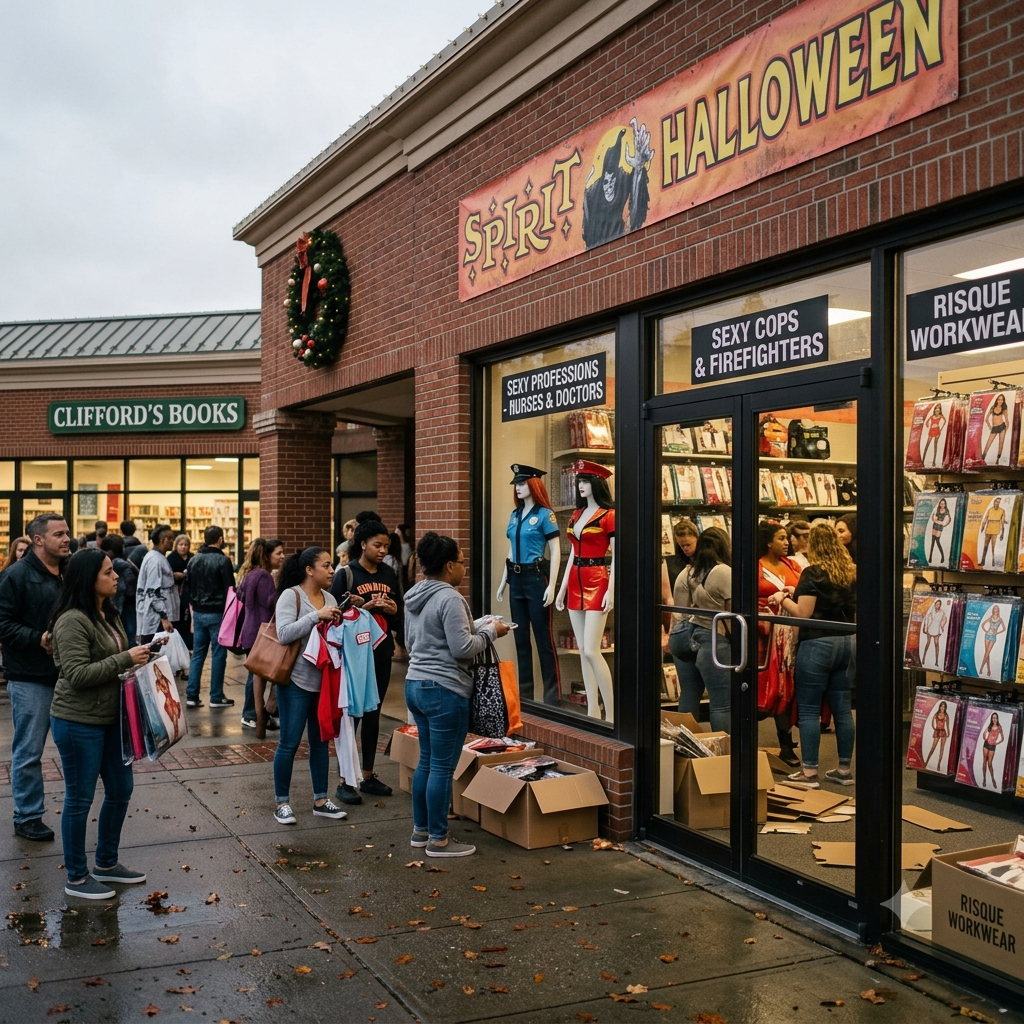
That first landlord was happy to accept a few bucks for a few weeks, which was better than nothing. Marver, of course, saw many, many, more dollars from people who only bought sexy product marketer costumes in October.

Then the store closed for the winter, spring, and summer.
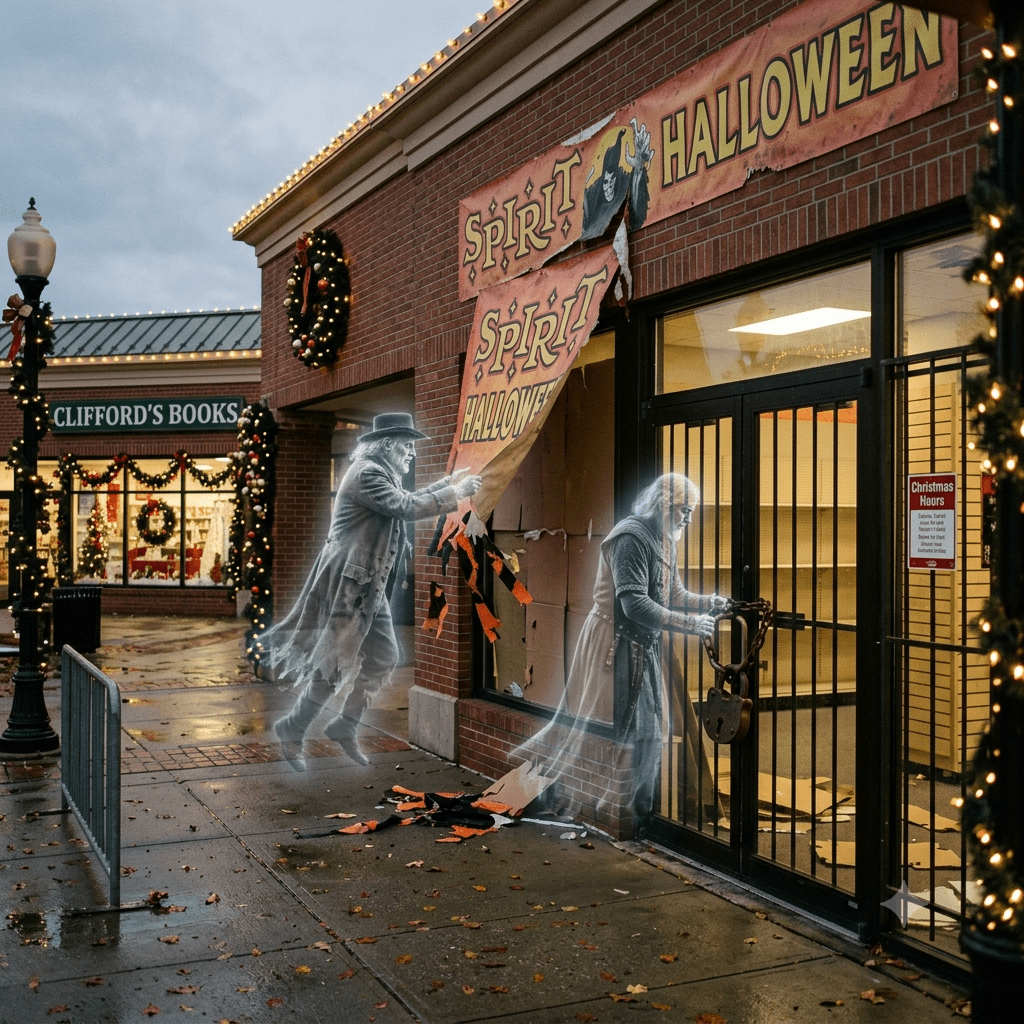
And the word “pop-up,” albeit used for videos at one point, remained in the domain of retail.
Artificially Intelligent Pick Up Lines

In 2017, researcher Janelle Shane had a really bad idea.
“So it occurred to me that the same neural network framework I’ve trained on recipes, Pokemon, superhero names, and Irish tune names might be able to write pick up lines as well.”
OK, so Shane isn’t your typical researcher.
But the pick up line project was a step below anything she had undertaken before. The project needed training data, and you can imagine what the training data looked like.
“I hadn’t really read many of these before, and most were obscene, or aggressive, or kind of insulting. I began to regret the whole project.”
But she continued, because Science!
But Shane’s neural network struggled with the wordplay in the training data, resulting in some bizarre outputs. One example:
“If I had a rose for every time I thought of you, I have a price tighting.”
Fast forward four years
In 2021 Shane tried again, using the then-current GPT-3. She entered the following prompt:
“So I started with the following prompt, for a neural net to fill in its prediction of what the rest of the article would be like: ‘These are the top pickup lines of 2021! Amaze your crush and get results! 1.’”
She awaited the responses, which did not disappoint.
“My name is a complicated combination of 45 degrees of forward motion, 25 degrees of leftward drift, 75 degrees of upward acceleration, and infinity and that is the point where my love for you stops.”
Fast forward five more years
As far as I can tell, Janelle Shane has not conducted any further pick up line experiments. Does that mean that AI-generated pick up lines are as…um…”good” as the human ones?
So I tried again in 2026. The prompt:
“Generate five pick up lines that will cause beautiful women to immediately swoon over me”
The good news: generative AI has matured enough that its pick up line responses are indistinguishable from human ones.
The bad news: generative AI has matured enough that its pick up line responses are indistinguishable from human ones.
Here are five smooth, high-effort pickup lines designed to charm, make her smile, and spark a genuine conversation:
- The Classic Romantic“Excuse me, I usually have a great sense of direction, but the moment you walked in, I completely forgot where I was going.”
- The Clever Observation“I was having a pretty average day, but seeing you just raised the bar significantly. Mind if I introduce myself?”
- The Playful & Confident“Are you a time traveler? Because I can easily see you in my future.”
- The Sincere Compliment“I’m not usually one to approach strangers, but you have an energy that’s impossible to ignore. I’m [Your Name].”
- The Witty Banter“Do you believe in love at first sight, or should I walk past you one more time?”
Ladies, does this tight your price?
 Bredemarket