When Acronyms Get Nasty

I think someone was trying to make a political point here.

34 USC 61101 was created under the Trump Administration-supported One Big Beautiful Bill Act (OBBBA). It is administered within the U.S. Department of Justice and provides state and local entities with federal reimbursement funds for particular purposes.

The Attorney General shall use amounts appropriated or otherwise made available for the Fund for grants to eligible States, State agencies, and units of local government, pursuant to their existing statutory authorities, for any of the following purposes:

(1) Locating and apprehending aliens who have committed a crime under Federal, State, or local law, in addition to being unlawfully present in the United States.

(2) Collection and analysis of law enforcement investigative information within the United States to counter gang or other criminal activity.

(3) Investigating and prosecuting-

(A) crimes committed by aliens within the United States; and

(B) drug and human trafficking crimes committed within the United States.

(4) Court operations related to the prosecution of-

(A) crimes committed by aliens; and

(B) drug and human trafficking crimes.

(5) Temporary criminal detention of aliens.

(6) Transporting aliens described in paragraph (1) within the United States to locations related to the apprehension, detention, and prosecution of such aliens.

(7) Vehicle maintenance, logistics, transportation, and other support provided to law enforcement agencies by a State agency to enhance the ability to locate and apprehend aliens who have committed crimes under Federal, State, or local law, in addition to being unlawfully present in the United States.

Oh, and the fund has a name.

It’s called the “Bridging Immigration-related Deficits Experienced Nationwide Reimbursement” Fund.

Or, if you just want to use the acronym, it’s “BIDEN.”

By a remarkable coincidence, the predecessor to the current U.S. President has the last name “BIDEN.”

I haven’t researched to see if the current administration has established funds with the acronyms OBAMA or HILLARY.

Shout It From the Mountaintops

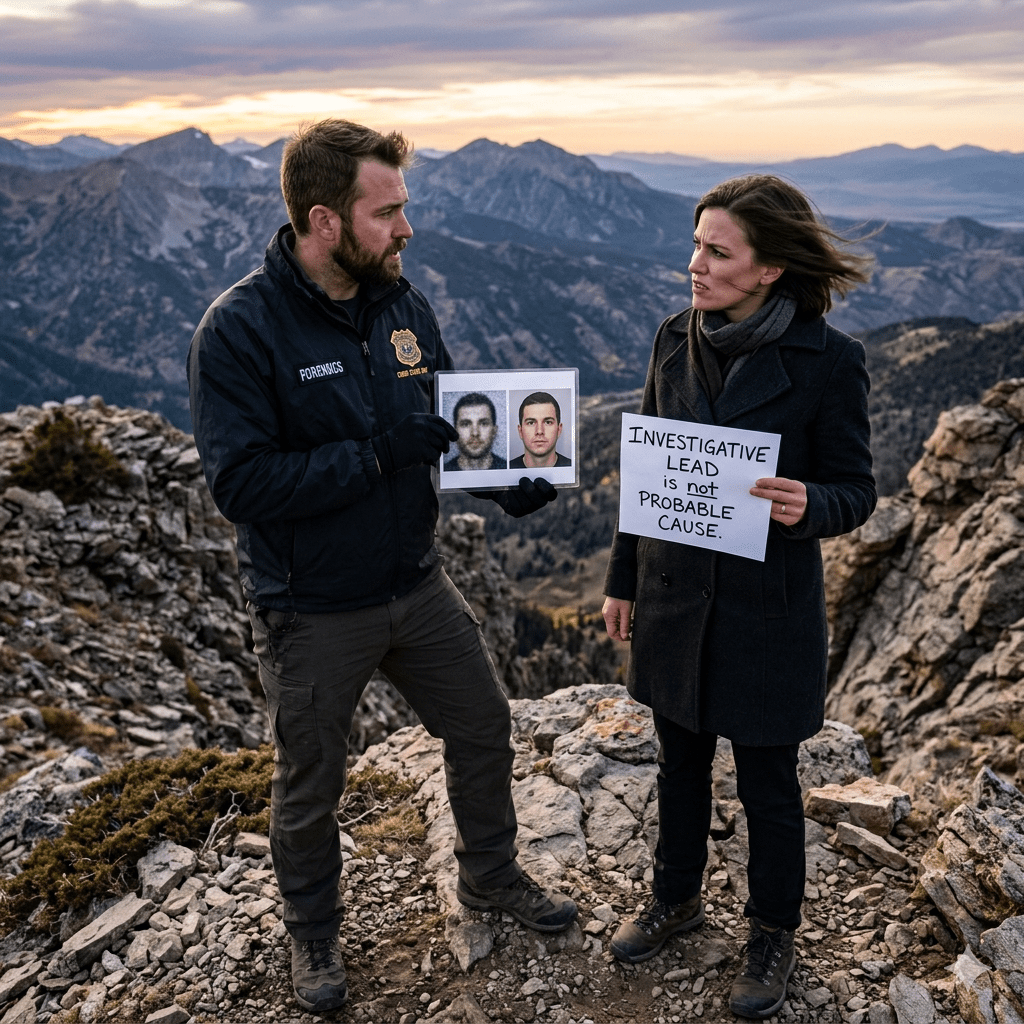
When I first heard about the “Florida man” facial recognition mismatch, I couldn’t tell whether the relevant police entity had arrested him based upon the facial recognition results alone, which is a big no-no. (Repeat after me: “investigative lead.”)

Chris Burt of Biometric Update repeated this:

“Shout it from the mountaintops: Probable cause cannot come from facial recognition alone.”

In his article, he also noted that the Pinellas County Sheriff’s Office is cracking down on the relevant police entity:

“PCSO says in its response that it has entered into an MoU requiring [the relevant entity] to send its officers for training on facial recognition before they are allowed to use the system…”

Bid Evaluation Criteria Disregarded

If you’ve ever responded to a Request for Proposal for a technical product, you know that the RFP often has mandatory criteria. If you don’t meet all of the mandatory requirements, you’re not going to win.

Unless you do.

I am not going to name the vendor who submitted this proposal for two reasons:

  • The alleged corruption in this bid may not have affected the vendor in question, but the vendor’s in-country agents. And yes, I know you have to select your agents carefully, but sometimes it’s impossible for vendors to know what the agents are doing.
  • As the article indicates, the vendor in question was not the only one to receive corruption allegations. And that’s all I’ll say about that.

Back to the bid, which was for an identity system in Nepal. At least two foreign companies bid on the system. The article describes the bid from one of those companies.

The technical sub-committee found that [THE VENDOR’S] bid for both packages failed to meet the required technical criteria. Specifically, in Package 1, [THE VENDOR] did not satisfy any of the 238 required technical specifications. In Package 2, the company fell short of 50 of 297 listed technical requirements.

Normally, if you meet exactly 0 out of 238 mandatory requirements, you don’t get an award.

Despite these findings, the evaluation committee overrode the technical sub-committee’s recommendations and allowed [THE VENDOR] to advance to the financial round. This directly contradicts Nepal’s Public Procurement Act, which mandates that only technically compliant bids may proceed. One member of the technical sub-committee withdrew his signature from the final evaluation report two weeks after it was submitted, indicating internal dissent within the department’s own review process.

The non-compliant vendor actually won the award…but there were a lot of questions. And action was subsequently taken.

The department’s latest procurement, a five-year contract worth approximately Rs 7.66 billion awarded to two…firms, triggered a prolonged legal and regulatory battle before culminating in the arrest of the department’s own director general on June 15, 2026.

Yes, arrest.

Specifically, of the Director General of the Department of Passports, Tirtha Raj Aryal, who also chaired the five-member evaluation committee that waived the technical non-compliance.

For the entire messy story, see here.

And remember that when a proposal evaluation process is thoroughly documented, shady evaluation decisions will be found out.

Veriff on Age Verification With Birth Certificates

In the past, if you needed to check the age of a younger teenager or a child who didn’t have a driver’s license, you had two options:

  • Estimate their age.
  • Hope they had a passport.

While many (not all) people have a birth certificate, Veriff reminds us that digital age verification with a birth certificate is difficult.

“Processing civil documents at scale was once a legitimate operational nightmare. Birth certificates vary dramatically in format across states and countries, making manual extraction slow, inconsistent, and error-prone.”

Why the nightmare?

To examine the reasons for the birth certificate operational nightmare, let’s limit ourselves to the United States for the moment.

Driver’s licenses and similar IDs are challenging enough because they are issued by over 50 separate states and territories, and in several different formats (different driver license categories, non driver license IDs, plus special formats for minors and people below legal drinking age). So you’re talking about potentially thousands of formats.

But at least those are renewed every few years.


Birth certificate of a B.H. Obama II. From https://obamawhitehouse.archives.gov/sites/default/files/rss_viewer/birth-certificate-long-form.pdf

Birth certificates are often NOT renewed (although you could conceivably request a new copy). So as a state changes its birth certificate formats over the decades, it could go through multiple different formats. And in a few cities such as New York City, they issued their own birth certificates independently of the state.

To complicate things further, the security on birth certificates is rudimentary, or perhaps non-existent for older birth certificates. Compare to driver’s licenses which are always incorporating new security features. (And older driver’s licenses without those security features are no longer valid or accepted.)

In short, validating birth certificates is significantly harder than validating driver’s licenses, which is hard enough.

Can we verify birth certificates today?

Veriff says it’s becoming possible.

“Modern automated extraction technology changes that reality. What was once a processing bottleneck is now a scalable, deployable component of a serious compliance strategy.”

How?

“Unlike a standardized driver’s license with a predictable layout and a scannable barcode, birth certificates are heavily unstructured….Modern unstructured document technology eliminates this bottleneck. Advanced extraction tools use intelligent models to read and pull key details from complex civil documents, regardless of the layout. By accurately capturing the date of birth, parent or guardian information, and place of birth, these tools turn a clunky manual review process into a fast, scalable verification workflow.”

Apply enough processing power and enough smarts and you can solve anything.

For Those Who Still Write User Manuals, They’re Better Now

1984 John would have been so jealous of me on Tuesday.

On Tuesday I was writing an installation guide for a Bredemarket client. Even though it was a simply formatted guide, its formatting was light years ahead the software user manuals I wrote around 1984 (no significance, just coincidence).

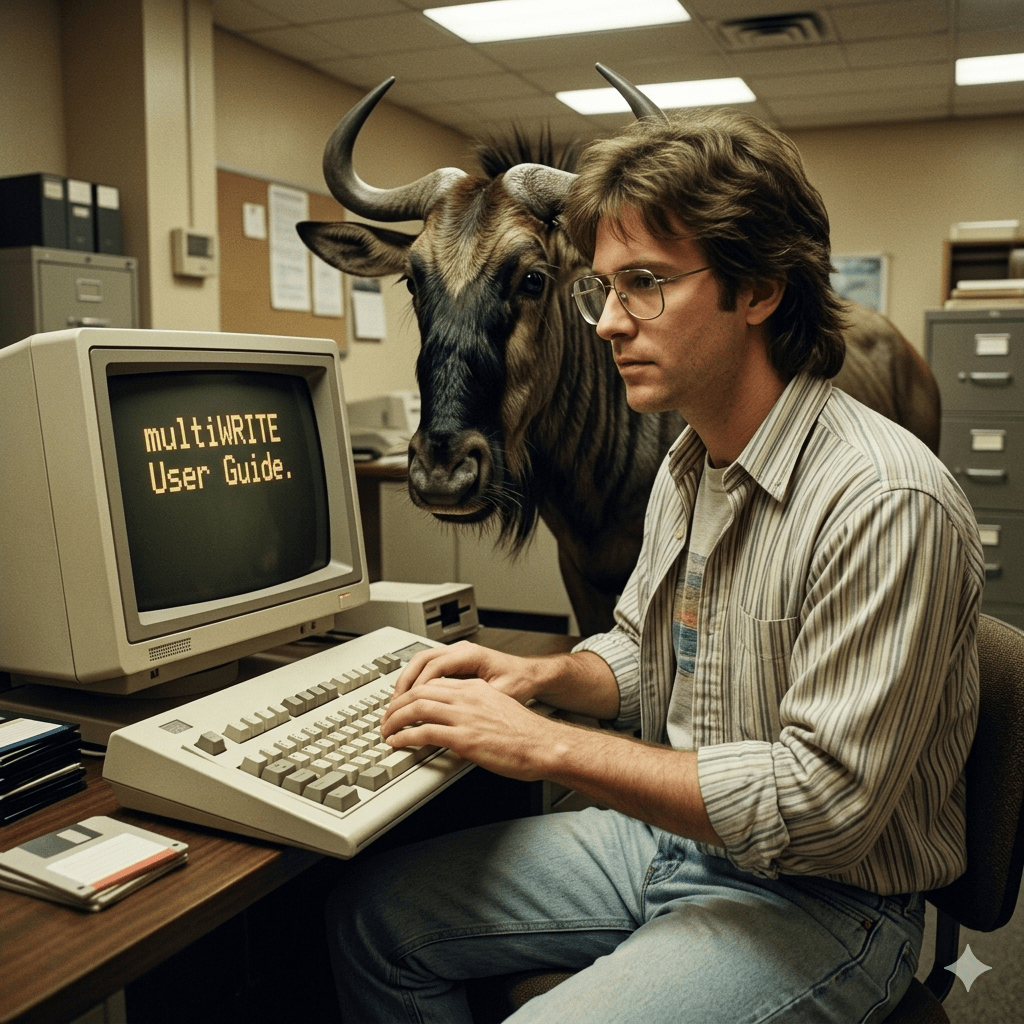
As I previously mentioned, 1984 John wrote user manuals using a software package called multiWRITE. You’ve probably never heard of it. multiWRITE was a word processor for the THEOS operating system that was developed by my employer, Logic eXtension Resources. So when I wrote the user manual for multiWRITE, I used…multiWRITE. Yeah, I ate my own wildebeest food even in the 1980s.

Google Gemini.

Now multiWRITE was a pretty good software package for the time, and THEOS was a pretty good operating system for the time. But by 2026 standards it was atrocious.

  • The output was bi-tonal, just black and white with no colors or even grayscale output.
  • The output was monospaced, just like a typewriter. Typewriters were still very common in 1984.

Things started to change as Logic eXtension Resources started to offer Macintosh software and started using Macs for internal document creation. But for my first years at Logic eXtension Resources it was basically typewriter-looking text saved to disk.

Fast forward to 2026, and I had to create a simple installation guide using today’s tools. The manual wasn’t fancy by any stretch of the imagination: even my ebook on the six factors of identity verification is fancier.

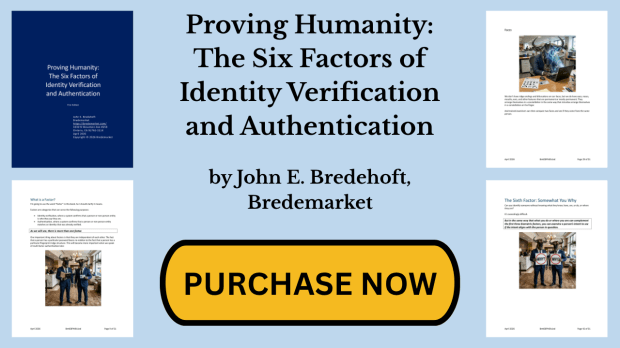
Oh, have I mentioned my ebook recently? Now I have. Click the image to buy.

Four pages from "Proving Humanity: The Six Factors of Identity Verification and Authentication" by John E. Bredehoft, Bredemarket. Click on the image to purchase.
Proving Humanity: The Six Factors of Identity Verification and Authentication.

But the client’s installation guide had several features that left multiWRITE in the dust.

One example: back in 1984 my text highlighting options were limited.

Re-creation of multiWRITE 1984 text.

On Tuesday I wrote a sentence that looked like this.

Actual Microsoft Word 2026 text.

Yeah, blue text. 1984 me would have been shocked.

Google Gemini.

But then again, other than me, who writes user manuals any more?

Who In Your Company Knows What Due Dates Are?

Proactive project management is possible, as the (anonymized) Bredemarket example later in this post illustrates. But first I am compelled to talk about an uncomfortable topic, due dates.

What is a due date?

Some people in a company don’t know what a “due date” is. If the work isn’t done by this Friday, it will get done by next Friday. Or whenever.

But there’s one part of your company that lives and breathes due dates. I talked about this in March 2025 as it relates to Bredemarket’s clients.

“I still enjoy the satisfaction when my client submits a persuasive, compliant proposal. A day before the due date, even.”

Which is better than submitting a proposal AFTER the due date.

Google Gemini.

Why does Proposals care about due dates?

Why does Proposals tend to care more about due dates than, say, Product Marketing?

Because the latter due dates are set internally. And the “agile curse” is that you can, and often do, change anything on a whim.

“The Perpetual Roadmap.” Google Gemini/Lyria. Public Domain.

Contrast with proposal due dates that are set externally by an outside entity such as a government agency that receives funding for a particular fiscal year. Funds that you use or lose.

How can others implement due dates?

For your organization’s product marketing initiatives, do you adopt a “we’ll do it when we get to it” approach?

You don’t have to.

Last week my client and I were getting proactive about an end customer’s anticipated requests. I was recording these in Excel.

Then I added an “anticipated due date” column.

Which allowed me to ask a question.

To preserve client and end customer confidentiality, I have obfuscated and fictionalized the question that I asked.

“Hey, Fernando, the widget manufacturer says that they will want a user guide, whatever that is.

Google Gemini.

“I doubt they’ll want it when they deliver their green widget pitch in Brooklyn next Tuesday, but is there a chance they’ll need it when they meet with Jay Leno’s folks the following week?”

Proactive project management involves transparency between the outside project manager (me), the client, and the end customer. Since we knew that the end customer was meeting with the organization of Jay Leno, we could ask the right questions and schedule a deliverable before the end customer even asked.

Google Gemini.

And we had a due date.

So what?

But what does this mean for you?

It means that Bredemarket can proactively manage your projects, whether they involve content, proposals, or analysis.

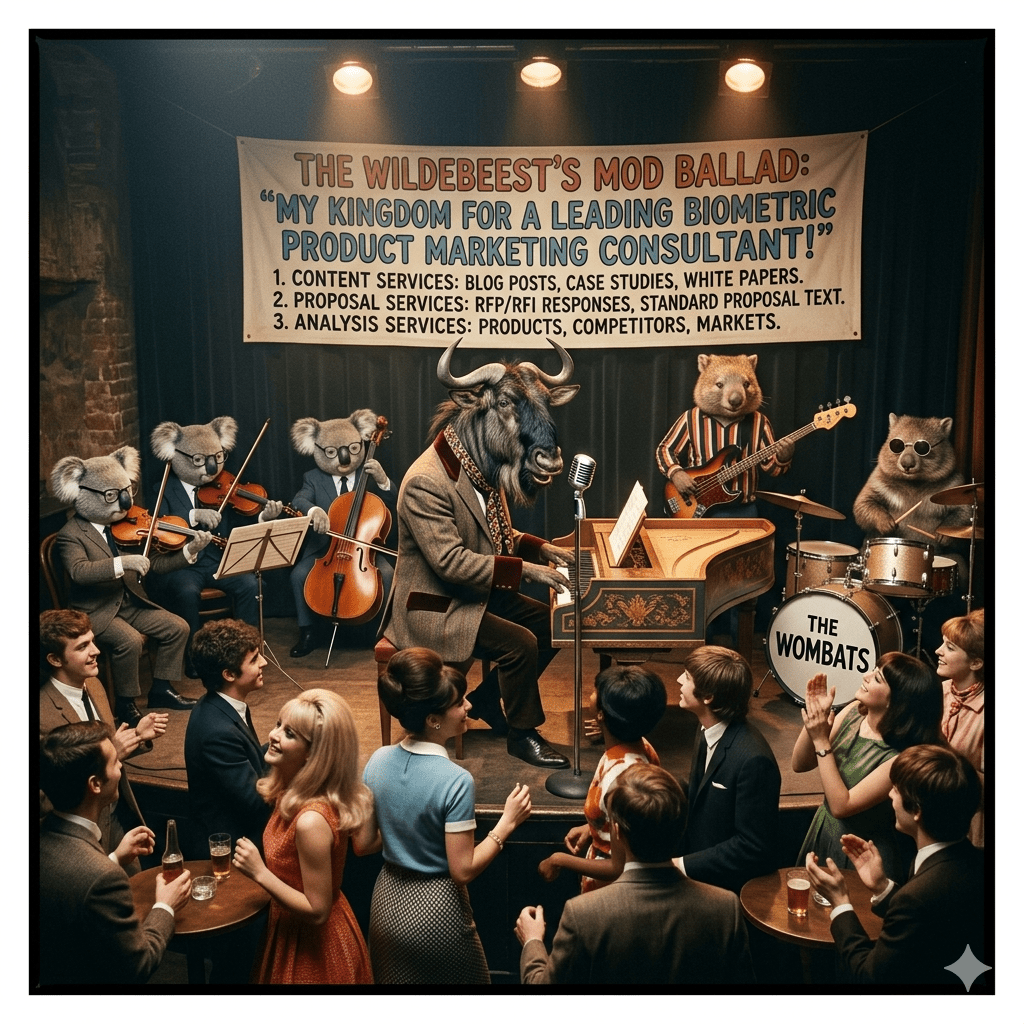
I provide product management consulting for identity, biometric, and technology products. In fact, I am a leading biometric product marketing consultant. (Among others.)

Google Gemini.

If you need an outside consultant to manage your product marketing projects, let’s talk.

Content, proposals, and analysis for tech marketers.

Let me help you…forge your future

.

Forge Your Future.