As a wordsmith, it’s interesting to see how slight wording changes can affect…pictures.
Slight alterations in the wording of a Google Gemini prompt can cause dramatic changes in the resulting images. The final picture prompt included words such as “oversaturated” and “grandly.”
I grew up in a time when phones were attached to the wall and not to us.
When something called a “card catalog” was an essential research tool.
And when the best way to learn the lyrics to your favorite song was to go to the drug store and buy the monthly magazine that listed all the song lyrics.
Imagen 4.
Not that this was necessary for ALL songs. You could pretty much figure out the lyrics to “53 Miles West of Venus.”
Imagen 4.
But for some songs you definitely needed the lyric magazines. Because the lyrics may not be on the record, and probably wouldn’t be on the cassette. And in those innocent days in which we didn’t yet do ourselves a favor by unplugging the jukebox—and we certainly didn’t hang the deejay—the guy behind the turntables didn’t know them either.
Imagen 4.
Of course it’s a lot different today. The phone, no longer attached to the wall, displays lyrics from websites such as Genius, music streaming services such as Spotify, and lyric videos posted on sites such as YouTube.
I spend a lot of time on LinkedIn and therefore endure the regular assault from the so-called LinkedIn “experts.”
You know them.
The people who get all bent out of shape over this character—because it’s certain proof that you use “ChatGPT” (because there is no other generative AI tool) because no human ever uses em dashes.
And then in the next breath the LinkedIn “experts” slam people who don’t use “ChatGPT” to increase productivity. For example, jobseekers should use “ChatGPT” to “beat the ATS,” automatically fine-tune their resumes for every individual application, and apply to thousands of positions.
Oh, but the LinkedIn “experts” say you shouldn’t spray and pray. Tap into the hidden job market via our members-only gated website.
But that’s not the worst thing they say.
Formulate Safe Generic Pablum
When they’re not commanding you to avoid the em dash, the LinkedIn “experts” remind us that LinkedIn is a professional network. And that our communications must be professional.
No cat pictures.
No “life sucks” posts.
Nothing that would cause anyone any offense.
The ideal personal communication is this: “I am thrilled and excited to announce my CJIS certification!”
The ideal business communication is this:
Yes, the “experts” wish that businesses said nothing at all. But if they do say something, a statement like this optimizes outcomes: “WidgetCorp is dedicated to bettering the technology ecosystem.”
Such a statement is especially effective if all your competitors are saying the same thing. This unity of messaging positions you as an industry leader.
Which enables you to…argh, I can’t do this any more. I am hating myself more and more with each word I type. Can I throw up now? This is emotionally painful.
Derek Hughes just sent me an email that describes this generic pablum. It read, in part:
“Everything reads like it was written by a robot on decaf.
“Same recycled tips. Same recycled tone. Somehow, it’s all… grey.”
Obliterate Safe Generic Pablum
If your company wants conversions—and I assume that you do—avoid the generic pablum and say something.
This will bring your hungry people (target audience) to you.
And for the prospects that despise humanness and glory in generic pablum…if their focus is elsewhere, your focus won’t impede. Let them roam in the distance.
Etymologically, the opposite of impostor syndrome would be expositor syndrome. I asked my buddy Google Gemini to hallucinate a definition, and this is what I got:
“Expositor Syndrome is a hypothetical, non-clinical psychological pattern characterized by an overwhelming and often compulsive urge to explain, clarify, or elaborate upon concepts, ideas, or events, even when such detailed exposition is unsolicited, unnecessary, or redundant. Individuals exhibiting Expositor Syndrome experience a profound discomfort or anxiety if they perceive a potential for misunderstanding or an unstated implication, feeling an internal pressure to “lay bare” all facets of a topic.
“Note: This is a fictional construct, not a recognized medical or psychological condition.”
Gemini actually said a lot more, but I chose not to elaborate.
This, rather than a delusion of grandeur, is considered the opposite of impostor syndrome because an impostor HIDES their true talented self, whereas an expositor ELABORATES and goes on and on about their knowledge. Until their friends become former friends and stop speaking to them.
But can someone exhibit both expositor syndrome and a delusion of grandeur?
Perhaps such a person—if they exist—can still make positive contributions to society.
Such as the Bredemarket 2800 Medium Writing Service, approximately 2800 to 3200 words that (a) answers the WHY/HOW/WHAT questions about you, (b) advances your GOAL, (c) communicates your BENEFITS, and (d) speaks to your TARGET AUDIENCE.
I’m a member of a local Facebook “news” group, and the group just emphatically stated that expression of opinions is NOT allowed in that group.
Because facts are free of bias. (Supposedly. I should address that topic in another post.)
Because this post includes two contentious opinions, it’s no surprise that I will NEVER share this post in that local news group. Their loss.
Actually the post is off-topic for the news group anyway. But as you will see, it is entirely on-topic for Bredemarket. I’ll explain, after I discuss a couple of songs and their singers.
Two Facts and One Opinion About “Girl from the North Country”
“Girl from the North Country” is a Bob Dylan song, which he started writing in 1962 while in England. The song was recorded in New York in 1963 and released that same year on the album “The Freewheelin’ Bob Dylan.”
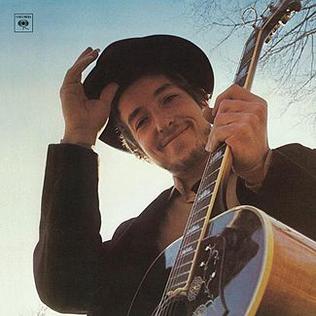
I care about Dylan’s cover of his own song, released several years later on the 1969 album “Nashville Skyline.” But Dylan had a special guest on this album: Johnny Cash.
Here are two facts about the 1969 version:
Bob Dylan has a distinctive voice.
Johnny Cash has a distinctive voice.
These are facts, not opinions, since I am not casting a value judgement on whether they are any good at singing. For the record, I love Bob Dylan’s solo songs, and I love Johnny Cash’s solo songs.
Now my opinion: the 1969 version of “Girl from the North Country” is an unmitigated disaster, because the distinctive voices do not blend at all.
If you’ve never heard this version of the song, let me provide a play-by-play account.
The song begins with Dylan and Cash strumming their guitars, accompanied by a backing band of Nashville stars. (Not Starrs.)
Dylan then sings the first verse, in a lower key than his original version, and the listeners were introduced to the newest version of Bob Dylan. Shed of a rock band, he has not returned to his early folk days, but appears in a new version of a peaceful, satisfied country crooner. More versions of Dylan were to follow.
Then we get the second verse, in which Johnny Cash picks up the story about the girl. Cash himself appears in a new guise, having moved beyond the Memphis rockabilly sound and the horn-infused “Ring of Fire” sound. Cash now entered a period in which he associated with people such as Dylan who were leap years away from both traditional country and the newer countrypolitan sound. Cash, like Dylan, would continue to travel all over the musical map, gaining fame at the end of his life by covering Nine Inch Nails.
Back to 1969. After Cash sings the second verse, Dylan returns to sing the third. Everything is going fine so far.
Then (again, in my opinion) all hell breaks loose at the 1:52 mark in the song, because now the two sing together.
Sort of.
Cash starts singing the fourth verse, Dylan joins in a second later, and then they kinda sorta sing the words of the fourth and fifth verses at kinda sorta the same time, with some harmonizing—some intentional, some unintentional when they couldn’t hit the notes. Hear the result on YouTube.
Now I will admit that my negative opinion of the Dylan-Cash duet on “Girl of the North Country” is not universal. A high school friend who shall remain anonymous (just call her “Editor Extraordinaire” and old school Rick Dees fan) thinks this version is charming. I find it amusing in a not-so-good way.
As far as I’m concerned, this collaboration didn’t work.
Which brings us to Christina Aguilera.
Three Facts and One Opinion About “Birds of Prey”
In 2010 Aguilera released her sixth album, “Bionic,” a massive 18-track album featuring a more electronic sound and numerous collaborations with Nicki Minaj, Sia, Linda Perry, and others.
I care about the Deluxe edition, with an even more massive total of 23 tracks.
One of which was co-written and produced by the (then) four members of the UK band Ladytron. As OC Weekly (R.I.P.) documented at the time, Aguilera was a fan of the quartet:
Ladytron followers were startled to learn that Christina Aguilera was not only a fan, but had also already worked with the band on a variety of songs to be released in the near future.
“We went in with no expectations; the whole thing was a massive surprise,” explains Wu. “But it was incredible. She was so musically talented, a vocalist who really knows her voice. The first takes sounded really amazing, and while we’d made demos, it was only when her voice was on them that it all came to life.
One of the songs was “Birds of Prey.” Not to be confused with “Bird of Prey” or “Sunset (Bird of Prey),” the Aguilera-Ladytron version builds upon the usual Ladytron vocal delivery from Helen Marine and Mira Aroyo by adding Christina Aguilera to the mix.
Which brings me to my three facts about this song:
Christina Aguilera has a distinctive voice, with a four-octave range that she frequently exercises to the fullest.
Helen Marnie has a distinctive voice, featured as the light “singing voice” of Ladytron.
Mira Aroyo has a distinctive voice, whose spoken word delivery blends with Marnie’s in many classic Ladytron songs. (For example, “Seventeen.”)
In my opinion, this vocal collaboration—unlike the Dylan-Cash one mentioned earlier—works out beautifully. Aguilera naturally opens the song (it’s her album after all), but as the song progresses you hear Marnie lightly chiming in and Aroyo whispering, building up to the closing of the song. Hear it here.
Again, this opinion is not universal—Aroyo in particular is an acquired taste—but the combination seems to work.
But what do “Girl from the North Country” and “Birds of Prey” have to do with B2B sales—whoops, I mean collaboration? And Bredemarket?
The art of collaboration
Bredemarket’s services are built upon the principle that I work together with my clients. My process includes a lot of references to “Bredemarket and you,” because we are both involved in every step, from the seven questions I address at the beginning to the iterative drafts and reviews that occur throughout.
But that isn’t the only way to manage a project, as I noted in June 2023. There are two others.
The first approach is to yield all control to the expert. You sit back, relax, and tell your content marketing consultant to do whatever they want. They provide the text, and you pay the consultant with no questions asked. The content marketing consultant is the pilot here.
The second approach is to retain all control yourself. You tell the content marketing consultant exactly what you want, and exactly what words to say to describe your best-of-breed, game-changing, paradigm-shifting, outcome-optimizing solution. (That last sentence was painful to write, but I did it for you.) The content marketing consultant follows your exact commands and produces the copy with the exact words you want. You are the pilot here.
So which of these two methods is the best way to create content?
When a Bredemarket client was reviewing my draft, the client asked about my use of parentheses around individual letters.
“what is the purpose of the “()” in the “(L)eading organizations…” and “(G)en AI…“?”
So I explained.
“I would have to confirm, but presumably the original text said “leading” and “gen.” To properly use the quote as a partial quote I capitalized the words, but enclosed them in parentheses to indicate I modified the original text.”
“When writers insert or alter words in a direct quotation, square brackets—[ ]—are placed around the change. The brackets, always used in pairs, enclose words intended to clarify meaning, provide a brief explanation, or to help integrate the quote into the writer’s sentence. A common error writers make is to use parentheses in place of brackets.”
Well, at least I’m not the only one. Lewis also provided several examples, including this one:
“[D]riving is not as automatic as one might think; in fact, it imposes a heavy procedural workload [visual and motor demands] on cognition that . . . leaves little processing capacity available for other tasks” (Salvucci and Taatgen 107).
I just corrected my client’s piece before publication, and will try to remember to use brackets as needed in all pieces day forward. I’m not going to go back through the hundreds of blog posts here and correct them.

















 Bredemarket