When Bredemarket begins an engagement with a client, I usually have no idea what processes, templates, or practices the client already has. So I have to handle whatever is or is not there and either understand what is there, adapt it, or create what is needed.
Understand
In some cases clients already have a process.
For example, as I delved into the Sharepoint library for one of Bredemarket’s clients, I found a complete set of branding guidelines that covered logos, colors, and many other aspects of the company’s branding.
In that case, my job is to simply make sure that I align with the client’s branding, and that my content, proposals, and analysis work for the client aligns with the branding guidelines…or with whatever other process the client has.
Adapt
Sometimes the client has a process, but it needs to be adapted in some way.
Here’s an example I can publicly share: not from a Bredemarket client, but from my former employer Motorola (back when Motorola was one company). I was a product manager at the time, and products were developed via a “stage gate” process. At Motorola, of course, it was called M-Gates.
Our “Printrak” group (automated fingerprint identification systems, computer aided dispatch systems, and the like) was the odd group out in our part of Motorola (the part that would later become Motorola Solutions). Most of the people in that part of Motorola sold police radios that were manufactured in bulk. Therefore the stage gate process included a step for a limited production run of police radios before moving to full production.
That didn’t apply for the software we sold to government systems. For example, the entire production run for the Omnitrak 8.1 release was no more than a half dozen systems for customers in Switzerland, Oklahoma, and other places. A limited production run wouldn’t make sense.
So OUR stage gate process eliminated that step and went straight to full production.
Create
And then there are the clients who don’t have anything. In these cases, my invention hat goes on.
For one Bredemarket client, I was asked to develop several pieces of collateral, such as (ironically) one on process maturity, and several random pieces of content tied to a product release.
I decided to approach it more systematically by introducing a simple go-to-market process that defined the external and internal collateral required for a “high” tier product release and a “low” tier product release. Resisting my urge to define something thorough, I simplified the GTM process as much as possible, while still providing guidance on what a product release should contain.
The client rejected the idea: “we don’t need no steenking process.”
Not surprisingly, the process maturity content was never released either.
I’ve had better luck with other Bredemarket clients, defining go-to-market, proposal, and other processes for them as needed.
Be Prepared
Providing product marketing expertise is much more than writing about a product.
Before I write a word of text, I ensure that the content aligns with the client’s strategies…or my own strategies if the client doesn’t have any.
I just realized that I have never told the FULL story of FpVTE 2003 in the Bredemarket blog. I’ve only told the problem part, but not the solution part. Bad on me.
The problem part
I told parts of this in a 2023 post entitled “The Big 3, or 4, or 5? Through the Years.” One of the pivotal parts of the story was when the “big 4” became the “big 3.”
It happened like this:
These days the U.S. National Institute of Standards and Technology (NIST) is well known for its continuous biometric testing, but one of its first tests was conducted in 2003. At the time, there were four well-recognized fingerprint vendors:
Cogent Systems.
Motorola, which had acquired Printrak.
NEC.
Sagem Morpho, which had acquired Morpho.
There were a bunch of other fingerprint vendors, but they were much smaller, including the independent companies Bioscrypt and Identix.
I was a product manager at Motorola at the time, managing the server portion of the company’s automated fingerprint identification system (AFIS), Omnitrak. This featured a modernization of the architecture that was a vast improvement over the client-server architecture in Series 2000. The older product was still in use at the Royal Canadian Mounted Police (RCMP), but Motorola was in the process of installing Omnitrak in Slovenia and upgrading existing systems in Oklahoma and Switzerland.
“FpVTE 2003 consists of multiple tests performed with combinations of fingers (e.g., single fingers, two index fingers, four to ten fingers) and different types and qualities of operational fingerprints (e.g., flat livescan images from visa applicants, multi-finger slap livescan images from present-day booking or background check systems, or rolled and flat inked fingerprints from legacy criminal databases).”
So the companies listed above, among others, submitted their algorithms to FpVTE 2003. After the testing, NIST issued a summary report that included this sentence.
“Of the systems tested, NEC, SAGEM, and Cogent produced the most accurate results.”
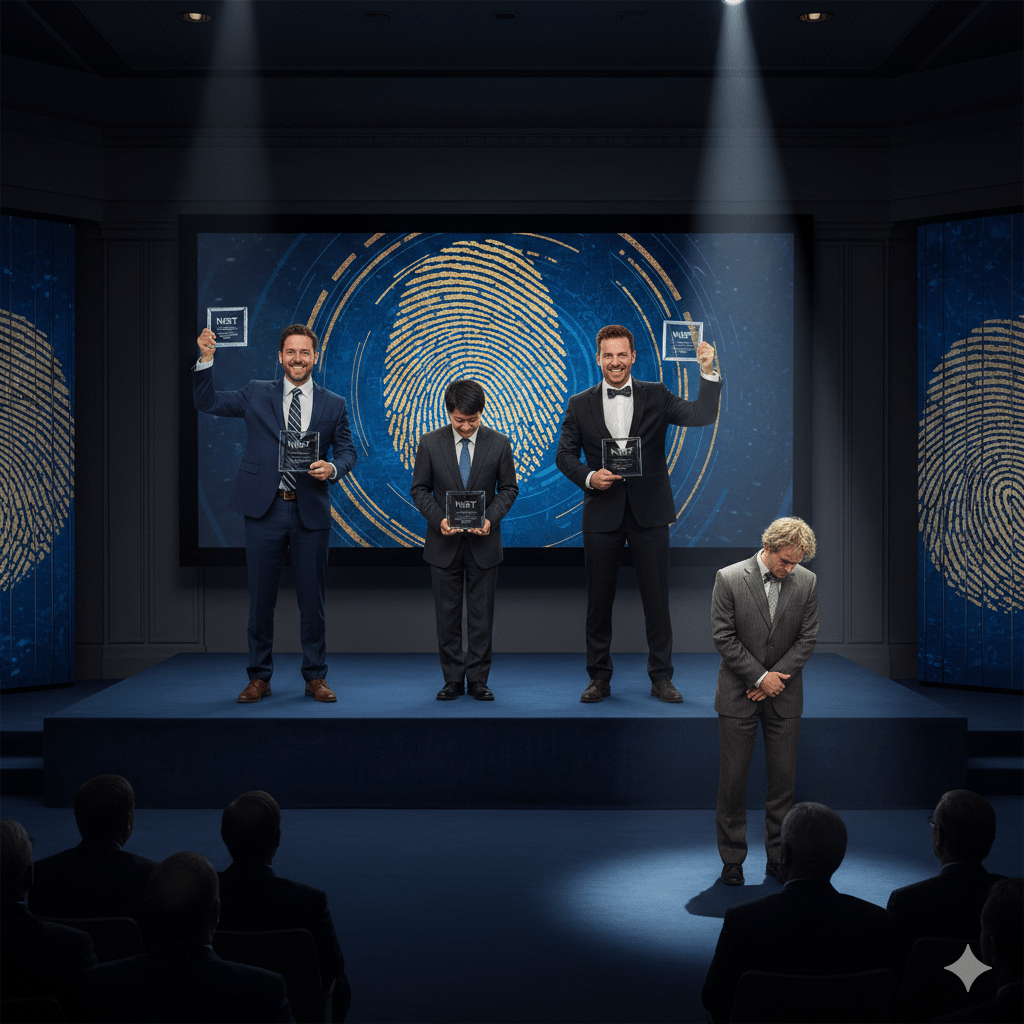
You can see how this affected Motorola…and me. We were suddenly second-tier, via independent confirmation.
I’m a loser, baby. Google Gemini.
We first had to go to the RCMP and admit that we weren’t as accurate as other systems. This came at a particularly bad time, since the RCMP was engaged in a massive system upgrade of its own. While Motorola’s FpVTE performance was not the ultimate deciding factor, we lost the massive RCMP system to Cogent.
But Motorola did something else at the same time.
The solution part
The accuracy of an automated fingerprint identification system falls in the laps of the algorithm developers, whether the vendor develops its own algorithms or buys a third-party algorithm from another AFIS vendor.
Motorola developed its own algorithm…and one of the R&D leaders was Guy Cardwell.
Motorola held a User’s Conference after the FpVTE results announcement, and Cardwell spoke to our customers.
It wasn’t a flashy presentation with smoke and mirrors.
It wasn’t an accusatory presentation calling NIST a bunch of crooks.
It was basically Guy, on stage, saying that we didn’t do well.
And that we would do better.
Now of course that in itself means nothing unless we actually DID better. The R&D team went to work and improved the algorithm, and continued with other advances such as supporting complete 1000 pixel per inch systems as Sweden demanded.
But from a product marketing perspective, Motorola’s initial messaging to its customers was critically important.
Because if Motorola didn’t publicly address its FpVTE 2003 performance, then the only people talking about it would be Cogent, NEC, and Sagem Morpho.
Identity/biometric marketing leaders continuously talk about how their companies have reduced bias in their products. But have they reduced bias in their own marketing to ensure it resonates with prospects?
“Marketers are driven to accentuate the positive about their companies. Perhaps the company has a charismatic founder who repeatedly emphasizes how ‘insanely great’ his company is and who talked about ‘bozos.’ (Yeah, there was a guy who did both of those.)
“And since marketers are often mandated to create both external and internal sales enablement content, their view of their own company and their own product is colored.”
Let’s look at two examples of biometric marketing internal bias…and how to overcome it.
Google Gemini.
Internal bias at Company A
Company A does not participate in the U.S. National Institute of Standards and Technology (NIST) Face Recognition Technology Evaluation (FRTE) for technical reasons.
As a result, the company’s marketing machine constantly discredits NIST FRTE, and the company culture is permeated with a “NIST is stupid” mentality.
All well and good…until it runs into that one prospect who asks, “Why are you scared to measure yourself against the competition? Does your algorithm suck that bad?”
Internal bias at Company B
Company B, on the other hand, participates in FRTE, FATE, FRIF (previously FpVTE), and every other NIST test imaginable.
This company’s marketing machine declares its superiority as a top tier biometric vendor, supported by outside independent evidence.
All well and good…until it runs into that one prospect who declares, “That’s just federal government test data. How will you perform in our benchmark using our real data and real computers?”
Internal bias at Bredemarket
Well, I have my admittedly biased solution to prevent companies from tumbling into groupthink, drinking of Kool-Aid, and market irrelevance.
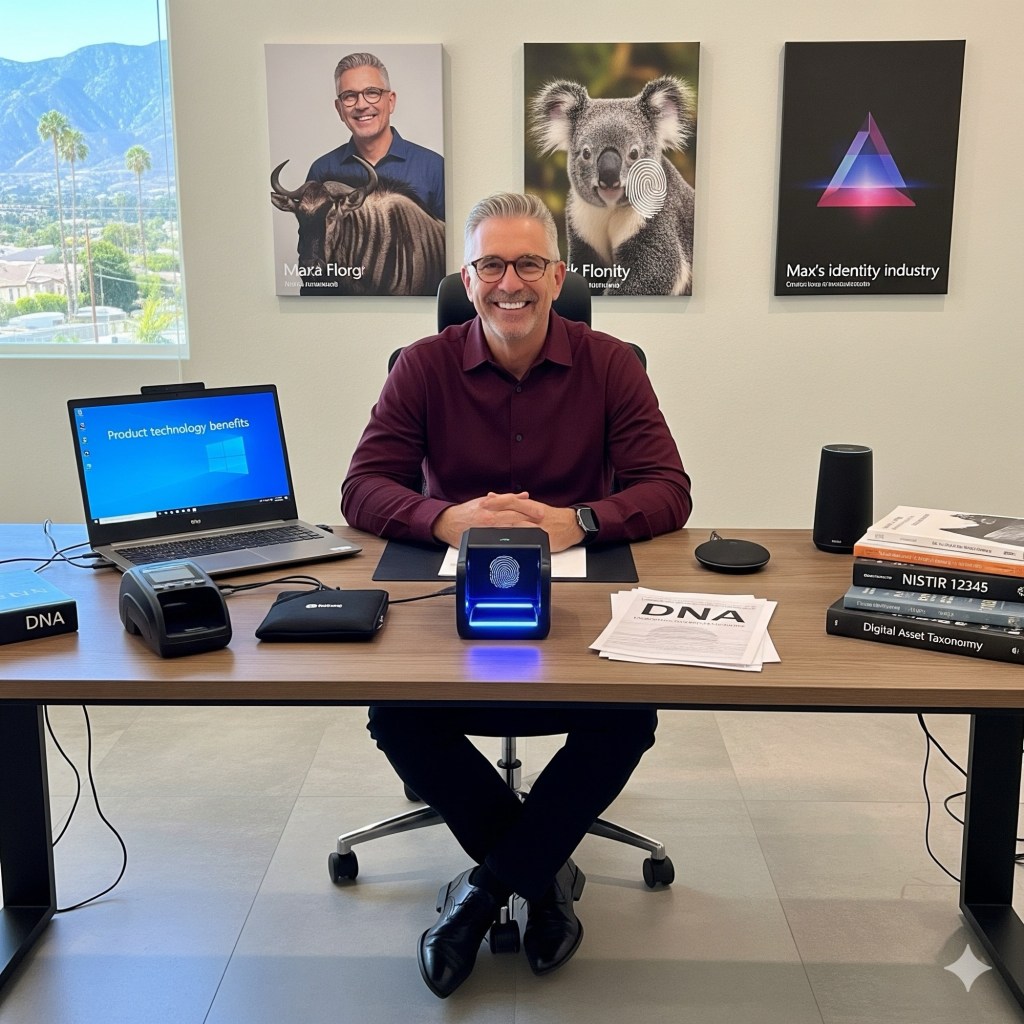
Contract with an outside biometric product marketing expert. (I just happen to know one…me.)
Google Gemini.
I haven’t spent 30 years immersed in your insular culture. I’ve heard all the marketing-speak from different companies, and I’ve written the marketing-speak for nearly two dozen of them. I can ensure that your content resonates with your external customers and prospects, not only with your employees.
All well and good…until…
Reducing internal bias at Bredemarket
“But John, what about your own biases? IDEMIA, Motorola, Incode, and other employers paid you for 25 years! You probably have an established process that you use to prepare andouillette at home, based upon a recipe from 2019!”
Google Gemini.
I don’t…but point taken. So how do I minimize my own biases?
My breadth of experience lessens the biases from my past. Look at my market-speak from 1994 to 2023, in order:
We are Printrak, a nimble private company that will dominate AFIS with our client-server solution.
We are Printrak (stock symbol AFIS) a well-funded public company that will dominate AFIS, mugshot, computer aided dispatch, and microfiche.
We are Motorolans, and our multi-tier Digital Justice Solution has a superior architecture to that of Sagem Morpho and others.
We are MorphoTrak, bringing together the best technologies from MetaMorpho and Printrak BIS, plus superior French technology for secure credentials and road safety…unencumbered by the baggage that weighs down MorphoTrust.
We are IDEMIA North America, bringing together the best technologies from MorphoTrust and MorphoTrak for ABIS, driver’s licenses, and enrollment, coupled with the resources from the rest of IDEMIA, a combined unbreakable force.
We are Incode, not weighed down with the baggage of the old dinosaurs, and certainly not a participant in the surveillance market.
Add all the different messaging of Bredemarket’s clients, plus my continuous improvement (hello MOTO) of my capabilities, and I will ensure that my content, proposals, and analysis does not trap you in a dead end.
Reducing internal bias at your company
Are you ready to elevate your company with the outside perspective of a biometric product marketing expert?
Let’s talk (a free meeting). You explain, I ask questions, we agree on a plan, and then I act.
Back in 2002, when I was an automated fingerprint identification system (AFIS) product manager at Motorola, another fingerprint company, Identix, made an announcement.
“Identix Inc. and Visionics Corp. announce a strategic merger of equals in an all-stock transaction valued at approximately $600 million.”
The word “synergy” was tossed about, justifiably. You see, while Identix had a long history with fingerprints, Visionics had a long history with facial recognition. So the new combined company would offer both fingerprint and face biometrics, something new for the time. So new that Visionics’ chairman and CEO, Dr. Joseph Atick, made the following statement:
“I believe this merger of equals is one of the most significant events in the history of the biometrics industry to date.”
One little footnote: the acquisition brought fingerprint provider Identix and its chief competitor Digital Biometrics into the same company, since Visionics had acquired Digital Biometrics in 2001.
Viisage plus TDT
Let’s, um, face it: the combined company (known as Identix) was positioned well against Visionics’ chief competitor, a company called Viisage.
“In February, it bought Trans Digital Technologies (TDT), which supplies the digital printing system for U.S. passports, for $50 million in cash and stock. Last year, the Arlington, Va.-based TDT landed a five-year, $65 million contract extension with the U.S. State Department for the passport system.”
Which prompted Bernard Bailey, Viisage’s president and CEO, to declare that the acquisition of TDT was:
“…the single most important transformational event in Viisages history.”
So who was the true visionary: Atick, or Bailey? Or maybe someone else we haven’t mentioned yet?
Identix and Viisage…and all the other companies
While Identix and Visionics had some pretty significant components, neither could claim to be a true identity leader. Both companies not only had to compete against the traditional AFIS providers including Sagem Morpho and Motorola, but also against other identity providers. Take Digimarc, which beefed itself up considerably by acquiring Polaroid’s driver’s license business in 2001.
So by 2004, my Motorola “Biometric Business Unit” was competing against a bunch of companies, including:
One of our traditional AFIS competitors, Sagem Morpho.
Identix, including Visionics and Digital Biometrics.
Sagem Morpho and Motorola’s Biometric Business Unit would be a Safran subsidiary called MorphoTrak (with some international pieces tossed over into a division that would subsequently be renamed Morpho).
The others (L-1 plus Digimarc’s driver’s license business, acquired in 2008) would be a Safran subsidiary called MorphoTrust.
The history of L-1 Identity Solutions has always fascinated me. I dealt with then-bitter enemies Digital Biometrics and Identix while I was at Printrak, with Viisage while I was at Motorola, and de facto competed with MorphoTrust while I was at MorphoTrak…until MorphoTrust in effect acquired MorphoTrak when IDEMIA NSS was set up and I reported to a supervisor in Massachusetts.
I used to have a PowerPoint presentation that traced the family tree of all of L-1’s acquisitions. Wish I still had it. But here’s a little taste of where things stood before Joseph Atick and Robert LaPenta started combining things:
Identix, while making some efforts in the AFIS market, concentrated on creating live scan fingerprinting machines, where it competed (sometimes in court) against companies such as Digital Biometrics and Bioscrypt.
The fingerprint companies started to compete against facial recognition companies, including Viisage and Visionics.
Oh, and there were also iris companies such as Iridian.
And there were other ways to identify people. Even before 9/11 mandated REAL ID (which we may get any year now), Polaroid was making great efforts to improve driver’s licenses to serve as a reliable form of identification.
(Some former links are dead and were removed from the bullets above. But the Digital Biometrics-Identix court case is described here, and Polaroid’s history with driver’s licenses in Utah is described here.)
Back in 2023 I assembled a list of “Five Topics a Biometric Content Marketing Expert Needs to Understand.” My fifth topic was “How L-1 Identity Solutions came to be.” I claimed I was half joking, but in reality I was completely serious. Despite similar efforts by HID and others (including IDEMIA), the sheer number of companies that combined to form L-1 remains unmatched.
Why do I have a sudden interest in things that happened at Morpho nearly 10 years ago, and at Printrak over 20 years ago? I’ll explain at the end of this post.
Printrak acquires…
Let’s start by looking at my former employer Printrak. In the summer of 1996 Printrak became a publicly traded company, and had secured the four-letter ticker “AFIS” back when an automated fingerprint identification system was THE biometric solution. (Face schmace. Iris schmiris. Voice schmoice.)
But then Printrak began to get bigger.
In April 1997 Printrak acquired a Greenville, South Carolina company, TFP Inc., that manufactured mugshot systems.
Later that same year Printrak acquired SunRise Imaging of Fremont, California, a provider of microfiche scanning services.
Printrak finished the year by acquiring the computer aided dispatch (CAD) and records management systems (RMS) unit of SCC Communications Corp., thus launching activities in Boulder, Colorado.
These acquisitions, costing millions of dollars each, increased the capabilities of Printrak. Several years later, I would be part of creating a “digital justice solution” that married AFIS, CAD, RMS, mugshot, and other services.
But not yet. Before that could happen, Printrak changed dramatically.
Printrak is acquired!
There used to be an online document that listed the entire negotiation history of what happened after these acquisitions, but I can no longer access that document. Instead, I found a document that lists the final results:
“ITEM 5. OTHER EVENTS On August 28, 2000, Printrak International Inc. (the “Registrant”) issued a press release regarding an agreement (the “Merger Agreement”) among Motorola, Inc. (“Motorola”), the Registrant, Panther Acquisition Corp., a wholly-owned subsidiary of Motorola (“Acquisition Sub”) and the Giles Living Trust UDT dated December 17, 1993, The Giles Family Foundation, and The Smith Family Revocable Trust dated October 2, 1992 (collectively referred to herein as the “Registrant’s Majority Stockholders”) pursuant to which Acquisition Sub will be merged (the “Merger”) with and into Registrant, with Registrant surviving the Merger as a wholly-owned subsidiary of Motorola. On August 28, 2000 the Registrant’s Majority Stockholders executed a written consent of stockholders approving the terms and authorizing the execution of the Merger Agreement by the Registrant. Under the Merger Agreement, Motorola has agreed to pay $12.1406 per share for all the outstanding common stock and common stock equivalents of Registrant for an aggregate merger consideration of approximately $160 million.”
In the language above, the two “Giles” entities were controlled by Richard Giles, who had joined De La Rue Printrak and then purchased the Printrak part from De La Rue. The Smith Family Revocable Trust was controlled by Charles Smith, another Printrak employee. While Printrak was a publicly traded entity, Richard Giles held over half the shares, and therefore had the power to sell, provided that the deal received the proper approvals from the United States, Argentina, Brazil, Germany, Romania, and other countries.
Why did Motorola want to acquire Printrak? Because Motorola needed a CAD product to pair with its significant business in police radios. And among Printrak’s acquisitions was a division with a CAD product, making that acquisition by far the most significant of the three acquisitions from 1997. Microfiche went nowhere, and the fact that the present company DataWorks Plus was founded in 2000 in Greenville, South Carolina is no accident.
But returning to Printrak, its growth through acquisitions made Printrak itself an acquisition target.
SCC, Sunrise Imaging, Printrak…and Motorola.
Morpho acquires…
Fast forward a few years, and a lot had happened at the Motorola company that Printrak joined. I won’t go into the history of Motorola during that decade, but by 2008 the company was shedding businesses that weren’t critically important. The CAD and RMS business was critically important, but the fingerprint business—the original pre-1997 Printrak—was not.
“In the late 1970s, a computer engineering subsidiary of France’s largest financial institution responded to a request by the French Ministry of Interior to work on automated fingerprint processing for the French National Police. Later, this company joined with the Morphologic Mathematics Laboratory at the Paris School of Mines to form a subsidiary called Morpho Systems that went on to develop a functioning [AFIS].”
Morpho Systems and its North American subsidiary were acquired by several companies in succession, the last being Safran.
And Safran thought that Motorola’s “Biometric Business Unit” would complement its existing biometric activities. So Safran purchased the unit (including me) from the willing seller Motorola, which became part of MorphoTrak.
“By 2011, Safran decided that it needed additional identity capabilities, so it acquired L-1 Identity Solutions and renamed the acquisition as MorphoTrust.”
These various acquisitions strengthened Safran’s identity and biometric capabilities, which was good because Safran’s competitors were also busy. Eventually the entire identity and security business was renamed “Morpho” after the little old French company from the 20th century. This was a major division within Safran’s empire…
Morpho is acquired!
…but Safran remained an aerospace/defense company, and Morpho was a distraction.
The point I want to make? Morpho’s growth through acquisitions made Morpho itself an acquisition target.
Motorola’s Biometric Business Unit, L-1 Identity Solutions, Morpho…and Advent International.
Incode acquires…
Now before someone slams me, I’m not making any predictions, just some observations.
Now let’s look at my former employer Incode. Unlike Printrak, Incode is not a publicly-traded firm. Like IDEMIA, Incode is held by private investors, although in Incode’s case there are multiple investors, not just one. Incode’s investors include General Atlantic, Softbank, J. P. Morgan, and others.
Lately Incode has been on an acquisition spree of its own.
Now remember that Incode’s investors didn’t invest just because they want to see cool technologies. They invested because they want to make money. And these moves potentially strenghthen Incode so that its investors may make a profit through an Incode IPO…
…or an acquisition of Incode by another entity, which would continue the consolidation of the identity/biometric industry.
If you hear a fingerprint person discussing a “bifurcation,” the definition is pretty simple.
“The point at which one friction ridge divides into two friction ridges.”
And if you think of fingerprint ridges as black lines on a white background, then a bifurcation is the exact opposite of a ridge ending.
The fingerprint image is from an appendix to the National Institute of Standards and Technology’s 2003 Fingerprint Vendor Technology Evaluation (FpVTE).
Yeah, THAT FpVTE. I remember it well from my days at Motorola…not a “top 3” vendor.
When a company announces its intent to buy another company, certain activities at both firms may be stalled.
This can be a good thing, as certain Motorola employees and IDEMIA lawyers know.
Motorola layoffs on hold
In late 2008 and early 2009 Motorola was in trouble—so much trouble that it would eventually bifurcate. (Heh.) So Motorola was laying off employees throughout the company…
…except in the Biometric Business Unit where I resided. Safran had announced its intent purchase that unit, and Motorola was obligated to deliver that unit to Safran intact.
So I kept my job…for another 12 years anyway.
IDEMIA lawsuit on hold
Anyway, Motorola’s Biometric Business Unit became part of Safran and then IDEMIA. And according to ID Tech, IDEMIA is the beneficiary of new acquisition activity.
“A legal dispute between South African Black Economic Empowerment (BEE) firm INFOVERGE and French multinational IDEMIA has stalled, with INFOVERGE citing ongoing acquisition activity involving IDEMIA’s South African subsidiary as the reason for the delay. The firm is seeking R39 million in damages over what it describes as a breach of contractual obligations by IDEMIA.
“INFOVERGE told reporters that it had been informed IDEMIA’s South African division is undergoing a corporate transaction, which has effectively paused the litigation process. ‘We’ve been told that the South African arm of IDEMIA is under acquisition … which leaves our legal matter in some kind of limbo as we wait,’ an INFOVERGE spokesperson said, adding that the prolonged delay is impacting their ability to fulfill their empowerment mandate.”
The most widely known member of the suite is SOC 2® – SOC for Service Organizations: Trust Services Criteria. But you also have SOC 1, SOC 3, SOC for Cybersecurity, SOC for Supply Chain, SOC for Steak…whoops, I made that one up because I’m hungry as I write this. But the others are real.
Who runs the SOC suite
But the difference about the SOC suite is that it’s not governed by engineers or scientists or academics.
I’m talking about the AICPA, or the Association of International Certified Professional Accountants.
Which begs the question: why are a bunch of bean counters defining compliance frameworks for cybersecurity?
Why CPAs run the SOC suite
Ask Schneider Downs. As an accounting firm, they may have an obvious bias regarding this question. But their answers are convincing.
“CPAs are subject matter experts in risk management.” You see, my reference above to “bean counters” was derogatory and simplistic. Accounts need to understand financial data and the underlying risks, including vulnerabilities in cash flow, debt, and revenue. For example, if you’ve ever talked to a CxO, you know that revenue is never guaranteed.
“It was a natural progression to go from auditing against financial risk to auditing against cybersecurity risk.” Now this may seem odd on the surface, because you wouldn’t think mad Excel skills will help you detect deepfakes. But ignore the tools for a moment and look at a higher levels. Because of their risk management expertise, they can apply that knowledge to other types of risk, including non-financial ones. As Schneider Downs goes on to say…
“CPAs understand internal control concepts and the appropriate evidence required to support the operating effectiveness of controls.” You need financial controls at your company. You aren’t going to let the summer intern sign multi-million dollar checks. In the same way you need to identify and evaluate the internal controls related to the Trust Services Criteria (TSC) associated with SOC 2: security, availability, processing integrity, confidentiality, and privacy.
So that’s why the accountants are running your SOC 2 audit.
And don’t try to cheat when you pay them for the audit.
And one more thing
A few of you may have detected that the phrase “SOC it to me” is derived from a popular catchphrase from the old TV show Rowan & Martin’s Laugh-In.
I just read a post by SentinelOne, but it’s too early to tell if this is just a string of buzzwords or a legitimate endeavor.
The post about a proposed “Autonomous SOC Maturity Model” (ASOCMM?) includes buzzwords such as “autonomous,” “SOC” (system and organizational controls, or security operations center – take your pick), “agentic AI,” and of course “maturity model.”
Having done my maturity model time during my days at Motorola Solutions predecessor Motorola (although our group stuck with CMM rather then moving on to CMMI), I’ve certainly seen the benefits and drawbacks of maturity models for organizations large and small. Or for organizations large: I shudder at the thought of implementing a maturity model at a startup; the learning curve at the Printrak part of Motorola was bad enough. You need to hit the target between no process, and process for process’ sake.
So what of this autonomous SOC maturity model? Perhaps it can be real.
“At SentinelOne, we see the Autonomous SOC through the lens of a maturity model. We welcome debate on where we, as an industry, are on this evolutionary revolution. We hope most will agree that this is a better way to look at Autonomous SOC innovation and adoption – far better than the binary, all-or-nothing debates that have long fueled analyst, vendor, and industry watcher blogs and keynotes.”
If nothing else, a maturity model approach lends (or can lend) itself to continuous improvement, rather than just checking off a box and saying you’re done. A Level 5 (or Level 4 on a 0-4 scale) organization, if it believes what it’s saying, is ALWAYS going to improve.








 Bredemarket