Battling deepfakes with…IAL3?

(Picture designed by Freepik.)

The information in this post is taken from the summary of this year’s Biometrics Institute Industry Survey and is presented under the following authority:

“You are welcome to use the information from this survey with a reference to its source, Biometrics Institute Industry Survey 2025. The full report, slides and graphics are available to Biometrics Institute members.”

But even the freebie stuff is valuable, including this citation of two concerns expressed by survey respondents:

“Against a backdrop of ongoing concerns around deepfakes, 85%
agreed or agreed strongly that deepfake technology poses a
significant threat to the future of biometric recognition, which
was similar to 2024.
“And two thirds of respondents (67%) agreed or agreed strongly
that supervised biometric capture is crucial to safeguard against
spoofing and injection attacks.”

Supervised biometric capture? Where have we heard that before?

IAL3 requires “[p]hysical presence” for identity proofing. However, the proofing agent may “attend the identity proofing session via a CSP-controlled kiosk or device.” In other words, supervised enrollment.

Now remote supervised enrollment and even in-person supervised enrollment is not a 100.00000% guard against deepfakes. The subject could be wearing a REALLY REALLY good mask. But it’s better than unsupervised enrollment.

How does your company battle deepfakes?

How do you tell your clients about your product?

Do you need product marketing assistance? Talk to Bredemarket.

What is the Proper Identity Assurance Level (IAL) for Employer Identification Number (EIN) Assignment?

(Imagen 4)

In the latest Know Your Business brouhaha, the Treasury Inspector General for Tax Administration (TIGTA) has questioned some potential gaps in the assignment of an Employer Identification Number, or EIN.

It seems that some so-called “businesses” are using an EIN as a facade for illegal activity…and insufficient identity assurance is preventing the fraudsters from being caught.

Obtaining Employer Identification Numbers to commit tax fraud

What is an EIN? In the same way that U.S. citizens have Social Security Numbers, U.S. businesses have Employer Identification Numbers. It’s not a rigorous process to get an EIN; heck, Bredemarket has one.

But maybe it needs to be a little more rigorous, according to TIGTA.

“EINs are targeted and used by unscrupulous individuals to commit fraud. In July 2021, we reported that there were hundreds of potentially fraudulent claims for employer tax credits….Further, in April 2024, our Office of Investigations announced that it helped prevent $3.5 billion from potentially being paid to fraudsters. Our special agents identified a scheme where individuals obtained an EIN for the sole purpose of filing business tax returns to improperly claim pandemic-related tax credits.”

Yes, that’s $3.5 billion with a B. That’s a lot of fraud.

Perhaps the pandemic has come and gone, but the temptation to file fraudulent business tax returns with an improperly-obtained EIN continues.

Facade.

Enter the Identity Assurance Level

So how does the Internal Revenue Service (IRS) gatekeep the assignment of EINs?

By specifying an Identity Assurance Level (IAL) before assigning an EIN.

Specifically, Identity Assurance Level 1.

“In December 2024, the IRS completed the annual reassessment of the Mod IEIN system. The IRS rated the identity proofing and authentication requirements at Level 1 (the same level as the initial assessment in January 2020).”

IAL1 doesn’t “assure” anything…except continued tax fraud

If you’ve read the Bredemarket blog or other biometric publications, you know that IAL1 is, if I may use a technical term, a “nothingburger.” The National Institute of Standards and Technology (NIST) says this about IAL1:

“There is no requirement to link the applicant to a specific real-life identity. Any attributes provided in conjunction with the subject’s activities are self-asserted or should be treated as self-asserted (including attributes a CSP asserts to an RP). Self-asserted attributes are neither validated nor verified.”

If that isn’t a shady way to identity a business, I don’t know what is.

Would IAL2 or IAL3 be better for EIN assignment?

These days it’s probably unreasonable to require every business to use Identity Assurance Level 3 (discussed in the Bredemarket post “Identity Assurance Level 3 (IAL3): When Identity Assurance Level 2 (IAL2) Isn’t Good Enough“) to obtain an EIN. As a reminder, IAL3 requires either in-person or supervised proof of identity.

But I agree with TIGTA’s assertion that Identity Assurance Level 2, with actual evidence of the real-world identity, should be the minimum.

Does your firm offer an IAL2/IAL3 product?

And if your identity/biometric firm offers a product that conforms to IAL2 or IAL3, and you need assistance creating product marketing content, talk to Bredemarket.

Identity Assurance Level 3 (IAL3): When Identity Assurance Level 2 (IAL2) Isn’t Good Enough

(Picture designed by Freepik.)

(Part of the biometric product marketing expert series)

I’ve talked about Identity Assurance Levels 1, 2, and 3 on several occasions. Most notably regarding Login.gov’s initial failure to adhere to Identity Assurance Level 2 (IAL2). (Old news; after the pilot, Login.gov is now certified for IAL2.)

But as usually happens, IAL2 is yesterday’s news. Because biometric tech always gets harder better faster stronger.

Refresher on IAL1, IAL2…and IAL 3

Let’s review the three identity assurance levels.

For our purposes, the big difference between IAL2 and IAL3 is that IAL2 allows “either remote or physically-present identity proofing,” while IAL3 requires “[p]hysical presence” for identity proofing. However, the proofing agent may “attend the identity proofing session via a CSP-controlled kiosk or device.” In other words, supervised enrollment.

When do you need IAL3? Mitek’s Adam Bacia clarifies:

“IAL3 is reserved for high-risk environments such as sensitive government services.”

How are solutions approved for a particular Identity Assurance Level?

Now I could get on my product marketing soapbox and loudly proclaim that my service is IAL2 compliant, or IAL3 compliant, or IAL4 compliant. (“What? You don’t know about IAL4? Obviously you’re not authorized to know about it.”)

But I doubt you would, um, trust my declaration.

Enter the Kantara Initiative, which manages an Identity Assurance Approval Process. For our purposes, we want to focus on the NIST 800-63 rev.3 class of approval:

“Available to Credential Service Providers offering Full or Component Credential Management Services. Modeled on best practice (drawing from, among other sources, ISO/IEC 27001, ISO/IEC 29115), this Class of Approval ensures the provider organization’s good standing and management / operational practices and assesses criteria which are derived strictly from NIST SP 800-63 rev.3 requirements, ensuring a conformant technical provision of the provider organization’s service.

“Assurance Levels: IAL2, IAL3; AAL2, AAL3; FAL2, FAL3”

  • You see that the Kantara Initiative doesn’t even offer an approval for IAL1, just for IAL2 and IAL3.
  • It also offers approvals for AAL2 and AAL3. I’ve previously discussed Authenticator Assurance Levels (AALs) in this post. Briefly, IALs focus on the initial identity proofing, while AALs focus on the authentication of a proven identity.
  • And you can also see that it offers approvals for FAL2 and FAL3. I’ve never discussed Federation Assurance Levels (FALs) before.

Component Services IAL2 approvals…and an IAL3 approval

Now if you go to the Kantara Initiative’s Trust Status List and focus on the Component Services, you’ll see a number of companies and their component services which are approved for NIST 800-63 rev.3 and offer an assurance level of IAL2.

With one exception.

“NextgenID Trusted Services Solution provides Supervised Remote Identity Proofing identity stations to collect, review, validate, proof, and package IAL-3 identity evidence and enrollment data for CSPs operating at IAL-3. The NextGenID TSS Identity Stations enable remote operators to remotely supervise NIST SP 800-63A compliant Supervised Remote Identity Proofing (SRIP) sessions for credentialing.”

So if remote identity assurance is not good enough for you, there’s a solution. I’ve already discussed NextgenID’s SUPERVISED remote identity proofing in this post. And there’s a video.

Trust Swiftly has also designed a remote IAL3 solution, but I couldn’t find Trust Swiftly on the Kantara Initiative’s Trust Status List. Perhaps it was processed under another accredited assessor.

But clearly biometric product marketers are paying attention to the identity assurance levels…at least the real ones (not IAL4). But are they communicating benefit-oriented messages to their prospects?

Biometric product marketing has to be targeted to the right people, with the right message. And the biometric product marketing expert at Bredemarket can help a company’s marketing organization create effective content. Talk to Bredemarket.

Do It

(From YouTube; https://youtu.be/hAEQvlaZgKY?si=5gmNIdjjYtzaStyy )

I’ve scheduled a post for Monday regarding Identity Assurance Level 3 (IAL3). I note that IAL2 is not enough for some government agencies, who have requirements that are…um…harder better faster stronger.

Monday’s post will include the “hands” video version of the Daft Punk song.

Today I’m sharing the “Shia” video version.

(Sadly, not enbeddable.)

For the “bias to action” folks.

Is Your Organization (Not) Managing Your Identity Proofing Vendors?

Today I’m doing something different.

  • Normally these blog posts are addressed to Bredemarket’s PROSPECTS, the vendors who provide solutions that use biometrics or other technology. Such as identity proofing solutions.
  • But I’ve targeted this post for another audience, the organizations that BUY biometrics and technology solutions such as identity proofing solutions. Who knows? Perhaps they can use Bredemarket’s content-proposal-analysis services also. Later I will explain why you should use Bredemarket, and how you can use Bredemarket.

So if you are with an organization that SELLS identity proofing solutions, you can stop reading now. You don’t want to know what I am about to tell your prospects…or do you?

But if you BUY identity proofing, read on for some helpful expert advice from the biometric product marketing expert.

Managing an identity proofing solution

When you buy an identity proofing solution, you take on many responsibilities. While your vendor may be able to help, the ultimate responsibility remains with you.

Here are some questions you must answer:

  • What are your business goals for the project? Do you want to confirm 99.9% of all identities? Do you want to reduce fraudulent charges below $10 million? How will you measure this?
  • What are your technology goals for the project? What is your desired balance between false positives and false negatives? How will you measure this?
  • How will the project achieve legal compliance? What privacy requirements apply to your end users—even if they live outside your legal jurisdiction? Are you obtaining the required consents? Can you delete end user data upon request? Are you prepared if an Illinois lawyer sues you? Do you like prison food?
  • What about artificial intelligence? Your vendor probably uses some form of artificial intelligence. What form? What does this mean for you? Again, do you like prison food?

Again…are you ready?

GAO, IRS, and DOA

So how do other organizations manage identity proofing solutions? According to Biometric Update, not well.

A new Government Accountability Office (GAO) audit found the Internal Revenue Service (IRS) has not exercised sufficient oversight of its digital identity-proofing program…

As many of you know, the IRS’ identity proofing vendor is ID.me. The GAO didn’t find any fault with ID.me. And frankly, it couldn’t…because according to the GAO, the IRS’ management of ID.me was found to be deficient.

“IRS was unable to show it had measurable goals and objectives for the program. IRS receives performance data from the vendor but did not show it independently identified outcomes it is seeking. IRS also has not shown documented procedures to routinely evaluate credential service providers’ performance. Without stronger performance reviews, IRS is hindered in its ability to take corrective actions as needed.

“ID.me acknowledges that its identity-proofing process involves the use of artificial intelligence (AI) technologies. However, IRS has not documented these uses in its AI inventory or taken steps to comply with its own AI oversight policies. Doing so would provide greater assurance that taxpayers’ rights are protected and that the technologies are accurate, reliable, effective, and transparent.”

So while ID.me meets the IRS’ key requirement of Identity Assurance Level 2 (IAL 2) compliance, is it performing well? The IRS needs to define what “performing well” means.

You would think the IRS had a process for this…but apparently it doesn’t.

Dead on arrival (DOA).

But I’m not the IRS!

I’ll grant that you’re not the IRS. But is your identity proofing program management better…or worse?

Do you know what questions to ask?

Let Bredemarket ask you some questions. Perhaps these can help you create relevant external and internal content (I’ve created over 22 types of content), manage an RFP proposal process, or analyze your industry, company, or competitors.

Let’s set up a free 30-minute consultation to assess your needs.

CPA

Wanna Know a “Why” Secret About Bredemarket’s TPRM Content?

(The picture is only from Imagen 3. I’ve been using it since January, as you will see.)

Here’s a “why” question: why does Bredemarket write the things it writes about?

Several reasons:

  • To promote Bredemarket’s services so that you meet with me and buy them.
  • To educate about Bredemarket’s target industries of identity/biometrics, technology, and Inland Empire business.
  • To dive into specific topics that interest me, such as deepfakes, HiveLLM, identity assurance levels, IMEI uniqueness, and Leonardo Garcia Venegas (the guy with the REAL ID that was real).
  • Because I feel like it.

And then there are really specific reasons such as this one.

In late January I first wrote about third-party risk management (TPRM) and have continued to do so since.

Why?

TPRM firm 1

Because at that time, a TPRM firm had a need for content marketing and product marketing services, and Bredemarket started consulting for the firm.

I was very busy for 2 1/2 months, and the firm was happy with my work. And I got to dive into TPRM issues in great detail:

  • The incredibly large number of third parties that a vendor deals with…possibly numbering into the hundreds. If hundreds of third parties have YOUR data, and just ONE of those third parties is breached, bad things can happen.
  • The delicate balance between automated and manual work. News flash: if you look at my prior employers, you will see that I’ve dealt with this issue for over 30 years.
  • Organizational process maturity. News flash: I used to work for Motorola.
  • All the NIST standards related to TPRM, including NIST’s discussion of FARM (Frame, Assess, Respond, and Monitor). News flash: I’ve known NIST standards for many years.
  • Other relevant standards such as SOC 2. News flash: identity verification firms deal with SOC 2 also.
  • Fourth-party, fifth-party, and other risks. News flash: anyone that was around when AIDS emerged already knows about nth-party risk.

But for internal reasons that I can’t disclose (NDA, you know), the firm had to end my contract.

Never mind, I thought. I had amassed an incredible 75 days of TPRM experience—or about the same time that it takes for a BAD TPRM vendor to complete an assessment. 

But how could I use this?

TPRM firm 2

Why not put my vast experience to use with another TPRM firm? (Honoring the first firm’s NDA, of course.)

So I applied for a product marketing position with another TPRM firm, highlighting my TPRM consulting experience.

The company decided to move forward with other candidates.

The firm had another product marketing opening, so I applied again.

The company decided to move forward with other candidates.

Even if this company had a third position, I couldn’t apply for it because of its “maximum 2 applications in 60 days” rule.

TPRM firm 3

Luckily for me, another TPRM firm had a product marketing opening. TPRM is active; the identity/biometrics industry isn’t hiring this many product marketers.

  • So I applied on Monday, June 2 and received an email confirmation:
  • And received a detailed email on Tuesday, June 3 outlining the firm’s hiring process.
  • And received a third email on Wednesday, June 4:

“Thank you for your application for the Senior Product Marketing Manager position at REDACTED. We really appreciate your interest in joining our company and we want to thank you for the time and energy you invested in your application to us.

“We received a large number of applications, and after carefully reviewing all of them, unfortunately, we have to inform you that this time we won’t be able to invite you to the next round of our hiring process.

“Due to the high number of applications, we are unfortunately not able to provide individual feedback to your application at this early stage of the process.

“Again, we really appreciated your application and we would welcome you to apply to REDACTED in the future. Be sure to keep up to date with future roles at REDACTED by following us on LinkedIn and our other social channels. 

“We wish you all the best in your job search.”

Unfortunately, I apparently did not have “impressive credentials.” Oh well.

TPRM firm 4?

What now?

If nothing else, I will continue to write about TPRM and the issues I listed above.

Well, if any TPRM firm wants to contract with Bredemarket, schedule a meeting: https://bredemarket.com/cpa/

And if any TPRM firm wants to use my technology experience and hire me as a full-time product marketer, contact my personal LinkedIn account: https://www.linkedin.com/in/jbredehoft

I’m motivated to help your firm succeed, and make your competitors regret passing on me.

Sadly, despite my delusions of grandeur and expositor syndrome (to be addressed in a future Bredemarket blog post), I don’t think any TPRM CMOs are quaking in their boots and fearfully crying, “We missed out on Bredehoft, and now he’s going to work for the enemy and crush us!”

But I could be wrong.

Authenticator Assurance Levels (AALs) and Digital Identity

(Part of the biometric product marketing expert series)

Back in December 2020, I dove into identity assurance levels (IALs) and digital identity, subsequently specifying the difference between identity assurance levels 2 and 3. These IALs are defined in section 4 of NIST Special Publication 800-63A, Digital Identity Guidelines, Enrollment and Identity Proofing Requirements.

It’s past time for me to move ahead to authenticator assurance levels (AALs).

Where are authenticator assurance levels defined?

Authenticator assurance levels are defined in section 4 of NIST Special Publication 800-63B, Digital Identity Guidelines, Authentication and Lifecycle Management. As with IALs, the AALs progress to higher levels of assurance.

  • AAL1 (some confidence). AAL1, in the words of NIST, “provides some assurance.” Single-factor authentication is OK, but multi-factor authentication can be used also. All sorts of authentication methods, including knowledge-based authentication, satisfy the requirements of AAL1. In short, AAL1 isn’t exactly a “nothingburger” as I characterized IAL1, but AAL1 doesn’t provide a ton of assurance.
  • AAL2 (high confidence). AAL2 increases the assurance by requiring “two distinct authentication factors,” not just one. There are specific requirements regarding the authentication factors you can use. And the security must conform to the “moderate” security level, such as the moderate security level in FedRAMP. So AAL2 is satisfactory for a lot of organizations…but not all of them.
  • AAL3 (very high confidence). AAL3 is the highest authenticator assurance level. It “is based on proof of possession of a key through a cryptographic protocol.” Of course, two distinct authentication factors are required, including “a hardware-based authenticator and an authenticator that provides verifier impersonation resistance — the same device MAY fulfill both these requirements.”

This is of course a very high overview, and there are a lot of…um…minutiae that go into each of these definitions. If you’re interested in that further detail, please read section 4 of NIST Special Publication 800-63B for yourself.

Which authenticator assurance level should you use?

NIST has provided a handy dandy AAL decision flowchart in section 6.2 of NIST Special Publication 800-63-3, similar to the IAL decision flowchart in section 6.1 that I reproduced earlier. If you go through the flowchart, you can decide whether you need AAL1, AAL2, or the very high AAL3.

One of the key questions is the question flagged as 2, “Are you making personal data accessible?” The answer to this question in the flowchart moves you between AAL2 (if personal data is made accessible) and AAL1 (if it isn’t).

So what?

Do the different authenticator assurance levels provide any true benefits, or are they just items in a government agency’s technical check-off list?

Perhaps the better question to ask is this: what happens if the WRONG person obtains access to the data?

  • Could the fraudster cause financial loss to a government agency?
  • Threaten personal safety?
  • Commit civil or criminal violations?
  • Or, most frightening to agency heads who could be fired at any time, could the fraudster damage an agency’s reputation?

If some or all of these are true, then a high authenticator assurance level is VERY beneficial.

Take Me to the (Login.gov IAL2) Pilot

As further proof that I am celebrating, rather than hiding, my “seasoned” experience—and you know what the code word “seasoned” means—I am entitling this blog post “Take Me to the Pilot.”

Although I’m thinking about a different type of “pilot”—a pilot to establish that Login.gov can satisfy Identity Assurance Level 2 (IAL2).

A recap of Login.gov and IAL2-non compliance

I just mentioned IAL2 in a blog post on Wednesday, with this seemingly throwaway sentence.

So if you think you can use Login.gov to access a porn website, think again.

From https://bredemarket.com/2024/04/10/age-assurance-meets-identity-assurance-level-2/.

The link in that sentence directs the kind reader to a post I wrote in November 2023, detailing that fact that the GSA Inspector General criticized…the GSA…for implying that Login.gov was IAL2-compliant when it was not. The November post references a GSA-authored August blog post which reads in part (in bold):

Login.gov is on a path to providing an IAL2-compliant identity verification service to its customers in a responsible, equitable way.

From https://www.gsa.gov/blog/2023/08/18/reducing-fraud-and-increasing-access-drives-record-adoption-and-usage-of-logingov.

Because it obviously wouldn’t be good to do it in an irresponsible inequitable way.

But the GSA didn’t say how long that path would be. Would Login.gov be IAL2-compliant by the end of 2023? By mid 2024?

It turns out the answer is neither.

Eight months later we have…a pilot

You would think that achieving IAL2 compliance would be a top priority. After all, the longer that Login.gov doesn’t comply, the more government agencies that will flock to IAL2-compliant ID.me.

Enter Steve Craig of PEAK.IDV and the weekly news summaries that he posts on LinkedIn. Today’s summary includes the following item:

4/ GSA’s Login.gov Pilots Enhanced Identity Verification

Login.gov’s pilot will allow users to match a live selfie with the photo on a self-supplied form of photo ID, such as a driver’s license

Other interesting updates in the press release 👇

From https://www.linkedin.com/posts/stevenbcraig_digitalidentity-aml-compliance-activity-7184539504504930306-LVPF/.

And here’s what GSA’s April 11 press release says.

Specifically, over the next few months, Login.gov will:

Pilot facial matching technology consistent with the National Institute of Standards and Technology’s Digital Identity Guidelines (800-63-3) to achieve evidence-based remote identity verification at the IAL2 level….

Using proven facial matching technology, Login.gov’s pilot will allow users to match a live selfie with the photo on a self-supplied form of photo ID, such as a driver’s license. Login.gov will not allow these images to be used for any purpose other than verifying identity, an approach which reflects Login.gov’s longstanding commitment to ensuring the privacy of its users. This pilot is slated to start in May with a handful of existing agency-partners who have expressed interest, with the pilot expanding to additional partners over the summer. GSA will simultaneously seek an independent third party assessment (Kantara) of IAL2 compliance, which GSA expects will be completed later this year. 

From https://www.gsa.gov/about-us/newsroom/news-releases/general-services-administrations-logingov-pilot-04112024#.

In short, GSA’s April 11 press release about the Login.gov pilot says that it expects to complete IAL2 compliance later this year. So it’s going to take more than a year for the GSA to repair the gap that its Inspector General identified.

My seasoned response

Once I saw Steve’s update this morning, I felt it sufficiently important to share the news among Bredemarket’s various social channels.

With a picture.

B-side of Elton John “Your Song” single issued 1970.

For those of you who are not as “seasoned” as I am, the picture depicts the B-side of a 1970 vinyl 7″ single (not a compact disc) from Elton John, taken from the album that broke Elton in the United States. (Not literally; that would come a few years later.)

By the way, while the original orchestrated studio version is great, the November 1970 live version with just the Elton John – Dee Murray – Nigel Olsson trio is OUTSTANDING.

From https://www.youtube.com/watch?v=cC1ocO0pVgs.

Back to Bredemarket social media. If you go to my Instagram post on this topic, I was able to incorporate an audio snippet from “Take Me to the Pilot” (studio version) into the post. (You may have to go to the Instagram post to actually hear the audio.)

Not that the song has anything to do with identity verification using government ID documents paired with facial recognition. Or maybe it does; Elton John doesn’t know what the song means, and even lyricist Bernie Taupin doesn’t know what the song means.

So from now on I’m going to say that “Take Me to the Pilot” documents future efforts toward IAL2 compliance. Although frankly the lyrics sound like they describe a successful iris spoofing attempt.

Through a glass eye, your throne
Is the one danger zone

From https://genius.com/Elton-john-take-me-to-the-pilot-lyrics.

Postscript

For you young whippersnappers who don’t understand why the opening image mentioned “54 Years On,” this is a reference to another Elton John song.

And it’s no surprise that the live version is better.

From https://www.youtube.com/watch?v=rRngmF-AcFQ.

Now I’m going to listen to this all day. Cue the Instagram post (if Instagram has access to the 17-11-70/11-17-70 version).

Age Assurance Meets Identity Assurance (Level 2)

I’ve talked about age verification and age estimation here and elsewhere. And I’ve also talked about Identity Assurance Level 2. But I’ve never discussed both simultaneously until now.

I belatedly read this March 2024 article that describes Georgia’s proposed bill to regulate access to material deemed harmful to minors.

A minor in Georgia (named Jimmy Carter) in the 1920s, before computers allowed access to adult material. From National Park Service, https://www.nps.gov/jica/learn/historyculture/early-life.htm.

The Georgia bill explicitly mentions Identity Assurance Level 2.

Under the bill, the age verification methods would have to meet or exceed the National Institute of Standards and Technology’s Identity Assurance Level 2 standard.

So if you think you can use Login.gov to access a porn website, think again.

There’s also a mention of mobile driver’s licenses, albeit without a corresponding mention of the ISO/IEC 18013-5:2021.

Specifically mentioned in the bill text is “digitized identification cards,” described as “a data file available on a mobile device with connectivity to the internet that contains all of the data elements visible on the face and back of a driver’s license or identification card.”

So digital identity is becoming more important for online access, as long as certain standards are met.

Login.gov and IAL2 #realsoonnow

Back in August 2023, the U.S. General Services Administration published a blog post that included the following statement:

Login.gov is on a path to providing an IAL2-compliant identity verification service to its customers in a responsible, equitable way. Building on the strong evidence-based identity verification that Login.gov already offers, Login.gov is on a path to providing IAL2-compliant identity verification that ensures both strong security and broad and equitable access.

From https://www.gsa.gov/blog/2023/08/18/reducing-fraud-and-increasing-access-drives-record-adoption-and-usage-of-logingov

It’s nice to know…NOW…that Login.gov is working to achieve IAL2.

This post explains what the August 2023 GSA post said, and what it didn’t say.

But first, I’ll define what Login.gov and “IAL2” are.

What is Login.gov?

Here is what Login.gov says about itself:

Login.gov is a secure sign in service used by the public to sign in to participating government agencies. Participating agencies will ask you to create a Login.gov account to securely access your information on their website or application.

You can use the same username and password to access any agency that partners with Login.gov. This streamlines your process and eliminates the need to remember multiple usernames and passwords.

From https://www.login.gov/what-is-login/

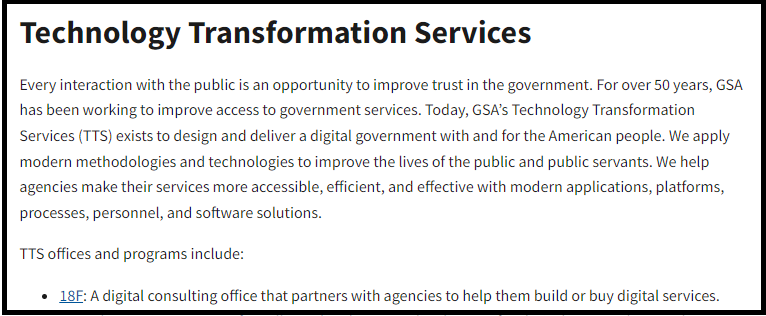
Obviously there are a number of private companies (over 80 last I counted) that provide secure access to information, but Login.gov is provided by the government itself—specifically by the General Services Administration’s Technology Transformation Services. Agencies at the federal, state, and local level can work with the GSA TTS’ “18F” organization to implement solutions such as Login.gov.

Why would agencies implement Login.gov? Because the agencies want to protect their constituents’ information. If fraudsters capture personally identifiable information (PII) of someone applying for government services, the breached government agency will face severe repurcussions. Login.gov is supposed to protect its partner agencies from these nightmares.

How does Login.gov do this?

  • Sometimes you might use two-factor authentication consisting of a password and a second factor such as an SMS code or the use of an authentication app.
  • In more critical cases, Login.gov requests a more reliable method of identification, such as a government-issued photo ID (driver’s license, passport, etc.).

What is IAL2?

At the risk of repeating myself, I’ll briefly go over what “Identity Assurance Level 2” (IAL2) is.

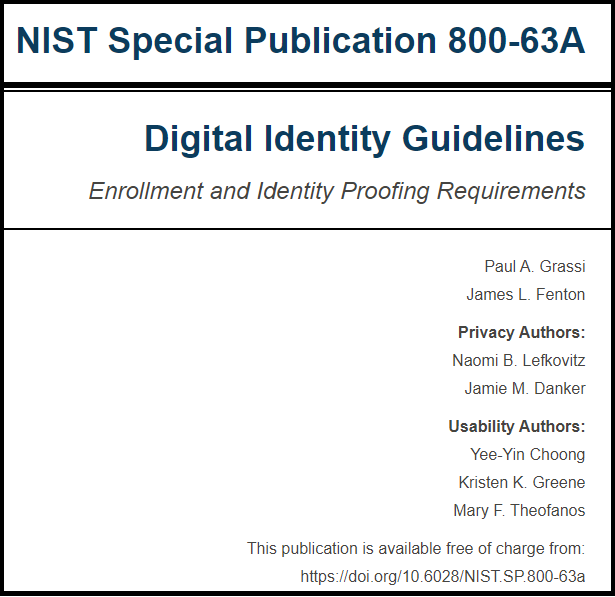
The U.S. National Institute of Standards and Technology, in its publication NIST SP 800-63a, has defined “identity assurance levels” (IALs) that can be used when dealing with digital identities. It’s helpful to review how NIST has defined the IALs. (I’ll define the other acronyms as we go along.)

Assurance in a subscriber’s identity is described using one of three IALs:

IAL1: There is no requirement to link the applicant to a specific real-life identity. Any attributes provided in conjunction with the subject’s activities are self-asserted or should be treated as self-asserted (including attributes a [Credential Service Provider] CSP asserts to an [Relying Party] RP). Self-asserted attributes are neither validated nor verified.

IAL2: Evidence supports the real-world existence of the claimed identity and verifies that the applicant is appropriately associated with this real-world identity. IAL2 introduces the need for either remote or physically-present identity proofing. Attributes could be asserted by CSPs to RPs in support of pseudonymous identity with verified attributes. A CSP that supports IAL2 can support IAL1 transactions if the user consents.

IAL3: Physical presence is required for identity proofing. Identifying attributes must be verified by an authorized and trained CSP representative. As with IAL2, attributes could be asserted by CSPs to RPs in support of pseudonymous identity with verified attributes. A CSP that supports IAL3 can support IAL1 and IAL2 identity attributes if the user consents.

From https://pages.nist.gov/800-63-3/sp800-63a.html#sec2

So in its simplest terms, IAL2 requires evidence of a verified credential so that an online person can be linked to a real-life identity. If someone says they’re “John Bredehoft” and fills in an online application to receive government services, IAL2 compliance helps to ensure that the person filling out the online application truly IS John Bredehoft, and not Bernie Madoff.

As more and more of us conduct business—including government business—online, IAL2 compliance is essential to reduce fraud.

One more thing about IAL2 compliance. The mere possession of a valid government issued photo ID is NOT sufficient for IAL2 compliance. After all, Bernie Madoff may be using John Bredehoft’s driver’s license. To make sure that it’s John Bredehoft using John Bredehoft’s driver’s license, an additional check is needed.

This has been explained by ID.me, a private company that happens to compete with Login.gov to provide identity proofing services to government agencies.

Biometric comparison (e.g., selfie with liveness detection or fingerprint) of the strongest piece of evidence to the applicant

From https://network.id.me/article/what-is-nist-ial2-identity-verification/

So you basically take the information on a driver’s license and perform a facial recognition 1:1 comparison with the person possessing the driver’s license, ideally using liveness detection, to make sure that the presented person is not a fake.

So what?

So the GSA was apparently claiming how secure Login.gov was. Guess who challenged the claim?

The GSA.

Now sometimes it’s ludicrous to think that the government can police itself, but in some cases government actually identifies government faults.

Of course, this works best when you can identify problems with some other government entity.

Which is why the General Services Administration has an Inspector General. And in March 2023, the GSA Inspector General released a report with the following title: “GSA Misled Customers on Login.gov’s Compliance with Digital Identity Standards.”

The title is pretty clear, but Fedscoop summarized the findings for those who missed the obvious:

As part of an investigation that has run since last April (2022), GSA’s Office of the Inspector General found that the agency was billing agencies for IAL2-compliant services, even though Login.gov did not meet Identity Assurance Level 2 (IAL2) standards.

GSA knowingly billed over $10 million for services provided through contracts with other federal agencies, even though Login.gov is not IAL2 compliant, according to the watchdog.

From https://fedscoop.com/gsa-login-gov-watchdog-report/

So now GSA is explicitly saying that Login.gov ISN’T IAL2-compliant.

Which helps its private sector competitors.