I’ve previously discussed the practice of one person registering for a gig work or another account, and another person (perhaps underage) using it. See my posts from October 2023, June 2025, and January 2026.
Well there’s more news on the account renting front:
“Identity verification and background screening are not what these companies do, and conducting them effectively would require implementing infrastructure most have no reason to build on their own.”
The author is from Trua, “a reusable verified identity and screening company.” Good for Trua in pointing out the problem and a possible solution (buy beats make here).
And presumably Trua catches the cases in which the fraudsters themselves get defrauded. Namely, when Bill rents Jane’s identity, not knowing that Jane has already rented that identity from Margaret. We are in subletting territory here…
Speaking of which, if you want to “rent” Bredemarket’s marketing and writing services, talk to me.
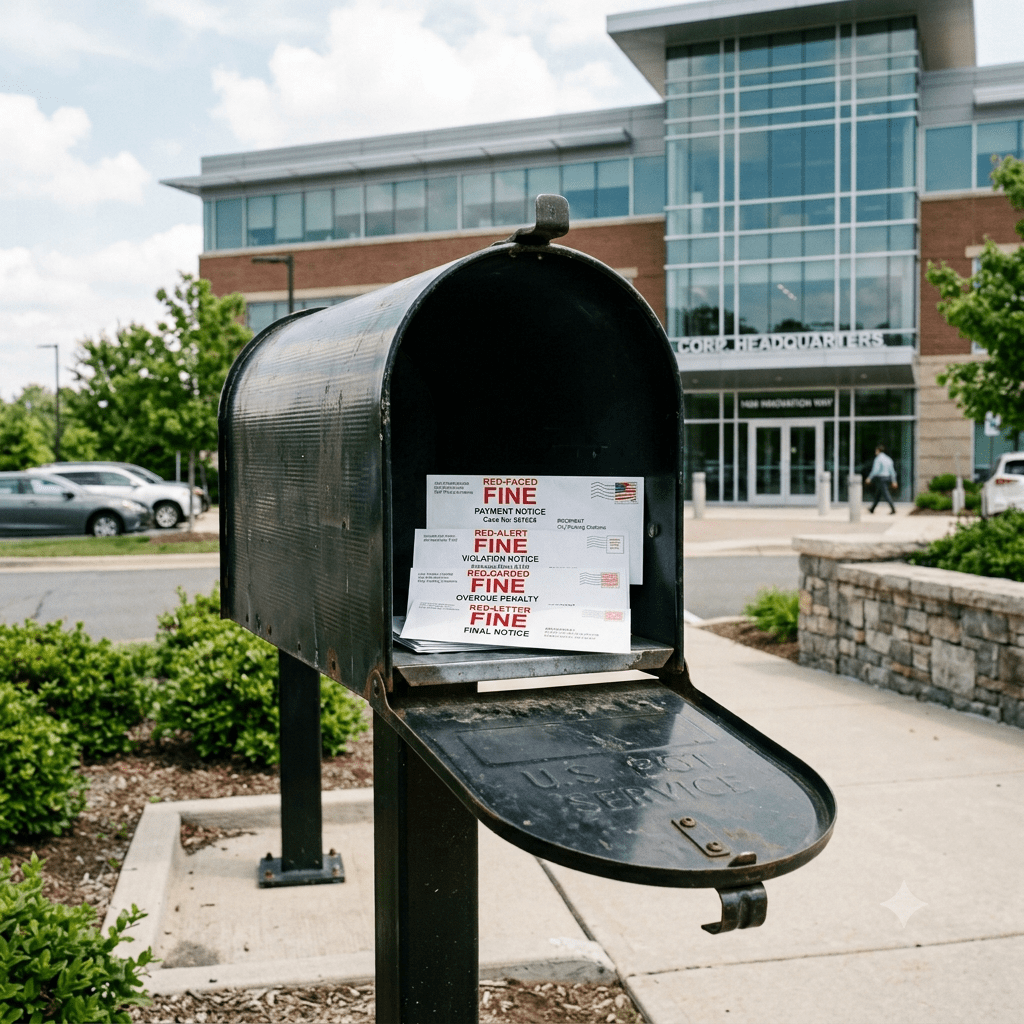
When a company runs afoul of regulations, there’s always the chance that they’ll be caught and fined. But what if they’re caught multiple times for different facets of the same offense…because they had never heard of YOUR company’s anti-money laundering (AML) solution?
deepidv on “coordinated enforcement”
Take the story of UBS Financial Services and FOUR different government and private entities.
“UBS Financial Services Inc faced simultaneous enforcement action from four separate US regulators. FinCEN [Financial Crimes Enforcement Network, part of Treasury] fined the firm $125 million for AML and suspicious transaction reporting failures. The SEC [Securities and Exchange Commission, independent agency] fined UBS $20 million for related AML failures. The CFTC [Commodity Futures Trading Commission, independent agency] fined the firm $8 million for AML monitoring deficiencies. FINRA [Financial Industry Regulatory Authority, private corporation overseen by the SEC] issued its own fine for overlapping AML shortcomings.”
Ouch.
If you don’t check money laundering, you’ll be out of money yourself.
And those are only the fines in the United States. Other countries may pile up and add more fines.
Could your company have solved UBS’ problem?
Now, there’s the chance that a vendor could have helped UBS Financial Services stay in AML compliance.
And perhaps YOU are that vendor.
If your software costs less than $125 million, it’s a win.
So how do prospects learn about your AML solution?
“John Doe is a firefighter and works one 24-hour shift every fourth day. During his off hours, he has developed a lucrative plumbing side business….John deals in cash for most of his plumbing jobs, but sometimes he deposits plumbing income into a special savings account. From 2011 to 2013, John cleared about $35,000 a year, after expenses, from his side business.”
Except Doe kinda sorta forgot to declare this income or the separate bank account when filing his taxes.
“Little does John know, the IRS received a Form 1099-MISC reporting $1,100 that ABC Builders paid to John Doe. The IRS also received a Form 1099-INT for $10.61 in interest income on John’s special savings account from Central Bank.”
In H&R Block’s story, Doe serves jail time, has to pay back taxes, and as a convicted felon loses his firefighting job.
Admittedly Doe’s plumbing work is not in and of itself criminal, so this isn’t money laundering…unless Doe’s customers are drug dealers looking to spend their profits on plumbing work.
You’ll recall that I initiated a Zelle transfer to my account at “the blue bank,” but the blue bank “placed this transfer on hold so they can conduct further review.”
With no word on what the blue bank was reviewing. And the “blue bank” representative whom I spoke with on Saturday didn’t know either.
I had already ruled out the simple explanations, such as either the sending Zelle account or the receiving Zelle account didn’t exist.
I figured that perhaps my use of Zelle was the issue. The day before I sent the “on hold” transaction, I had sent another transaction. I figured that two transactions in two days tripped up some odd alert of possible account draining.
Neither of these turned out to be the issue.
On Monday (just after I had rated the “blue bank” 5 out of 10 for its handling of the issue; coincidence, or no?) I received a call from someone at my local “blue bank” branch.
Turns out that the issue was the COMMENT that I attached to the Zelle transfer.
My comment referenced another individual. Without revealing this person’s personally identifiable information (PII), I will state that his first name begins with a K, his last name begins with a P, and he is a “Junior.” So because acronyms are wonderful, I referred to this person as “KP2” in the Zelle transfer field.
Which was an extremely evil thing to do, because that tripped up an anti-money laundering check.
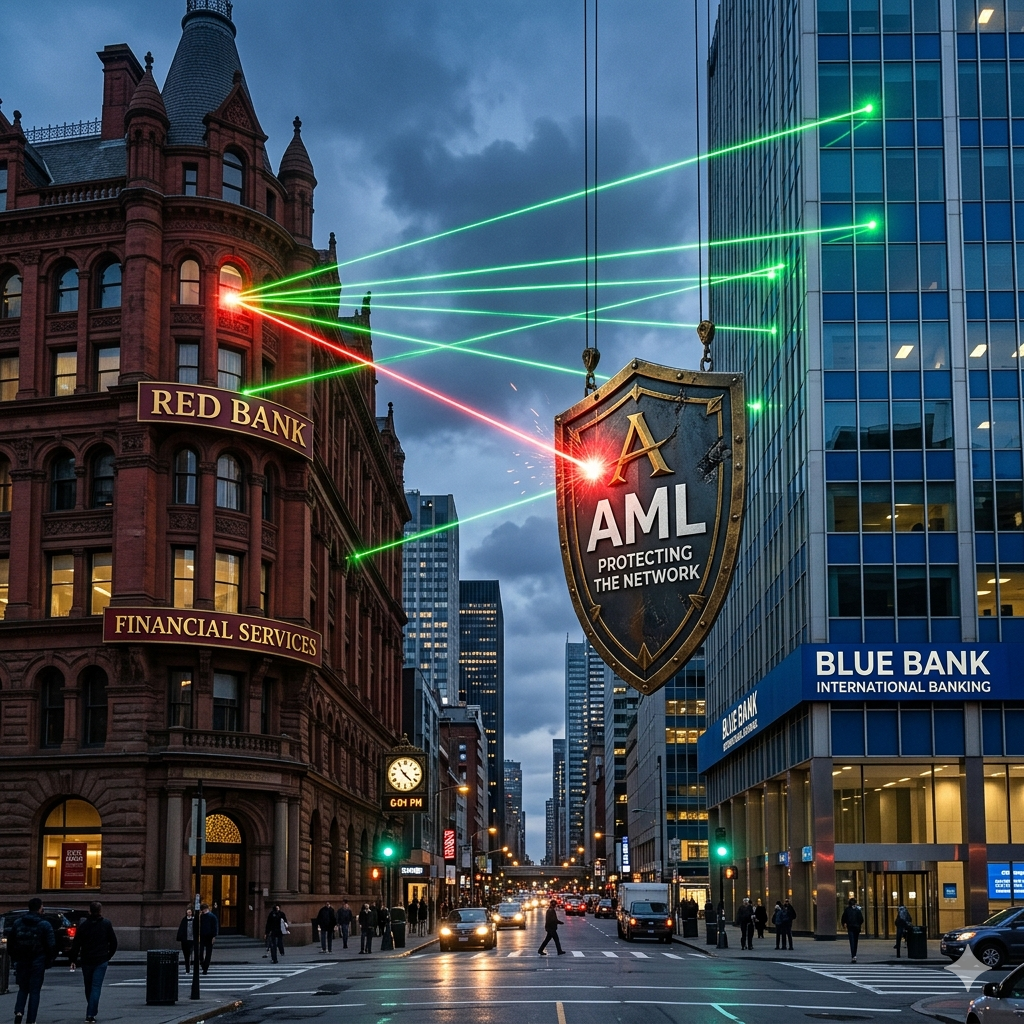
“AML.” Google Lyria. Public Domain.
Basically, anti-money laundering checks verify that a person isn’t transferring money for a sanctioned person.
And I didn’t trip up just ANY anti-money laundering check.
This one was bad.
AML catches evil people.
Really bad.
AML catches evil people.
How bad?
Let’s look at ISO 3166 country codes. The alpha 2-digit country code for the Democratic People’s Republic of Korea (North Korea) is…KP. KP-02 is the specific administrative code for South Pyongan Province (Pyeonganbuk-do).
Back to the call I received from my local “blue bank” branch. The representative didn’t go into all that, but just said that my comment about “KP2” looked like a reference to North Korea.
I burst out laughing.
I gave the “blue bank” representative the full name of K[REDACTED] P[REDACTED] Junior, explained that there were five “KP”s, and that I used numbers to tell them apart.
Ironically, both “KP2” and “KP4” are veterans. I wonder if they realize their initials associate them with this guy.
Remember in March 2022 when I searched my (then) Twitter profile picture against TinEye and found 0 matches, indicating that I may be a fraudster because TinEye didn’t have a history on me?
Taken 2019, in case you’re curious.
Well, I found additional evidence of my supposed shady nature.
For purposes of this discussion, I will refer to the two banks in question as the “red” bank and the “blue” bank. (No political implications here.) I’ve previously referred to the blue bank as Wildebeest Bank, but today I’m sticking to the color scheme idea.
Both banks use Zelle to support instant transactions between member institutions, and I have Zelle-enabled accounts with both banks. For the record:
I frequently perform immediate Zelle transfers from the blue bank to the red bank.
On Wednesday, I successfully performed an immediate Zelle transfer from the red bank to the blue bank.
So on Thursday, I thought nothing of sending a second Zelle transfer from the red bank to the blue bank.
Until the red bank emailed me.
“The recipient bank [the blue bank] has placed this transfer on hold so they can conduct further review. Upon completion of the review, they will either complete your transfer or [the red bank] will contact you with more details. No further action is required from you at this time.”
Now why would a bank conduct further review? Three possible reasons.
The recipient isn’t enrolled in Zelle. Not a problem here.
The recipient bank is conducting a technical check. This shouldn’t be a problem here, since both Zelle accounts have been successfully used before.
The recipient bank is conducting a fraud check. This, perhaps an anti-money laundering investigation, seems the most likely scenario, especially since this was launched one day after another transfer. Even though the second transfer is SMALLER than the first transfer, perhaps the one-day timeframe looks like someone is trying to drain the red bank account.
So this happened Thursday, and as of Saturday (two calendar days and one business day later) I hadn’t heard a thing.
So I called the blue bank, reached a helpful representative, and waited for her to research the issue. I heard her mutter over the phone:
“Accept without posting”
Then, a minute later:
“What does THAT mean?”
While I waited for her to officially talk to me again, I performed some online research and confirmed that “accept without posting” is another way of saying that the transaction is under review. Here’s what the Cleveland Federal Reserve says about FedNow, one bank transfer method:
“[T]he FedNow Service sends the payment information to the receiver’s financial institution and asks that bank to confirm that it intends to accept the payment message. It can accept, or reject, or accept without posting, which means some of the pre-checks of the transaction are pending or delayed.”
Then when the blue bank representative did speak to me, things got even more confusing as she said that there were notes from Monday involving “the green bank” that wasn’t even involved in the transaction. Wisconsin Travel Federation?
The representative didn’t have access to the group that put my Zelle transfer on hold, so for now I wait.
Andrew Austin at Sardine has written an eye-catching blog post that discusses a fraud ring exhibiting unusual patterns.
Some fraudsters use synthetic identities to fool systems, but good systems can catch the synths.
But other fraudsters use mules and other techniques that pass identity verification checks, because the people are REAL people.
Google Gemini.
Austin’s post discusses an example of the latter.
Sign-up patterns in Bangladesh
In this particular case (Example 3 of 3), a gig economy company had discovered a fraud ring operating out of Bangladesh, but the identities were those of real people. The investigator noticed something right off the bat:
“When we looked into it, something was off: all of the locations seemed to be clustered in a few small towns.”
But wait…it gets better.
“The fraudsters were going door-to-door and signing up anyone who was willing to share their information….
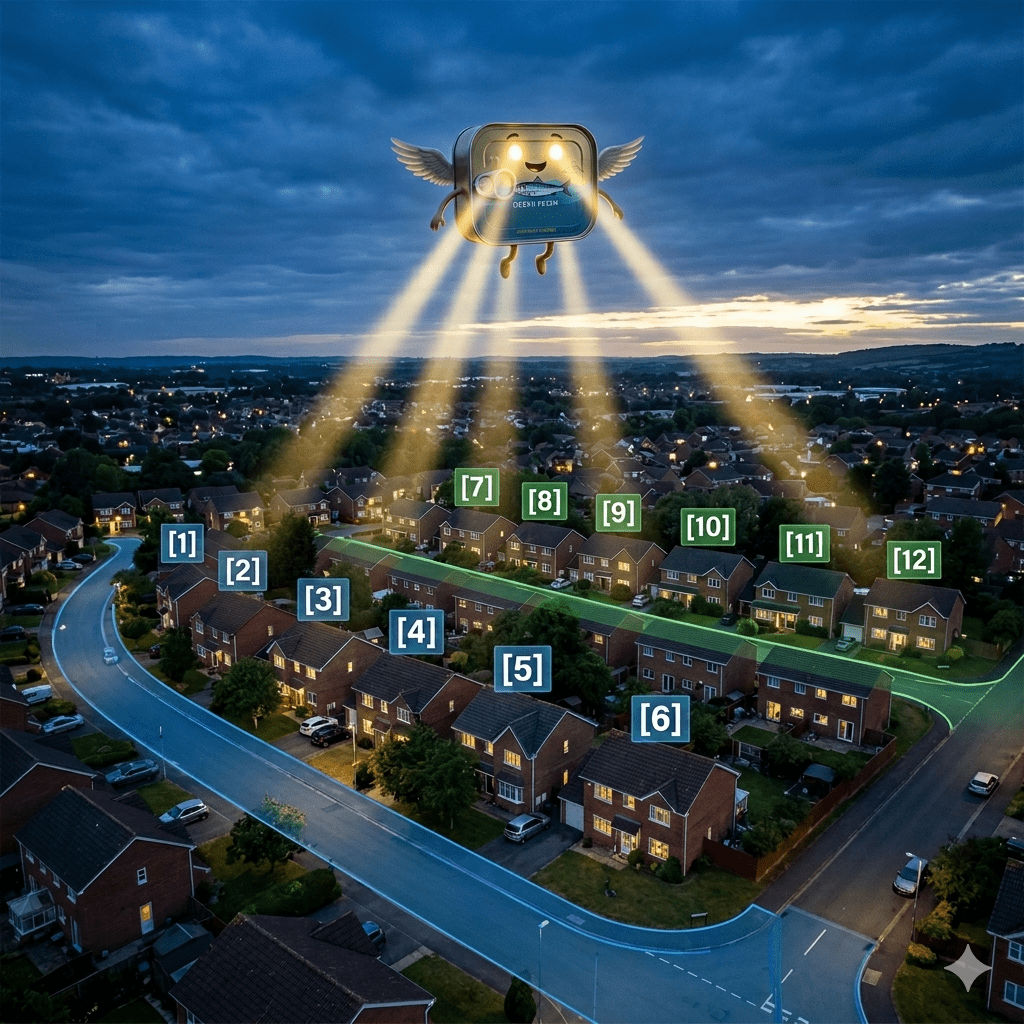
“Dozens of routes snaked through neighborhoods where new accounts were being created, each of them running from North to South and then back to their starting point on the next street over.”
It turns out that the fraudsters were going down each street, paying people to borrow their identities, and then moving on to the next street.
Google Gemini.
How identity factors (in the plural) identified the fraud
In Bredemarket’s view, this raised alarms surrounding two factors of identity verification and authentication.
The first was geolocation. Once the identities were plotted, it seems strange that all of the identities lined up down each street and on to the next street.
The second is what I call “somewhat you why.“ It’s reasonable to believe that if person A signs up for a service, their neighbors may sign up also. But it’s NOT reasonable to believe that people would sign up for the service in address order, moving from street to street. “No, Jim, 158 1st street can’t sign up for the service! 156 1st street hasn’t signed up yet!”
Now even if you don’t believe that “somewhat you why” is a real factor (Sardine prefers to talk about “device and behavior intelligence“), it’s clear that fraudsters were using the identities of real people to engage in a massive fraud scheme.
Look at the patterns, and you can discover from unusual ones.
The term “money mule,” which first appeared around 2005, refers to a person who transfers illicit money for someone else—sometimes knowing that the activity is criminal, sometimes unknowingly.
“[Y]our job is to receive goods, often electronics that have been shipped to you, inspect them and then reship them to an address provided to you by your new employer.”
So the employee is being paid to inspect goods. What’s wrong with that?
“The problem is that these goods have been purchased with stolen credit cards and you have just become an accomplice to the crime when you ship them to someone else who will then sell them to turn the merchandise into cash.”
Trouble
And if the employee plays their cards wrong, they can end up on an Anti-Money Laundering blocklist.
“Among those who seek to disguise the illegal proceeds of their crimes are drug traffickers, terrorists, corrupt public officials, and organized criminal groups.”
A student job
And there are consequences for the money mules, knowing or not. A foreign student in the UK applied to a job ad with this job description:
“your job content is: use your mobile banking during daily part-time working hours, according to my requirements: help the company collect and transfer money, transfer to the account designated by the company, the company has every day Many orders.”
The company assured the student that everything was legal, so the student took the job. Things went well, until:
“And today my bank sent me a message saying they’ve frozen my account and will still do so unless i explain what certain transactions are for.”
Because the banks can also get in trouble if they violate AML laws.
As some of you know, AML stands for Anti-Money Laundering. It ensures that money given to Johnny Angel doesn’t end up in the hands of Vladimir Putin. This impacts financial institutions:
“Banks had to follow government regulations (know your customer, anti-money laundering, know your business), even in the midst of a worldwide pandemic.”
But AML goes far beyond banks because of its national security implications. Which means the military has to get involved.
Therefore DARPA has entered the picture, with its Program Announcement (posted on SAM as DARPA-SN-25-23) for something DARPA calls “Anticipatory and Adaptive Anti-Money Laundering,” or A3ML.
“The program seeks to develop sophisticated algorithmic methods that can analyze financial transaction graphs and detect suspicious patterns more effectively than existing manual processes. This initiative represents a significant shift towards proactive and predictive financial crime detection methodologies.”
Of course, the introduction of the word “predictive” raises alarm bells, based upon activities outside of banking. At best, police potentially waste a lot of time investigating every single broken tail light. At worst, Muslim lawyer Brandon Mayfield becomes a suspect for a crime he didn’t commit.
Hopefully the people pursuing A3ML can minimize bias.









 Bredemarket